Most Toilet Problems Are Simpler Than You Think
I’ve been fixing toilets for over thirty years and I can tell you this: the vast majority of toilet problems come down to about five things. A bad flapper, a failing fill valve, a clog, a bad wax ring, or something wrong with the flush mechanism. Thats it. Five categories cover probably 95% of everything that goes wrong.
People panic when their toilet breaks. I get it. Its the one fixture in your house you absolutely cannot live without. But most of these repairs take less than an hour, cost under $20 in parts, and require nothing more than a pair of pliers and a trip to the hardware store.
This guide covers every common toilet problem with links to detailed repair instructions for each one. Find your problem below and I’ll point you in the right direction.
Running Toilet
A running toilet is the most common complaint I hear. That constant hissing or trickling sound means water is leaking from the tank into the bowl, and your fill valve keeps refilling to compensate. A running toilet can waste over 25,000 gallons of water per year. Thats not a typo.
The cause is almost always one of two things: the flapper or the fill valve.
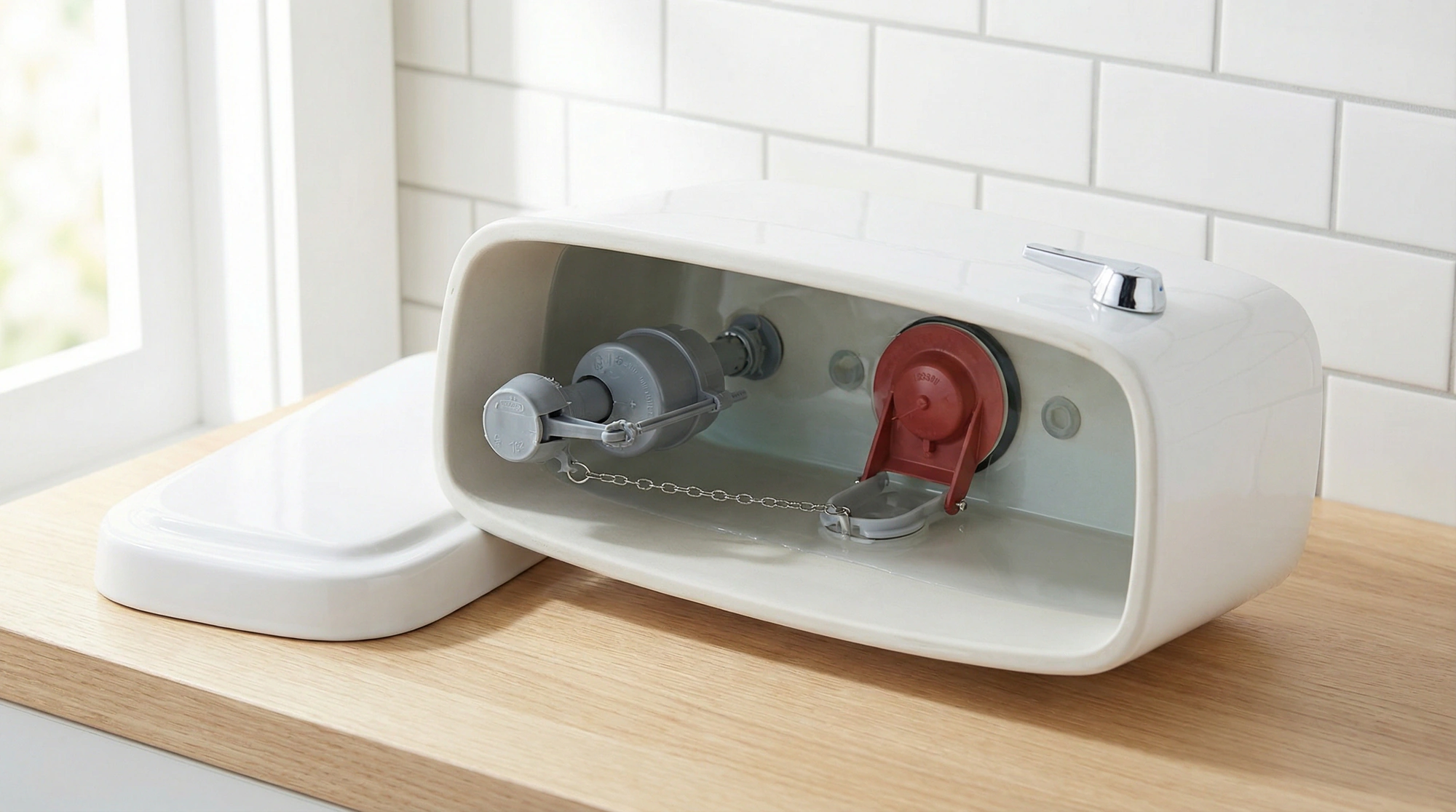
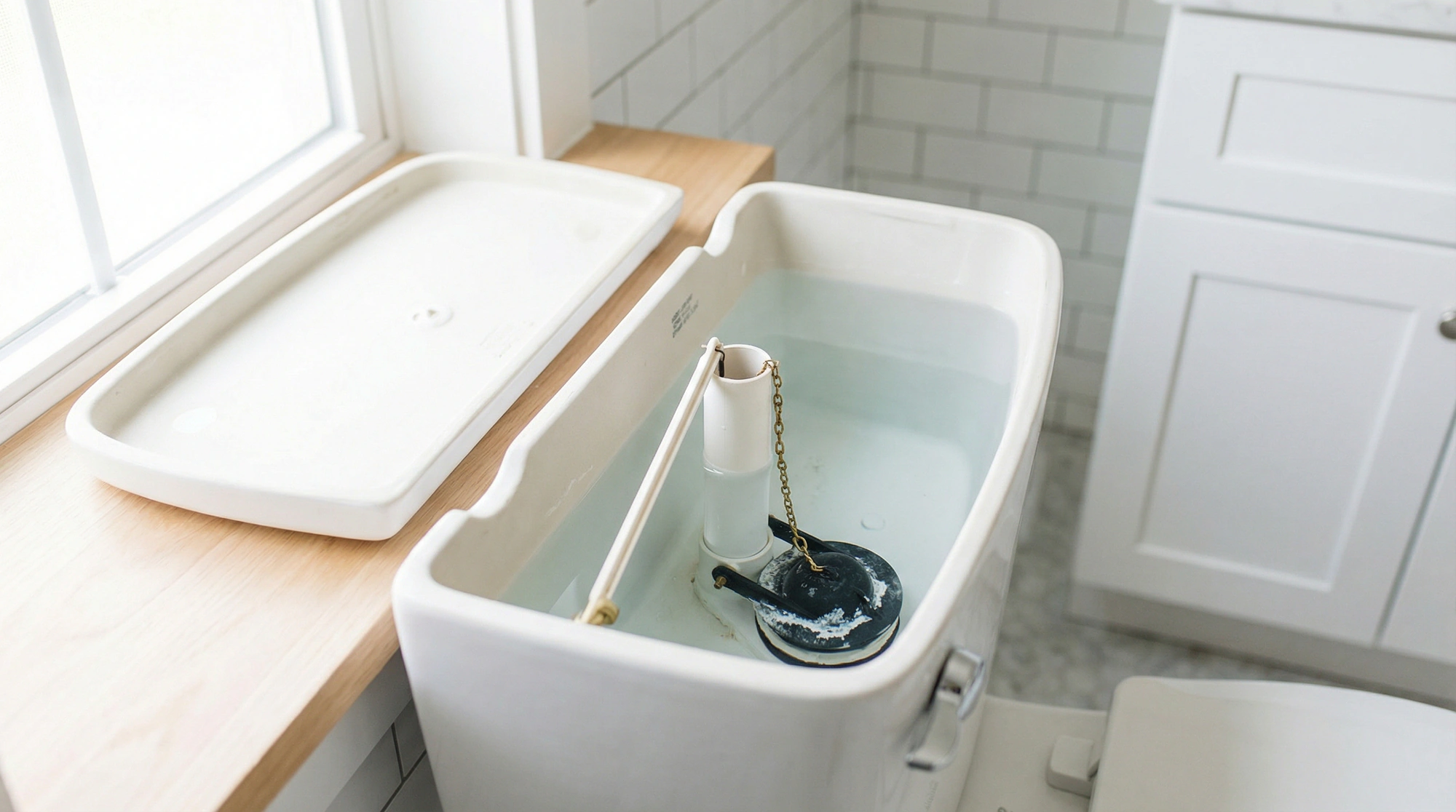
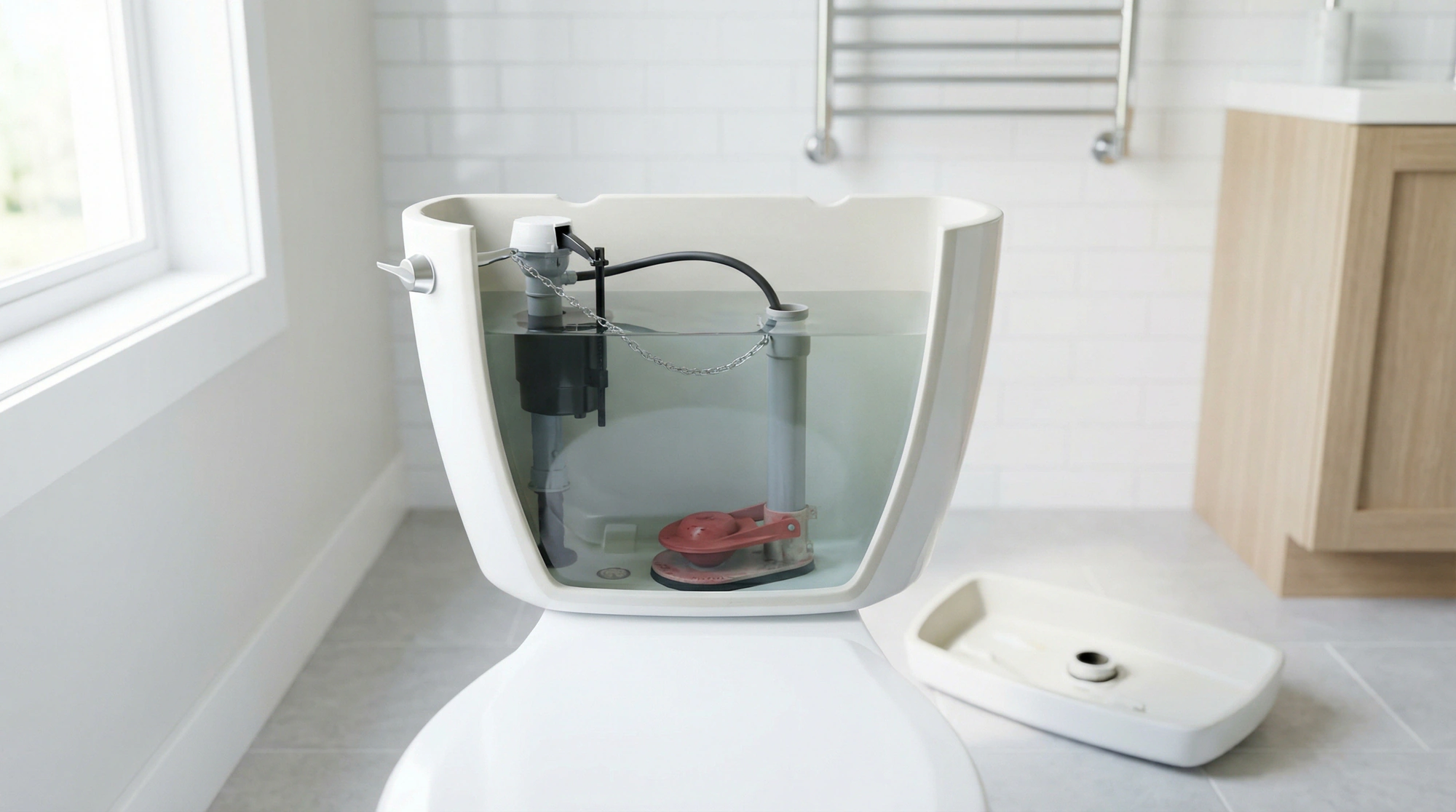
The flapper is that rubber disc at the bottom of the tank. It lifts when you flush and seals the tank when its done. Over time rubber degrades, the flapper warps, and water seeps through. If your toilet runs intermittently, the flapper is the first thing to check. Replacing a toilet flapper is a ten-minute job that costs about five dollars.
If the flapper looks fine but the toilet still runs, the fill valve is probably the issue. The fill valve controls the water level in the tank and when it fails it either runs constantly or cycles on and off. Replacing a toilet fill valve takes about twenty minutes and costs $8-15 for the part.
Our complete running toilet guide walks through the full diagnosis: how to tell which part is failing, the step-by-step fix for each, and when the problem is something deeper.
Toilet Won’t Flush
When you press the handle and nothing happens, or the flush is weak and incomplete, the problem is usually mechanical. The lift chain might be disconnected or too slack. The flapper might not be lifting fully. The water level in the tank might be too low.
Start by taking the tank lid off and watching what happens when you flush. You’ll usually see the problem immediately. If the chain is disconnected, reattach it. If the flapper barely lifts, shorten the chain. If the water level is low, check the fill valve.
Our toilet won’t flush guide covers every scenario including weak flushes, partial flushes, and the handle that just flops with no resistance.
Toilet Overflowing
This is the one that sends people into panic mode. Water rising toward the rim, about to spill over onto the bathroom floor. Step one: reach behind the toilet and turn the shutoff valve clockwise. That stops the water. Everything else can wait.
Once the water stops rising, the cause is almost always a clog. A plunger fixes most clogs. If the plunger doesnt work, a toilet auger will. If the auger doesnt work, you might have a main line problem, and thats when you call a plumber.
Our toilet overflowing guide covers the emergency shutoff procedure, proper plunger technique (most people do it wrong), and how to tell the difference between a simple clog and something more serious.
Toilet Leaking at the Base
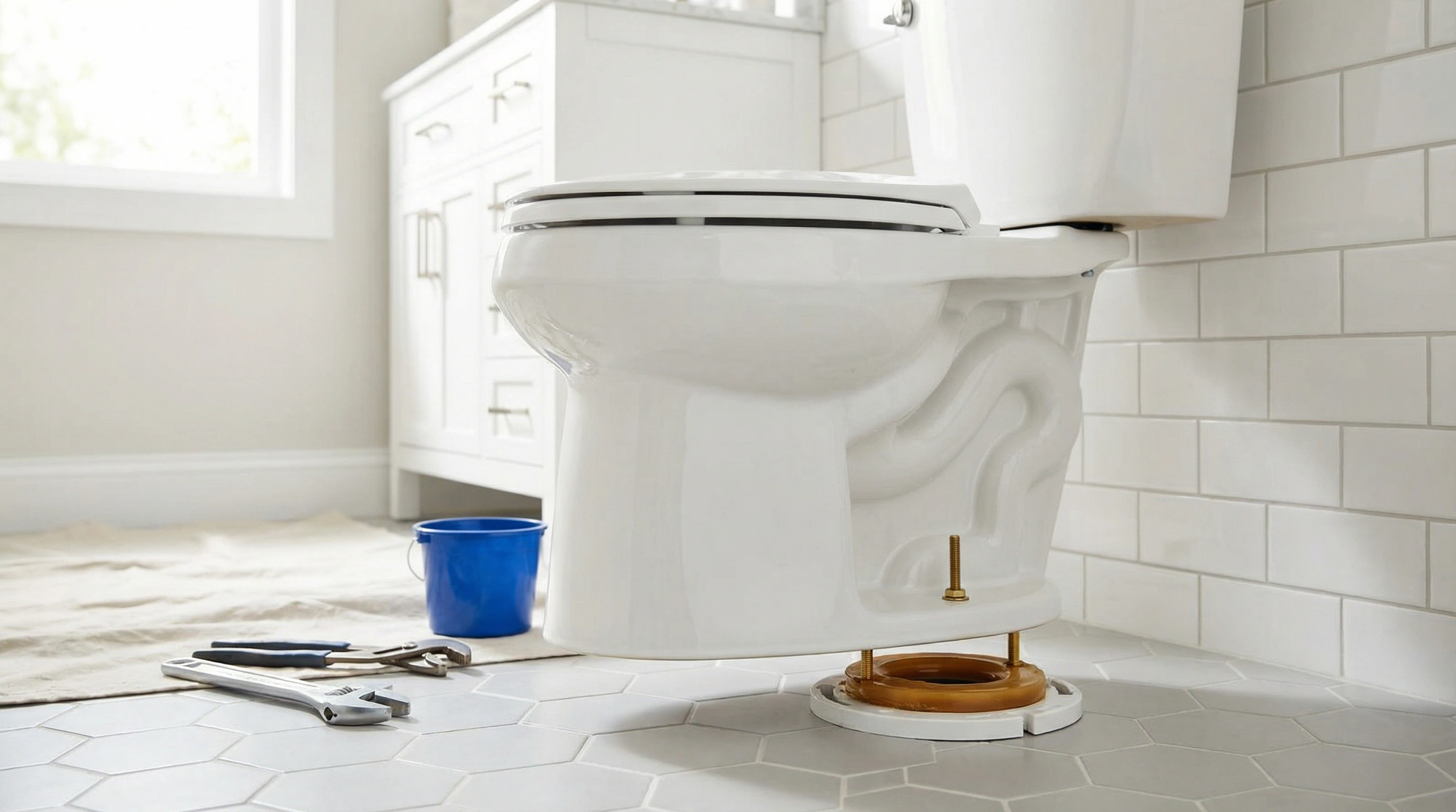
Water pooling around the base of your toilet usually means the wax ring has failed. The wax ring is a seal between the bottom of the toilet and the drain flange in the floor. When it fails, water (and sometimes sewer gas) escapes every time you flush.
Replacing a wax ring means removing the entire toilet, scraping off the old wax, setting a new ring, and resetting the toilet. Its not complicated but it is heavy and messy. You also want to inspect the flange while the toilet is off, because a cracked or corroded flange is what causes wax ring failures in the first place.
Our toilet leaking at the base guide has the full procedure including flange inspection and the common mistakes that cause leaks to come back.
Toilet Tank Not Filling
You flush, the bowl empties, but the tank just sits there barely filling or not filling at all. This usually means the fill valve is stuck or failing, the water supply valve is partially closed, or the float is set too low.
Check the supply valve first. Its the knob on the wall behind the toilet. Make sure its fully open. If thats fine, the fill valve is your next suspect.
Our toilet tank not filling guide walks through all three causes with the diagnostic steps to identify which one you’re dealing with.
Toilet Tank Maintenance
Most people never look inside their toilet tank. They should. Mineral deposits, rust, and even mold can build up in there over time. This buildup corrodes the internal parts and shortens the life of your flapper and fill valve.
Cleaning the tank once or twice a year with white vinegar keeps everything in good shape and extends the life of the components. Our toilet tank cleaning guide has the full process.
When to Replace the Whole Toilet
Sometimes repair isnt worth it. If your toilet is more than 20 years old, cracks are visible in the porcelain, it clogs constantly despite being clear of blockages, or you’re spending more on repairs than a new toilet costs, its time to replace.
A new toilet runs $200-500 for the fixture plus installation. You can replace a toilet yourself in about two hours if you’re comfortable with the wax ring and flange work. The key is getting the wax ring seated properly. Rush that step and you’ll be dealing with a base leak within months.
What to Fix vs. What to Call a Plumber For
DIY-friendly:
- Replacing flappers and fill valves
- Adjusting lift chains and water levels
- Unclogging with a plunger or auger
- Cleaning the tank
- Tightening loose tank bolts
Call a plumber:
- Cracked porcelain (tank or bowl)
- Broken or corroded drain flange
- Recurring clogs that dont respond to a plunger or auger
- Sewer gas smell with no visible leak
- Any repair you’re not comfortable doing yourself
Theres no shame in calling a professional. A plumber will charge $150-300 for most toilet repairs. Thats less than the water damage from a botched DIY wax ring replacement.
Toilets are simple machines. Tank holds water, flapper lets it go, bowl catches it, drain takes it away. When something breaks, its almost always one of those four stages. Figure out which stage is failing and the fix usually presents itself.
If keeping track of toilet maintenance feels like overkill, consider that replacing a $5 flapper once a year prevents the $200 water bill spike from a running toilet you didnt notice. Thats what Homevisory is for. Our home task manager reminds you to check these things before they become problems.