When Water Starts Rising
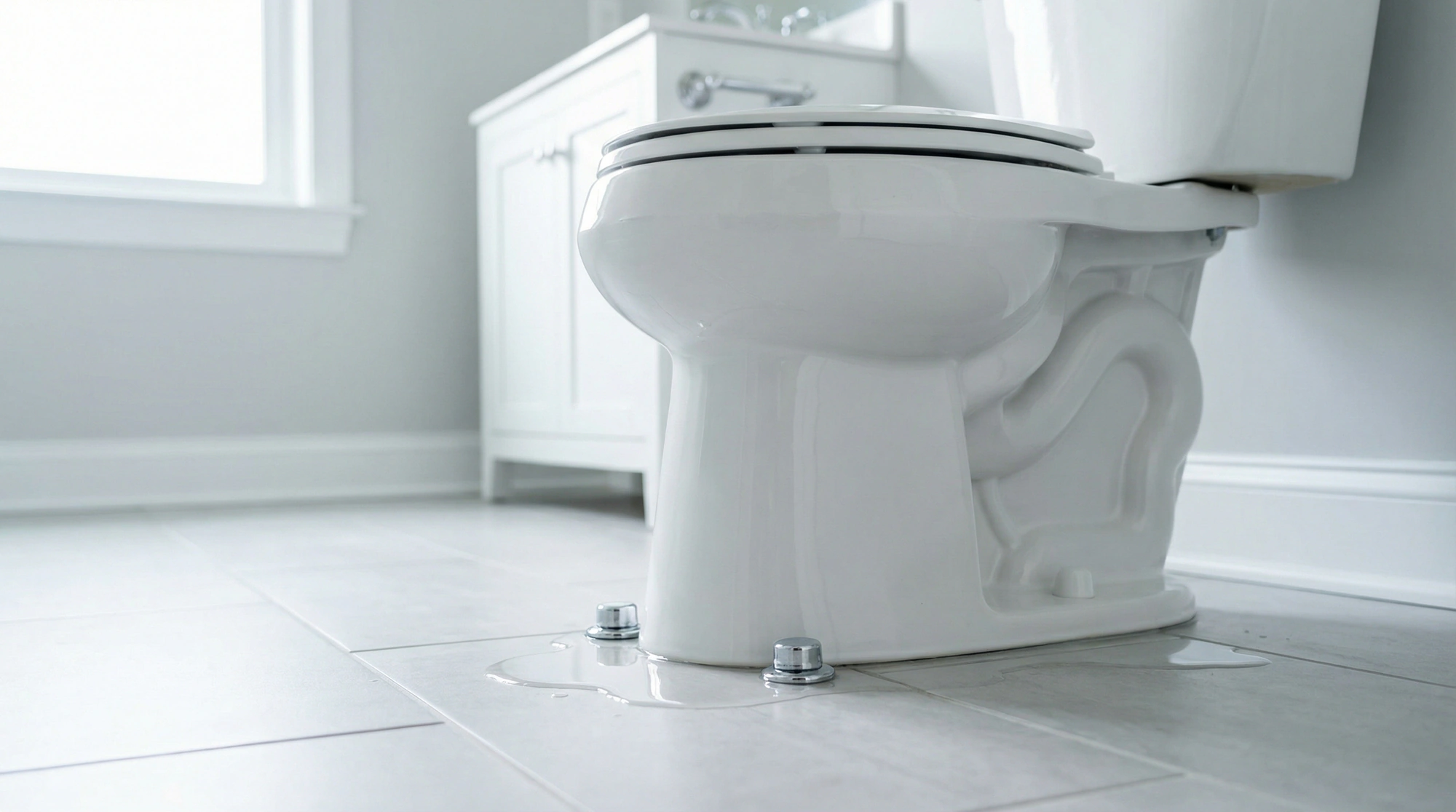
There’s a moment when you flush and the water doesnt go down. It goes up. And you stand there watching it rise toward the rim thinking maybe it’ll stop, maybe it’ll be fine, and then it doesnt stop and suddenly you’re grabbing towels off the rack and throwing them on the floor.
I’ve been there. Everyone’s been there. The toilet overflowing is one of those universal homeowner experiences that nobody talks about until it happens to them.
First thing. The very first thing. Stop the water.
Shut Off the Water Supply
I dont care what else is happening in your bathroom. Before you grab towels, before you grab a plunger, before you do anything else, you need to stop more water from entering the toilet.
There’s a valve on the wall behind your toilet, usually on the left side near the floor. Its an oval-shaped handle or a small lever. Turn it clockwise until it stops. Thats it. You’ve just stopped the flooding.
My dad used to say, about something totally different, he used to say knowing where your emergency shutoffs are is half the battle. He was talking about the machines at the factory where he worked in Atlanta. But it applies to everything in a house. Know where your water shutoffs are before you need them. The main shutoff. The toilet shutoff. The sink shutoffs. Find them now, not when water is pouring onto your bathroom floor.
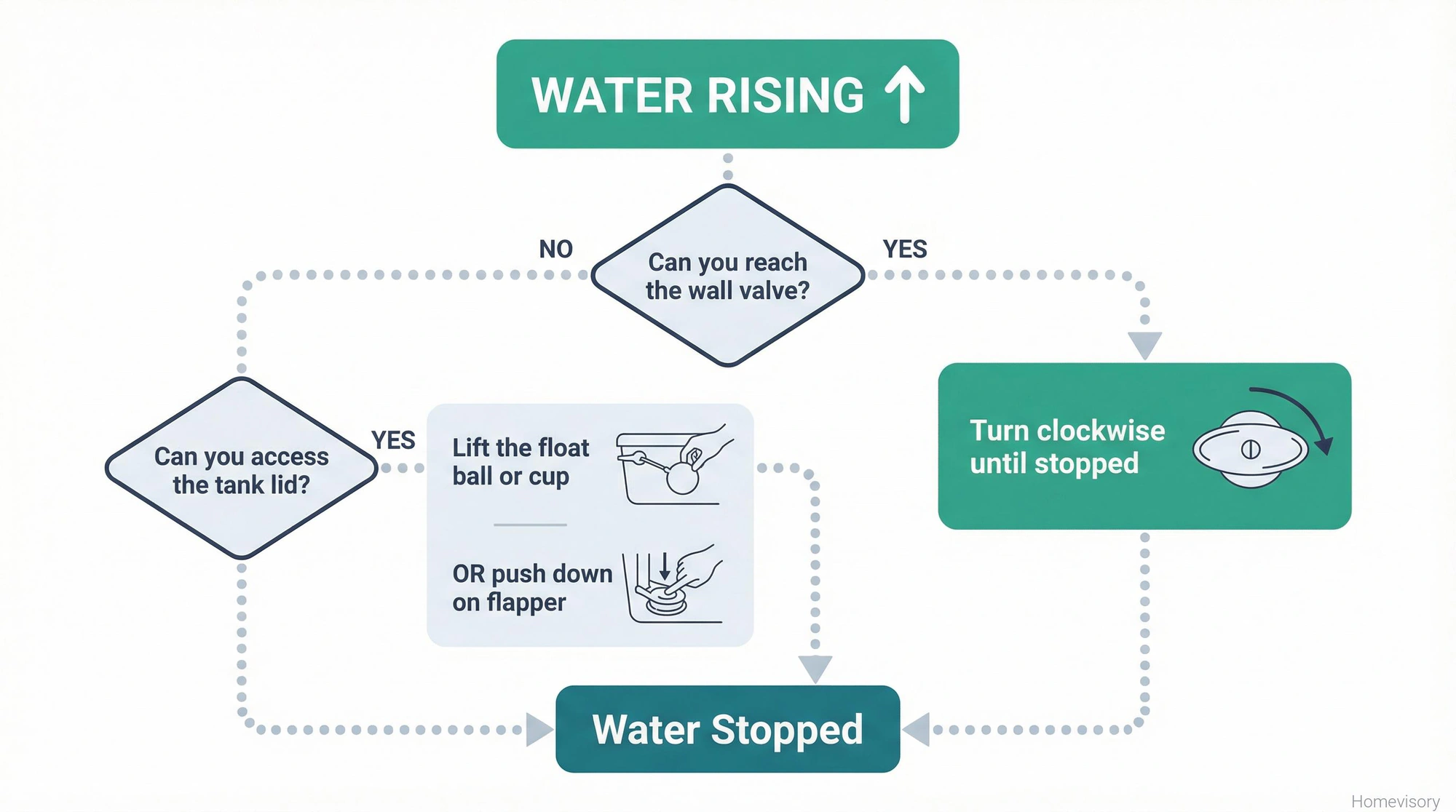
If the valve behind the toilet is stuck or you cant reach it, take the lid off the tank and lift the float ball or float cup. This stops water from filling the tank. You can also push down on the flapper at the bottom of the tank to close it. Not elegant. Works.
Why It Happened
Okay. Water stopped. Now figure out whats going on.
A toilet overflowing usually comes from one of two places: the bowl or the tank. Most of the time its the bowl, which means you have a clog somewhere between the toilet and the drain line. Sometimes its the tank, which means something went wrong with the fill mechanism.
Bowl overflow from a clog: this is the common one. Somebody flushed something they shouldnt have, or theres a buildup in the trap, or theres a partial blockage further down the line that finally gave up. The water comes up because it has nowhere else to go.
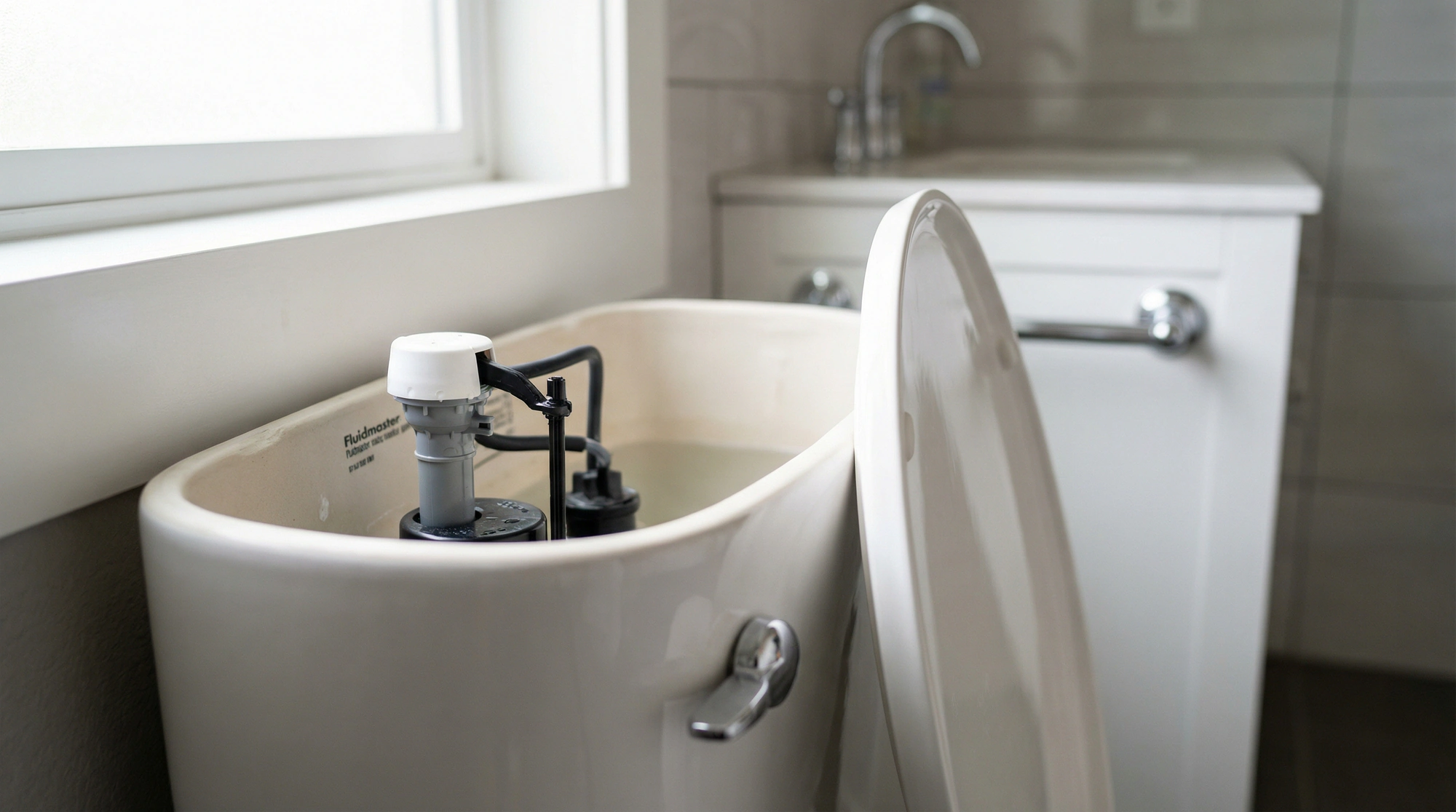
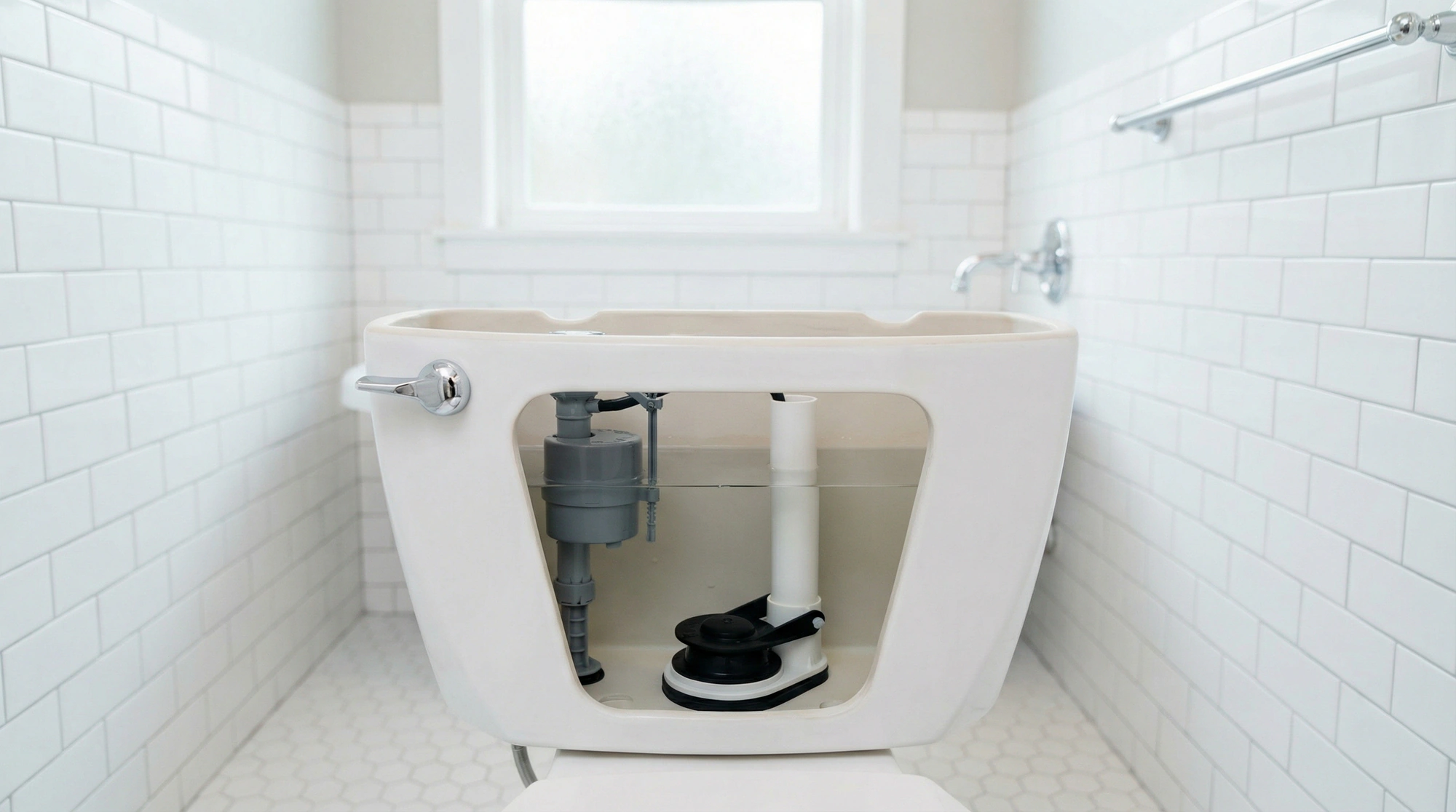
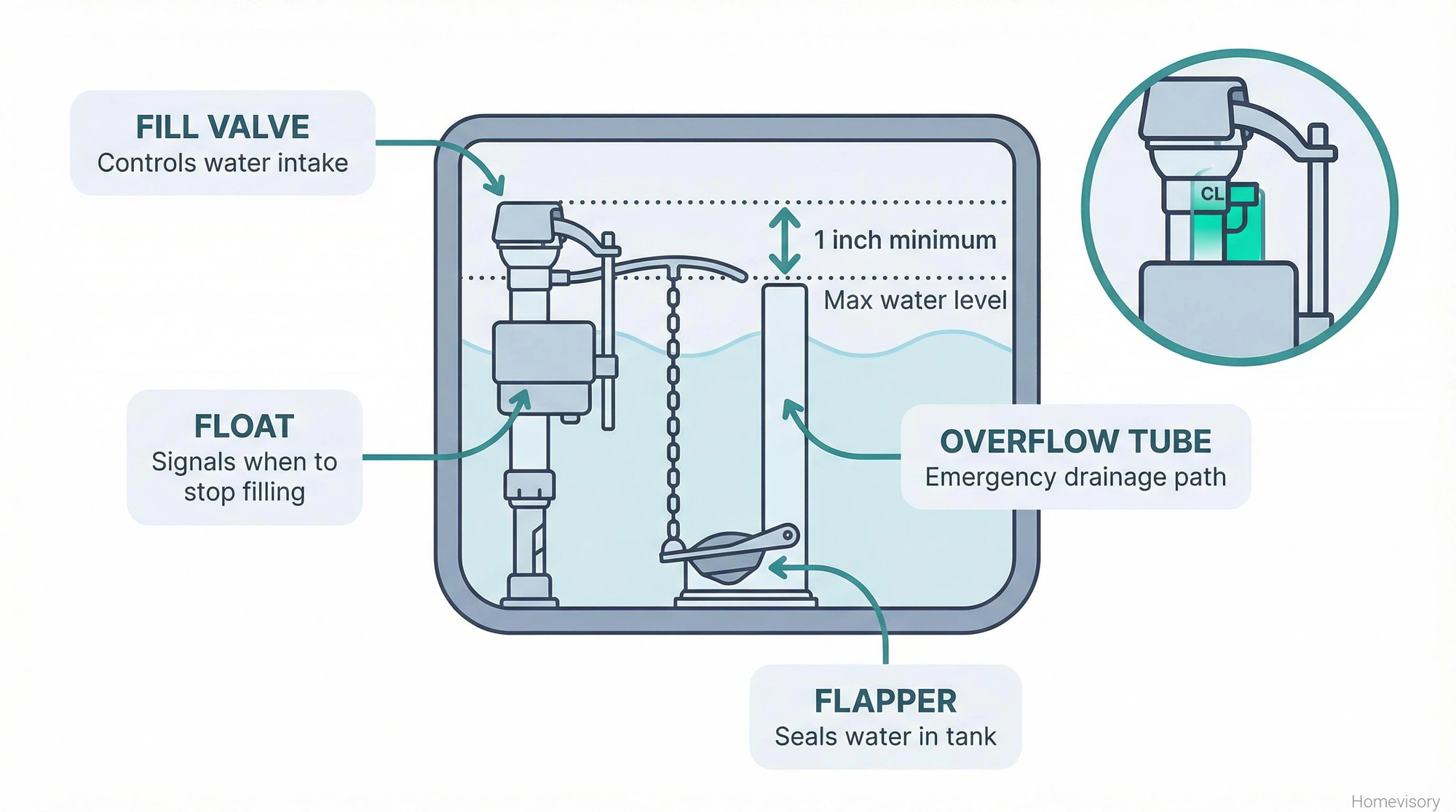
Tank overflow is different. The tank keeps filling because the fill valve didnt shut off, and the overflow tube cant handle the volume, so water spills out of the tank. This is less common but more annoying because it means something mechanical failed.
Here’s the thing about tank mechanics that most people dont understand and honestly this is the part I probably spend too much time explaining but I’ve seen so many toilets with the wrong water level and people wondering why they have problems. The overflow tube in your tank isnt just decoration. Plumbing codes require toilets to have overflow protection that can handle the maximum rate of water flow under normal conditions. The fill valve has a critical level mark, usually labeled CL on the side, and that mark needs to be at least one inch above the top of the overflow pipe. If its not, if the water level is set too high, or if the fill valve is worn out and doesnt shut off completely, water goes over the overflow tube and into the bowl continuously. And if your drain is even slightly slow, you get a toilet overflowing when nobody’s even in the bathroom.
Clearing the Clog
Most clogs clear with a plunger. Get a flange plunger, not the flat red one your grandma had. The flange is the extra rubber piece that folds out from the bottom and fits into the toilet drain opening. Creates a better seal.
Push down, pull up. Thats it. Moving on.
No really, thats the whole technique. Push down to force water into the drain, pull up sharply to create suction. Do it ten or fifteen times. Most clogs will clear.
If plunging doesnt work, you might need a toilet auger. Its a snake specifically designed for toilets, has a rubber sleeve to protect the porcelain. Feed it in, crank the handle, it breaks up or grabs whatever’s stuck in there. Twenty bucks at any hardware store.
What you dont do is flush again hoping the clog clears itself. I dont know who taught my kids this approach but Richard went through a phase where his solution to a slow toilet was to flush three more times. Which is how you guarantee a toilet overflowing. The bowl only holds so much water. Every flush adds more.
The Water Damage Problem
Here’s why I care so much about this. Water damage is expensive.
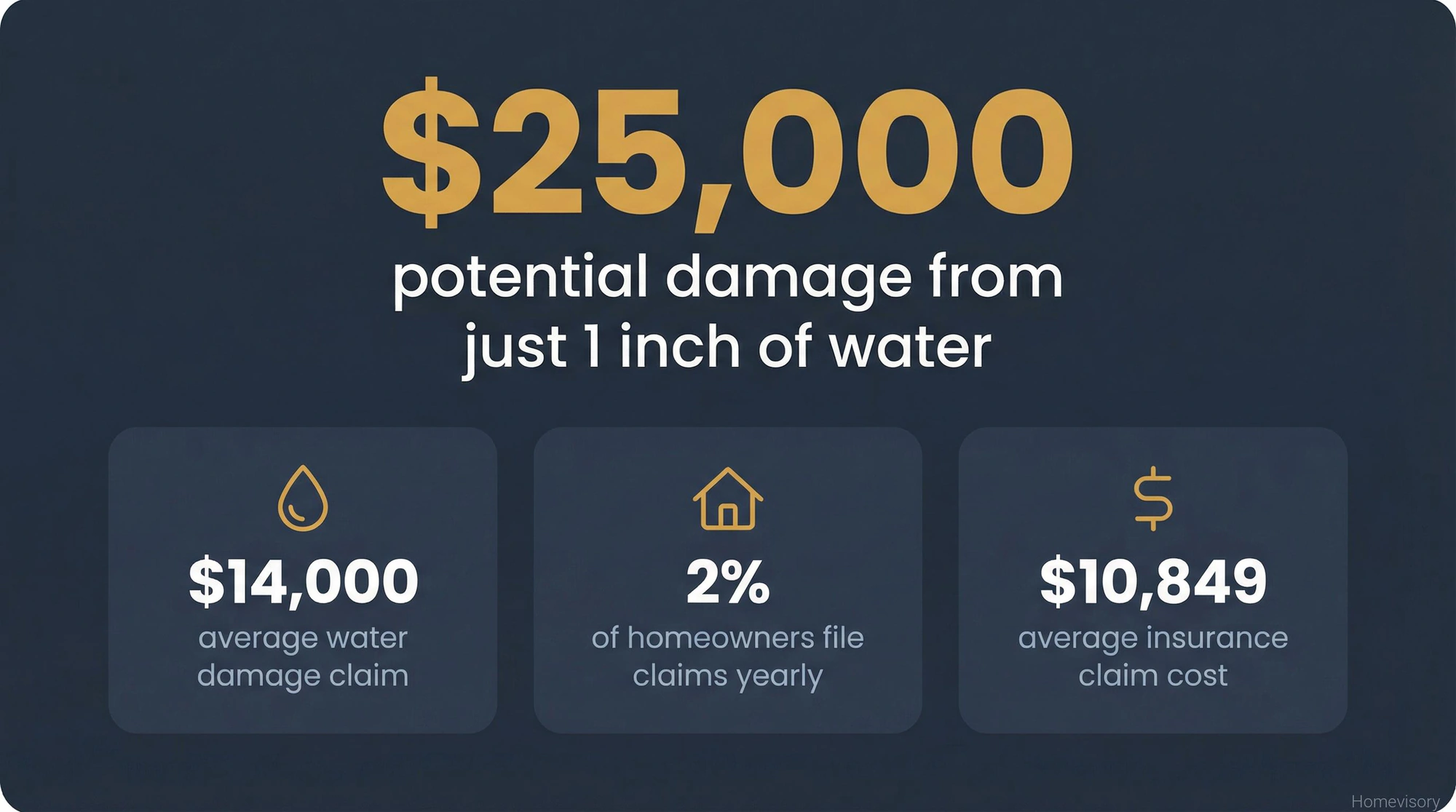
The average water damage claim from 2017 to 2021 was over $12,500. And FEMA estimates that just one inch of water can cause up to $25,000 worth of damage to a home. One inch. Thats not a flood. Thats a toilet overflowing for twenty minutes while you’re at work.
And the Insurance Information Institute reports that about 2% of all homeowners file water damage claims every year, with the average claim running around $10,849. Water damage accounts for nearly a quarter of all homeowners insurance claims. This isnt rare.
I learned this lesson the hard way back in 2011, not with a toilet but with a shower. Did the work myself, cut some corners, and eleven months later my subfloor was soft from water damage because water finds every mistake you make. Water is patient. It will find the gap, the crack, the place where the seal isnt quite right. Raquel made me sleep on the couch because I smelled like mold. She was right to.
The point is that a toilet overflowing isnt just gross and inconvenient. It can be the start of serious structural damage if you dont deal with it fast and thoroughly.
When Its More Than a Clog
Sometimes a toilet overflowing is a symptom of something bigger. If you have multiple drains backing up at the same time, toilets and sinks and tubs, thats not a toilet problem. Thats a main line problem. Call a plumber. Im not getting into main line issues here because thats a different situation entirely and honestly beyond what most homeowners should tackle themselves.
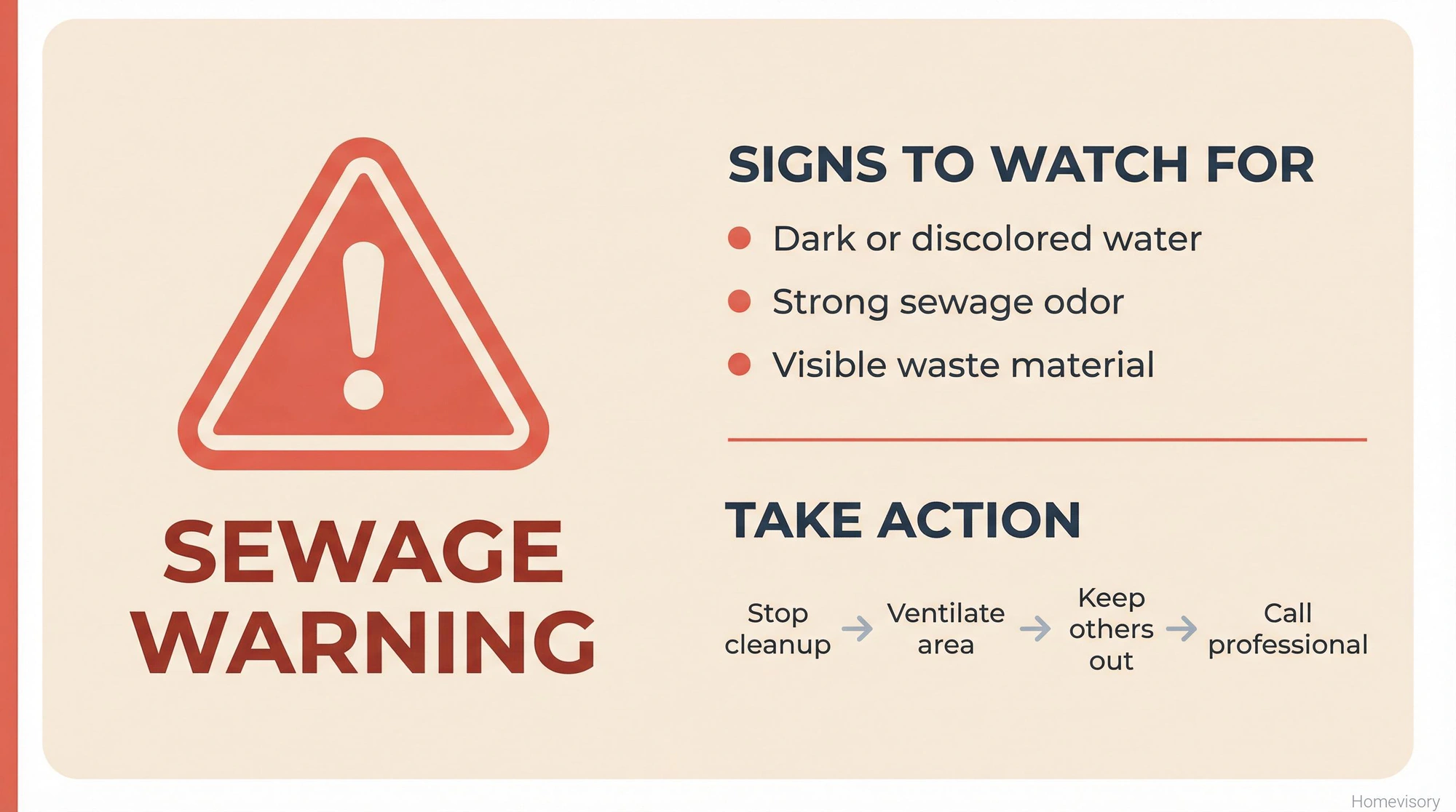
Also worth knowing: sewage overflows can be hazardous. If the water coming up is dark, smells particularly bad, or if you see waste material, you’re dealing with sewage, not just toilet water. That water can contain bacteria, viruses, and toxic gases like hydrogen sulfide and methane. Dont mess around with it. Dont try to clean it up with paper towels and hope for the best. Get the area ventilated, keep kids and pets out, and call someone who handles sewage cleanup.
Water and electricity. Man. I’ve had my share of close calls with that combination. Wet floors and electrical outlets dont mix. If water from a toilet overflowing reaches anywhere near an outlet or electrical equipment, shut off the circuit breaker before you start cleanup. Anyway.
Preventing the Next Overflow
Prevention is where I get probably too obsessive but Ive seen too many people ignore the basics and then act surprised when they have problems.
First thing: know what goes in the toilet. Toilet paper and human waste. Thats the list. Thats the whole list. Not “flushable” wipes, which arent actually flushable no matter what the package says. Not feminine products. Not cotton swabs. Not dental floss. Not those little plastic things. I dont know why this is hard for people but apparently it is.
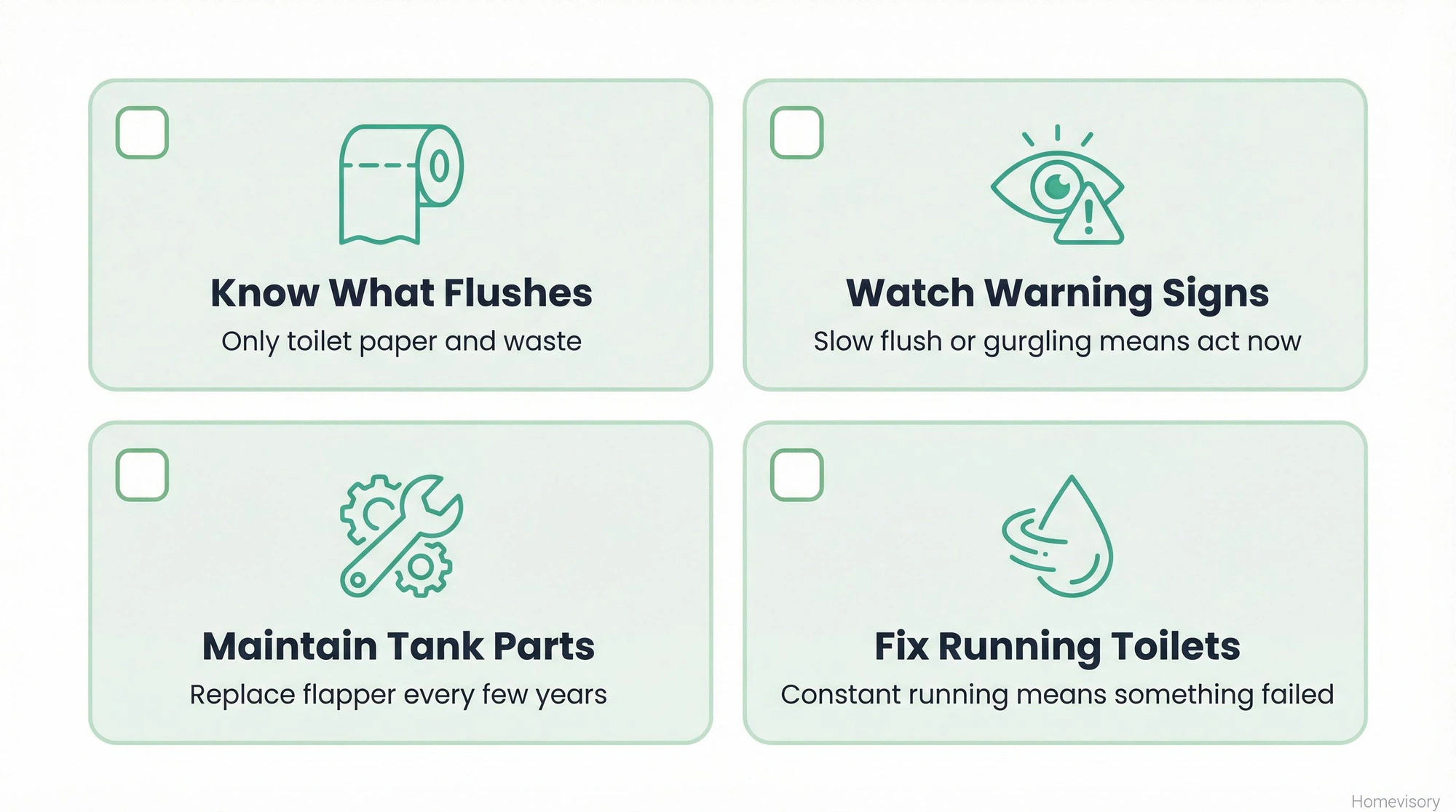
Second thing: watch for warning signs. A toilet that flushes slowly or requires two flushes is telling you something. A toilet that gurgles is telling you something. These are early warnings that a clog is developing. Address it now with a plunger or an auger, not later when water is on your floor.
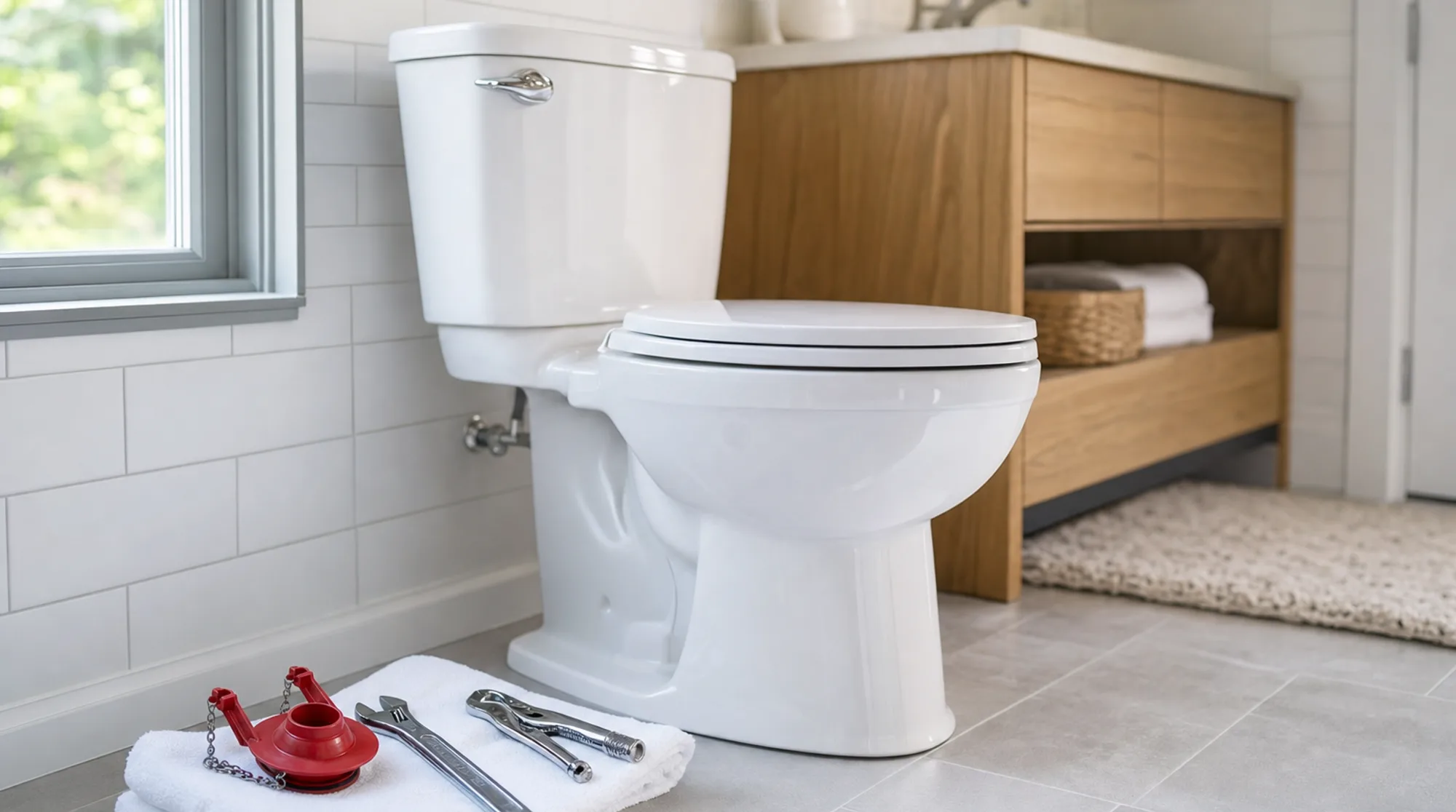
Third thing: maintain the tank components. The EPA points out that most toilet leaks come from old or worn-out flappers. Same components that cause leaks can cause tank overflows when they fail completely. Flappers are cheap. Replace them every few years whether they look bad or not. Check your fill valve occasionally. Make sure the water level is where it should be, usually marked on the inside of the tank.
Fourth thing: dont ignore a running toilet. A toilet that runs constantly means the fill valve isnt shutting off or the flapper isnt sealing. Either way, water is flowing when it shouldnt be. Fix it or call someone.
My mom Shirley used to say, about keeping the house clean, she used to say that how you do the small things is how you do everything. She was talking about dusting and scrubbing floors but it applies to maintenance too. You check the flapper now so you dont have a toilet overflowing at 2 AM. You replace the fill valve when it starts acting up instead of waiting for it to fail completely. Small things.
She’d probably be proud that Im telling people to check their toilet flappers. Or she’d say Im not explaining it right. Probably that one.
What This Costs
Fixing a clog yourself: basically free if you have a plunger. A decent plunger costs $15-20. A toilet auger costs $20-30.
Replacing tank components yourself: a flapper is $5-10. A fill valve is $10-20. A complete rebuild kit is $20-30.
Calling a plumber for a simple clog: $150-250 depending on where you live.
Water damage cleanup if you let a toilet overflow soak into your subfloor: thousands. Tens of thousands if it gets into the structure.
The math is pretty clear.
The Fast Version
If you skipped to the end because your toilet is overflowing right now:
- Shut off the valve behind the toilet. Clockwise. Now.
- If you cant reach the valve, lift the tank lid and hold up the float.
- Wait for the water level to drop.
- Plunge. Flange plunger. Push down, pull up, repeat.
- If it clears, flush carefully while watching. Hand near the valve.
- If it doesnt clear, auger or call a plumber.
- Clean up the water. All of it. Fans, towels, whatever it takes.
- Figure out why it happened so it doesnt happen again.
Thats it. Not complicated. Just requires knowing what to do before you’re standing there watching water rise.
A toilet overflowing is one of those things that feels like an emergency but is usually just a simple problem that got out of hand. Most of the time its a clog. Most clogs clear with a plunger. The key is stopping the water fast and not panicking. Once the crisis is over, our complete toilet repair guide can help you figure out what went wrong and prevent it from happening again.
At Homevisory, we built a task manager that reminds you to check on stuff like this before it becomes a problem. Replace the flapper every few years. Check the fill valve. Know where your shutoffs are. Small maintenance beats emergency cleanup every time. Sign up free and we’ll help you stay ahead of the messes.