Oil on your driveway looks terrible. I know this because I’ve been staring at a stain in my own driveway for three weeks now, from my truck, and every time I pull in I think about how I should have dealt with it the day it happened. Thats the thing about oil stains on concrete. They dont get better with time. They get worse.
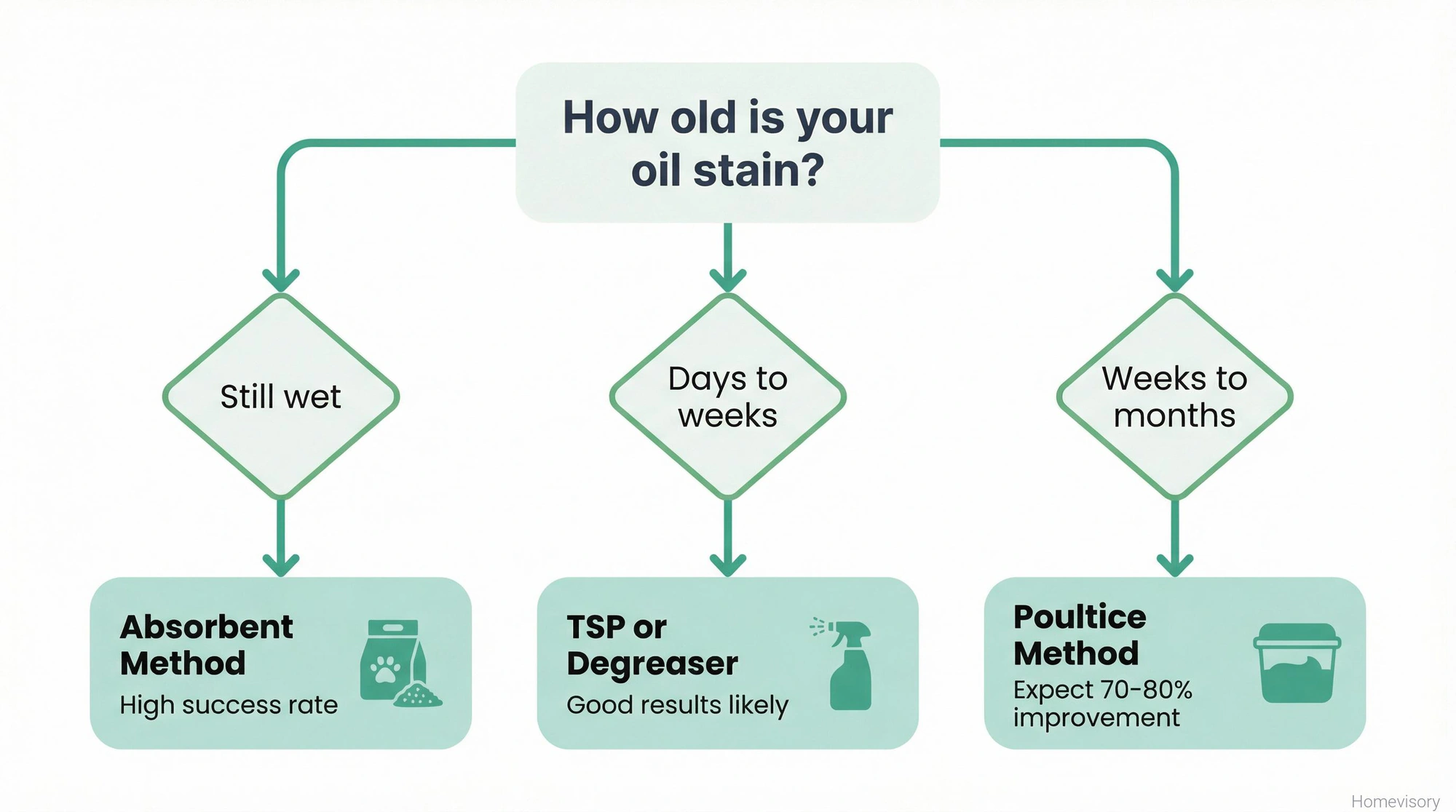
If youre trying to figure out how to clean oil off driveway concrete, the method you use depends entirely on how long the stain has been sitting there. Fresh stain, maybe a few hours old, thats easy. Stain thats been baking in the Florida sun for a month, thats a different conversation.
Fresh Oil Stains: Act Fast
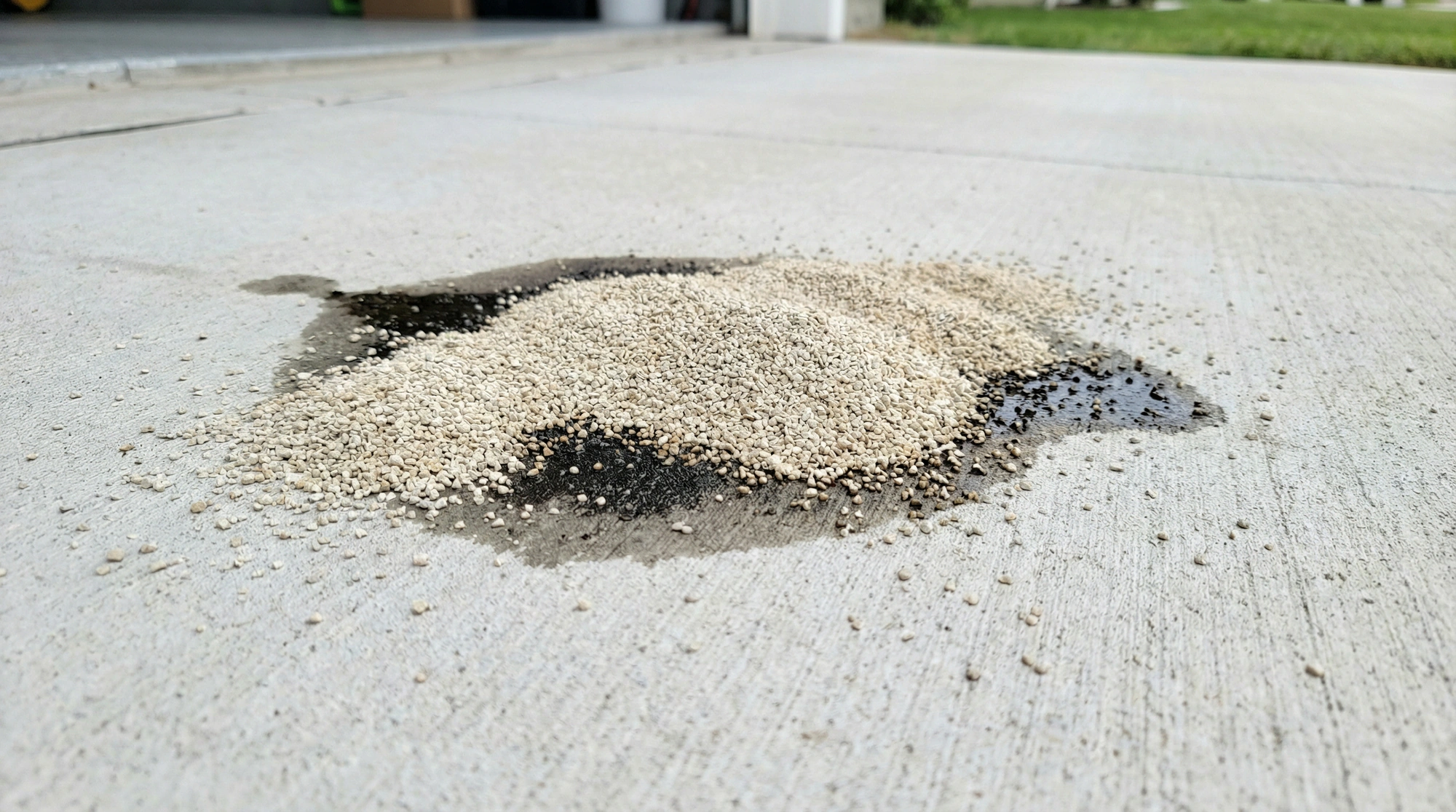
The first hour matters more than anything else. American Family Insurance puts it plainly: oil stains that are still wet should be treated with absorbents that soak up the oil. Cat litter. Sawdust. Dirt, even. Whatever you have.
I keep a bag of cheap cat litter in my garage specifically for this. Not for cats. For oil.
Heres what you do. Pour the cat litter over the entire stain, make sure you go past the edges by a couple inches because oil spreads wider than it looks. Then grind it in with your foot. Really work it into the concrete. Some people are gentle about this and thats wrong. You want the absorbent material pressed into the pores of the concrete where the oil is trying to go.
Leave it for a few hours. Overnight is better. Then sweep it up and hit the area with dish soap and hot water. Dawn works fine. Scrub it with a stiff brush. Rinse.
If you catch it fast enough, thats it. Done.
Old Stains: Why This Gets Harder
Mr. Davis, my woodshop teacher back in Atlanta, used to say about wood stains that the longer it sits the deeper it goes. He was talking about finishing wood, applying stain to get the color you want, but its true for the kind of stains you dont want too. Oil on concrete works the same way. Every hour that passes, the oil is seeping deeper into those pores.
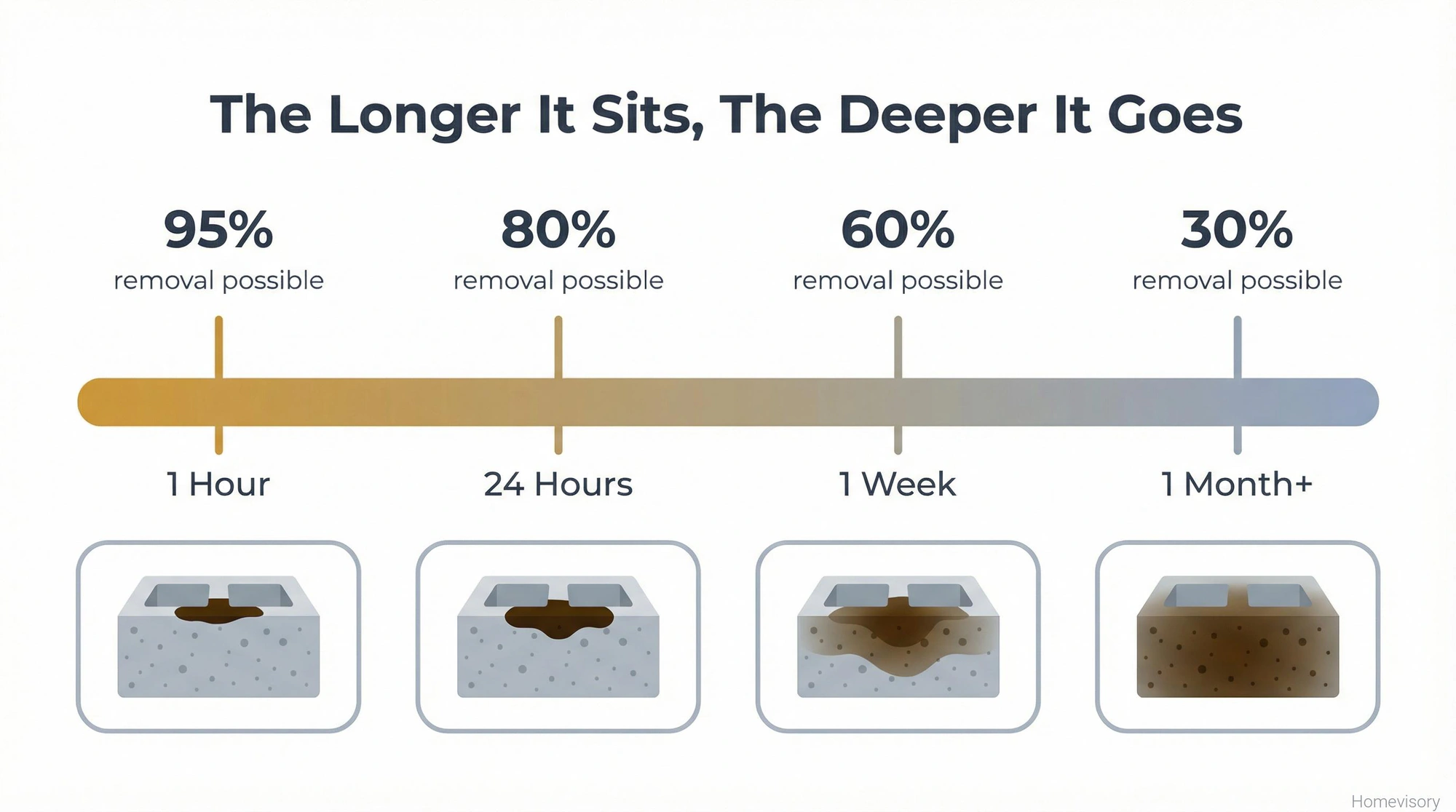
The GSA’s technical procedures for cleaning historic buildings warns that cleaning concrete may drive stains deeper into porous concrete if you dont do it right. They’re talking about government buildings, preservation work, but concrete is concrete. The principle is the same.
So what do you do when the stain is already set in. Thats where things get interesting.
The Poultice Method: This Is What Actually Works
I’m going to spend more time on this than anything else because this is the method I trust for old stains and the method most people have never heard of.
A poultice is basically a paste you make from an absorbent material and a solvent. You smear it on the stain, cover it with plastic, and let it sit for days. Not hours. Days. The solvent breaks down the oil and the absorbent material pulls it up out of the concrete through osmosis. Concrete Network explains that you saturate an absorptive material like kitty litter, pool filter media, or sawdust with a strong solvent like acetone, xylene, lacquer thinner, or MEK, and then cover the whole thing with plastic to keep the solvent from evaporating too fast. The process takes time but it works because youre not just cleaning the surface, youre actually drawing the oil up and out of the concrete. I’ve used this method on stains that were six months old and it got maybe 80% of the discoloration out, which is about as good as youre going to get on something that old.
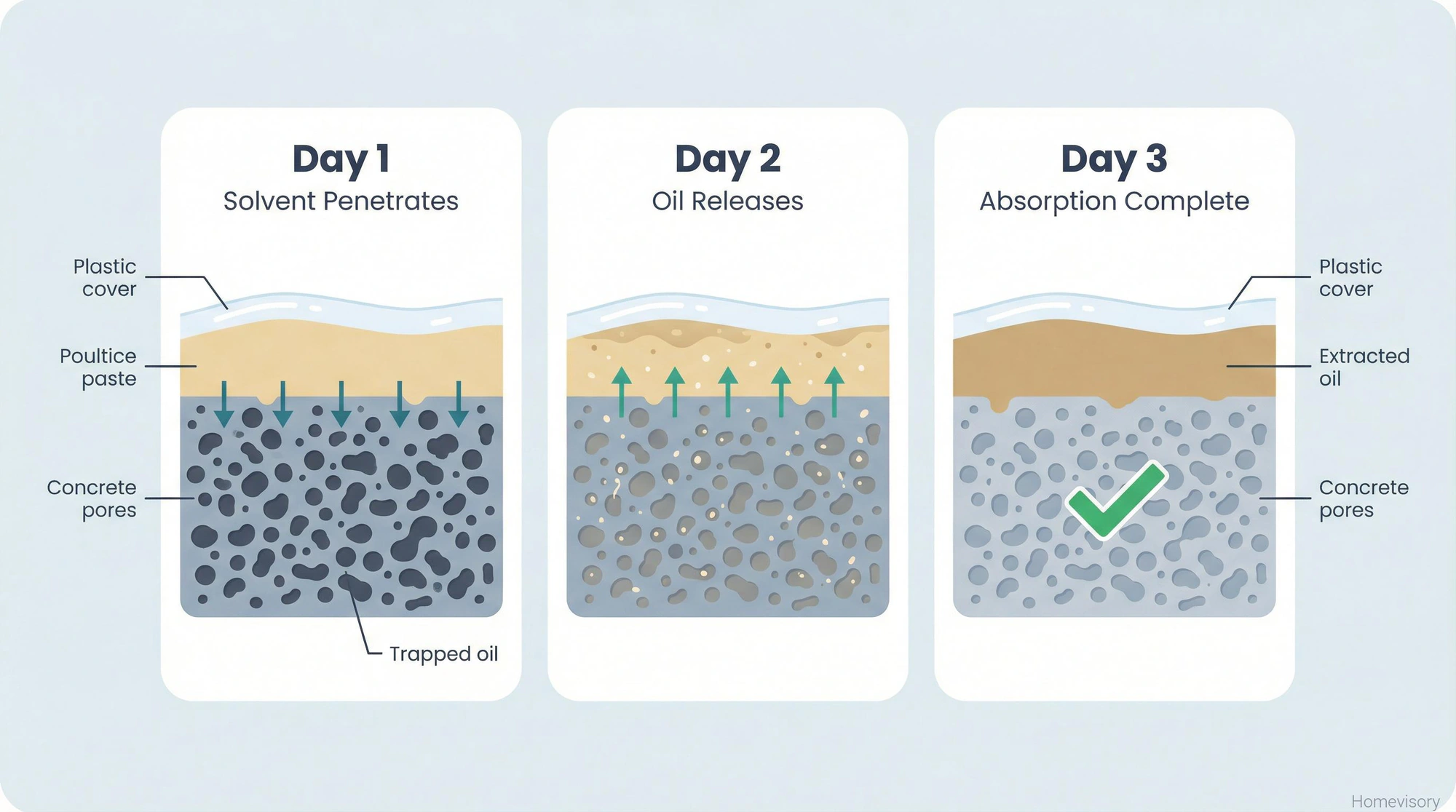
The Institute for Environmental Research and Education recommends diatomaceous earth mixed with mineral spirits or acetone for the poultice, and they say to let it sit for several days. Several days. People want a quick fix and there isnt one for deep stains.
My dad had a stain in our garage in Atlanta, early 80s, from his Buick. He never got it out completely. That stain was there when I was ten and it was there when I was seventeen when we moved. He tried everything. Well, almost everything. I dont think he ever did the poultice thing, not properly anyway. Saturdays he’d be out there with some spray can of something, scrubbing, hosing it off. The stain would look lighter for a few days then darken up again. I helped him a couple times. We’d be out there in the humidity, him with the brush, me with the hose. Anyway.
Trisodium Phosphate: When You Need More Power
TSP is serious stuff. IERE is clear about this: trisodium phosphate is a powerful cleaning agent for oil stains but its a strong irritant and can be harmful to the environment. Wear gloves. Wear eye protection. This isnt Dawn dish soap.
Mix it according to the package directions, apply it to the stain, let it sit for 15-20 minutes, then scrub with a stiff brush and rinse thoroughly. I’ve used this on medium-age stains, maybe a few weeks old, with decent results.
The GSA procedure mentions mixing sodium orthophosphate (which is basically TSP) at about 1 pound 6 ounces per gallon of water. Thats pretty concentrated. You dont need to go that strong for a driveway, but it gives you an idea of what professionals use on historic buildings when they need to get serious.
Commercial Degreasers
You can buy automotive engine degreasers at any auto parts store. The Concrete Institute recommends these products along with high-foam washing powder or concentrated liquid detergents, and says they work best when mixed with boiling water.
Buy one, spray it on, follow the instructions on the bottle. Some work better than others. I’m not getting into brand comparisons because they all basically do the same thing and your results depend more on how old the stain is than which product you picked.
Moving on.
Pressure Washing: The Order Matters
My neighbor pressure washed his driveway last summer. Oil stain and all. Didnt treat the oil first. Just hit the whole thing with the pressure washer.
You know what happens when you pressure wash an oil stain without treating it first. You spread it around. His stain went from a concentrated spot about two feet wide to a faded smear about six feet wide. He made it worse. Much worse.
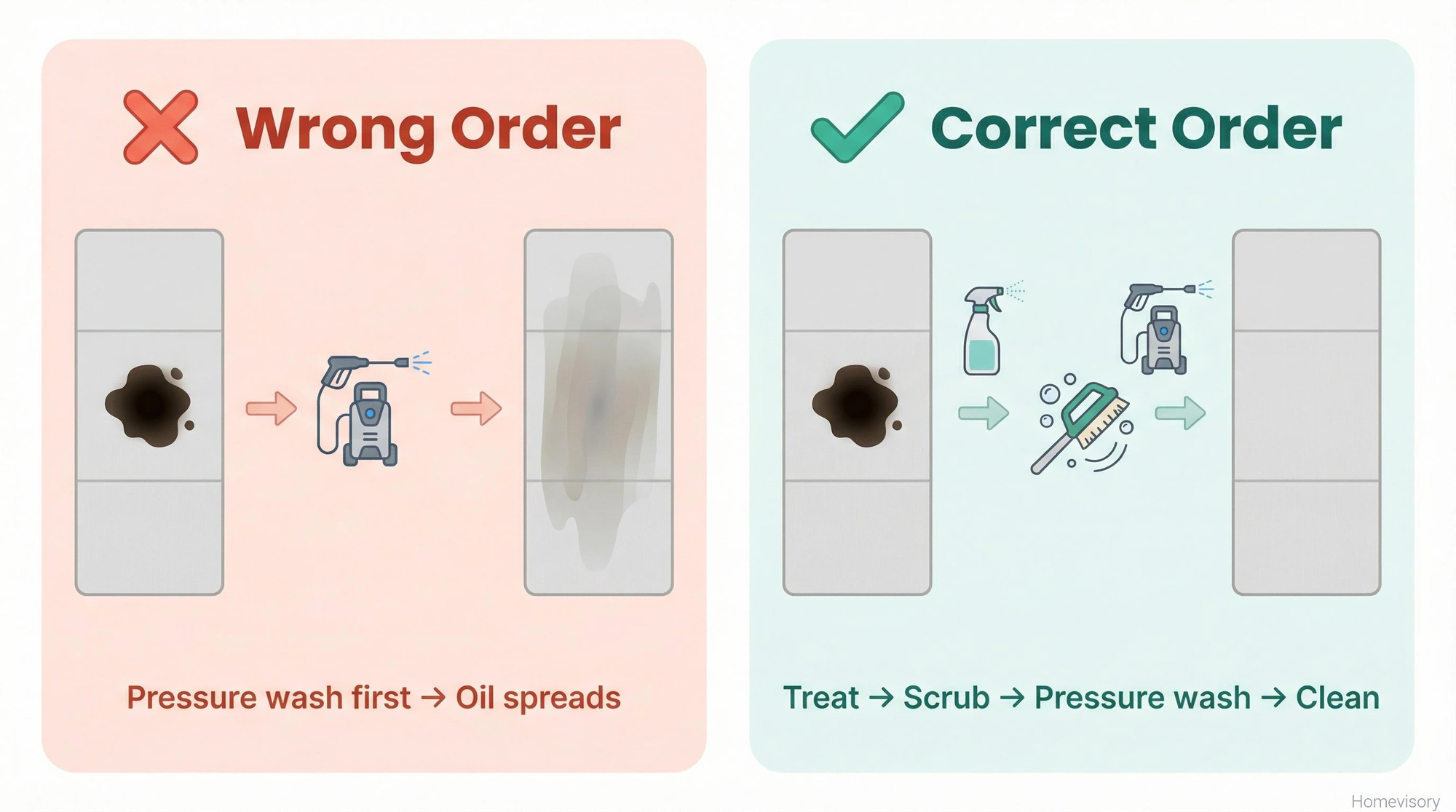
The Concrete Institute says to use the pressure washer after the cleaning agent has been applied but before it has evaporated. The order matters. Apply your degreaser or TSP or whatever youre using, let it sit, scrub it, THEN hit it with the pressure washer to flush everything out.
A stiff bristle brush is inadequate for reaching deposits that have already penetrated into the pores of the concrete. The high pressure is what gets the stuff thats down in there. But only after youve broken it up with a chemical.
What Doesnt Work: Bleach
People keep asking me about bleach. Dont use bleach.
IERE is clear about this: bleach is not effective at removing oil and can damage the concrete surface. It can also react with other chemicals creating hazardous fumes.
Bleach is for organic stains. Mildew, algae, that kind of thing. Oil is petroleum. Different chemistry entirely. Bleach will make your driveway smell like a pool for a day and the oil stain will still be there looking at you.
The Nuclear Option: Microbial Cleaners
This is newer technology and honestly kind of fascinating. Concrete Network describes special single-celled microorganisms that eat crude oil and its derivatives. The enzymes and oxygen digest the oil and turn it into carbon dioxide and more microorganisms. When the food source is gone the microorganisms die and leave the concrete clean.
This is the same technology they use to clean up beaches after oil spills.
I havent used this myself but I’ve read enough about it to believe it works. The products are more expensive than regular degreasers and the process takes longer, but for a really stubborn stain that nothing else touches, its worth considering.
Seal Your Driveway After
Once you get the stain out, or at least get it as faded as its going to get, seal the concrete. This prevents the next leak from soaking in so fast. For the complete approach to concrete upkeep — stain removal, crack repair, cleaning, and sealing — see our concrete care guide. We also have a full guide on concrete sealer options if you want to dive deeper.
Angi reports that penetrating sealers bond with the concrete and prevent liquid from passing through, protecting the surface from water, oil, and gasoline spills. The cost of sealing concrete runs about $1.35 to $2.50 per square foot with labor, or HomeGuide estimates $575 to $1,700 for a 2-car driveway.
You can do it yourself for less. One gallon of sealer covers roughly 150 to 300 square feet. A typical two-car driveway is around 400-500 square feet so youre looking at two gallons, maybe three.
Is it worth it. Yes. Especially in climates like mine in Palm Beach where you get sun and humidity and salt air all working against your concrete.
How to Clean Oil Off Concrete: My Actual Process
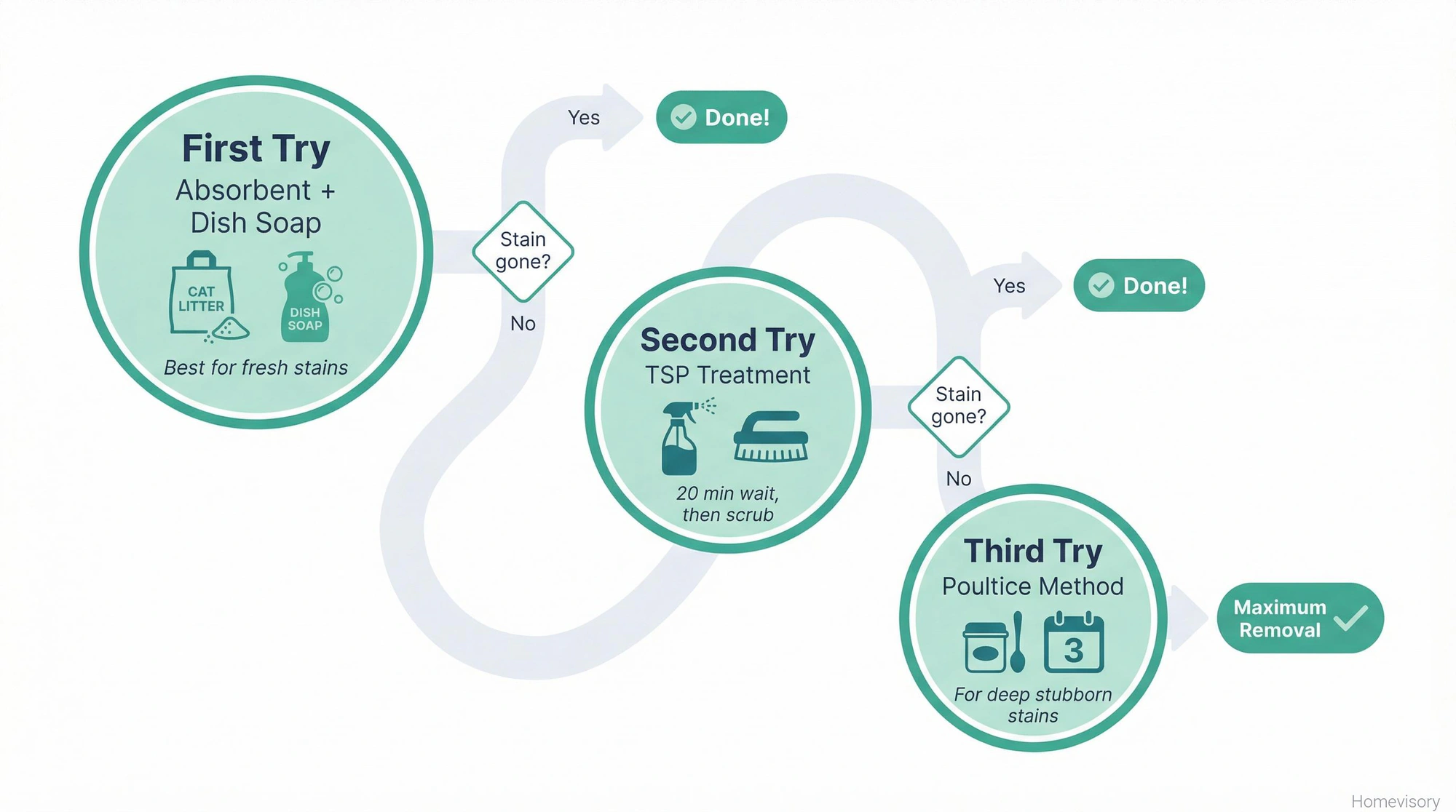
Heres what I do now whenever I find a fresh stain. Cat litter immediately. Grind it in. Leave it overnight. Sweep up and hit it with Dawn and hot water, scrub hard, rinse.
If thats not enough, TSP next. Mix it up, apply, wait 20 minutes, scrub, pressure wash.
If its still there, poultice. Acetone and cat litter or diatomaceous earth. Cover with plastic. Wait three days. Scrape it up, pressure wash.
For the stain from my truck thats been sitting there three weeks. I’ll probably need to go straight to the poultice. Should have dealt with it when it happened.
That’s what we do here at Homevisory, by the way. We help you remember to do things before they become bigger problems. Check out our free Homevisory home task manager. It’ll remind you to check under your vehicles for leaks, clean your garage floor before stains set in, reseal your driveway when its time. The stuff you mean to do but forget until youre staring at an oil stain wondering why you didnt just handle it three weeks ago.