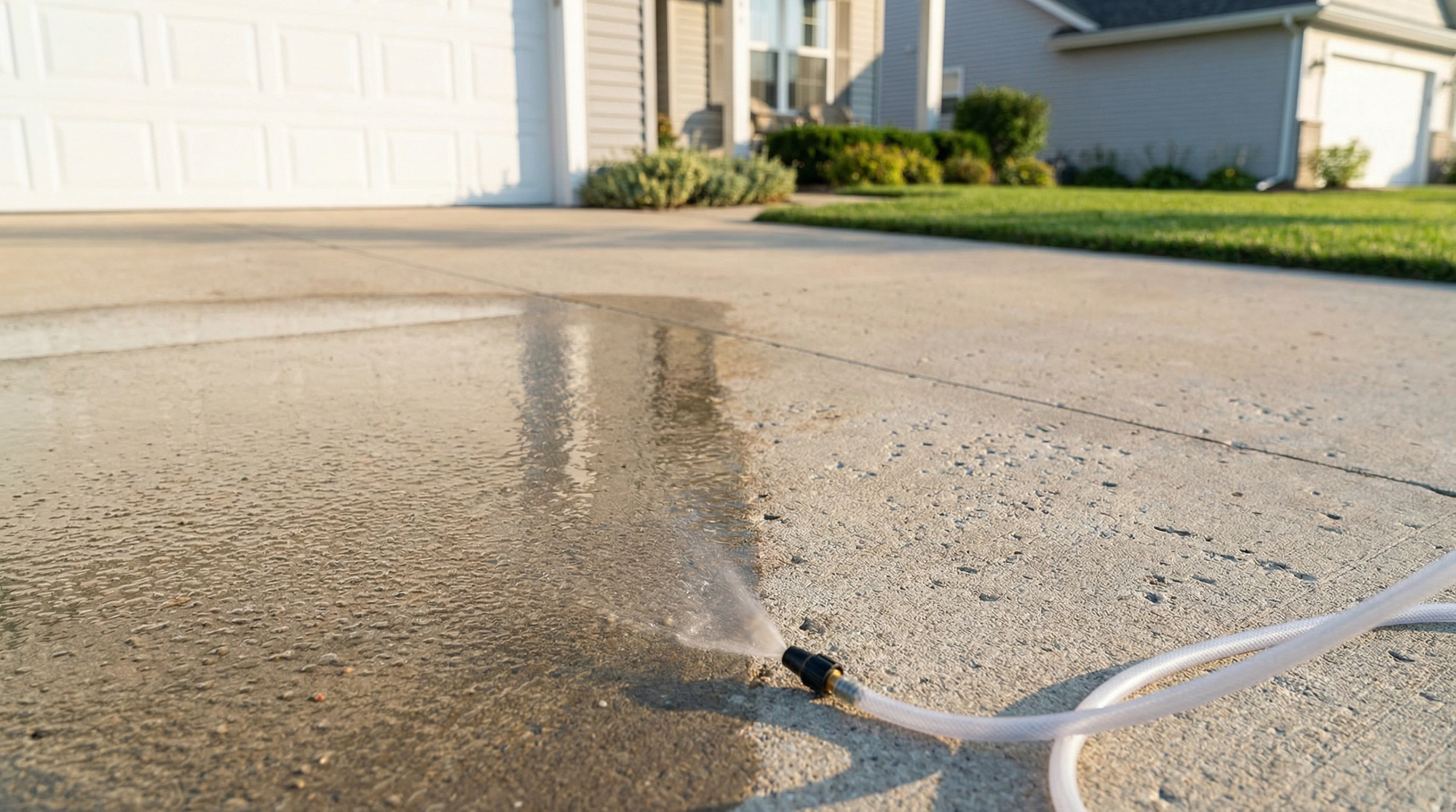
Why Your Driveway is Probably Dying Right Now
Most people dont think about their driveway until something cracks. Then they panic, buy whatever concrete sealer the hardware store guy recommends, slap it on, and wonder why it looks terrible in two years.
I’ve sealed more driveways than I can count. My own, my parents, clients back when I was doing commercial renovation work, neighbors who asked nicely. And I’ve done it wrong more times than I’ve done it right, especially early on.
Heres the thing about concrete. It looks solid. It feels permanent. But its actually full of tiny pores, like a sponge, and water gets into those pores and just sits there. Then winter comes and that water freezes and expands and suddenly you’ve got cracks. Or you live somewhere like Florida where I am now and the water brings salt air and minerals that eat away at the surface over time. Either way, unsealed concrete has maybe 10-15 years before it starts looking rough. Sealed concrete can go 25-30.
The difference is whether you want to pour a new driveway in your fifties or your seventies. I know which one I prefer.
The Two Types of Concrete Sealer (This Matters More Than You Think)
This is where I’m going to spend most of my time because this is where most people mess up.
There are two basic categories: penetrating sealers and topical sealers. They work completely differently and theyre not interchangeable.
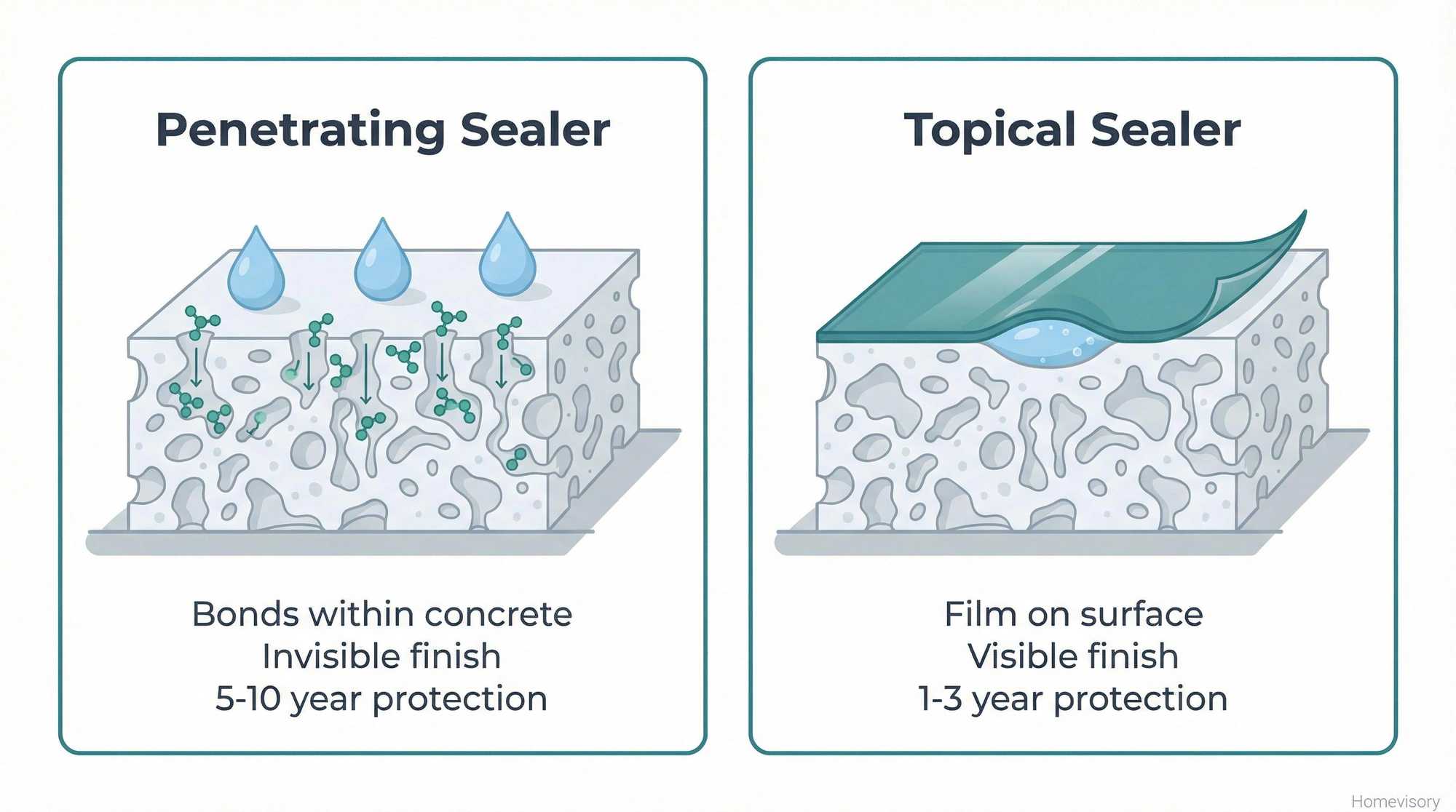
Penetrating sealers soak into the concrete. They react chemically with the pore structure and create a barrier below the surface. You cant see them once theyre dry. The concrete looks exactly the same, maybe slightly darker for a few days, but then it just looks like concrete. According to industry professionals, penetrating sealers actually last longer than topical sealers because they absorb down into the surface of the concrete instead of just sitting on top like paint.
Topical sealers sit on the surface. They create a film, kind of like putting a clear coat on wood. Some are glossy, some are matte, some add color. They can make your driveway look wet or shiny or whatever finish youre going for.
I used topical sealers for years. I thought the glossy look meant protection. I was wrong. Heres why.
Topical sealers can peel. They can flake. They can trap moisture underneath if you apply them when the concrete is even slightly damp, and then you get this whitish haze that looks terrible and you basically have to strip the whole thing and start over. I did this once on a client’s pool deck in Texas, applied acrylic sealer on a day that seemed dry enough but apparently wasnt, and within three months it looked like someone had painted it with milk. I ate that cost. Learned my lesson.
Penetrating sealers dont have that problem. They cant peel because theres nothing on the surface to peel. They bond with the concrete itself. Research from Iowa State University found that the main factors destroying concrete are moisture saturation and chloride ions from deicing salts, and penetrating sealers address both of those at the source.
Topical acrylic sealers last 1 to 3 years on average. Penetrating sealers can last 5 to 10 years depending on the product and conditions. I’ve had penetrating silane-siloxane sealers go 8 years on my own driveway before I noticed any degradation in water beading.
When to Use What
Topical if you want a specific look. Glossy garage floor, decorative patio, something where appearance matters more than pure protection. Some people want their driveway to look wet all the time. Thats a topical sealer. Pick whatever sheen you want. Whatever. Its a driveway.
Penetrating for everything else. Driveways exposed to weather, anything that sees salt or deicers, pool decks, anything where you want protection without changing the appearance.
Stamped or decorative concrete is a whole different animal. Those need special sealers that enhance the color and pattern. Im not getting into that here. If you have stamped concrete, call someone who specializes in it or at minimum talk to whoever originally installed it.
Sealing Cracks in Driveway Before You Seal
This is where I get annoyed.
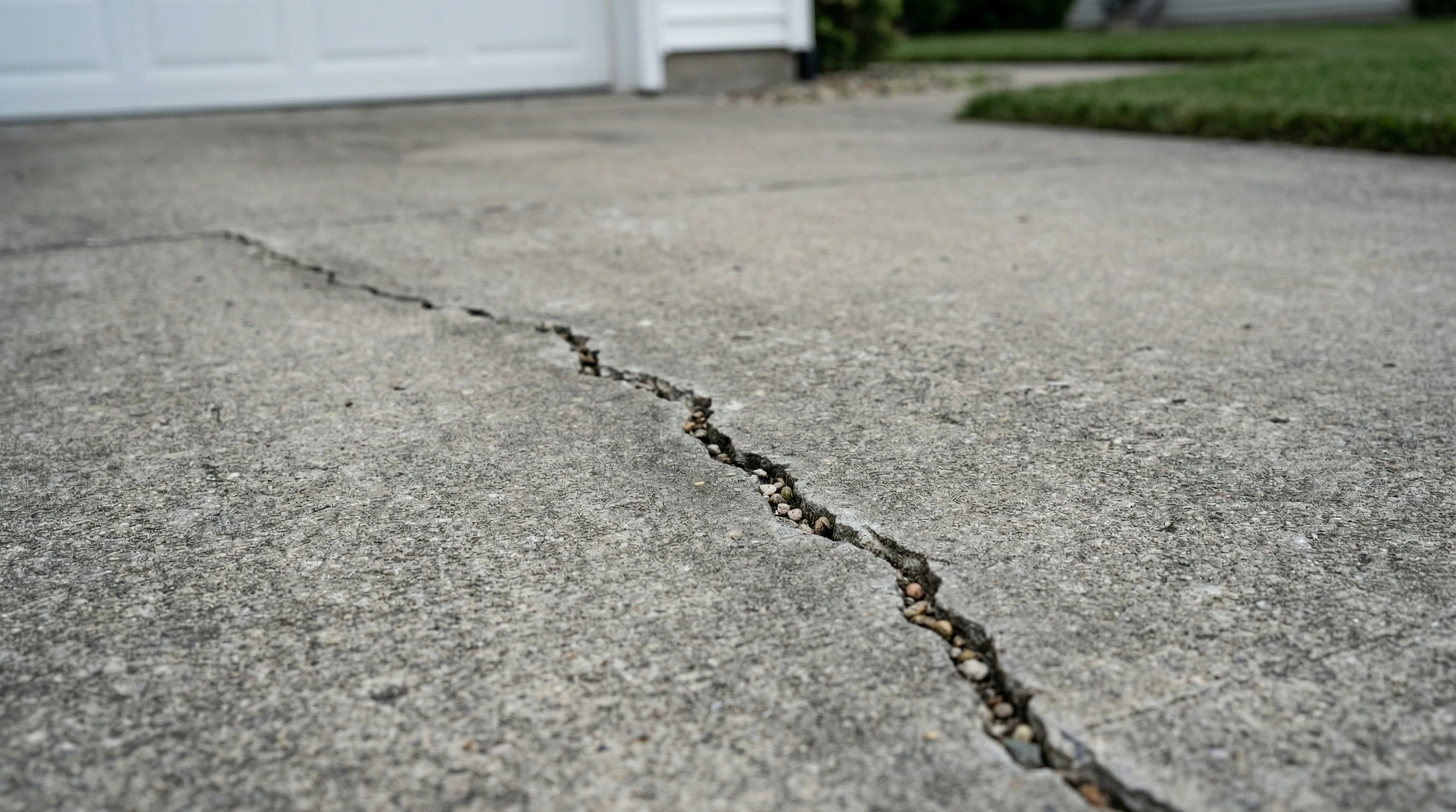
People seal over cracks. They just roll right over them thinking the sealer will fill them in and protect them. It doesnt work that way. Sealer is not filler. Its not caulk. Its not magic. If you have a crack and you seal over it, you now have a sealed crack that will continue to expand because water is still getting in through the crack itself.
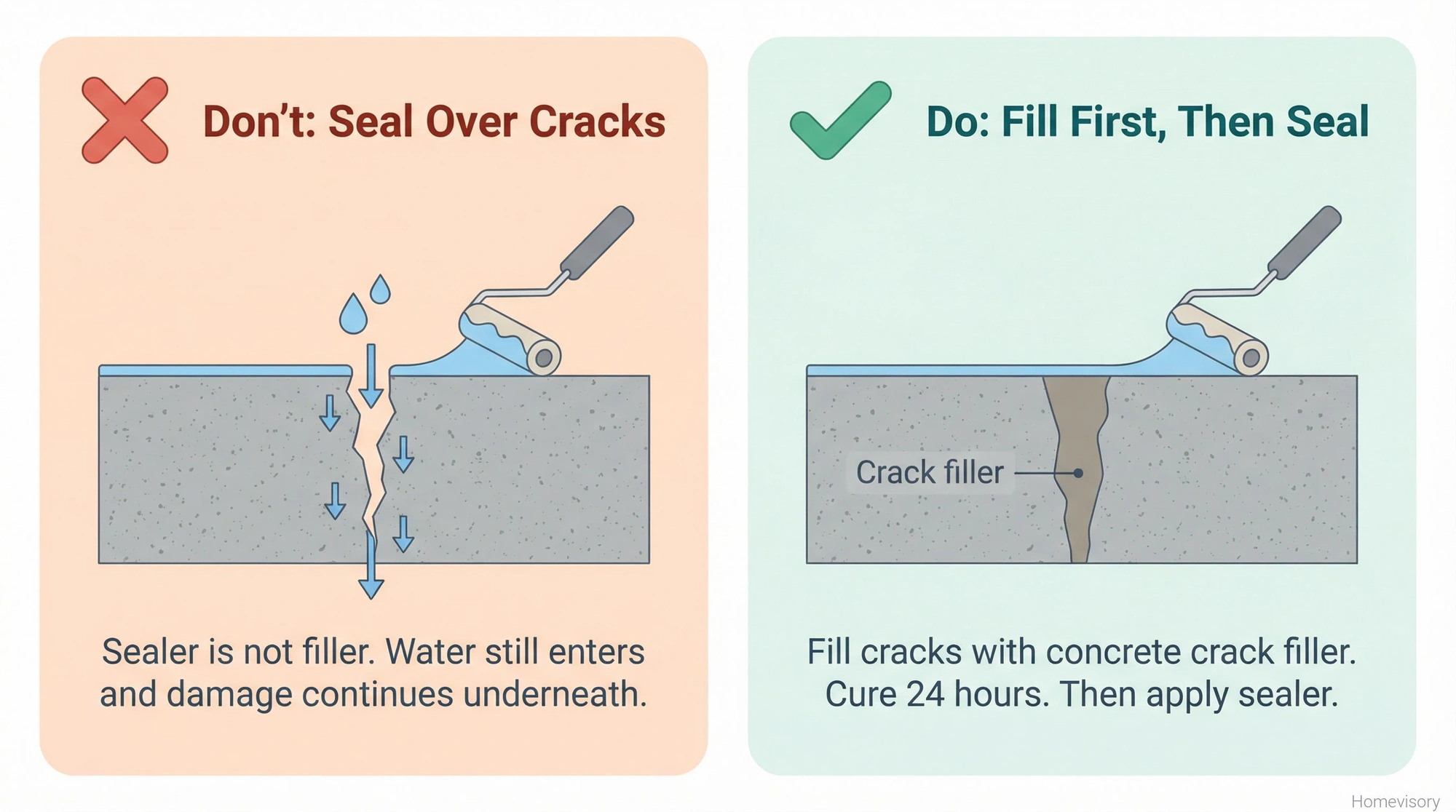
Sealing cracks in driveway concrete is a separate step that happens BEFORE you apply sealer. Hairline cracks, the really thin ones, you can sometimes get away with just the sealer. But anything you can fit a credit card into needs to be filled first.
For small cracks, use a concrete crack filler. Its a caulk-like product, comes in a tube, you squeeze it in and smooth it out. Let it cure for at least 24 hours before sealing over it.
For larger cracks, anything wider than about a quarter inch, you need backer rod first. Its a foam rope you stuff into the crack to give the filler something to bond to. Then filler on top.
For cracks that are actually moving, like expanding and contracting with temperature, you need a flexible sealant not a rigid one. This is getting into territory where you might want to call someone.
My dad used to say, about something totally different, he used to say “surface prep is 90% of the job.” He was talking about painting equipment at the factory where he worked. But it applies to concrete sealing perfectly. You can use the best concrete sealer money can buy and it wont matter if you skip the prep work.
The Actual Process
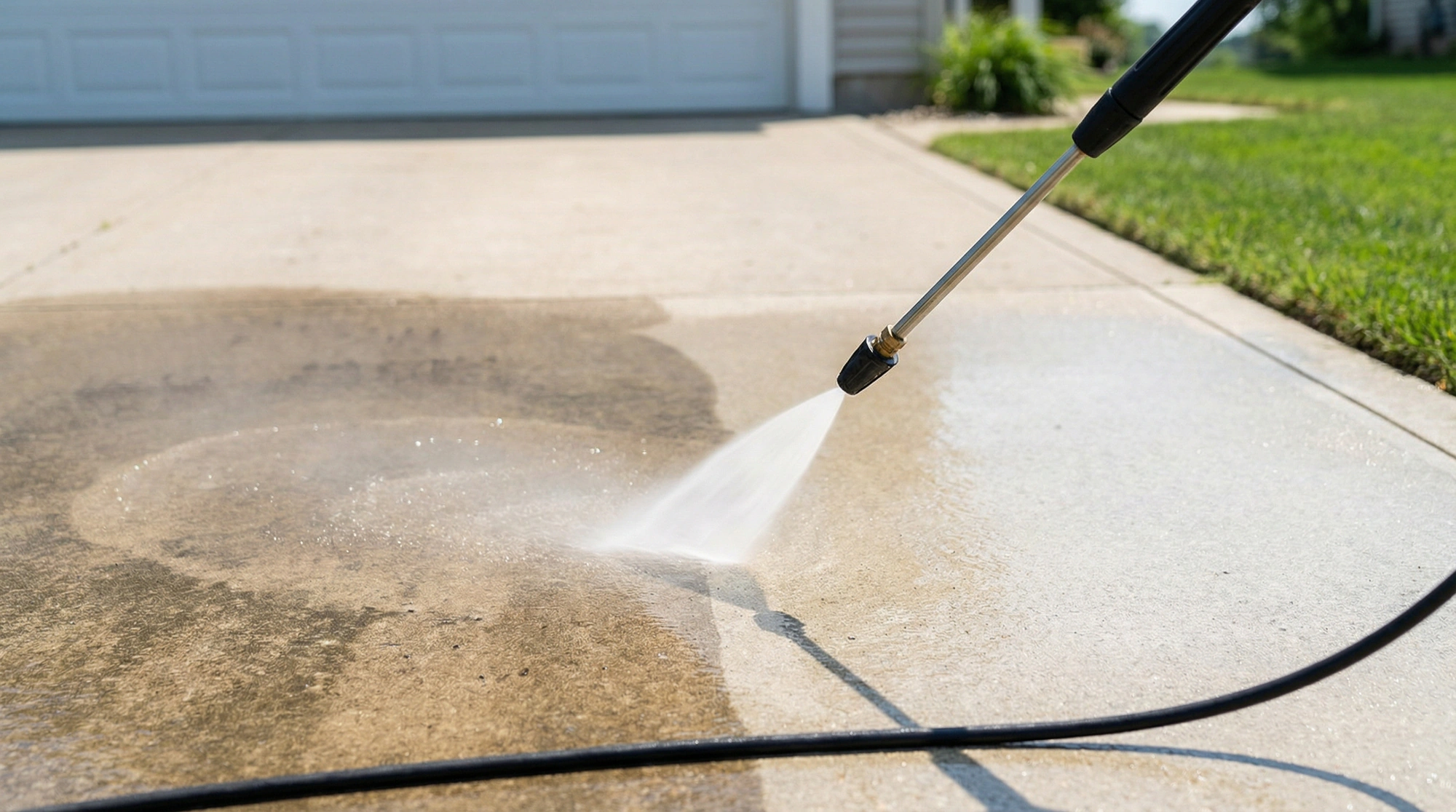
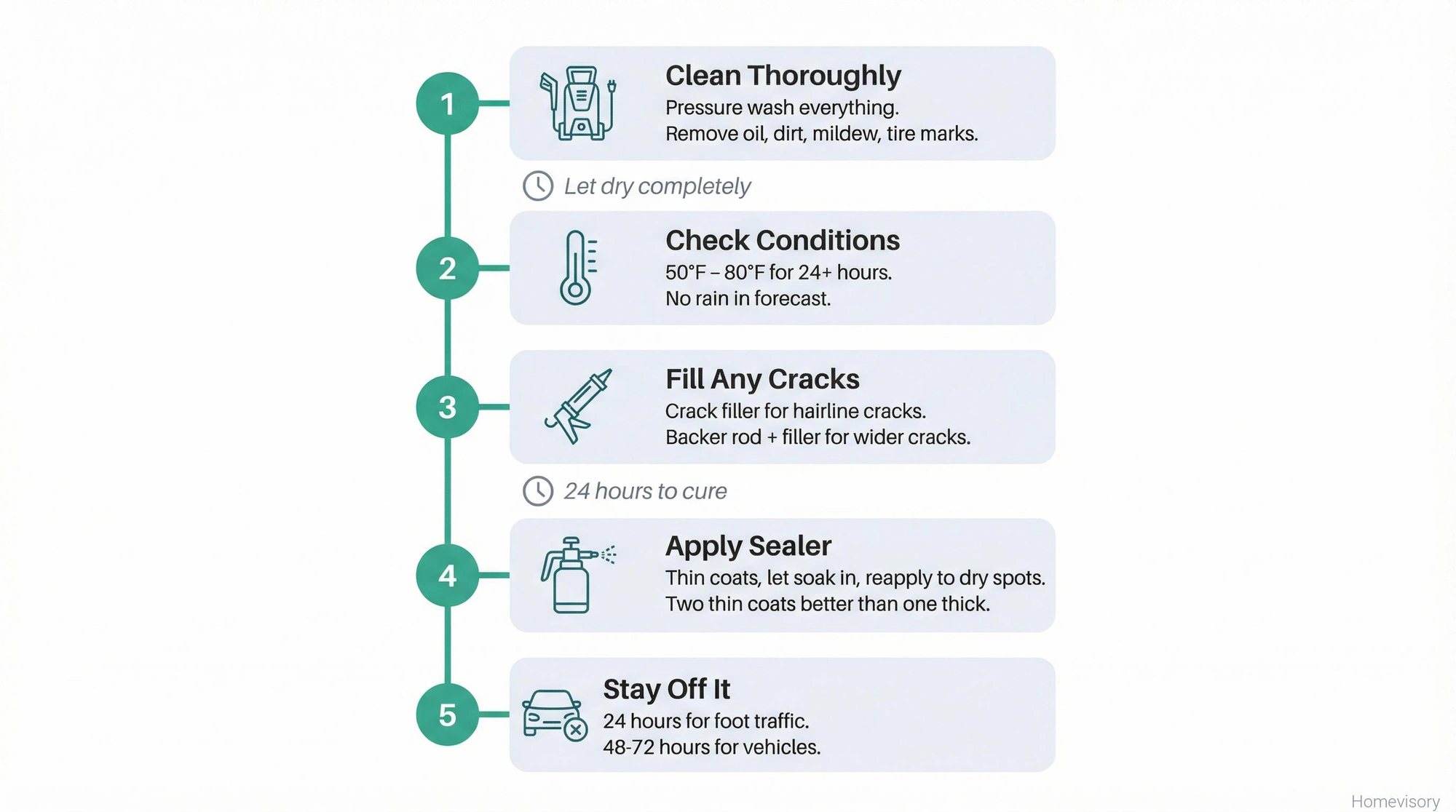
Clean the concrete first. I mean really clean it. Not just sweep it. Pressure wash it. Get the oil stains, the dirt, the mildew, the tire marks, everything. Our concrete care guide walks through the full process — clean, repair, then seal — in the right order. If you have serious oil stains on your driveway, theres a product called TSP (trisodium phosphate) that works, but you have to rinse it completely or it will interfere with the sealer.
Let it dry. Completely. This is where people mess up. The best time to seal concrete is in spring or fall when temperatures stay between 50°F and 80°F for at least 24 hours. Not just when you apply it, but for the full curing period. I’ve seen people seal in the morning when its 60 degrees and then temperatures drop to 40 overnight and the sealer never cures right.
If the concrete is new, wait. Most manufacturers say 28 days minimum. Ive seen some newer formulations that claim installation as early as 5 days after concrete placement, but honestly I’d still wait at least two weeks. Concrete continues releasing moisture as it cures and if you trap that moisture under a sealer you’ll have problems.
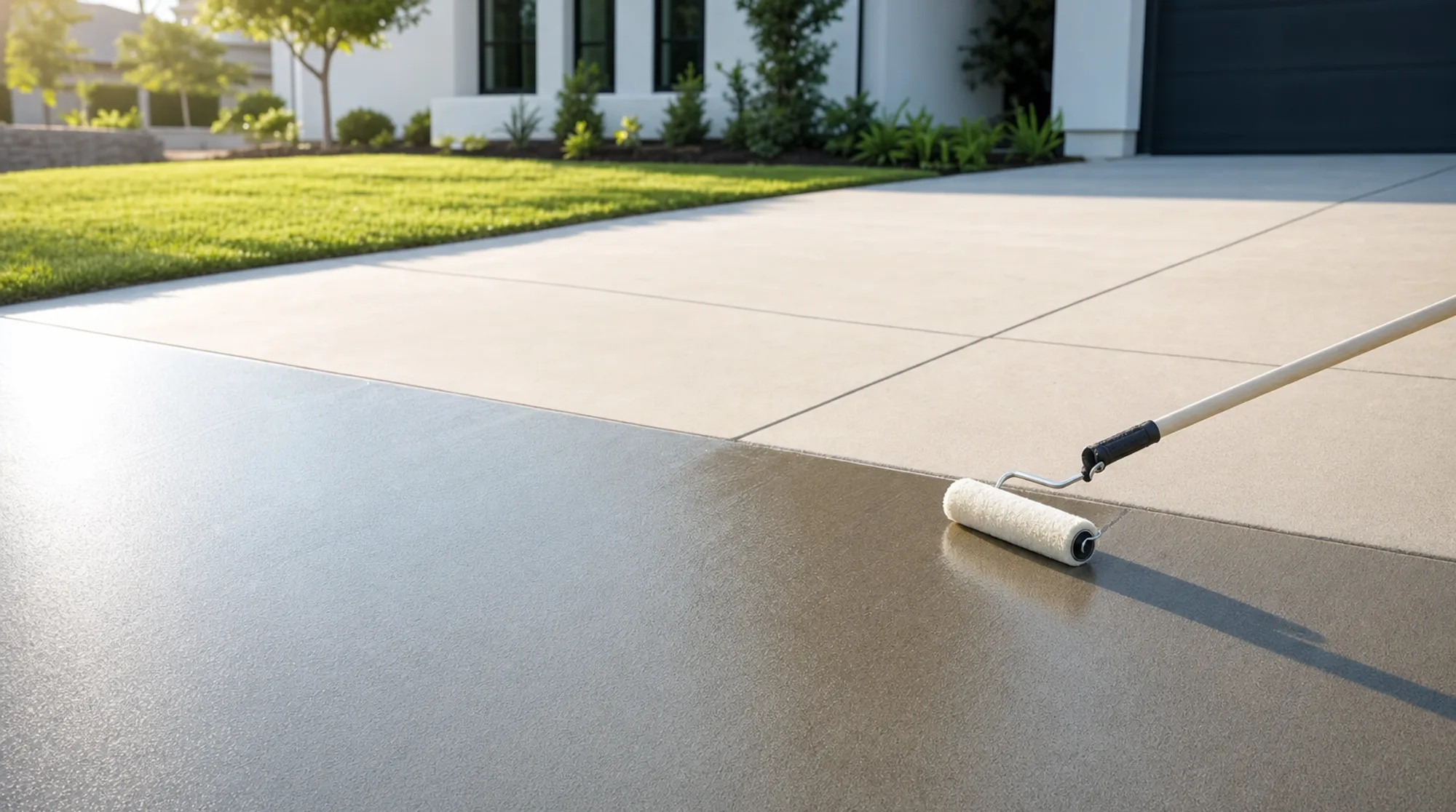
Apply the sealer. For penetrating sealers, I use a pump sprayer. Apply it liberally, let it soak in, then come back and apply more to any dry spots. You want it wet but not puddling. For topical sealers, you can spray or roll depending on the product.
Two coats is usually better than one thick coat. Thin coats cure better.
Stay off it. 24 hours for foot traffic, 48-72 hours for vehicles. I dont care what the can says about “drive on in 4 hours.” Give it time.
Cost Reality
You can do this yourself for pretty cheap. A gallon of sealer covers up to 300 square feet, and a standard two-car driveway is around 400-500 square feet, so youre looking at two gallons. Acrylic sealers run $16 to $75 per gallon. Penetrating sealers cost more, usually $40-100 per gallon for the good stuff.
If you hire it out, professional concrete cleaning and sealing runs $1 to $3 per square foot. For a two-car driveway thats roughly $575 to $1,700 depending on condition and what needs to be done. If theres old sealer that needs to be stripped first, add another $1 to $3 per square foot for removal.
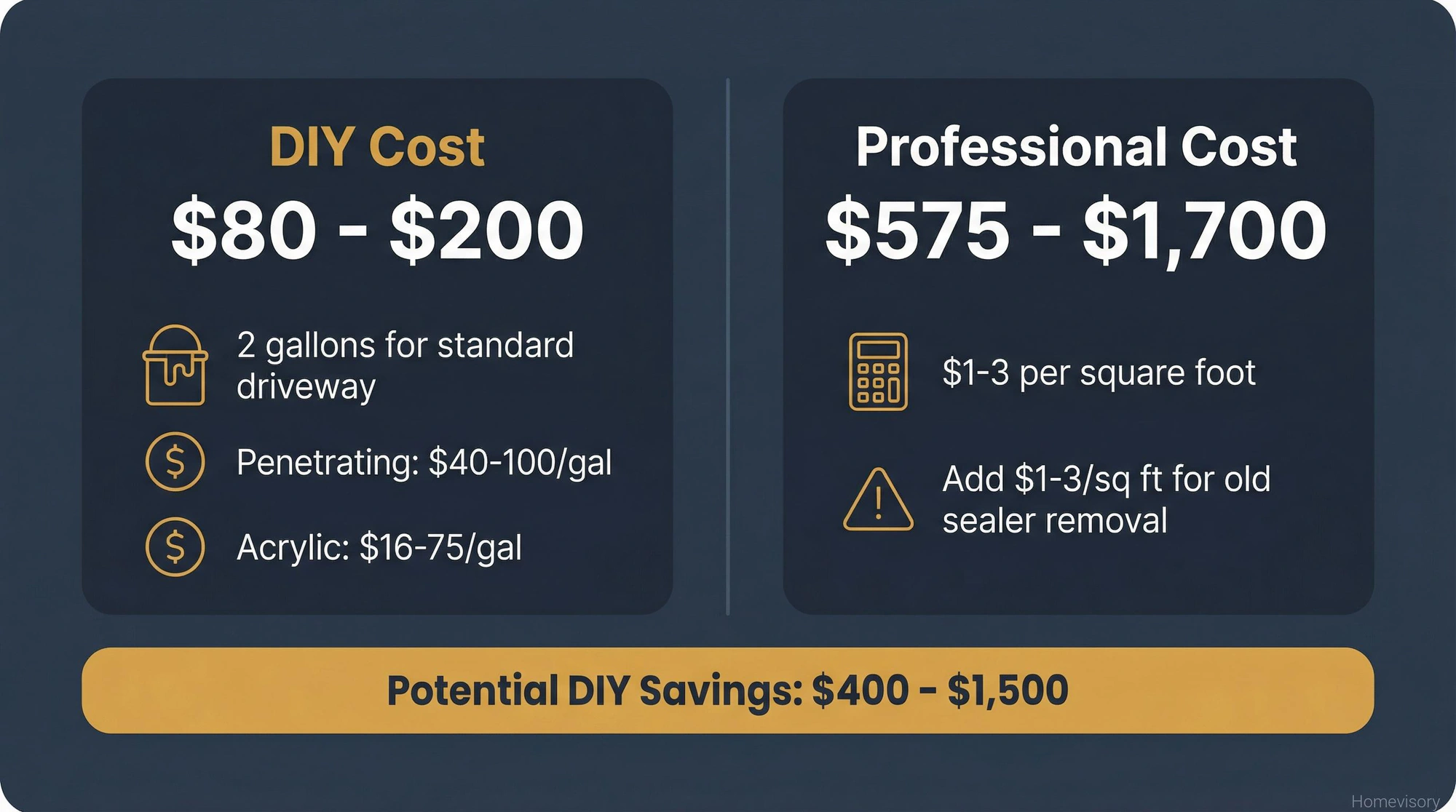
Is it worth doing yourself? If you have a pressure washer and a pump sprayer and a free Saturday, yes. The products arent complicated to apply. You just have to be patient with the prep and the drying time.
My Dad’s Driveway
I helped my dad seal his driveway in Atlanta when I was maybe sixteen. Summer. Hot. He made me pressure wash it the day before which I thought was unnecessary because it looked fine to me. Then we waited until evening when it cooled off a little and he handed me a roller and we just worked our way down from the garage to the street. He used some kind of topical sealer, whatever was available in the late eighties, probably acrylic. It went on pink and dried clear which I thought was the coolest thing.
That driveway looked good for years. He resealed it every couple years, always made it a project for when I was visiting, always did the same routine. Pressure wash. Wait. Evening application. He still does it now though I think my brother handles most of the actual labor these days.
Anyway.
What I Actually Use
Silane-siloxane blend penetrating sealer. I wont name the brand because theres a guy at my local hardware store who keeps trying to upsell me to some professional-grade solvent-based thing that costs three times as much and honestly I dont think it works any better. The water-based silane-siloxane products work fine for residential driveways.
Washington State University research has actually been working on nano-engineered sealers that showed 75% improvement in water repellency and 44% improvement in salt damage reduction compared to commercial products. Thats probably overkill for your driveway but its interesting that the science keeps improving.
For crack filling I use whatever concrete crack filler is on sale. Theyre all basically the same.
How Often
Every 2-3 years for topical. Every 5-7 years for penetrating. But honestly just do the water test. Pour some water on your driveway. If it beads up, youre fine. If it soaks in and darkens the concrete, time to reseal.
I check mine every spring. Takes about ten seconds.
The Homevisory Part
This is the kind of thing that falls through the cracks, no pun intended. You seal your driveway, it looks great, you forget about it for five years, and suddenly youre dealing with damage that could have been prevented with a $50 reseal.
Thats what we built Homevisory for. It tracks all your home maintenance schedules, sends you reminders before things become problems, and keeps records of what you did and when. The driveway sealer reminder is one of about forty different maintenance tasks it handles.
Sign up is free. Takes about five minutes to set up your home profile. Then it just runs in the background and tells you when stuff needs attention.
Thats what we do here at Homevisory.