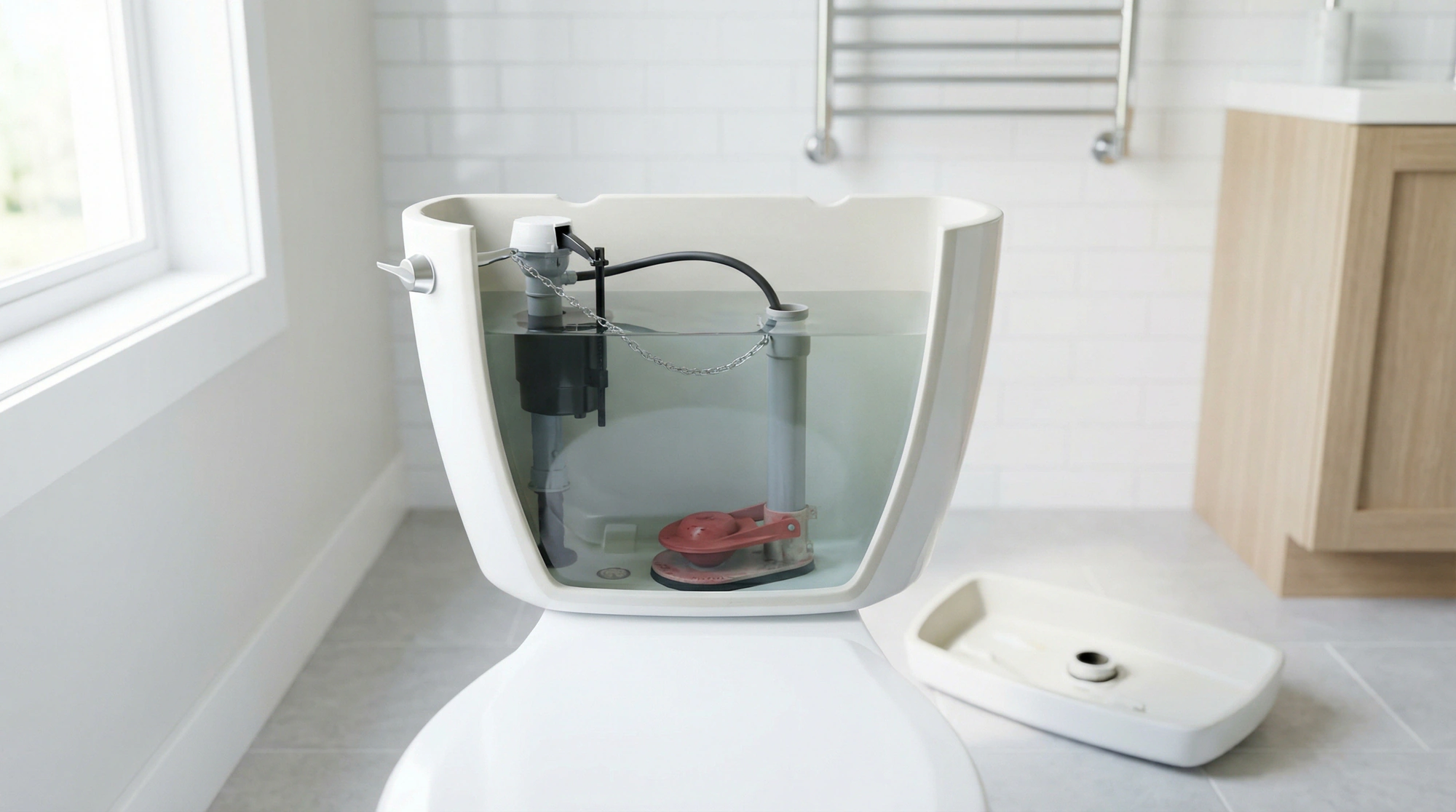
Listen, if your toilet keeps running, you already know something’s wrong. You can hear it. That constant hissing or trickling sound from the bathroom at 2 AM. The tank refilling when nobody flushed. Raquel called it “the ghost flush” for years before I finally told her thats not a ghost, thats money going down the drain.
A running toilet isnt complicated to fix. I’m going to walk you through this because I’ve fixed probably a hundred of these over the years, in my own house, in client houses, in my parents’ house when Curtis calls me on Sunday and casually mentions the toilet’s been “making a noise” for three weeks. Three weeks, Dad. Three weeks of wasted water.
How Much Water Are You Actually Wasting
Before we get into the fix, you need to understand why this matters. A toilet that won’t stop running isn’t just annoying. Its expensive.
The EPA reports that the average family wastes about 180 gallons per week from household leaks. Thats 9,400 gallons a year. And toilets are usually the problem. According to Denver Water, a leaking toilet can waste about 200 gallons every single day. Do the math on your water bill.
Chemung County in New York did a breakdown on this and found that a bad toilet leak can add $500 a year to your water bill. Five hundred dollars. For water you never even used.

The national numbers are even worse. The plumbing industry estimates that running toilets, dripping faucets, and other household leaks waste about 1 trillion gallons annually in the US. Six billion dollars worth. That’s the combined water use of Los Angeles, Chicago, and Miami.
So yeah. Fix your toilet.
Why Does My Toilet Keep Running
My dad Curtis used to say, about factory equipment, he used to say “the machine tells you what’s wrong, you just gotta listen.” He worked at a plant in Atlanta for thirty years and he could diagnose problems by sound alone. Same principle applies here. Your toilet is telling you exactly what’s broken. You just have to pay attention.
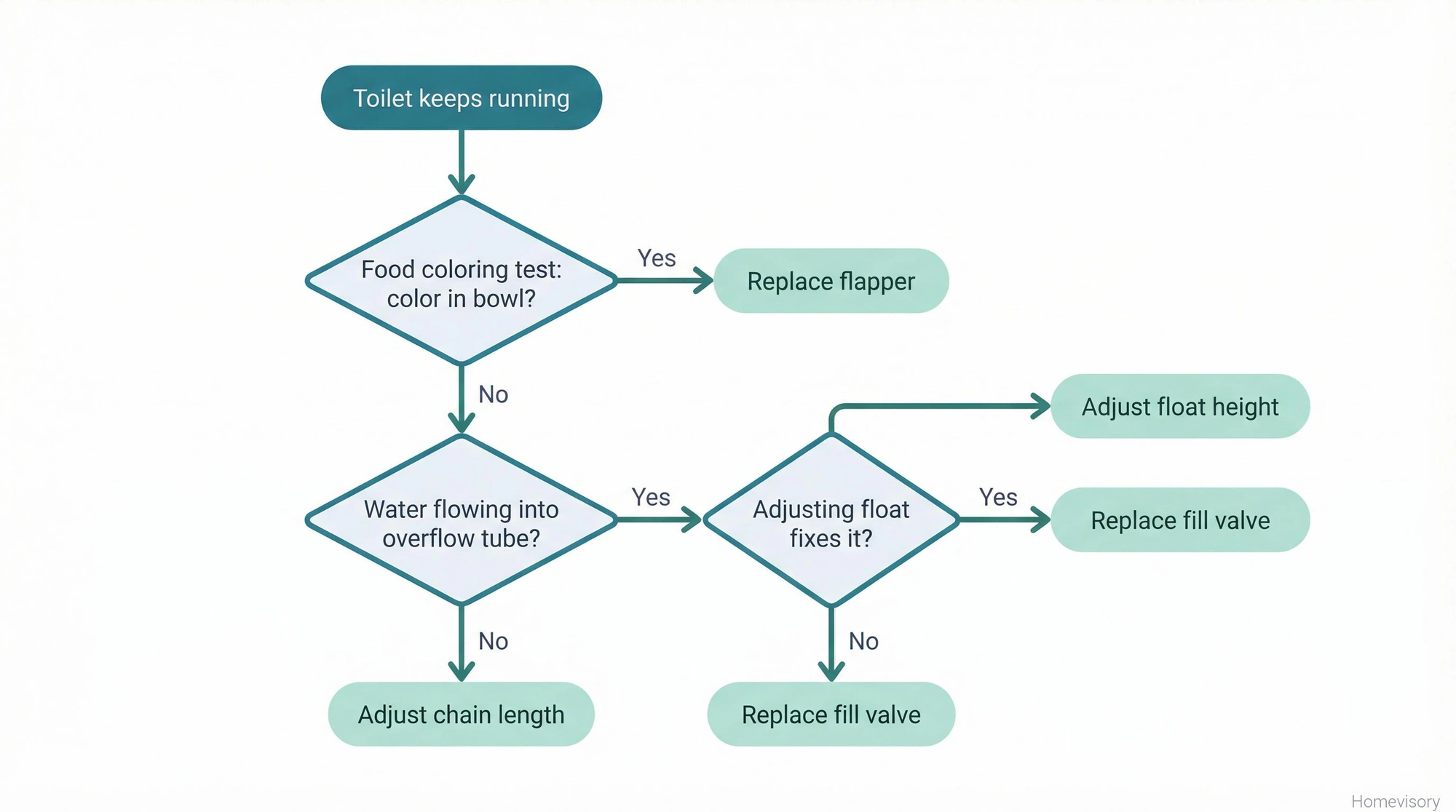
There are really only four things that cause a toilet to run continuously:
- The flapper valve is bad
- The fill valve is bad
- The chain is too long or too short
- The float is set wrong
Thats it. Four possibilities. I’m going to spend most of my time on the flapper because the EPA specifically says that worn-out flappers are the cause of most toilet leaks. Most. Not some. Most.
The Flapper Valve (This Is Probably Your Problem)
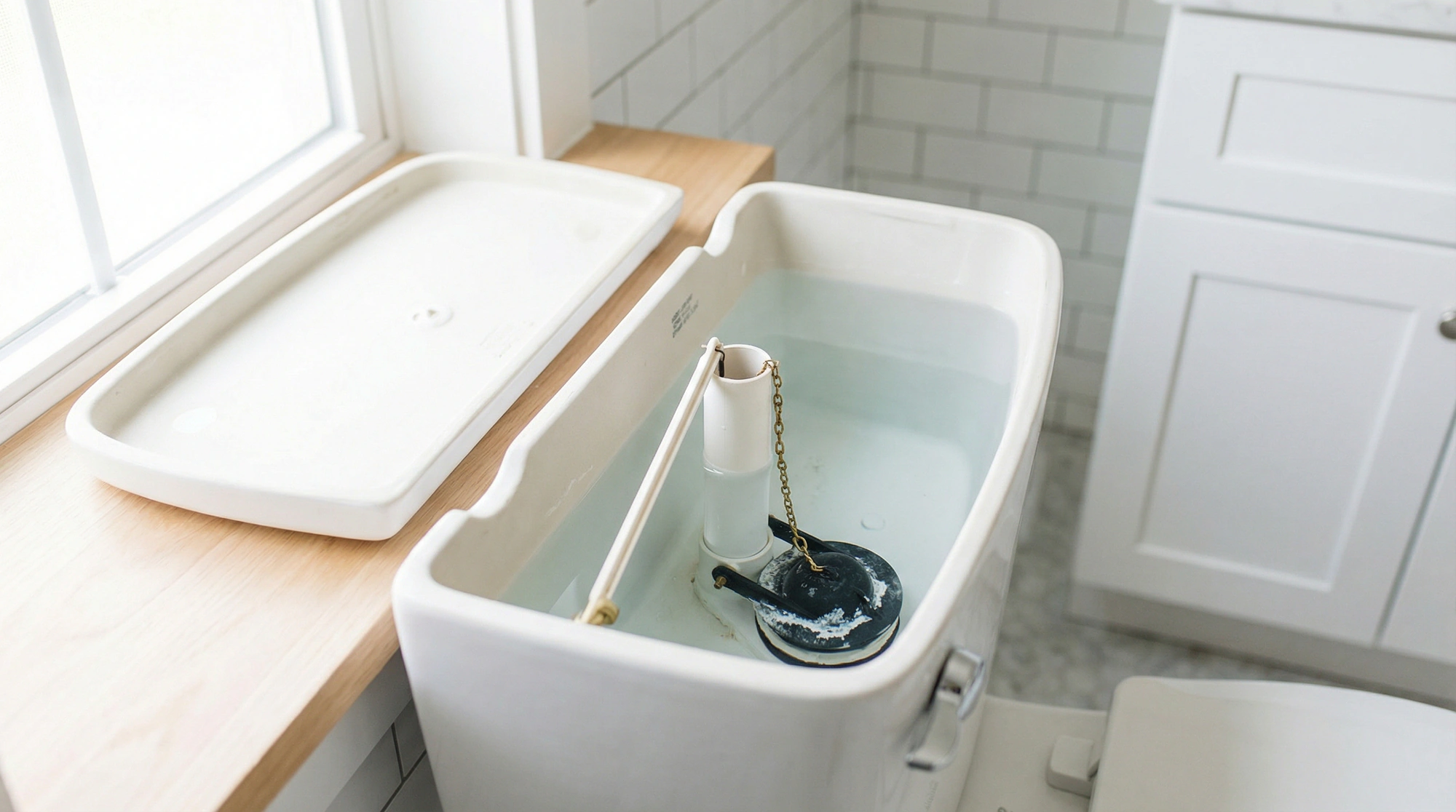
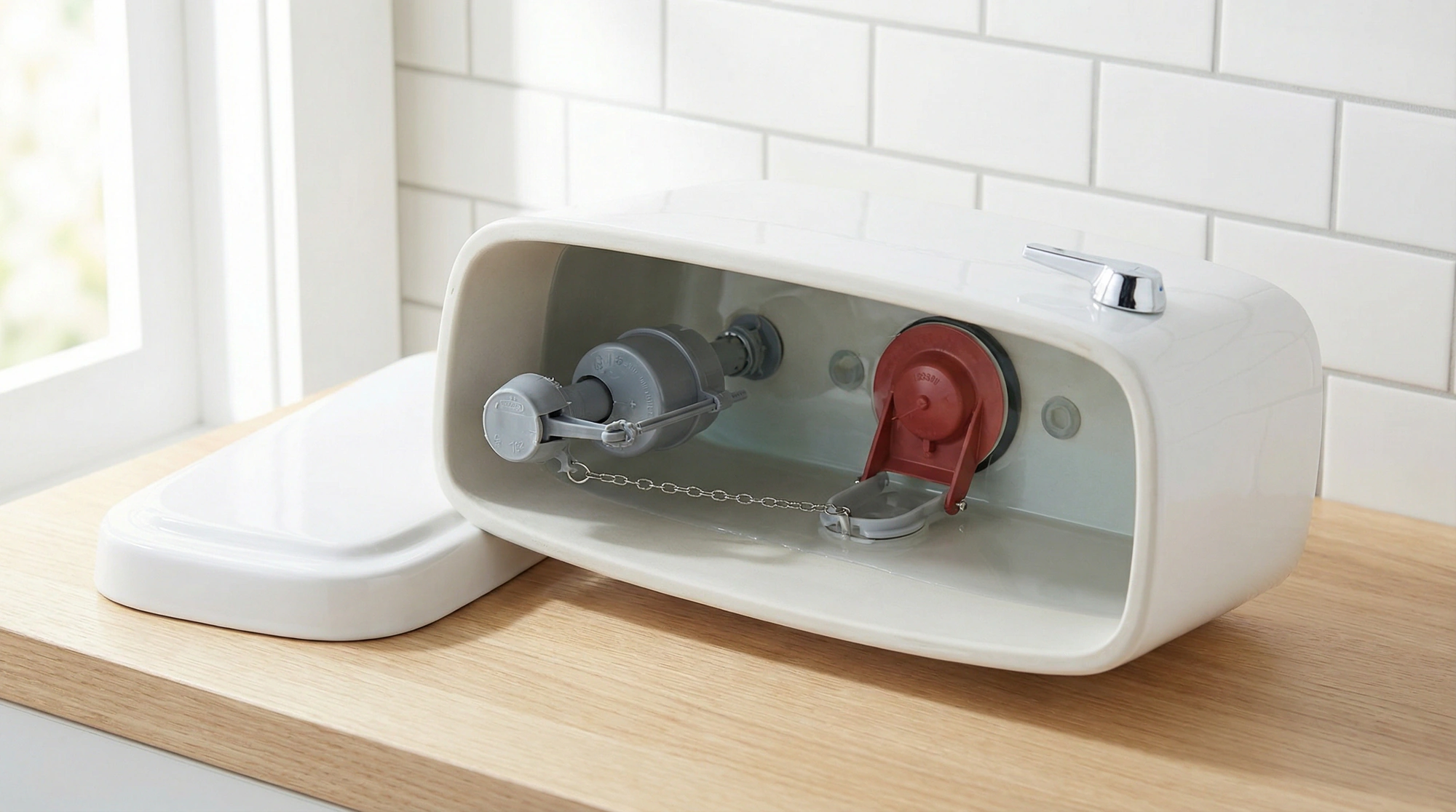
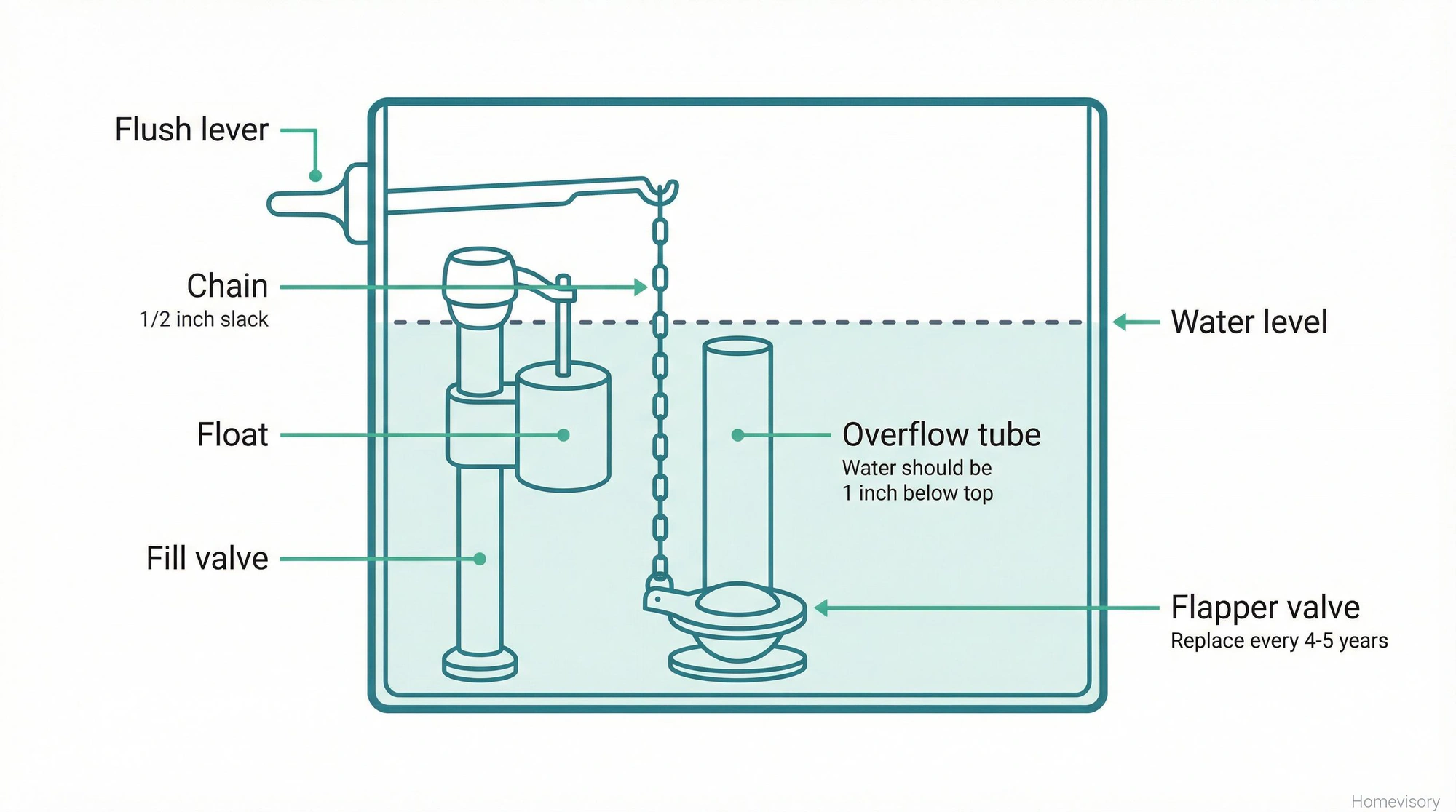
The flapper is that rubber piece at the bottom of your tank that lifts up when you flush and then drops back down to seal the tank so it can refill. When the flapper goes bad, water slowly leaks from the tank into the bowl, the tank water level drops, the fill valve kicks on to refill it, and you hear that phantom flush sound even though nobody touched the handle.
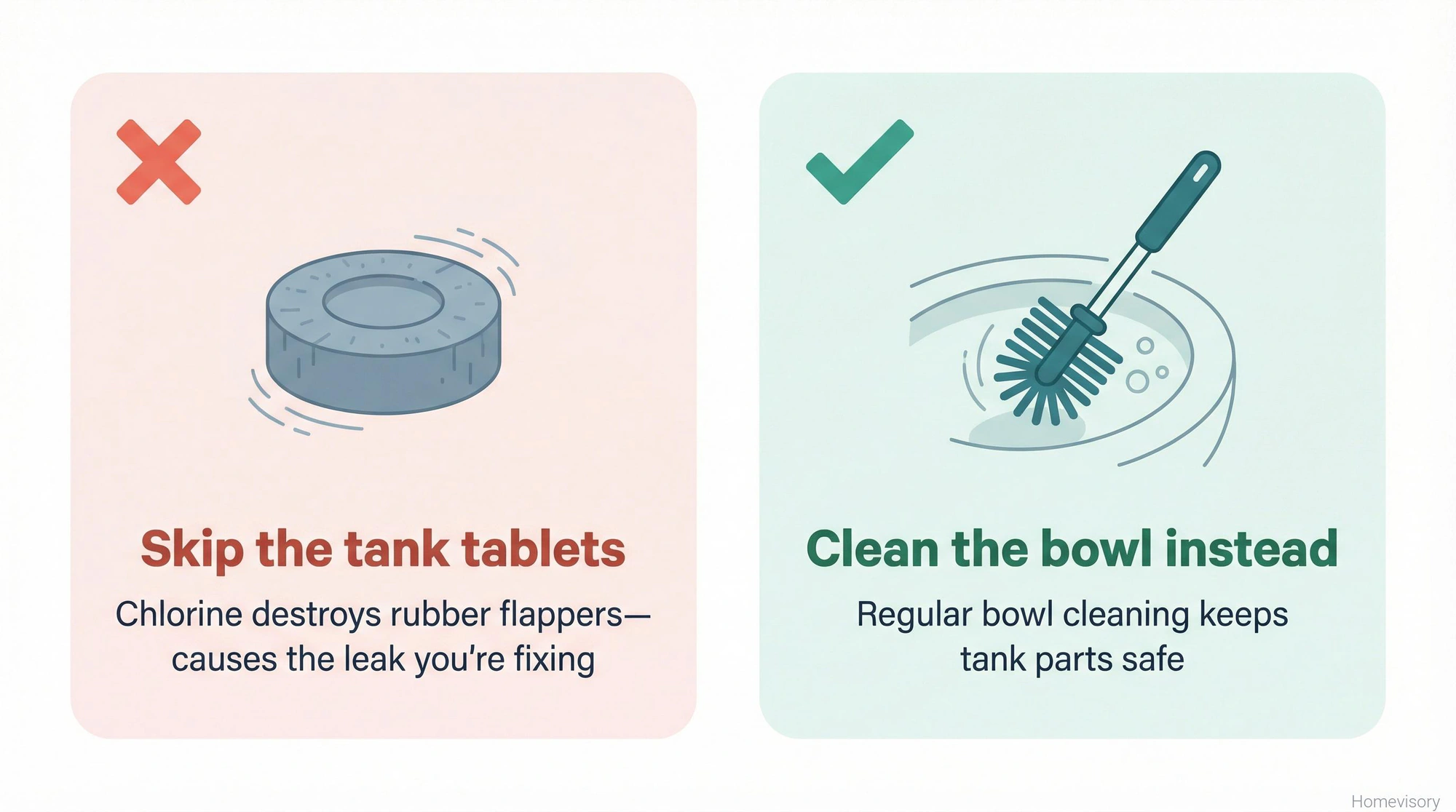
Here’s the thing about flappers and I care way too much about this but I’ve seen so many people misdiagnose running toilets when the answer was sitting right there at the bottom of the tank the whole time. Flappers are made of rubber. Rubber degrades. It gets hard, it warps, it develops cracks, it stops sealing properly. The minerals in your water speed this up. The chlorine in your water speeds this up. The cleaning tablets people drop in their tanks, those blue things, absolutely destroy flappers because they’re basically slow-release chlorine bombs sitting right next to the rubber seal. If you use those tablets and your toilet keeps running, now you know why. Stop using them. Learn how to clean a toilet tank properly without damaging your components.
I had a running toilet in our house in Texas for probably two weeks before Raquel said something. She has a way of saying something without saying something, you know what I mean. She asked if I’d noticed the water bill was higher. I had not noticed the water bill. I notice the water bill now.
How to Test Your Flapper
Drop some food coloring in the tank. Not the bowl. The tank. Wait fifteen minutes without flushing. If the colored water shows up in the bowl, your flapper isn’t sealing and water is leaking through. Simple test. Takes two minutes.
You can also just reach in there and feel the flapper. If it’s hard instead of flexible, if it’s warped, if you can see cracks or mineral buildup, replace it. They cost like four dollars.
How to Replace a Flapper
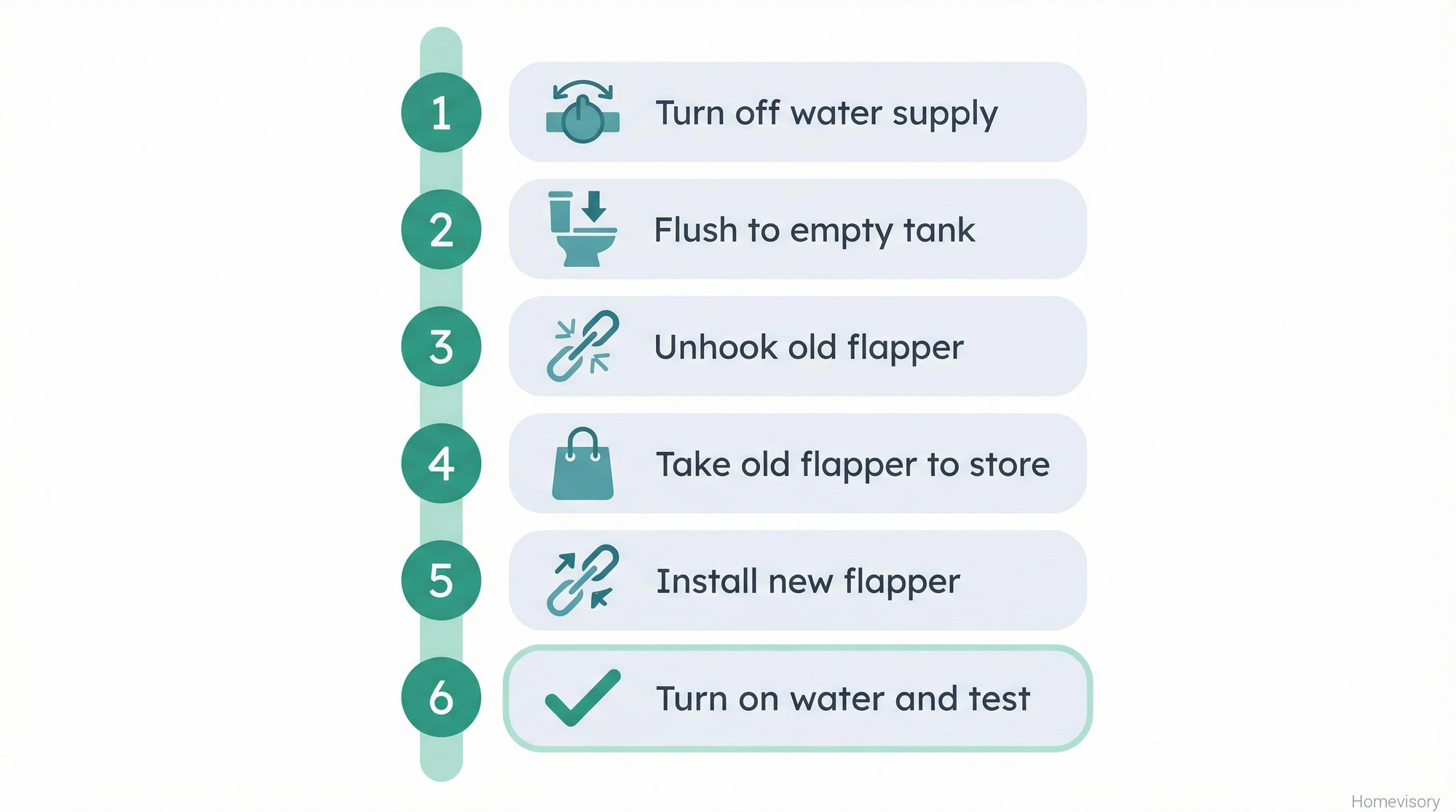
Turn off the water supply. The shutoff valve is on the wall behind the toilet, usually on the left side. Turn it clockwise until it stops.
Flush the toilet to empty the tank.
Unhook the old flapper from the overflow tube. There are usually two ears on the side that clip onto pegs. Pull them off. Disconnect the chain from the flush lever.
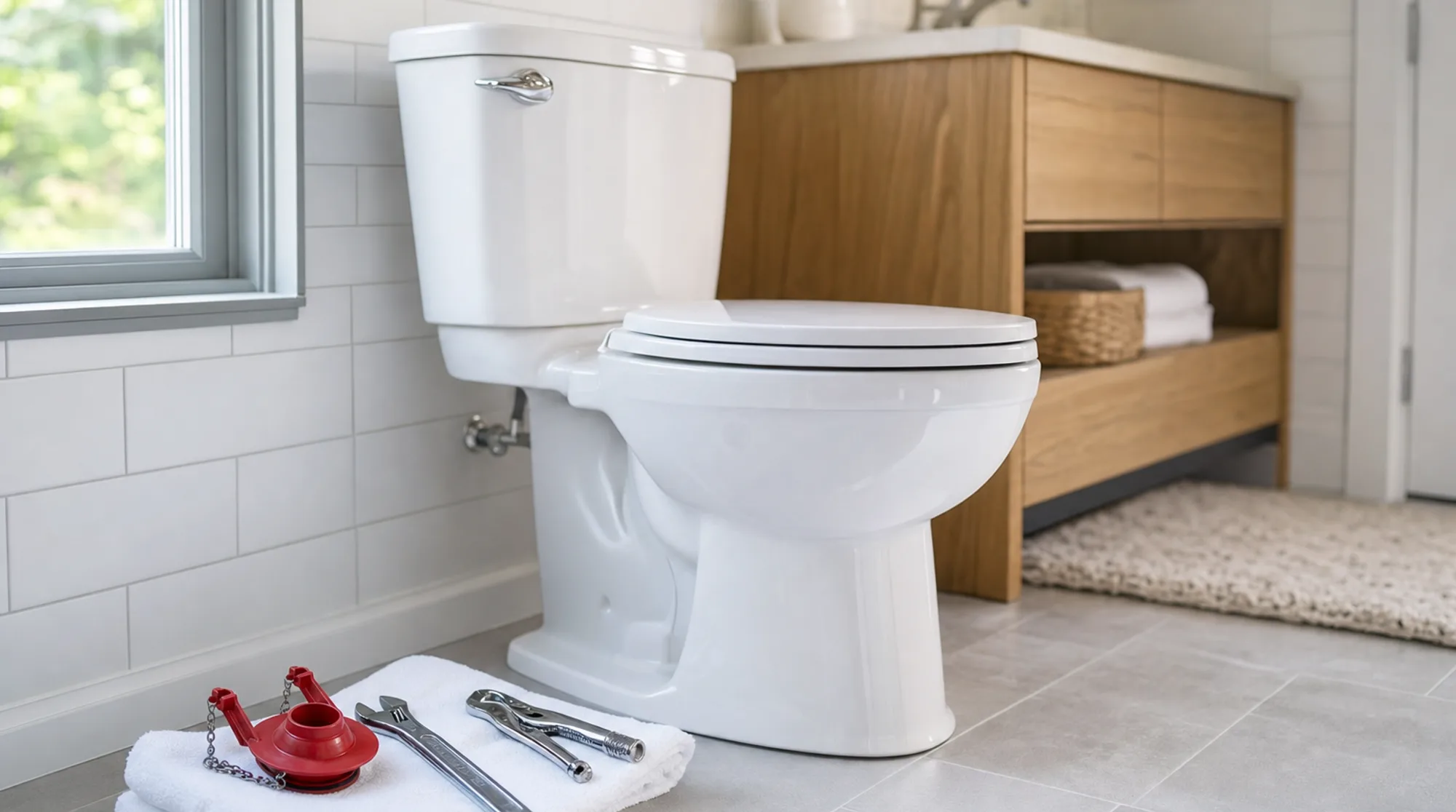
Take the old flapper to the hardware store. I know people say “just buy a universal flapper” but there’s no such thing as truly universal. Different toilets have different flush valve sizes. Kohler makes a 3-inch flapper. American Standard uses 2-inch. If you buy the wrong size it won’t seal right and you’ll be back where you started. Just bring the old one with you.
Install the new flapper. Clip the ears onto the pegs. Connect the chain to the flush lever. More on chain length in a minute.
Turn the water back on. Let the tank fill. Flush a few times. Listen. No more running.
Done.
The Chain Length Problem
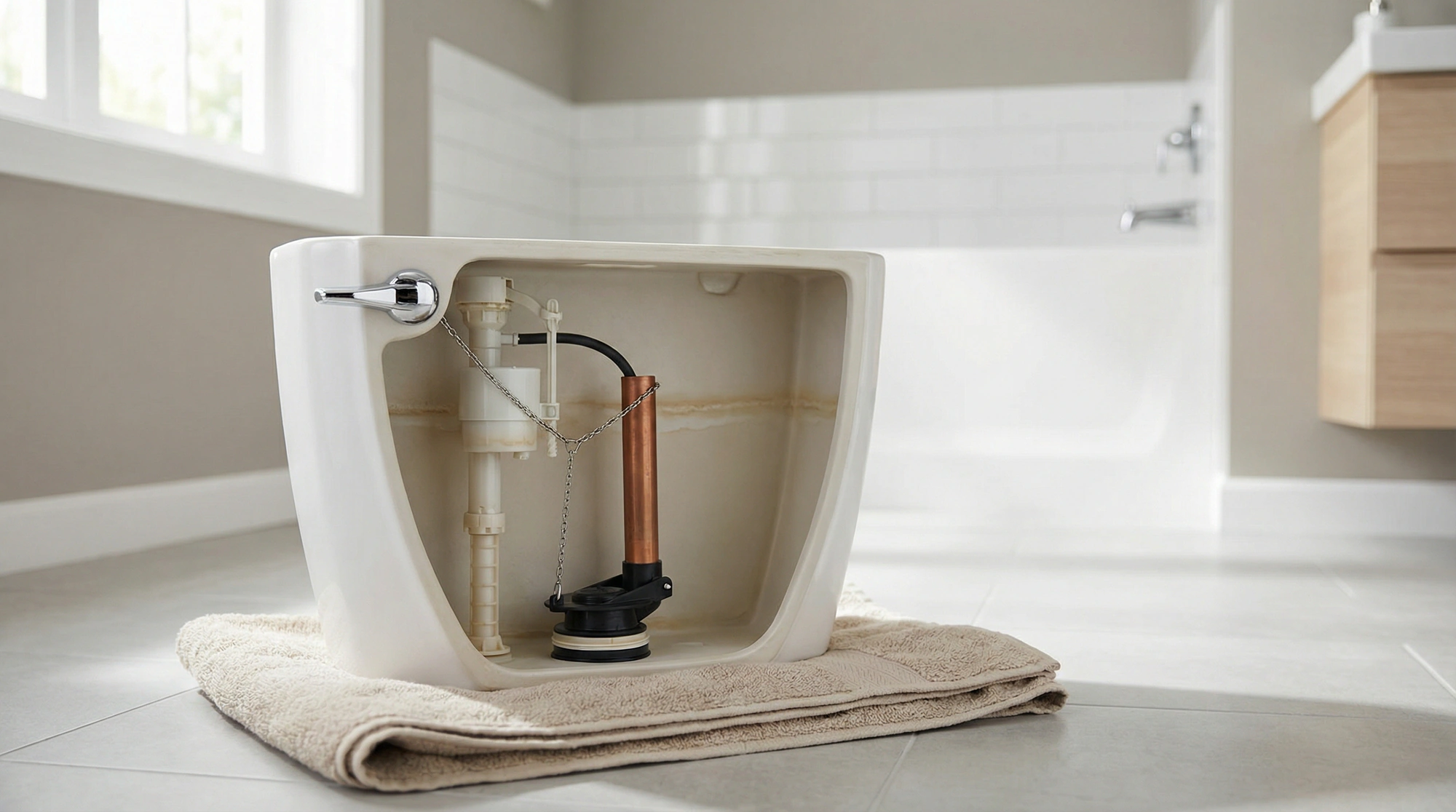
If your flapper is fine but your toilet won’t stop running, check the chain. This is the metal or plastic chain that connects the flush lever to the flapper.
Too long and it can get caught under the flapper, preventing a seal. Too short and it holds the flapper partially open all the time, so water constantly drains into the bowl.
You want about half an inch of slack when the flapper is closed. Not tight. Not loose. Just a little slack. If you need to adjust it, there are usually multiple holes on the flush lever where you can hook the chain. Move it one hole up or down until you get it right.
I watched Richard mess with this for twenty minutes once when he was maybe fifteen and finally I just said let me show you. Half inch of slack. That’s the whole lesson. Half inch.
The Fill Valve Situation
If you’ve ruled out the flapper and the chain and your toilet is still running, it’s probably the fill valve. This is the tall thing on the left side of the tank that refills the water after you flush. Some people call it the ballcock assembly, which is the old-school term for the float-based version.
Here’s my honest opinion. If your fill valve is bad, just replace the whole thing. I’ve got a full guide on toilet fill valve replacement if you want the details. I’m not going to walk you through rebuilding a ballcock assembly because it’s not worth your time. A complete fill valve replacement kit from Fluidmaster or Korky costs maybe $15-20 and takes twenty minutes to install. Trying to diagnose and fix individual parts inside a 15-year-old fill valve is like fixing a $5 watch. Whatever. Just replace it.
The signs of a bad fill valve: water constantly running into the overflow tube, weird whistling or humming sounds when the tank refills, tank that never seems to fill completely.
Replacing the Fill Valve
Turn off the water supply. Flush to empty the tank. Put a towel on the floor because water’s going to drip.
Under the tank, there’s a nut connecting the fill valve to the water supply line. Unscrew it. Have a bucket ready.
Inside the tank, there’s a locknut holding the fill valve in place. Unscrew that. Pull out the old fill valve.
Put the new one in. The instructions are in the box and theyre actually pretty clear for once. Adjust the height so the top of the overflow tube is about an inch below the top of the fill valve. Tighten the locknut. Reconnect the water supply. Turn the water on.
Adjust the float so the water level is about an inch below the top of the overflow tube. There’s usually a screw or clip on newer fill valves that lets you raise or lower the float. Fill it too high and water constantly drains into the overflow tube. Fill it too low and you get weak flushes.
Float and Water Level Adjustment
Speaking of floats. If your toilet keeps running because the water level is wrong, you might not need to replace anything. Sometimes the float just needs adjusting.
Old toilets have a float ball on an arm. You bend the arm down to lower the water level, bend it up to raise it. That’s literally all you do. Bend the arm.
Newer toilets have a float cup that slides up and down the fill valve. There’s a clip or screw that lets you adjust it. Lower the float cup, lower the water level.
The water should sit about an inch below the top of the overflow tube. There’s usually a line marked on the inside of the tank showing you where it should be. If your water is above the overflow tube, it’s constantly draining and that’s why is your toilet running.
The Overflow Tube Situation
If water is going into the overflow tube constantly, either your float is set too high or your fill valve is broken and won’t shut off. Adjust the float first. If that doesn’t work, replace the fill valve.
I’m not getting into cracked overflow tubes here because if your overflow tube is actually cracked, you probably need a new tank or a new toilet. That’s not a DIY fix, that’s a call-the-plumber situation.
When to Actually Call Someone
Look. I fix houses for a living. I still call plumbers sometimes. No shame in it.
Call someone if:
- You’ve replaced the flapper and fill valve and it’s still running
- There’s water leaking from the base of the toilet onto the floor
- The tank is cracked
- You’re not comfortable working with water supply lines
- You’ve been messing with it for an hour and it’s getting worse
Professional toilet repair typically costs between $60 and $200, with most repairs coming in around $125 for something like a fill valve replacement. Not cheap but not terrible either, especially compared to that $500 water bill increase.
A Word on Safety
Toilet repair is pretty low-risk as far as home maintenance goes. You’re not dealing with electricity. But there are a few things.
Safety guidelines recommend wearing gloves when you’re working around toilets. It’s not just about cleanliness, though there’s that. Old flappers and fill valves can have sharp edges. I caught my hand on something inside a tank once and it was a surprisingly deep cut for what felt like nothing.
Also just turn off the water before you start messing with anything. I know I already said that but you’d be surprised how many people skip that step and end up with water everywhere.
My Dad and the Quiet Fix
Curtis still calls me every Sunday after church. He’s 82 now and still in Atlanta, still in the house I grew up in. Couple months ago he mentioned, real casual, that the bathroom toilet had been “making a noise.” I asked how long. He said a while. I said how long is a while, Dad. He said maybe since Christmas.
This was March.
I drove up the following weekend and it was the flapper. Of course it was the flapper. Four dollar part. Ten minute fix. He could’ve done it himself, he’s fixed a thousand things in that house over the years, but I think he wanted me to come visit and this was the excuse. He handed me tools like he used to when I was ten years old learning how things worked in our old place in Brooklyn before we moved south.
Anyway.
The point is that a running toilet is one of those things that seems small until it isn’t. It’s just noise until you see the water bill. It’s just a minor annoyance until you realize youve wasted a few thousand gallons of water. And the fix is almost always simple. Flapper, chain, fill valve, float. That’s the whole list. For a walkthrough of every common toilet issue and how to handle it, check out our complete toilet repair guide.
What Homevisory Does About This
This is exactly the kind of maintenance that falls through the cracks. Nobody has “check toilet flapper” on their calendar. Nobody thinks about it until the toilet’s been running for three weeks and someone finally says something.
That’s what we built Homevisory to fix. The task manager tracks this stuff for you. It reminds you to do the simple checks, the food coloring test every six months, the visual inspection of your flappers once a year. Catches the small problems before they turn into $500 problems.
You can sign up for free. That’s what we do here at Homevisory.