
What Garage Door Installation Actually Costs
I get asked about garage door installation more than almost anything else. People want a number. They want me to say “it costs X dollars” and be done with it. I cant give you that because it depends on about fifteen different things, but I can tell you what to expect and where the money actually goes.
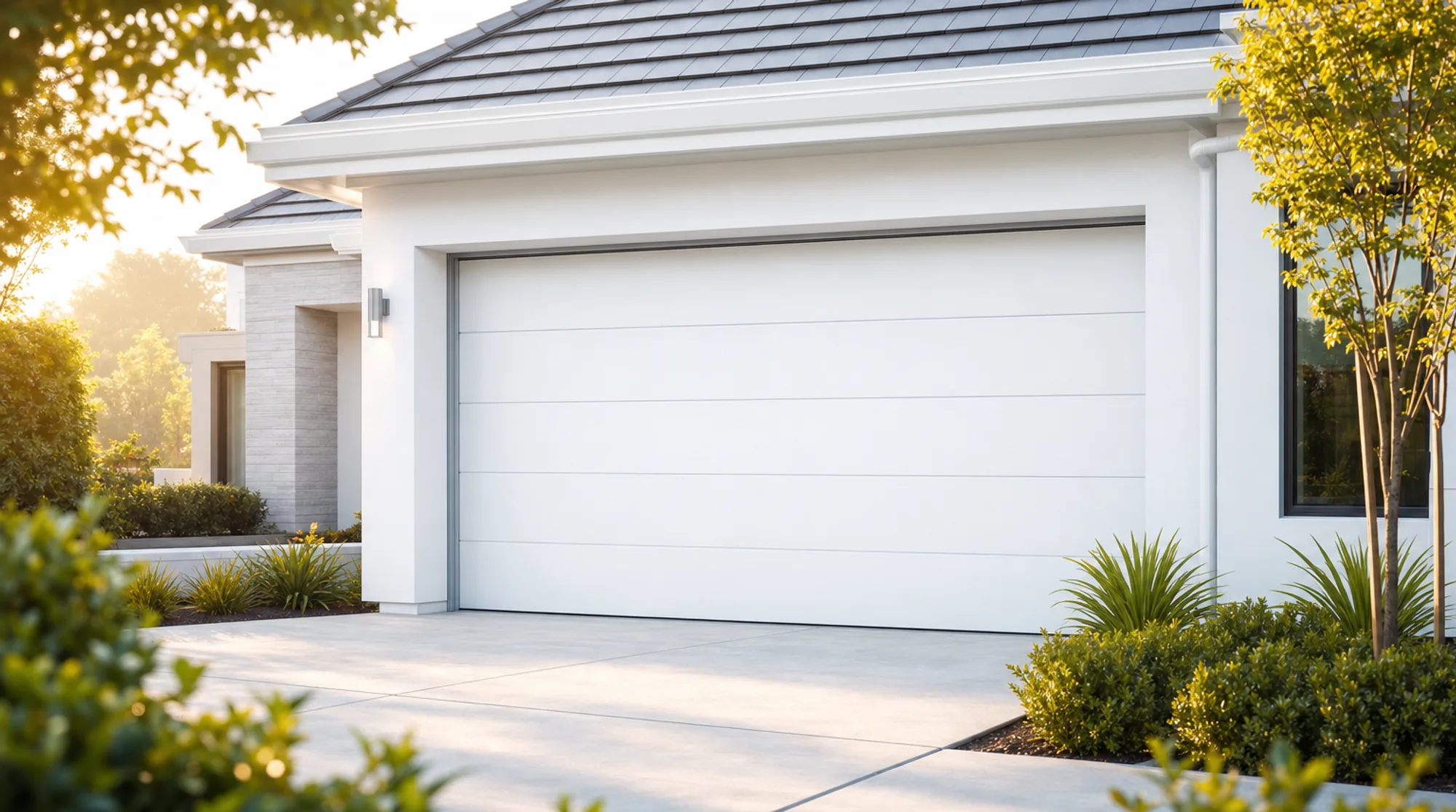
The short version: youre looking at somewhere between $1,000 and $4,000 for a standard two-car garage door with professional installation. Homewyse estimates put the basic cost at $969 to $1,573 per door for mid-range work, and that tracks with what I’ve seen. But “mid-range” is doing a lot of work in that sentence. A basic steel door with no windows and no insulation is a different animal than an insulated carriage-style door with decorative hardware.

The garage door itself is usually 60-70% of your total cost. Installation labor runs $200 to $500 depending on complexity and where you live. If youre replacing an old door and the tracks are fine and the opening is standard, its on the simpler end. If the installer shows up and your header is rotted or your opening is out of square, now you’re paying for carpentry work too.
The Door Itself
Steel doors are the most common. Basic single-layer steel starts around $400-600 for a two-car size. Add insulation and you’re at $800-1,200. Add windows, decorative panels, carriage-style overlays, and you can hit $2,000-3,000 just for the door.
Wood is beautiful and expensive. Real wood doors start around $1,500 and can go way past $4,000. They need maintenance. They need repainting or restaining. They can warp. I love how they look but I’m honest with people about the upkeep.
Aluminum and fiberglass exist. They’re lighter, they don’t rust. Some of the modern glass-panel aluminum doors look incredible. They also cost incredible amounts of money. If you’re asking about those, you already know what you’re getting into.
Colors, windows, hardware. Pick what you like. The wife and I went back and forth on windows for three weeks when we replaced ours in Palm Beach. In the end, the windows cost an extra $200 and I dont think about them anymore. Moving on.
What Actually Matters: The Spring System
This is the part I care too much about. Ask anyone who’s worked with me. I will talk about garage door springs until your eyes glaze over because I have seen what happens when they fail or when someone tries to mess with them without knowing what they’re doing.
Your garage door weighs between 150 and 400 pounds depending on size and material. The springs are what make it possible for you to lift that weight with one hand. They’re under enormous tension. When a spring breaks, and they do break eventually, they release all that stored energy at once.

The Door & Access Systems Manufacturers Association puts it plainly: springs are arguably the most important and most dangerous part of your door, and when they break, injury can result. Thats not marketing language. Thats the industry telling you to take this seriously. I’ve heard stories, secondhand mostly, about springs letting go and the noise alone was enough to make people think something exploded. I knew a guy in Texas, this was years ago, who tried to adjust his own torsion springs with a winding bar he made from a piece of rebar. He’s fine now. He was not fine that afternoon.
There are two types: torsion springs mount above the door on a shaft, extension springs run along the tracks on either side. Torsion springs are better. They’re smoother, they last longer, they’re more balanced. If your installer quotes you extension springs and there’s room for torsion, ask why.

Spring replacement costs $150-350 including labor. Do not do this yourself. I’m not being dramatic. I fix houses for a living and I call a professional for garage door springs. The CPSC has documented fatalities going back decades from garage door entrapment, and while most of those are from doors closing on people rather than spring failures, the point is that these systems can hurt you. Respect them.
The Opener
Most garage door installation quotes include just the door and the installation of the door. The opener is often separate. Budget $150-300 for a basic chain-drive opener, $200-400 for a belt-drive. I’ve written a detailed comparison of opener types if you want help deciding. Belt-drive is quieter. If there’s a bedroom above or next to your garage, get the belt-drive. You’ll thank yourself at 6 AM.
Smart openers with WiFi and cameras and apps. I’m not getting into all that here. Some people love them. Some people dont need their garage door connected to the internet. Figure out which one you are.
The safety features matter more than the smart features. Since 1993, all residential garage door openers sold in the US have to meet federal entrapment protection requirements. That means auto-reverse, that means photo-eye sensors at the bottom of the door. If something breaks the beam while the door is closing, the door goes back up. This isnt optional. This is the law. Any opener you buy new will have this. If you have an older opener from before 1993 and it’s still working, replace it anyway.
Professional Installation vs DIY
I’ll be blunt. This is not the project to learn on.
The Institute of Door Dealer Education and Accreditation says a garage door is the largest moving part in your home, and improperly installed products can create a hazard due to the tremendous force that can be exerted. Their certified installers complete training and continuing education. There’s a reason for that.
The door has to be level. The tracks have to be plumb. The springs have to be calibrated to the exact weight of your specific door. The opener has to be mounted so it pulls straight. The safety sensors have to be aligned. Get any of this wrong and the door binds, the springs wear unevenly, the opener burns out, or worse.
I watched a friend try to install his own garage door about six years ago. This was a guy who could frame a wall, wire a outlet, do most things around the house. He got the door hung. It looked fine. Then he tried to balance the springs himself and the door would stop halfway up and just hover there because the tension was wrong. He spent the whole weekend on it. Then he called someone. The pro had it working in forty-five minutes.
You might save $200-500 on installation labor doing it yourself. You might also spend your Saturday in the emergency room. I know which one I’d pick.
The Actual Installation Process
This is what happens when a crew shows up to do a garage door installation.

They remove the old door if there is one. This takes 30-60 minutes. They inspect the opening, the header, the framing. If something’s wrong, this is when they tell you. Rotten wood needs to be replaced. An opening that’s out of square needs to be fixed. This is additional cost if it comes up.
They install the tracks. They assemble the door panels, usually starting from the bottom and working up. Each panel gets connected to the tracks with rollers and hinged to the panel below it. Then the springs go on. Then the opener if you’re having one installed.
The whole thing takes 3-5 hours for a standard installation with no surprises. Add time if the opening needs work or if you’re adding insulation or weatherstripping.
What Can Go Wrong
Old openers that arent compatible with new doors. If your opener is more than 15 years old, assume you need a new one. Before that point, most opener problems are fixable without full replacement.
Openings that arent standard size. Custom doors cost more.
Rotted framing. You don’t know until the old door comes off.
Missing reinforcement for the opener bracket. Some doors, especially lighter ones, need a reinforcement strut at the top to mount the opener arm without warping.
Low headroom. If you dont have 12-15 inches of clearance between the top of the door opening and the ceiling of the garage, you need special low-headroom hardware. It costs more.
My Dad’s Rule About Buying Cheap
I think about this every time someone asks me if they should get the cheapest option.
My dad Curtis worked in a factory for years. He used to say, about tools mostly, he used to say “buy it right once or buy it wrong three times.” He was talking about wrenches. Socket sets. That kind of thing. But it applies to everything.
The cheapest garage door will work. It will go up and down. It will keep the rain out. But it won’t insulate well, so your garage will be an oven in summer and a freezer in winter. It won’t be as quiet. It won’t look as nice. And in eight years when it’s dented and faded and the springs have already been replaced twice, you’ll wish you’d spent the extra $400 upfront.
The mid-range door, something insulated with decent hardware, thats the sweet spot for most people. You dont need the top of the line. You also don’t want the bottom.
Getting Quotes
Get three quotes. This is the rule for everything, but especially for garage door installation.
Make sure each quote includes the same things: door, installation, disposal of the old door, the opener if you want one, taxes. Sometimes the low quote is low because they’re not including removal of your old door or they’re quoting extension springs when they should quote torsion.
Ask about warranty. Most doors come with warranties from the manufacturer. Installation should have a separate warranty from the installer. Get it in writing.
The International Door Association has a directory of member professionals if you want to start with installers who belong to a trade organization. That’s not a guarantee of quality but it’s a filter.
What I’d Do
If it were my house and I needed a new garage door, here’s what I’d do.
Insulated steel door, R-value of at least 12 if I have any plans to spend time in the garage. Windows across the top because I like natural light and the wife likes how it looks. Torsion springs, not extension. Belt-drive opener, basic model without the WiFi stuff.

I’d get three quotes and I’d go with whoever seemed most knowledgeable, not whoever was cheapest. I’ve been burned too many times by cheap.
That setup, professional installation, haul away the old door, runs $1,800-2,500 in most markets. Could be more if you’re in a high cost-of-living area. Could be less if you catch a sale or know someone.
We had this garage in Atlanta when I was a kid. It wasnt attached to the house, it was a separate building behind the property, and the door was this heavy wooden thing that you had to lift manually. No springs, no opener, just a door on hinges that weighed a ton. My dad kept his tools out there. I learned to use a saw out there. The door barely closed right after a while, one of the hinges was rusted and the wood had swelled, and we just lived with it because that’s what you did. I don’t know why I think about that garage sometimes. It was falling apart. Anyway.
A garage door installation is one of those things that seems simple until you look at it closely. There are a lot of moving parts, literally. Get a professional to do it. Budget $1,500-3,000 for something decent. Test the safety features every month after its installed, the auto-reverse and the photo-eyes. And don’t touch the springs. For the full rundown on openers, repairs, storage, and maintenance, see our complete garage door guide.
That’s what we do here at Homevisory, help you stay on top of stuff like this. If you’re trying to keep track of all the maintenance tasks your home needs, check out our free home task manager. It’ll remind you to test those safety sensors and schedule that annual inspection. Because your garage door is the largest moving part in your house, and it deserves more attention than most people give it.