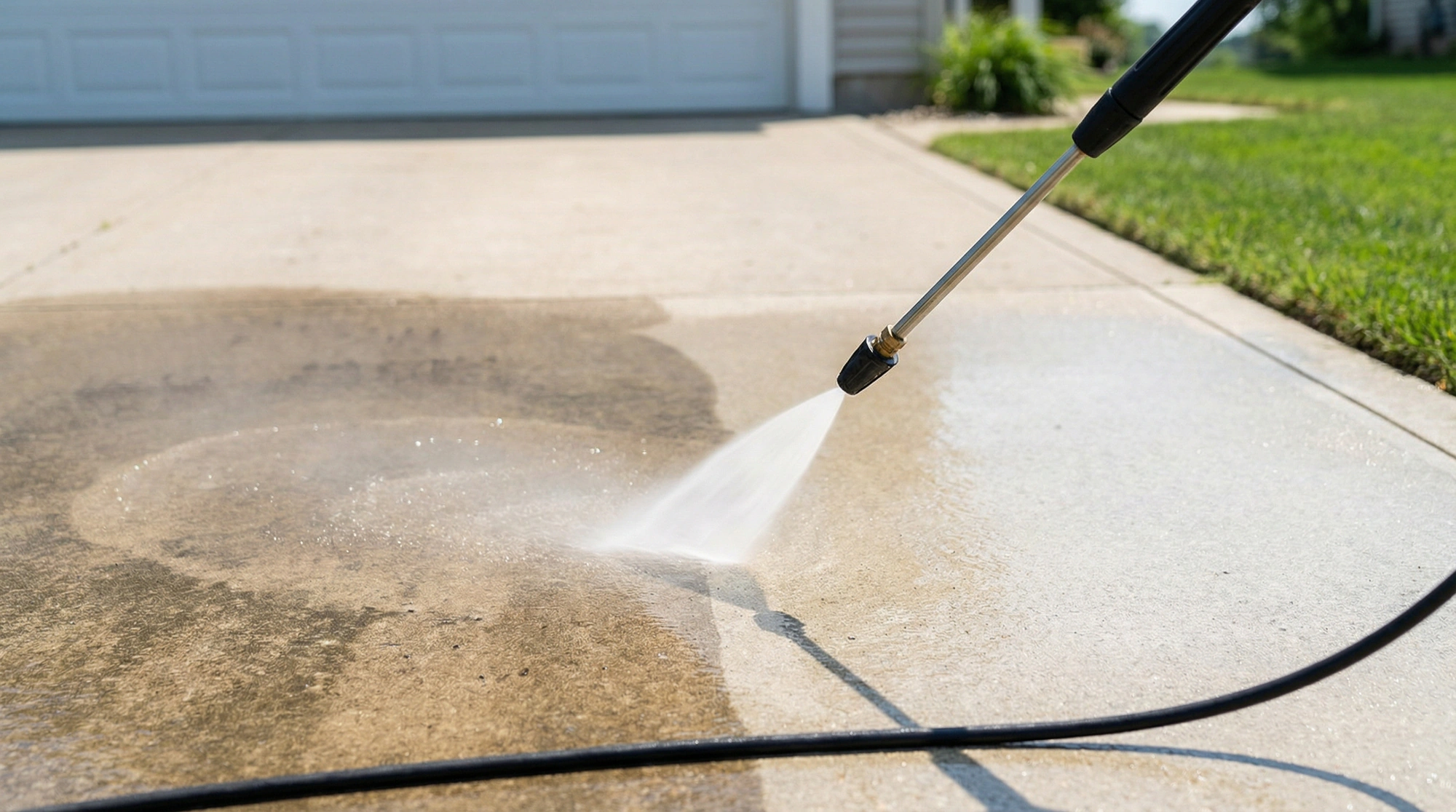
Concrete cleaning is one of those things that seems straightforward until you actually do it wrong. Then you’ve got etched surfaces, streaks that look worse than the original dirt, or in some cases a driveway that looks like someone took a belt sander to it. I know because I’ve made most of these mistakes myself, and I’ve fixed plenty of driveways and patios for people who thought pressure washing was just pointing and spraying.
Heres the thing about concrete. It looks tough, and it is tough, but its also porous. Dirt, oil, mold, mildew, all of it gets into those pores and just sits there. Surface cleaning doesnt cut it. You need to actually get into the concrete to clean it properly, which means understanding what youre dealing with before you start blasting water at it.
Why Concrete Gets So Dirty
Most people dont think about their driveway until it looks terrible. But concrete is basically a sponge for everything your car drips, everything the weather throws at it, and everything that blows in from the street. Oil stains are the obvious ones. But you’ve also got tire marks, rust, mold and mildew especially in humid climates, and just general grime that builds up over years.
I grew up in Atlanta, moved around a lot, now I’m in Palm Beach. Humidity is the common thread. Florida is brutal on concrete. The combination of heat, moisture, and salt air means mold and mildew grow faster than you can keep up with. My dad’s driveway back in Atlanta, he cleaned it twice a year without fail. Spring and fall. He had a system. I remember him out there with the hose and a push broom and some kind of cleaner my mom bought at Sears. The concrete always looked good. I dont know if he sealed it or what he did exactly. He probably did. Anyway.
The Basic Approach to Clean Concrete
Before you do anything else, sweep the surface. Get the loose debris off. Leaves, dirt, whatever is sitting on top. This sounds obvious but I’ve watched people start pressure washing with six months of pine needles on the surface and wonder why its not working.
For light cleaning, you can get away with a garden hose, a stiff brush, and some dish soap. Mix a few tablespoons of dish soap in a bucket of water, spread it around, scrub with a push broom, rinse. Done. This works for concrete thats just dusty or has light surface dirt.
For anything more than that, youre looking at either chemical cleaners or pressure washing or both.
Chemical Options
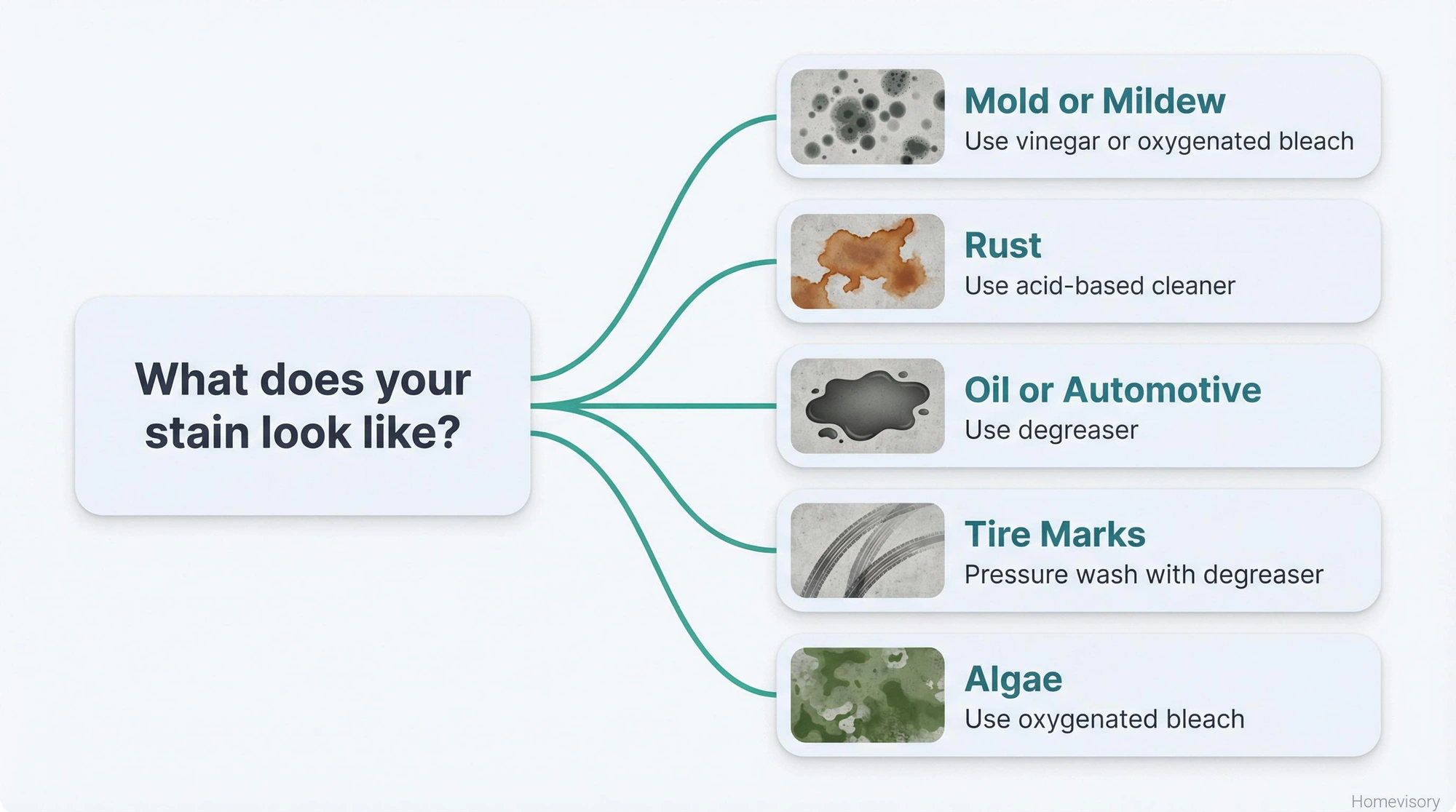
You’ve got a few choices here. The GSA recommends a solution of 1 part acetic acid in 19 parts water, or you can just use undiluted white vinegar for lighter jobs. Vinegar works surprisingly well on mold and mildew. Its not going to touch heavy oil stains but for biological growth its solid.
Commercial concrete cleaners exist and some of them work fine. Degreasers for oil stains, acid-based cleaners for rust, alkaline cleaners for organic stuff. Whatever works. Moving on.
One thing the GSA notes that most people ignore: cleaning products can run off onto adjacent materials and cause problems. If your driveway butts up against landscaping or painted surfaces, be careful. Cover what you need to cover.
Pressure Washing a Driveway
This is where I have opinions. Too many opinions probably. But I’ve seen too many ruined driveways to not care about this.
First, the safety stuff, which nobody wants to hear but everyone needs to know. OSHA notes that water pressure can reach 4,000 PSI, which is enough to cause serious injury. Were talking lacerations, eye injuries, the works. That red 0-degree nozzle can etch concrete, which means it can absolutely destroy skin. I watched a guy at a job site years ago catch his foot with a pressure washer stream. I wont describe what that looked like. Wear closed-toe shoes. Wear eye protection. OSHA requires a full face shield for pressure above 2,000 PSI if theres debris risk. Most people ignore this and most people are lucky until they aren’t.
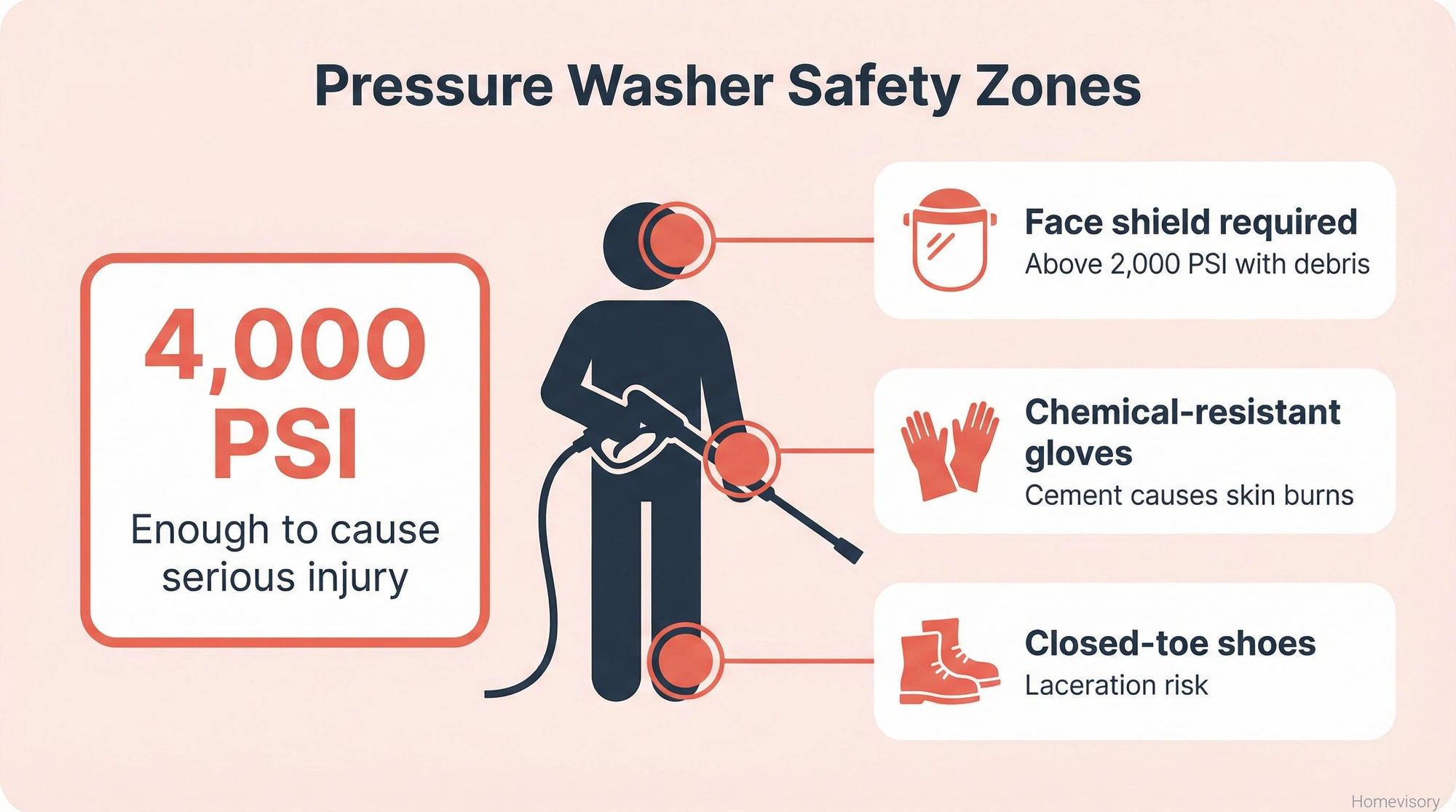
Also gloves. Especially if youre using any kind of chemical cleaner. Cement dust and wet cement can cause burns and skin irritation. Pressure washing kicks up all kinds of particles.
PSI and Nozzles
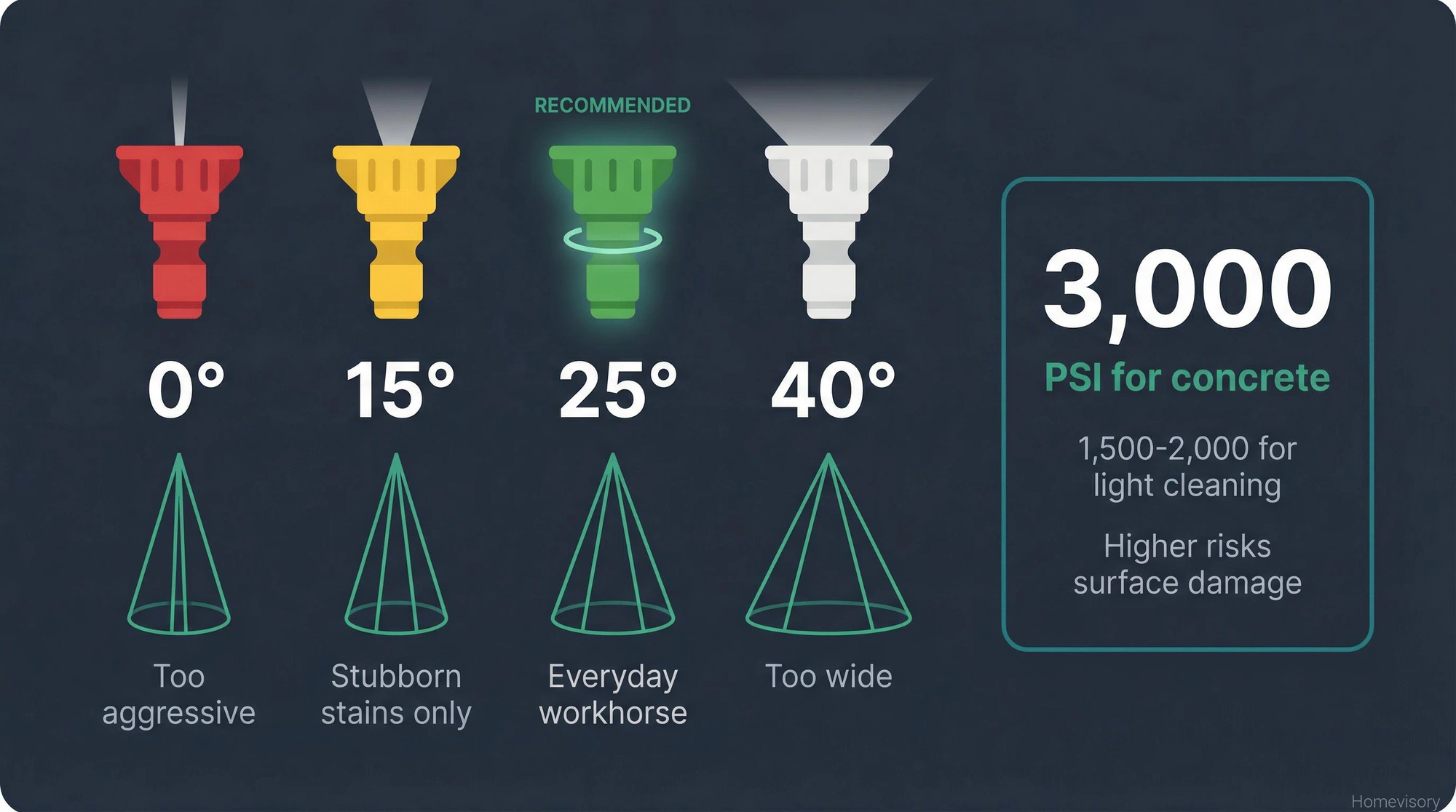
For concrete, you want something in the 3,000 PSI range for tough stains and grime. Lower than that, around 1,500-2,000 PSI, will work for lighter cleaning but youll be there all day on a heavily stained driveway. Higher than that and you risk damaging the surface.
The nozzle matters more than people think. The 0-degree red nozzle is basically a laser of water, way too aggressive for most concrete work. The 15-degree yellow is better for stubborn stains. The 25-degree green is your everyday workhorse for concrete. The 40-degree white is too wide for effective cleaning on horizontal surfaces. I use the 25-degree for most of the driveway and switch to 15-degree for oil stains and problem spots.
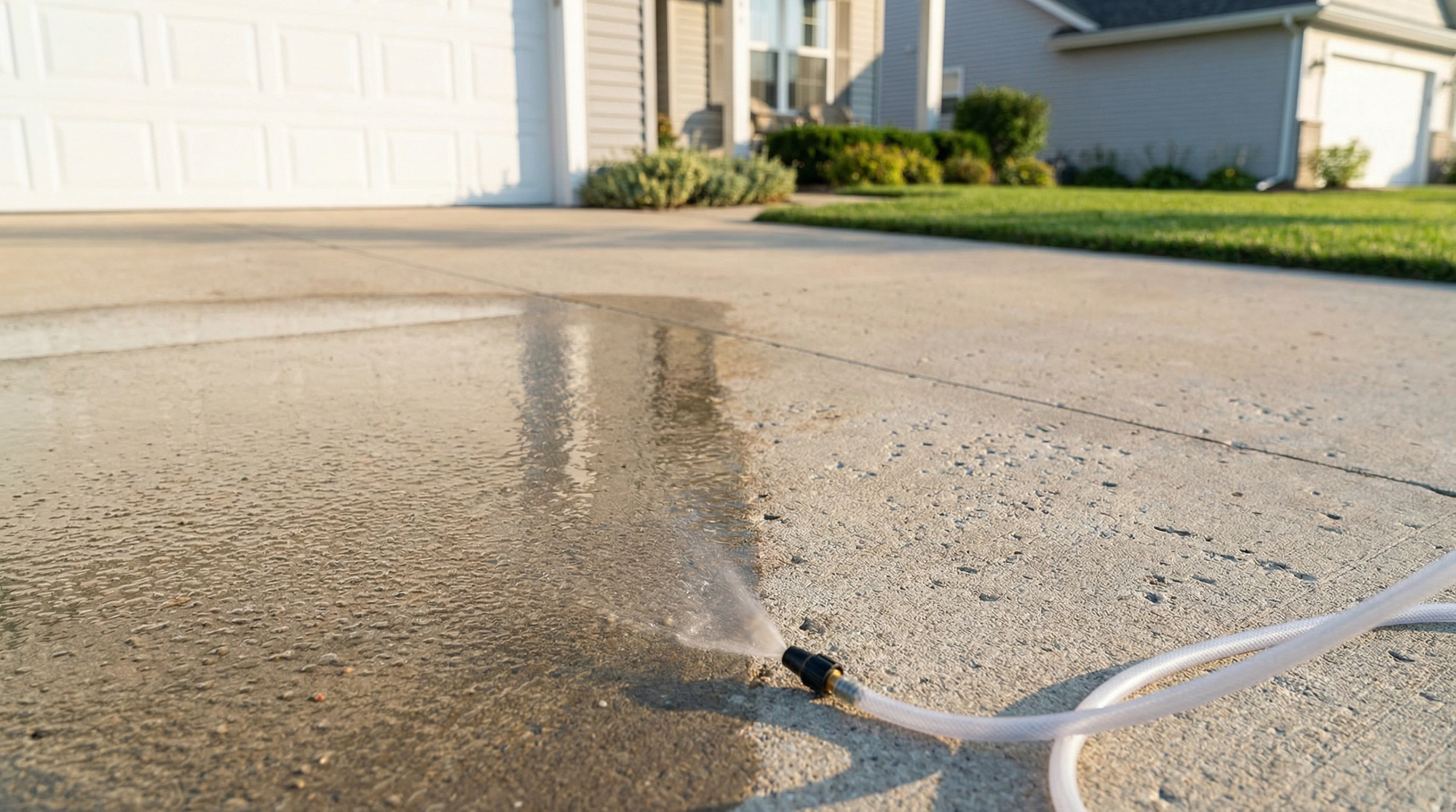
Heres where I get into trouble because I could talk about this all day. The technique matters as much as the equipment. You want to keep the nozzle about 8-12 inches from the surface, consistent distance, and work in overlapping passes so you dont get stripes. Go with the slope of the concrete so the dirty water runs away from where youve already cleaned. Dont hold the stream in one spot, keep it moving. I’ve seen people etch their name into concrete by accident because they paused to look at something with the trigger still pulled. The water pressure doesnt care that you got distracted. Also work in sections, maybe 4x4 feet at a time, especially on a hot day because you dont want the cleaner to dry before you rinse it.
Early in my career I was cleaning a driveway in Texas, Plano area, and I was using way too much pressure and holding the nozzle way too close because I was impatient and wanted to get the oil stain out faster. I basically carved a light spot into the concrete that was noticeably different from the rest of the surface. The homeowner was not happy. I learned something that day about patience.
My neighbor here in Palm Beach pressure washed his driveway a few months ago at 7 AM on a Saturday. Full volume. I was trying to sleep in. The sound of a pressure washer at maximum for three hours straight is something I could live without ever hearing again.
The Surface Cleaner Attachment
If youre doing large areas like a two-car driveway, which is around 650 square feet typically, get a surface cleaner attachment. Its a round disc that goes on the end of the wand with spinning nozzles underneath. Covers more area faster and gives you more even results without the striping you get from a standard nozzle. Worth the extra money.
How to Clean Concrete Floors
Garage floors and basement floors are different from outdoor concrete. Youre in an enclosed space, ventilation matters, and you probably have stuff around that you dont want to get wet or damaged.
For garage floors, I start by getting everything out. Every tool, every box, everything. Then sweep, then deal with oil stains specifically before doing an overall clean. For oil stains, cat litter is the old school approach. Pour it on, grind it in with your foot, let it sit overnight, sweep it up. Works okay. Degreasers work better.
You can pressure wash a garage floor but you need drainage figured out before you start. The water has to go somewhere. And you need to be careful about overspray on drywall, electrical outlets, whatever else is in there.
For basement floors, be extremely careful about moisture and drainage. You dont want water getting into places it shouldnt be. Sometimes a mop and bucket with a good cleaner is the smarter choice even if its slower.
I’m not getting into stamped concrete or decorative finishes here. Thats a whole different thing with different rules and if you have stamped concrete you should probably call someone who specializes in it because its too easy to strip the color or damage the texture.
How to Clean a Concrete Patio
Patios get the same treatment as driveways mostly. Sweep first. Chemical cleaner or pressure washer or both. Rinse.
The difference is patios often have more organic growth because theyre in shadier spots. Mold, mildew, algae, moss. For this stuff, an oxygenated bleach solution works well. Not chlorine bleach, oxygenated. Safer for plants around the patio, still effective on the organic material.
If your patio has furniture on it, youre going to have shadow patterns where the furniture blocked sun and dirt accumulated differently. Just be prepared for that. You might need to do a few passes to even things out.
DIY vs Hiring Someone
You can rent a pressure washer from any big box store for around $50-100 a day. Buying a decent electric one runs $200-400. Gas powered units that can actually hit 3000 PSI are more.
Professional concrete cleaning typically runs $0.55-0.60 per square foot. For a 650 square foot driveway thats around $400. More for heavily stained surfaces.
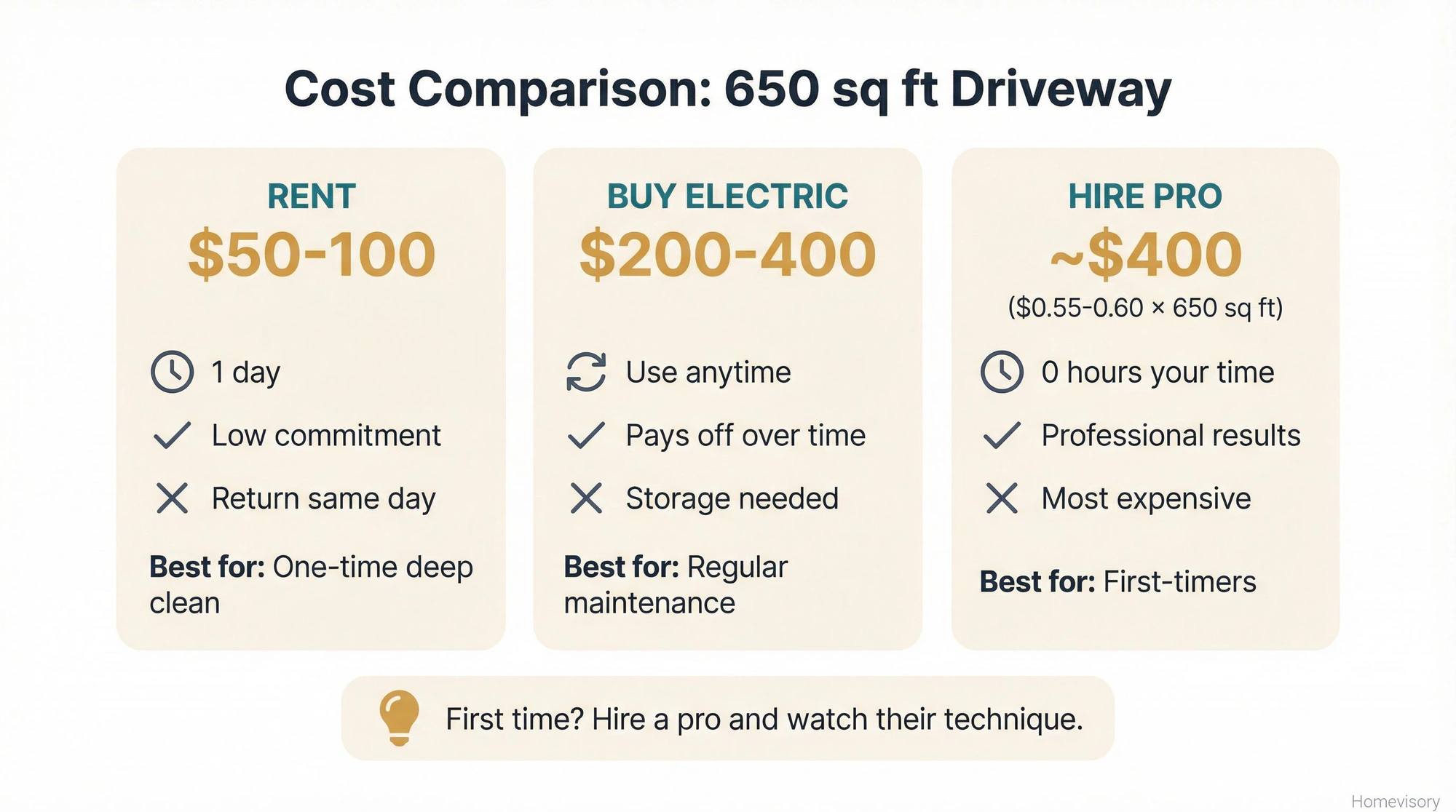
Is it worth hiring out. Depends on your time, your comfort with the equipment, and how much you care about the result. I’ve done my own concrete cleaning for decades but I also know what I’m doing. If youve never used a pressure washer before and your driveway is 1500 square feet, maybe pay someone the first time and watch how they do it.
After You Clean It
Mr. Davis, the woodshop teacher I had back in Atlanta, used to say finishing the job matters as much as starting it. He was talking about sanding and finishing wood but it applies to concrete too.
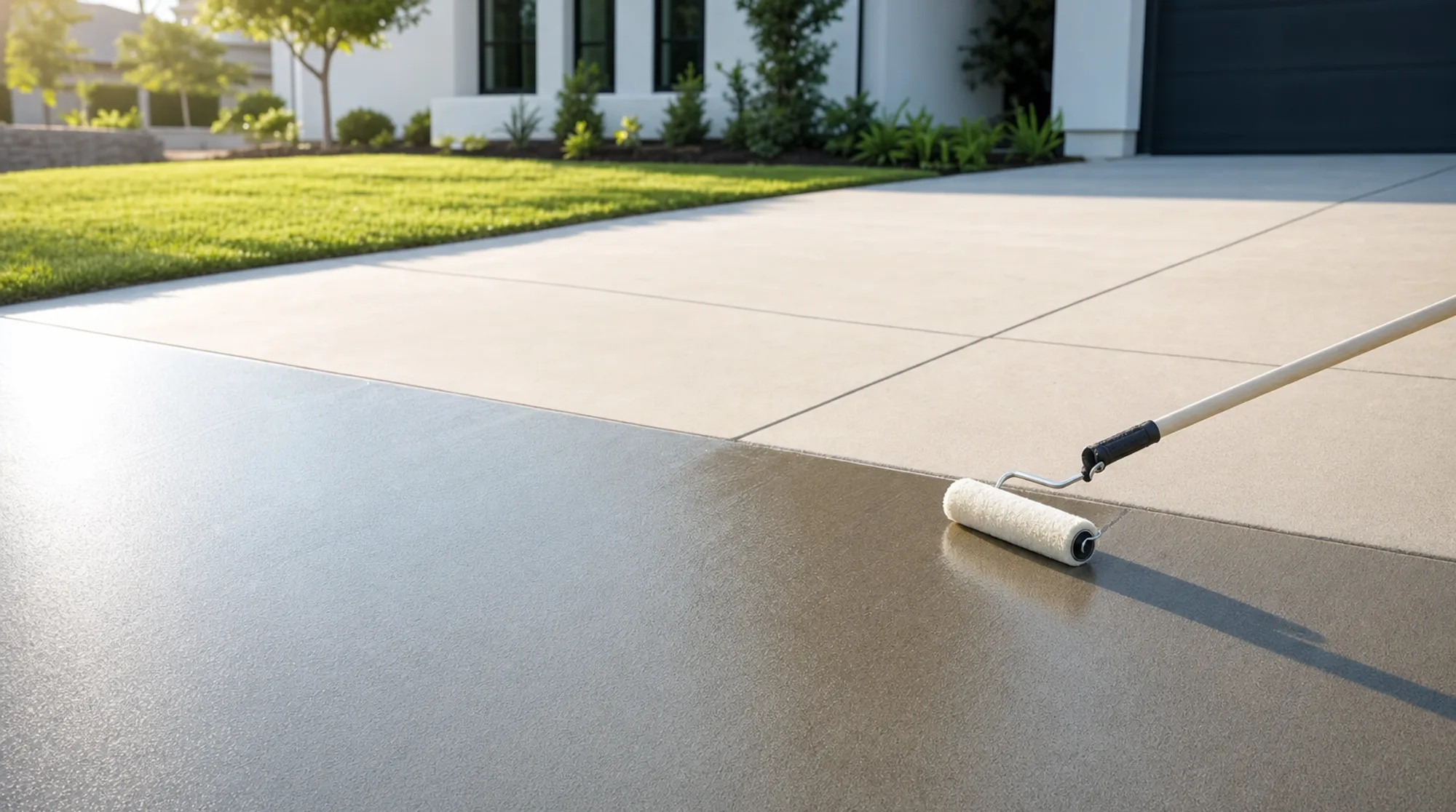
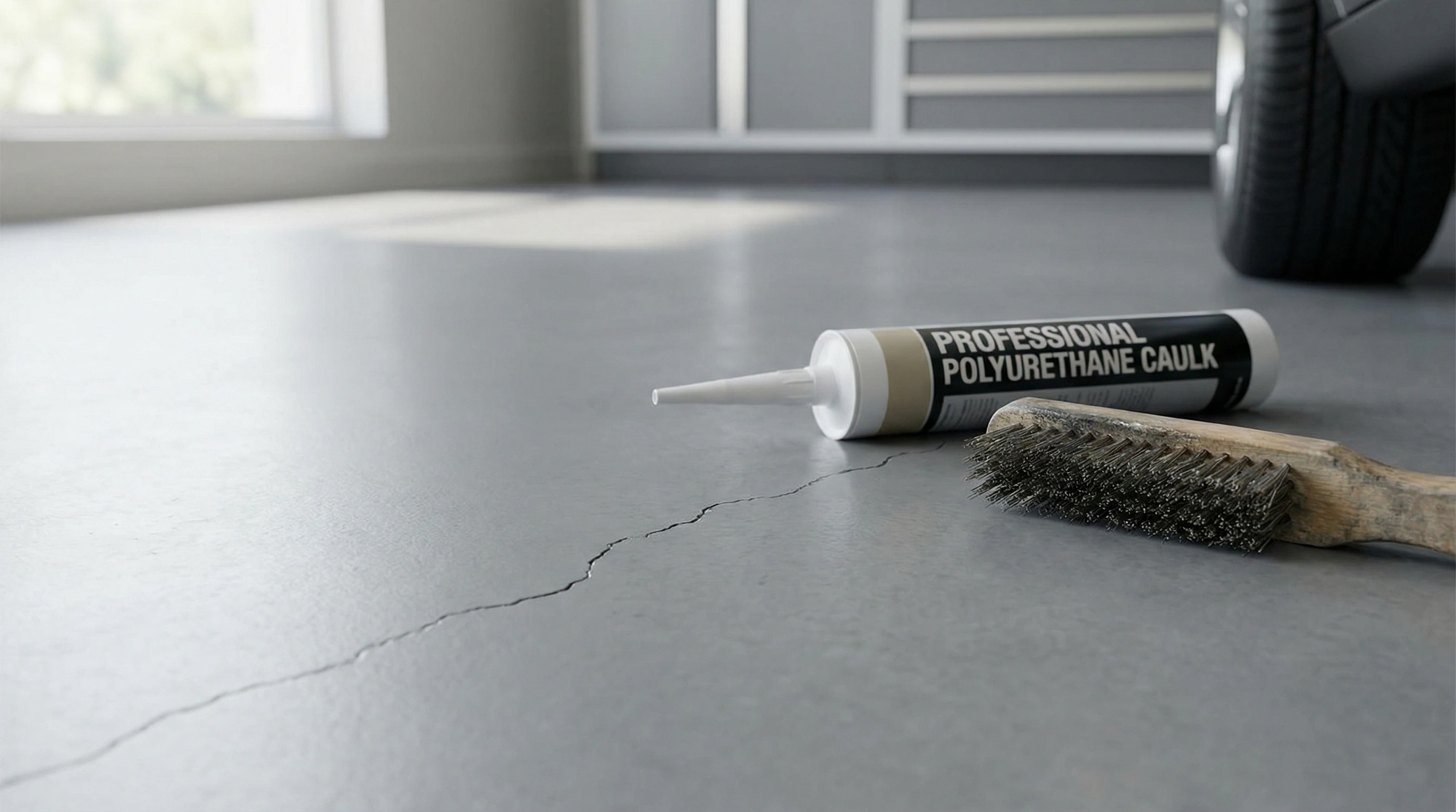
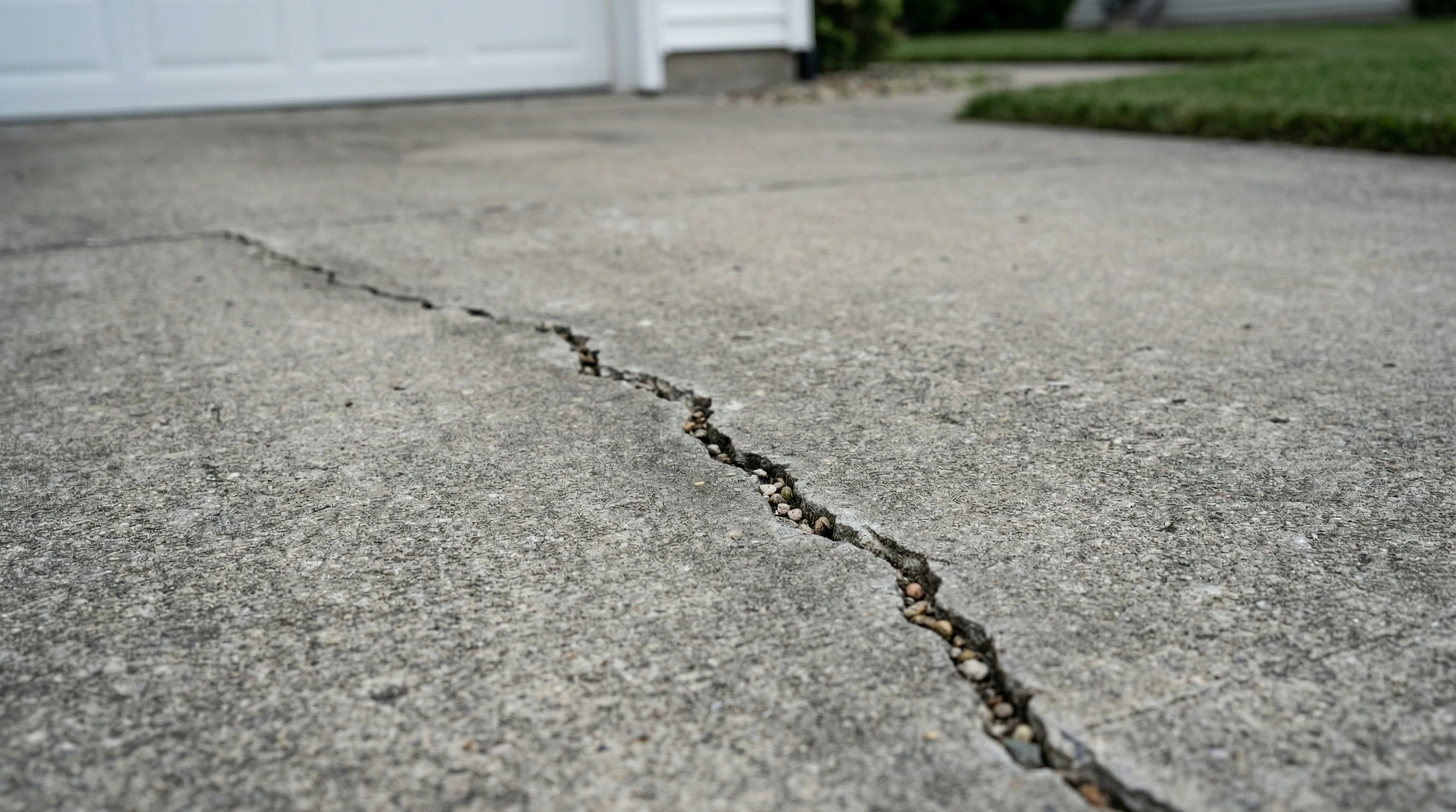
After you clean concrete, especially outdoor concrete, you should seal it. A high-quality sealer prevents water absorption and protects from freeze-thaw cycles, deicing salts, oil, mold, grime, and UV damage. Cleaning is just the first step — our concrete care guide covers the full maintenance cycle including repairs and sealing. This is especially important in climates with real winters, but even in Florida the UV protection matters.
Wait for the concrete to dry completely before sealing. Most concrete takes 24-48 hours to fully dry after deep cleaning. Dont rush it. Sealing wet concrete traps moisture and causes problems down the line.
Keep Up With It
The whole point of cleaning concrete is that its easier to maintain than to restore. Once you get it clean, stay on top of it. Sweep regularly. Hit oil stains when they happen, not six months later. Do a full cleaning once or twice a year depending on your climate and how much use the surface gets.
Thats what we do here at Homevisory. We help people stay on top of all the maintenance tasks that are easy to forget until they become expensive problems. If you want help keeping track of when to clean your concrete, when to reseal it, when to check your gutters and change your filters and everything else, the Homevisory home task manager can help you build a schedule and stick to it. Its free to sign up.