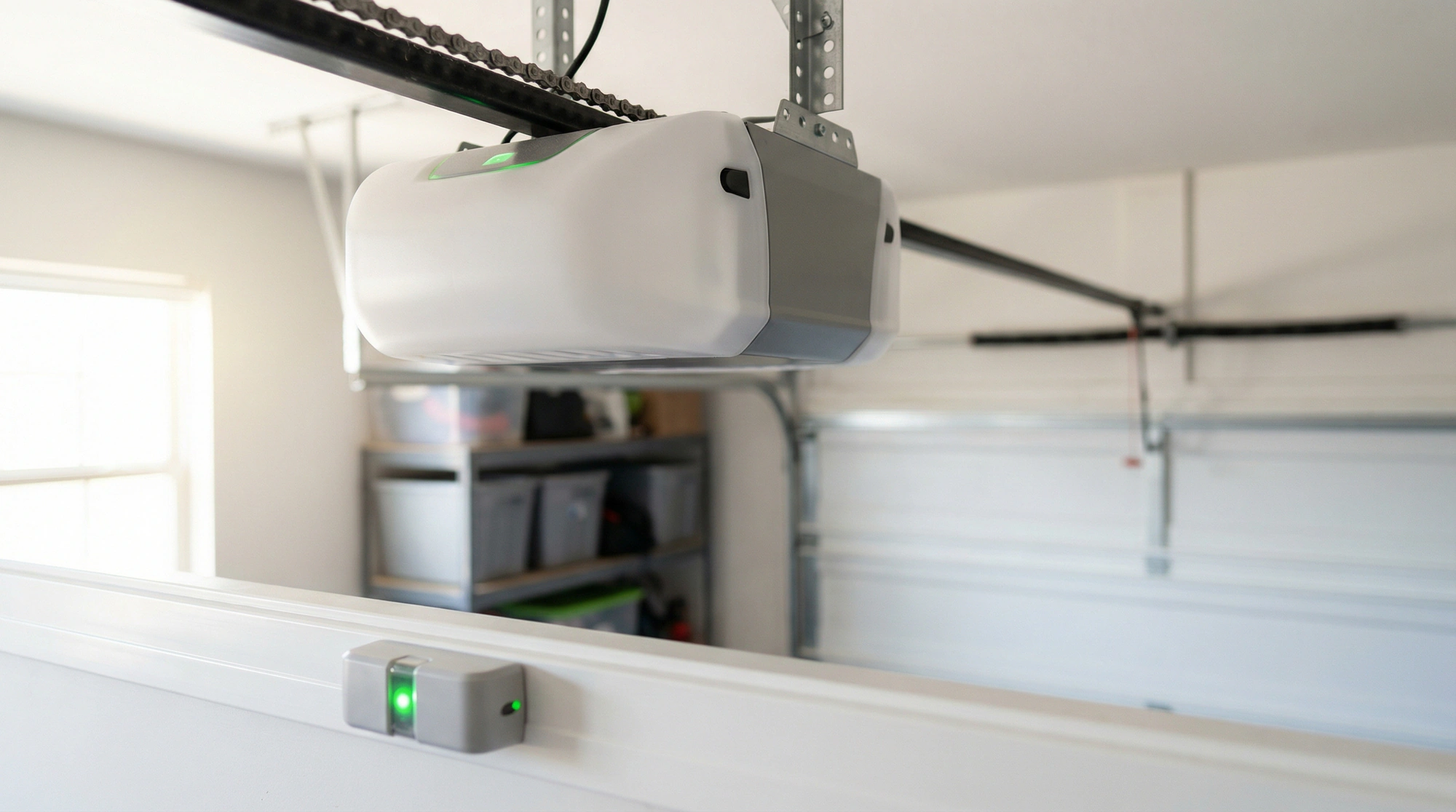
Most people ignore their garage door opener until it stops working. Then its suddenly an emergency. The car is trapped inside, youre late for work, and now youre standing in the garage at 6:45 AM pressing the button like something different is going to happen the eleventh time.
I’ve been doing home renovation work for over thirty years and garage door opener repair is one of those things that sounds complicated but usually isnt. Most problems fall into a handful of categories and most of them you can fix yourself with basic tools and twenty minutes. Some of them you absolutely cannot fix yourself and I’ll tell you which ones those are.
The Safety Thing First
I’m going to talk about this before anything else because garage doors can kill people. Thats not dramatic. The CPSC reports that about 73 children between ages 2 and 14 have been trapped and killed under automatic garage doors since 1982. Three deaths per year on average. And more than 2,000 people per year are crushed by garage doors according to injury surveillance data.
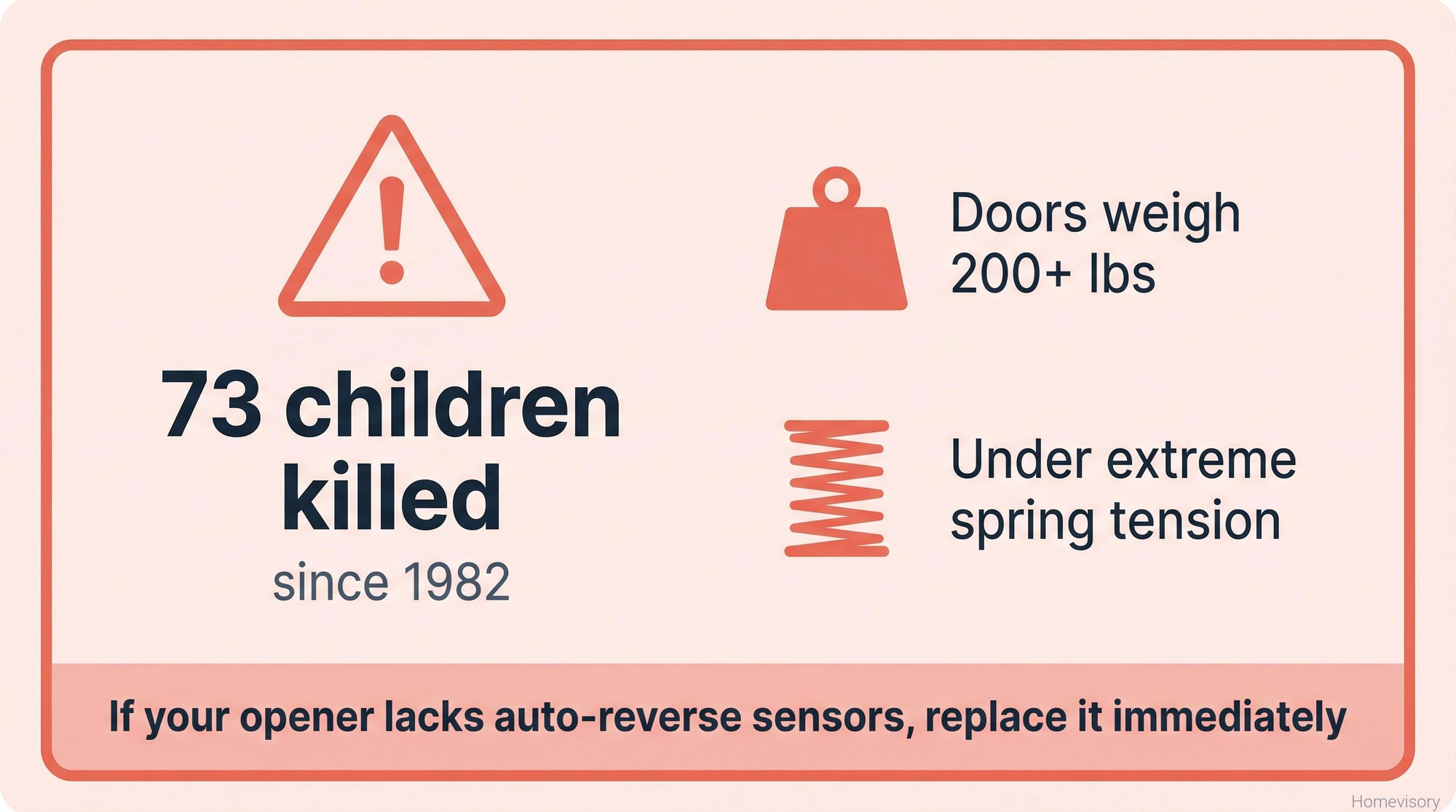
So before you start messing with anything, understand what you’re dealing with. Garage doors can weigh more than 200 pounds and they operate under heavy spring tension. Since 1993 federal law requires all automatic garage door openers to include an auto-reverse mechanism and photoelectric safety sensors. If your opener doesnt have these features, stop reading this article and replace it. I’m serious.
The Remote and Wall Button
Start here. Always start here.
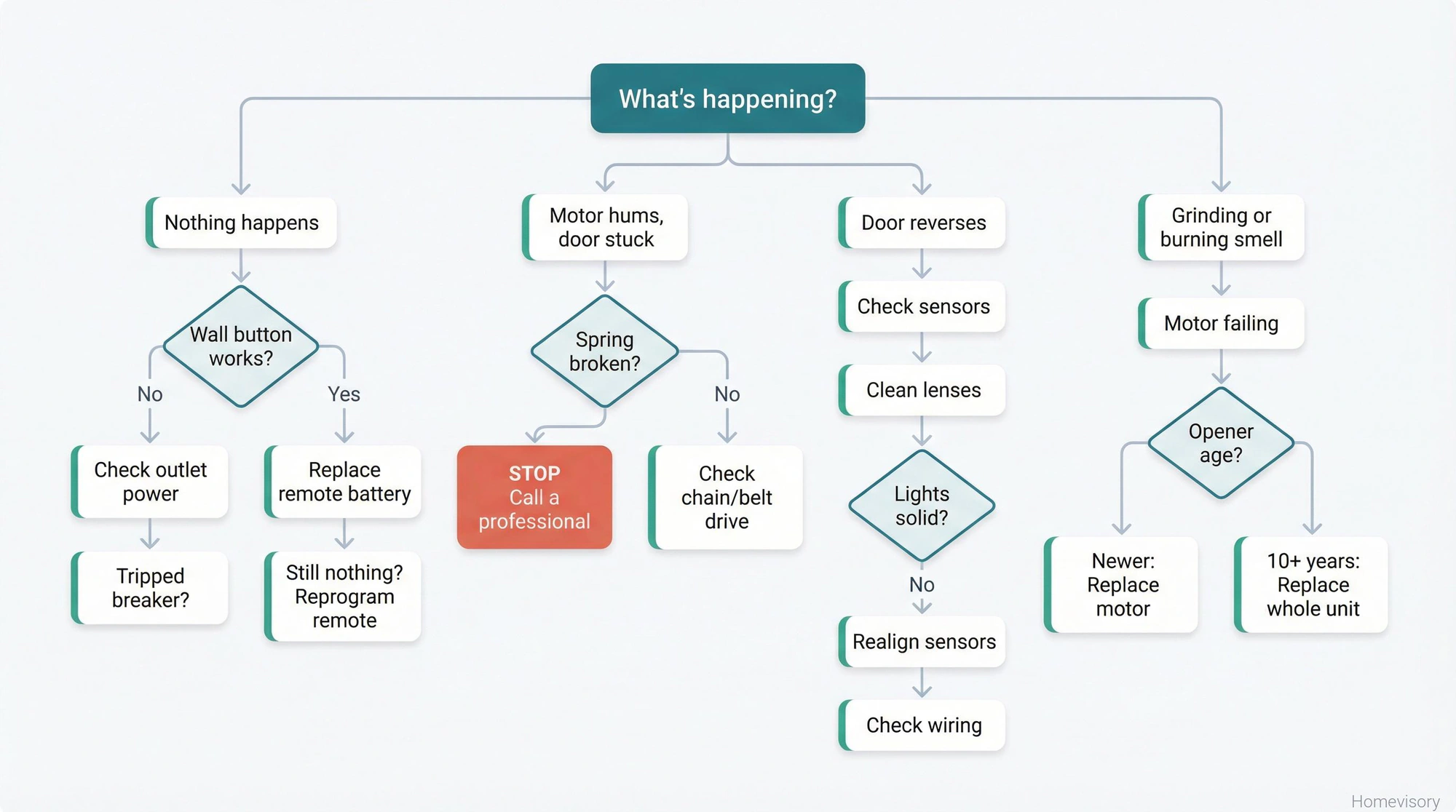
If your remote isnt working but the wall button works fine, you dont have an opener problem. You have a remote problem. Replace the battery. I know you think you just replaced it. Replace it again. Batteries are weird and they die at random times and half the time the “new” battery you put in was sitting in a drawer for three years.
If that doesnt fix it, reprogram the remote. Every opener is different but theres usually a “learn” button on the motor unit. Press it, then press your remote button within 30 seconds. Done. If that doesn’t work either, I’ve got a complete remote programming guide that covers every brand.
If neither the remote nor the wall button works, check if the motor unit has power. Is it plugged in. Did the outlet trip. I’ve driven to peoples houses for “emergency” garage door opener repair and the problem was that the outlet tripped and nobody thought to check. They saw lights on in the garage and assumed everything had power. Different circuits.
The Safety Sensors
This is where I’m going to spend most of my time because this is where most DIY garage door opener repair goes wrong. The sensors are the two little boxes on either side of the door opening, about six inches off the ground. One sends an infrared beam, the other receives it. If anything breaks that beam, the door reverses.
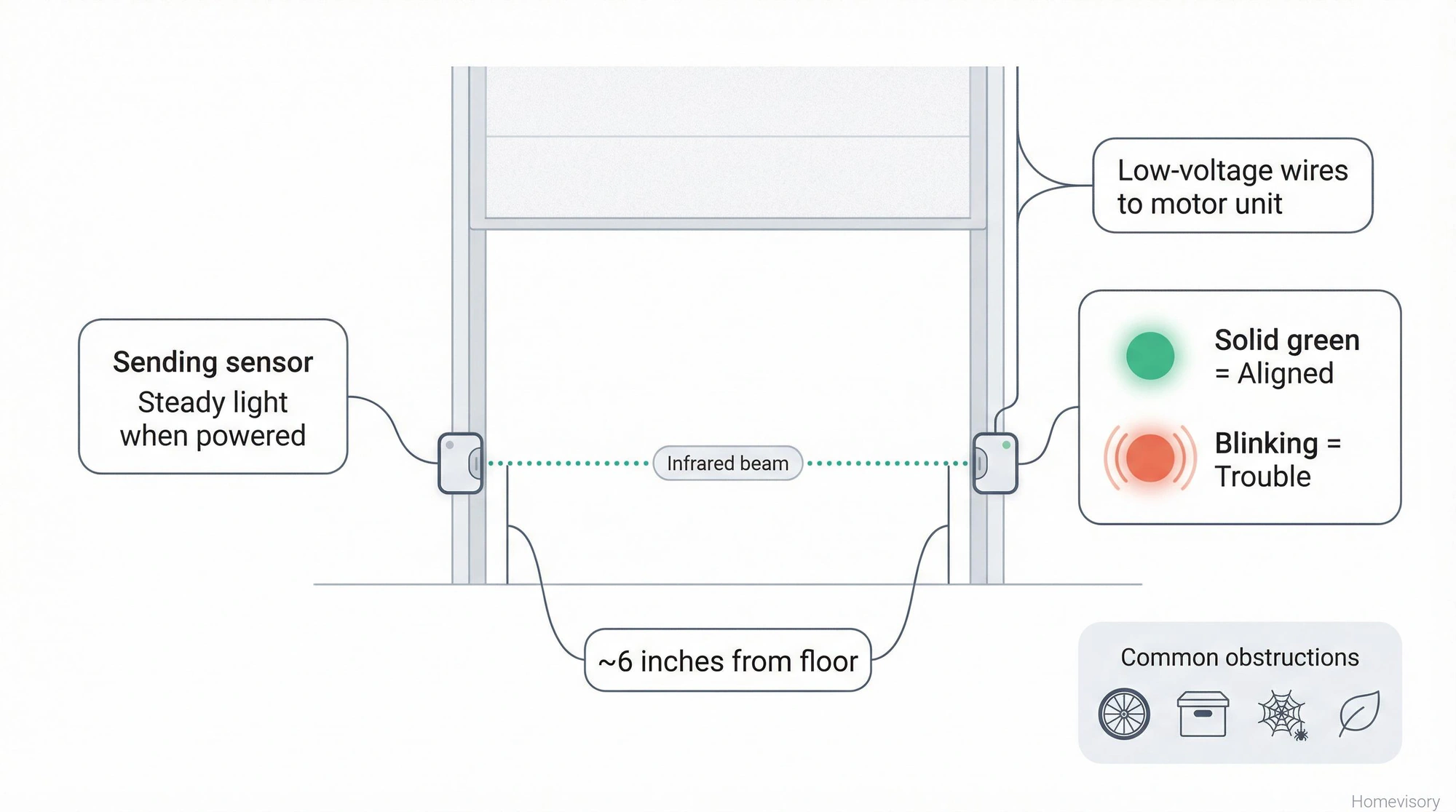
When sensors have a problem, the opener usually clicks but the door wont close. Or it starts to close and immediately reverses. One sensor will have a steady light, the other will be blinking. Blinking means trouble.
Here’s what to check. The sensors get knocked out of alignment constantly because they’re in the stupidest possible location, right at the height where kids bump them with bikes and where you hit them with the lawnmower and where every piece of junk you store against the wall slowly drifts into their path over months until one day you can’t close your door and you dont know why. People store so much garbage in their garages and half of it ends up leaning against the wall right where the sensor is and they can’t figure out why their door stopped working last Tuesday when nothing changed. Something changed. Something always changed. You just didnt notice it falling over at 3 AM. I’ve seen spider webs trigger these things. I’ve seen a single leaf sitting on top of the sensor lens trigger them. Dust accumulation over years. Water spots from that time you washed the car inside.
Wipe both lenses with a clean cloth. Check alignment by looking for the indicator lights on both units, usually green means aligned. Loosen the mounting brackets slightly and adjust until both lights are solid. Tighten everything back down.
If you’ve cleaned them and aligned them and they still dont work, check the wiring. These things run on low voltage, usually a pair of thin wires that run up the wall and along the ceiling to the motor unit. Look for breaks, look for corrosion at the terminals, look for where a staple might have punctured the wire when someone was hanging Christmas lights. I’ve seen that twice.
Sensor replacement isnt hard. New sensors cost maybe $40-60 for a pair and you just disconnect the old wires and connect the new ones. Thats it. But heres what you dont do. You dont bypass the sensors because the door is stuck open and you need to get to work. I’ve seen people disconnect the sensor wires entirely and then wonder why their opener started working again. Great. Now you have a 200+ pound door with no safety features. The CPSC specifically warns that non-reversing garage door openers are a hazard and should be repaired or replaced immediately.
The Gears and Motor
My dad Curtis and I installed a Genie opener when we first moved to Texas. I was maybe seventeen. He’d never installed one before but he had the manual and he read the whole thing twice before we started, which is the most Curtis Carter thing I can tell you. Took us most of a Saturday. I remember the sound it made the first time we tested it, this grinding whir that seemed way too loud for what it was doing. He said every machine makes noise and the trick is knowing which noises are normal and which ones arent.
Mr. Davis, my shop teacher back in Atlanta, said something similar about power tools. A tool cant tell you whats wrong but you have to listen to it. The motor knows. You just have to pay attention.
If your opener makes a humming sound but nothing moves, the motor is trying but something is stopping it. Could be stripped gears. Could be a broken chain or belt. Could be that the door itself is stuck, which brings me to the part I wont help you with.
Springs
No.
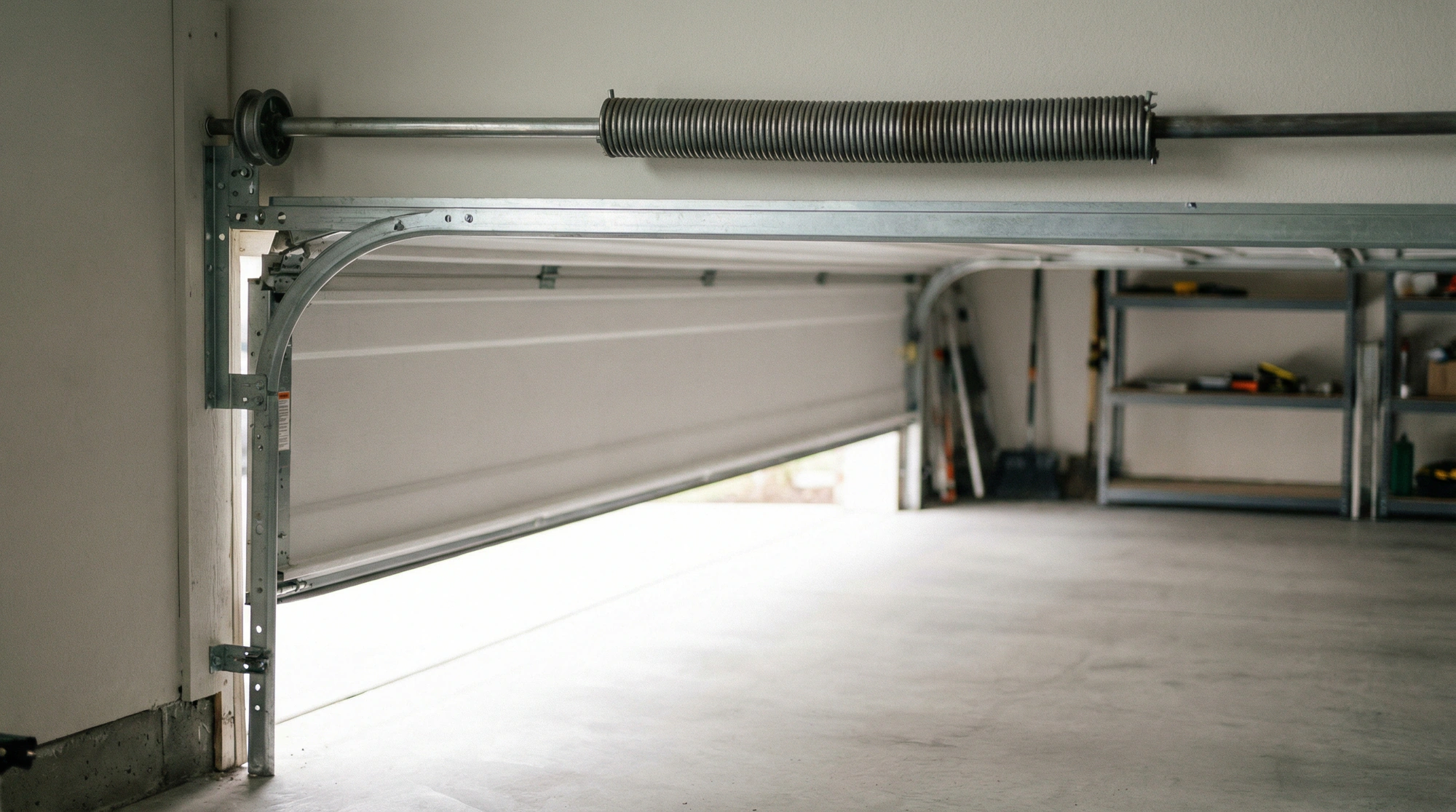
If your spring is broken, call someone. Torsion springs are under extreme tension and they will hurt you badly if you dont know what you’re doing. Spring replacement is the most common garage door repair and there’s a reason professionals do it. I’ve been doing this work for thirty years and I still call someone for springs.
Moving on.
The Chain, Belt, or Screw Drive
Your opener uses one of three drive systems. Chain drives are loud but durable. Belt drives are quiet but cost more. Screw drives are in the middle and have fewer parts to break.
If the motor runs but the door doesnt move, the drive mechanism is probably the issue. For chain drives, check if the chain is broken or has jumped off the sprocket. This happens when chains stretch over time and arent adjusted. You can adjust chain tension yourself, theres usually a threaded rod with nuts that lets you take up the slack.
Replacing chains costs about $100 to $400 with labor or $10 to $50 for just the parts. If youre handy and the chain just needs replacing, its not a complicated job. Remove the old chain, route the new one around the sprocket and through the rail, connect both ends to the trolley, adjust tension.
Belt drives rarely break but when they do, same process.
When the Motor Dies
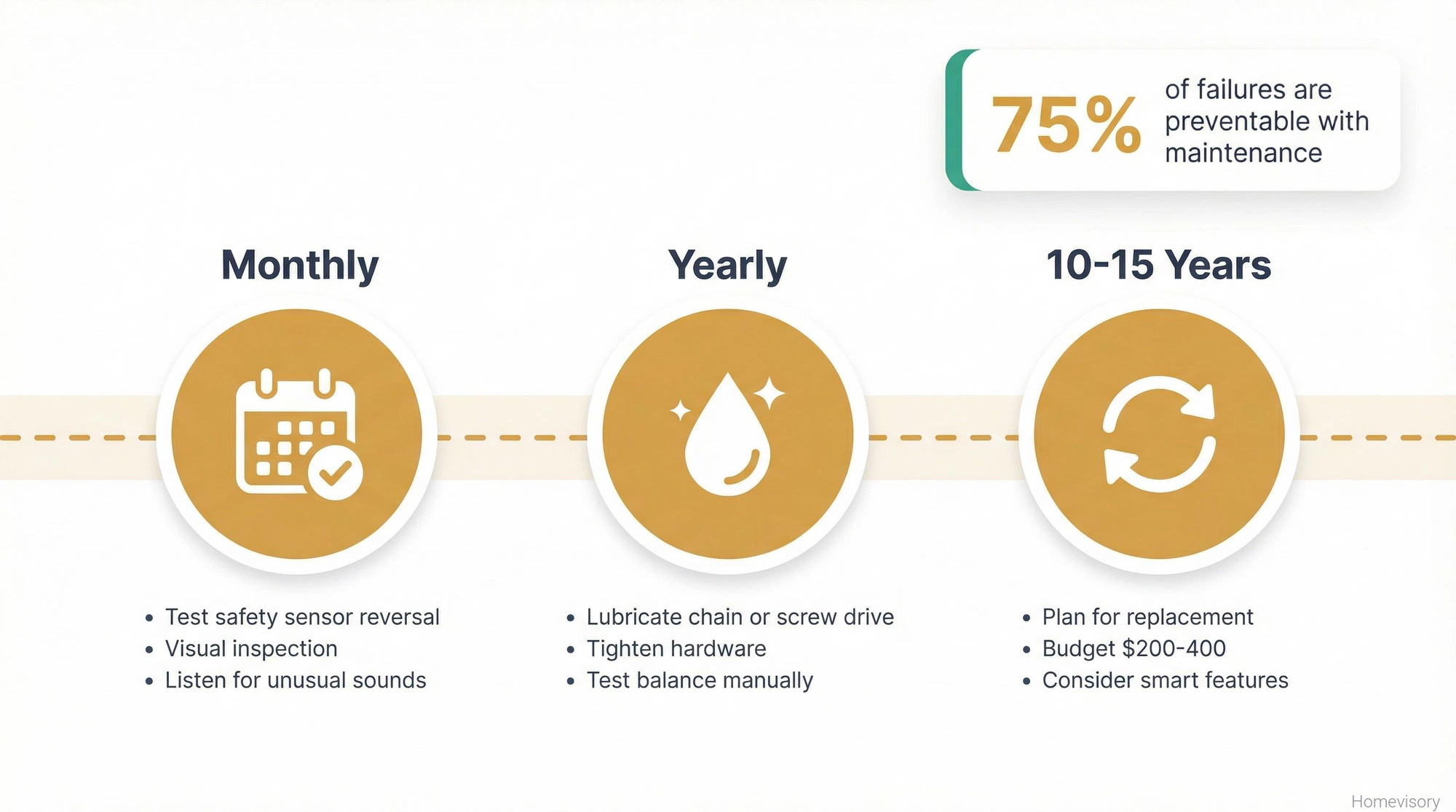
Motors last about 10 to 15 years with regular use. If yours is grinding, overheating, or making electrical burning smells, its probably done. Garage door motors cost between $180 and $400 and honestly at that price point you might as well replace the whole opener. A new opener is $200-400 for a basic model and you get new safety features, new remotes, maybe smartphone control, and a warranty.
Whatever. Just budget for it. Openers arent forever.
The Weird Stuff
Sometimes garage doors close most of the way and then reverse for no apparent reason. Check the close-limit adjustment on the motor unit. Theres usually a screw or dial that controls how far down the door travels. If its set wrong, the opener thinks the door has hit something and reverses.
Sometimes the door reverses when opening. Same concept, different screw. Open-limit adjustment.
Sometimes the light on the opener flashes a certain number of times after you press the button. That’s a diagnostic code. Look up your model and the flash pattern. The opener is trying to tell you what’s wrong.
The IDA reports that 75% of garage door failures are due to lack of regular maintenance. Which sounds high but honestly I believe it. Lubricate the chain or screw drive once a year. Test the safety sensors once a month. The CPSC recommends inspecting the garage door and opener every 30 days to make sure everything works.
What You Can Fix Yourself
- Remote batteries and reprogramming
- Sensor alignment and cleaning
- Sensor replacement
- Chain tension adjustment
- Drive chain or belt replacement
- Limit adjustment
What You Should Call Someone For
- Spring repair or replacement
- Cable repair or replacement
- Anything involving the door tracks
- Motor replacement if you’re not comfortable with electrical work
- Any opener that lacks modern safety features
That Genie we installed in Texas, I dont know how long it lasted. We moved again a few years later and I never thought to ask. I remember my dad reading that manual twice though. And I remember the sound it made. But yeah.
Garage door opener repair isnt complicated for most common problems. The hard part is knowing what you’re looking at and whether you should be looking at it yourself. If something feels dangerous, it probably is. Call someone. For a broader look at everything garage-door-related, from installation to storage, check out our complete garage door guide.
For everything else, keeping track of when your opener was installed, when you last maintained it, when parts were replaced, thats the kind of thing that prevents emergencies. Thats what we do here at Homevisory. Our Homevisory home task manager helps you schedule maintenance before things break, track what youve done, and know when its time to call a professional. Its free to sign up and its the difference between handling problems on your schedule and handling them at 6:45 AM when youre already late.