The Thing Most People Get Wrong About Garage Door Repair
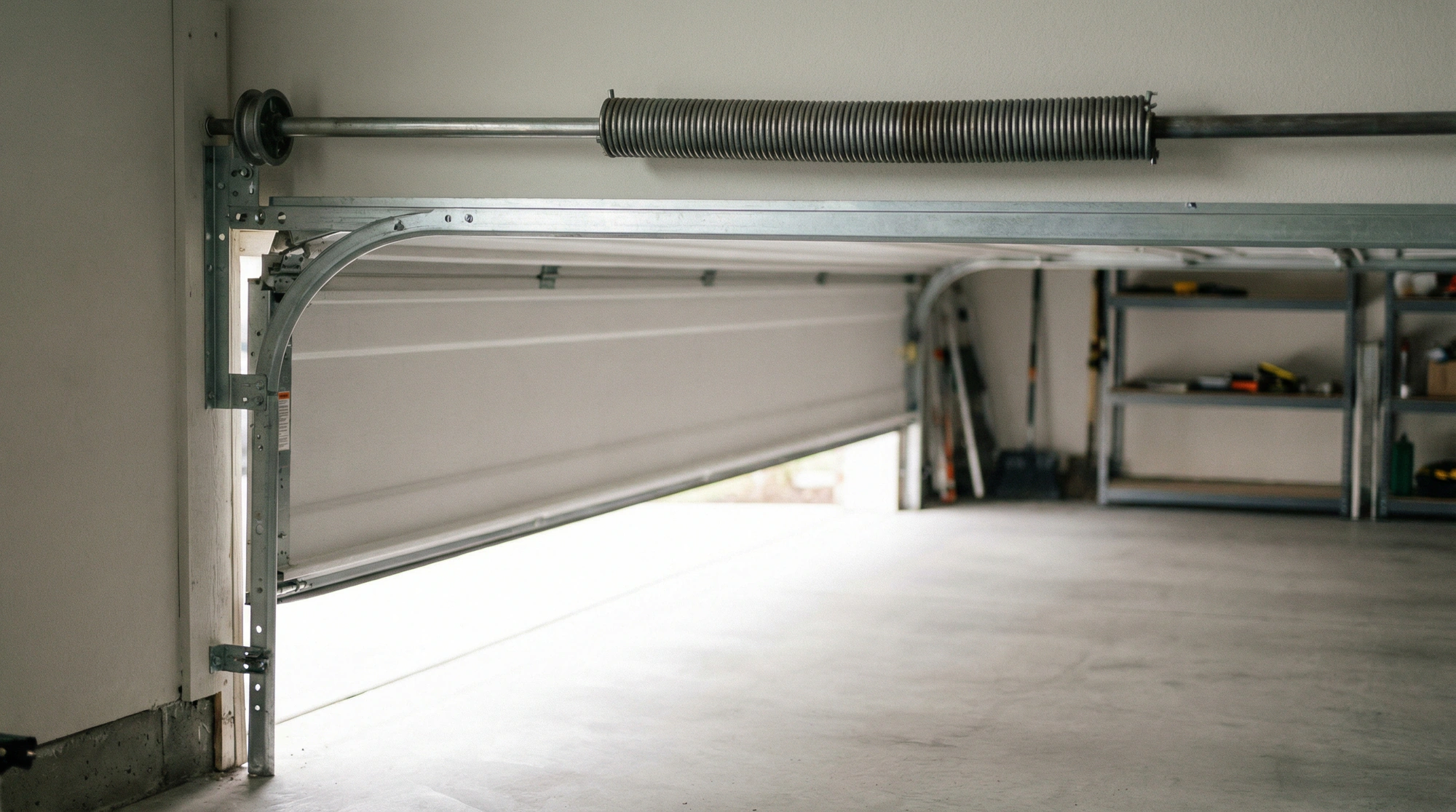
Your garage door is probably the largest moving object in your house. I dont know why people forget that. They’ll call a professional to fix their dishwasher but then watch a YouTube video and decide they can replace a torsion spring themselves on a Saturday afternoon.
I need to talk about this because garage door repair is one of those topics where the gap between “stuff you can handle yourself” and “stuff that will send you to the hospital” is massive. And the line isnt always obvious.
More than 2,000 people per year are crushed by garage doors, and over 7,500 get pinched during operation. Thats not a small number. And a lot of those injuries happen during repair attempts.
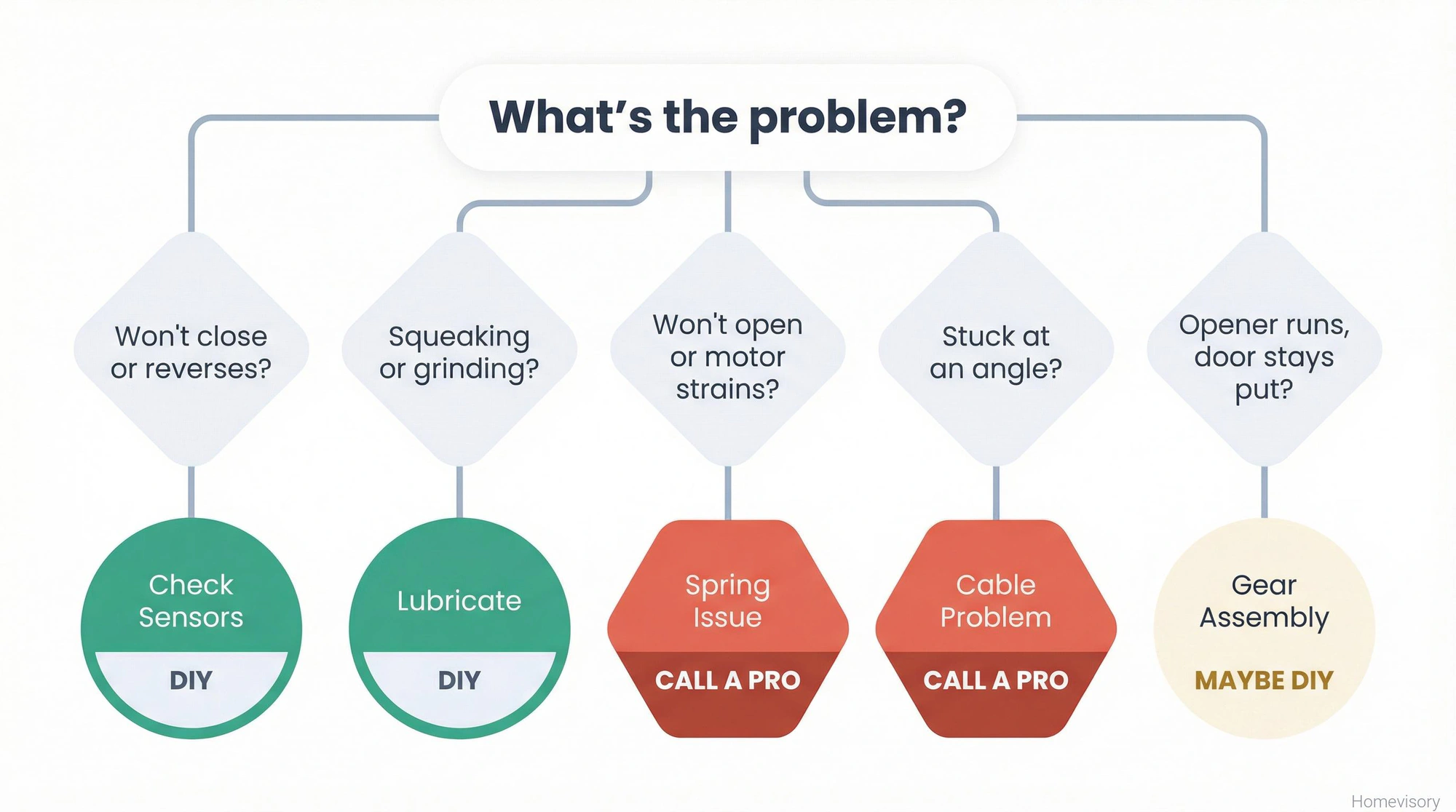
So heres what we’re going to do. I’m going to walk you through what you can fix yourself, what you absolutely cannot fix yourself, and how to know the difference. Because theres plenty of garage door repair you can handle without calling anyone. But theres also stuff that will kill you if you guess wrong.
The Stuff You Can Actually Fix Yourself
Let me start with the good news. A lot of garage door problems are simple.
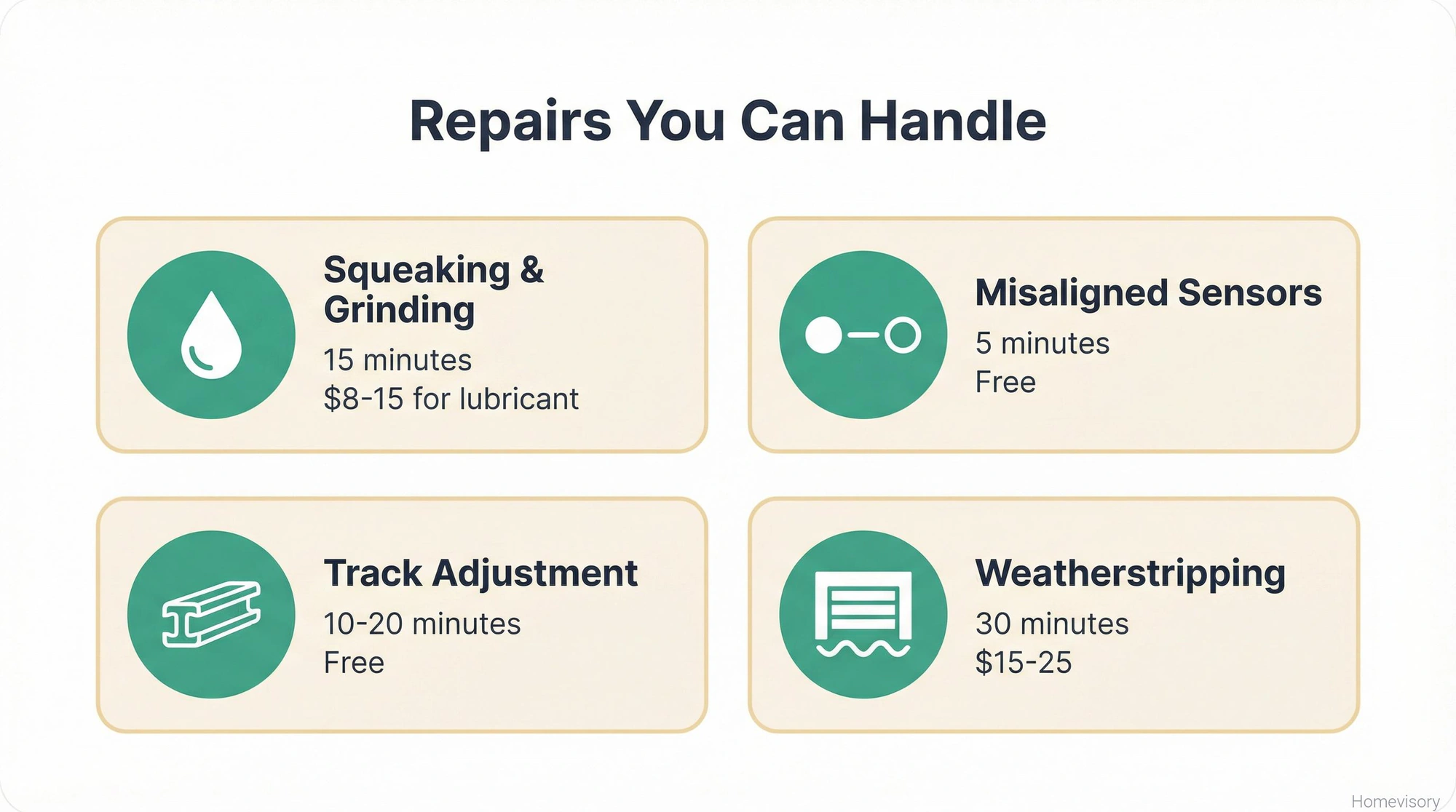
Squeaking and Grinding
If your door sounds like its in pain every time it moves, youve probably just got a lubrication issue. This is a fifteen-minute fix. Get a silicone-based lubricant or white lithium grease. Dont use WD-40 because its a solvent, not a lubricant, and it’ll dry out your parts.
Spray the hinges, the rollers if theyre metal, the track where the rollers ride, and the springs. Not the track surface where the rollers actually roll—that should stay dry so the rollers can grip. Just the contact points.
Do this twice a year. Maybe three times if you live somewhere humid like I do in Palm Beach.
Misaligned Sensors
This is probably the most common “emergency” call that isnt actually an emergency. Your door starts to close and then reverses for no reason. Or it wont close at all and the lights on your opener are blinking.
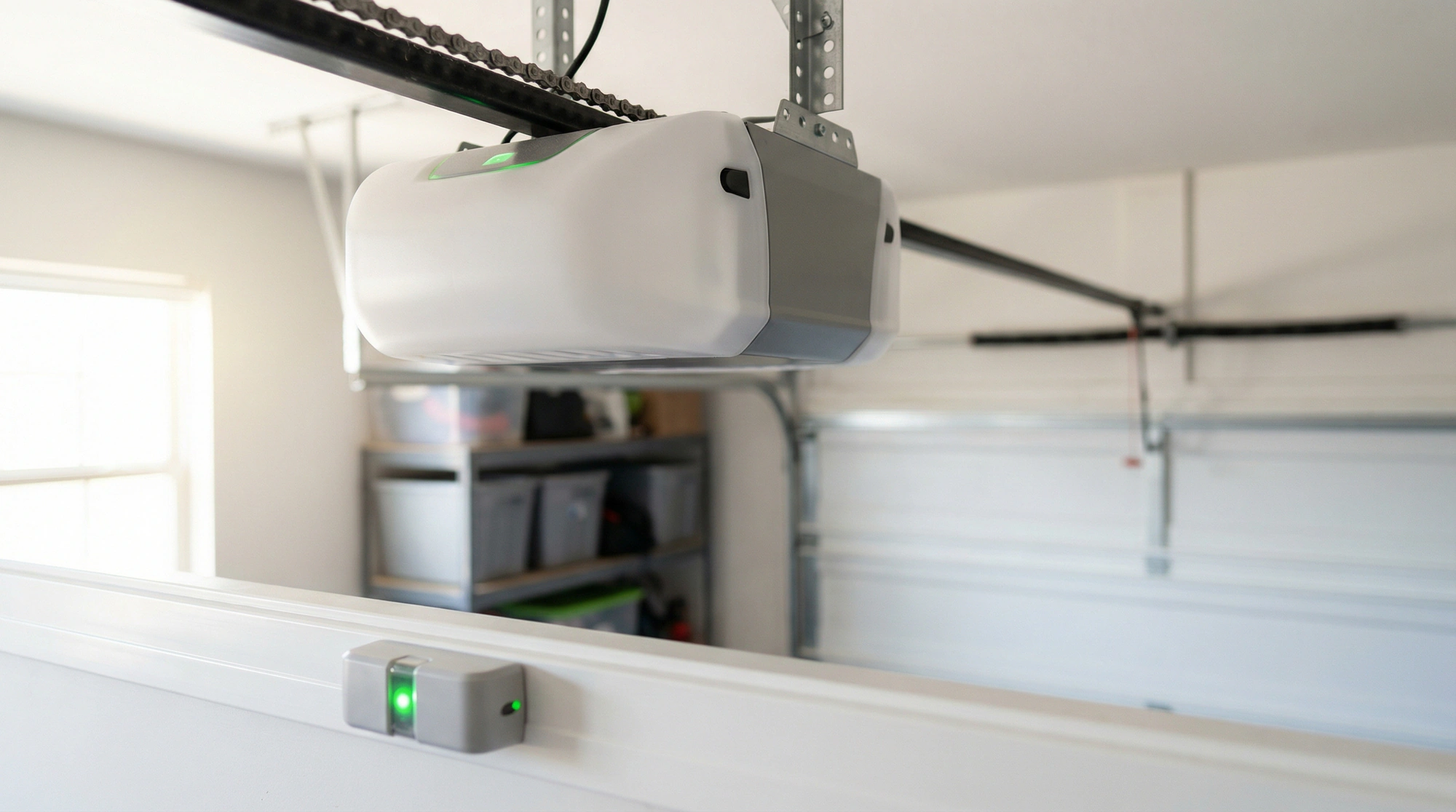
Look at the photo-eye sensors at the bottom of the door frame, about six inches off the ground. The CPSC mandated these on all garage door openers manufactured after 1993 because kids were getting trapped. They shoot an invisible beam across the opening and if anything breaks that beam, the door reverses.
Usually theyre just knocked out of alignment. A kid kicks one, someone bumps it with a bike, whatever. You can see if theyre lined up because most have a little LED light—green means good, red or blinking means they cant see each other.
Loosen the wing nut, adjust the angle, retighten. Done.
Also check for spiderwebs. I’m serious. Spiders love those things and a web across the lens will block the beam. Wipe them down.
The Track
Look at your track. Is it bent? Is there debris in it? Is there a gap between the track and the frame?
Minor bends you can tap back into place with a rubber mallet. Not a hammer, a rubber mallet. You dont want to dent it worse. Gaps between the track and frame mean the bolts are loose—tighten them.
If the track is seriously bent or warped, thats when you call someone. But most track issues are minor alignment problems you can handle.
Weatherstripping
The rubber seal along the bottom of your door cracks and tears over time. It lets in water, bugs, cold air, all of it. Replacement weatherstripping costs maybe twenty bucks and you just nail it or screw it to the bottom of the door. Theres nothing complicated about it.
Springs: The Part Where I Get Serious
Okay. I need to talk about springs.
Approximately 30% of garage door repairs involve broken springs, making them the most common failure point. And theyre also the most dangerous component of your entire garage door system. I’ve seen the aftermath of spring failures. Ive talked to guys who’ve been hit. This isnt something I’m being dramatic about.
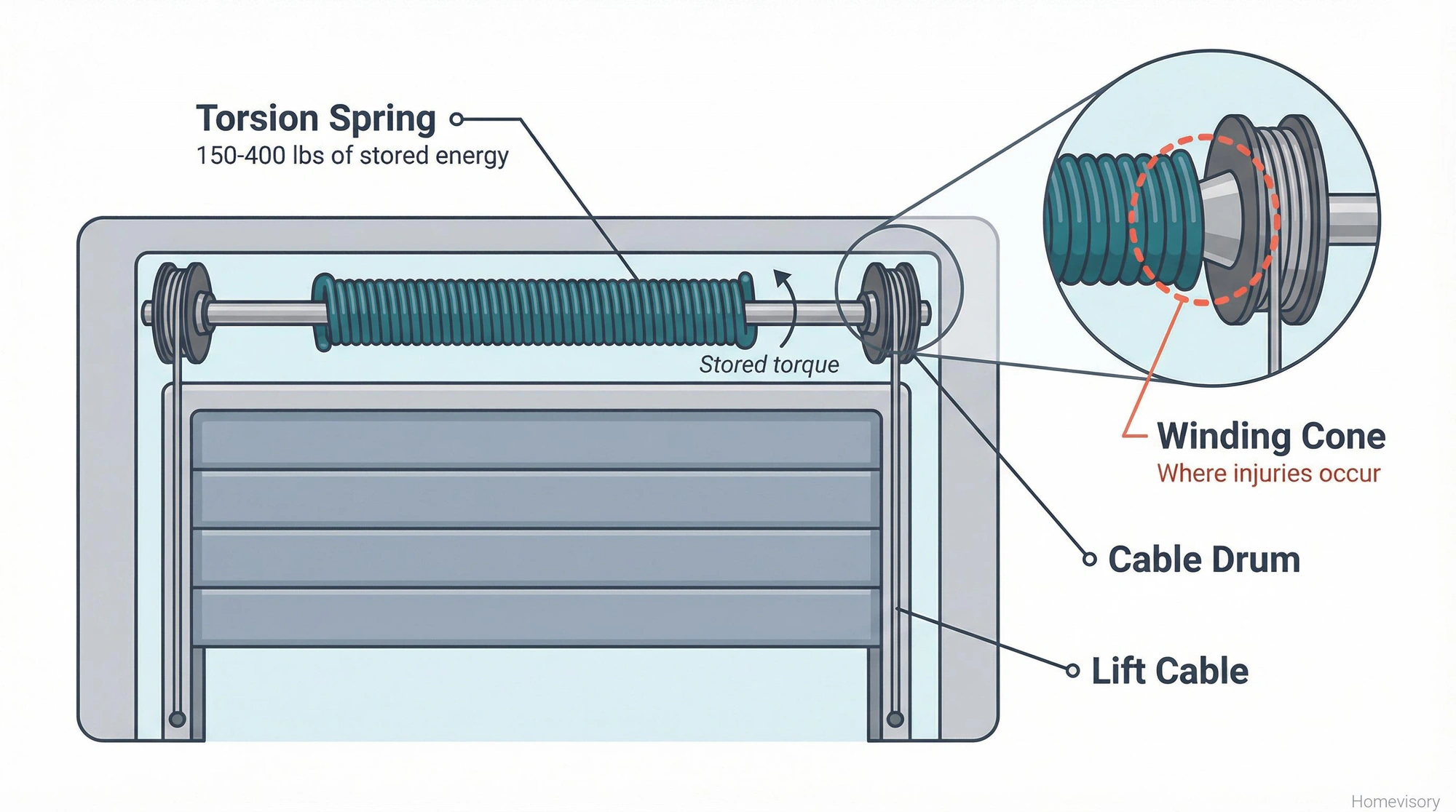
Your garage door weighs between 150 and 400 pounds depending on the size and material. The springs are what make it possible for you to lift that door with one hand or for a small motor to lift it automatically. They do this by being under extreme tension, and when I say extreme I mean theres enough force stored in a torsion spring to throw a metal rod through a wall.
My dad Curtis worked in a factory in Atlanta for thirty years. One thing he used to tell me, about something totally unrelated, he used to say “the first thing you learn is which machine will take your hand off.” He meant it literally. There were machines you could stand next to all day and machines you didnt turn your back on. The springs on a garage door are the machine you dont turn your back on.
Types of Springs
Theres two kinds. Torsion springs run horizontally above the door, mounted on a metal shaft. Extension springs run along the horizontal tracks on either side. Torsion springs are more common on newer and heavier doors because theyre better, but extension springs are still out there on older or smaller doors.
Both are dangerous. Torsion springs are dangerous because of the torque. Extension springs are dangerous because they can fly across the garage if they break and theyre not contained by a safety cable.
What a Broken Spring Looks Like
You’ll know. The door either wont open at all, or it opens about six inches and stops, or the opener motor is straining and groaning like its trying to lift a car. Sometimes you can see the break—a gap in the spring where it separated.
If you have torsion springs, do not touch them. Dont try to manually wind them. Dont try to remove them. Dont try to adjust them. I dont care how many YouTube videos you’ve watched. The winding cones on those springs are designed to be turned with special bars under controlled conditions and if the bar slips, or if you use the wrong size, the cone spins and the bar becomes a projectile.
Replacing garage door springs costs between $180 and $350 each, including parts and labor. Thats what, the cost of a nice dinner out and a movie? Is that worth risking your life over? Is that worth emergency garage door repair becoming “emergency room visit” instead?
The Guy in Plano
I knew a guy in Plano when I was doing commercial work in Texas. Not a homeowner, a contractor. He’d been doing this for years. He was adjusting a torsion spring and the winding bar slipped out of the cone. Caught him across the forearm. Broke both bones. He was lucky it wasnt his head.
He’d done that repair hundreds of times. Hundreds. It only takes once.
Extension Springs: Slightly Less Dangerous
Extension springs you can maybe replace yourself IF, and this is a big if, the door is fully open and the springs are relaxed. When the door is up, extension springs are not under tension. When the door is down, theyre stretched and loaded.
But honestly. Just call someone.
How Often Do Springs Fail?
Garage door springs are rated for cycles. One cycle is one open and one close. A standard spring is rated for about 10,000 cycles. If you open and close your door four times a day, thats roughly seven years.
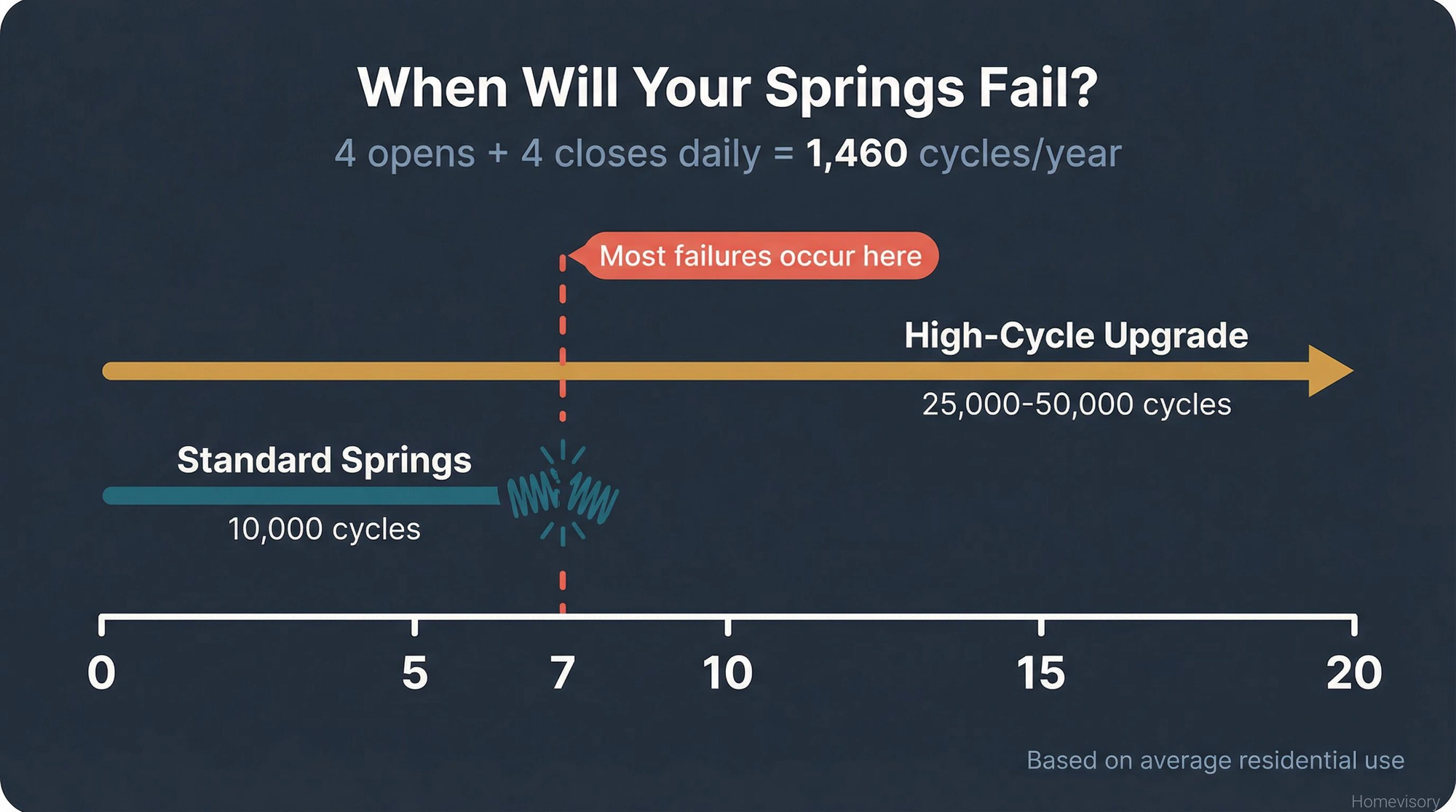
Some people upgrade to high-cycle springs rated for 25,000 or 50,000 cycles. Costs more upfront, lasts longer. If you’re having springs replaced anyway, ask about this.
Garage Door Cable Replacement
Cables are another component that fails and another one you probably shouldnt mess with.
The cables connect the bottom of the door to the springs. When a spring breaks, the cable often goes slack and comes off the drum. When a cable breaks, the door can drop unevenly or get stuck at an angle.
Garage door cable replacement technically requires the same safety considerations as spring work because you’re dealing with the same tension system. If the springs are still intact and under tension, you’re working around that stored energy even if you’re just touching the cables.
I’ve replaced cables before. In my professional career, not as a homeowner project. And even then I didnt love doing it. Theres just too much that can go wrong.
If your cable is frayed or broken, call someone. The average garage door repair costs $264, and cable replacement is usually on the lower end of that range. Pay the money.
The Opener
Your garage door opener is basically a motor on a rail. Motors burn out. Gears strip. Circuit boards fail. I’ve got a whole guide on garage door opener troubleshooting if you want the full breakdown.
If the opener runs but the door doesnt move, its usually the gear assembly. You can replace that yourself if you’re comfortable with basic mechanical work. Its not dangerous like springs.
If the opener doesnt run at all, check the obvious stuff first. Is it plugged in. Did the breaker trip. Are the remotes working. Sometimes its just a dead battery in the remote and people assume the whole system is broken.
Logic boards are hit or miss. Some you can order and swap out. Some are proprietary and you’re better off just buying a new opener. If your opener is more than fifteen years old and the board dies, buy a new opener. The technology has gotten better and newer ones are quieter and have better safety features.
Speaking of safety features—if your opener was manufactured before 1993, replace it. Not “consider replacing it.” Replace it. Pre-1993 openers don’t have the mandatory entrapment protection that prevents the door from closing on people. The CPSC documented 62 deaths from entrapment before those standards went into effect. This isnt something to procrastinate on.
When You Need Emergency Garage Door Repair
True emergencies:
The door is stuck open and you cant secure your house. Thats an emergency. Your car is trapped inside and you need to get to work. Thats an emergency. The door fell and is now blocking your car from getting out. Emergency.
A squeaky door is not an emergency. A door that takes an extra two seconds to open is not an emergency.
Most garage door companies charge a premium for same-day or after-hours service. You’re looking at $100-150 on top of whatever the repair costs. So before you call for emergency garage door repair, ask yourself if it can wait until Monday.
If it legitimately cant wait, call. But dont pay emergency rates for something that’s just annoying.
Routine Maintenance
I want to spend a minute on this because routine maintenance costs between $100 and $200 and it prevents most of the expensive stuff.
Once a year, ideally:
- Lubricate all moving parts
- Tighten all hardware (the vibration from opening and closing loosens bolts over time)
- Test the balance (disconnect the opener and lift the door manually—it should stay put when you let go)
- Test the auto-reverse by putting a 2x4 under the door
- Test the photo-eyes
- Inspect the springs, cables, and rollers for wear
Thats it. An hour of your time or a hundred bucks for a professional. Either way it beats a garage door cable replacement or emergency spring failure.
My Dad’s Garage Door in Atlanta
My parents had a garage door in the Atlanta house that didnt work right for three years. The chain was loose and it would skip and grind and sometimes the door would stop halfway up. My dad Curtis would go out there and mess with it and then say it was fine. It was not fine.
I was maybe fourteen, fifteen. I told him I could probably figure out how to tighten the chain. He said dont touch it. Not because he was worried about me getting hurt—I dont think he even thought about that—he just didnt want me messing with his stuff.
Three years. Of him going out there and manually lifting the door when the opener gave up. Of that grinding noise every morning.
Eventually the motor burned out and he had to get a new opener anyway. And the new one worked great. He never admitted the old one had been broken. Just said the new one was “an upgrade.”
I think about that sometimes. Anyway.
What Homevisory Does Here
Look, you cant remember all this stuff. When did you last lubricate your garage door? When are your springs going to hit 10,000 cycles? When was the opener manufactured?
This is exactly what we built Homevisory for. You put in your home’s information, and the app tells you what needs to be done and when. Not because we’re trying to sell you something—the app is free—but because keeping track of all this yourself is genuinely hard. If you want everything in one place, our complete garage door guide covers openers, installation, storage, and all the maintenance that goes with it.
Garage doors, HVAC filters, water heaters, all of it. The Homevisory home task manager tracks it so you dont have to remember. And when something does need attention, you already know whether its a DIY job or a call-the-pro job because youve got the information right there.
Thats what we do here at Homevisory.
Know what you can fix. Know what you cant. And for the love of everything, dont touch the springs.