I live in Palm Beach now so winterizing the garden isnt exactly my daily concern anymore. But I spent enough years in Atlanta and then Texas to know what happens when you dont prepare your plants before the cold hits. You wake up one morning, everything looks fine, and three days later half your perennials are brown mush because you thought you had another week.
You didnt have another week. The cold doesnt care about your schedule.
Why Knowing How to Winterize Garden Beds Actually Matters
Most people think about winterizing their garden the way they think about changing smoke detector batteries. Theyre gonna do it. Eventually. And then suddenly its twenty-eight degrees and theyre outside in their pajamas throwing old towels over their tomato plants.
Freezes, cold weather, and frost resulted in $854 million in agricultural damages in 2024 alone. Thats commercial farming, sure, but the principle is the same for your backyard. Cold kills plants. Preparation prevents it.
The first thing you need to understand is your hardiness zone. The USDA Plant Hardiness Zone Map is based on the average annual extreme minimum winter temperature, broken into 10-degree zones and 5-degree half zones. Its the standard for figuring out which perennials will actually survive your winters. If you dont know your zone, you’re guessing. Stop guessing.
My dad Curtis used to say that prep work is the work. He was talking about his job at the factory, something about staging materials before a shift, but it applies here. The work you do in October is what saves you in January.
The Mulch Situation
This is where I’m going to spend some time because people get mulch wrong constantly.
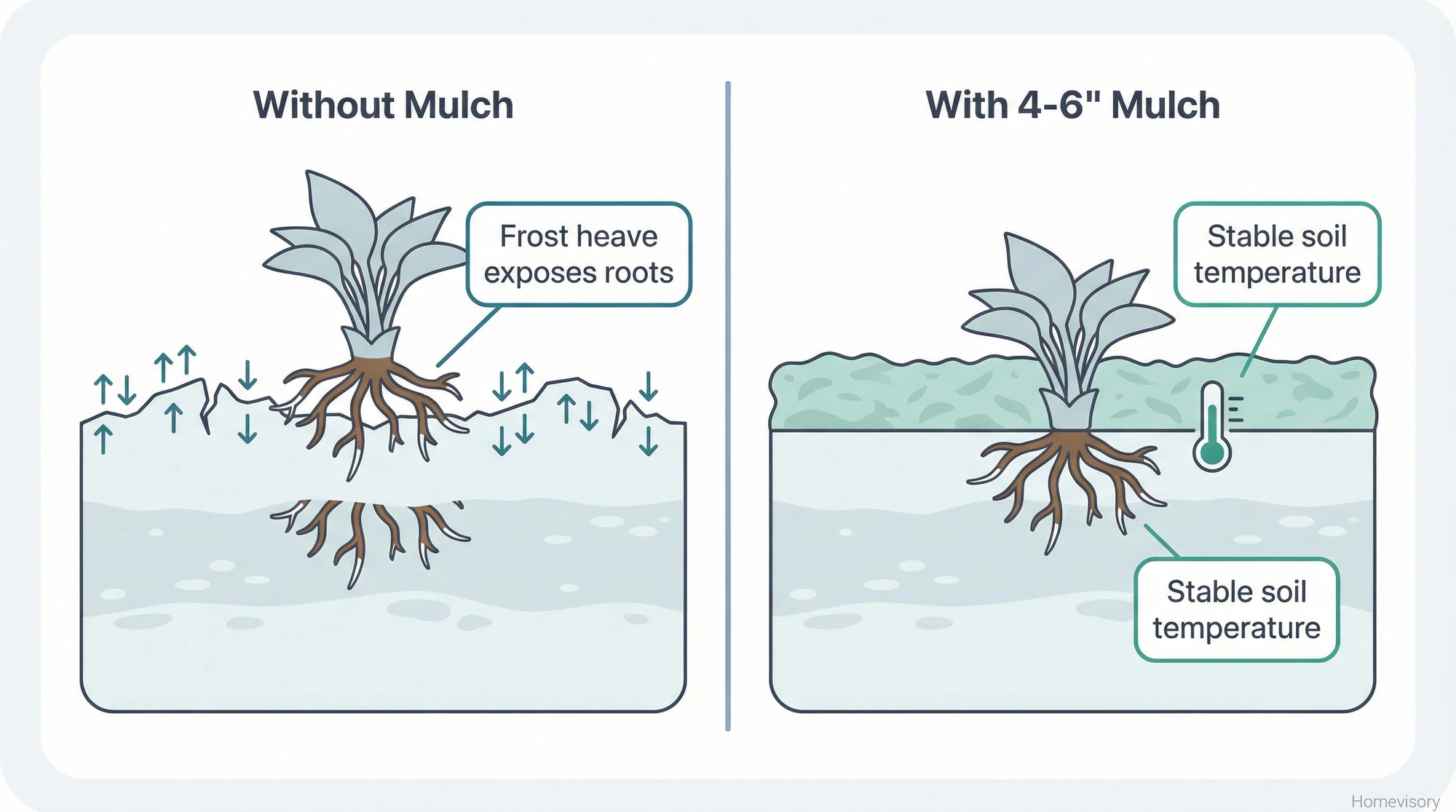
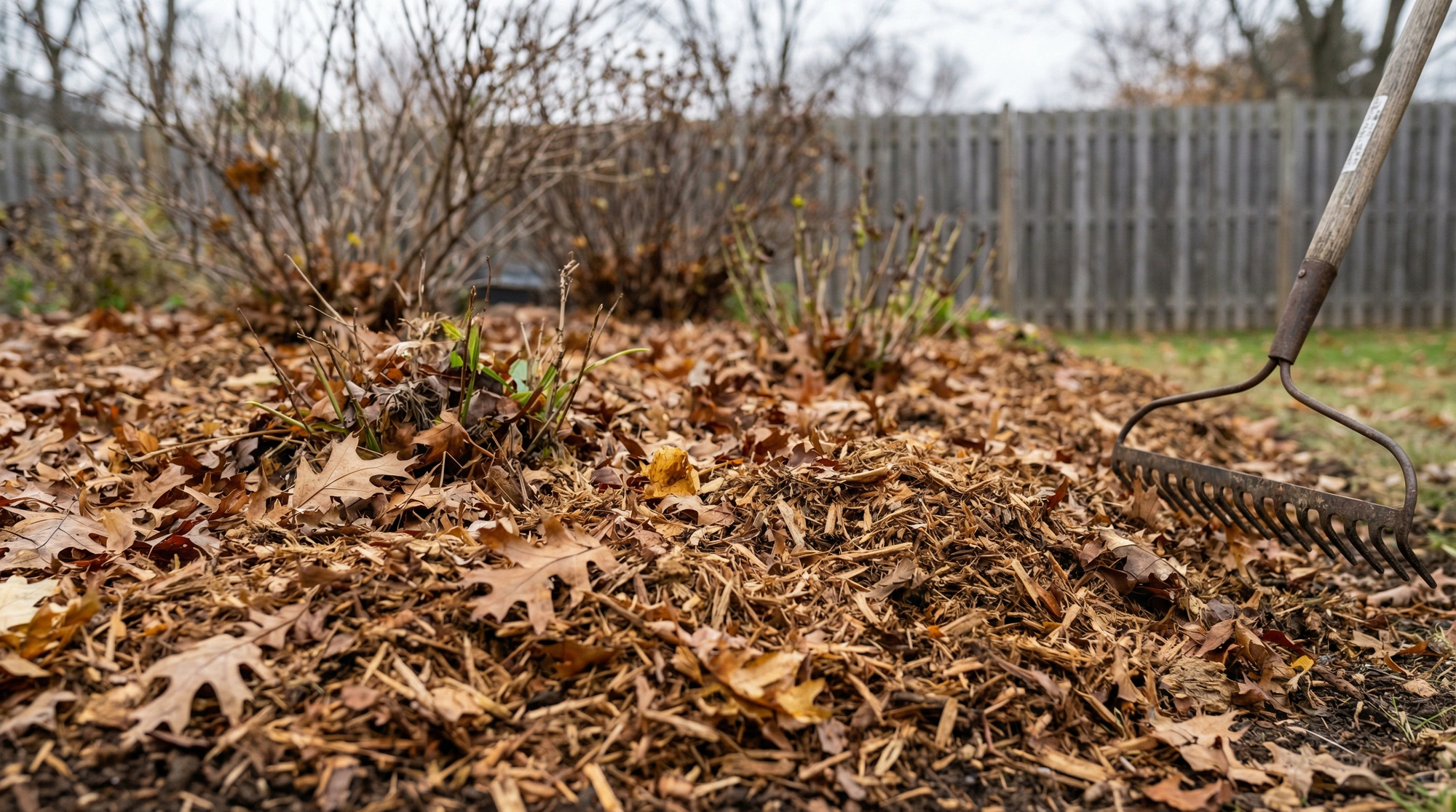
Mulch is not decoration. I know it looks nice. Thats not the point. Winter mulch is insulation for your soil and for the shallow roots of your perennials that are trying to survive until spring. When the ground freezes and thaws repeatedly, that freeze-thaw cycle does something called frost heave, where the soil literally pushes plants up out of the ground and exposes their roots and crowns to freezing air. Ive seen it happen to hostas, to daylilies, to stuff that should have been fine but wasnt because nobody put down a proper mulch layer. The mulch keeps the soil temperature more stable so the ground stays frozen or stays thawed instead of going back and forth like it cant make up its mind. That back and forth is what kills things.
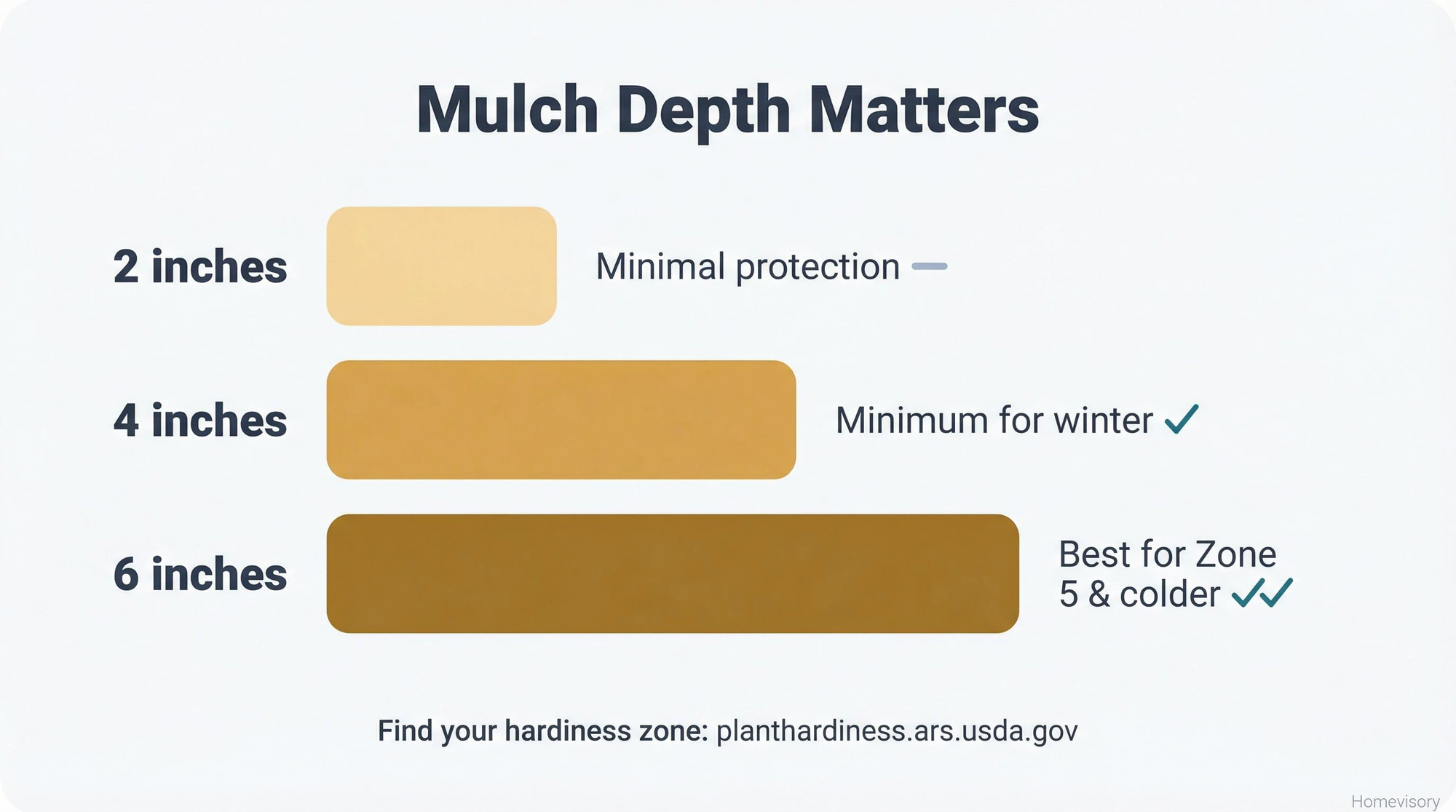
Mulch depth matters. Two inches is nothing. Four inches is the minimum for winter protection. Six inches if you’re in zone 5 or colder. People put down a little sprinkle and think they did something. You did nothing.
What to Use
Organic mulch is what you want. Shredded leaves are free and they break down by spring and add nutrients to your soil. Mr. Davis, my old woodshop teacher in Atlanta, had a garden behind his house that I helped him with a few times after school. He used to run over his oak leaves with a lawn mower and then pile them around everything. Six inches deep. His wife thought he was crazy. His garden survived every cold snap.
Pine needles work too if you have access to them. They’re acidic so keep that in mind if your soil pH matters for what you’re growing. Straw works. Wood chips work but they take longer to break down.
What you dont want is anything plastic or anything that doesnt breathe. The plant crown needs to be insulated but it also needs air circulation or it’ll rot under there.
Mr. Davis passed away in 2012. I still think about his garden sometimes. He’d say I’m overthinking the mulch thing. He’d be wrong.
When to Mulch
This is where people mess up. You dont mulch too early. If you pile on the mulch while the ground is still warm, you’re keeping the warmth in and the plant thinks its still growing season. Then the cold hits harder because the plant never went dormant properly.
Wait until after the first hard freeze. Let the ground start to get cold. Then mulch to keep it consistently cold, not to keep it warm. Counterintuitive. But thats how it works.
Frost Protection for the Stuff You Cant Mulch
Some plants you cant just bury in leaves. Shrubs. Young trees. Things with structure.
Iowa State University Extension says covering plants is typically no longer effective once temperatures drop below about 28°F, and damage can still happen above 28°F if the below-freezing temperatures last five hours or more. So covering works but it has limits.
Old bedsheets. Burlap. Tarps if you’re careful to not let them touch the foliage directly because the cold transfers. Fancy frost cloth. Whatever. Just get something over them before the temperature drops. And I mean before. Not during. Not after. Before.
I’ve seen people run outside at midnight trying to cover their citrus trees. Temperatures in the low 20s for more than five hours will damage citrus fruit. If you’re doing midnight emergency covering, you already lost.
The sheets and burlap and whatever else you use, they trap heat rising from the soil. Thats why they work. Thats also why they have to go all the way to the ground and not just drape over the top like a hat. A hat does nothing.
Moving on.
Container Plants Are a Different Problem
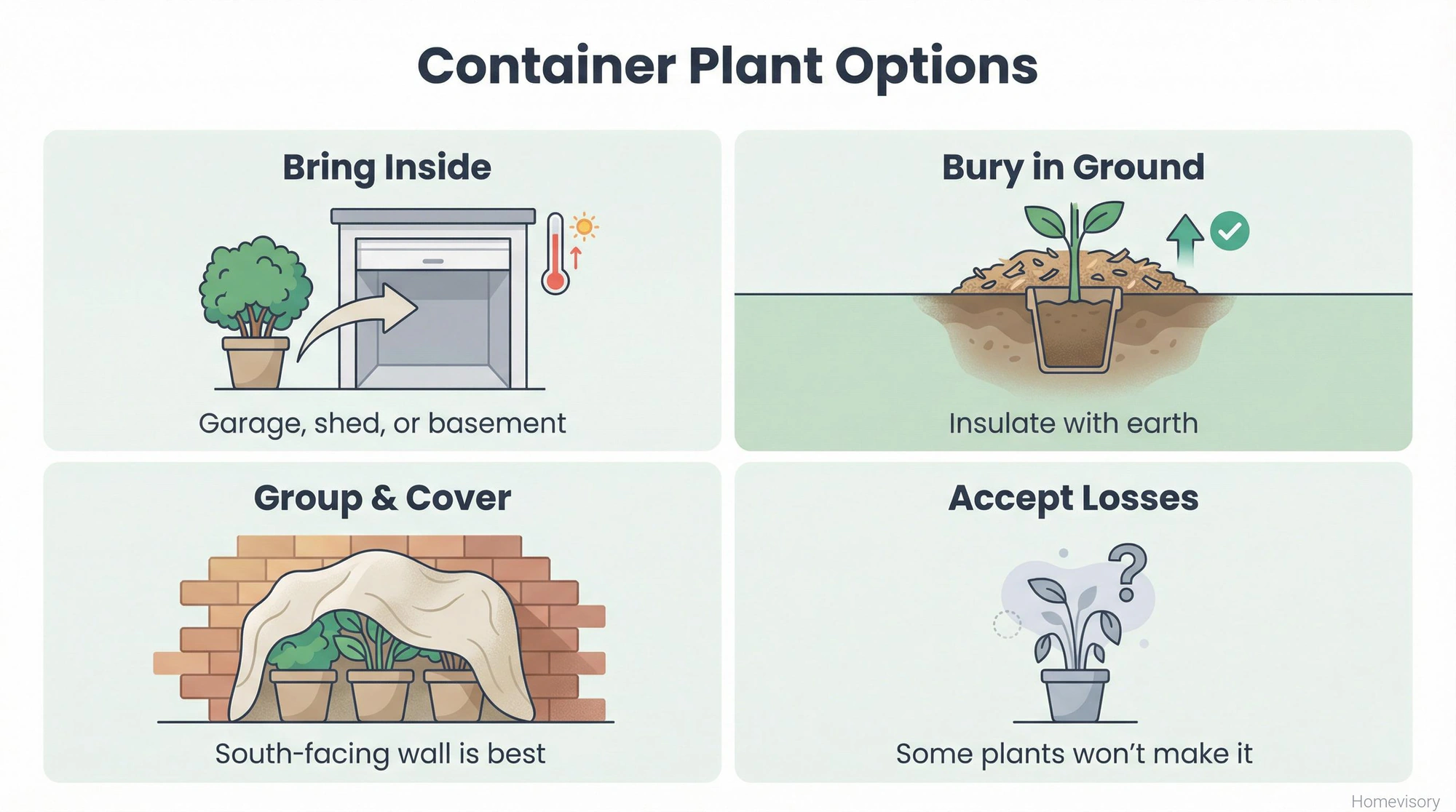
If you have perennials in pots, you have a bigger problem than the people with in-ground beds. Container plants are more susceptible to cold temperatures because their roots are exposed above the ground instead of insulated by earth.
Your options:
- Bring them inside. Garage. Shed. Wherever.
- Bury the containers in the ground and mulch over them.
- Group them together against a south-facing wall and cover them.
- Accept losses.
I’m not being dramatic about option four. Some stuff isnt going to make it. Thats gardening.
The Tree and Shrub Thing
University of Minnesota Extension recommends creating enclosures around tree trunks and entire shrubs using 4-foot tall hardware cloth fencing, buried a few inches into the soil to keep animals out. Rabbits and deer will eat your bark when theyre hungry enough in winter. The damage girdles the tree and kills it.
Young trees especially. If you planted anything in the last two or three years, protect the trunk.
Also Minnesota says roots of most trees and shrubs die at temperatures between 0 and 10 degrees F. The roots. Not the branches. The underground part that you think is safe because its underground. Mulch your tree bases too.
What Not to Do
Dont prune late in the season. New growth that comes after pruning is tender and vulnerable. Minnesota gardeners are advised to avoid pruning after September to prevent vulnerable new growth developing before winter.
Dont fertilize late either. Same reason. You dont want to encourage growth when the plant should be shutting down.
Dont remove snow from beds. Snow is insulation. Leave it there. People think theyre helping by clearing snow off their garden beds. Youre not helping.
Raquel’s Grandmother
My wife Raquel had a grandmother in Georgia, somewhere outside Augusta, who had a garden that seemed to survive everything. Didn’t matter what winter threw at it. I met her once before she passed and she was out there in November doing something with newspaper and I never asked what exactly she was doing or why.
Should have asked. Anyway.
Timing for How to Winterize Garden Properly
Start paying attention in September. Iowa State says mid to late September is when gardeners should start watching forecasts and noting overnight lows.
September feels early. Its not.
Heres the rough timeline:
- September: Stop fertilizing. Stop major pruning. Start watching forecasts.
- October: Clean up dead plant material. Prepare your mulch supply. Cover tender stuff on cold nights.
- November: After the first hard freeze, apply your winter mulch. Protect tree trunks. Move containers.
- December through February: Check covers after storms. Add mulch if it compresses.
The Real Point
My mother Shirley used to say that how you do the small things is how you do everything. She was talking about cleaning but she could have been talking about gardening. The people who lose plants every winter are the same people who skip the prep work because it doesnt feel urgent.
It doesnt feel urgent until everything’s dead.
Learning how to winterize garden beds isnt complicated. Mulch deep, mulch late, cover before the cold, protect the containers, wrap the young trees. Thats it. Thats the whole thing. Your garden is just one part of the fall prep though — I’ve got a complete house winterization checklist covering pipes, windows, heating, and everything else. Our winterization guide puts all the seasonal tasks in one place. And don’t forget to winterize your sprinkler system too.
But you have to actually do it. Not plan to do it. Not mean to do it.
Do it.
This is what Homevisory is built for. Not just gardens but everything around your house that needs attention before you’re in crisis mode. The platform tracks seasonal tasks, sends you reminders before its too late, and keeps everything organized so you’re not running outside in your pajamas trying to save your tomatoes. Sign up free at the Homevisory home task manager and stop letting maintenance surprise you.