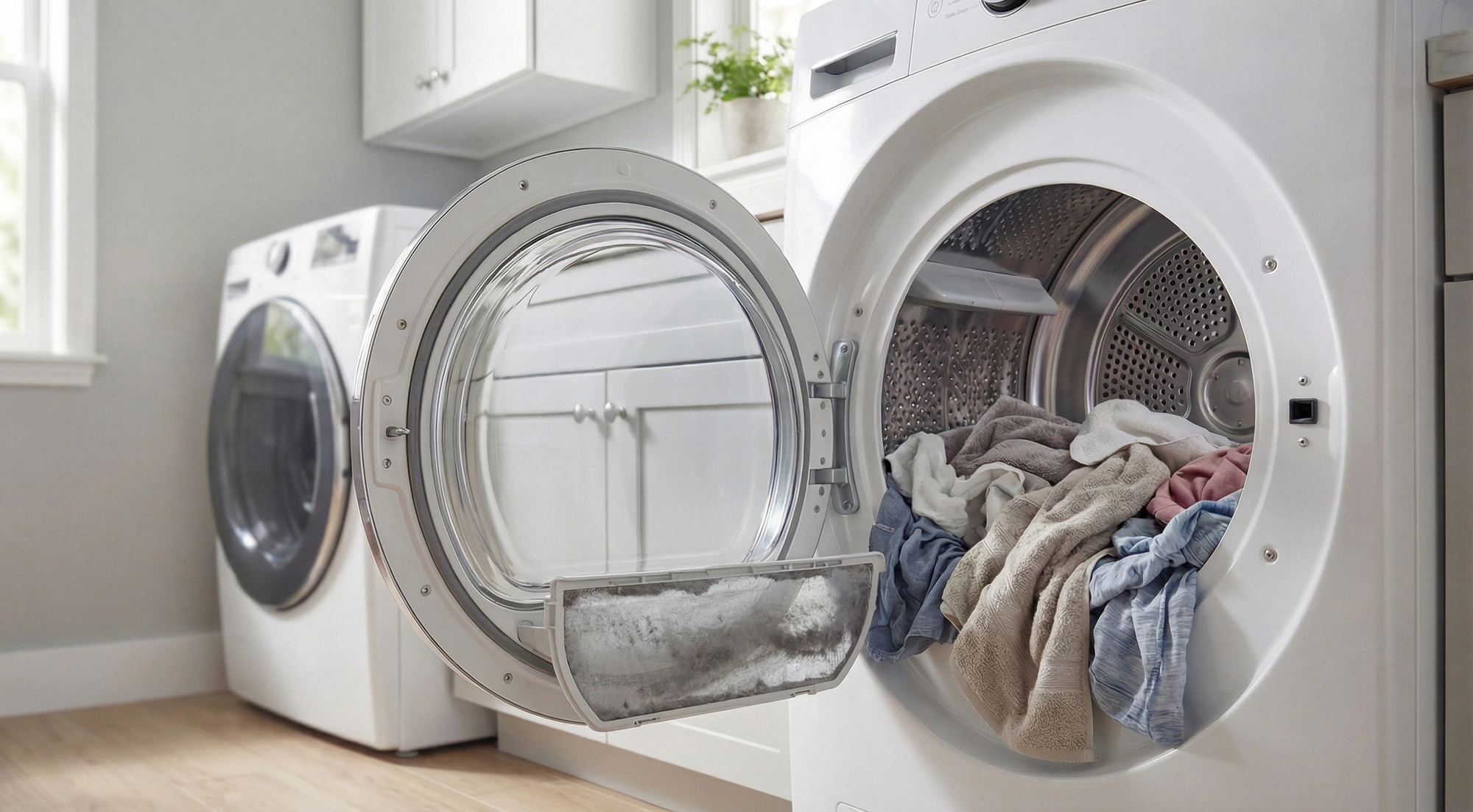
When Your Clothes Come Out Wet and Cold
A dryer not heating is one of those problems that seems urgent until you realize its usually something simple.
I’ve been doing this long enough to know that 80% of the time, the fix takes ten minutes and costs nothing. The other 20% is where it gets interesting.
Last week someone asked me about their Samsung dryer not heating and they were ready to buy a new one. Turns out the exhaust vent was so clogged with lint it looked like insulation. Thats a $400 dryer they almost threw away because they didnt check a vent.
So lets go through this properly.
The First Thing You Check (And I Mean First)
Before you start pulling your dryer apart or googling error codes, check your lint trap. I know you think you clean it. I know you pull that screen out after every load and think youre done.
Youre not done.
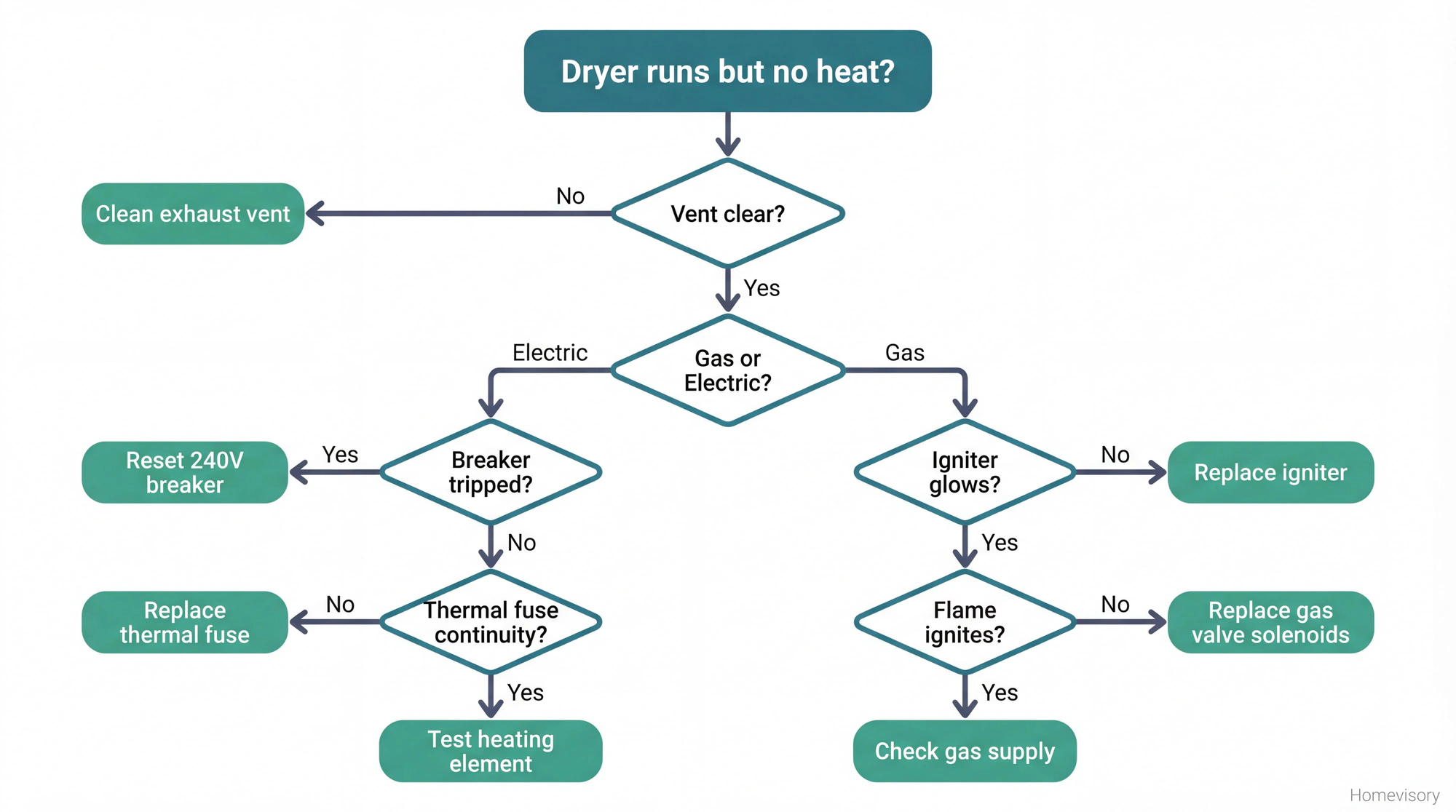
The lint trap catches maybe 60% of the lint. The rest goes into the exhaust duct, the vent hose, and eventually the vent that leads outside your house. Over months and years that stuff accumulates and what happens is your dryer loses airflow. Without airflow the heating element shuts off because theres a safety feature called a thermal fuse that trips when things get too hot. No airflow means heat builds up, thermal fuse trips, dryer stops heating.
This is the cause of most dryer not heating problems. Not a bad element. Not a broken igniter. Not a failed control board. A clogged vent that you havent cleaned in three years because you didnt know you were supposed to.
Disconnect your dryer from the vent, stick your hand in there, see what you pull out. Then go outside and check the vent hood. If the flapper doesnt open easily or if you can see lint packed in there, thats your problem. I clean mine twice a year. Raquel has a whole laundry system I dont question and part of that system is she tells me when its time to clean the dryer vent because she notices the clothes taking longer to dry. Shes usually right. For detailed instructions, see our complete dryer vent cleaning guide.
Gas Dryer Not Heating vs Electric
This matters because the causes are different.
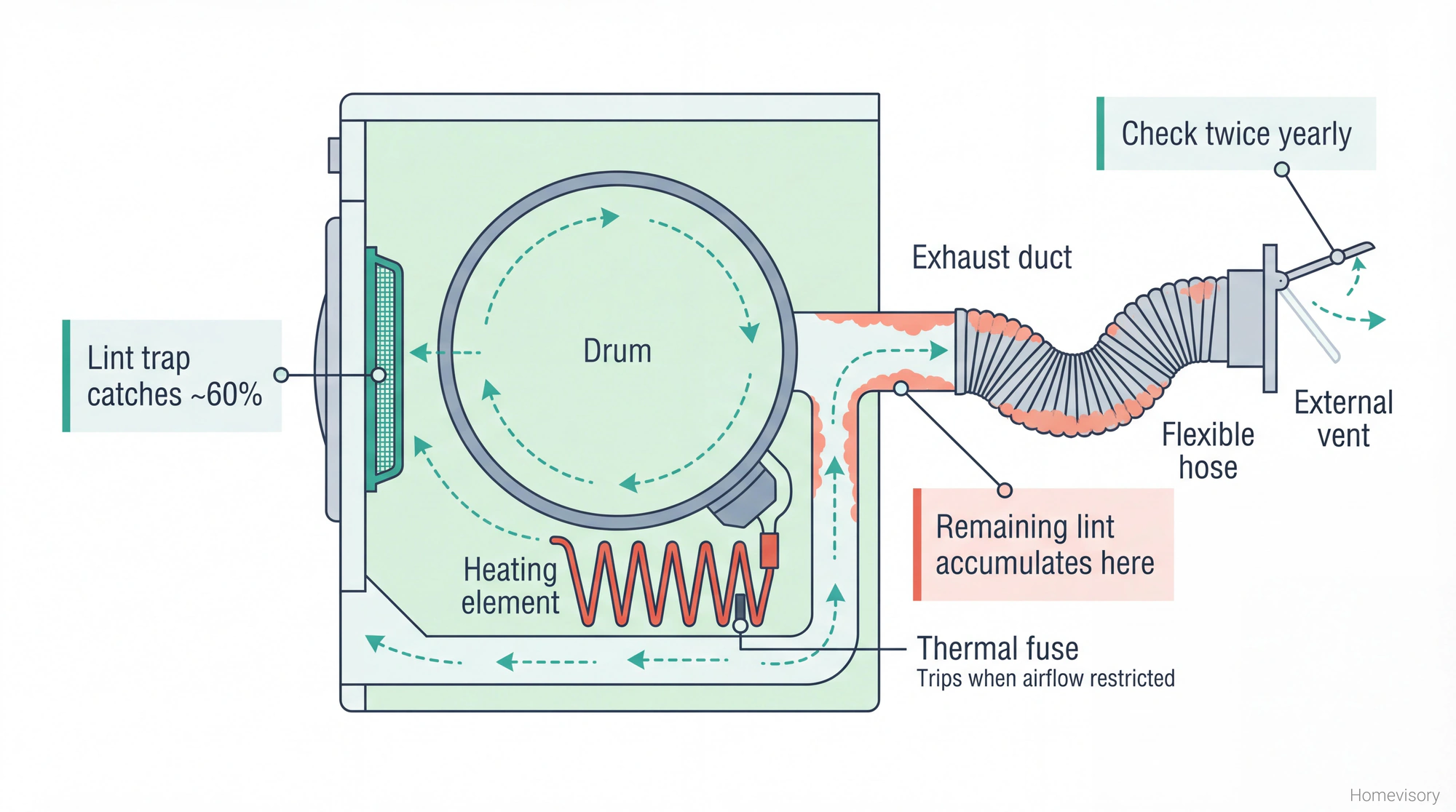
Electric dryers have heating elements that glow red and warm the air. If your electric dryer not heating, its either the element itself, the thermal fuse, or a problem with the high-voltage circuit. Electric dryers need 240 volts. If one leg of that circuit trips, youll have a dryer that runs but doesnt heat. Check your breaker panel. Look for a tripped breaker. I helped a guy in Plano once, he was convinced his Whirlpool dryer not heating meant he needed a new dryer. I asked if hed checked the breaker. He said yes. I went over there and one of the double breakers was tripped but it wasnt obvious because it was sitting in the middle position, not fully off. Reset it and the dryer worked fine. He offered me a beer. I took it. Anyway.
Gas dryers are different. A gas dryer not heating usually means the igniter failed, the gas valve solenoids are bad, or the flame sensor is covered in gunk. The igniter is what lights the gas. It glows orange, like a heating element, and when it gets hot enough it opens the gas valve. If the igniter works but the solenoids dont, you get igniter glow but no flame. If the igniter is bad, nothing happens at all.
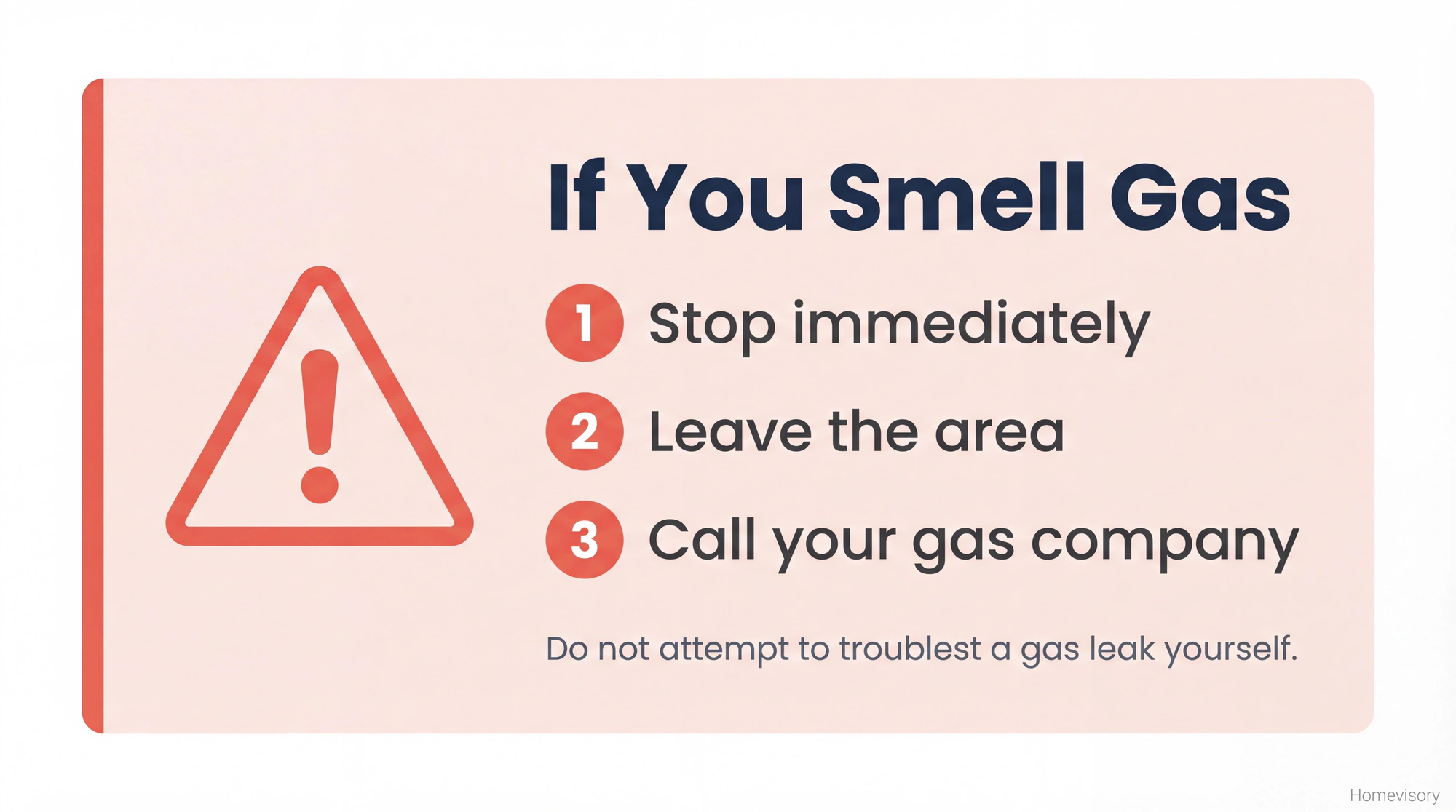
One important thing about gas dryers. If you smell gas, stop. Dont troubleshoot. Dont try to fix it yourself. Get out, call the gas company. I dont mess around with gas leaks and neither should you.
Brand-Specific Stuff (Some of This Matters, Some Doesnt)
Samsung Dryer Not Heating
Samsung dryers have a habit of throwing error codes that actually tell you something useful. The HE code means heating error. Check your vent first, always, but Samsung dryers also have issues with the heating element failing. We have a full guide on Samsung dryer heating element replacement if thats your situation. The element is at the back of the drum and its not the hardest thing to replace if you know what youre doing.
One Samsung-specific thing. Their moisture sensors sometimes get coated with dryer sheet residue and that messes with the dry cycle. Wipe them down with rubbing alcohol. Theyre the two metal strips inside the drum, usually near the lint trap.
LG Dryer Not Heating
LG is similar to Samsung. Korean brands, similar engineering. The d80 or d90 code on an LG means exhaust blockage, which is the dryer telling you the vent is clogged. I appreciate a dryer that tells you whats wrong instead of just dying.
LG dryers, especially the newer ones, have a flow sense indicator that shows green, yellow, or red depending on airflow. If its yellow or red, clean your vent before you do anything else.
Whirlpool Dryer Not Heating
Whirlpool has been making dryers forever and theyre generally reliable but when a Whirlpool dryer not heating becomes an issue its usually one of three things. Thermal fuse, heating element, or the cycling thermostat. The thermal fuse is a one-time safety device. Once it blows, it doesnt reset. You have to replace it. Its a $5 part and its usually located on the blower housing or the heating element housing depending on the model.
The good news about Whirlpool is parts are easy to find and theres a million YouTube videos showing how to replace everything. The bad news is some of their models require you to basically disassemble the entire dryer to get to the heating element. I dont know why they do this. Making it hard to fix things doesnt make me buy a new dryer, it makes me annoyed.
Maytag Dryer Not Heating
Maytag is owned by Whirlpool so a lot of the same issues apply. Same parts, often same part numbers. If your Maytag dryer not heating and its electric, check the thermal fuse first. If its gas, check the igniter.
Older Maytag dryers from the 90s and early 2000s were tanks. Built to last. The newer ones are fine but theyre basically Whirlpool dryers with a different badge. Whatever. Check your vent first anyway.
Kenmore Dryer Not Heating
Heres the thing about Kenmore. Kenmore doesnt actually make dryers. They never did. Kenmore dryers are made by Whirlpool, LG, Samsung, or whoever else had the Sears contract that year. So if your Kenmore dryer not heating, you need to figure out who actually made it.
Look at the model number. If it starts with 110, its made by Whirlpool. If it starts with 796, its LG. The first three digits tell you the manufacturer. Once you know that, troubleshoot it like that brand.
GE Dryer Not Heating
GE dryers are solid. Not fancy but solid. A GE dryer not heating is usually the same story as everyone else. Thermal fuse, heating element, or vent blockage. GE uses a high-limit thermostat that can fail and cause the same symptoms as a blown thermal fuse.
One thing I like about GE dryers is the parts layout makes sense. You can usually get to the heating element without performing surgery on the whole machine.
Amana Dryer Not Heating
Amana is another Whirlpool brand. Same parts warehouse, same basic design. An Amana dryer not heating gets the same diagnostic approach. Thermal fuse, element, vent.
Speed Queen Dryer Not Heating
Now were talking. Speed Queen is what laundromats use because they build things to last. If your Speed Queen dryer not heating, it actually surprises me a little because these things are bulletproof. But they do fail eventually.
Speed Queen uses commercial-grade parts which means theyre more expensive to replace but they fail less often. Same components though. Thermal fuse, heating element or gas igniter, and always check the vent.
The Heating Element
Electric dryers have a heating element. Its basically a big coil that gets hot when electricity runs through it.
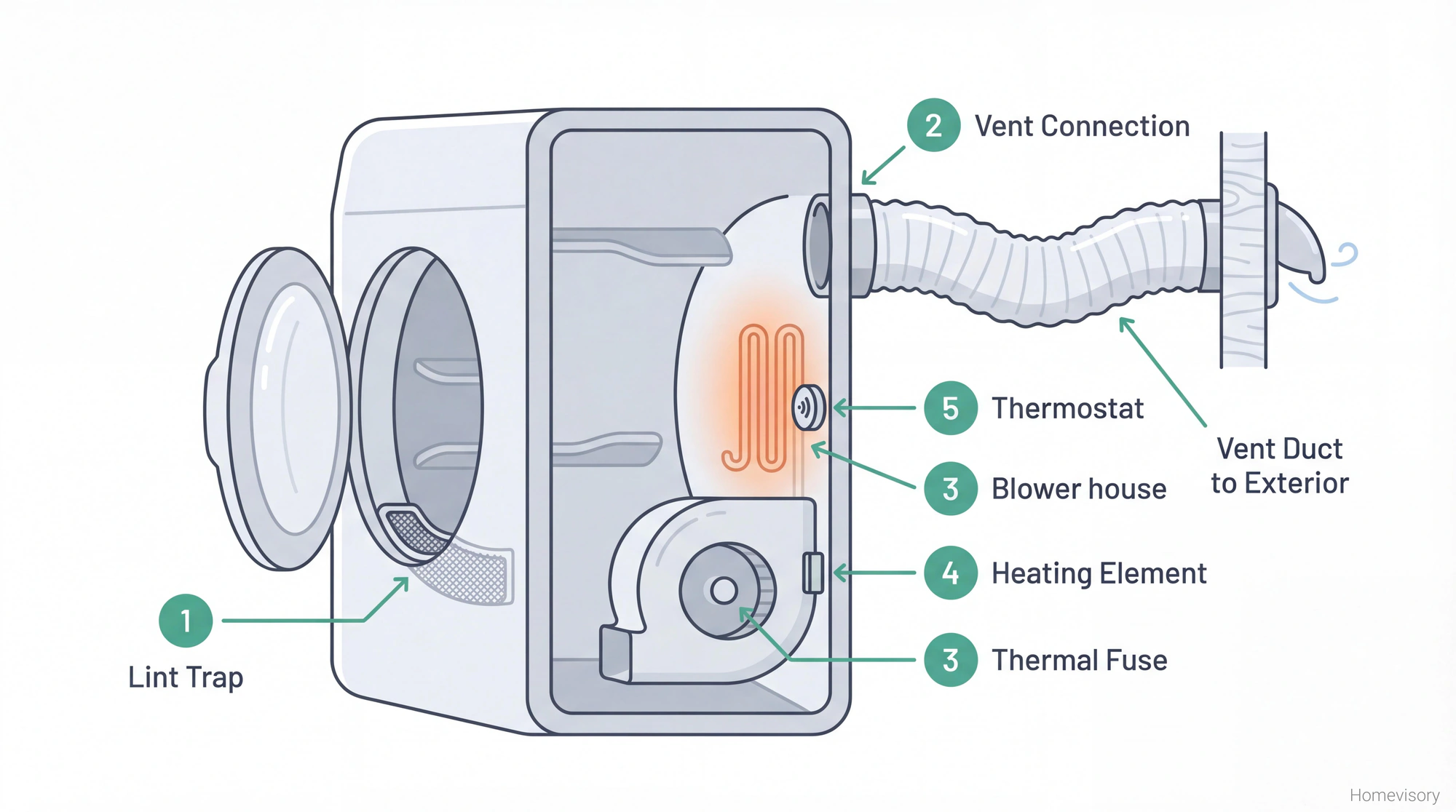
Over time these can burn out.
You can test this with a multimeter too. If you’re not familiar with how to use a multimeter, it’s worth learning since continuity testing is one of the most useful functions. The element is usually in the back of the dryer, inside a housing. Pull it out, check for continuity, if theres none its dead. Replacement elements run fifty to a hundred and fifty dollars depending on your model.
If the elements burned out, you can replace it yourself if youre handy or call someone.
The Thermostat and Cycling Switch
Your dryer has thermostats that regulate temperature. If one fails, the dryer might not heat or might not heat properly. Theres usually a high-limit thermostat that works with the thermal fuse and a cycling thermostat that turns the heat on and off to maintain temperature.
Testing these requires a multimeter and some patience. Youre checking for continuity at room temperature. If a thermostat has no continuity at room temp, its bad.
Honestly if youve gotten this far and everything else checks out, this is where most people call a repair tech. Not because its complicated but because now youre deep into diagnostics and youve already spent an hour pulling panels off and testing things. Sometimes its worth paying someone to figure out which specific part failed.
What Actually Causes This
Let me tell you about a thermal fuse situation I had years ago. This was at a house in Atlanta, probably 2008 or so, rental property I was helping a family friend with. The dryer ran but no heat. I assumed it was the heating element because thats what everyone assumes.
Pulled the dryer apart. Element was fine. Checked the thermostat. Fine. Then I found the thermal fuse. It was blown. Replaced it, cost me maybe four dollars. Dryer worked perfectly. But here’s the thing I almost missed, the reason the thermal fuse blew in the first place was because the exhaust vent was crushed behind the dryer. Someone had pushed the dryer back too far and kinked the flexible vent hose. Restricted airflow, heat buildup, blown fuse. If I had just replaced the fuse without fixing the vent, it would have blown again in a few weeks.
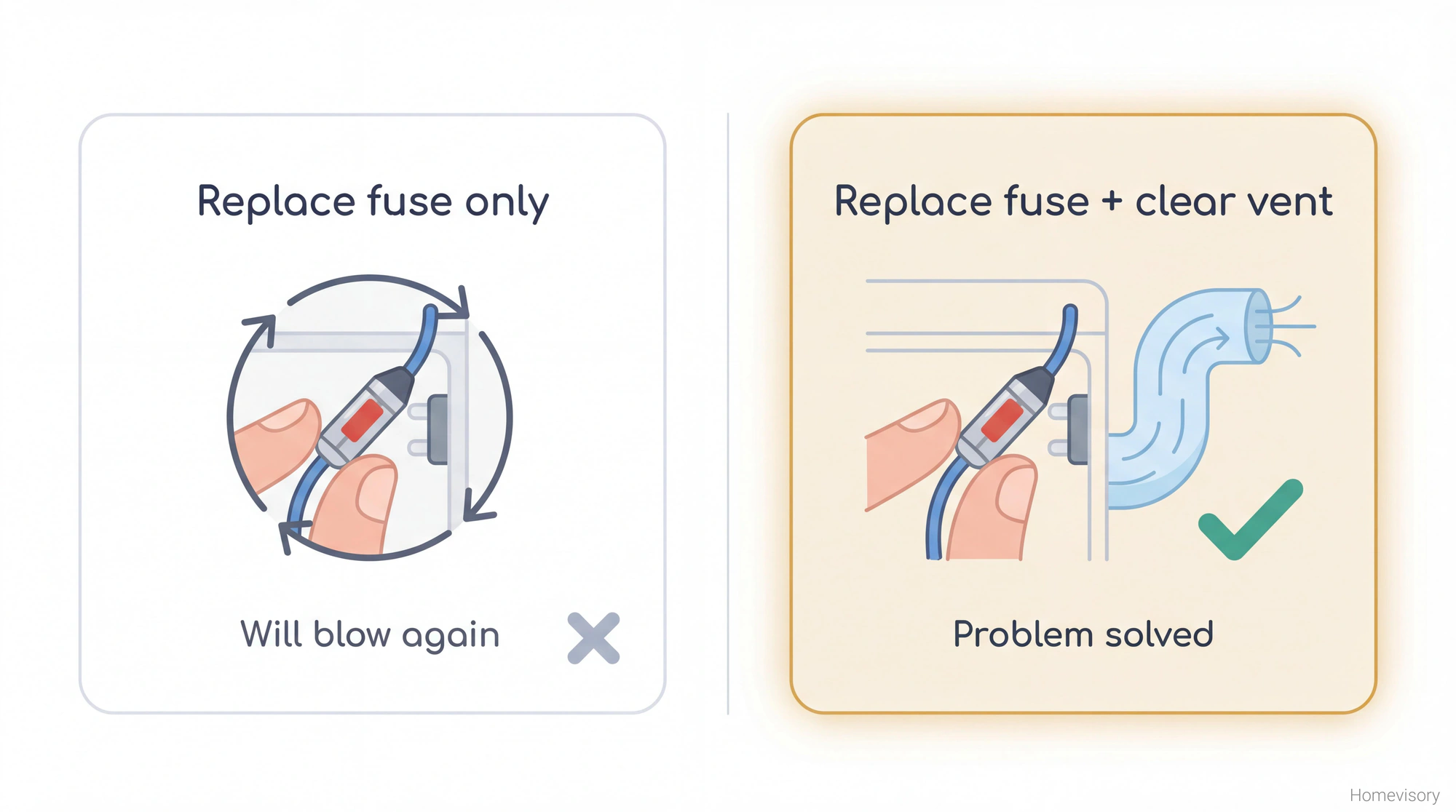
My dad Curtis worked in a factory for decades and he used to say that when a machine breaks you have to ask why it broke not just fix what broke. He was talking about production equipment but it applies. The thermal fuse is a symptom. The clogged or crushed vent is the disease. If you suspect vent damage, our guide on dryer vent repair covers common problems and DIY fixes.
The Stuff I’m Not Getting Into
Control boards. If your dryer isnt heating and youve checked the vent, the fuses, the element, and the gas igniter if applicable, and everything tests fine with a multimeter, you might have a control board issue. At that point call someone. Control boards are expensive, theyre hard to diagnose without proper tools, and if you order the wrong one youre out a couple hundred dollars. I’m not getting into control board diagnostics here because thats where DIY ends for most people.
Motor issues that prevent the dryer from sensing heat. Belt issues that stop the drum from turning properly. These exist but theyre less common than people think.
What You Actually Need to Do
Check the lint trap. Yes, again.
Check the exhaust vent. Disconnect it from the dryer, look inside, then go outside and check where it exits your house.
If its electric, check your breaker panel. Look for a tripped breaker. Remember it might look like its on but actually be in the middle position.
If its gas, watch through the inspection window when the dryer starts. You should see the igniter glow, then flame. If no glow, bad igniter. If glow but no flame, probably the gas valve solenoids.
Test the thermal fuse with a multimeter if you have one. It should show continuity. If it shows open, its blown.
If all that checks out and youre still stuck, call someone. Thats not failure, thats knowing your limits.
When to Just Call Someone
If your dryer is under warranty, call them. Dont void your warranty trying to save a service call fee.
If youve checked the lint trap and vent, tested the thermal fuse, and youre still stuck, thats probably a good stopping point for most people. A repair tech can diagnose it in twenty minutes because they do this every day.
If your dryer is fifteen plus years old and needs a major part, think about whether repair makes sense versus replacement. A new dryer is four to eight hundred dollars. If youre looking at a two hundred dollar repair on an old machine, the math might not work.
A Note About Parts
My mom used to say that how you do the small things is how you do everything.
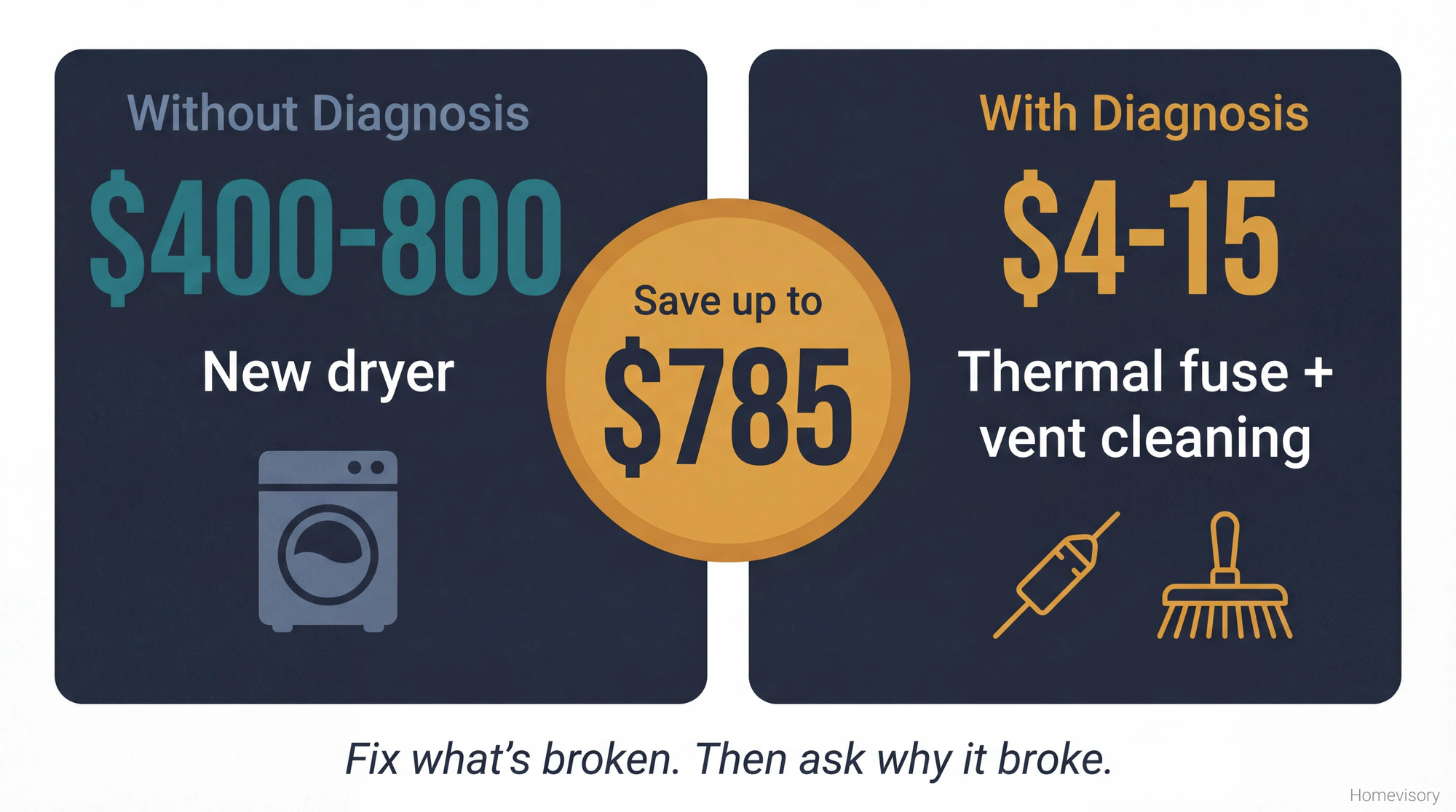
She was talking about cleaning but it applies to repairs too. Buy quality replacement parts. The $3 thermal fuse from an unknown seller might work, or it might fail in six months. I use OEM parts or quality aftermarket from suppliers I trust. Its not always the cheapest option but I’m not doing the same repair twice.
That’s what we do here at Homevisory. Give you the information you need to handle things yourself when you can and know when to call someone when you cant. If you want help staying on top of stuff like dryer vent cleaning before it becomes a problem, try our Homevisory home task manager. Its free and it keeps you from forgetting the stuff thats easy to forget until your dryer stops heating and your clothes come out wet.