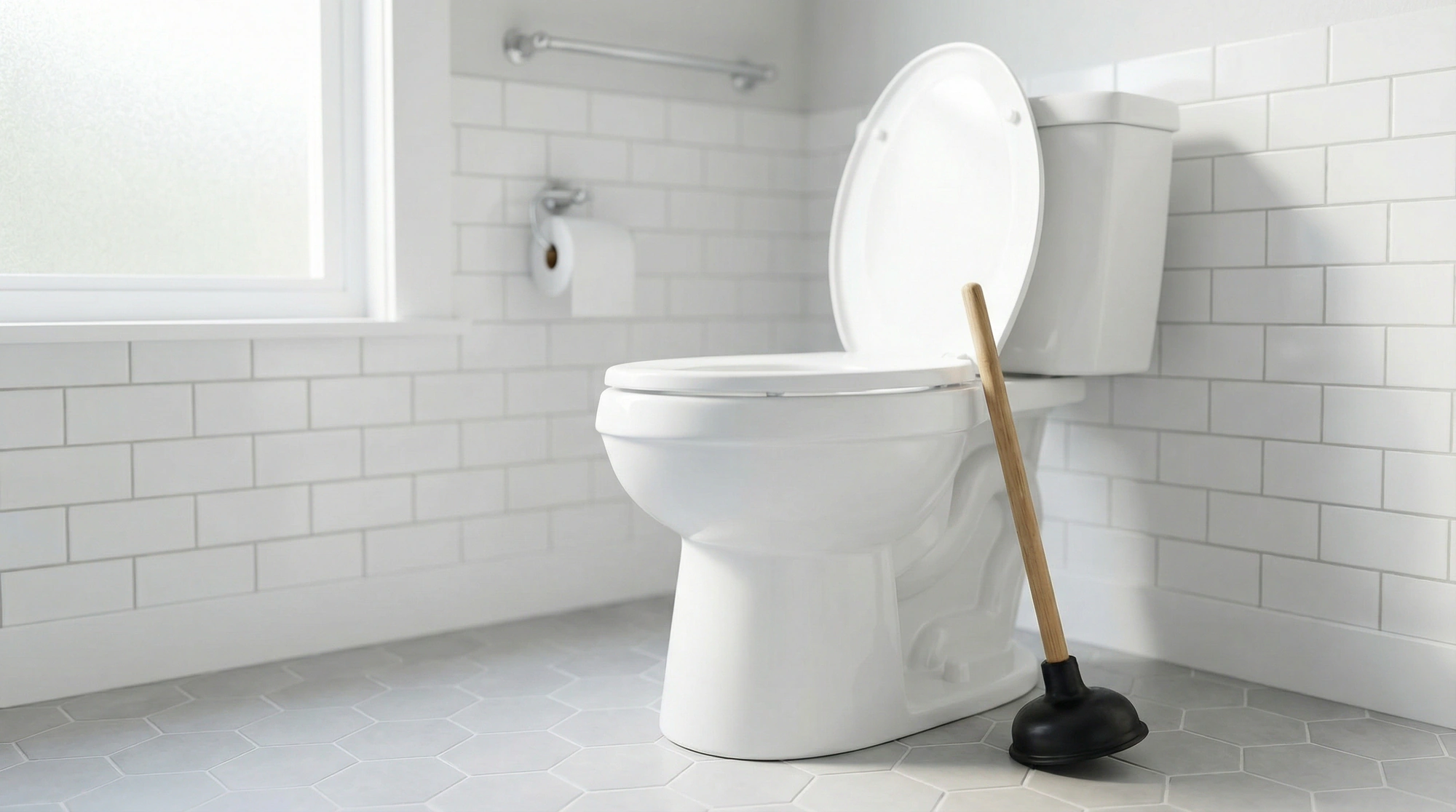
Clogged toilets. Nobody wants to talk about them but everybody deals with them. A national survey by Mr. Rooter found that nearly 20% of homeowners frequently deal with clogged toilets, which is more than double the rate of clogged sinks. And according to data from Kohler, about 28 million American toilets clog every single month.
Thats a lot of clogged toilets.
I’ve unclogged more toilets than I can count. My own, clients toilets, toilets in houses I was renovating. Four kids means I’ve seen every possible way a toilet can get backed up. Richard, my second son, once used half a roll of toilet paper when he was maybe seven years old. I don’t know what he was thinking. I asked him and he just shrugged. Kids.
Anyway.
Knowing how to unclog a toilet is one of those basic homeowner skills that saves you money and embarrassment. A plumber will charge you anywhere from $200 to $450 for something you can probably fix yourself in ten minutes. So lets go through the methods, starting with the one that works 90% of the time.
The Plunger (Do This First, Do It Right)
Most people own a plunger. Most people use it wrong.
First, you need the right plunger. Theres a difference between a sink plunger and a toilet plunger and I’m amazed how many people don’t know this. A sink plunger is flat on the bottom, like a rubber cup. A toilet plunger, sometimes called a flange plunger, has an extra piece that sticks out from the cup. That flange folds out and fits into the drain opening at the bottom of your toilet bowl. Without it youre just pushing water around.
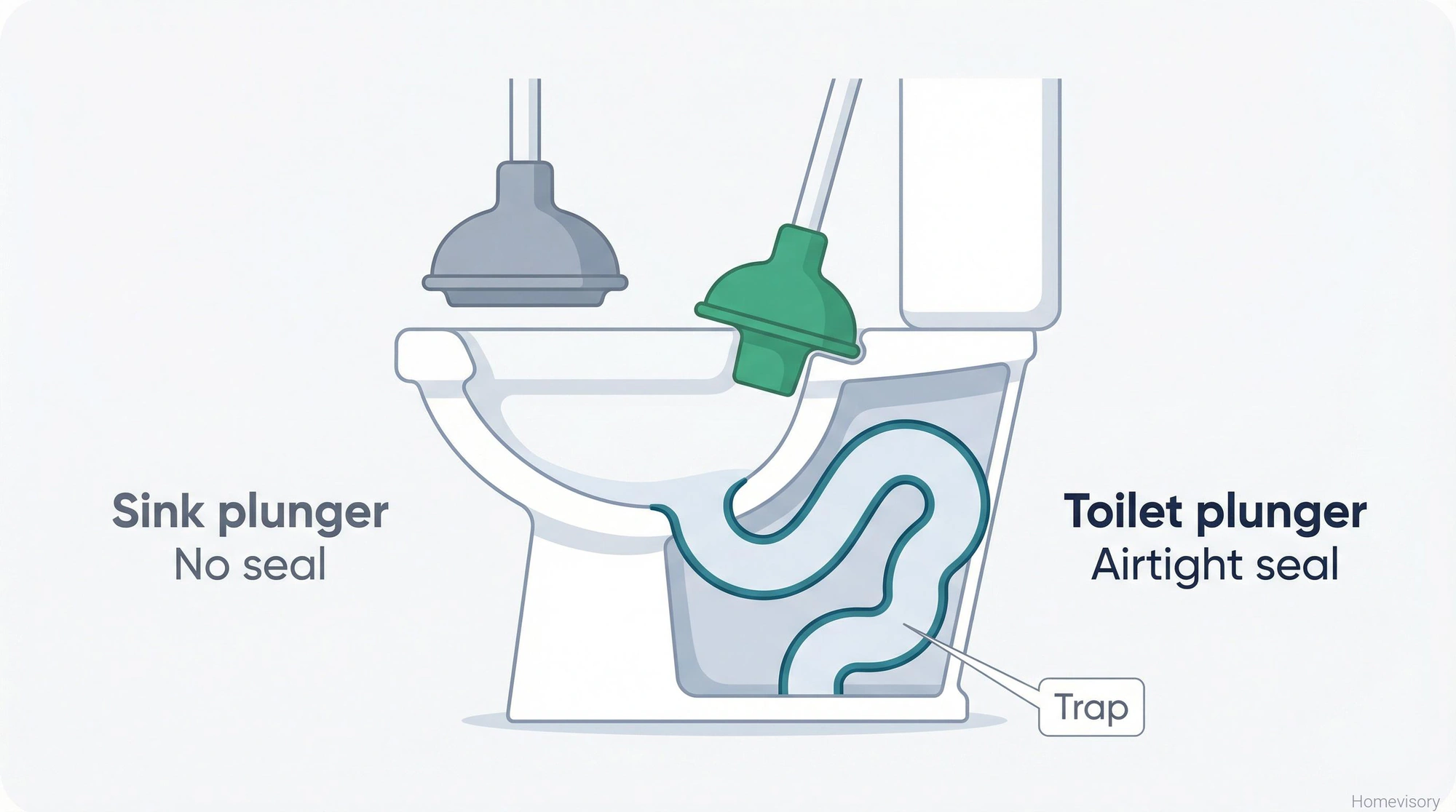
Heres the thing about plunging that nobody tells you. The pull is more important than the push. Everyone focuses on pushing down hard but thats not whats clearing the clog. What clears the clog is the suction you create when you pull back. So you want a good seal, then push down to compress the air, then pull back sharply. The suction dislodges whatever is stuck in the toilet trap.
My dad used to say about tools, he’d say “don’t force it, finesse it.” He was talking about wrenches but it applies to plungers too. Youre not trying to jackhammer through the clog. Youre trying to create pressure changes that move it. Push, pull, push, pull. Keep the plunger submerged so youre moving water not air.
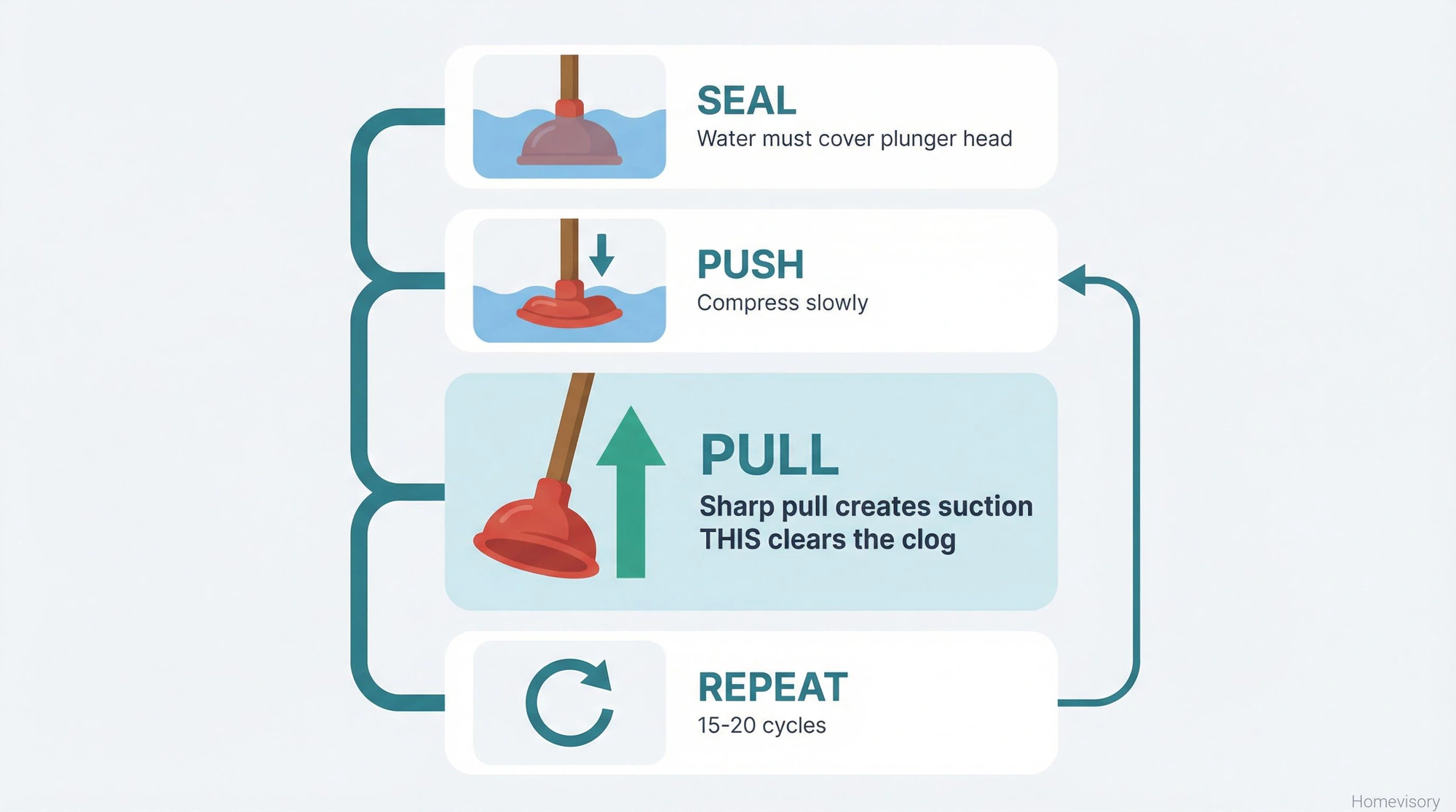
If you dont have enough water in the bowl to cover the plunger head, add some. I know that sounds counterintuitive when the toilet is clogged but you need water to create the hydraulic pressure. Air compresses, water doesnt. Thats basic physics and its why a plunger works.
Do this for maybe 15-20 plunges. If the water starts draining, you won. Flush to test. If it doesn’t drain, keep going for another 30 seconds. If nothing happens after a solid minute of proper technique, move on.
Hot Water and Dish Soap
This ones for organic clogs. Waste, toilet paper, that kind of thing. Not toys. Not whatever else ends up in toilets that shouldn’t be there.
Squirt a good amount of dish soap into the bowl. Like a quarter cup. The soap acts as a lubricant and helps break down the clog. Then get hot water from your sink or bathtub, not boiling. Boiling water can crack your porcelain bowl and then you have a much bigger problem than a clog. Hot tap water, as hot as it gets.
Pour it from waist height so it has some force behind it. Let it sit for 10-15 minutes. The hot water softens things up, the soap lubricates, and sometimes the clog just slides through on its own.
Try flushing. If it drains slow but drains, repeat the process. Sometimes it takes two or three rounds.
Baking Soda and Vinegar
The science fair volcano method. It works the same way here.
Pour a cup of baking soda into the bowl. Then slowly pour a cup of vinegar. It’ll fizz up, thats the reaction you want. The fizzing action can help break up minor clogs. Let it sit for 30 minutes, then flush.
I’ll be honest, this method is hit or miss. It works great on partial clogs where water is draining slow. It does almost nothing on a solid blockage. But its cheap, you probably have both ingredients in your kitchen, and it wont damage anything. Worth trying before you escalate.
The Toilet Auger (This Is What Plumbers Use)
If the plunger isn’t working, you need a toilet auger. Also called a closet auger. Not a regular drain snake, a toilet auger specifically.
The difference matters. A toilet auger has a protective sleeve that goes into the bowl first. This sleeve protects your porcelain bowl from getting scratched by the metal drain cable. Regular plumbing snakes don’t have this and you will scratch up your toilet using one. I’ve seen people gouge their bowls so bad they needed a new toilet. Over a clog. Don’t be that person.
A toilet auger costs maybe $30-40 at any hardware store. You stick the curved end into the drain opening, then crank the handle to feed the cable through the toilet trap and into the drain. When you hit resistance thats your clog. Keep cranking, the auger head either breaks through the blockage or hooks onto it so you can pull it back out.
The technique here is patience. Feed it slow. When you hit the clog, dont just ram it, work it back and forth while cranking. The auger head is designed to either bore through or grab onto whatever is stuck. Pull back occasionally to see if you’ve hooked something. Sometimes youll pull out a wad of something that makes you question your life choices.
My dad used to work in a factory and he’d come home with stories about guys who broke equipment because they tried to force things. Same principle applies here. Finesse. The auger does the work if you let it.
The Bucket Pour
Whatever. This works sometimes.
Fill a bucket with water. Pour it directly into the bowl from about waist height. The force of the water can push a clog through where gentle flushing won’t. Its basically the hot water method without the heat.
I’ve seen this work on partial clogs. I’ve seen it do absolutely nothing on serious ones. Its worth trying because it takes 30 seconds and you probably have a bucket.
If the water level rises and doesn’t go down, stop. Youre about to overflow.
When to Call a Plumber
Theres no shame in calling a plumber. I’ve called plumbers. I fix houses for a living and I’ve still called plumbers because some clogs are beyond DIY methods.
Call someone if:
- The auger hits something solid that wont move or break up
- Multiple fixtures are backing up (toilet and shower, toilet and sink)
- You see sewage coming up in other drains (if your sink drain is also clogged, that’s a bad sign)
- You’ve tried everything and nothing works
- The toilet keeps clogging repeatedly even after you clear it
That last one is important. If your toilet clogs every week, you have a bigger problem. Could be a partial blockage further down the line. Could be roots in your sewer pipe. Could be your toilet trap has buildup that narrows the passage. A plumber can run a camera down there and actually see whats going on.
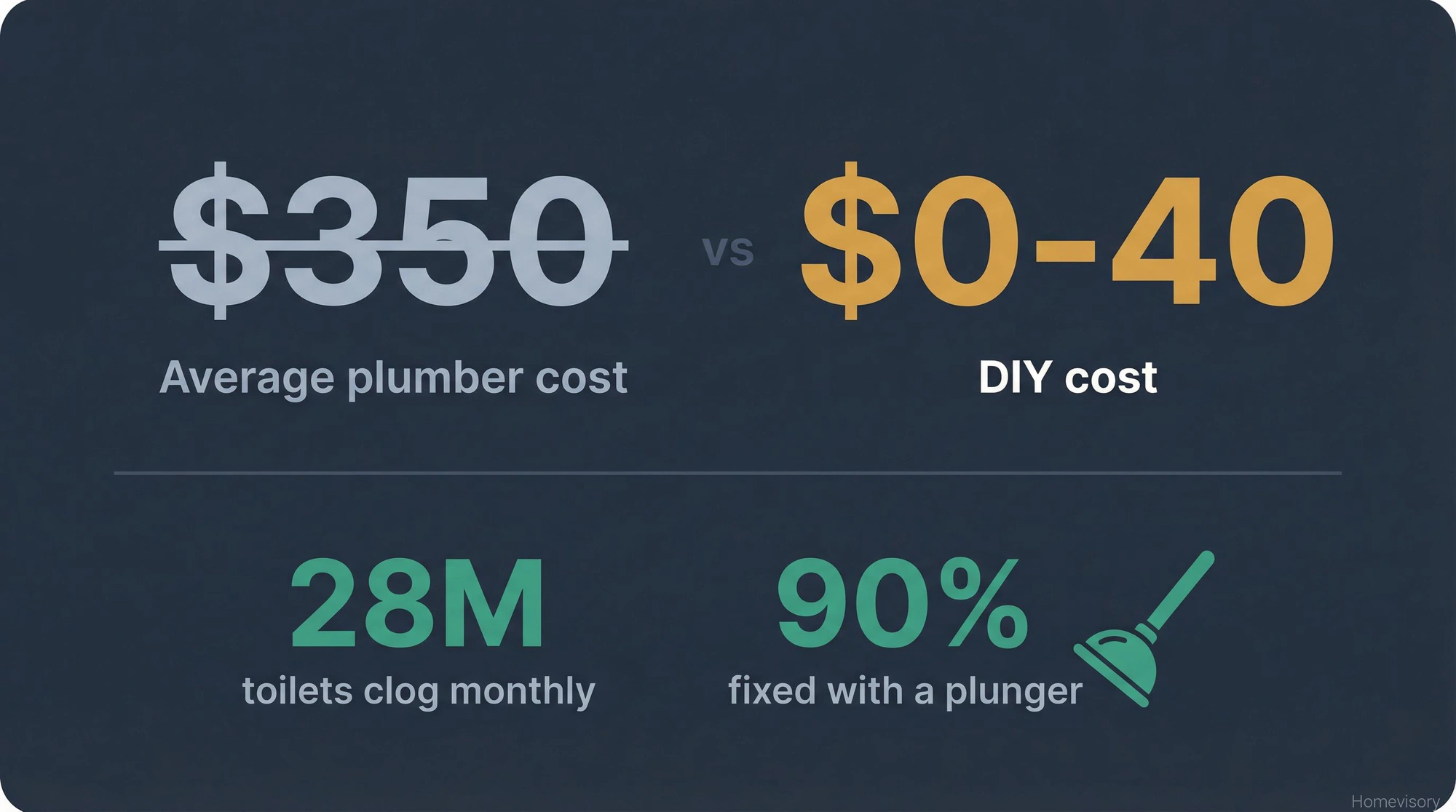
Professional toilet unclogging runs about $350 on average for them to come out with an electric auger and clear the line. If theres something wrong with your main sewer line thats a different conversation and a different price. But for a stubborn clog that you cant clear yourself, a few hundred dollars is worth it. Water damage from an overflowing toilet costs a lot more.
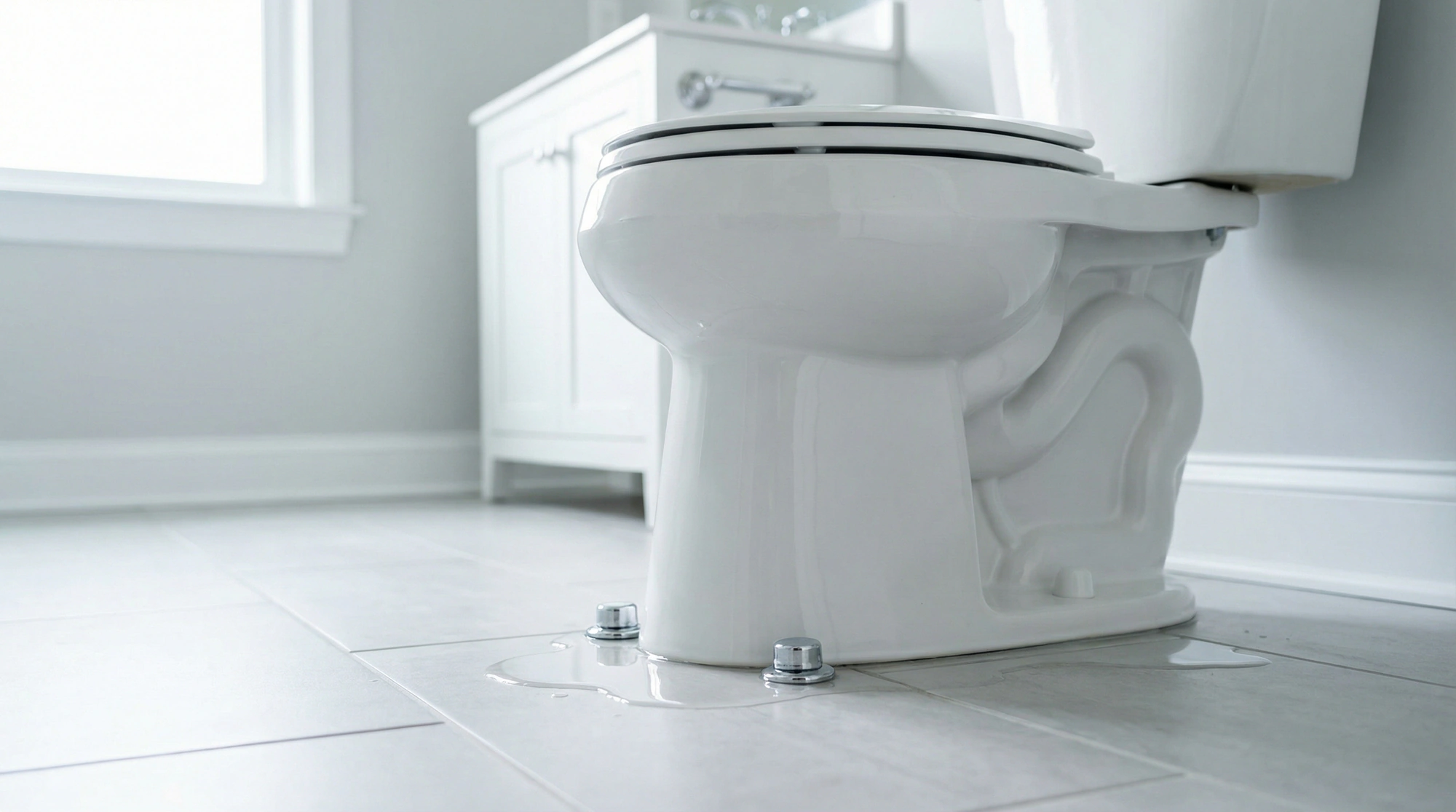
One thing. If your toilet is overflowing, turn off the water supply at the valve behind the tank. Turn it clockwise until it stops. Do this before you do anything else. Standing water you can deal with. Active flooding is a different situation. If youre dealing with clogs in other fixtures too, our clogged drain guide covers sinks, showers, and main lines.
What I’m Not Getting Into
Chemical drain cleaners. I don’t use them on toilets. Some people swear by them. I’ve seen them damage wax seals and I’ve seen them do nothing to actual clogs while creating a bowl full of caustic chemicals that you now have to deal with somehow. If you want to try them thats your call. I’m not recommending them.
Moving on.
Why Toilets Clog in the First Place
My parents house in Atlanta had this old toilet from probably the 70s. Thing was a tank. Used like four gallons per flush. Never clogged. Not once in the entire time I lived there.
Then the federal government mandated low-flow toilets. In 1994 they dropped the maximum to 1.6 gallons per flush and those first generation low-flow toilets were terrible. Everyone complained about them. They didn’t have enough water pressure to clear waste properly and people started dealing with clogs way more often.
Modern low-flow toilets are better. The engineering improved. But if you have a house built in the late 90s with original toilets, you might just have a clog-prone toilet. Thats not your fault. Thats the toilet.
Other reasons toilets clog:
- Too much toilet paper at once
- “Flushable” wipes that aren’t actually flushable
- Things that should never go in a toilet (cotton swabs, dental floss, feminine products, diapers, toys)
- Older sewer systems that can’t handle modern low-flow
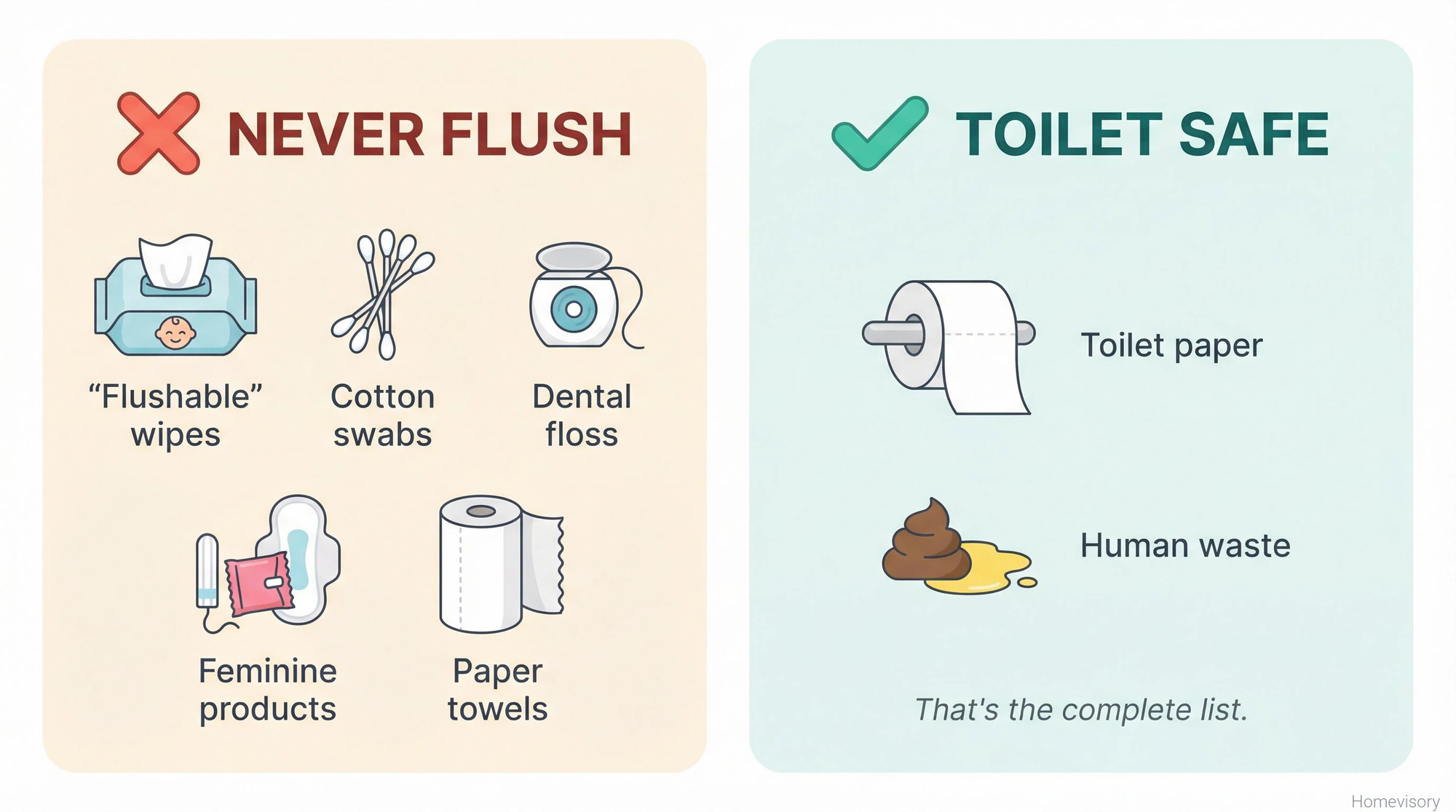
That “flushable wipes” thing drives me crazy. They do not break down like toilet paper. They might make it through your toilet but they catch on things in your pipes and create blockages over time. Every plumber I know has stories about pulling wads of these things out of sewer lines. Janelle, my daughter, used them for a while and I made her stop after I had to auger the main line twice in three months. She wasn’t happy about it.
But yeah.
Preventing Clogs
Prevention is easier than clog removal.
Use reasonable amounts of toilet paper. If you need more, flush twice. Teach your kids this. I had to tell Richard probably fifteen times before it stuck.
Never flush anything except waste and toilet paper. Nothing else. Not “flushable” wipes. Not cotton balls. Not dental floss. None of it.
If you have an older toilet that clogs frequently, consider upgrading. Modern toilets use less water but flush more effectively than those mid-90s disasters.
Keep a plunger in every bathroom. The good kind with the flange. You want it there when you need it, not somewhere else in the house.
Quick Reference
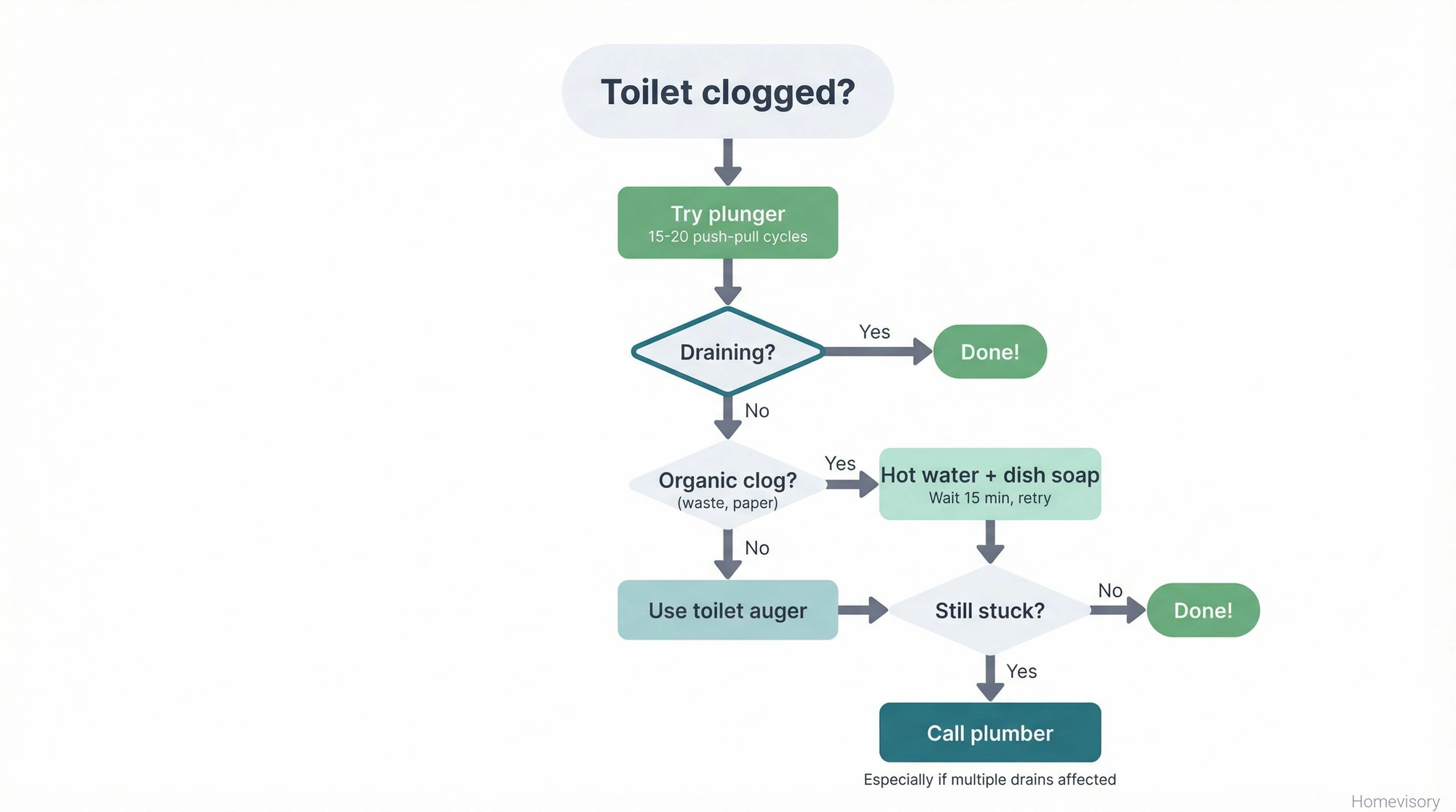
Most clogs: Plunger with proper technique (push-pull, submerged, 15-20 reps)
Organic clogs: Hot water + dish soap, let sit, flush
Minor clogs: Baking soda + vinegar, wait 30 minutes
Stubborn clogs: Toilet auger, slow and steady, finesse not force
Recurring clogs or multiple fixtures: Call a plumber
That covers how to unclog a toilet in pretty much every situation you’ll face. Most of the time its the plunger. Use it right and you’ll solve 90% of clogs without spending anything.
If you want to stay ahead of toilet problems and every other home maintenance task, thats what we built Homevisory for. Our Homevisory home task manager keeps track of what needs doing and when, so you’re not scrambling when something goes wrong. You can sign up for free and start getting your home maintenance organized.