The Slow Drain Problem Nobody Fixes Until It’s an Emergency
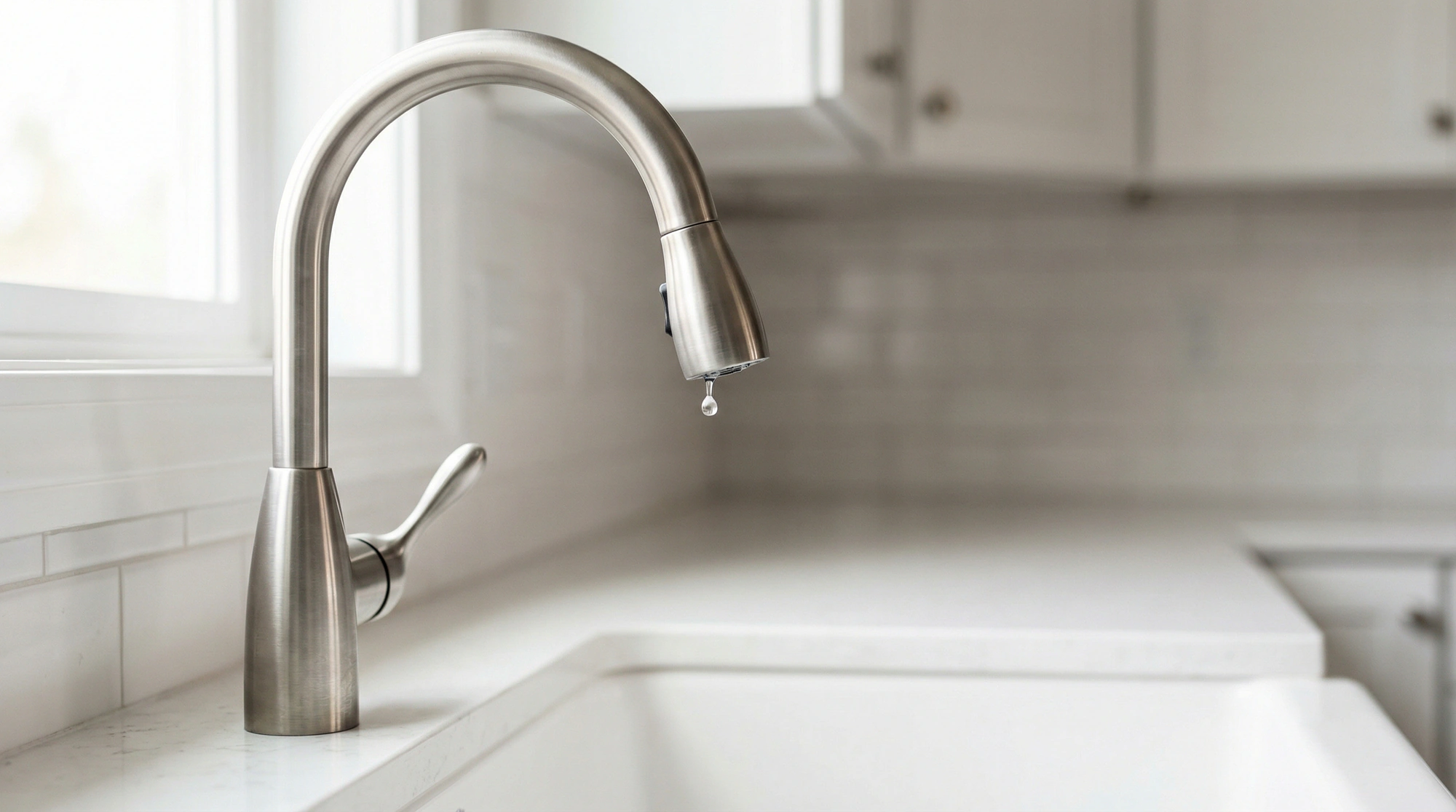
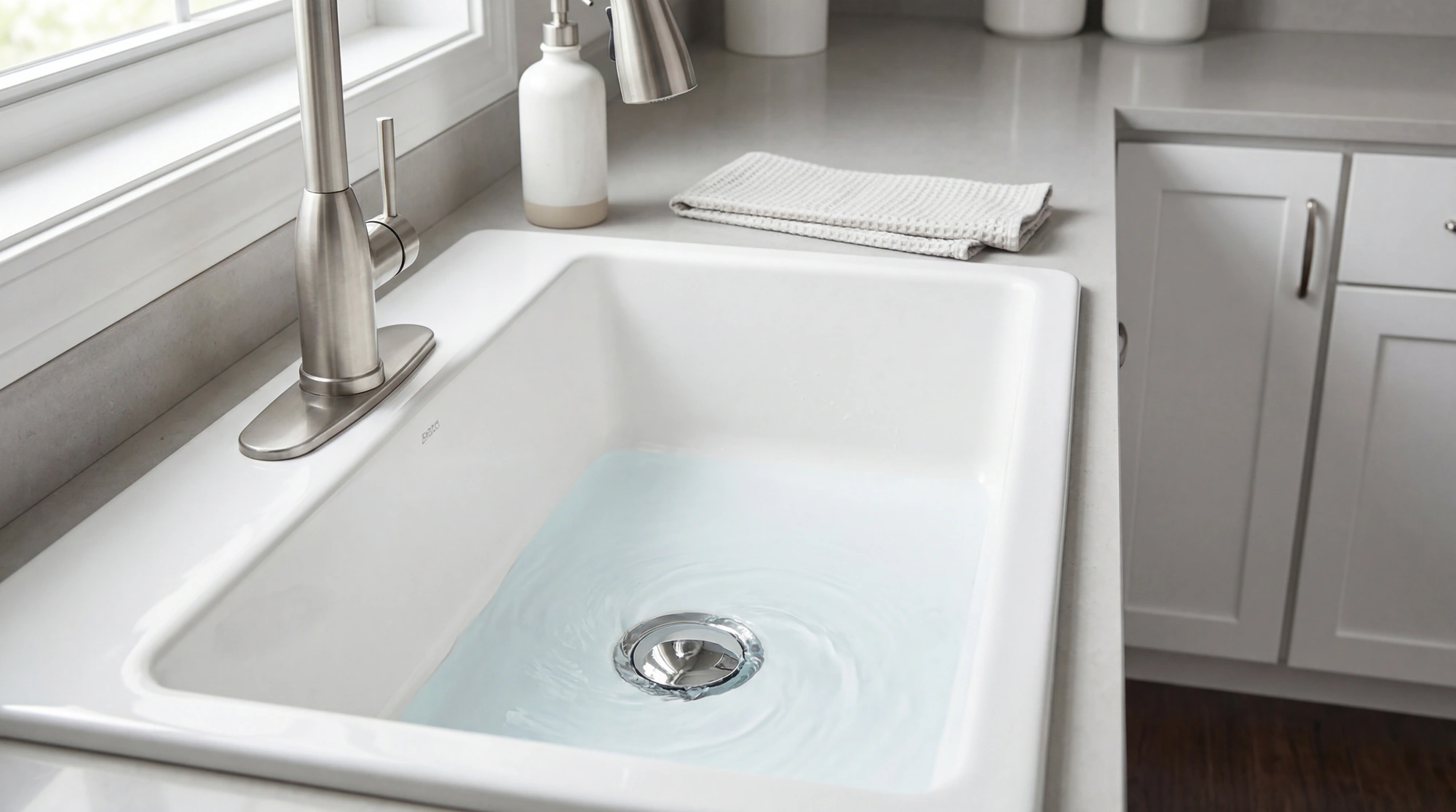
Your sink is draining slow. You noticed it last week. Maybe two weeks ago. You’re standing there watching the water pool around your hands while you rinse dishes and you think “I should do something about that” and then you don’t. I’ve done this. Everyone does this.
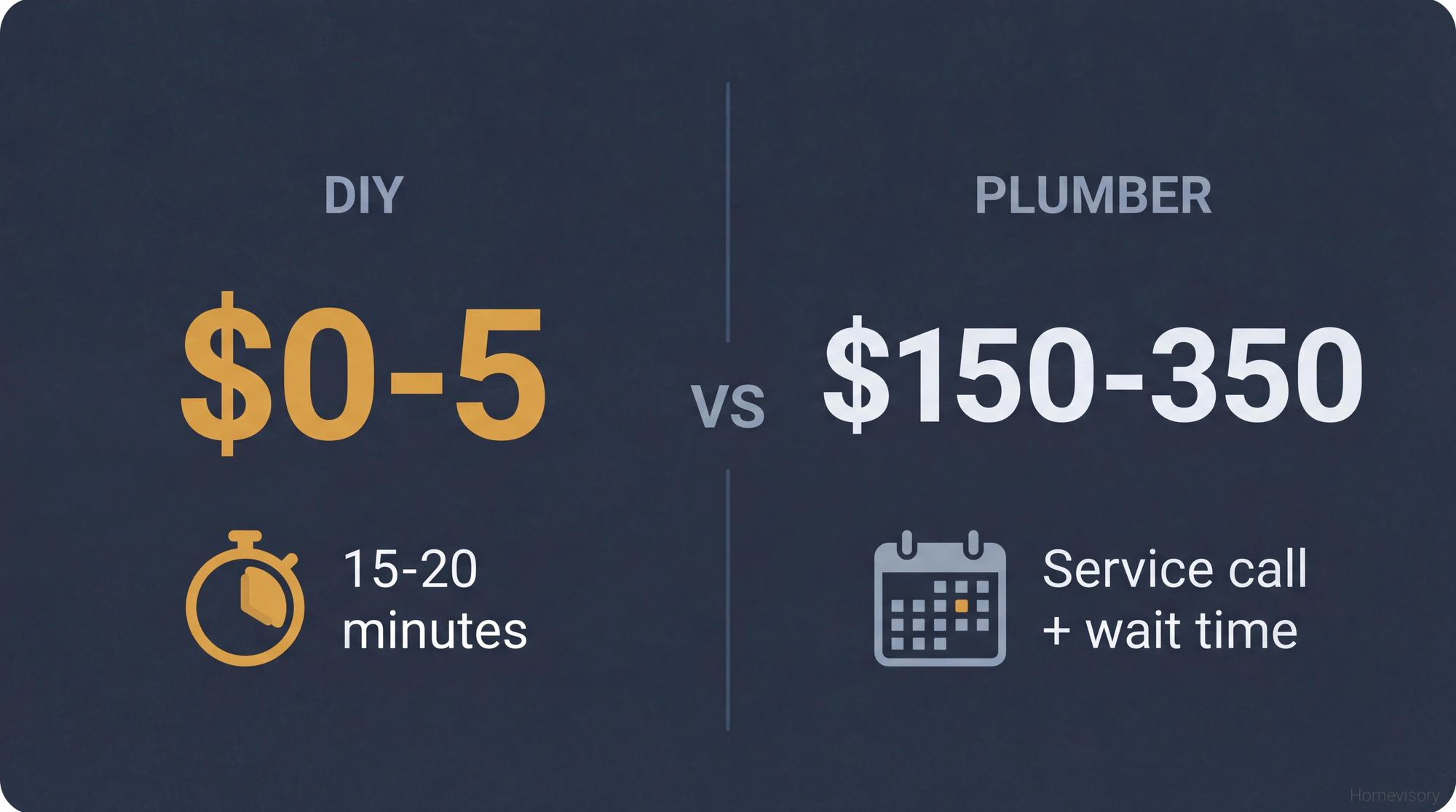
Then one morning the sink doesnt drain at all. Water just sits there. And now it’s an emergency and you’re calling a plumber and paying somewhere between $147 and $345 to fix something you could have handled yourself for basically nothing. If you’re already at that point, our guide on how to unclog a sink covers the emergency fixes.
This is an article about how to clean a sink drain before it becomes that emergency. And honestly, even if you’re already at the emergency stage, most of this still applies.
Why Sink Drains Get Clogged
I need to explain what’s actually happening down there before I tell you how to fix it.
Kitchen sinks accumulate grease, food particles, soap residue, and whatever else makes it past your drain catch. Bathroom sinks get hair, toothpaste, soap scum, and that weird gunk that forms when all those things combine. For the full scope of drain problems — sinks, toilets, showers, and main lines — see our clogged drain guide. Toilets have their own set of problems, and if you’re dealing with how to unclog a toilet, that’s a different article. The buildup is gradual. You dont notice it for months and then suddenly the drain is slow and you cant figure out what changed. Nothing changed. It just finally accumulated enough to restrict the flow.
The EPA recommends using boiling water or a drain snake instead of chemical drain openers for clogged drains. Theres a reason for that, and I’ll get to the chemical thing later.
My dad Curtis worked in a factory for thirty-something years and he’d come home smelling like machine oil and metal shavings. First thing he’d do, every single day, was go to the kitchen sink and wash his hands. He had this whole routine. The sink in that house in Atlanta, the one I grew up in, I don’t know how many times I watched him do that. Hundreds. Maybe thousands. Anyway.
The Boiling Water Method
This is where you start. Always.
Boil a full kettle of water. Pour it directly down the drain. Wait five minutes. Do it again.
Thats it.
For minor buildup, especially grease in kitchen sinks, this dissolves enough to restore flow. I do this once a week in my kitchen sink as preventative maintenance. Takes two minutes. Costs nothing.
One thing: if you have PVC pipes and they’re older, don’t use boiling water repeatedly. The heat can soften the joints over time. Warm water is safer for older plastic pipes. If you don’t know what kind of pipes you have, look under the sink. White plastic is PVC. Gray metal is usually galvanized steel. Copper is, you know, copper-colored. If you have PVC, use hot water from the tap, not boiling.
Baking Soda and Vinegar
The science fair volcano method. It actually works.
Pour half a cup of baking soda down the drain. Follow it with half a cup of white vinegar. You’ll get that fizzing reaction. Let it sit for 15-30 minutes. Then flush with hot water.
The first house Raquel and I bought, this was in Texas, had a bathroom sink that drained slow from day one. We should have noticed during the inspection but we were young and excited and didn’t think about sink drains. I tried the boiling water thing and it didn’t help. The baking soda and vinegar treatment ran three times over a week and slowly, gradually, the drain cleared up. Turned out the previous owners had been using bar soap, which leaves more residue than liquid soap, and years of that buildup had narrowed the pipe. The fizzing action broke it down.
This method is also good for odors. If your sink smells like something died in it, the baking soda neutralizes the acids causing the smell and the vinegar kills some of the bacteria. Not a replacement for actually cleaning the drain, but it helps.
Free printable
Save this for later: get the printable field guide
The free Homevisory field guide covers every season on one calm, printable plan: what to check, what normal looks like, and when to call for help. Tell us where to send it.
Sent! Check your inbox in the next minute or two.
Can't wait? Download the guide now
The P-Trap
This is the part I probably care too much about.
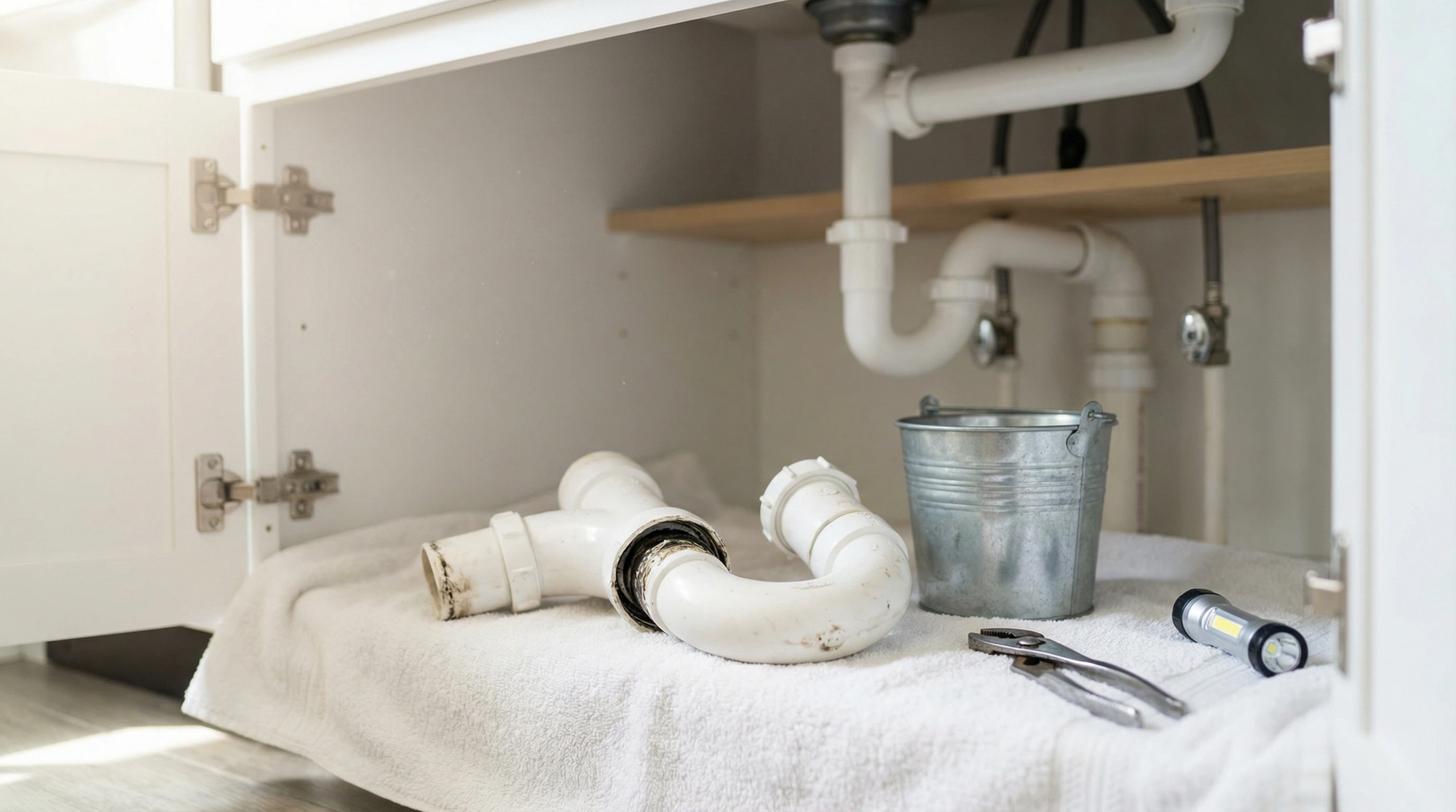
Under your sink theres a curved section of pipe that looks like the letter P lying on its side or sometimes like a U depending on the angle. That’s the P-trap. Its job is to hold a small amount of water at all times, which creates a seal that prevents sewer gas from coming up through your drain and into your house. Thats why your home doesn’t smell like a sewer. The P-trap.
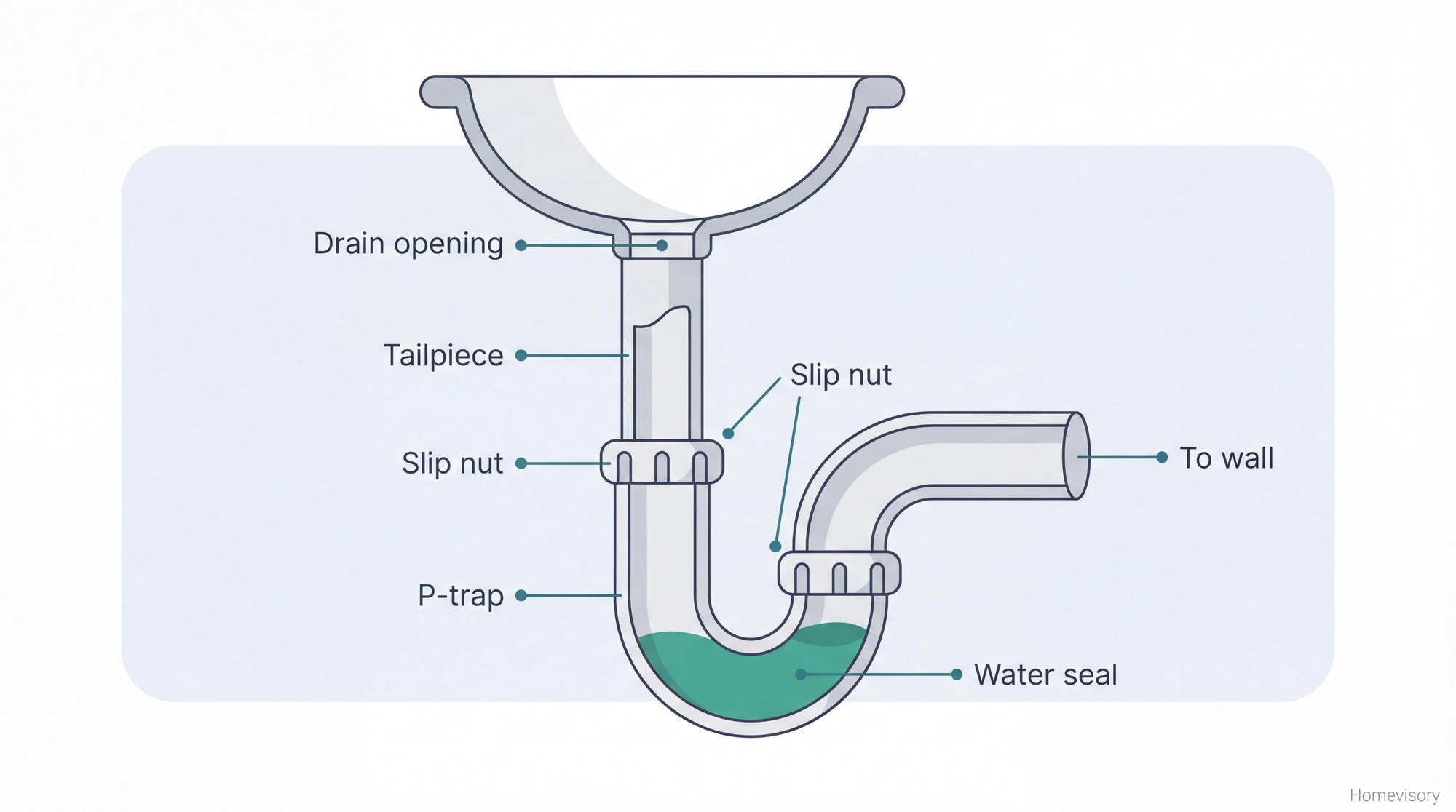
When people talk about “cleaning a sink drain” they usually mean pouring something down the drain and hoping for the best. But the P-trap is where most clogs actually form because it’s the lowest point in the system and gravity pulls debris there. If you really want to know how to clean a sink drain properly, you need to take the P-trap off and actually look inside it.
This sounds intimidating but it’s not. Turn off the water. Put a bucket under the P-trap because there’s going to be water in there and also whatever gunk has been accumulating. The P-trap connects to the pipes with slip nuts, those big rings you can usually turn by hand, if they’re plastic. Metal ones might need pliers. Unscrew both ends, pull the P-trap down and out, and dump whatever’s in there into the bucket. You might need a moment. It’s going to be disgusting. I’ve pulled stuff out of P-traps that made me question what people are doing in their bathrooms. Clumps of hair held together by soap scum that have formed into these dense, horrifying masses. The smell is something else. But once you clean it out, really scrub the inside of that curved section, and put it back together, your drain will flow like it’s brand new. The whole job takes fifteen minutes. No chemicals. No plumber. No hundred-something dollars for a service call.
I do this once a year on every sink in my house. Takes an hour for the whole house.
Drain Snakes
If the clog is past the P-trap, you need a snake.
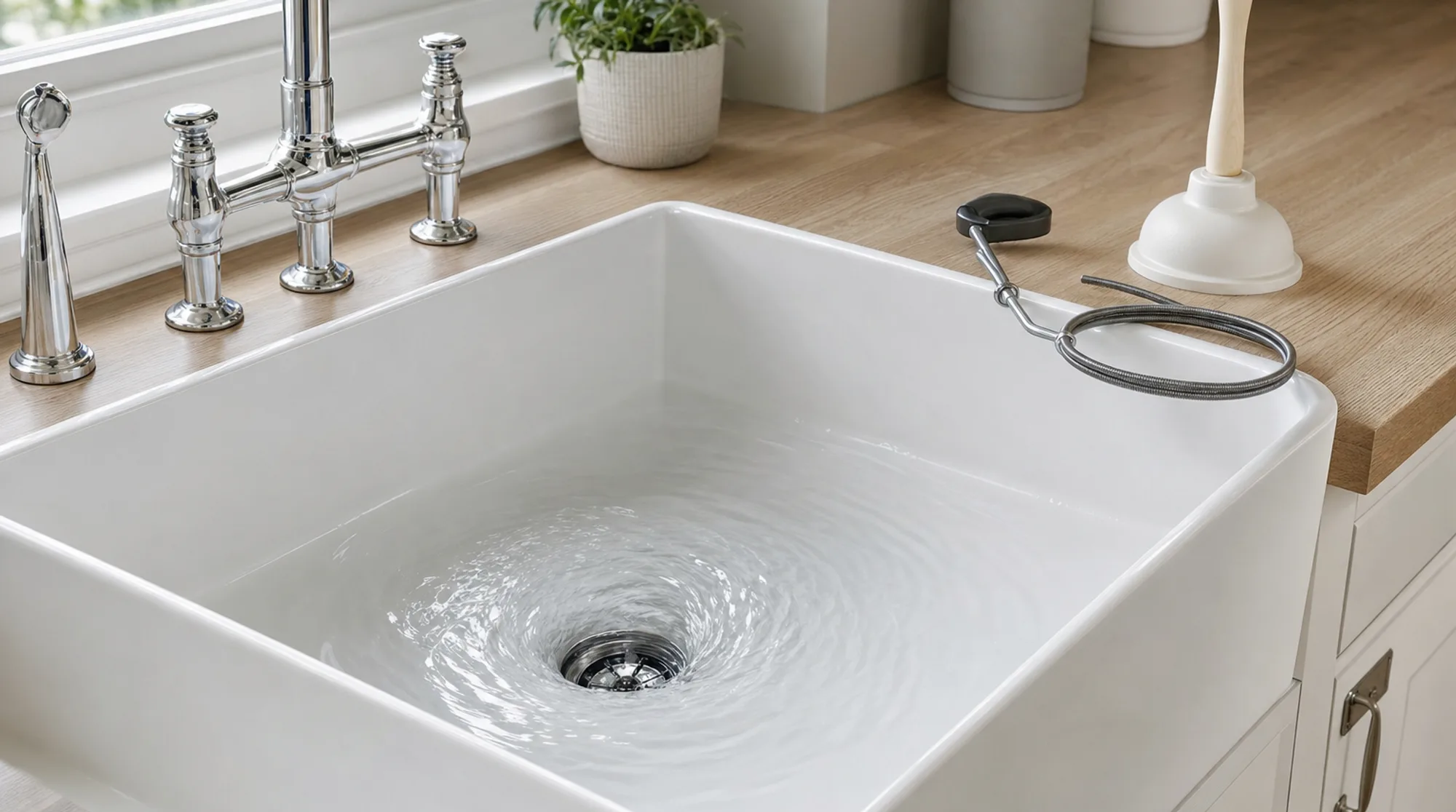
A drain snake, also called a drain auger, is a long flexible cable you feed into the pipe. When it hits the clog, you rotate it to either break up the blockage or hook it so you can pull it out. Basic plastic drain snakes cost five dollars at any hardware store. They’re disposable and work fine for bathroom sinks where hair is usually the culprit. Longer metal augers cost maybe $30-40 and can reach clogs further down the line.
Feed the snake into the drain slowly. When you feel resistance, you’ve hit the clog. Rotate the handle while pushing gently. Pull it back out slowly. The gunk will come with it. Flush with hot water.
My mom Shirley used to say, and she was talking about something completely different, she used to say you address problems when they’re small or you address them when they’re expensive. She was talking about getting the car serviced. But it applies to drains. A slow drain is a small problem. A completely clogged drain where water is backing up into your sink is an expensive problem. Plumbers charge around $90 per hour on average, more in some cities, and most drain calls take at least an hour.
Chemical Drain Cleaners
I’m not getting into these.
They work by creating a chemical reaction that generates heat and dissolves organic material. They can also damage older pipes, especially if used repeatedly. They’re terrible for septic systems. The EPA recommends mechanical methods instead.
If you want to use them, read the directions. Wear gloves. Don’t mix products. Don’t use them if you’ve already tried something else and there’s standing water because now you have standing water full of caustic chemicals.
Whatever. Call a plumber if you want to go that route. Moving on.
Preventative Maintenance
The best way to clean a sink drain is to keep it from getting clogged in the first place.
Kitchen sinks: Use a drain catch. Don’t pour grease down the drain, even with hot water running. Scrape plates into the trash before rinsing. Run the garbage disposal with plenty of cold water, not hot, because cold water solidifies grease so it gets chopped up instead of coating the pipes.
Bathroom sinks: Get a drain cover that catches hair. Clean it weekly. Actually clean it, don’t just look at it. The same principles apply to unclogging your shower drain where hair accumulation is even worse.
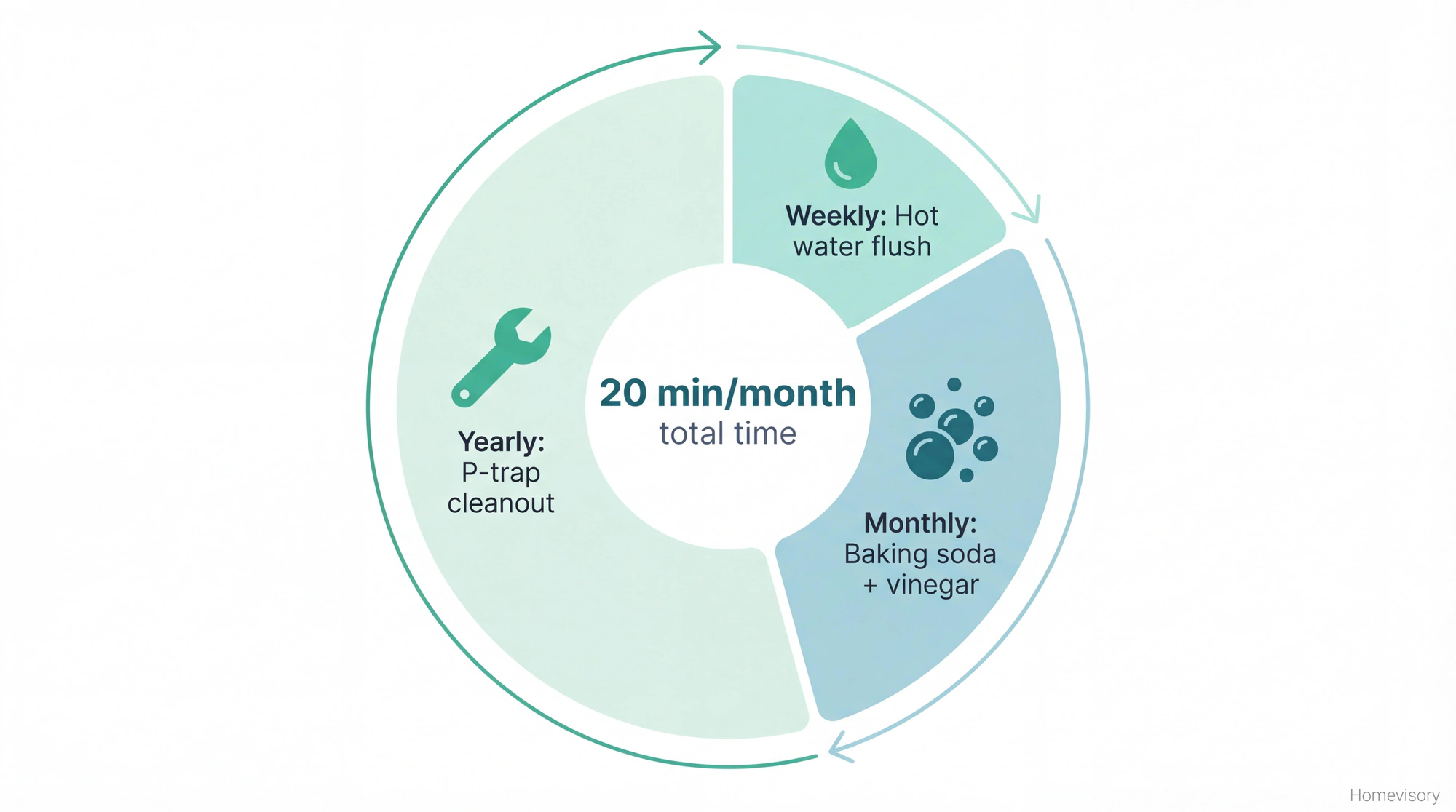
Both: Do the boiling water flush once a week. Do the baking soda and vinegar treatment once a month. Take apart the P-trap and clean it once a year.
That’s it. Total time investment is maybe twenty minutes a month. Total cost is basically zero.
When to Call a Plumber
If you’ve tried everything here and the drain is still slow or clogged, the problem is further down the line than you can reach. Main line clogs require professional equipment. Snaking a main sewer line costs $100 to $250, and hydrojet cleaning runs $250 to $600 for heavy buildup. Professionals recommend having sewer lines cleaned every two years.
Also call a plumber if you smell sewer gas even when the drain is working. That could mean the P-trap seal is failing or there’s a venting issue.
Also if multiple drains in your house are slow at the same time. That’s a main line problem, not an individual drain problem.
What Homevisory Does
Look, you’re going to forget about drain maintenance. Everyone does. You read an article like this, you think “I should do that,” and then six months later you’re standing at a slow drain wondering what you were supposed to do about it.
That’s what we built Homevisory for. It tracks all your home maintenance tasks, reminds you when things are due, and gives you the actual instructions when you need them. Drain cleaning, filter changes, all of it. The whole point is you don’t have to remember. The system remembers for you.
It’s free to sign up. That’s what we do here at Homevisory home task manager.