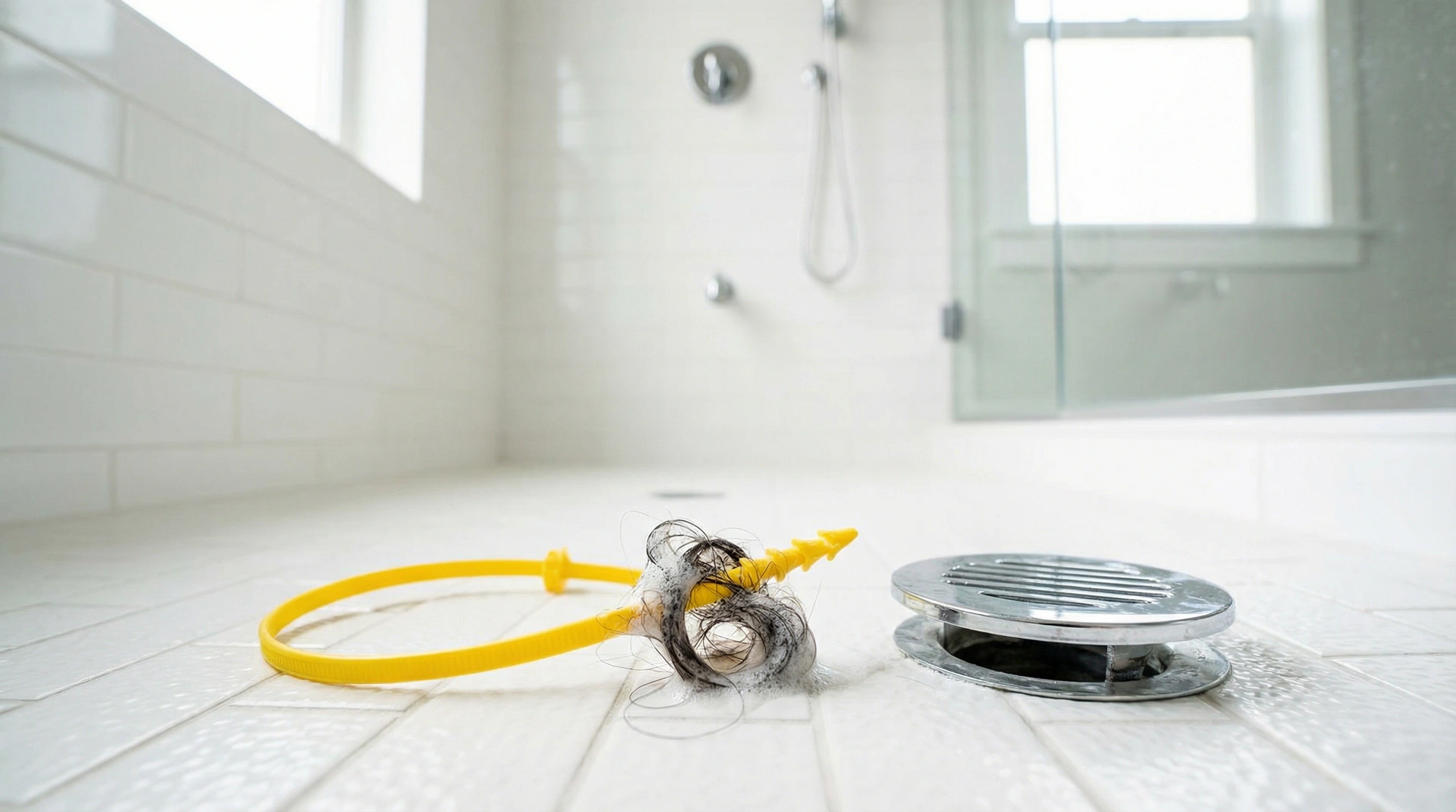
The Slow Drain Warning
Your shower drain is telling you something right now. If the water is pooling around your ankles while you’re trying to rinse off, thats not normal. Thats the beginning of a clog, and if you ignore it, youre going to end up standing in six inches of water wondering why you didnt deal with this two weeks ago.
I’ve been unclogging drains for thirty years. In my own homes, in client homes, in rental properties where the previous tenant clearly never heard of a hair catcher. And heres what I can tell you: learning how to unclog a shower drain is one of those basic homeowner skills that will save you money and frustration for the rest of your life.
Most clogs arent complicated. They’re hair. They’re soap scum. They’re that gross combination of both that forms a plug about six inches down your drain pipe. You dont need a plumber for this. You need fifteen minutes and one of the methods I’m about to show you.
What’s Actually Causing the Clog
Before you start poking around in there, it helps to understand what youre dealing with.
About 80% of all plumbing issues in households are related to clogged pipes. Our clogged drain guide covers every drain type in your house, and the sink drain cleaning guide covers the kitchen side specifically. Eighty percent. That means if something’s wrong with your plumbing, chances are pretty good it’s a blockage somewhere. And shower drains are one of the most common culprits because of what goes down them every day.
Hair is the big one. Human hair doesnt break down. It just accumulates. It wraps around the drain crossbars, catches more hair, catches soap residue, and eventually forms something that looks like a small drowned animal. I’ve pulled things out of shower drains that made me question whether the homeowner had a pet they forgot to mention.
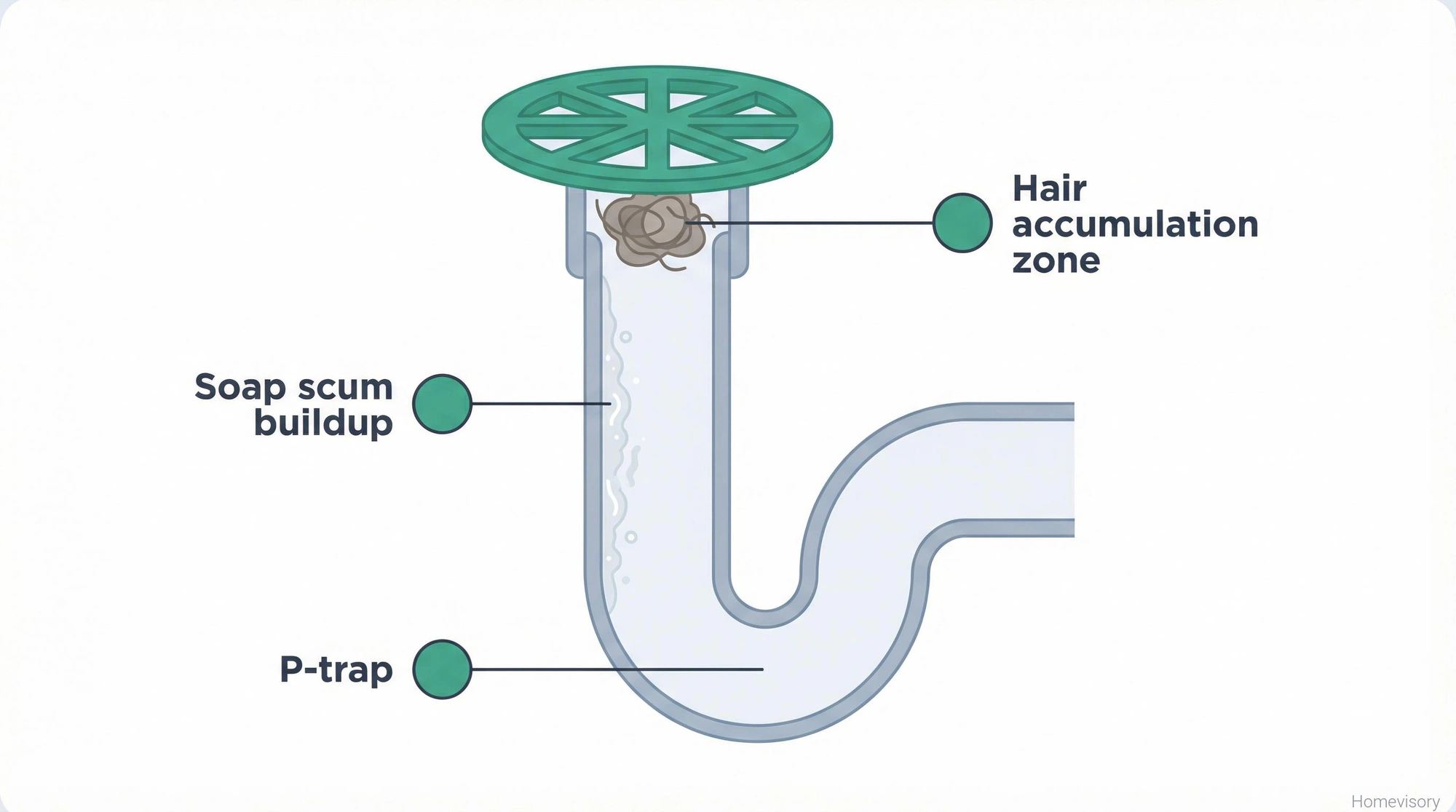
Soap scum is the other factor. The fatty acids in bar soap combine with minerals in your water and create a film that sticks to everything, including the hair thats already building up. Shampoo and conditioner residue add to it. Body oils add to it. Over time, you get a plug.
Now. Five methods to clear it.
Method 1: Remove the Drain Cover and Pull It Out
Start here. Always start here.
Most shower drains have a cover you can remove. Some just lift out. Some have a screw in the center. Some twist off. Whatever yours does, get it off and look down there with a flashlight.
Nine times out of ten, you can see the clog. It’s right there, a few inches down, wrapped around the crossbars. You can reach it with your fingers if you’re not squeamish about it. I’m not squeamish about it. After thirty years in this business, nothing about a drain bothers me anymore.
If you cant reach it with your fingers, use needle-nose pliers. Or a bent coat hanger. Or whatever tool you can improvise to grab that clump and pull it out.
Done. Thats the whole method.
I know it sounds too simple. But I’ve gone to client homes where they’ve tried chemicals, tried plungers, tried everything except actually looking in the drain and removing the obvious obstruction. The clog was sitting right there, visible, waiting to be pulled out. They just didnt want to touch it.
Wear gloves if you need to. But check the obvious thing first.
Method 2: The Zip Tool (My Preferred Method)
This is what I use more than anything else. A plastic drain snake, sometimes called a zip tool or a drain stick. You can buy a pack of them for five dollars at any hardware store.
Its just a long flexible plastic strip with barbs on the sides. You feed it down the drain, the barbs grab the hair, you pull it out. Simple. Effective. No chemicals, no plunger, no mess beyond the disgusting clump of hair youre about to see.
Heres my technique and this is the part where I probably go into too much detail but I’ve unclogged hundreds of drains this way so I know what works. You want to feed the strip down slowly, not jam it. Push it down until you feel resistance, which is the clog, and then rotate the strip a quarter turn while pushing gently so the barbs can grab more material. Then pull straight up, slow and steady, dont yank it or youll leave half the clog behind. If it comes up with a big clump, great, do it again because theres probably more. Keep going until the strip comes up clean. Then run hot water for two minutes to flush any loose debris.
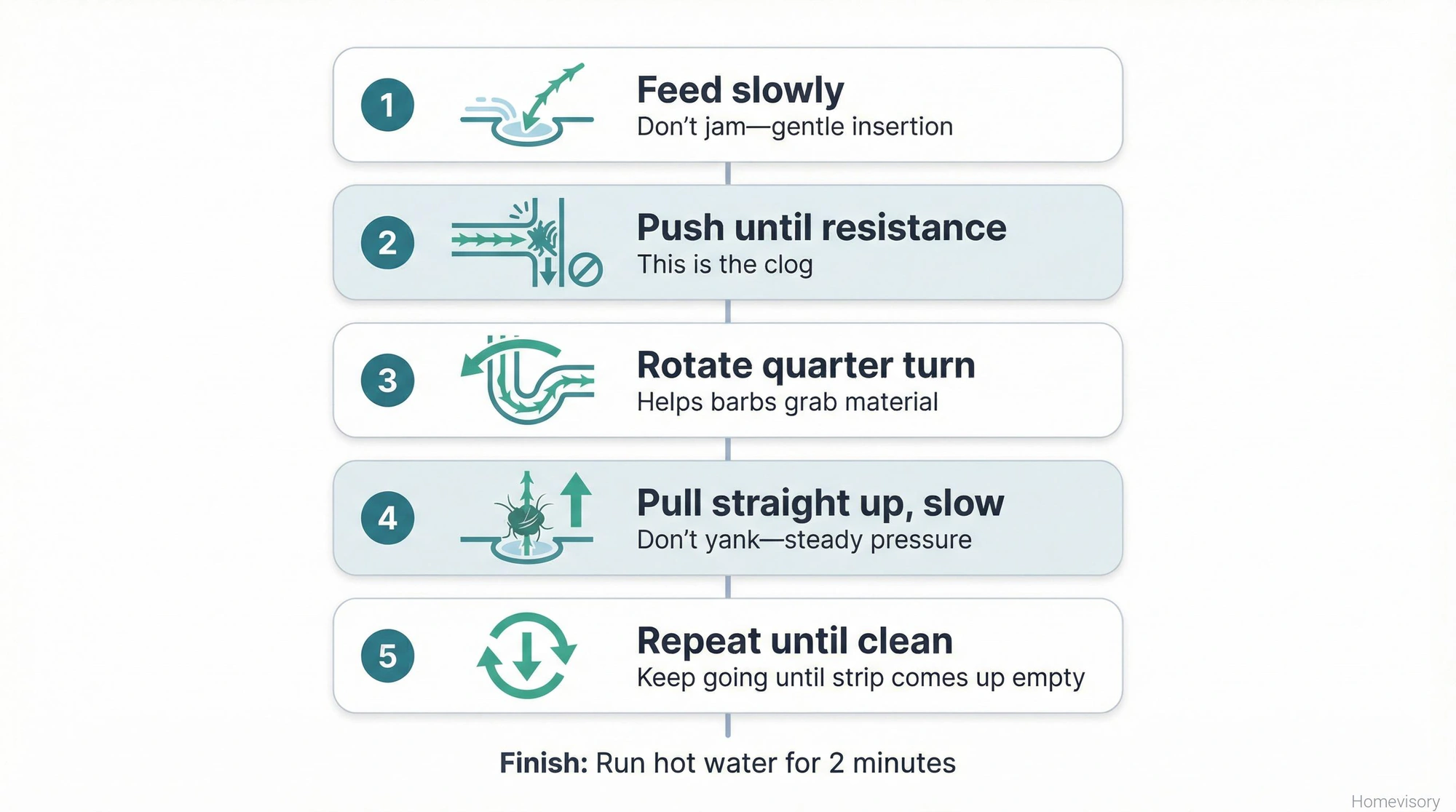
The zip tool works because it physically removes the obstruction. It doesnt dissolve anything or push anything further down the pipe. It pulls the problem out so you can throw it away.
I keep a few of these in my garage at all times. Raquel knows where they are. The kids know where they are. When someone mentions the shower is draining slow, someone grabs a zip tool and handles it. Thats how it should work in your house too.
Method 3: Baking Soda and Vinegar
Look. This one is hit or miss.
Baking soda and vinegar create a fizzy reaction. People think the fizzing is doing something aggressive. Its not. Its a mild acid-base reaction that produces carbon dioxide bubbles. It can help loosen light buildup, but it’s not going to dissolve a solid hair clog.
That said, I use this as a maintenance step after I’ve already pulled out the main obstruction.
Pour half a cup of baking soda down the drain. Follow it with half a cup of white vinegar. Let it sit for fifteen minutes. Then flush with hot water. Not boiling water. Hot water from your tap.
I want to be clear about the boiling water thing because I see people recommend it all the time. PVC drain pipes are rated for 140°F, and black ABS pipe is rated for 180°F. Boiling water is 212°F. You pour boiling water down there repeatedly, youre risking damage to your pipes. Hot tap water is fine. Boiling is not worth the risk.
The baking soda and vinegar method works best for slow drains, not full clogs. If water is standing in your shower and not draining at all, this isnt going to fix it. You need to physically remove the obstruction first.
Method 4: The Plunger
You need a cup plunger, not a flange plunger. Cup plunger is the basic one, looks like a red rubber cup on a stick. Flange plunger has an extra piece that folds out, thats for toilets.
Make sure theres enough water in the shower to cover the rubber cup. Press it down over the drain to create a seal. Pump it up and down fifteen or twenty times. The pressure change can dislodge clogs that are further down the pipe.
That’s it. Moving on.
Method 5: A Drain Snake (The Real One)
If none of the above works, youre dealing with a clog thats deeper in the pipe. Past the P-trap. Maybe in the horizontal run that connects to your main drain line.
This is where a real drain snake comes in. Not the plastic zip tool, an actual metal snake or auger. You can buy a hand-crank model for twenty to thirty dollars, or rent an electric one if the situation is serious.
Feed the snake into the drain until you hit resistance. Then crank the handle to rotate the tip, which either breaks through the clog or grabs it so you can pull it out. This takes some feel. You dont want to force it and damage your pipes. But if you go slow and pay attention to what the resistance is telling you, you can usually clear it.
I’ll be honest. If youre at this point and the clog still isnt clearing, you might be dealing with something bigger. A tree root intrusion. A collapsed pipe. Something thats beyond DIY territory. Our main drain cleaning guide covers what to do when the problem is deeper in your system. Professional drain cleaning runs about $242 on average, with most jobs falling between $147 and $345 depending on where the clog is and how stubborn it is. Thats not cheap but its cheaper than water damage from a backed-up drain.
What I Don’t Recommend
Chemical drain cleaners.
I’m not getting into all the different brands because I dont recommend any of them. The stuff you buy at the grocery store, the gel formulas, the crystal formulas, whatever. These products contain corrosive chemicals that can cause burns and permanent tissue damage if you get them on your skin or in your eyes. The fumes are toxic. And heres the thing that really bothers me: they damage your pipes over time.
The corrosive chemicals dont just clear clogs, they can destroy metal, plastic, and wood pipes. You might clear this clog, but youre weakening your plumbing every time you use that stuff. Eventually you end up with leaks or burst pipes that cost way more than a drain snake ever would.
If you have a septic system, its even worse. The EPA and most septic system manufacturers explicitly warn against using commercial drain cleaners because they kill the beneficial bacteria that break down waste in your tank.
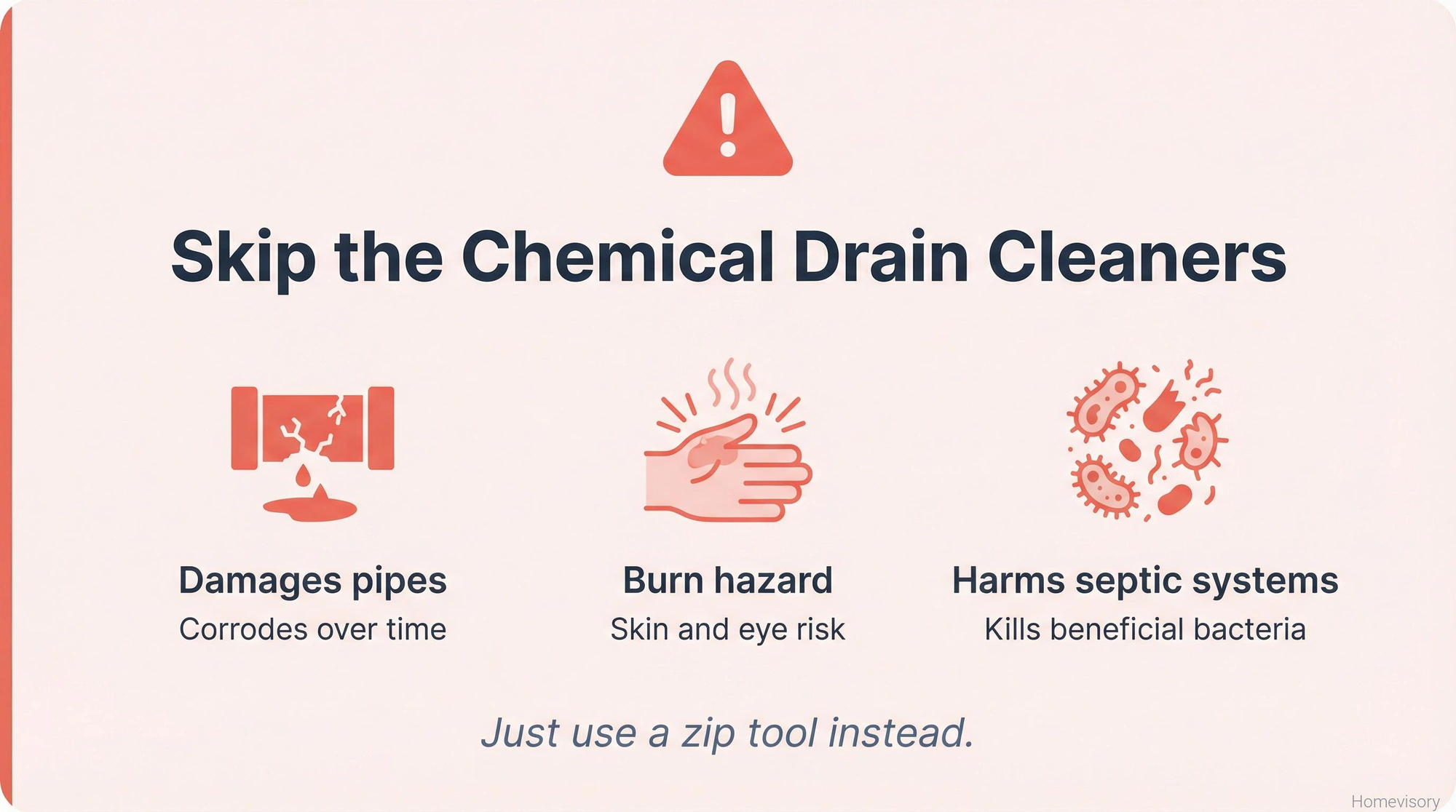
Just use a zip tool. Physically remove the hair. Its faster, cheaper, and safer.
The Real Problem
My dad Curtis used to say, about something totally different, he used to say “dont make future you clean up after present you.” He was talking about putting your tools away when youre done. But it applies to everything and it definitely applies to slow drains.
A slow drain is a future clog. Thats it. Thats the whole relationship. If your shower is draining a little sluggish, you have a partial blockage right now that is going to become a full blockage later. You can spend five minutes today with a zip tool, or you can spend an hour next month dealing with standing water and a much worse situation.
I learned this the hard way. Back in 2011, I tiled directly over old tile in my own bathroom because I was trying to save time. Shortcut. I knew better. Eleven months later, grout cracked, tiles popped off, water got behind everything, subfloor went soft. Raquel made me sleep on the couch because I quote smelled like mold.
The point isnt the tile. The point is that I ignored early warning signs because fixing them was inconvenient. The shower drain started draining slow during that same period. I told myself I’d deal with it later. Later turned into a mess.
Dont be me in 2011.
Prevention
After you unclog your shower drain, keep it from happening again.
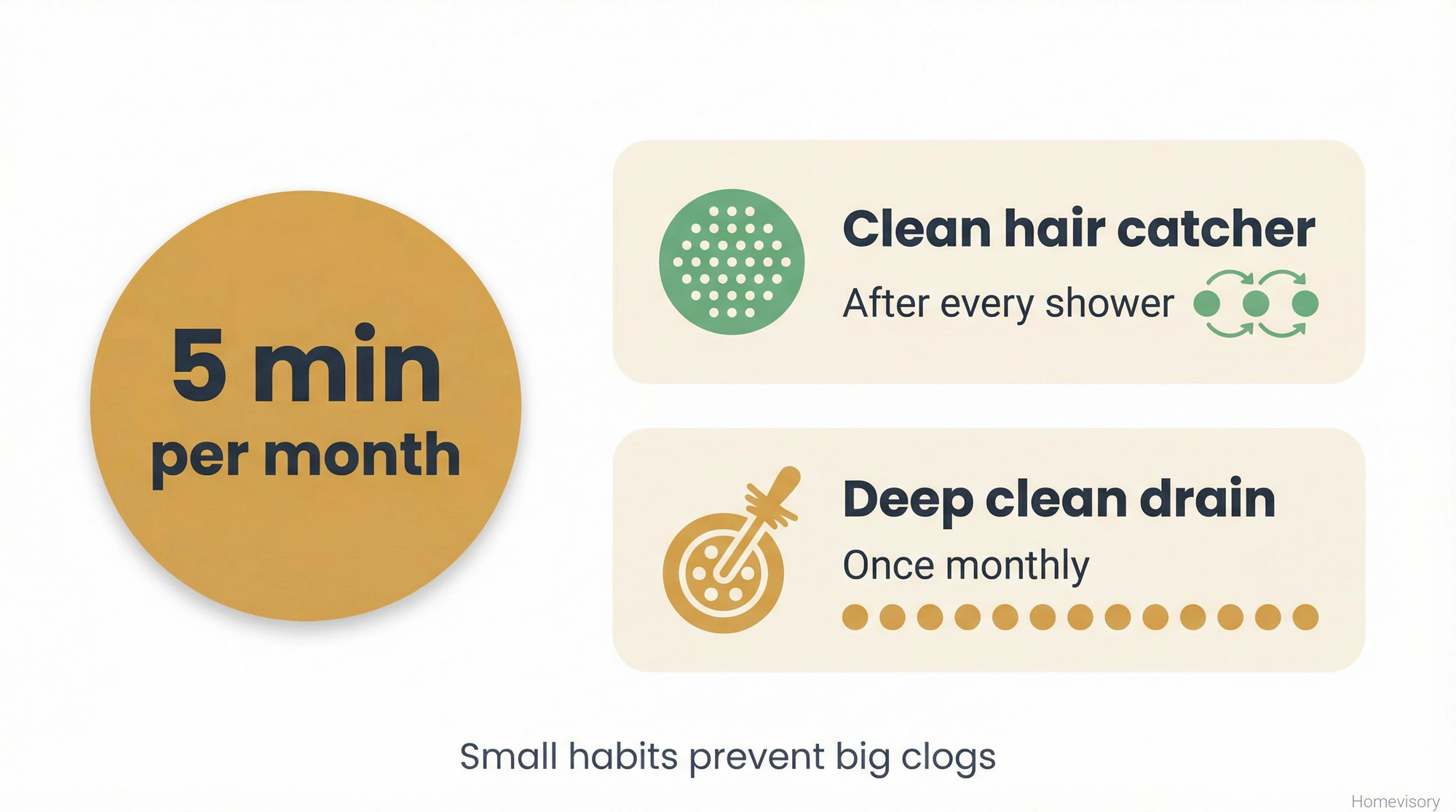
Get a hair catcher. A mesh screen or silicone cover that sits over your drain and catches hair before it goes down. Clean it after every shower. This is the easiest thing you can do.
Raquel bought some hair catchers a few years ago that were supposed to be universal fit. They didnt fit our drain. Sat there crooked, water pooled around them, defeated the whole purpose. I dont even know what brand they were. The point is, measure your drain and get one that actually fits. Or get the kind that sits down inside the drain opening, those work better in my experience.
Once a month, pull the drain cover and clear out any buildup. Use the baking soda and vinegar treatment as maintenance. Five minutes once a month is all it takes.
When My Mom Taught Me
I was maybe fourteen when I helped my mom Shirley with a clogged drain in our house in Atlanta. The bathroom sink, not the shower, but same principle. She handed me a bent coat hanger and told me to fish out whatever was down there. I remember pulling out this clump of hair and soap and being genuinely disgusted. She just said “now you know” and made me rinse the sink out three times.
I dont know if I did it right. She probably fixed it properly after I went to bed. But thats when I learned that drains clog and you deal with it. You dont call someone. You dont ignore it. You handle it.
Anyway.
What Homevisory Does For You
At Homevisory, we built a task manager that reminds you to do this stuff before it becomes a problem. Monthly drain maintenance. Seasonal checks. The boring tasks that prevent expensive emergencies.
You can sign up free at the Homevisory home task manager and start tracking your home maintenance today. Because future you deserves better than standing in six inches of cold water at 6 AM wondering why the shower wont drain.
Thats what we do here at Homevisory.