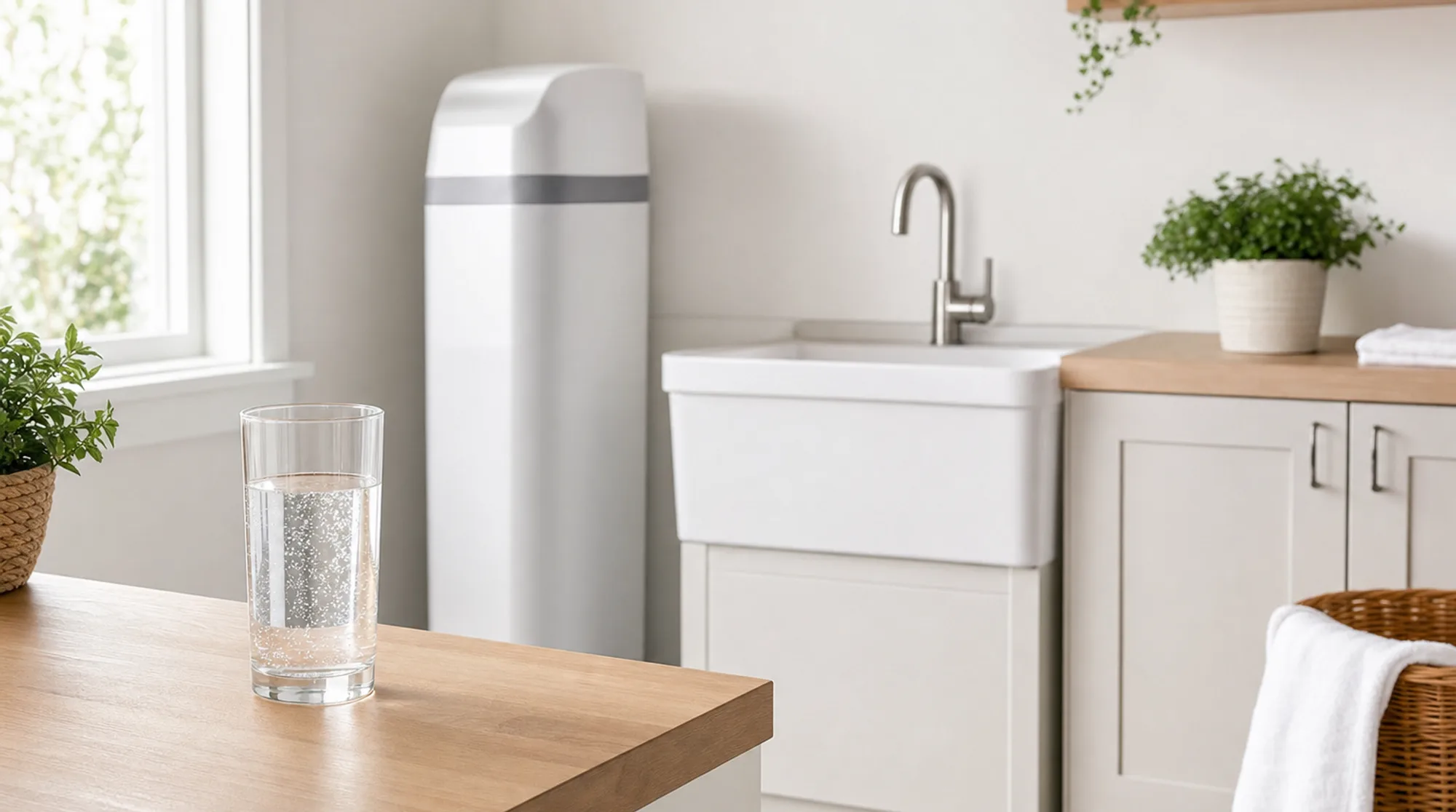
Hard Water Is More Expensive Than You Think
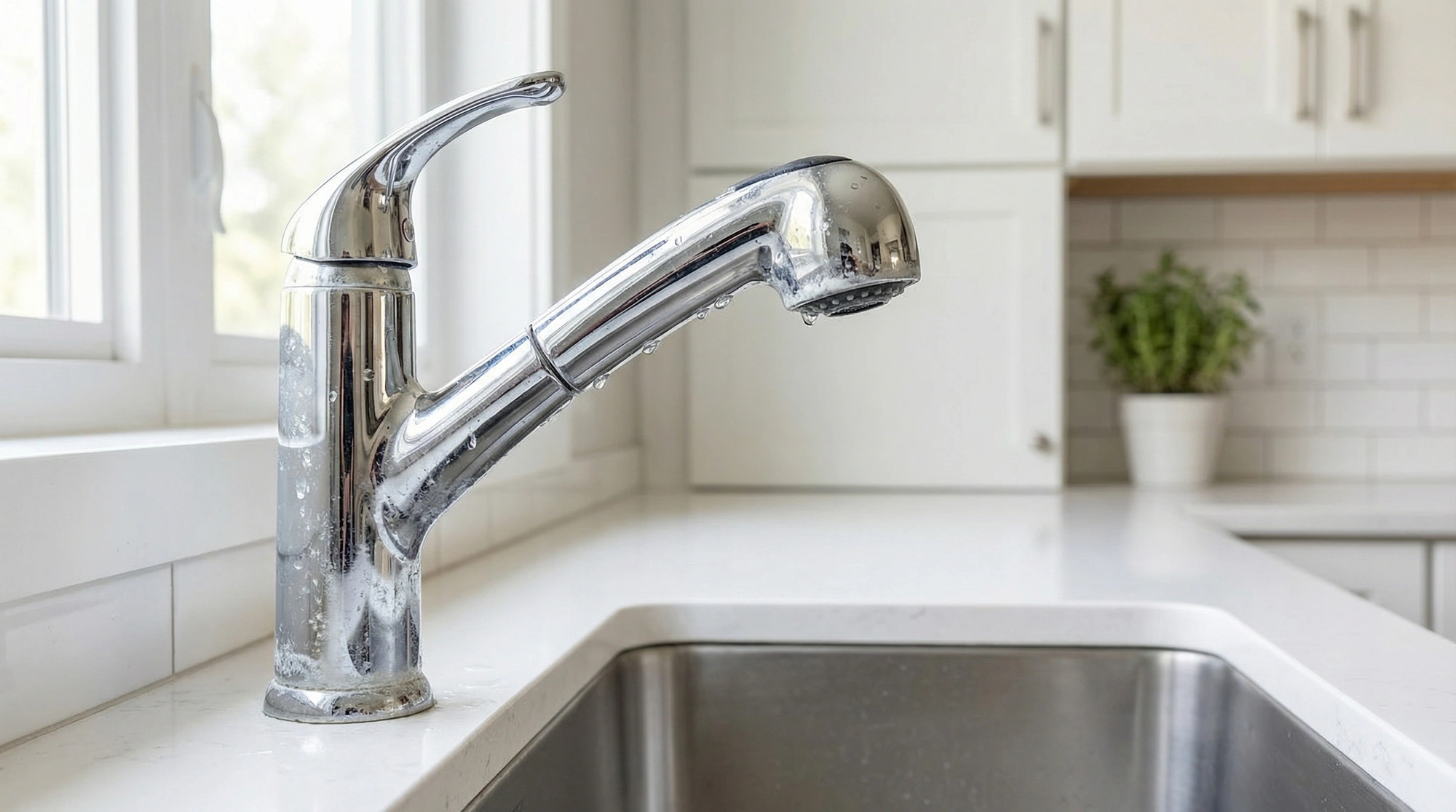
About 85% of American homes have hard water. Most people know it by the white crusty buildup on their faucets or the spots on their shower doors. But what they dont realize is what its doing behind the scenes. Hard water destroys water heaters, shortens the life of dishwashers and washing machines, and makes soap and detergent less effective. The Department of Energy estimates that hard water scale buildup can increase water heating costs by 25-40%.
I’ve been working on homes for over thirty years and water quality is one of those things people ignore until something expensive breaks. The water heater dies five years early. The dishwasher stops cleaning properly. The shower head flow drops to a trickle. Then they spend thousands fixing the symptoms instead of the cause.
This guide covers everything I know about dealing with hard water: how to figure out if you have it, what actually fixes it, and how to keep your system running once its installed.
Figure Out What You’re Dealing With
Before you spend anything on treatment, you need to know two things: whether you actually have hard water, and how hard it is. The hardness level determines what kind of system you need and how big it should be.
You can get a rough idea from the signs. White mineral deposits on faucets and showerheads. Soap that wont lather properly. Spots on dishes after the dishwasher runs. Dry skin and flat hair after showering. Stiff laundry even with extra detergent.
But signs only tell you hard water exists. They dont tell you the hardness level in grains per gallon, which is what you need to size a softener correctly. Our complete guide to fixing hard water explains the difference between real treatment systems and the scams, and walks you through figuring out what makes sense for your situation.
Water Softeners: The Actual Fix
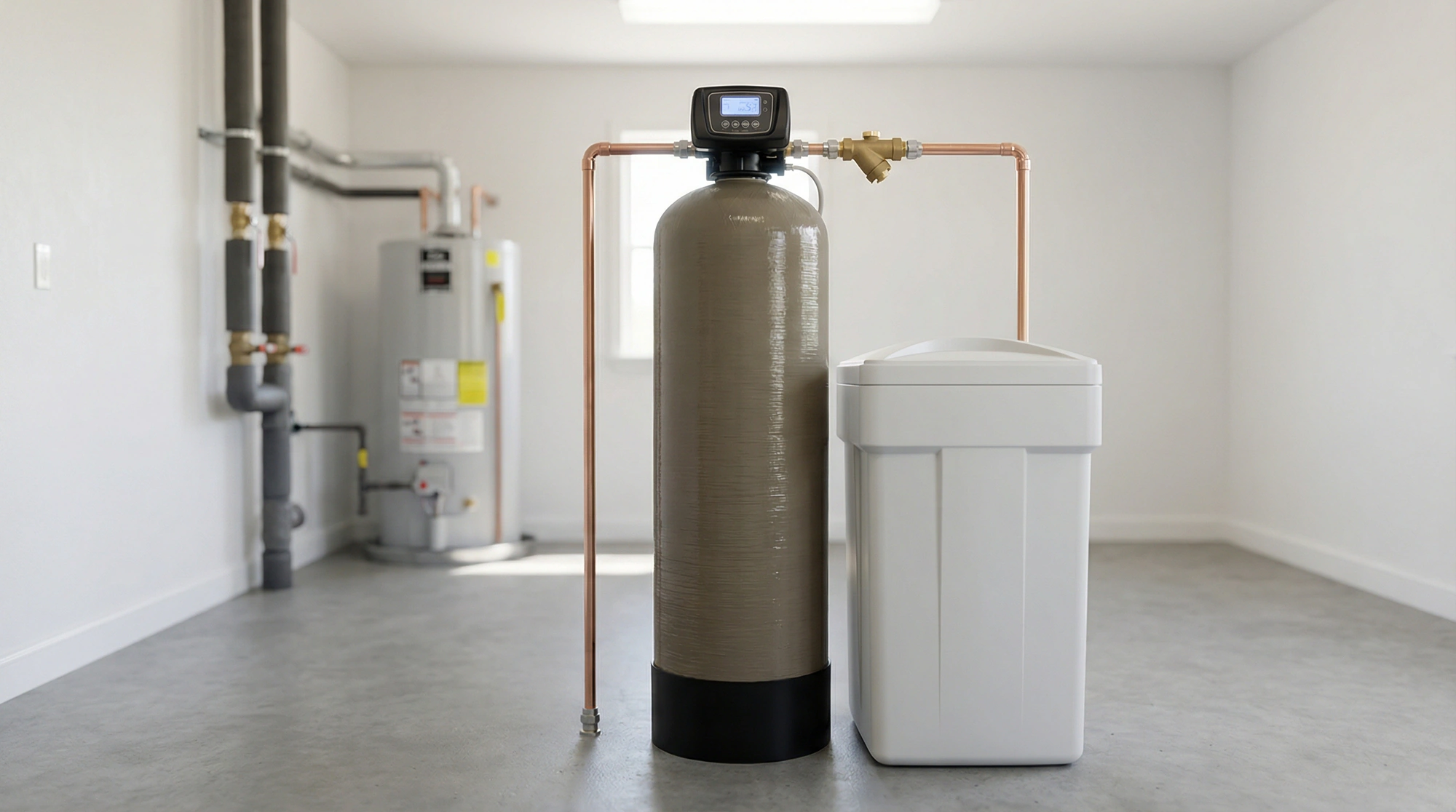
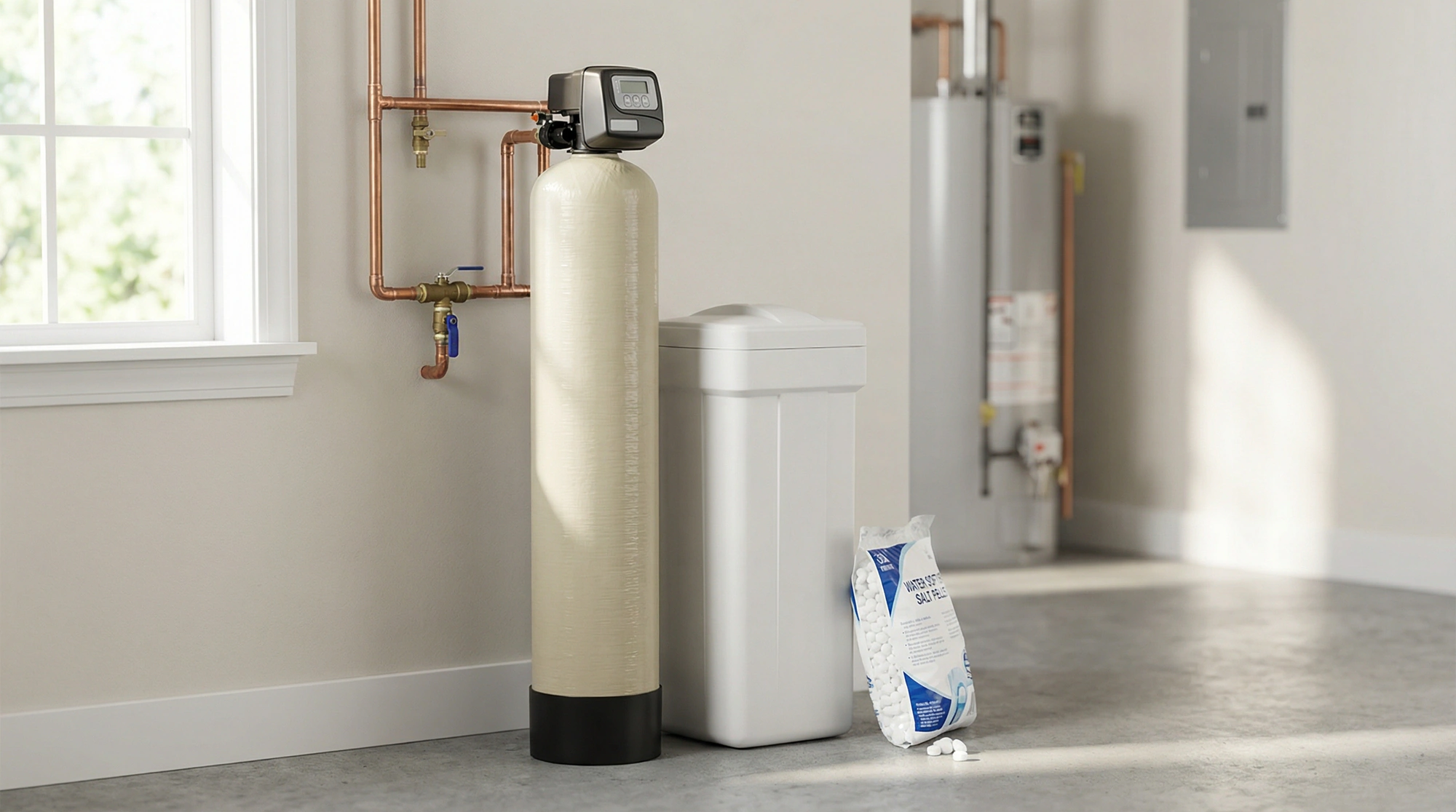
If your water tests above 7 grains per gallon, a water softener is the real solution. Not a magnetic conditioner. Not a filter. A proper ion-exchange water softener that actually removes the minerals causing the problem.
The catch is that sizing matters more than brand. An undersized softener regenerates too often, wastes salt, and doesnt actually soften all your water. An oversized one sits stagnant and breeds bacteria. You need to calculate based on your hardness level, household water usage, and number of people in the home.
Our water softener installation guide covers the full sizing calculation, where to install the unit, permit requirements, and the honest answer on whether this is a DIY job or a plumber job. Spoiler: it depends on your plumbing setup.
Well Water: A Different Challenge
If youre on well water, everything gets more complicated. Well water often has iron, manganese, and sulfur in addition to calcium and magnesium hardness. A standard water softener handles calcium and magnesium fine, but high iron levels can foul the resin bed and kill the system in a couple years.
You need to test for more than just hardness. Iron, pH, manganese, and hydrogen sulfide all affect which system will work and which will fail. Some wells need a pre-filter or an iron-specific treatment stage before the softener.
Our best water softener for well water guide covers iron removal strategies, grain capacity requirements for untreated water, and which systems are actually built to handle what wells throw at them. If you have that sulfur smell, thats covered too.
Keeping Your System Running
A water softener isnt a set-it-and-forget-it appliance. It needs regular attention or it stops working properly and you wont notice until the scale is back on everything.
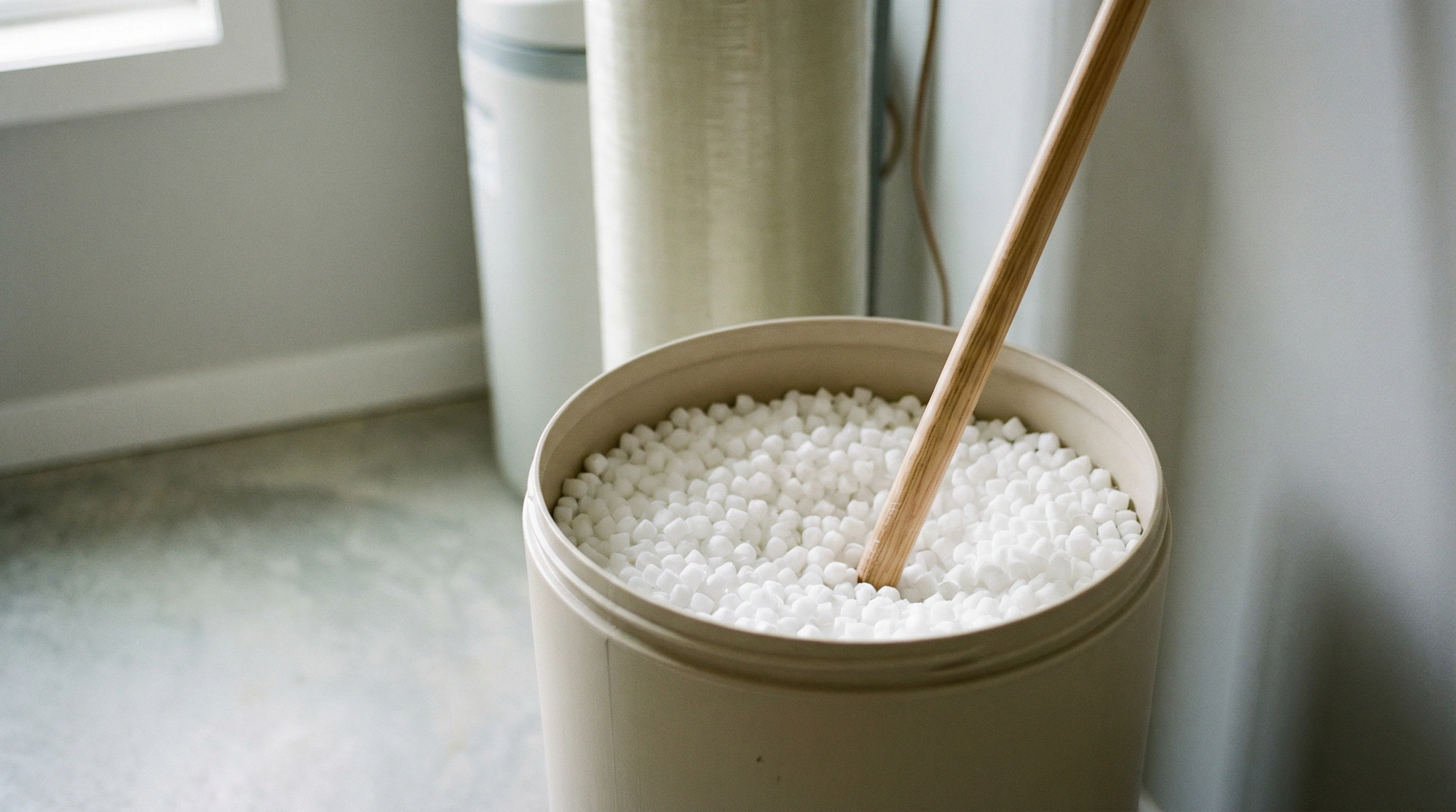
The big maintenance items are checking salt levels monthly, watching for salt bridges (a hard crust that forms above the water line and fools the system into thinking it has enough salt when it doesnt), and cleaning the brine tank once a year. Most people skip all of this and wonder why their softener stopped working after three years.
Our water softener maintenance guide covers the complete care schedule: what to check monthly, quarterly, and annually, plus how to diagnose and fix the common problems that develop over time.
When to Call a Professional
Handle these yourself:
- Checking and adding salt
- Cleaning the brine tank
- Adjusting regeneration settings
- Testing water hardness periodically
- Clearing a salt bridge
Call a professional for:
- Initial installation (unless you have accessible plumbing and experience)
- Resin bed replacement
- Control valve failures
- Well water system design (iron removal + softener staging)
- Any time youre not sure whats wrong and the water is getting hard again
A plumber who specializes in water treatment will charge $200-500 for diagnosis and most repairs. Thats a lot less than replacing a water heater that died early from scale buildup.
Hard water is one of those problems that costs you money every day you ignore it. It shortens the life of every appliance that touches water, makes cleaning harder, and slowly clogs your pipes. The fix isnt complicated. Test your water, install the right system, and maintain it.
If keeping track of salt checks, brine tank cleaning, and regeneration cycles feels like one more thing to remember, thats exactly what Homevisory is for. Our home task manager schedules your water softener maintenance so you dont have to think about it.