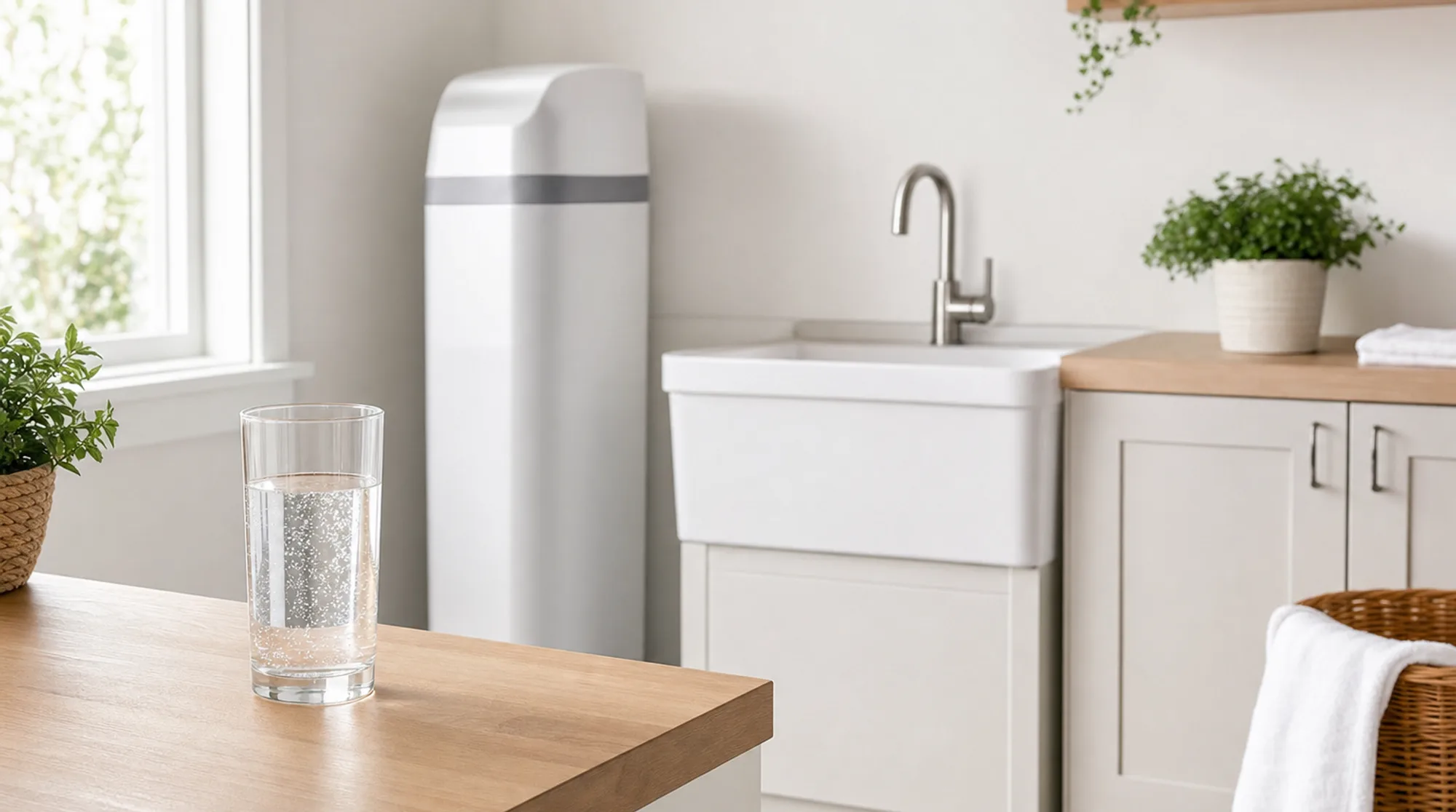
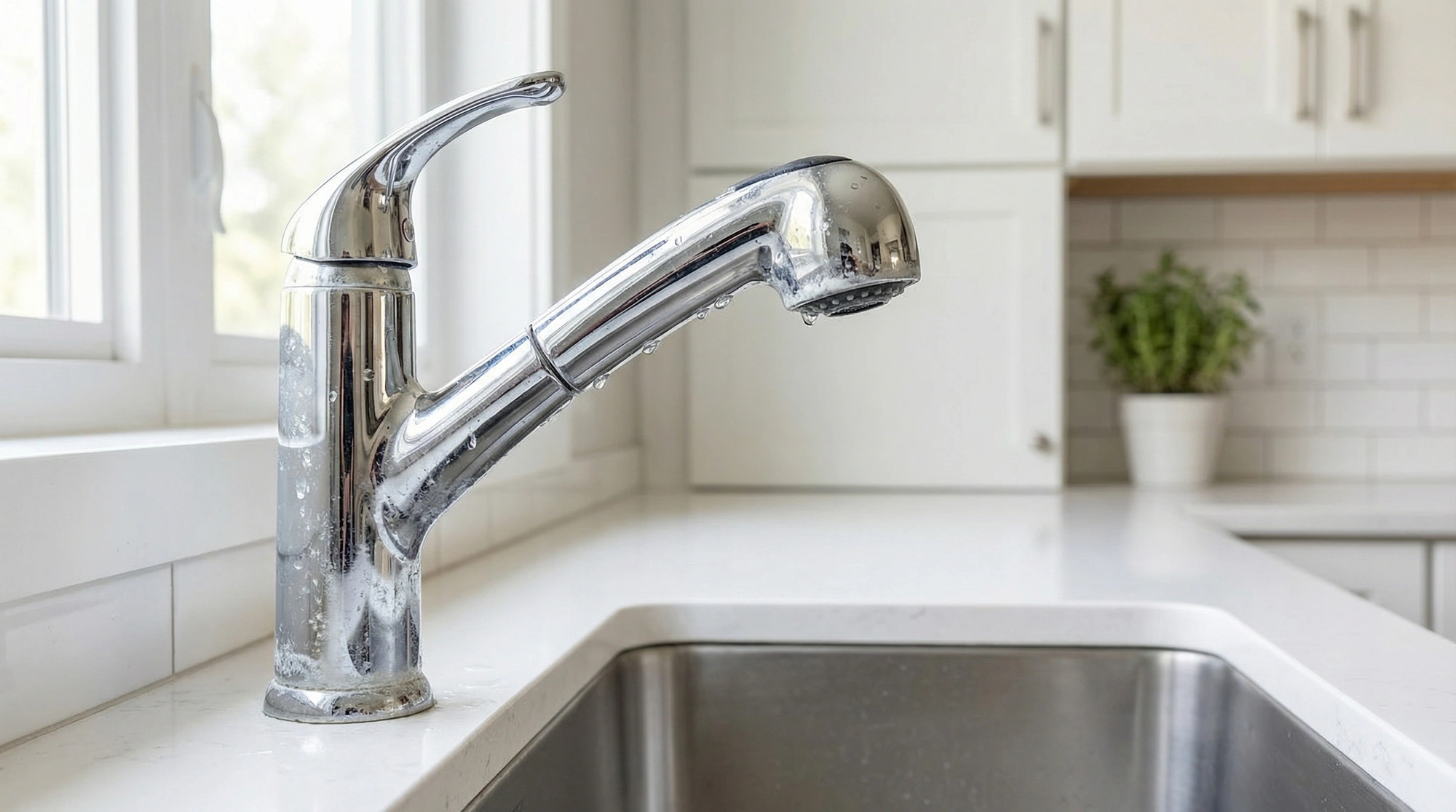
Hard water is one of those problems that sneaks up on you. You dont notice it until you’re scrubbing white crusty buildup off your faucets for the third time this month, or your wife is asking why her hair feels like straw, or your water heater dies six years early and the plumber shakes his head and says “yeah, you got hard water.”
So how do you fix hard water? Thats what we’re going to cover. And I’ll tell you right now, there are real solutions and there are scams, and I’ve dealt with both.
What Hard Water Actually Is
I’m not going to get too deep into the chemistry because I barely passed chemistry in high school. But the basics matter.
Hard water just means your water has a lot of dissolved minerals in it, mostly calcium and magnesium. These minerals get picked up as water moves through rock and soil before it gets to your tap. The USGS classifies water hardness like this: 0 to 60 mg/L is soft, 61 to 120 is moderately hard, 121 to 180 is hard, and above 180 is very hard.
Here’s the thing my dad Curtis never understood. He grew up thinking water is water. “Its all the same,” he’d say. He was wrong about that. We had different water in Brooklyn, Atlanta, and Texas, and I can tell you from experience they were not the same. The water in our Texas house was brutal. You could practically see the minerals floating in it. Our Atlanta water was softer. My mom Shirley used to complain about spots on her drinking glasses anyway though. She was particular about those glasses. Crystal-looking things she got from somewhere, maybe Sears, and she’d hold them up to the window and inspect them. I dont know. Anyway.
The point is, over 85% of American homes have hard water according to the Water Quality Association. If youre reading this, you probably have it too.
How to Know If You Have Hard Water
Get a test kit. They cost like $15 at Home Depot. Test your water. Thats it.
You can also just look around your house. White chalky buildup on faucets and showerheads. Soap that doesnt lather well. Spots on dishes even after running them through the dishwasher. Clothes that feel stiff after washing. Skin that feels dry. These are all signs.
If your water is below 7 grains per gallon, Penn State Extension says you can probably live with it without major scaling problems. Above that, you’re going to want to do something about it.
The Real Solutions for How to Fix Hard Water
Water Softeners (The Actual Fix)
I’m going to spend more time on this than anything else because its what actually works and what most people should be doing. If you want to know how to fix hard water for real, not just treat the symptoms, you need a water softener. Our complete hard water solutions guide covers the full picture from testing through treatment and maintenance, and we have a detailed guide on how to install a water softener if you’re ready to take that step.
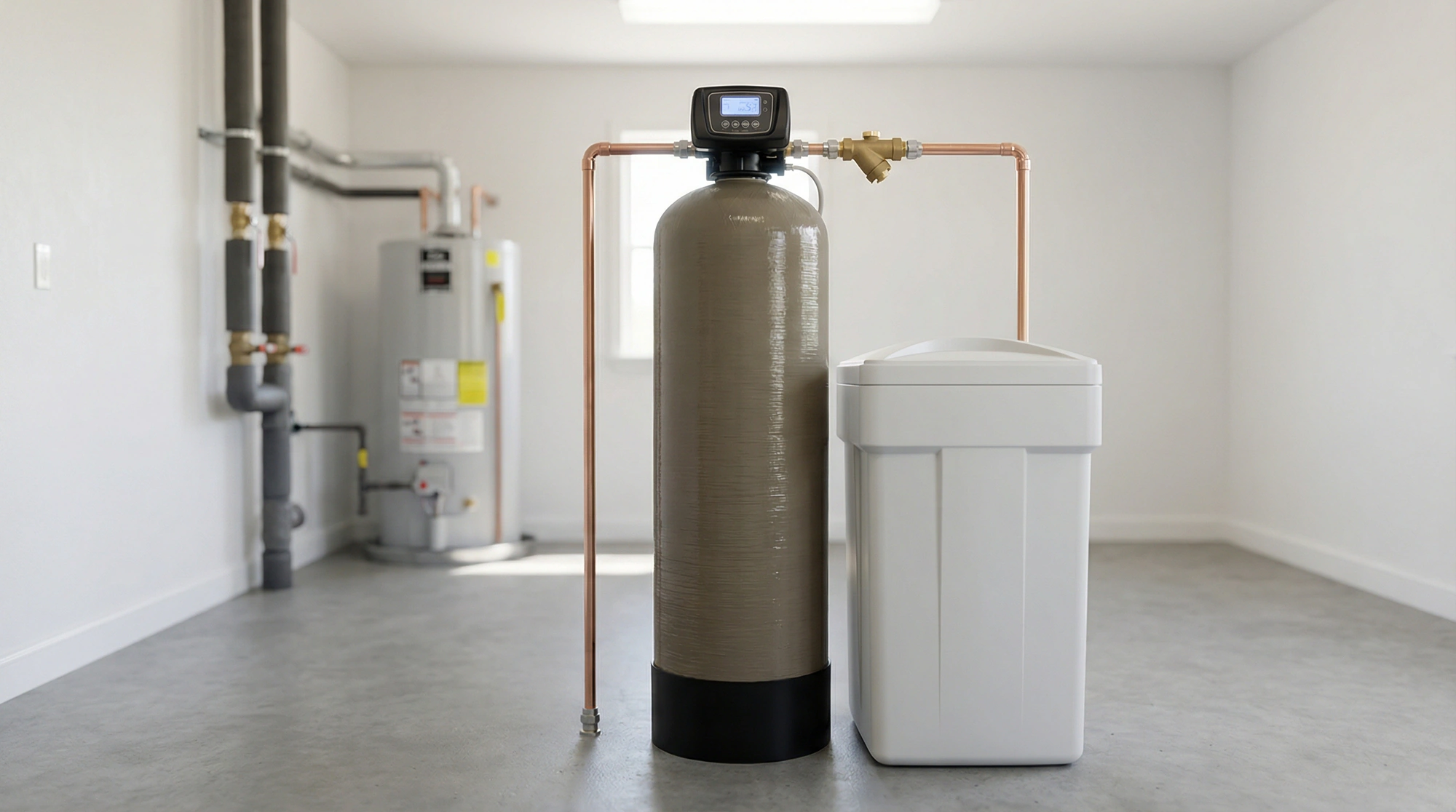
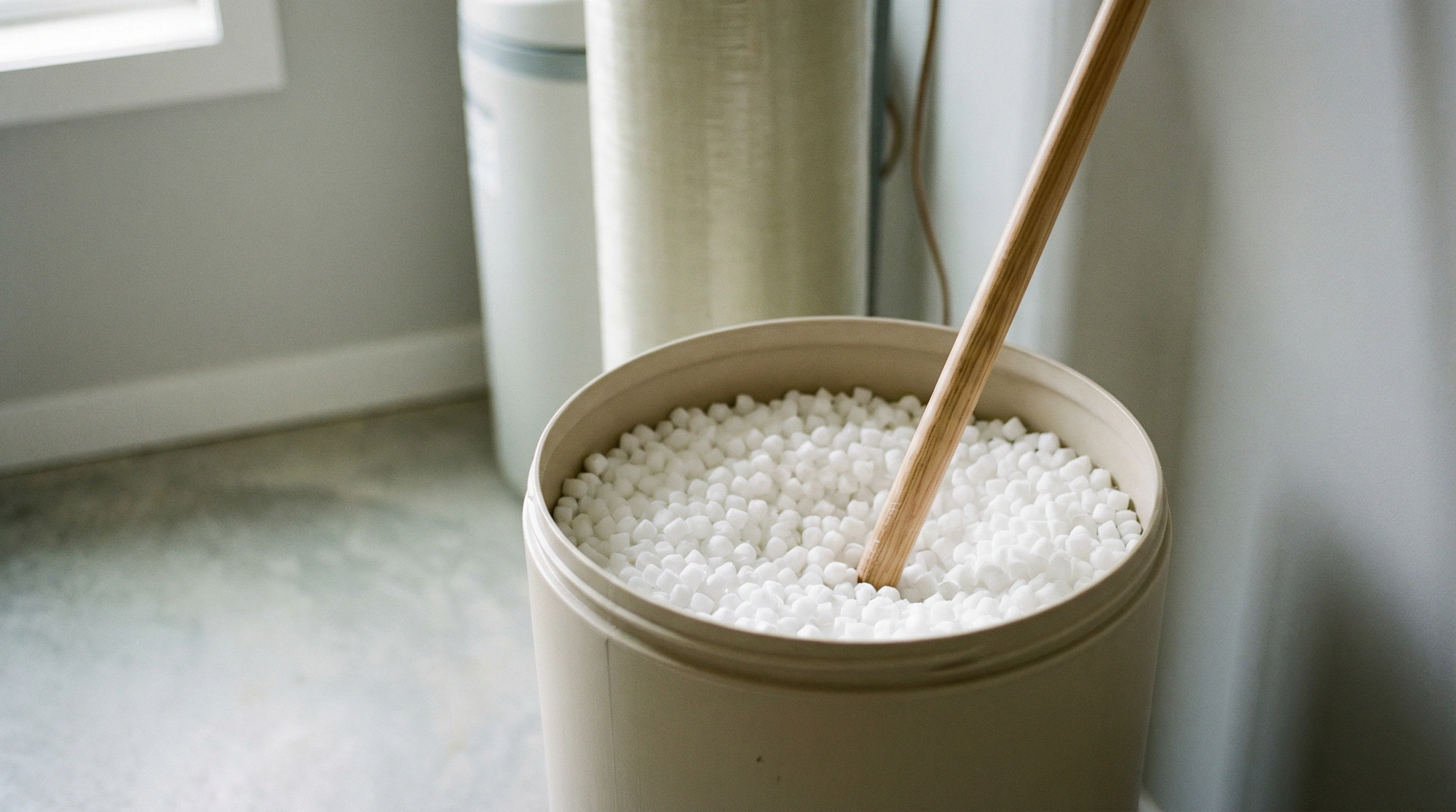
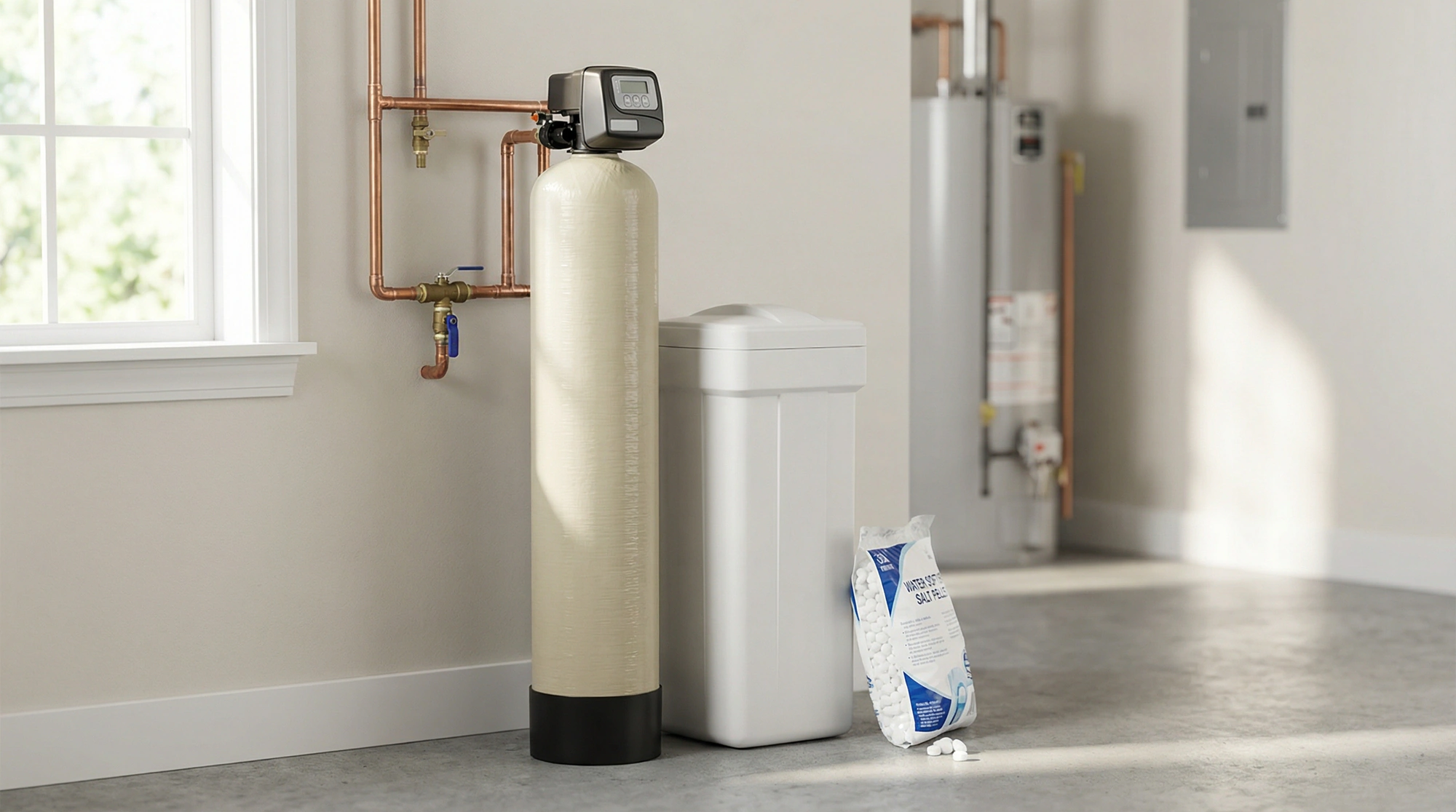
Heres how they work. A water softener uses something called ion exchange, which sounds complicated but really isnt. You have a tank full of resin beads that are coated with sodium or potassium ions. When hard water flows through the tank the calcium and magnesium ions stick to the resin and the sodium or potassium ions get released into the water instead. So you’re basically swapping the minerals that cause problems for minerals that dont. Every few days the system regenerates itself by flushing the resin with salt water which kicks off all the calcium and magnesium and recharges the beads with sodium. The whole thing is automatic once its set up and you just have to add salt to the brine tank every month or so.
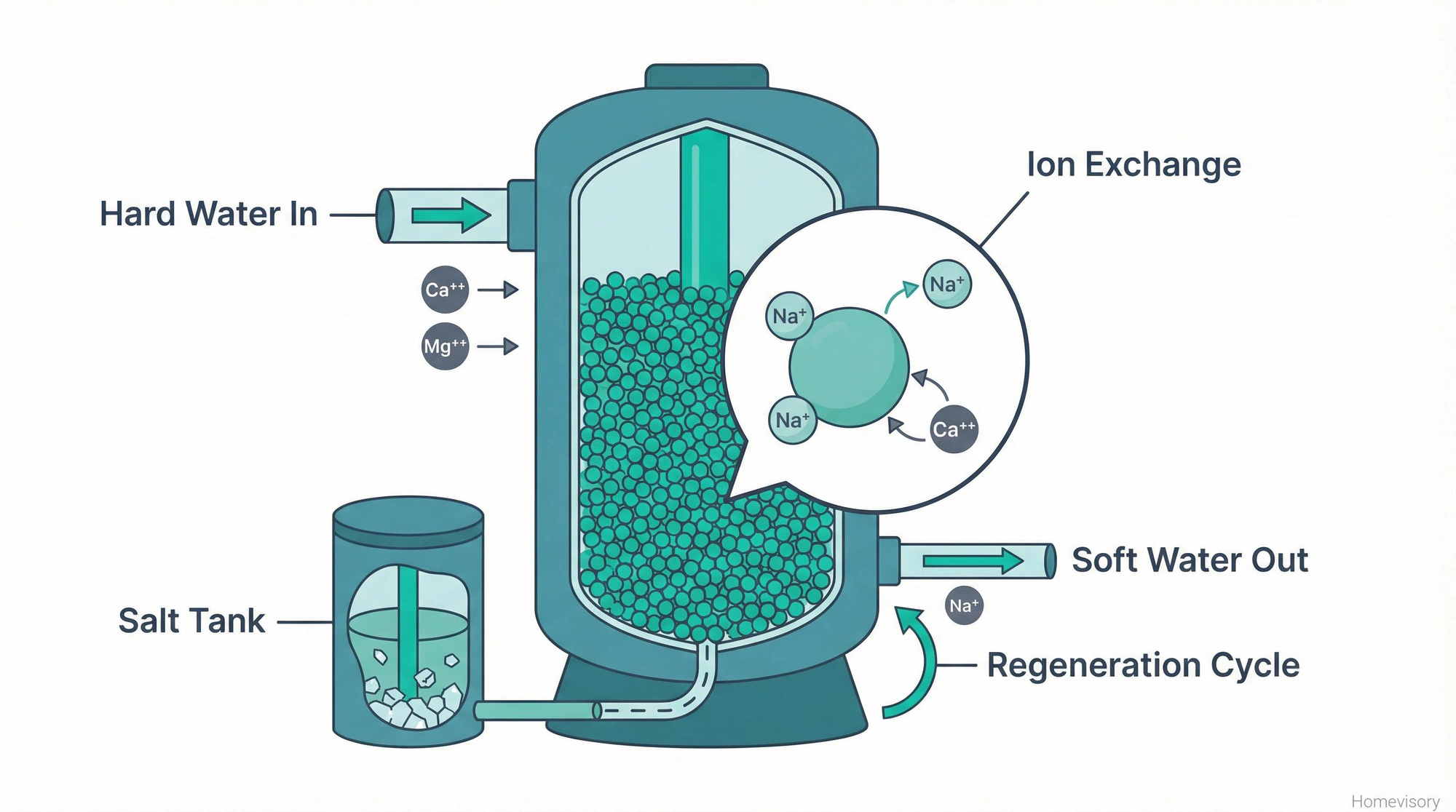
The University of Nebraska-Lincoln Extension explains that this process adds about 8 mg of sodium per liter for each grain of hardness removed. So if you have 10 grain water, youre looking at 80 mg of sodium per liter after softening. For most people this is nothing, but if youre on a strict low-sodium diet, you can use potassium chloride instead. Its not quite as efficient but it works.
When we moved to Palm Beach I knew we needed a softener. Florida water is hard, and between the humidity and the hard water, Raquel was not happy with what was happening to her hair and skin. We got a whole-house system installed. Cost us about $1,200 for the equipment and another few hundred for installation. Penn State puts the hardware range at $500-$1500, which matches what I’ve seen. Not cheap. But within a week Raquel said her hair felt different. The water spots on the shower door stopped appearing. My coffee maker stopped making that grinding noise. Worth it.
The annual cost is mostly salt. Figure $100-150 per year depending on how hard your water is and how much you use.
What About Those Magnetic Water Conditioners?
No.
I’m going to be direct about this because I’ve seen too many people waste money on these things. Those magnetic or electronic water conditioners that claim to change the structure of minerals without removing them. They dont work. There’s no credible scientific evidence that they do anything. They’re sold by companies that make impressive claims and have nice looking websites and people buy them because they’re cheaper than real softeners and dont require salt.
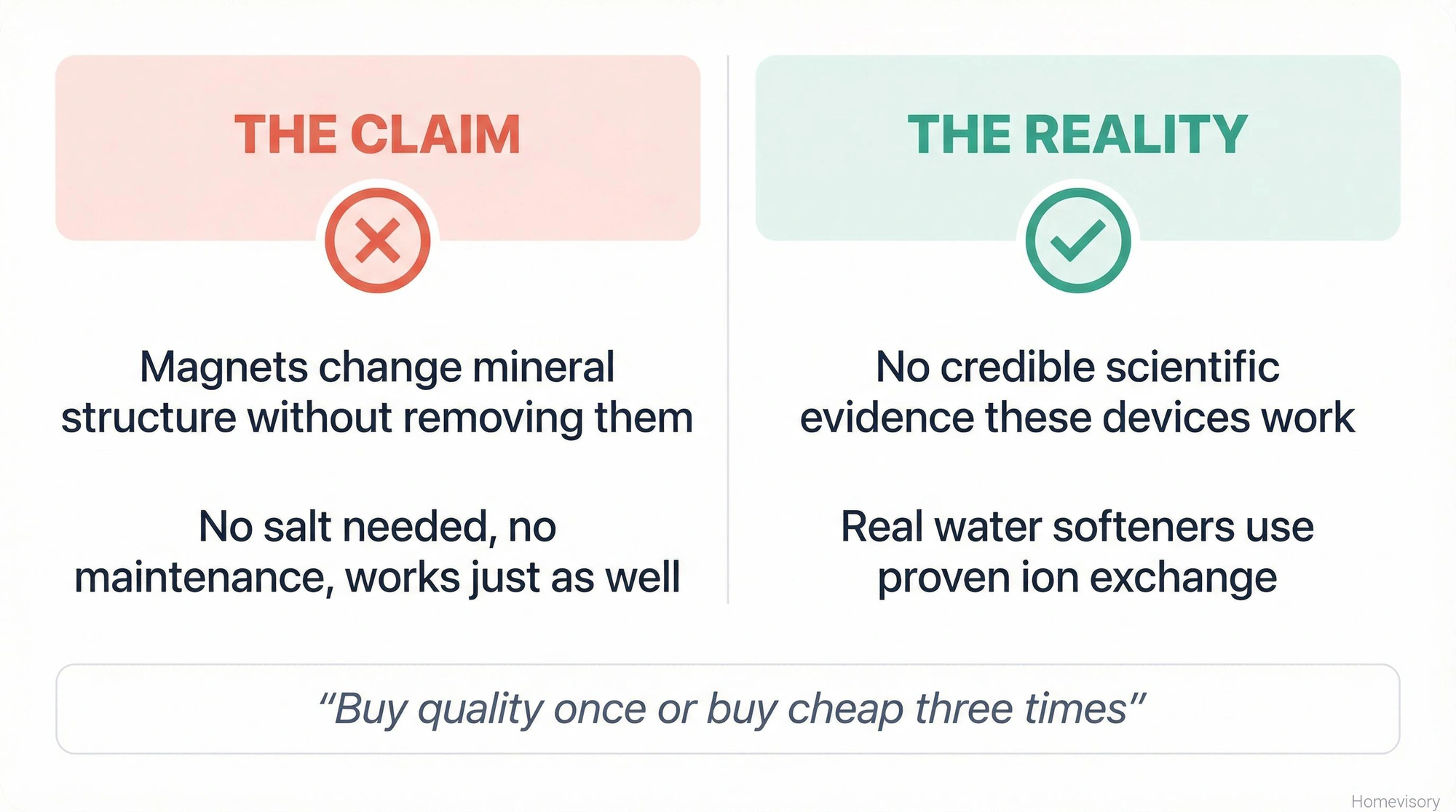
Mr. Davis, my old woodshop teacher in Atlanta, used to tell us: buy quality once or buy cheap three times. That applies here. Dont waste $200 on something that does nothing when you could put that toward something that actually solves the problem.
Moving on.
Salt-Free Water Conditioners
These are different from the magnetic scams. Salt-free systems, sometimes called template-assisted crystallization or TAC systems, are real technology. They dont remove the minerals, they change their structure so they dont stick to surfaces as easily.
Are they as effective as salt-based softeners? No. But they work well enough for some people, especially if you have moderately hard water or if you really cant use salt for some reason. They dont require electricity or drain lines, and they dont waste water during regeneration.
I dont have personal experience with these. We went with a traditional softener and I’m happy with that choice.
Reverse Osmosis
If you want to get into whole-house RO, thats a different conversation and honestly beyond what most people need. Reverse osmosis removes everything from water, including the good stuff, and whole-house systems are expensive and require significant maintenance.
What most people do is put a small RO system under the kitchen sink for drinking water. That works fine. But its not how you fix hard water throughout your house.
Why This Actually Matters (Its Not Just About Spots)
Hard water isnt a health hazard. The Vermont Department of Health confirms that hard water is safe to drink, and honestly the calcium and magnesium might even be good for you. An 8-ounce glass of moderately hard water has about 50-75 mg of calcium, which isnt nothing.
But the damage to your home is real.
When hard water gets heated, like in your water heater, the minerals come out of solution and form scale. That scale builds up inside the tank, on the heating elements, in the pipes. The USGS notes that this scale can reduce equipment life, raise heating costs, lower efficiency of electric water heaters, and clog pipes.
How much does this cost you? According to data from the Water Quality Research Foundation, gas water heaters can lose between 24-48% of their efficiency due to scale buildup. Thats 40-57% higher energy costs in extreme cases. Every 5 grains per gallon of hardness causes roughly a 4% drop in water heater efficiency.
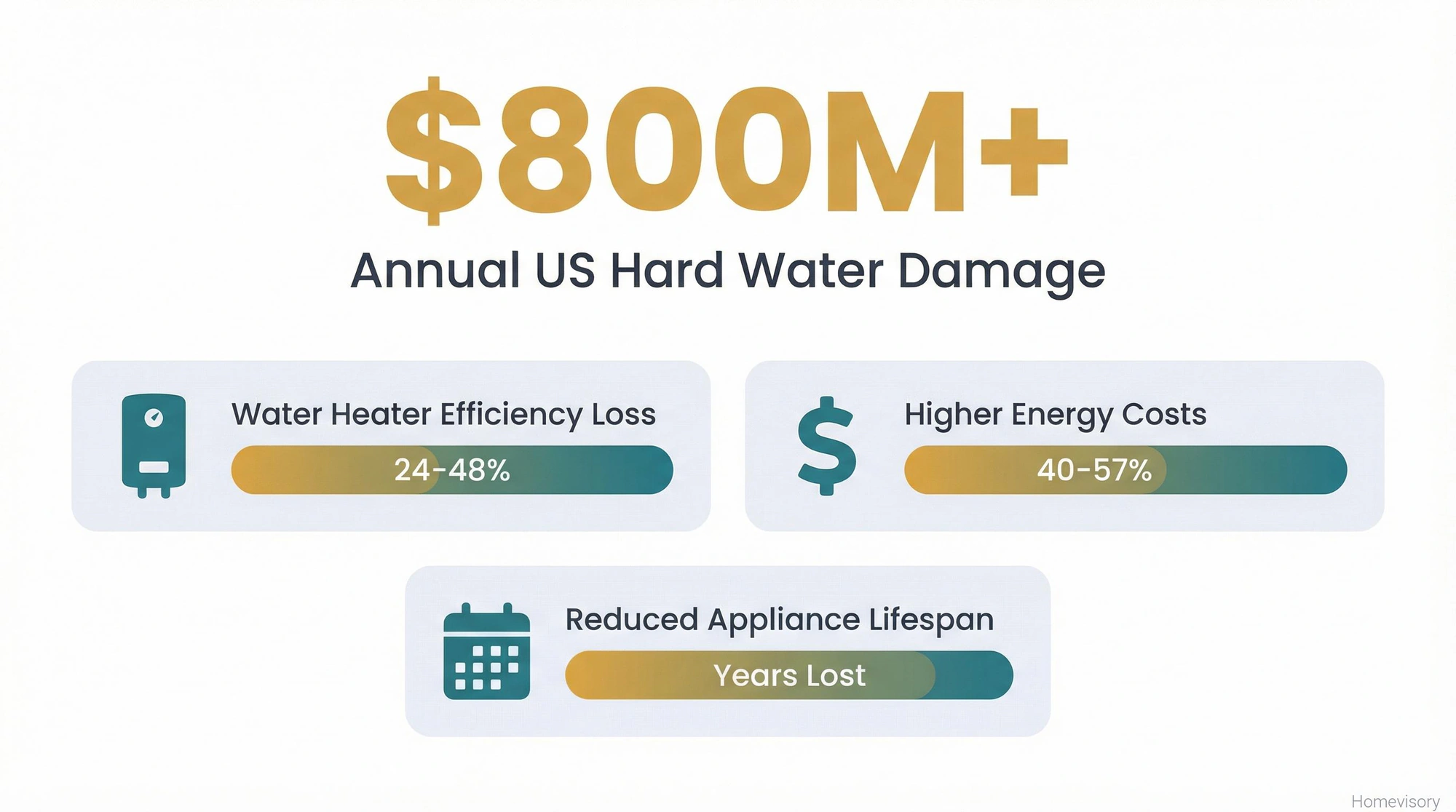
And then there’s the appliance damage. The Water Quality Association estimates that hard water damage to appliances and plumbing exceeds $800 million annually in the US.
Your dishwasher. Your washing machine. Your water heater. Your pipes. All of it working harder and dying sooner because of minerals you could remove.
Best Dishwasher Detergent for Hard Water
If you’re dealing with hard water and havent installed a softener yet, or if you want extra help even with a softener, your detergent matters.
The best dishwasher detergent for hard water needs to do two things: clean despite the mineral interference, and prevent those white film deposits on your dishes.
I’ve had good luck with Finish Powerball Quantum and Cascade Platinum. Both have built-in rinse aids and water softening agents. They cost more than basic detergent but they work. Youre throwing money away if you use cheap detergent in hard water, your dishes come out cloudy, you run them through again, you use more water and electricity and still dont get clean dishes.
Also use rinse aid. Fill that compartment in your dishwasher door and keep it filled. I ignored that thing for years because it seemed unnecessary. It isnt.
For really hard water, some people add a booster like Lemi Shine which is citric acid based and helps dissolve mineral deposits. I used that in Texas before we got our softener and it helped.
What Actually Makes Sense for Your Situation
Low hardness (under 7 gpg): You can probably live with it. Use a good detergent, maybe add rinse aid, and dont worry too much.
Moderate hardness (7-10 gpg): A salt-free conditioner might be enough, or you might want to go ahead and get a real softener. Depends on how much the issues bother you.
High hardness (over 10 gpg): Get a water softener. Period. The damage youre doing to your appliances and plumbing costs more than the softener over time.
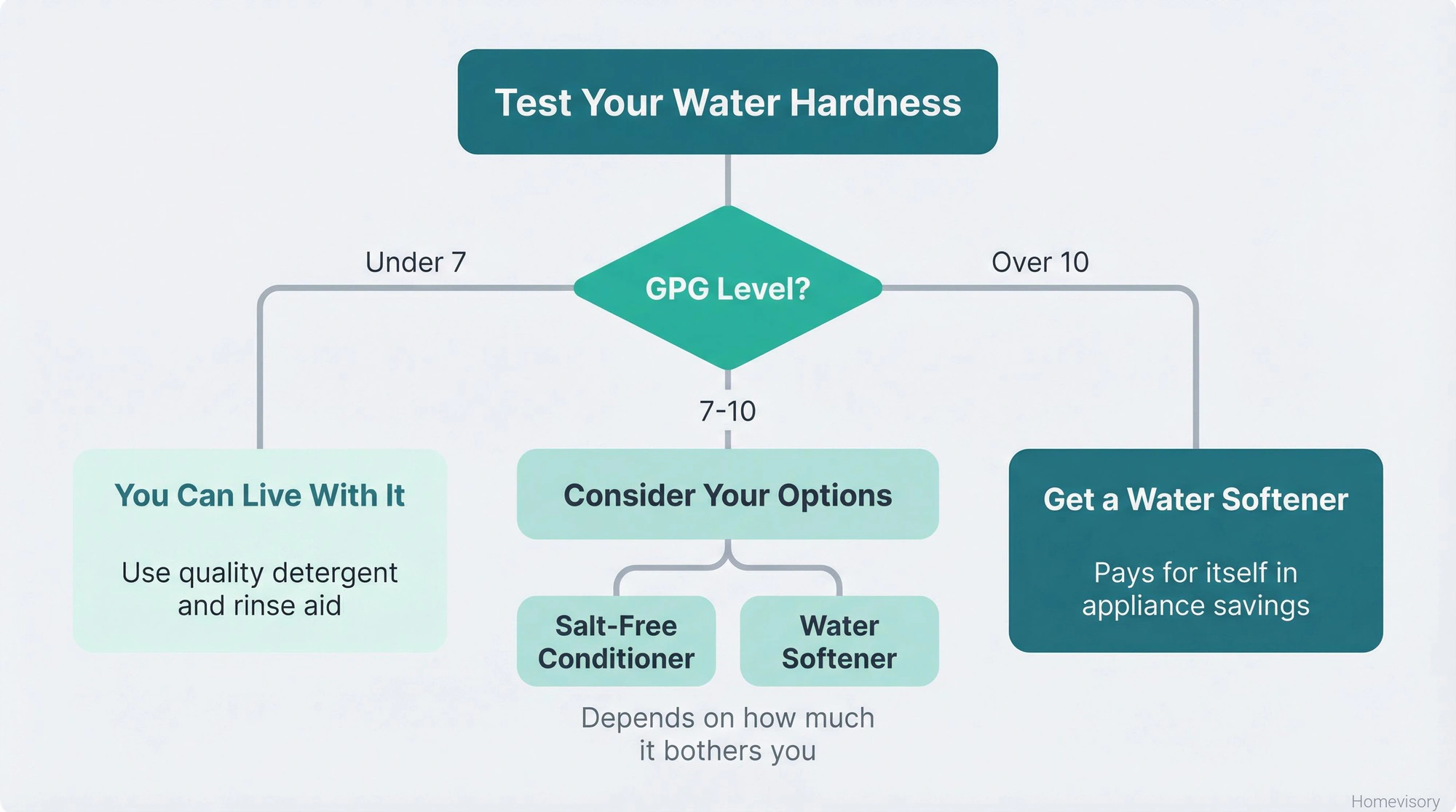
And whatever you do, get your water tested first. Know what youre dealing with. The hardness test matters, but also check for iron because iron can foul up softener resin and you might need a pre-filter. If you’re on well water specifically, we have a guide on the best water softener for well water that covers iron filtration and other considerations.
The Bottom Line
You fix hard water by either removing the minerals or changing how they behave. Water softeners remove them and work the best. Salt-free conditioners change their behavior and work okay for some situations. Magnetic things dont work at all.
The cost of a water softener is real. The cost of not having one is also real, you just pay it slowly in higher energy bills, appliance repairs, and replacing things before you should have to.
That’s what we do here at Homevisory. We help you stay on top of the stuff that matters before it becomes expensive. If youre trying to figure out when to test your water, when to add salt to your softener, when to clean your water heater, check out our Homevisory home task manager. Its free, it sends you reminders, and it means you dont have to remember all this stuff yourself.