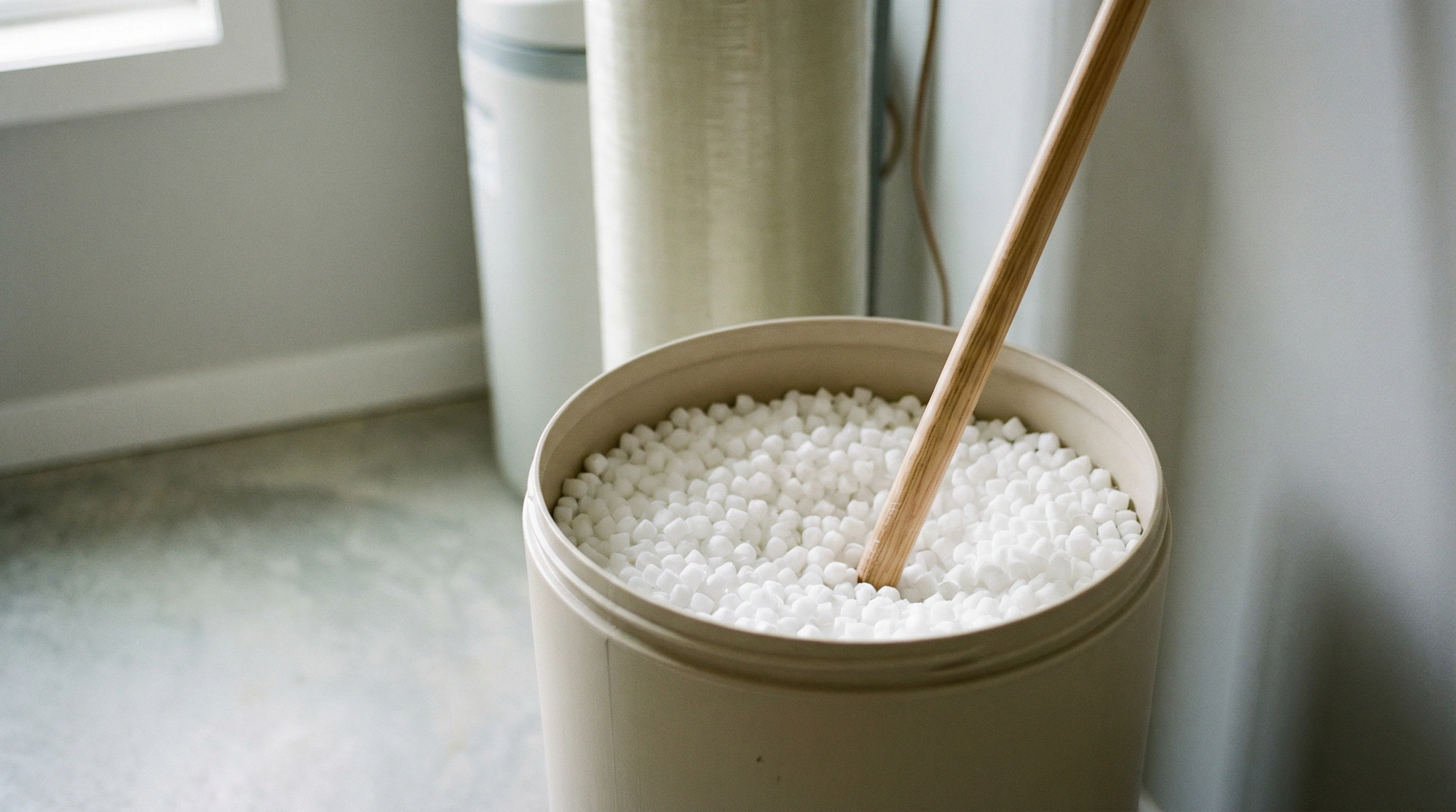
Water Softener Maintenance Starts With Salt
Most people install a water softener and then forget it exists until their water starts tasting like a swimming pool again or their dishes come out with spots. Thats not maintenance. Thats neglect with extra steps.
I’ve had a water softener in every house since we moved to Texas in the late eighties. The well water there had this sulfur smell that made you feel like you were showering in a hot spring, which sounds nice until you actually have to do it every morning. My mom hated it. My dad found a guy who sold softeners and we had one in within two weeks. I was maybe sixteen and I remember asking why we needed a whole machine just for water. He said water isnt just water. It carries stuff. Minerals, iron, whatever the ground puts in it. The softener takes it out.
He wasnt wrong. I didnt appreciate it then but I do now.
How to Maintain a Water Softener Without Overthinking It
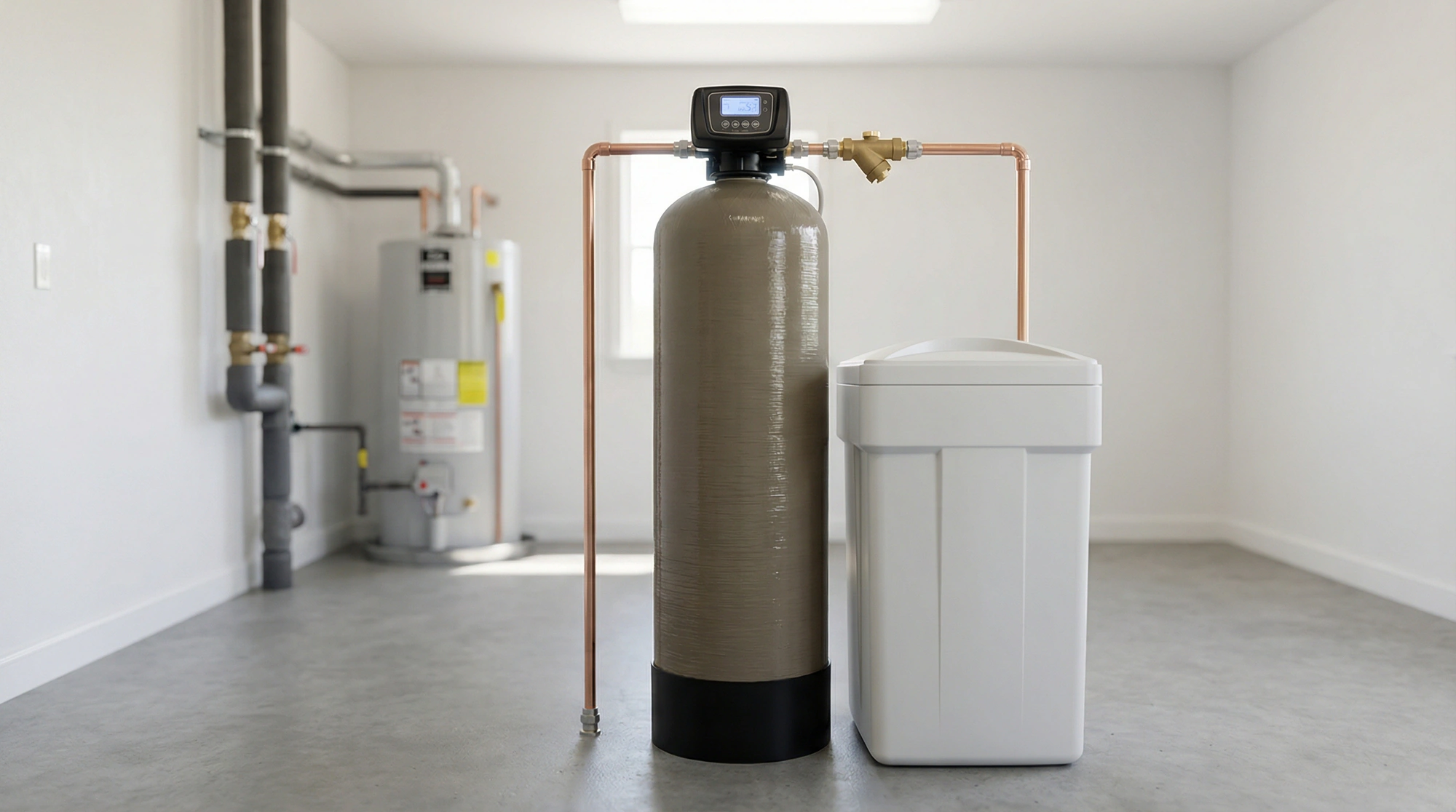
Heres the thing about water softener maintenance. Its not complicated but people make it complicated by either doing nothing or doing too much. The system is pretty simple. Water comes in hard, passes through resin beads that swap the calcium and magnesium for sodium ions, and comes out soft. The resin gets recharged with a brine solution made from salt in your tank. Thats it. Thats the whole process.
The Department of Energy says to check your salt levels every 4-6 weeks. I check mine monthly because I have a big family and we use a lot of water. Four kids, two dogs, Raquel running laundry constantly. Our system works hard.
Most softening units will automatically regenerate on a schedule to keep the resin charged, according to Penn State Extension. So you dont need to babysit it. You just need to make sure it has what it needs to do its job.
The Salt Situation
This is where I’m going to spend most of my time because this is where most people mess up. The salt. The brine tank. The whole situation that everyone ignores.
Your water softener needs salt to make the brine solution that regenerates the resin. No salt, no brine, no regeneration, hard water comes back. Simple enough. But people will let their salt run completely out and then call someone asking why their softener “stopped working.” It didnt stop working. You starved it.
Check your salt level once a month at minimum. Open the lid, look inside. The salt should be at least a few inches above the water line. If you can see water at the top of the salt, you need to add more. Angi recommends checking at least monthly to ensure proper resin regeneration. During summer when you’re filling pools or running sprinklers or everyone’s showering twice a day because Florida is basically a sauna, you might need to check more often and refill more regularly.
What kind of salt. People ask me this all the time like theres some secret formula. The Department of Energy says cubes or crystal salt works for most models. Some people use solar salt, some use evaporated salt, some use potassium chloride instead of sodium if they’re watching their sodium intake. Penn State notes that potassium pellets work the same way but without adding sodium to your water. Whatever. Pick one and stick with it. Dont mix types if you can help it.
Monthly salt costs run about $20-$50 depending on your water hardness and usage. Not expensive. Not worth skipping.
Salt Bridges Are the Silent Killer
Now heres where I get worked up.
A salt bridge is when the salt forms a hard crust at the top of the tank with empty space underneath. You look in and see salt. You think everything is fine. Meanwhile theres nothing actually dissolving into the water below because the salt is just sitting there like a dome. I’ve seen tanks where the salt bridge was three inches thick and there was eight inches of empty space below it. No brine being made. System running but accomplishing nothing. The homeowner had been “checking the salt” for six months and seeing salt and thinking they were good. They werent good. They were running a very expensive decorative box.
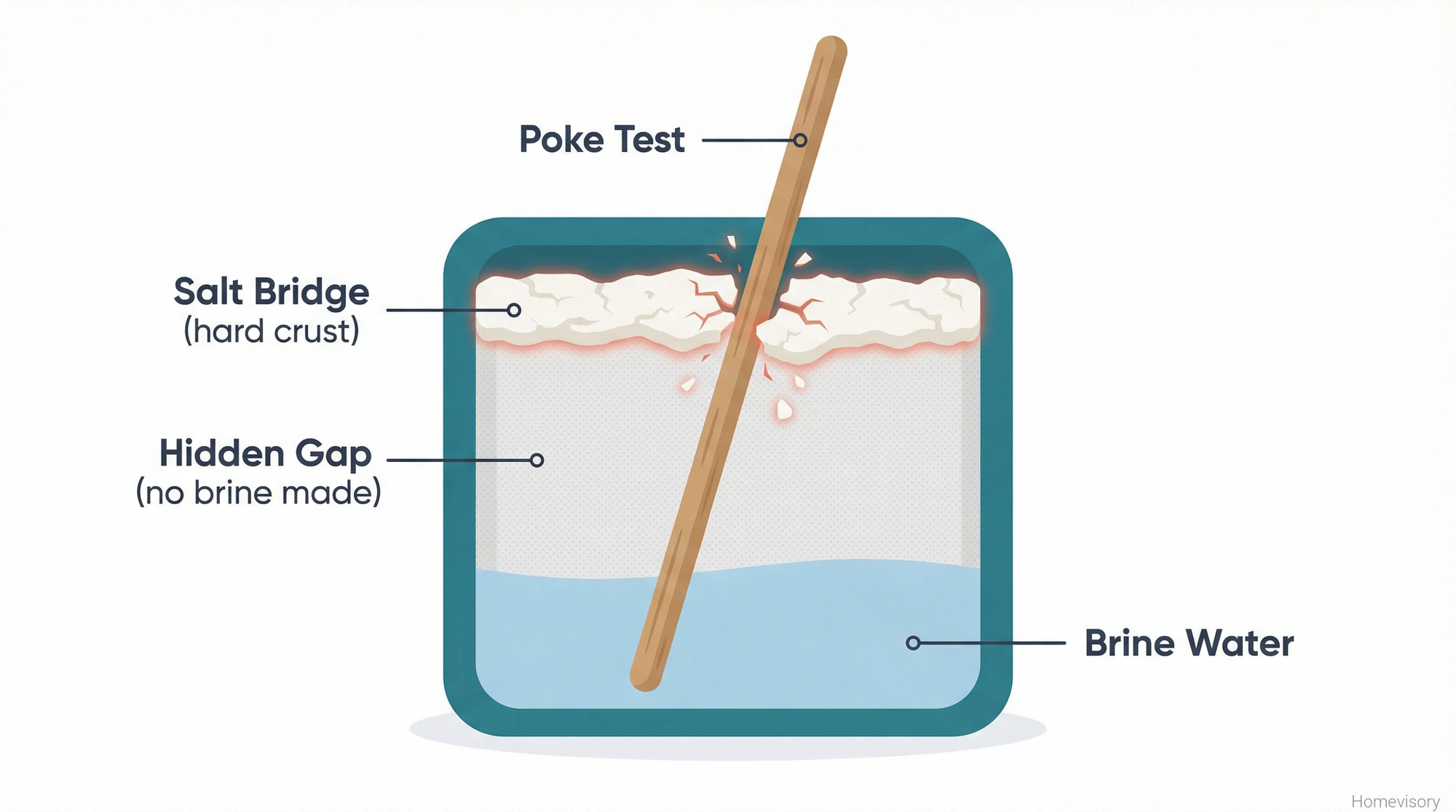
The Department of Energy specifically warns about salt bridges because they prevent the resin beads from softening water properly. This is the number one thing people miss.
How do you check for a salt bridge. Take a broom handle or something long and poke it down through the salt. You should feel consistent resistance all the way down. If you hit a crust and then break through into empty space, you have a bridge. Break it up. Push through it, stir it around, make sure the salt is actually in contact with the water.
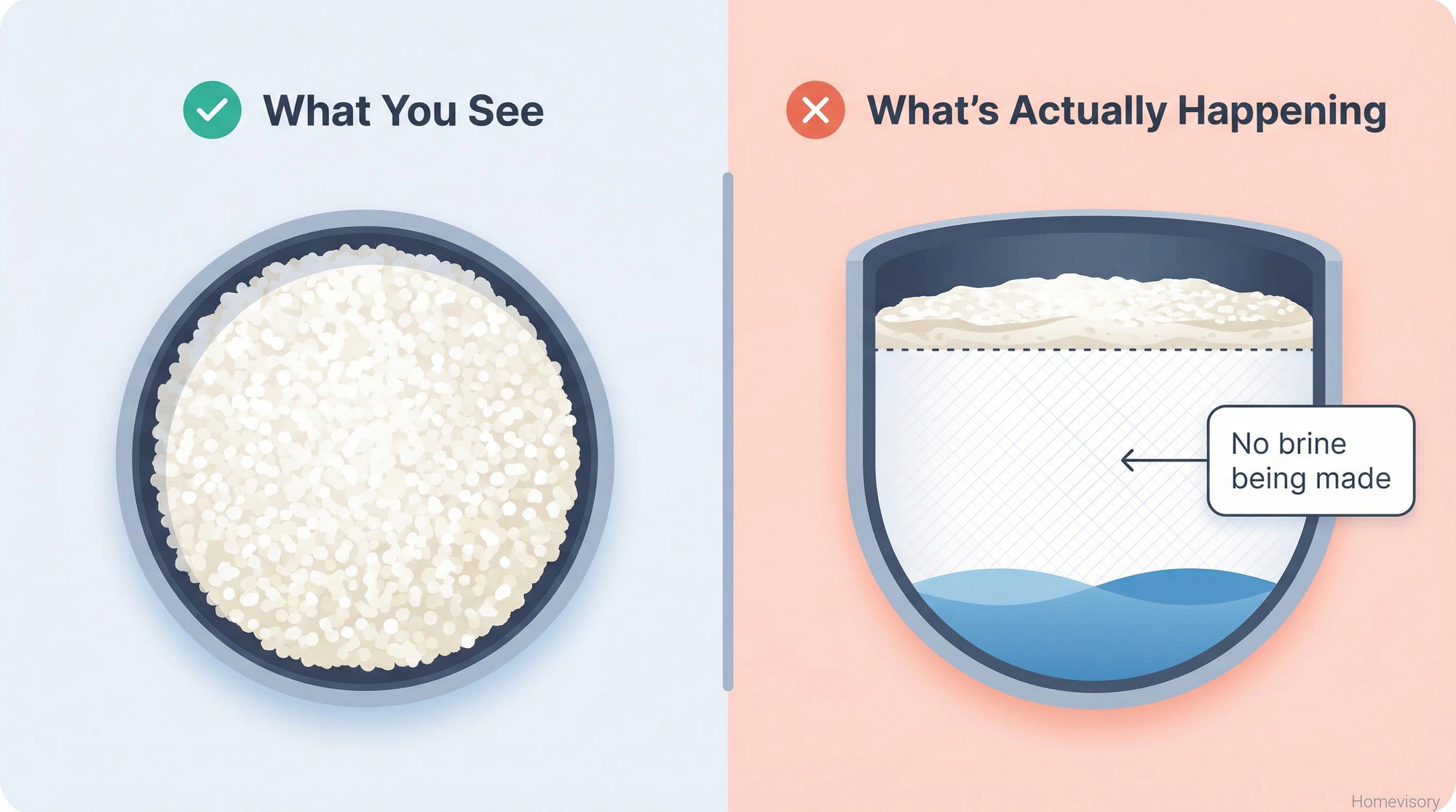
I check for bridges every time I add salt. Takes ten seconds. Saves you from wondering why your water heater is building up scale when you supposedly have a working softener.
Salt Mushing Is the Other Problem
Salt mushing is different. Instead of a hard bridge, you get a thick sludge at the bottom of the tank that blocks the brine from regenerating properly. Usually happens when you use the wrong type of salt or the humidity gets weird. You can sometimes fix this by draining the tank and scooping out the mush, but if it keeps happening you might need to switch salt types.
The Resin Needs Attention Too
The resin beads inside your softener dont last forever. HomeGuide reports that resin replacement costs $200 to $400 on average. Thats not yearly. Thats after years of use when the resin finally gives out.
You can extend your resin life by using a water softener cleaner every few months. Pour it in, let it run through during a regeneration cycle. It cleans out iron and other buildup that coats the beads and makes them less effective. Angi recommends using cleaner quarterly or bi-annually during the regeneration process when you have adequate salt.
My dad used to say about factory equipment, he’d say you have to clean the machines or they get lazy. He wasnt being poetic. He meant that buildup makes things work harder to do the same job and working harder means wearing out faster. Its true for factory equipment and its true for water softeners.
Cleaning the Brine Tank
Every few years you should drain and clean out the brine tank completely. Disconnect it, dump it out, scrub the inside with soap and water, rinse it thoroughly. I do this about every three to four years.
Angi says newer water softeners only need full cleaning every 5-10 years, but systems over 15 years old need professional cleaning annually. My current system is about eight years old so I’m somewhere in the middle. I do it myself because its not hard, its just messy.
NDSU Extension notes that maintenance of water softeners is largely confined to restocking salt, with semiautomatic models requiring you to start the recharging cycle manually. If you have a newer automatic system, theres even less to do. Just keep it fed and clean it occasionally.
What About Those Magnetic Things
Some people ask me about magnetic water conditioners or electronic descalers. I’m not getting into those. NDSU Extension reports that the Water Quality Association found inconsistent performance from magnetic devices, with research showing no change in physical and chemical properties of water. Traditional ion exchange softeners do the best job. The other stuff is a gamble.
Moving on.
When to Call Someone
Look, I fix houses, not water treatment systems. There are some things you should call a professional for.
If your water isn’t getting soft despite full salt and no bridges, could be a valve issue or a control head problem. Call someone. If the system is constantly regenerating or never regenerating, something’s wrong with the timer or sensors. Call someone. If you see actual water leaking from the unit, call someone immediately.
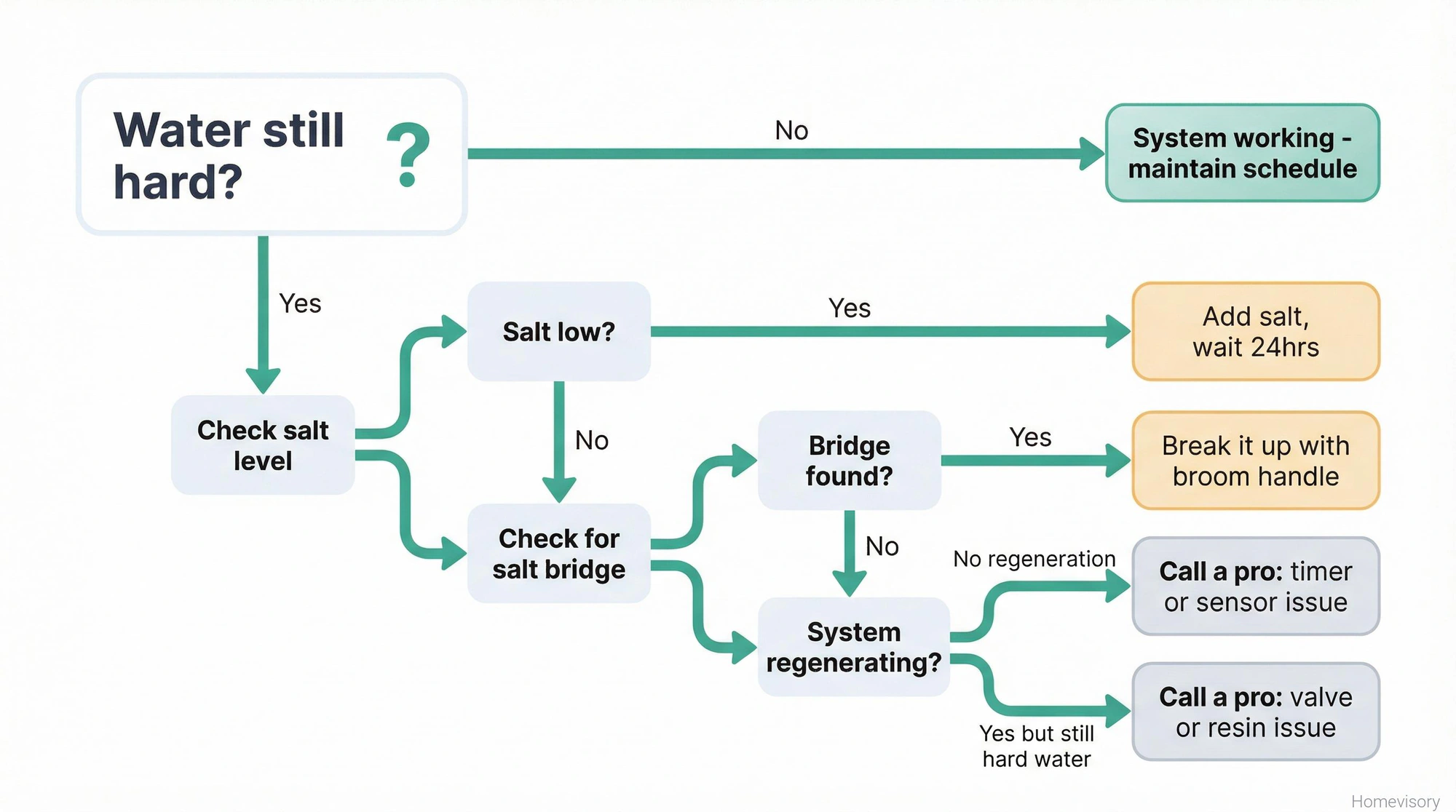
An all-inclusive maintenance contract costs $100 to $250 per year and covers repairs, cleaning, salt refills, water testing, and annual inspections. Emergency repairs without a contract run $150 to $600 per call according to ServiceChannel. Whether thats worth it depends on your comfort level with DIY and how old your system is.
How Long Should This Thing Last
The Department of Energy says the average water softener lasts 10 to 15 years. HomeGuide says the same thing, noting they can last even longer if well-maintained.
That Texas house we moved to in the eighties, that softener lasted maybe twelve years before we replaced it. I remember the water starting to taste different and my mom complaining and my dad dragging his feet because he didnt want to spend the money. The sulfur smell came back a little. Not as bad as before we had the softener but enough that you noticed. Anyway.
If your system is pushing fifteen years and giving you problems, sometimes its cheaper to replace than repair. New systems are more efficient anyway. If you’re considering installing a new one yourself, check out our guide on how to install a water softener.
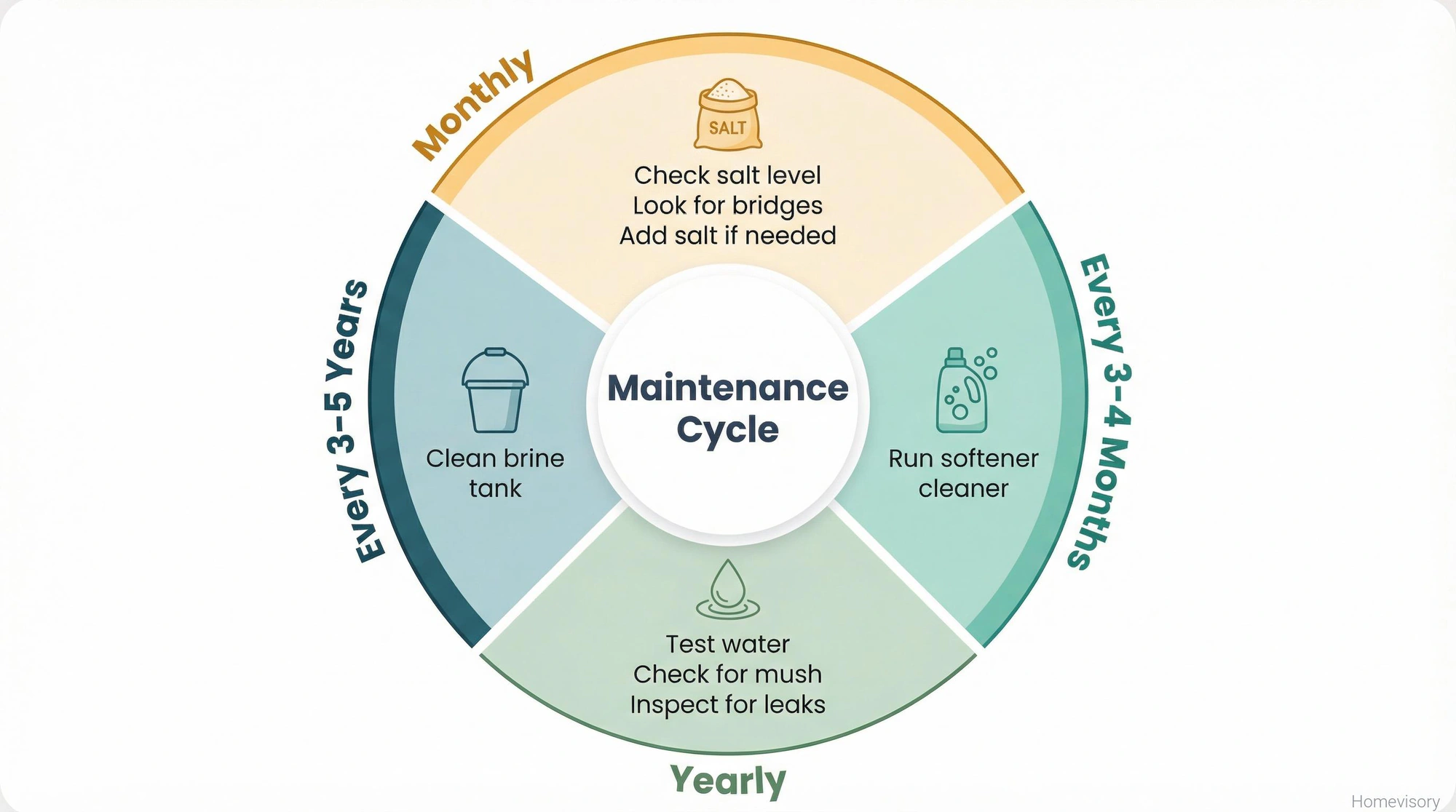
Water Softener Maintenance Schedule
Monthly:
- Check salt level
- Look for salt bridges
- Add salt if needed
Every 3-4 months:
- Use water softener cleaner during regeneration
Yearly:
- Test your water to make sure the softener is actually working
- Check for salt mush at the bottom of the tank
- Inspect for any leaks or issues
Every 3-5 years:
- Drain and clean the brine tank
The system runs itself. You just have to give it what it needs and check on it occasionally. Thats it. If you want to understand how maintenance fits into the bigger picture of water quality, our hard water solutions guide covers testing, treatment, and ongoing care all in one place.
This Is What Homevisory Is For
We built Homevisory because nobody remembers to check their salt levels or test their water or clean their brine tank until something goes wrong. The Homevisory home task manager reminds you when maintenance is due so you’re not googling “why is my water softener not working” at 9 PM on a Tuesday.
Sign up free. Set up your water softener tasks. Let the system remind you instead of learning the hard way that you’ve been running a salt bridge for six months.
That’s what we do here at Homevisory.