The Filter Thing
I talk about filters too much. I know this. Raquel has told me this. But I’m going to talk about them again because air conditioner maintenance starts and ends with your filter and most people treat it like an optional suggestion instead of the thing thats actually keeping their system alive.
Heres the deal with HVAC. Its not complicated. People make it complicated because they dont understand it and HVAC companies make it complicated because confusion is profitable. But the core of it, the stuff you can actually control, is straightforward.
Change your filter. Keep things clean. Pay attention. Thats most of it.
Why Filters Get Their Own Section
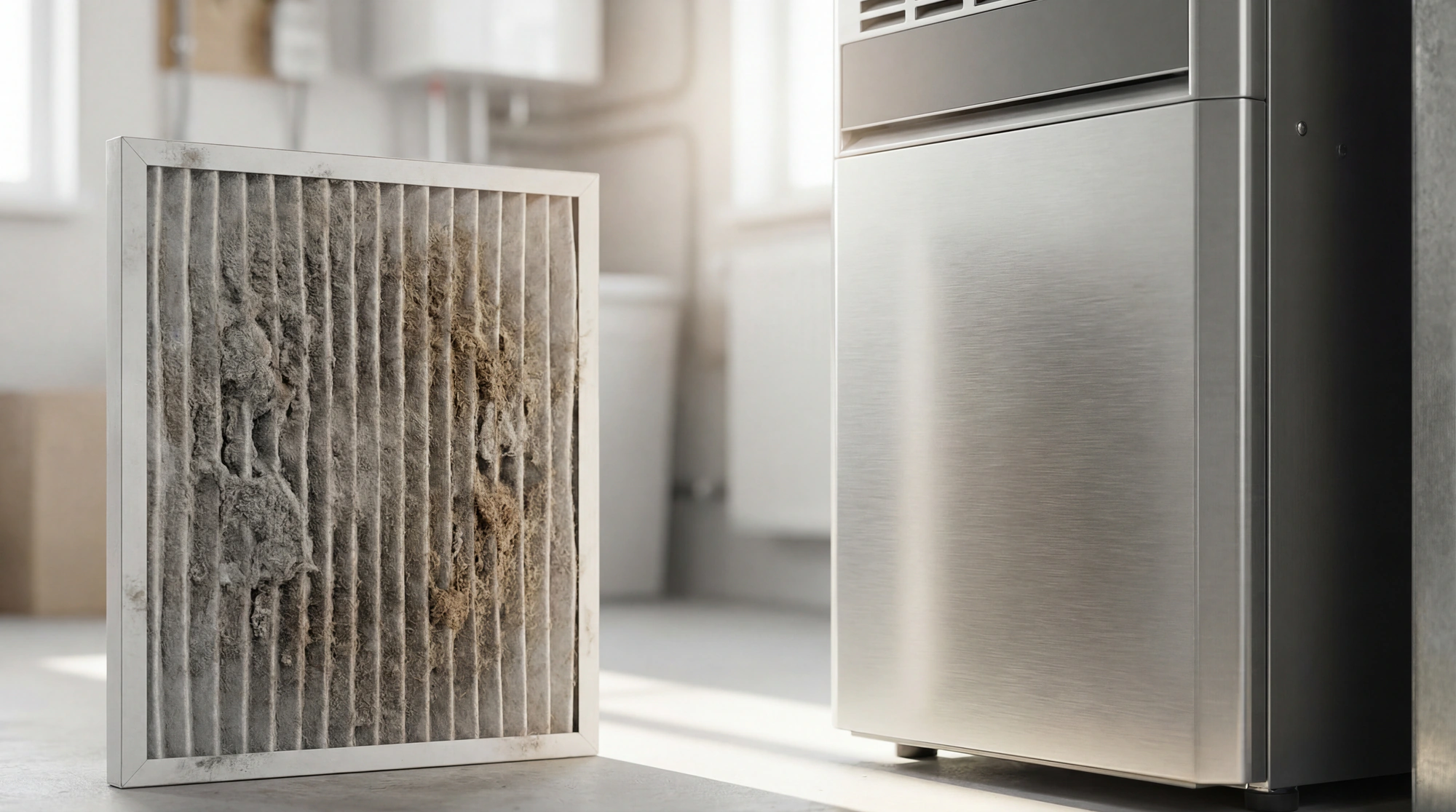
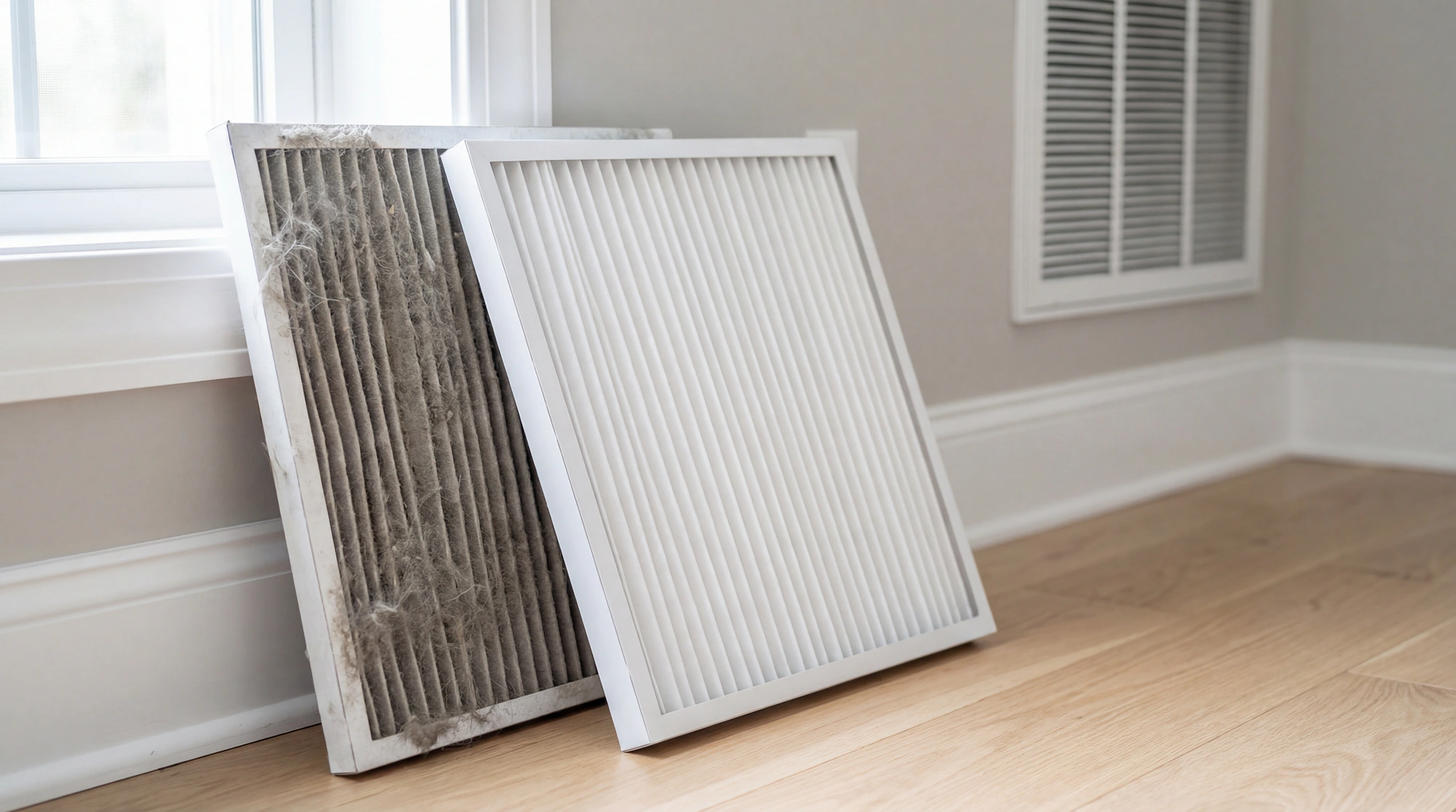
Your air filter does one job. It catches dust and debris before it gets pulled into your system. Thats it. Simple. But when that filter gets clogged, everything downstream suffers. Your blower motor works harder. Your evaporator coil gets dirty. Your energy bills go up. Your system runs longer to hit the same temperature. And eventually something burns out because it was never designed to work that hard for that long.
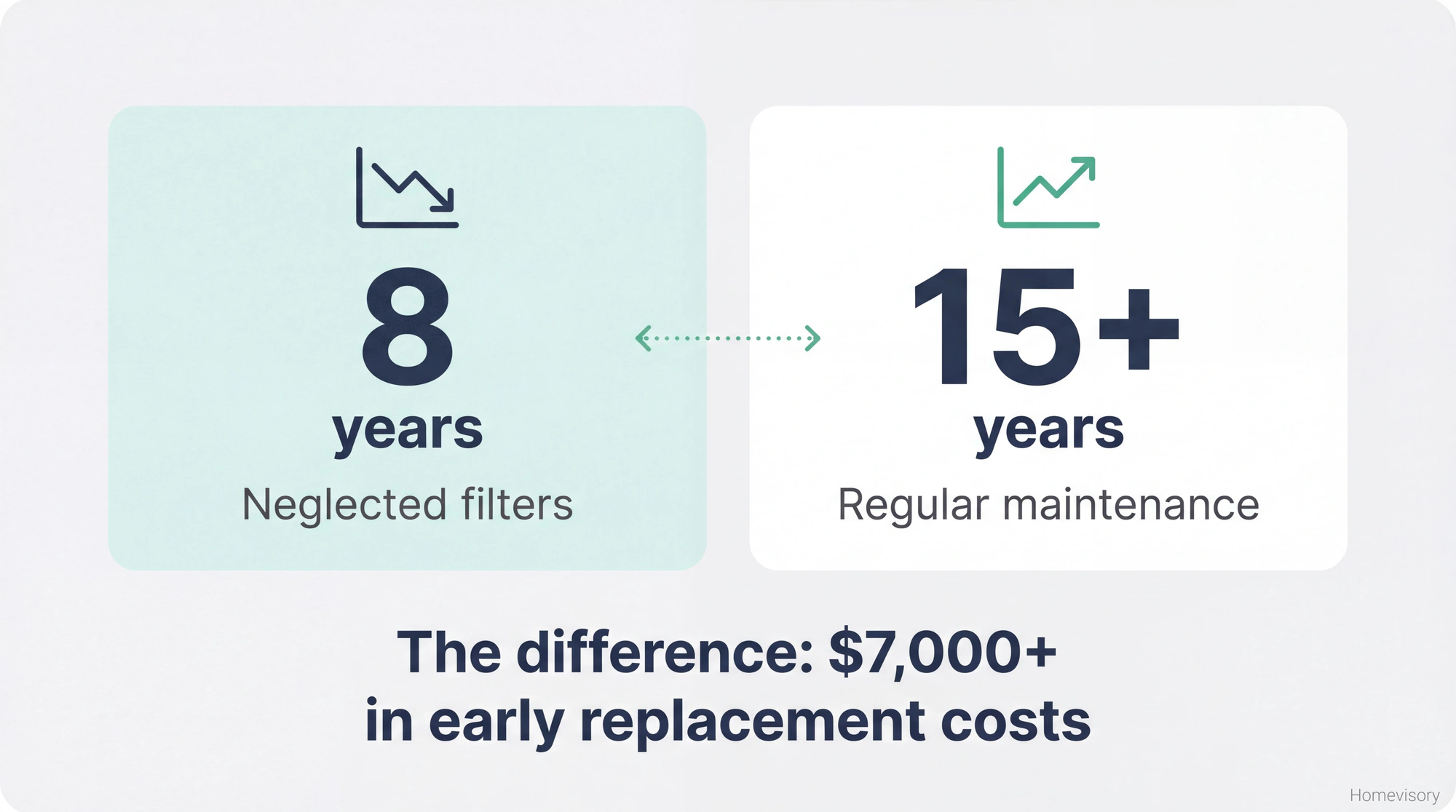
I’ve seen systems fail at eight years that should have lasted fifteen and almost every time the filter was gray and matted and looked like it hadnt been touched since the last president. The homeowner always says the same thing. “I didn’t think it mattered that much.” It matters. It matters more than almost anything else on your hvac maintenance checklist.
The rule is every 30 days for standard one-inch filters. Every 90 days for thicker pleated filters. If you have pets, every 30 days regardless of filter type because pet hair and dander clog faster than anything. For a complete breakdown by filter type, check our guide on how often to change your HVAC filter. I have Sparkplug and Ratchet and I check mine every three weeks. Sometimes its fine. Sometimes it looks like a sweater.
The expensive filters are not always better. I know they market the HEPA filters and the allergen filters and the ones that cost $25 each. Some of them are good. Some of them are so restrictive they actually reduce airflow and make your system work harder. Read your manual. Find out what MERV rating your system can handle. Most residential systems are designed for MERV 8-11. Going higher isnt automatically better.
Buy them in bulk. A 12-pack of decent filters costs maybe $50-60. Set a reminder on your phone. Or use something like Homevisory to track it so you dont forget. Whatever works. Just do it.
The Seasonal Stuff
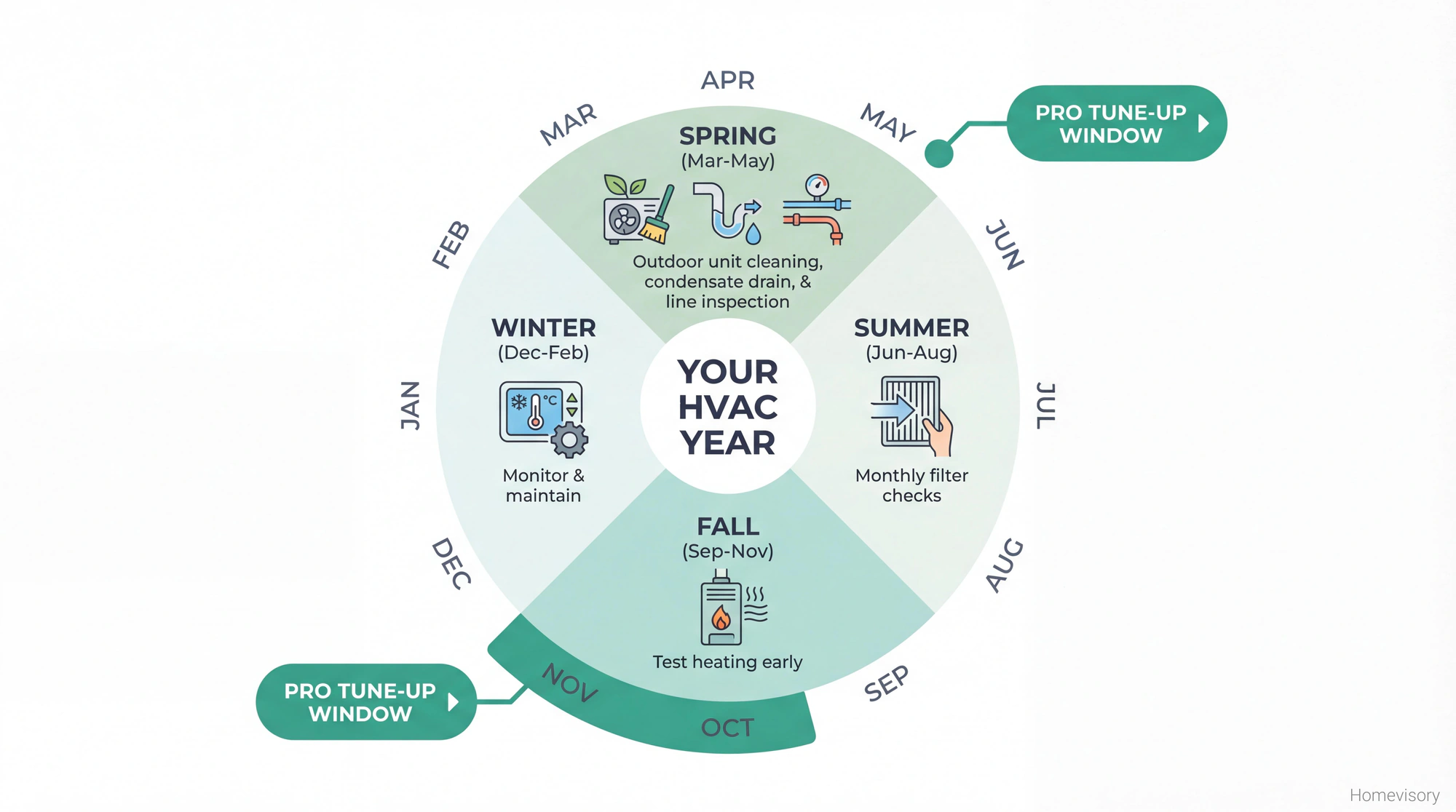
Your hvac preventative maintenance schedule breaks down into two main times. Spring before you need cooling. Fall before you need heating.
Spring is when you check:
- Your outdoor condenser unit. Clear debris. Cut back vegetation. Give it two feet of clearance on all sides.
- Your condensate drain line. Pour a cup of bleach or vinegar down it. Clogs here cause water damage.
- Your refrigerant lines. Look for ice. Ice means a problem.
- Your thermostat batteries if its not hardwired.
Fall is when you check:
- Your furnace or heat pump. Run it before you need it.
- Your pilot light if you have one.
- Your heat exchanger for cracks. Actually dont check this yourself. This is a carbon monoxide issue. Get a professional.
- Your humidifier if you have one.
I learned about heating the hard way. When I was doing commercial renovations in the 90s I spent a winter in Chicago and I was not prepared for what cold actually means. I grew up in Atlanta. Moved to Texas as a teenager. I thought cold was 40 degrees. Chicago cold is different. Your eyelashes freeze. Your nose hairs freeze. I was staying in this apartment with baseboard heating that couldnt keep up and the windows were single-pane and I remember waking up one morning and there was frost on the inside of the window. Not outside. Inside. I spent that winter learning about insulation and weatherstripping and storm windows and how much it costs when you lose heat through every crack and gap in a building. The guy in the unit next to mine had one of those little space heaters running 24/7 and one night I smelled burning. Turned out the heater was fine. His outlet wasnt. Anyway.
Your AC Maintenance Checklist
For people who want the actual list. Here it is.
Monthly:
- Check filter. Replace if needed.
- Check thermostat is working.
- Listen for weird noises.
Quarterly:
- Clean or replace filter (definitely by now).
- Check condensate drain.
- Inspect visible ductwork for gaps or disconnections.
- Clean supply and return vents.
Twice Yearly (Spring and Fall):
- Clean outdoor condenser coils.
- Check refrigerant lines for damage.
- Test system before you need it.
- Clear debris from outdoor unit.
- Check weatherstripping on doors and windows.
Annually:
- Professional hvac maintenance service.
- Duct inspection if you havent done one in years.
- Check for duct leaks.
- Inspect electrical connections. Actually have a professional do this.
Thats the ac maintenance checklist. Print it. Screenshot it. Put it somewhere youll see it.
Professional Service vs DIY
People ask me all the time whether they need to pay for hvac maintenance plans or if they can do everything themselves. The answer is both.
Most of what matters you can do yourself. The filter. The cleaning. The clearing debris. The basic visual inspections. You dont need to pay someone to pour vinegar down a condensate drain.
But once a year you should have someone with tools and training check the stuff you cant see. Refrigerant levels. Electrical connections. Heat exchanger integrity. Blower motor condition. The things that require gauges and meters and expertise.
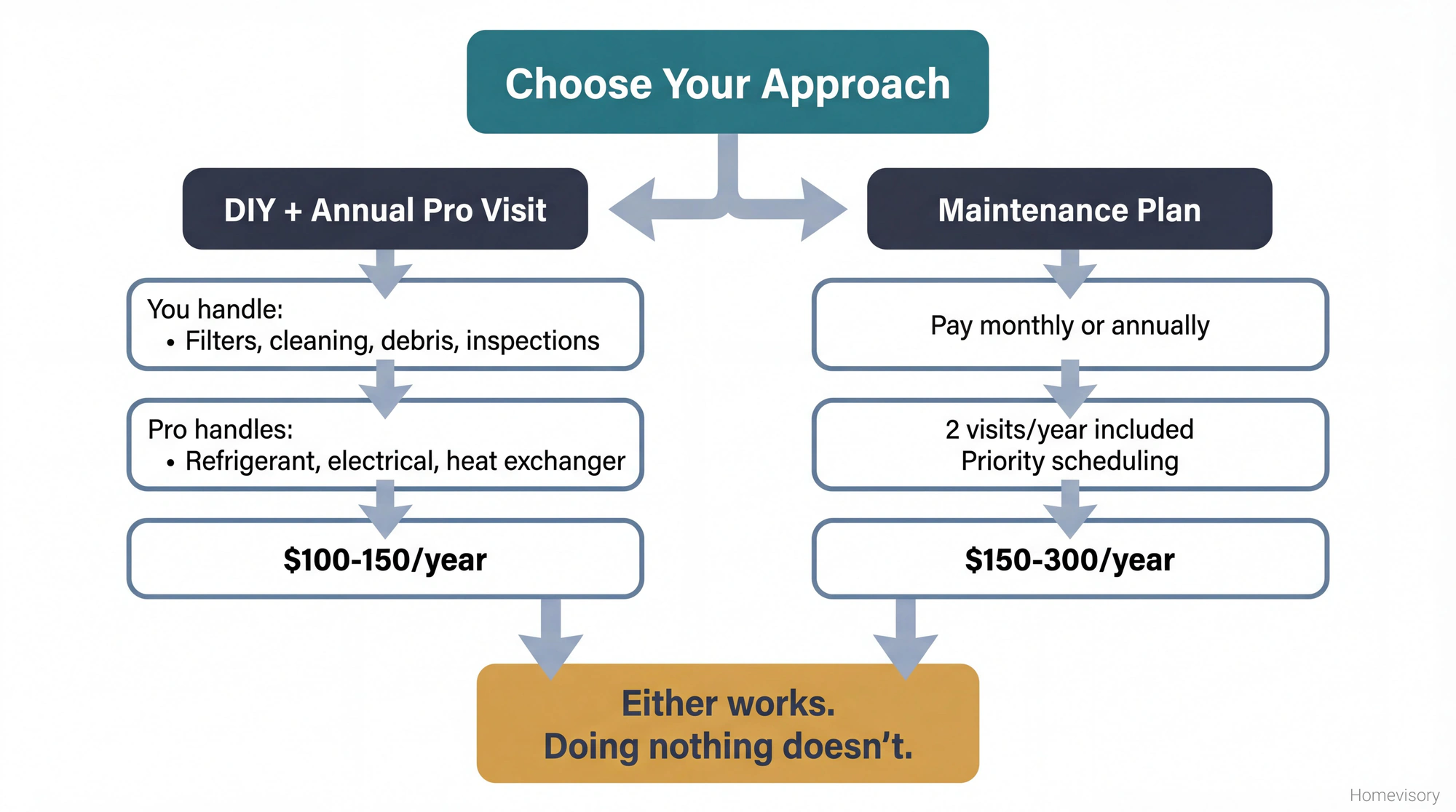
The average ac maintenance cost for a professional tune-up is $100-150. Some companies charge more. Some offer hvac maintenance plans where you pay monthly or annually and get two visits per year plus discounts on repairs. These can be worth it if you actually use them. A lot of people pay for the plan and then never schedule the visits because life gets busy and they forget. Then the plan just becomes a donation.
My dad Curtis worked in a factory for thirty years and they had scheduled maintenance on everything. Every piece of equipment had a maintenance schedule and someone was responsible for following it. He used to say “scheduled downtime beats unscheduled downtime.” The factory knew that a machine going down for planned maintenance costs a lot less than a machine failing at 2 AM on a Wednesday when youve got orders to fill. Same principle applies to your house. A $150 annual ac maintenance service costs a lot less than a $4,000 compressor replacement in July when every HVAC company has a three-week waitlist.
What Professional Service Actually Includes
When you pay for hvac maintenance service, heres what they should be doing:
- Checking refrigerant levels and pressures
- Testing electrical components and connections
- Lubricating moving parts
- Checking the thermostat calibration
- Inspecting the condensate drain
- Cleaning the evaporator and condenser coils
- Checking the blower motor
- Inspecting ductwork where accessible
- Testing system operation and cycling
If they dont do most of these things, you didnt get a tune-up. You got a guy who looked at your system and charged you money.
Some companies try to upsell you on stuff you dont need. UV lights in your ductwork. Duct cleaning every year. Special coatings. Air scrubbers. Some of these things have value in specific situations. Most of the time theyre profit margin for the company. If someone’s pushing hard on add-ons before they’ve even looked at your system, that tells you something.
I’m not getting into refrigerant or compressor stuff here. Thats beyond what you should be messing with. Refrigerant is regulated. It requires certification to buy and handle. If your system is low on refrigerant it means you have a leak and adding more without fixing the leak is just burning money. Call someone.
The Coil Situation
You have two coils. The evaporator coil is inside, usually in the air handler or attached to your furnace. The condenser coil is outside in that big metal box. Both get dirty. Both affect efficiency.
The outdoor coil you can clean yourself. Turn off the power to the unit. Use a hose to spray from the inside out. Dont use a pressure washer. Dont bend the fins. There are coil cleaning sprays you can buy but water usually works fine.
The indoor coil is harder to access and easier to damage. Most homeowners shouldnt mess with it. This is part of what youre paying for with professional ac maintenance services.
Dirty coils mean your system has to run longer to transfer the same amount of heat. Longer run times mean higher bills and more wear on everything. I clean my outdoor coil twice a year. Spring before cooling season. Fall after cooling season. Takes maybe twenty minutes.
Ductwork
Ductwork gets ignored because you cant see it. Its in your attic or your crawlspace or inside walls and out of sight means out of mind.
But ductwork leaks. According to ENERGY STAR, the average home loses 20-30% of its conditioned air through duct leaks, holes, and poorly connected ducts.
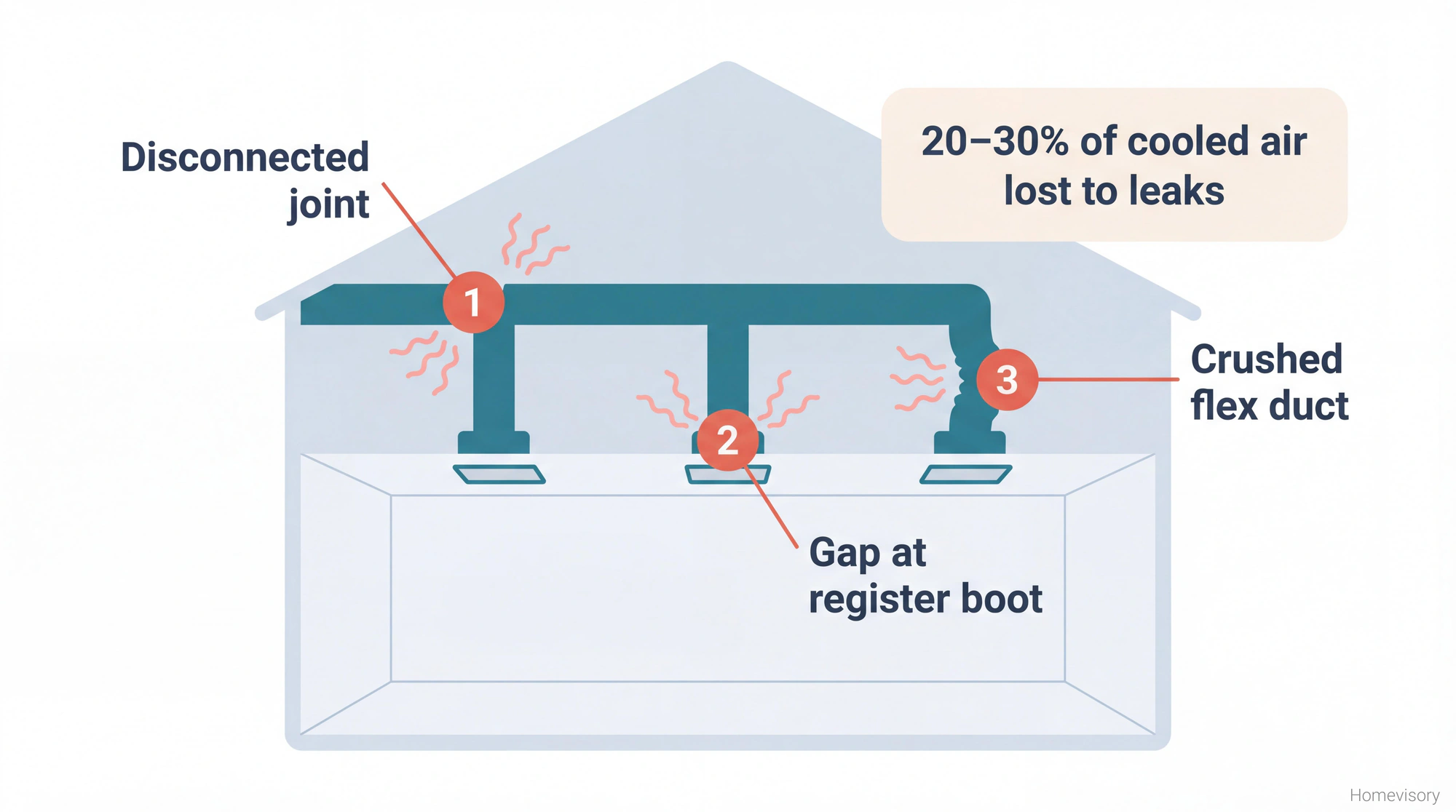
Youre paying to cool or heat air that never makes it to your rooms. It just dumps into your attic or crawlspace.
Once every few years you should have someone inspect your ductwork. Look for disconnections. Look for gaps at joints. Look for crushed flexible duct. The fix is usually mastic sealant or metal tape. Not regular duct tape despite the name. Regular duct tape fails after a few years.
I’m not going to tell you to crawl around your attic in August. Thats how people end up in the ER. But if youve never had your ducts looked at and your house is more than ten years old, its worth a professional inspection. And while you’re thinking about attic airflow, an attic fan can make a real difference in reducing heat buildup that your AC has to fight against.
Thermostat Stuff
Your thermostat is the brain. If its old and dumb your system is working harder than it needs to. If its smart and programmed correctly your system runs only when necessary.
I dont care which thermostat you buy. Nest. Ecobee. Honeywell. Whatever. What I care about is that you actually use the programming features. A programmable thermostat that runs the same temperature 24/7 is a waste. Set it higher when youre not home in summer. Set it lower when youre not home in winter. Let it adjust while youre sleeping.
Every degree matters. Keeping your house at 72 instead of 74 in summer costs you real money over a full season.
What An HVAC Maintenance Plan Actually Costs
Since people ask about ac maintenance cost I’ll give you ranges.
One-time professional tune-up: $100-200 Annual hvac maintenance plan: $150-300 per year (usually includes two visits) Duct cleaning: $300-500 (you dont need this every year) Emergency repair call: $100-200 just to show up, plus parts and labor
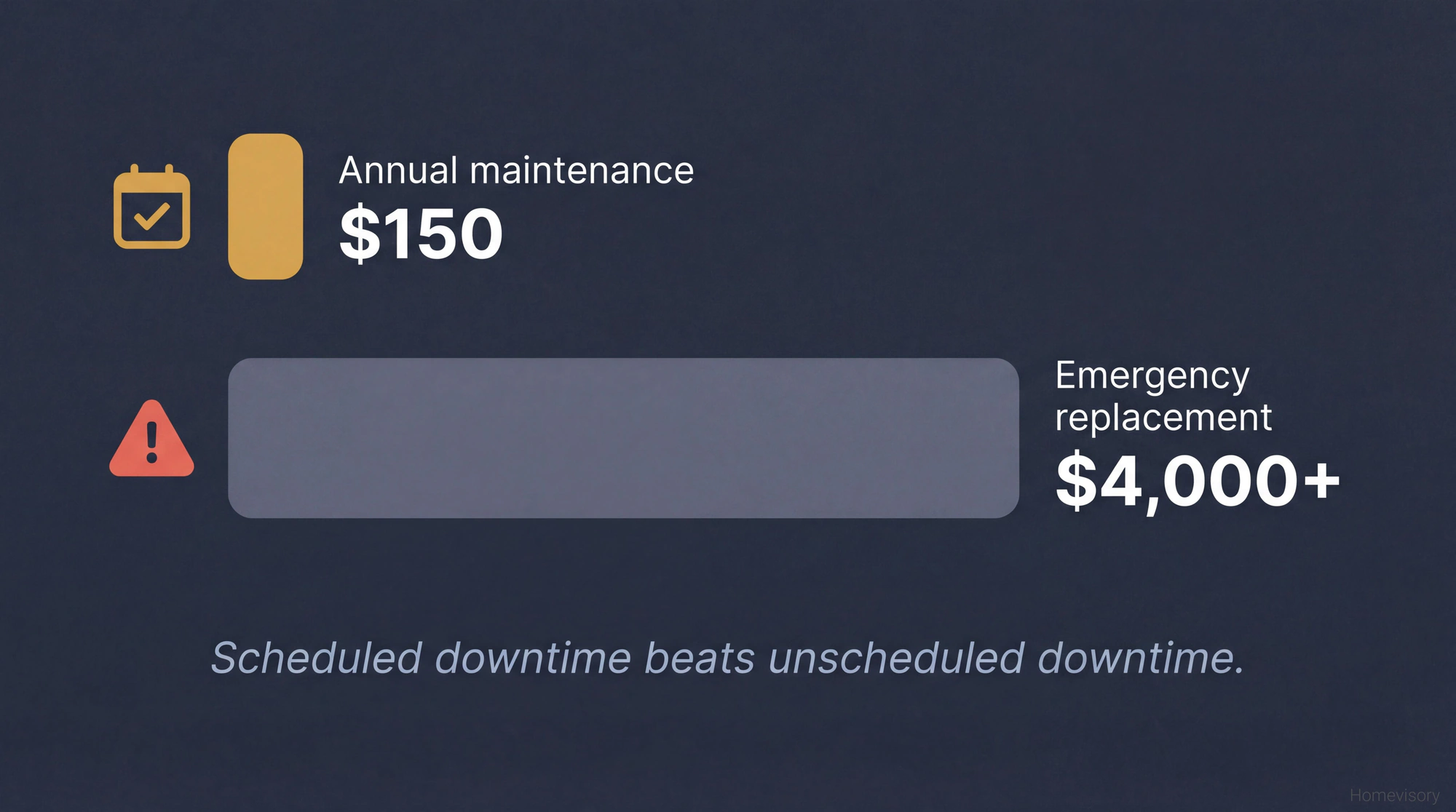
If your system isnt cooling at all, dont assume it needs a tune-up — check our guide on why your AC might be blowing hot air first since the fix might be simpler than you think. The math usually works out that paying for an hvac maintenance plan saves you money IF you use it and IF the company is reputable. You get the scheduled visits plus priority scheduling if something breaks. You often get discounts on parts and labor for repairs.
But read the contract. Some plans have exclusions and limitations. Some companies make you jump through hoops to actually use the benefits. And some plans are priced assuming most people wont use them.
Whatever. Just pick one approach and stick with it. Either get a maintenance plan or schedule your own professional visit once a year. Either way works. Doing nothing doesnt work.
The Big Picture
HVAC systems are expensive. A full replacement runs $5,000-15,000 depending on size and efficiency and where you live. Thats a significant purchase. And most systems should last 15-20 years if maintained properly. If you’re wondering about your specific equipment, check out our guide on how long furnaces and AC units actually last.
The difference between proper maintenance and neglect is often the difference between 12 years and 18 years of life. Thats half again as long. Thats pushing your next major purchase out by six years. The math is obvious.
Mr. Davis, my woodshop teacher back in Atlanta, used to say something similar about tools. Take care of them or plan to replace them. He had hand planes from his grandfather that still worked because every time he used them he cleaned them and oiled them and put them away properly. He passed away in 2012 and I still think about him when Im maintaining anything. How you take care of things matters. Its respect for the thing itself and respect for your future self who wont have to deal with the consequences of neglect.
Your HVAC system isnt a plane from your grandfather. Its a machine with a limited lifespan. But that lifespan stretches or shrinks based on what you do.
Change your filter. Clean your coils. Clear the debris. Get professional service once a year. Pay attention to weird noises and smells. Catch small problems before they become big problems.
Thats what we do here at Homevisory. Track your maintenance. Set your reminders. Stop wondering when you last did something. Sign up free and get your hvac maintenance checklist scheduled automatically. Your system will last longer. Your bills will be lower. And youll stop being the person who calls an HVAC company in a panic in July because everything failed at once.
That panic costs money. The maintenance is practically free by comparison.