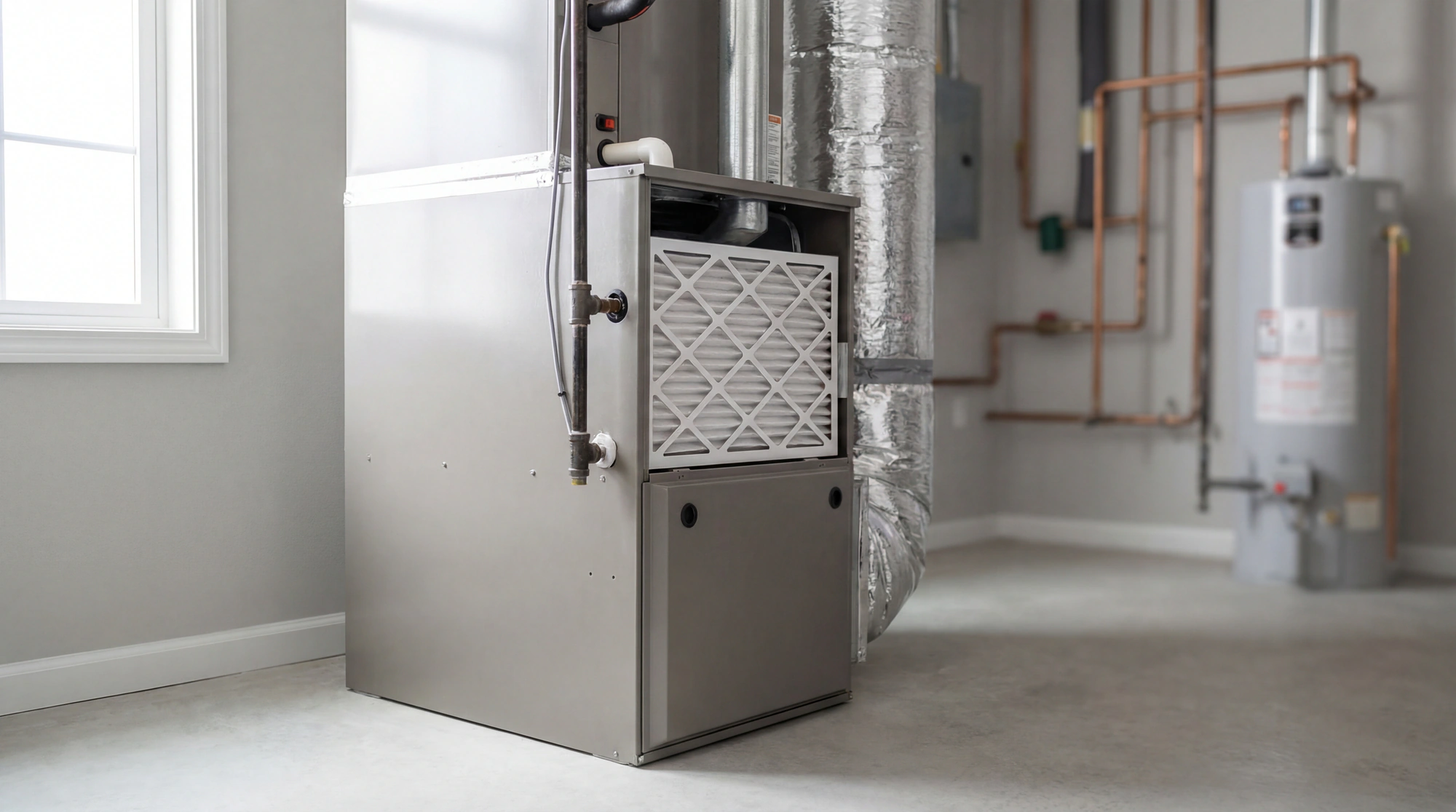
The Real Answer Nobody Wants to Hear
People ask me how long does a furnace last like theres some magic number I can give them. Fifteen years. Twenty years. Whatever. The truth is more annoying than that.
Your furnace lasts exactly as long as you treat it like it matters.
Same with your AC. Same with pretty much everything in your house that has moving parts and electricity running through it. The question isnt really “how long do furnaces last” because that depends almost entirely on you.
But fine. You want numbers. I’ll give you numbers. Then I’ll tell you why the numbers are mostly meaningless.
The Official Lifespan Numbers
A gas furnace typically lasts 15-20 years. The Department of Energy uses 21 years as the average furnace lifetime in their lifecycle cost calculations. An oil furnace, 15-25 years. Electric furnaces can push 20-30 years because theres less combustion wear.
How long does an AC unit last. Usually 15-20 years for a central air system. Window units, maybe 10-12 if youre lucky. ENERGY STAR recommends considering replacement if your AC is more than 10 years old or your furnace is more than 15 years old, especially if you’re experiencing comfort or efficiency issues.
Heat pumps split the difference, around 15 years, because theyre running year-round doing both jobs.
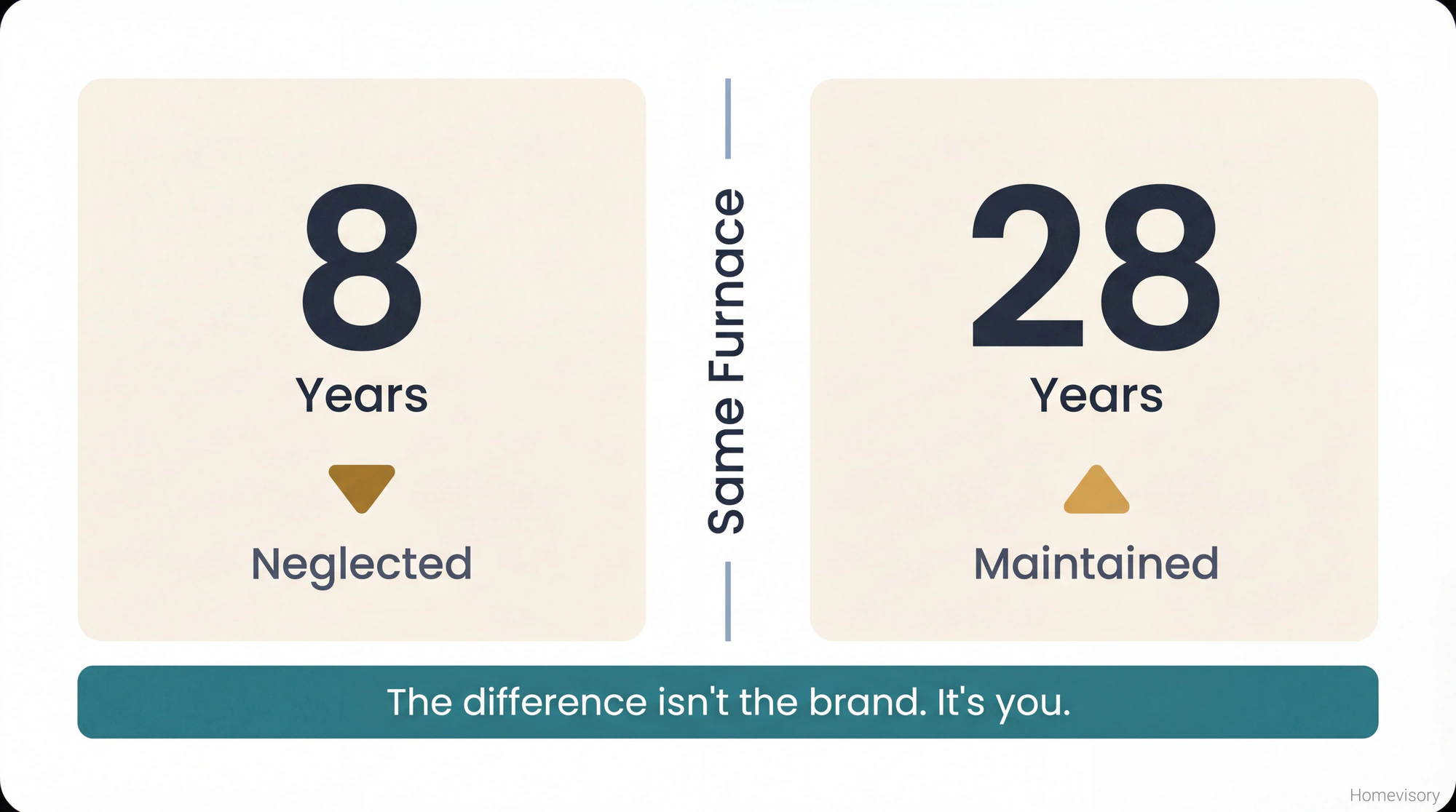
There. Those are your numbers. Write them down if you want. But heres the thing, I’ve seen furnaces die at 8 years and I’ve seen furnaces running strong at 28 years. The spread is huge. And the difference between an 8-year furnace and a 28-year furnace usually isnt the brand or the model or how much you paid for it.
Its maintenance.
Why Maintenance Matters More Than the Equipment
My dad Curtis worked in a factory outside Atlanta for years. Heavy equipment, industrial stuff, things that cost more than houses. And he used to say, about something totally different than home HVAC, he used to say “a machine doesn’t die. It gets neglected to death.” They’d run equipment on that factory floor until it seized up because nobody changed the fluids or replaced the belts or did any of the basic stuff the manual told them to do. Then they’d blame the manufacturer.
Same thing happens with furnaces. Same thing happens with AC units.
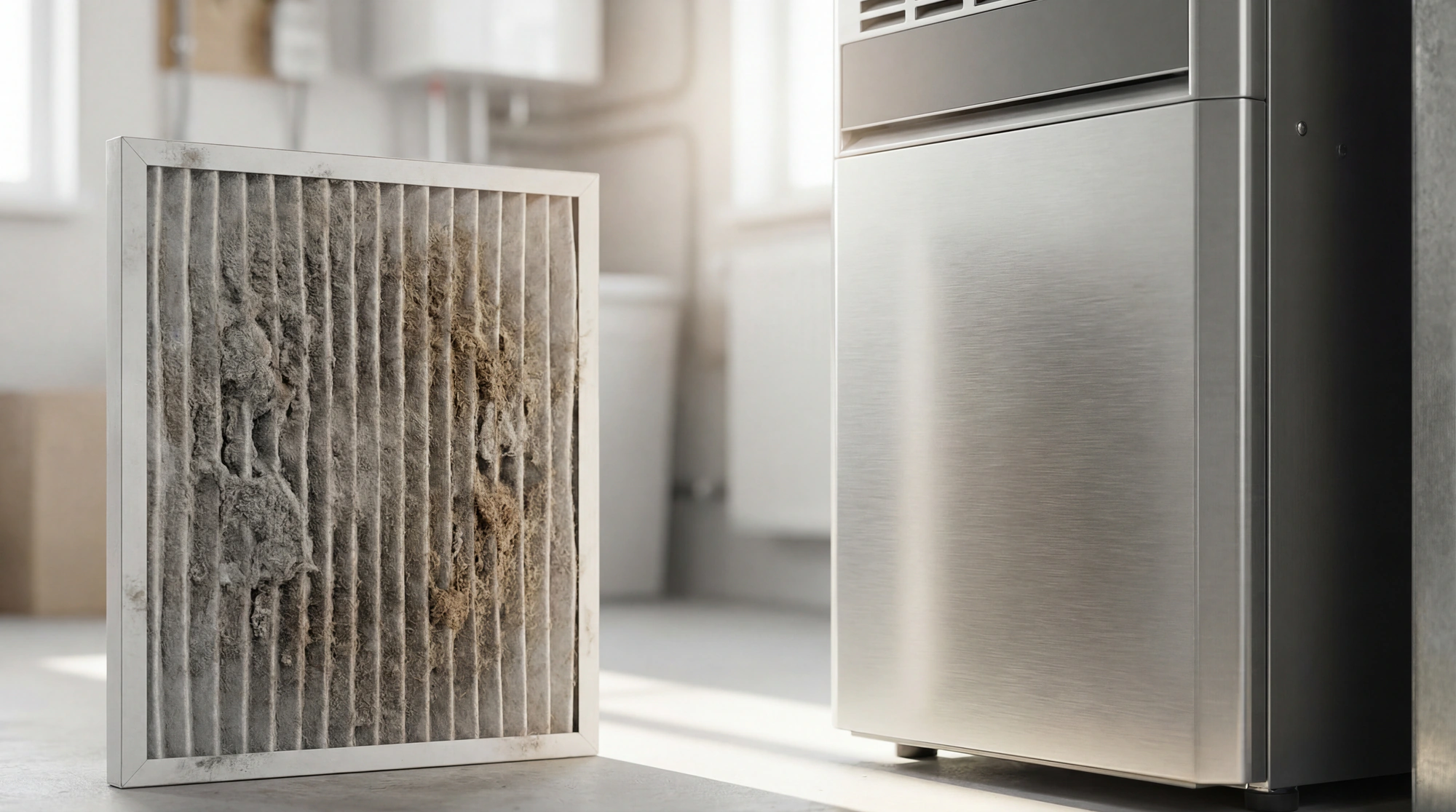
Your HVAC system has a filter. The filter catches dust and debris so it doesnt clog up the blower motor and the evaporator coils and everything else. If you dont change that filter, youre making the system work harder every single day. The blower pushes against restriction. The motor runs hotter. The coils get dirty and cant transfer heat efficiently. And none of this shows up as a dramatic failure, not at first anyway, it shows up as slightly higher energy bills and slightly shorter runtime and then one day the whole thing just quits and you call someone and they tell you the compressor is shot and youre looking at $4,000 or you can just replace the whole unit for $7,000 and you think “well it was old anyway” but it wasnt. It was neglected. Theres a difference.
The filter thing sounds so basic that people skip it. I know because I’ve been in houses where the filter looks like it was installed during the Clinton administration. Gray. Fuzzy. Barely any airflow getting through. And the homeowner says “yeah I should probably change that” like its optional. Its not optional. Its the single cheapest thing you can do to extend the life of your system.
Change your filter every 30-90 days depending on usage. If you have pets, closer to 30. If you have allergies, closer to 30. If you run your system constantly, closer to 30. Thats it. Thats the whole secret. For the complete breakdown by filter type, check out our guide on how often to change your air filter.
Annual Service Calls
Beyond filters, get your system serviced once a year. Twice if you have separate heating and cooling, once in spring before AC season, once in fall before heating season.
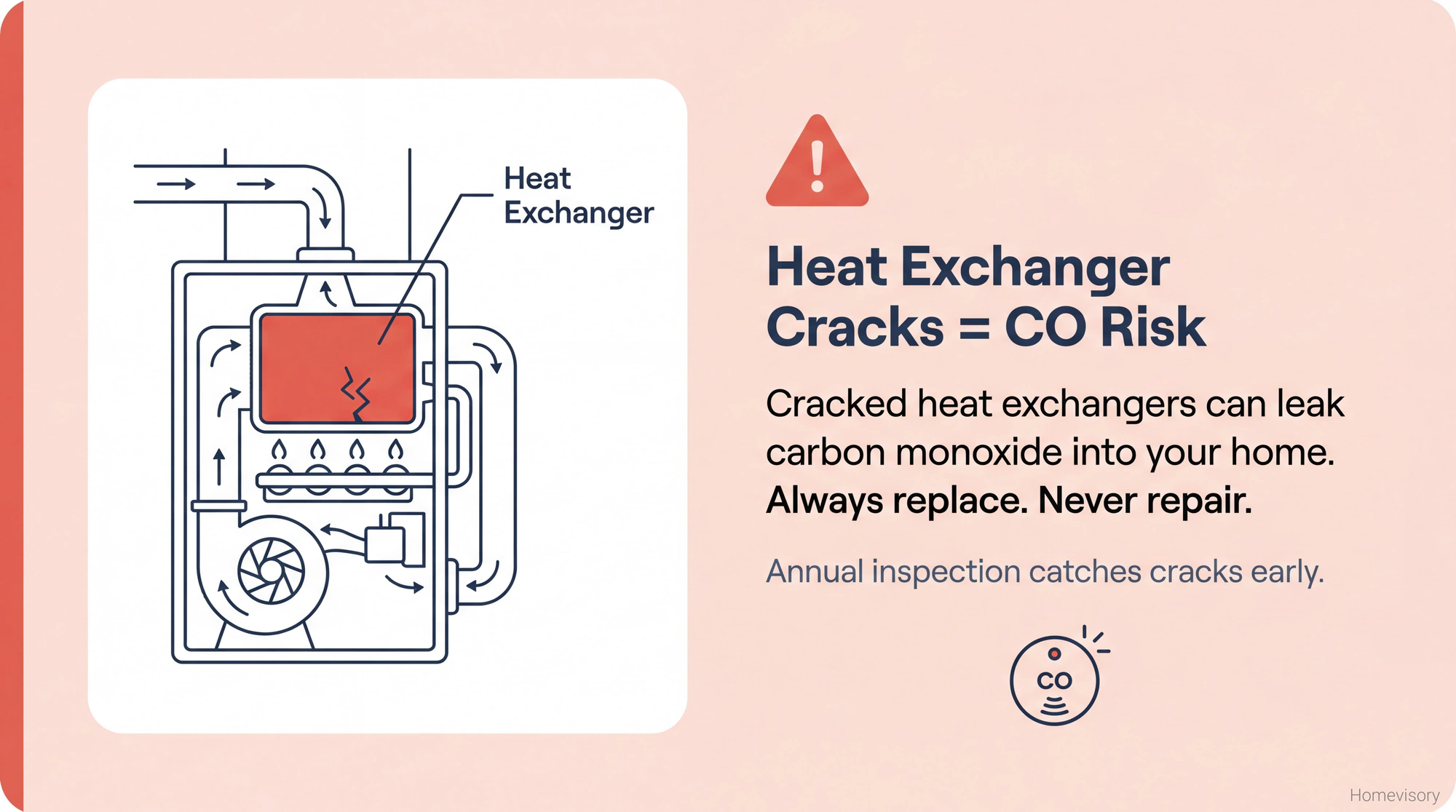
A tech will check refrigerant levels, clean the coils, inspect the heat exchanger for cracks, test the electrical connections, all the stuff you cant really do yourself. Costs maybe $100-150 per visit. And it catches problems before they become expensive problems.
Is it worth it. That’s not really a question. Yes.
Signs Your System Is Dying
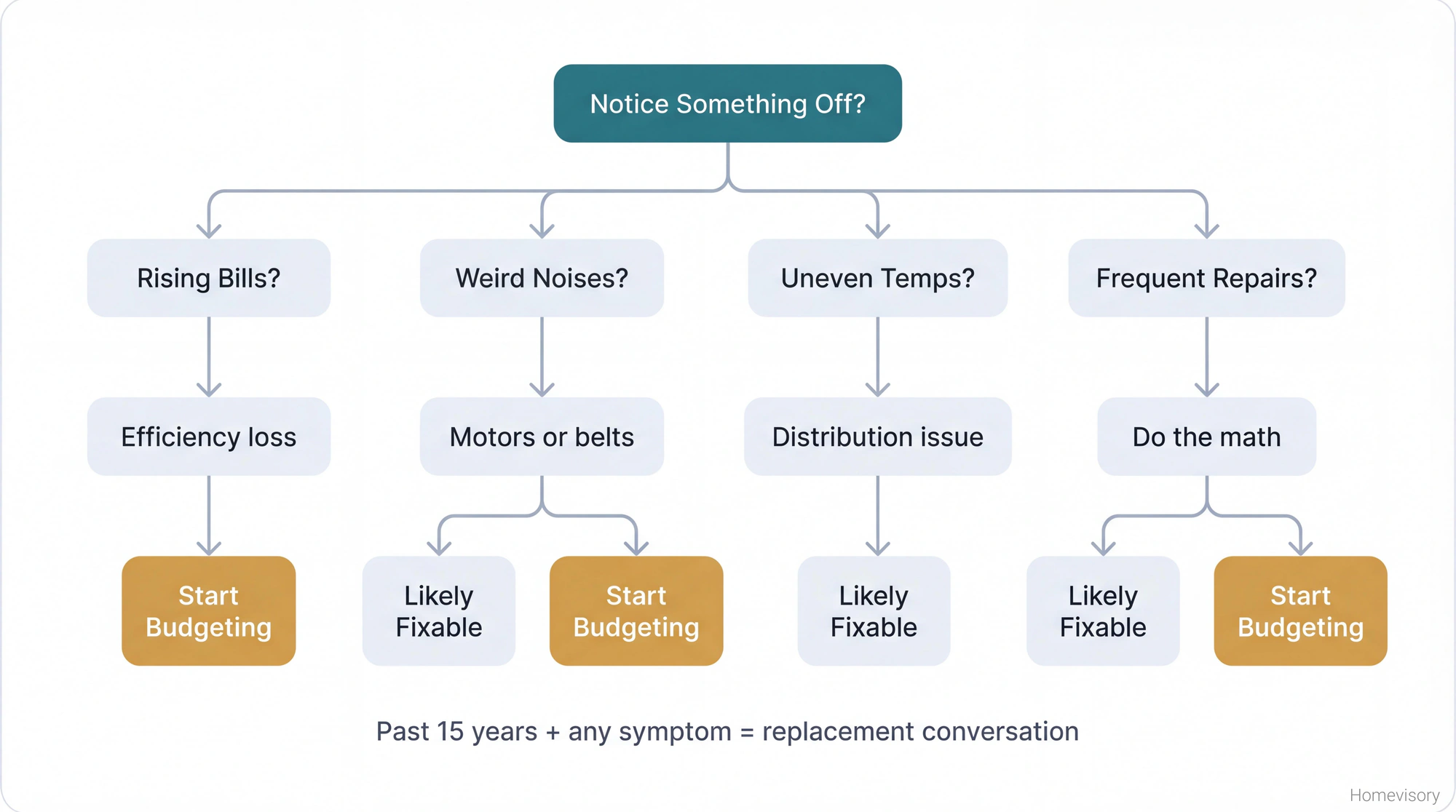
Now look, even with good maintenance, nothing lasts forever. Heres what to watch for when youre trying to figure out when to replace heating and air conditioning.
Rising energy bills with no explanation. If your usage hasnt changed but your bills keep climbing, the system is losing efficiency. Could be fixable. Could be the beginning of the end.
Uneven temperatures. Hot spots and cold spots that werent there before. The system isnt distributing air like it should.
Weird noises. Banging. Screeching. Clicking that happens more than once when it starts up. Motors and belts and bearings wear out.
Frequent repairs. If youre calling a tech more than once a year, start doing the math. At some point the repairs cost more than replacement.
The age thing. If your furnace is past 15 and your AC is past 15 and youre seeing any of the above, yeah. Start budgeting.
I was in Chicago one December, this was during my project manager years when I traveled constantly, and a client’s furnace died on Christmas Eve. The heat exchanger had cracked, which is actually dangerous because it can leak carbon monoxide, and they had family coming the next day and nowhere to go. We found an emergency tech who charged about triple the normal rate and the whole thing was chaos. The furnace was 19 years old and hadnt been serviced in at least five. The homeowner kept saying he was going to get around to it. Anyway.
How Long Do AC Units Last vs Furnaces
People sometimes ask why their AC dies before their furnace even though they were installed at the same time. Fair question.
AC units work harder in some ways. They deal with humidity and condensation and refrigerant cycles. The outdoor unit sits in the weather, rain and sun and whatever else. Theres more corrosion potential.
Furnaces live indoors, usually in a basement or utility closet, protected from the elements. Gas furnaces have combustion wear but not weather exposure.
So if youre in a hot climate like I am now in Palm Beach, your AC is running eight months a year. Your furnace barely runs at all. Of course the AC dies first.
If youre in Minnesota, opposite situation. Furnace running constantly, AC maybe four months. The furnace wears out first.
Climate matters. Usage matters. Its not just about the equipment.
The Warranty Question
People ask about warranties like the warranty tells you how long the equipment will last. It doesnt. The warranty tells you how long the manufacturer is willing to take responsibility.
A 10-year warranty doesnt mean the furnace lasts 10 years. It means if something fails in 10 years due to manufacturing defects, theyll cover it. Most failures arent manufacturing defects. Most failures are neglect.
Whatever the warranty says, double it if you maintain it, halve it if you dont. Thats the formula. Moving on.
When to Replace vs Repair
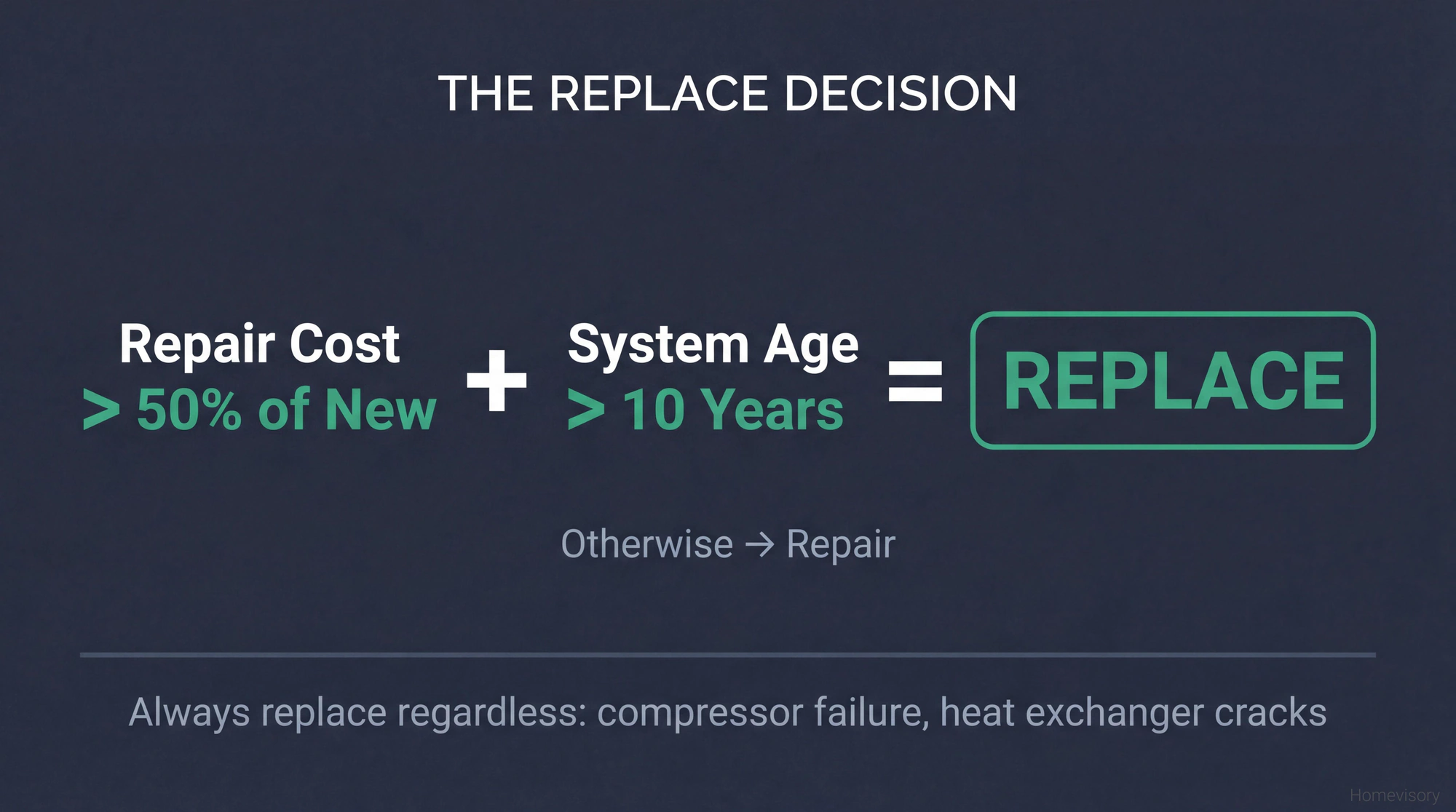
Heres my rule. If the repair costs more than half the price of a new unit and the system is more than 10 years old, replace it. If the repair is minor and the system is well-maintained, repair it.
Also depends whats broken. Blower motor? Repair. Compressor? Probably replace, thats a major component. Heat exchanger crack? Replace, thats a safety issue.
Get three quotes. Always three quotes. I’m not getting into brands here, everybody has opinions about brands and most of them are based on one experience with one unit. Call three contractors, get three quotes, pick the one who explains things clearly and doesnt try to upsell you on stuff you dont need.
What Actually Extends Lifespan
Heres the short version of everything.
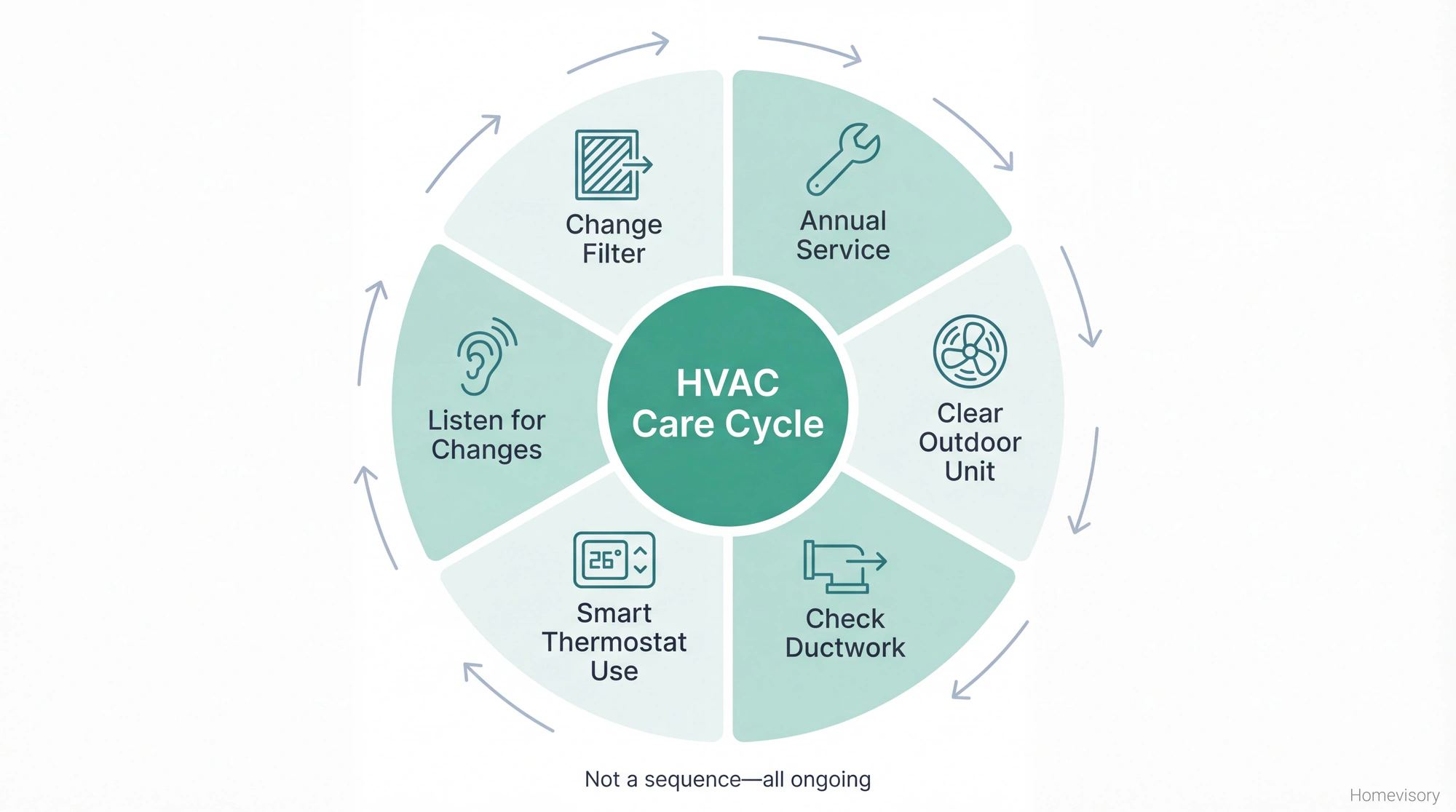
Change your filter. 30-90 days. Not negotiable.
Annual service. Professional eyes on the system once a year minimum.
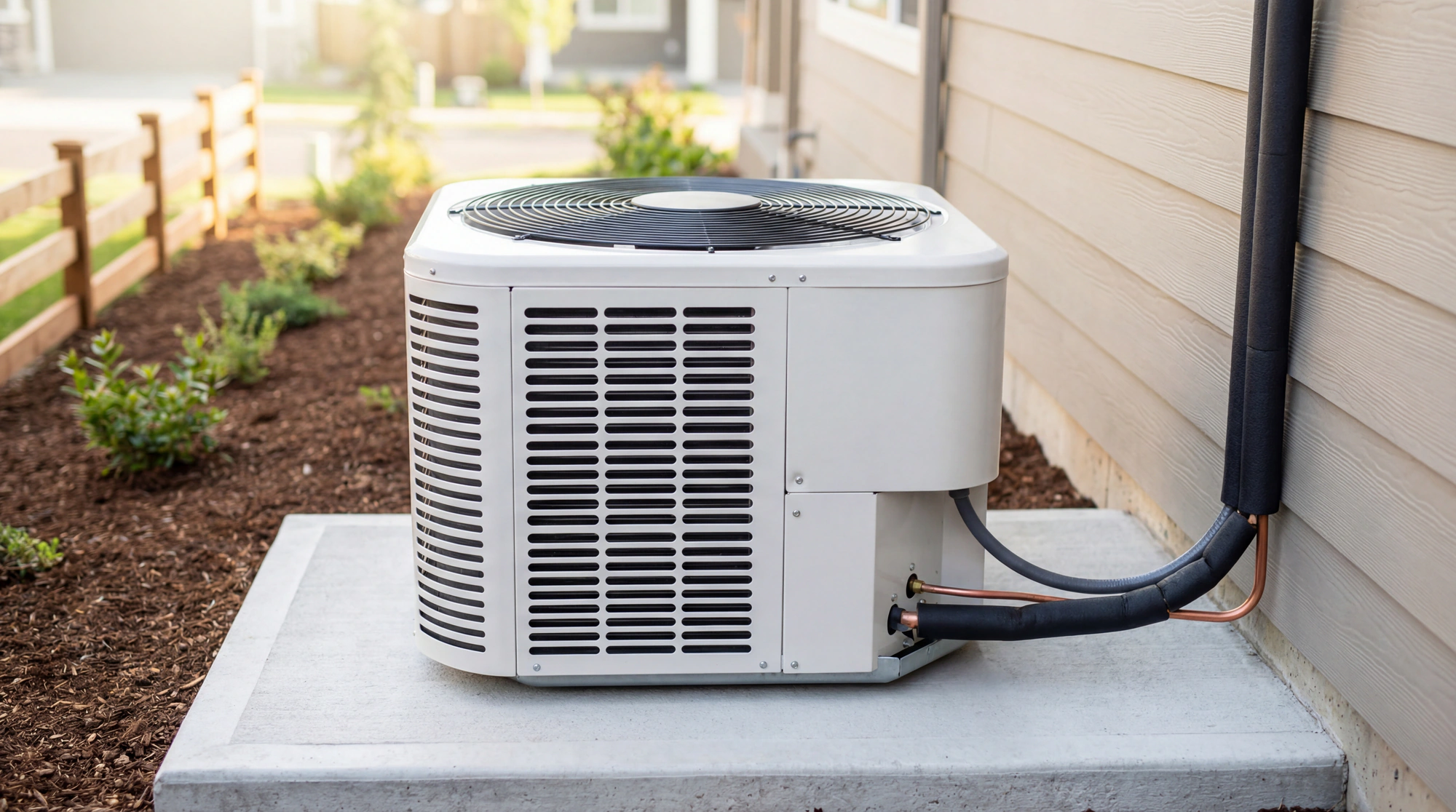
Keep the outdoor unit clear. Two feet of clearance around it. No bushes, no debris, no storage.
Check your ductwork. Leaky ducts make the system work harder. According to ENERGY STAR, about 20-30% of the air that moves through a typical home’s duct system is lost due to leaks and poorly connected ducts. If you feel air coming from seams in the basement, thats conditioned air youre paying for and losing.
Run it reasonably. Constant 68 degrees in summer in Texas is asking a lot. Programmable thermostat, let it ease off when youre not home.
Listen to it. You know what your system sounds like normally. When it sounds different, pay attention.
Mr. Davis, my old woodshop teacher back in Atlanta, he used to talk about listening to your tools. Power saw makes a certain sound when its happy and a different sound when the blade is dull or the motor is struggling. HVAC is the same. You live with this thing. You hear it every day. When it sounds wrong, it probably is wrong.
The Homevisory Approach
Look, the real answer to “how long does a furnace last” is this: longer than you expect if you take care of it, shorter than you expect if you dont.
Most people dont have a system for tracking maintenance. They mean to change the filter. They mean to schedule service. They mean to check the condensate drain. And then life happens and they forget and three years later theyre calling someone because the system died.
Thats what we built Homevisory for. It tracks your home systems, reminds you when maintenance is due, keeps records so you know the last time something was serviced. Its free to sign up and it takes the thinking out of it.
Because the difference between an 8-year furnace and a 28-year furnace isnt luck. Its just staying on top of the basics. And the basics arent hard if you have something reminding you to do them.
Ready to stay on top of your home maintenance? Sign up for the Homevisory home task manager - it’s free.