The Question Everyone Asks Wrong
People always ask how long do appliances last like theres one answer. Like I can tell you “refrigerators last 15 years” and that means something. It doesn’t. Not really.
The better question is how long will YOUR appliances last, in YOUR house, with YOUR water quality and YOUR maintenance habits. Because I’ve seen $3,000 refrigerators die in six years and I’ve seen my parents’ basic Kenmore run for twenty-two.
I started tracking this stuff obsessively after I got into the home maintenance business. Had to. When you’re advising people on whether to repair or replace, you need to actually know the numbers, not just guess.
So heres what I’ve learned from thirty years of fixing things, breaking things, and watching other people break things.
The Actual Numbers (With Context)
Before I get into specifics, understand that these are averages. Averages include the guy who never cleans his dryer vent and the woman who has her HVAC serviced twice a year. You’re probably somewhere in between.
Average Lifespans:
- Refrigerator: 10-20 years (huge range, I’ll explain)
- Dishwasher: 9-12 years
- Washing Machine: 10-14 years
- Dryer: 10-13 years
- Oven/Range: 13-15 years
- Microwave: 5-10 years
- Garbage Disposal: 8-12 years
- HVAC System: 15-25 years
- Water Heater: 8-12 years (tank), 20+ years (tankless)
Now let me tell you why these numbers are mostly useless without context.
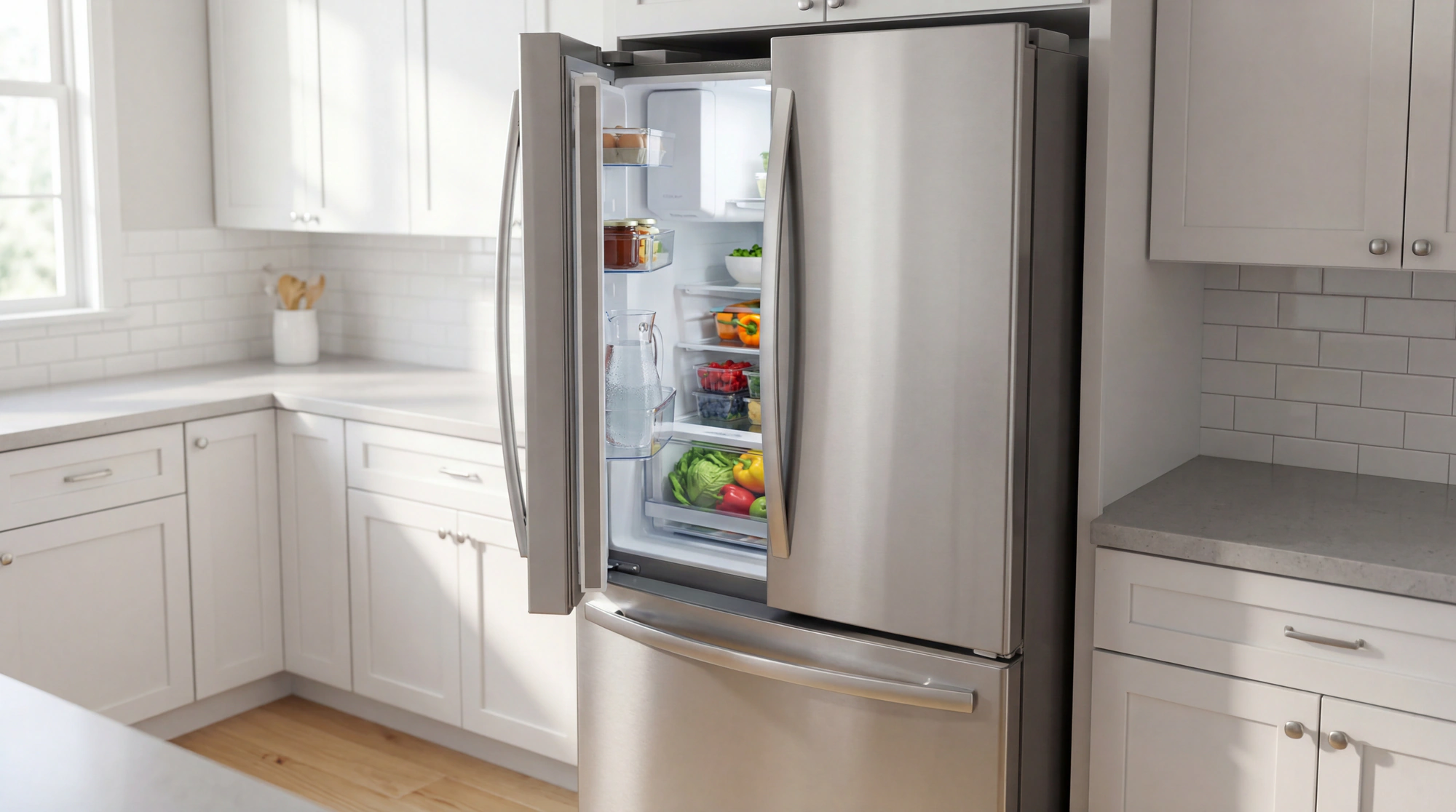
Refrigerators (This Is Where I Have Opinions)
I care way too much about refrigerators. Ask Raquel. She’ll tell you about the time I spent forty-five minutes in Home Depot arguing with a sales guy about compressor quality. She waited in the car.
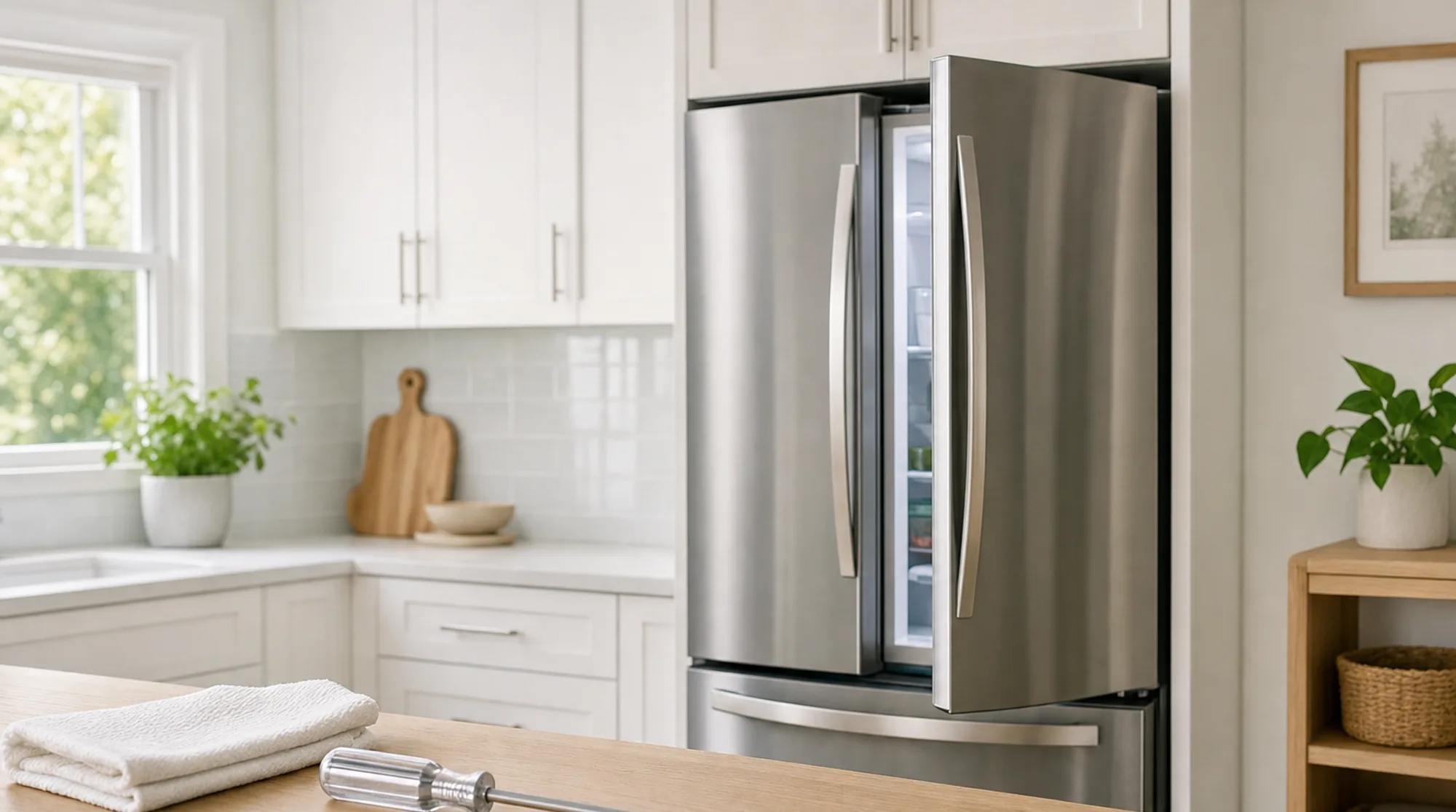
The thing is, refrigerators have the widest lifespan range of any major appliance and its almost entirely about the compressor and how hard you make it work. In Palm Beach where I live now, humidity is brutal. Your fridge is fighting that humidity every time you open the door, which means the compressor runs more, which means it wears out faster. I had a fridge in my first Florida house that lasted eight years. Same brand, same model series that my parents had in Atlanta lasted seventeen years. The difference was climate and the fact that my mom cleaned those condenser coils religiously.
Speaking of my parents, they had a side-by-side Kenmore they bought in 1987 that ran until 2009. Twenty-two years. My dad used to brag about it. Said it was from “when things were made to last, not made to break.” He worked in a factory for thirty years and he had strong opinions about what he called “designed failure.” I dont know if hes right about that being intentional but I know newer fridges dont seem to hit twenty years very often.
What kills refrigerators early:
- Dirty condenser coils (clean them every 3-6 months)
- Poor ventilation (needs airflow around it)
- Overstuffing (blocks air circulation inside)
- Door seals failing and nobody noticing
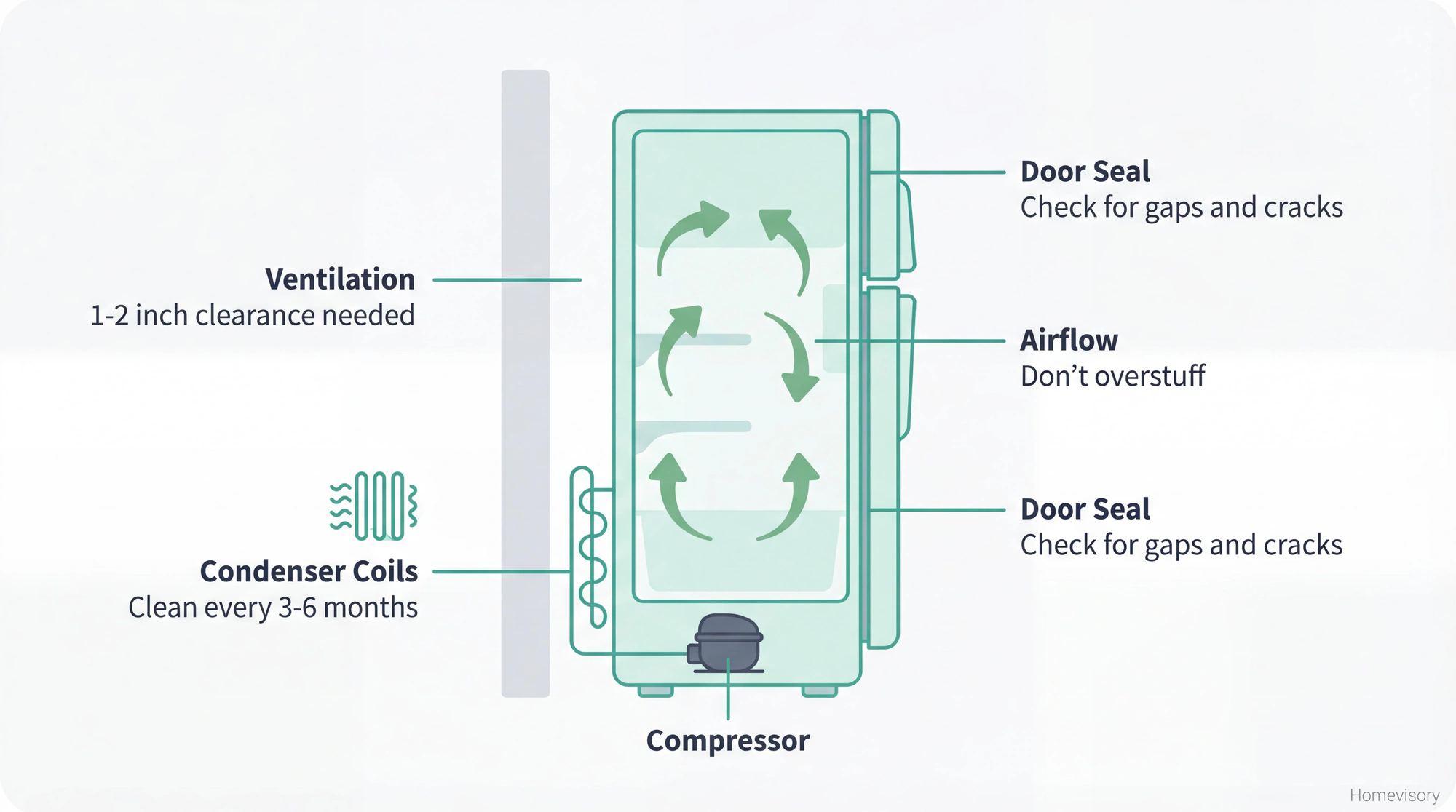
If you do nothing else, clean the coils. Pull your fridge out twice a year, vacuum the coils, push it back. Thats it. Your compressor will thank you.
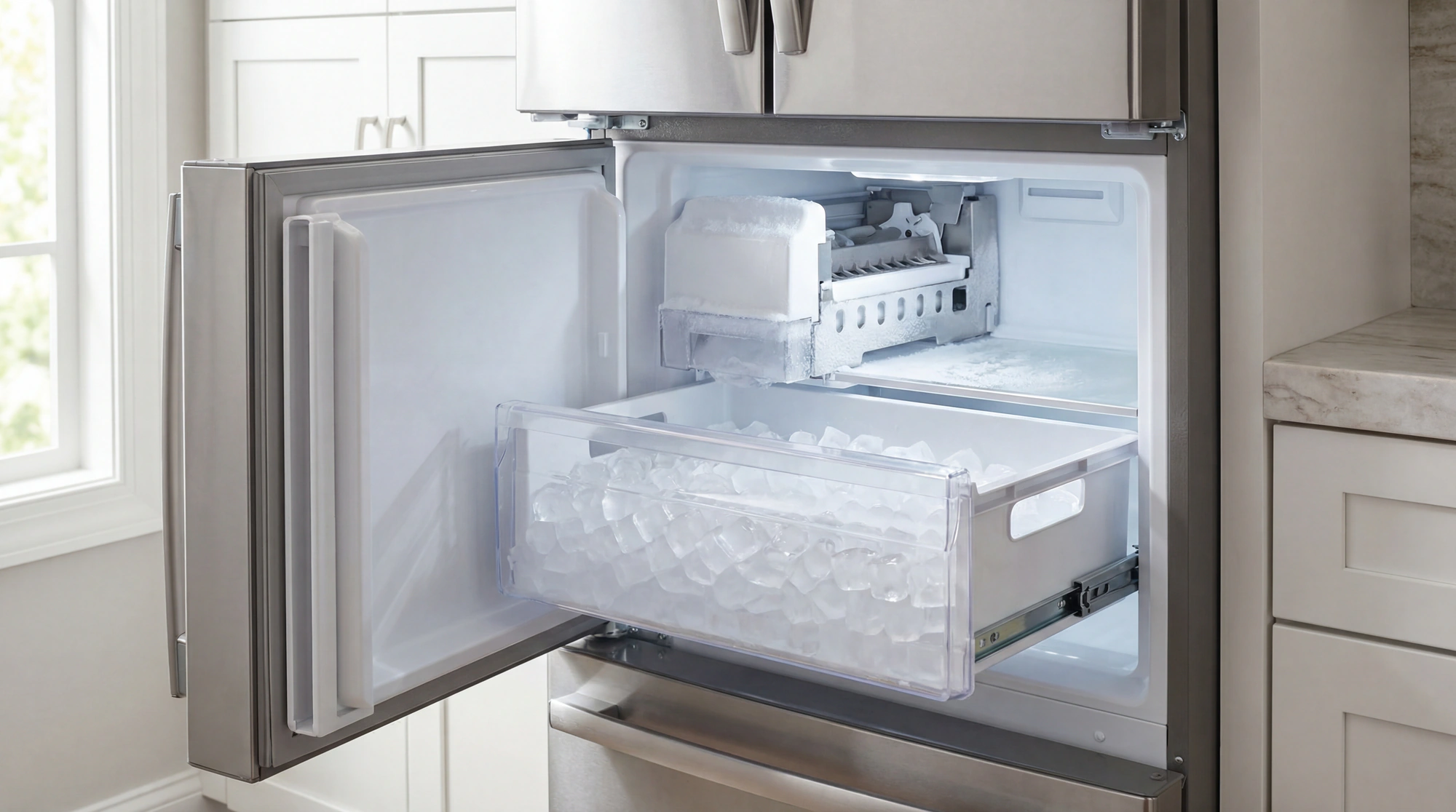
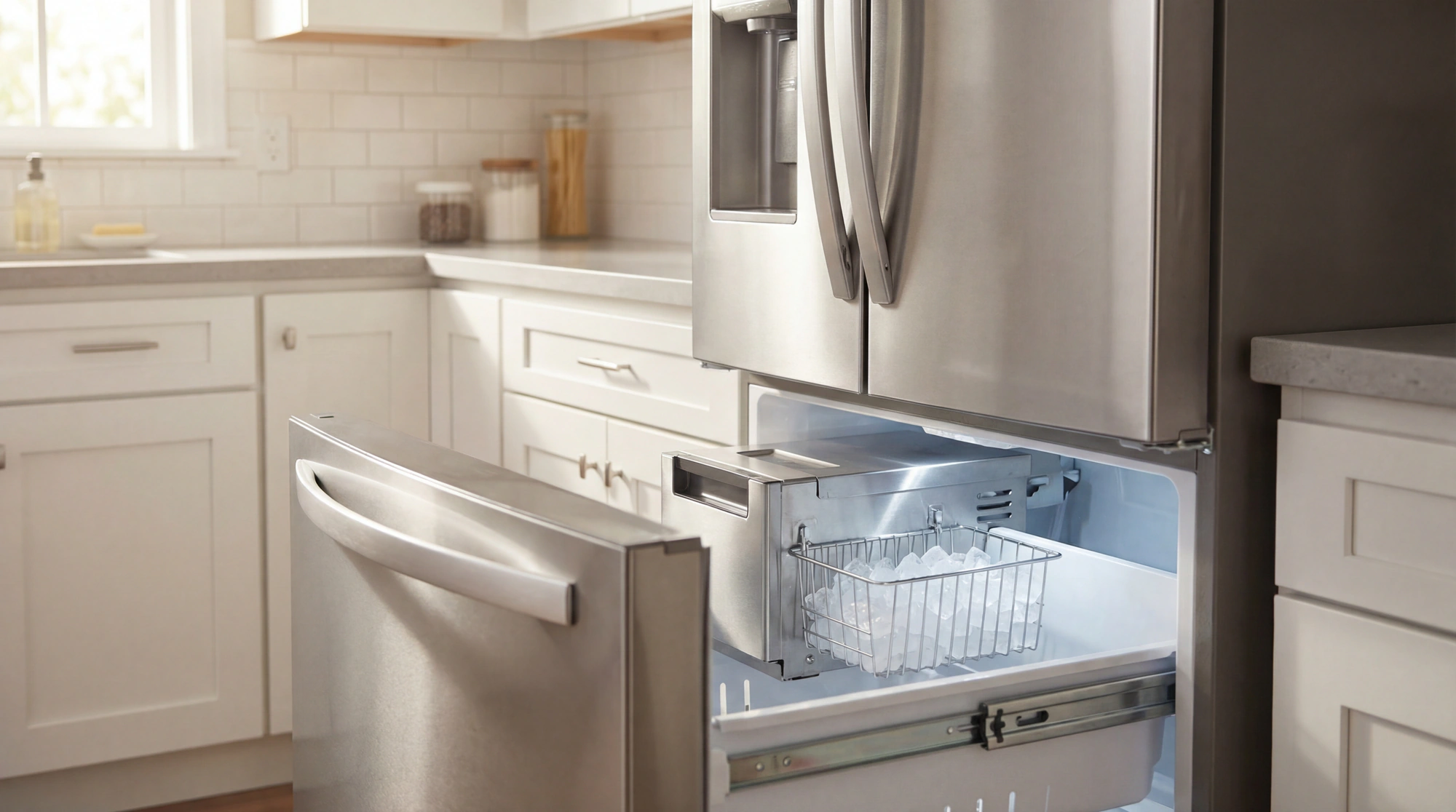
The ice maker and water dispenser, by the way, are the first things to fail on any fridge that has them. Not the main cooling. Those little motors and valves give out around year seven or eight in my experience. You can usually repair them for $150-300 or just live without ice from the door like a normal person.
Dishwashers
Nine to twelve years is accurate but here’s the thing, dishwashers are pretty simple machines. A motor, a pump, some spray arms, a heating element. There’s not that much to break.
What kills them is usually the pump motor or control board, and both are repairable. I’ve fixed my current dishwasher twice, once the pump seal went and once the door latch broke. Total cost for both repairs was maybe $80 in parts. Meanwhile my neighbor replaced his whole unit because the spray arm “wasn’t spinning right.” It was clogged. Twenty minutes with a toothpick.
Clean the filter monthly. Check the spray arms for clogs. Dont use too much detergent, it actually makes things worse. Run an empty cycle with vinegar every couple months.
My mom’s old dishwasher, also Sears, also lasted forever. She’d run it at night after dinner and wipe down the door seal every single time. Every single time. I thought she was being excessive but that dishwasher outlasted two of mine so what do I know.
Washing Machines
Ten to fourteen years and I’m going to be direct here: buy the basic one.
The fancy front-loaders with touch screens and steam cycles and eighteen different wash settings? More things to break. More expensive to repair. More likely to have mold issues if you dont leave the door open between loads.
I’ve owned both. The front-loader was a nightmare after year five. Mold smell, bearing issues, control board died at year seven. Replaced it with a basic top-loader. Still running six years later.
High-efficiency top-loaders are fine. The agitator-style ones are also fine. Just dont let anyone sell you on needing a $1,500 washing machine. You dont need WiFi on your washer. I promise.
What shortens washer life:
- Overloading (everyone does this, stop doing this)
- Too much detergent (HE machines need almost nothing)
- Leaving wet clothes sitting in there
- Not cleaning the door seal (front-loaders especially)
My parents had a top-load Maytag that lasted twenty-three years. I remember helping them move it when they went to a smaller place, must have been around 2015 or so. Heavy as a car. I dont know what happened to it after that. They probably gave it away and it’s probably still running in someone else’s house. That sounds like a joke but it’s not. Those old machines were different. Anyway.
Dryers
Ten to thirteen years and the secret is embarrassingly simple: clean the lint trap every load and clean the vent duct once a year.
That’s it. Thats the whole secret.
Dryers are basically a heating element and a drum that spins. They’re not complicated. They die early because the exhaust gets restricted, the dryer overheats, and components burn out.
I had a client in Texas years ago who called me because her dryer “stopped heating.” I went over expecting to replace the heating element. The vent duct was packed solid. Four inches of compressed lint. It’s a miracle the house didn’t burn down. I cleaned the duct, dryer worked fine for another five years.
A new dryer is $600-900 for something decent. An annual duct cleaning is $100-150 if you hire someone, free if you do it yourself with a brush kit from Amazon. The math is obvious.
Ovens and Ranges
Thirteen to fifteen years on average but honestly, these are tanks. The heating elements might need replacing once or twice in that span. The igniter on a gas range will probably go at some point. Neither repair is expensive.
I have a gas range that’s fourteen years old. Replaced one burner igniter at year nine. Still going strong.
The thing that kills modern ovens is the control panel. All those digital displays and touchpad buttons. When those fail, the repair can cost more than a new basic oven.
If your oven still works but looks dated, don’t replace it just keep using it. A working 15-year-old oven is better than a new one with a five-year control board.
Microwaves
Five to ten years. They’re $100-200 for a decent countertop model. When they die, replace them. I’m not spending $150 to repair a $150 appliance.
The over-the-range ones are more annoying because they’re built in, but same logic applies. If it’s more than $200 to fix and the unit is over six years old, just replace it.
Moving on.
Garbage Disposals
Eight to twelve years. They die. Replace them.
A new disposal is $100-200 plus installation or just the cost of your time if you do it yourself. Takes thirty minutes if you’ve done it before. Not worth getting emotional about.
Things that overwork them and can cause them to stop working are putting fibrous stuff down there (celery, artichokes), grinding up bones, running them without water.
Water Heaters
This one matters because a water heater failure is an emergency. Eight to twelve years for a tank model.
You want to know how much life is left in yours? Look at the manufacturing date on the label. If its past year eight, start budgeting for replacement. If you see rust around the connections or water pooling under the unit, don’t budget, schedule.
Flush the tank annually if you have hard water. Most people never do this and it shortens the life significantly. Sediment builds up at the bottom, insulates the water from the heating element, makes everything work harder.
Tankless heaters last longer, twenty years or more, but the upfront cost is double or triple. Whether that math works out depends on how long you plan to stay in your house.
HVAC Systems
Fifteen to twenty-five years and this is where maintenance makes the biggest difference. I wrote a whole article on how long furnaces and AC units last if you want the deep dive.
I lived in Chicago for a while during my project management days, brutal winters, and I learned fast what happens when people skip furnace maintenance. Eyelashes literally froze walking to my car once. That kind of cold will destroy a neglected HVAC system in ten years.
Now in somewhere like Florida, it’s the AC that works overtime. Same principle. The unit runs constantly half the year. If you’re not changing filters monthly and getting it serviced annually, you are not giving it the best chance at a longer lifespan.
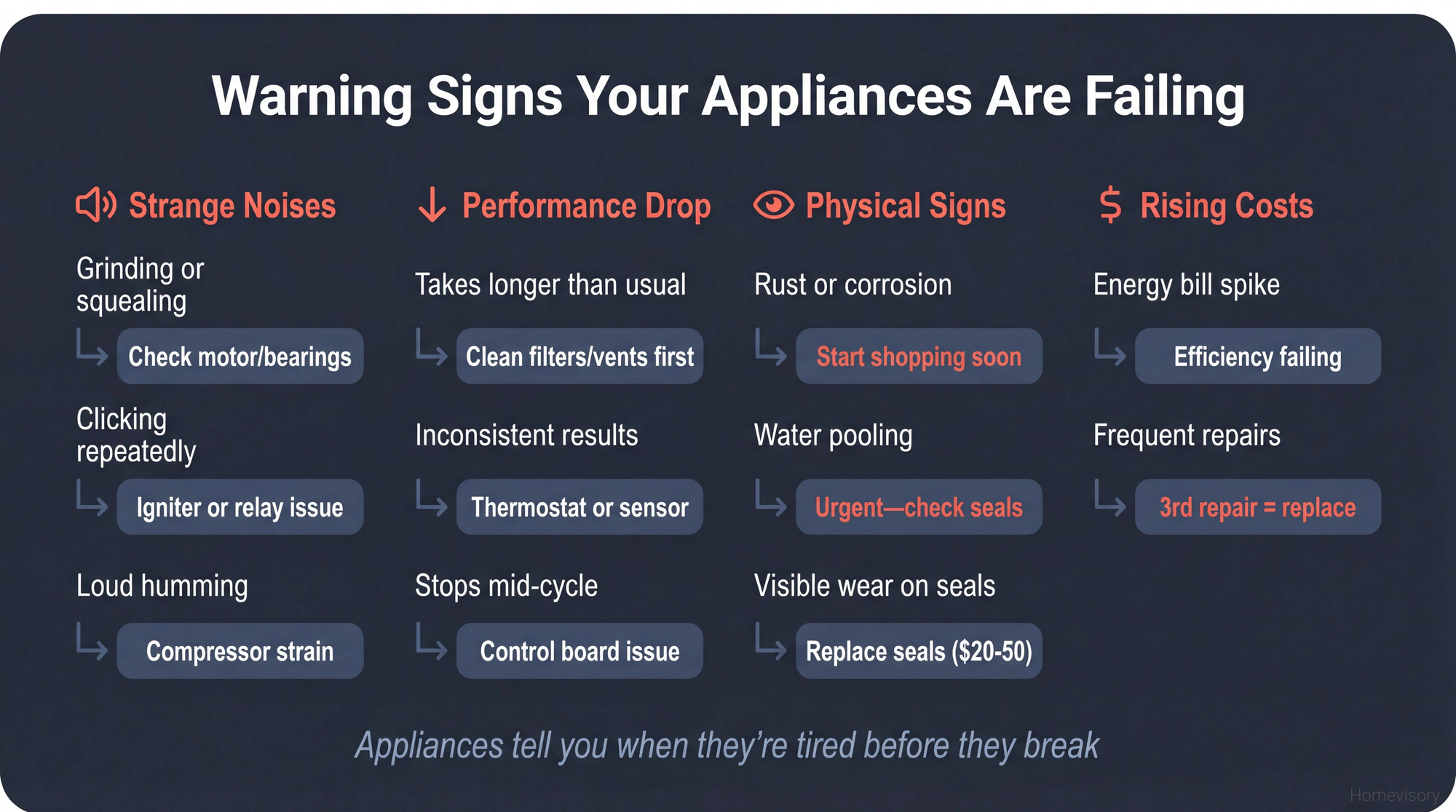
Mr. Davis, my woodshop teacher back in Atlanta, used to say that wood tells you when it’s tired before it breaks. You can see it. Feel it. HVAC systems are the same way. Weird noises, uneven heating or cooling, higher energy bills, these are warning signs. Pay attention and you can often fix problems before they become replacements.
The Repair vs Replace Decision
My rule for appliances: If the repair costs more than 50% of replacement AND the unit is past 70% of its expected life, replace it. If it’s a critical appliance (fridge, water heater, HVAC) and the repair is over 30% of replacement, consider replacing.
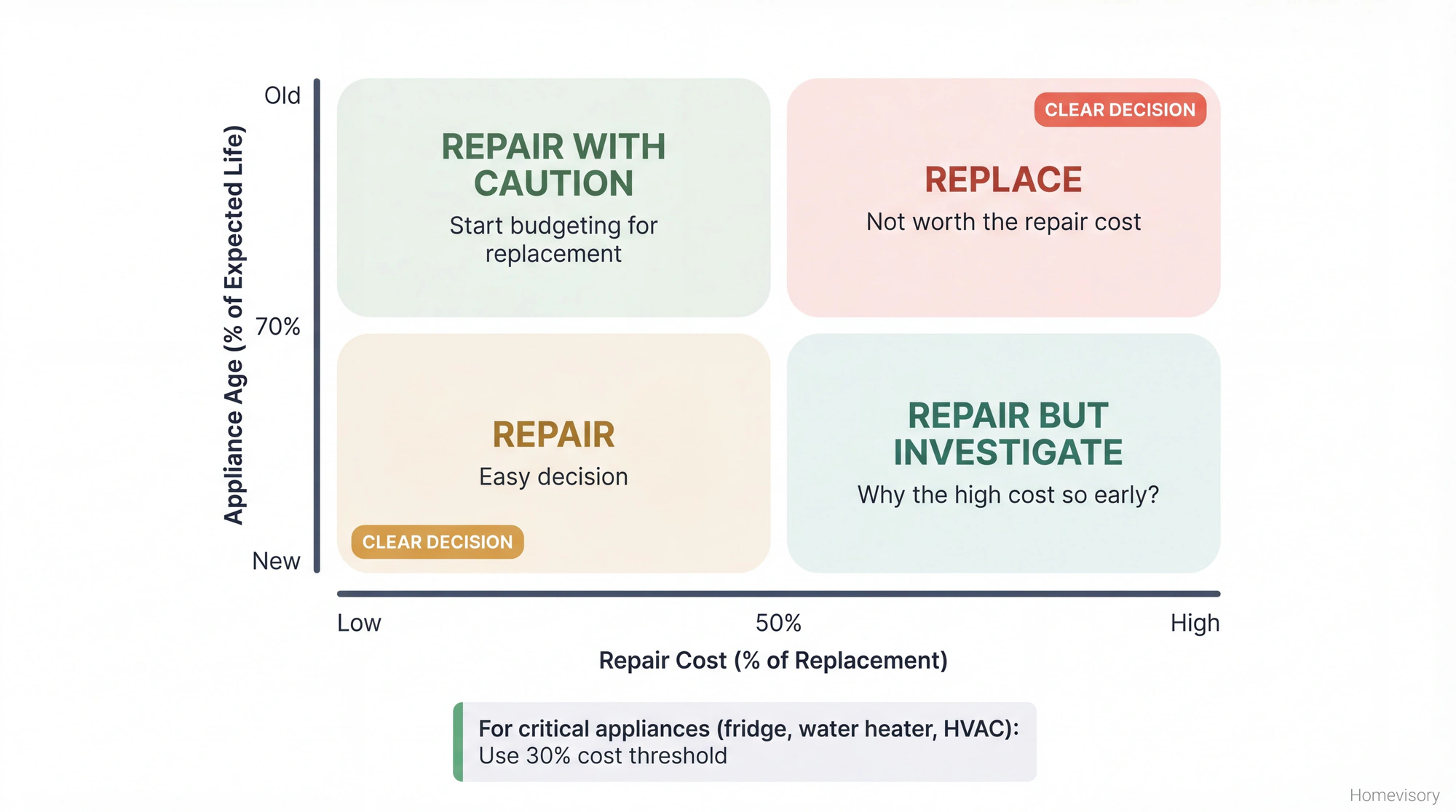
But there’s a factor people forget. Your time. Your sanity. If you’ve already repaired something twice and now it needs a third fix, even a cheap one, maybe just get a new one and stop thinking about it.
What Actually Extends Appliance Life
Everything I’ve said so far assumes average maintenance. Which means no maintenance. Most people dont maintain their appliances at all until something breaks.
If you want to beat the averages:
Monthly:
- Clean dryer lint trap (every load actually)
- Check/change HVAC filter
- Clean dishwasher filter
- Wipe refrigerator door seals
Quarterly:
- Clean refrigerator coils
- Run empty dishwasher cycle with vinegar
- Check washer hoses for bulging
Annually:
- Clean dryer vent duct
- Flush water heater (if you have hard water)
- HVAC professional service
- Check washing machine fill hoses
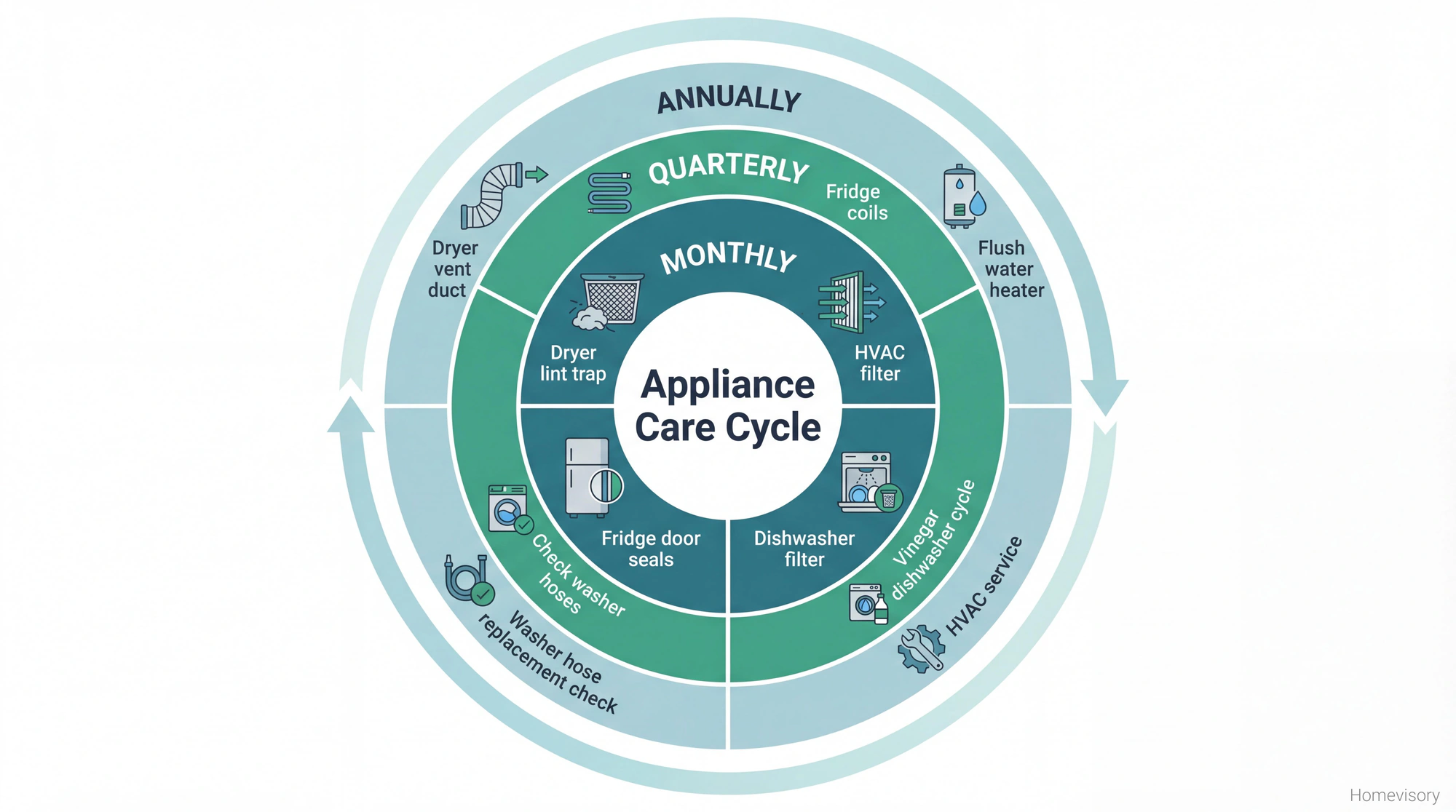
This isnt hard. It takes maybe two hours a month total if you add it all up. And it’s the difference between your fridge lasting ten years and lasting eighteen.
Track It or Lose Track
The reason I know my range is fourteen years old and my fridge needed coil cleaning in March is because I write it down. Always have. Started with a notebook, now I use Homevisory to track everything.
Most people buy a house with nine major appliances and have no idea when any of them were installed or last serviced. Then something breaks and they’re surprised. Then they replace it and forget to track the new one.
This isn’t complicated. Write down what you have, when you got it, and when you maintain it. That’s how you avoid the 2 AM “the water heater is flooding the garage” call to an emergency plumber.
Homevisory home task manager does this automatically if you set it up. Tracks your appliances, reminds you when maintenance is due, gives you the information you need to make repair vs replace decisions. Free to sign up. That’s what we built it for.
How long do appliances last? As long as you help them last. Or until they dont, and you’re standing in a flooded laundry room wondering what went wrong.
Dont be that person. Track your stuff. Maintain your stuff. Your future self will appreciate it.