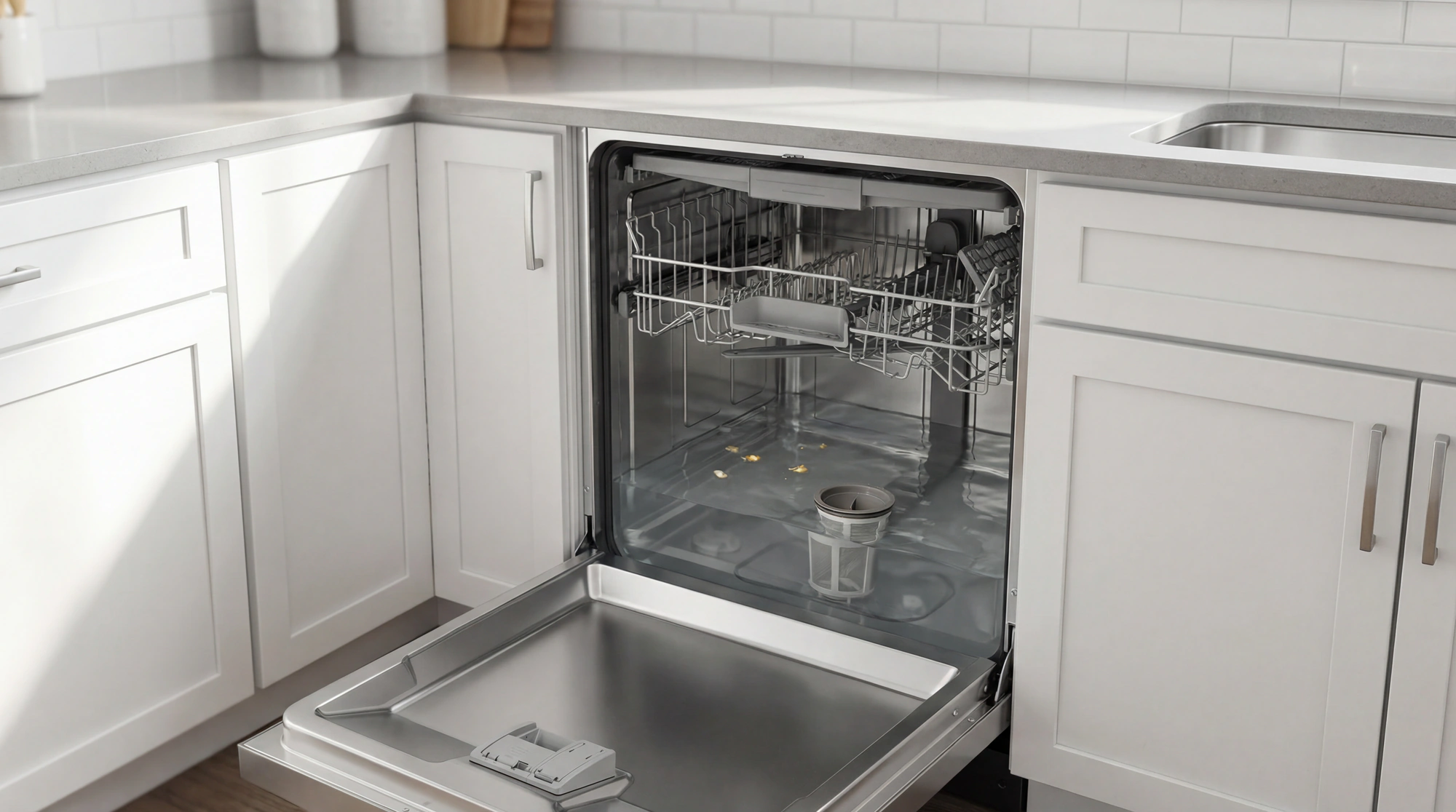
Standing Water Is the Symptom, Not the Problem
Your dishwasher not draining is one of those problems that looks worse than it usually is. You open the door expecting clean dishes and instead theres three inches of gray water sitting at the bottom and maybe some food debris floating around like sad little islands. Its gross. I get it.
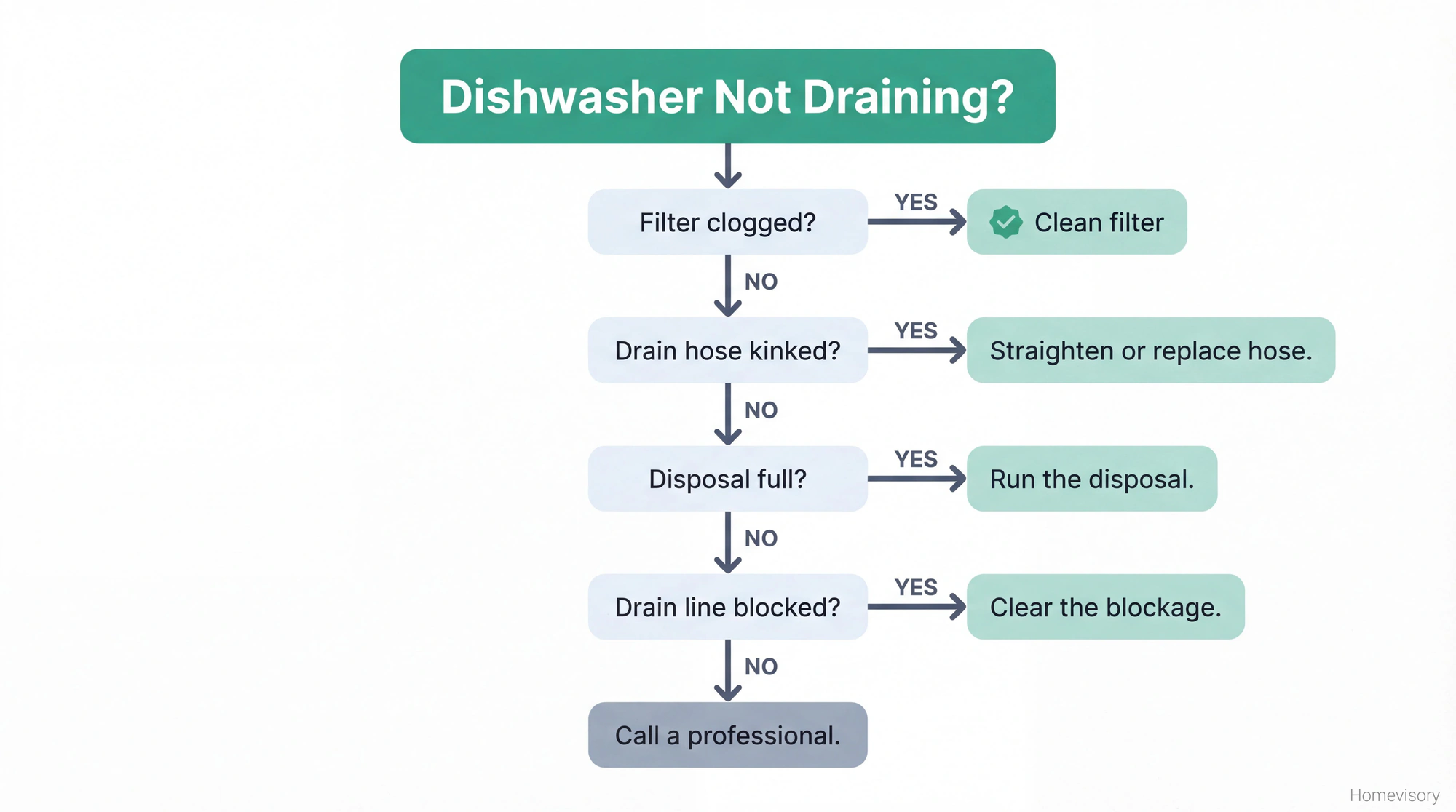
But heres the thing most people get wrong. They assume the dishwasher is broken. They start googling repair costs or looking at new units. And yeah, sometimes the drain pump is shot or something electrical went wrong. But probably eighty percent of the time when a dishwasher wont drain, its something you can fix yourself in under twenty minutes.
My dad worked in a factory for thirty years and they had this troubleshooting rule: check the dumbest, simplest thing first. Always. Because nine times out of ten, thats what it is. Somebody didnt plug something in. Somebody forgot to turn something on. The problem is almost never as complicated as you think.
Same thing applies here. Before you panic about drain pumps and motors and calling a professional service, lets go through the simple stuff.
The Filter
I need to talk about the filter first because this is where I lose people. Not because its complicated but because most people dont even know their dishwasher has a filter that needs cleaning.
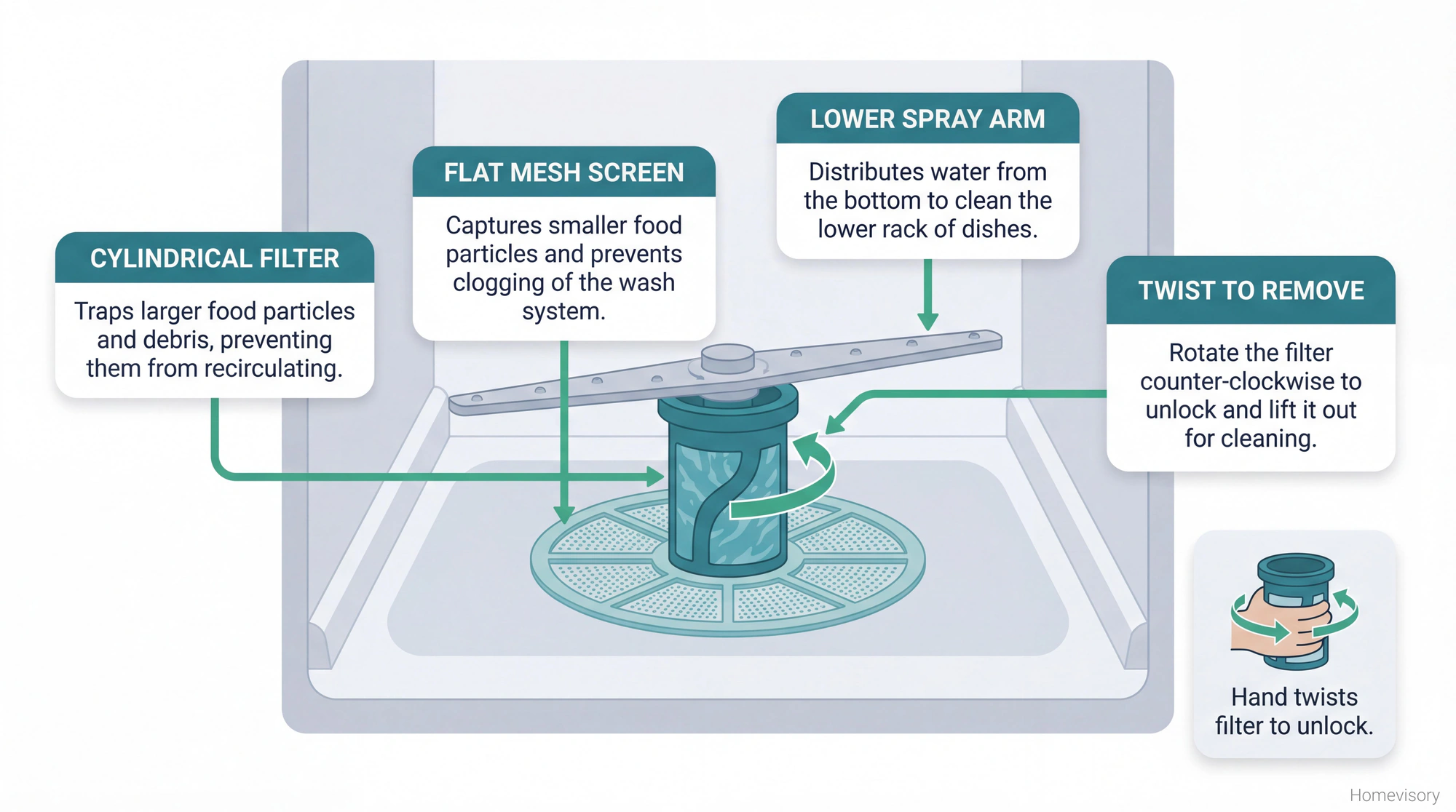
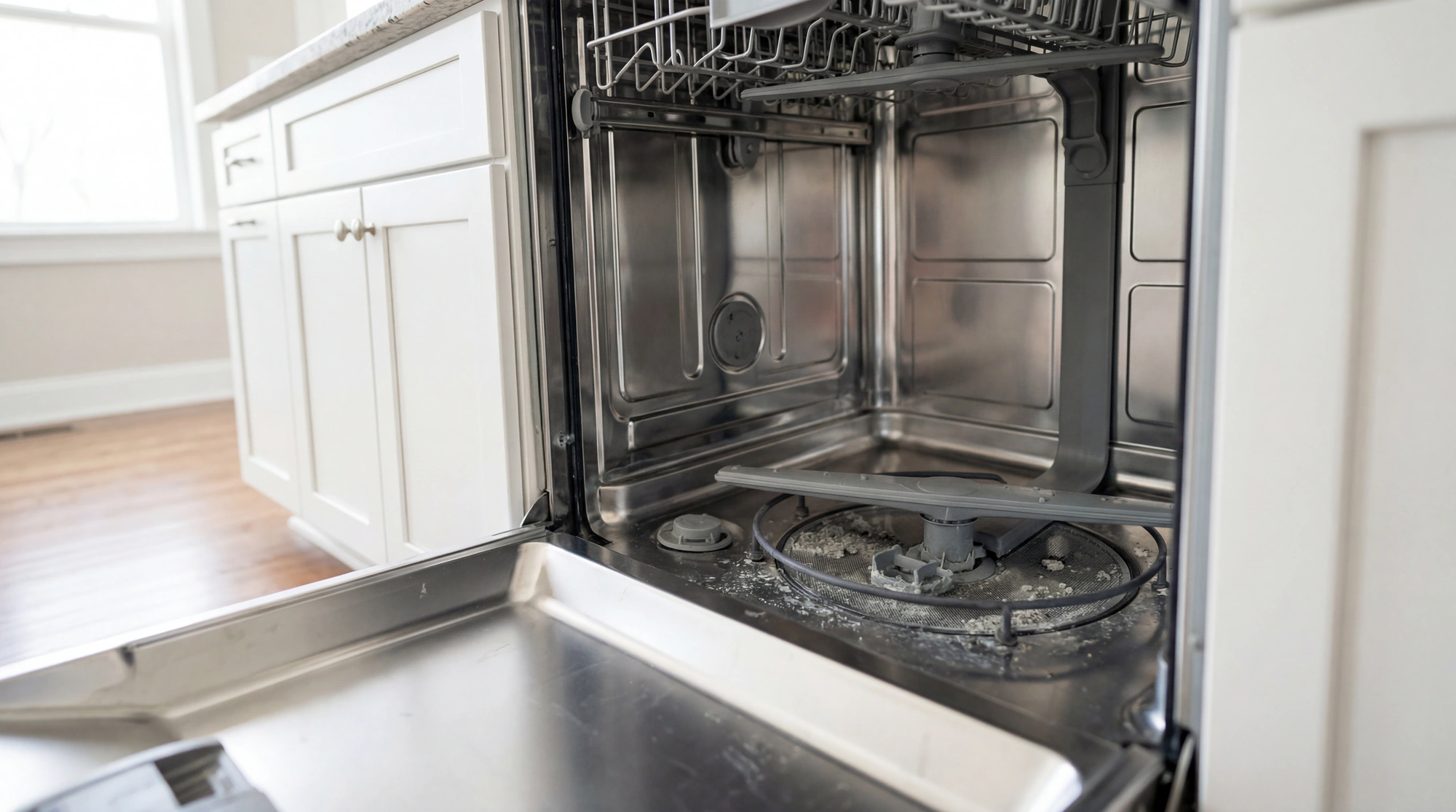
It does. Its usually at the bottom of the dishwasher, in the center or slightly off to one side, and its either a twist-off cylinder or a flat mesh screen or sometimes both. You pull it out and you clean it. Thats it. Thats the whole thing.
The problem is nobody does this. I’ve pulled filters out of dishwashers that haven’t been cleaned in five, six, seven years and the amount of food debris packed into them is genuinely disturbing. I’m talking layers of decomposed lettuce and rice and pasta and little bone fragments from chicken wings and this gray sludge that I don’t even want to identify. One time in a house in Plano I pulled a filter that had a full shrimp tail stuck in it, like not a piece of shrimp but the actual tail, and the homeowner looked at me and said “we don’t eat shrimp” and I just stood there holding this thing not knowing what to say. The filter had been in there so long that whatever was clogging it had basically fossilized into this solid plug and there was no water flow happening at all, the standing water had nowhere to go.
If your dishwasher not draining is new, like it just started happening, check the filter first. Pull it out, hold it under running water, scrub it with an old toothbrush if you need to. You’ll know immediately if this was the problem because the filter will be disgusting.
My mom Shirley would clean her dishwasher filter every two weeks. Every two weeks. I thought she was excessive about it when I was a kid. She’d have me help her with kitchen chores on Saturdays and I’d watch her pull this thing out and scrub it under the faucet even when it looked fine. She worked at Sears for years, customer service desk, and she used to say that how you do the small things is how you do everything. I didn’t get it then. The filter thing is probably because of her. She’d be proud I’m telling people to clean their filters. Or she’d say I’m not being thorough enough. Probably that one.
Clean your filter monthly at minimum. If you have a big family like mine, four kids, dinners with actual plates and pots and pans, clean it every two weeks. The clogged filter is the number one reason dishwashers don’t drain and its the easiest fix. For a complete guide on keeping your dishwasher in top shape, check out our article on how to clean a dishwasher.
The Drain Hose
This is the rubber hose that runs from your dishwasher to either your garbage disposal or your sink drain. Its usually behind or under the dishwasher, which means you might need to pull the dishwasher out a bit to see it.
Two things can go wrong here.
First, a kinked hose. The hose can get bent or pinched, especially if someone recently moved the dishwasher or installed a new garbage disposal or did anything that involved messing with the connections under the sink. A kinked hose blocks water flow completely. Straighten it out.
Second, a clog in the hose itself. Food debris and grease build up over time. Disconnect the hose from the disposal or drain line, put a bucket under it because water will come out, and see if you can clear the blockage. Sometimes you can do this by running water through it backwards. Sometimes you need a drain snake or a long brush. Sometimes the hose is so gunked up you just replace it. They cost like eight dollars.
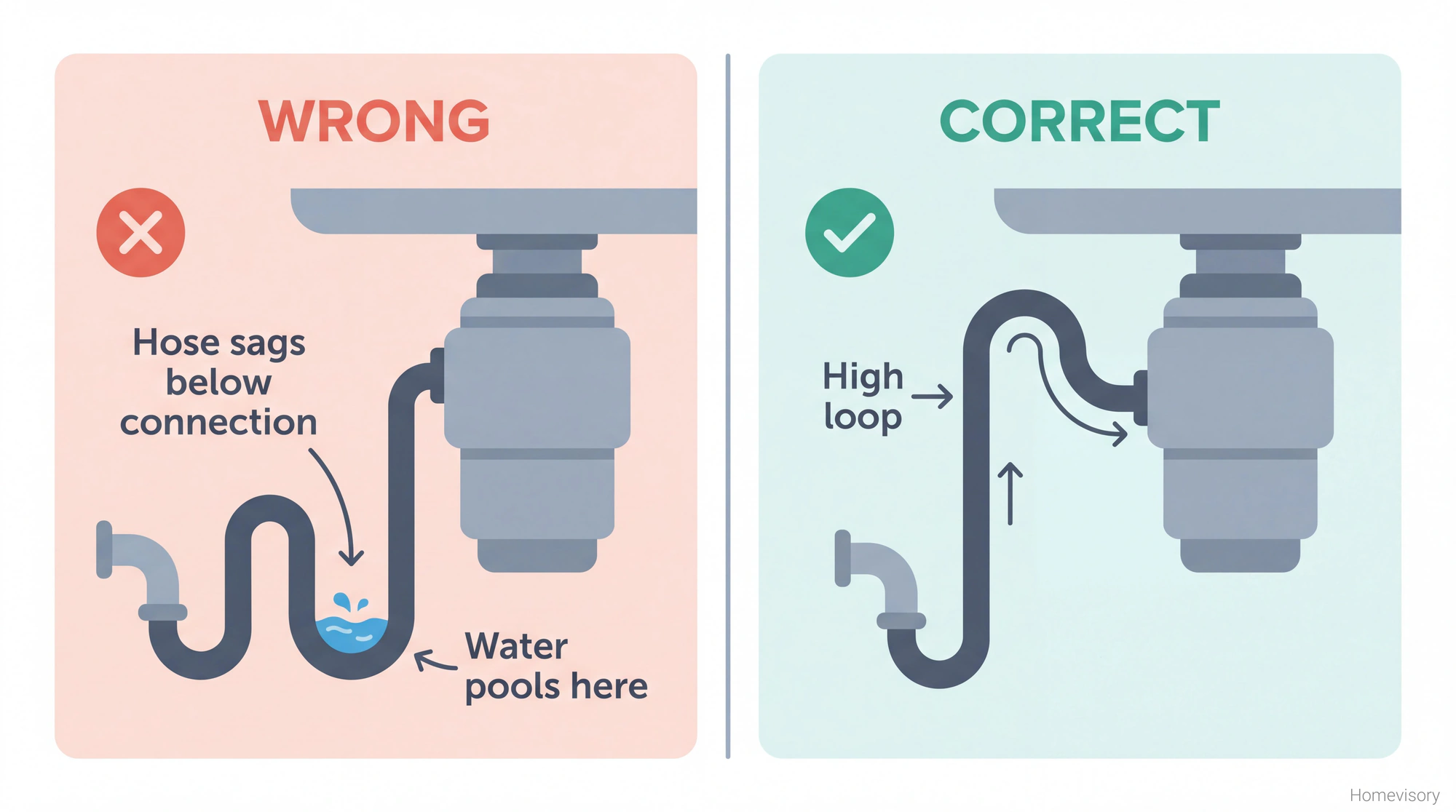
I had a job once in Richardson, this was probably 2008 or 2009, and the homeowner had been dealing with a dishwasher not draining for months. Months. She’d had two different repair guys come out. One replaced the drain pump. The other replaced something else, I forget what. Neither fixed it. I pulled the dishwasher out and the drain hose had a loop in it that dipped down below the connection point, which meant water was sitting in that low spot and not making it to the disposal. I repositioned the hose so it had a proper high loop, like its supposed to, and that was it. Two hundred dollars in repairs she’d already paid for and it was a positioning issue.
Make sure your drain hose goes up before it goes down. If it sags or loops below where it connects, water has nowhere to go.
The Garbage Disposal Connection
If your dishwasher drains through your garbage disposal, which most do, then anything wrong with the disposal affects your dishwasher. If your garbage disposal is not working, fix that first.
Run the disposal before you do anything else. A lot of standing water situations happen because the disposal is full of old food and the dishwasher water has nowhere to go. This is obvious. I feel dumb even writing it. But people forget.
If your disposal is new, like recently installed, check if someone removed the knockout plug. When garbage disposals come from the factory, theres a plastic plug blocking the dishwasher inlet. You have to punch it out with a screwdriver and a hammer before you connect the drain line. If whoever installed it forgot this step, your dishwasher water is hitting a wall.
Whatever. Just run your disposal and see if that helps. If the disposal itself is clogged or broken, fix that first.
The Air Gap
Some dishwashers have an air gap, which is that little chrome cylinder thing on your countertop or sink. Not all setups have one. If you don’t have one, skip this section.
If you do have one, pop off the cap and look inside. The air gap prevents dirty water from your sink backing up into your dishwasher, and it can get clogged with debris. Use an air gap brush or just clean it out with your fingers.
Im not getting deep into air gap theory here. If yours is clogged, clean it. If its not clogged, its not your problem.
The Drain Valve and Drain Pump
Now we’re getting into stuff that might require actual repair.
The drain valve is a gate that opens to let water out. If its stuck closed, water stays in. The drain pump is what pushes water out through the drain line. If its dead, nothing moves.
You can test if the pump is working by starting a drain cycle and listening. You should hear it. If you hear nothing, or if you hear it trying but nothing happens, thats your answer.
Call someone. This is where I tell people to get professional service unless you really know what you’re doing with appliance repair. Motors and valves and electrical components are not DIY territory for most people. I fix houses, not appliances. Moving on.
Check the Drain Line Itself
This is separate from the drain hose. The drain line is the pipe in your wall or under your sink that the hose connects to. If that pipe is clogged, your dishwasher water has nowhere to go.
You can test this by disconnecting the hose and seeing if water drains from the pipe itself. If nothing comes out, or it drains slowly, the blockage is in your plumbing, not your dishwasher.
Pour some baking soda and vinegar down there. Let it sit. Flush with hot water. If that doesn’t work, you might need a plumber.
One I Never Figured Out
I had a dishwasher situation in Dallas, must have been 2006, where nothing I checked explained the problem. Filter was clean. Drain hose was fine, no kinks, proper high loop. Disposal was clear. Air gap wasn’t clogged. I could hear the drain pump running. But water just sat there.
I ended up disconnecting and reconnecting the drain hose at both ends, basically just taking it off and putting it back on, and after that it worked. The homeowner looked at me like I was a genius. I was not. I have no idea what actually fixed it. Maybe the connection was loose in a way I couldn’t see. Maybe there was an air pocket. Maybe I bumped something else while I was down there. I don’t know.
Sometimes things just start working and you move on.
Manual Check
Find your dishwasher manual. I know you don’t have it. Nobody has it.
Raquel found the manual for our dishwasher in a junk drawer three years after we bought the thing. Three years. I had already looked up the model online multiple times for various issues. The manual was thirty feet away the whole time, behind twist ties and dead batteries and one of Peach’s scrunchies.
Look up your model online if you don’t have the physical manual. Most manufacturers have PDFs. Your specific dishwasher might have drain quirks or a filter you access differently than what I described. The generic advice covers ninety percent of machines but your Bosch or your Whirlpool might have something weird.
When to Actually Call Someone
If you’ve cleaned the filter, checked the drain hose, cleared the disposal, verified there’s no drain blockage in your pipes, and the dishwasher still won’t drain, then yeah. Professional service.
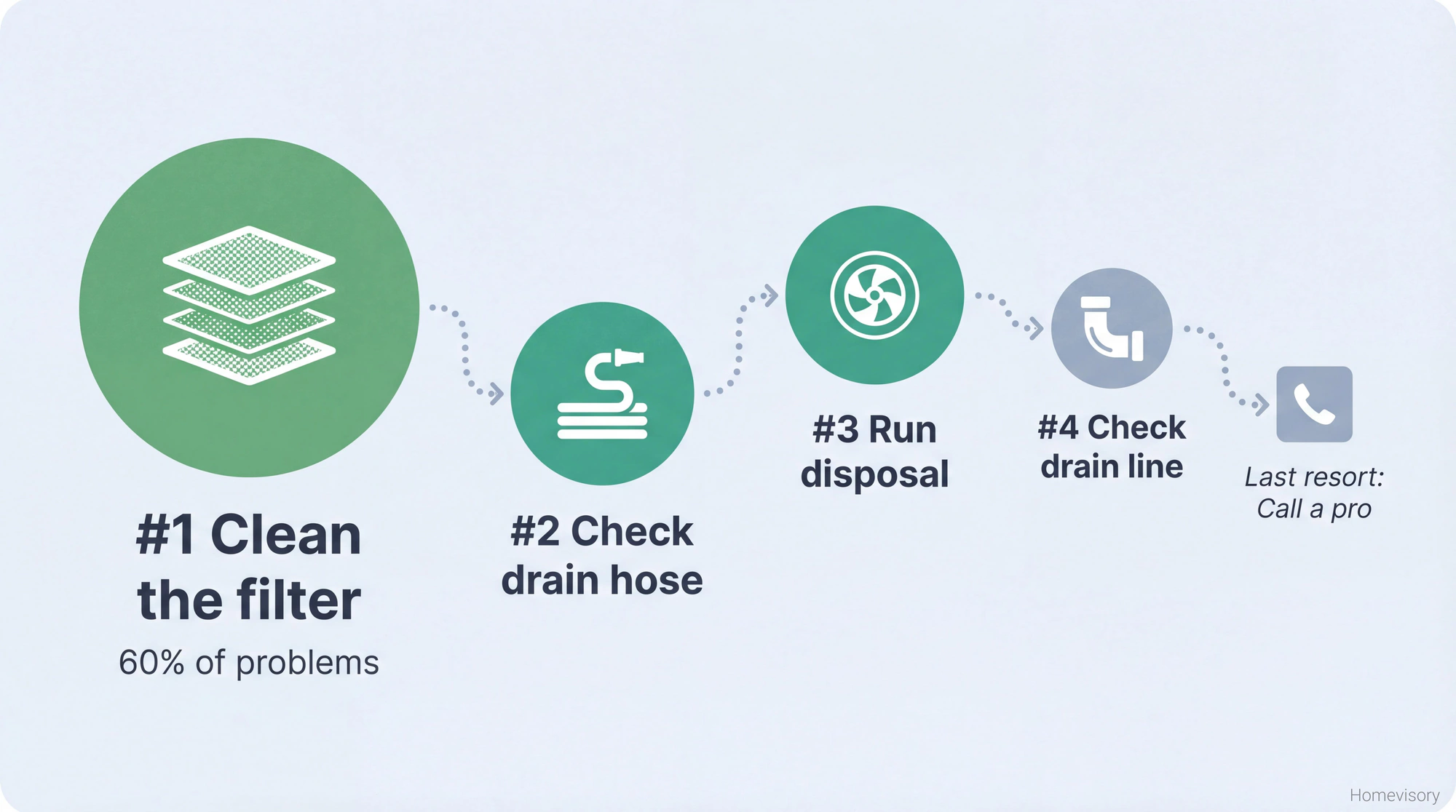
Could be the pump. Could be the control board. Could be something with the drain valve. If your dishwasher has other issues beyond draining, like leaking or other water problems, those might be related. At that point you’re looking at either a repair bill or a replacement, and which one makes sense depends on how old the machine is and what the repair costs.
Dishwashers should last ten to fifteen years. If yours is twelve years old and needs a two hundred dollar repair, think about whether that money makes more sense going toward a new unit.
Just Do the Filter
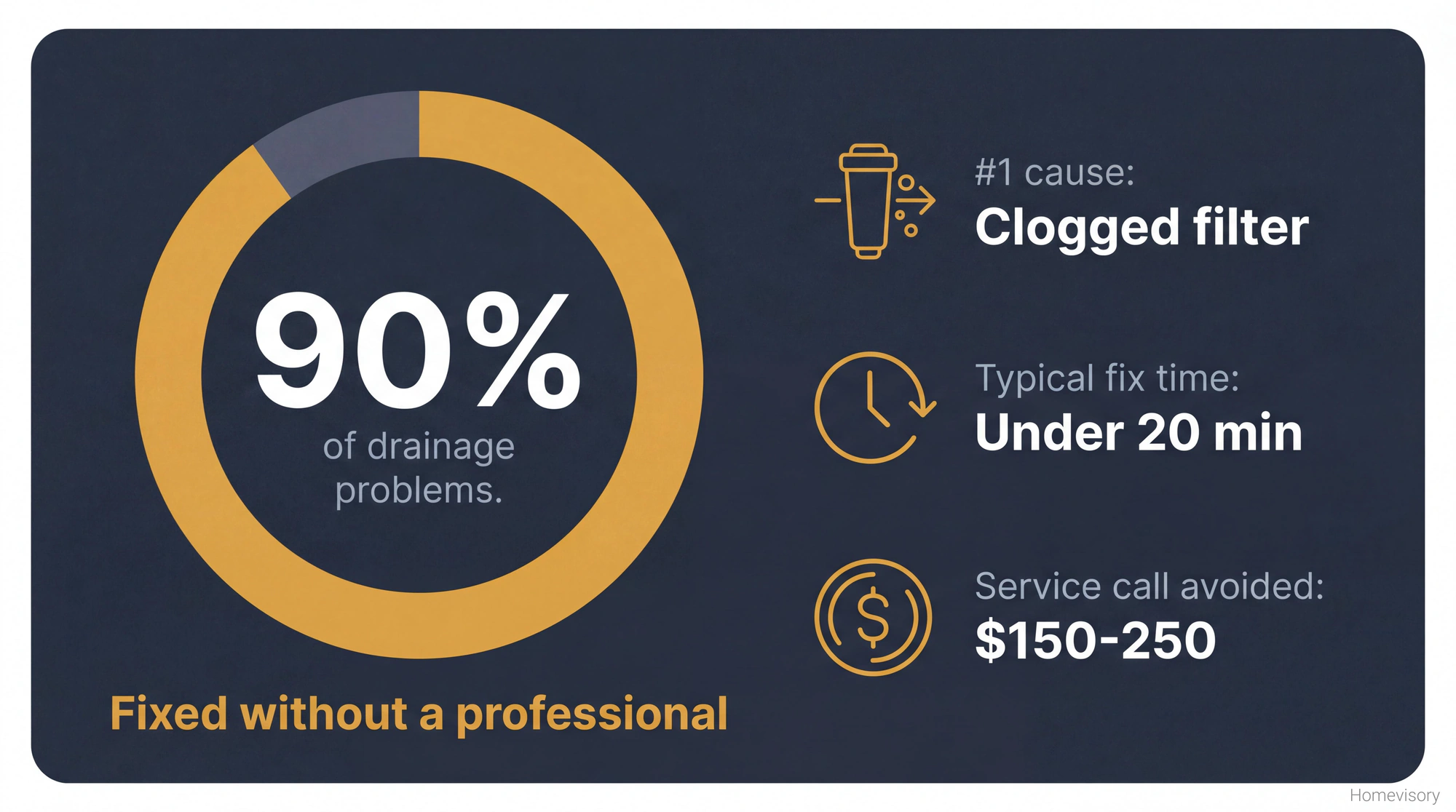
Ninety percent of the time when someone tells me their dishwasher is not draining, its the filter. Or its food jammed in the drain area at the bottom. Or its the disposal being full.
Basic stuff. Simple stuff. The dumbest thing first.
That’s what we do here at Homevisory, we help you stay on top of the simple stuff so it doesn’t become expensive stuff. Our Homevisory home task manager sends you reminders for things like cleaning your dishwasher filter before its a problem. You can sign up free, takes about two minutes, and then you don’t have to remember any of this. The system remembers for you.
Clean your filter. Check your hose. Run your disposal. And if you’ve done all that and water is still sitting there, then call someone. No shame in it. Some problems need professionals.