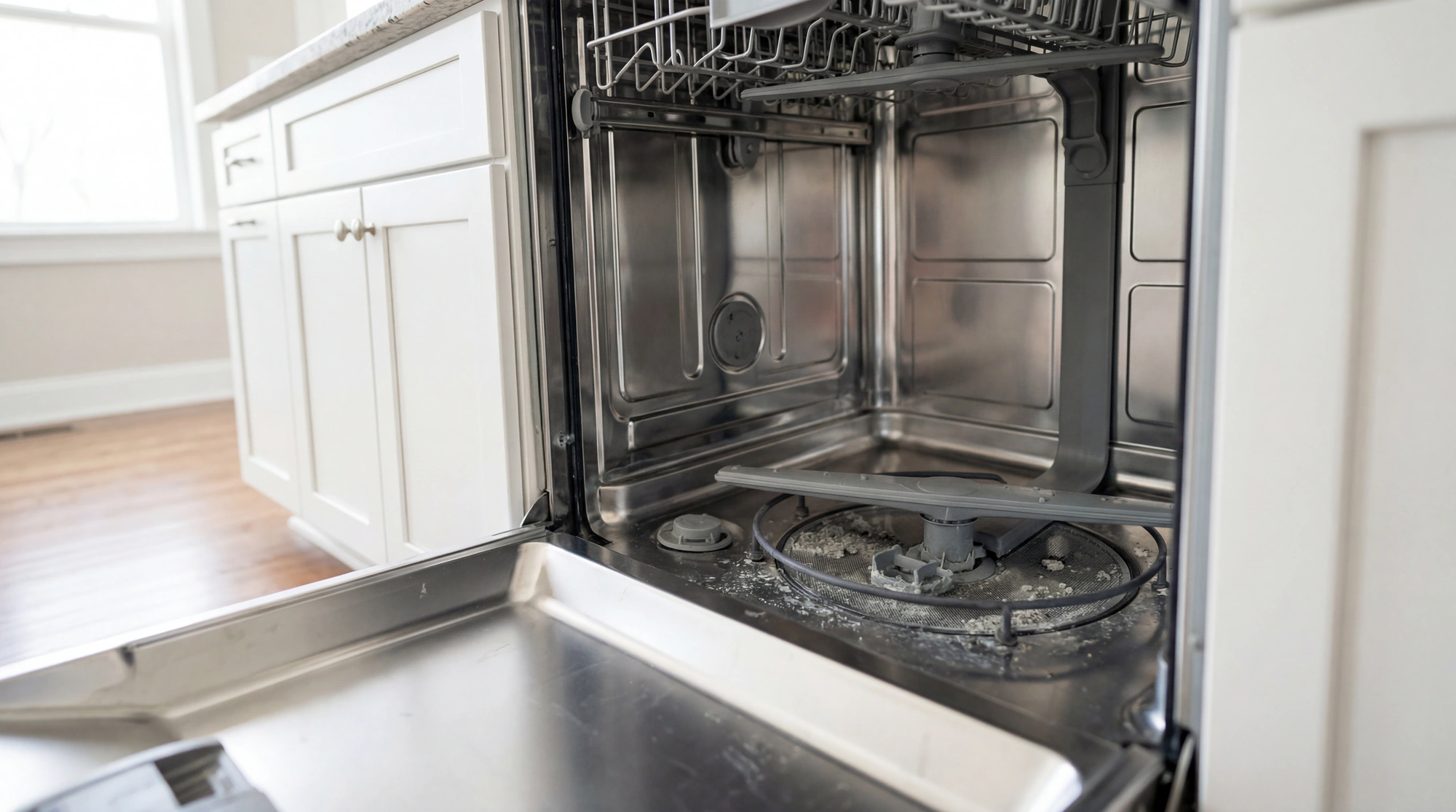
Your Dishwasher Isn’t Cleaning Itself
Most people don’t think about how to clean a dishwasher because it seems like it should clean itself. Its a cleaning machine. It runs hot water and soap through itself every time you use it. How dirty could it get.
Very dirty. The answer is very dirty.
I’ve been in this business since the 90s and I’ve pulled dishwasher filters that looked like they belonged in a horror movie. Gray slime. Old food particles that have basically composted. A smell that makes you question every “clean” dish you’ve eaten off of for the past three years. And the homeowner always says the same thing: “I didn’t know there was a filter.”
There’s a filter. And if you haven’t cleaned it, this article is going to change your life. Or at least change how your glasses smell when they come out of the dry cycle.
The Filter is Everything
I’m going to spend more time on this than you probably think is necessary. Thats fine. The dishwasher filter is the single most neglected part of any kitchen and I’ve made it my personal mission to change that.
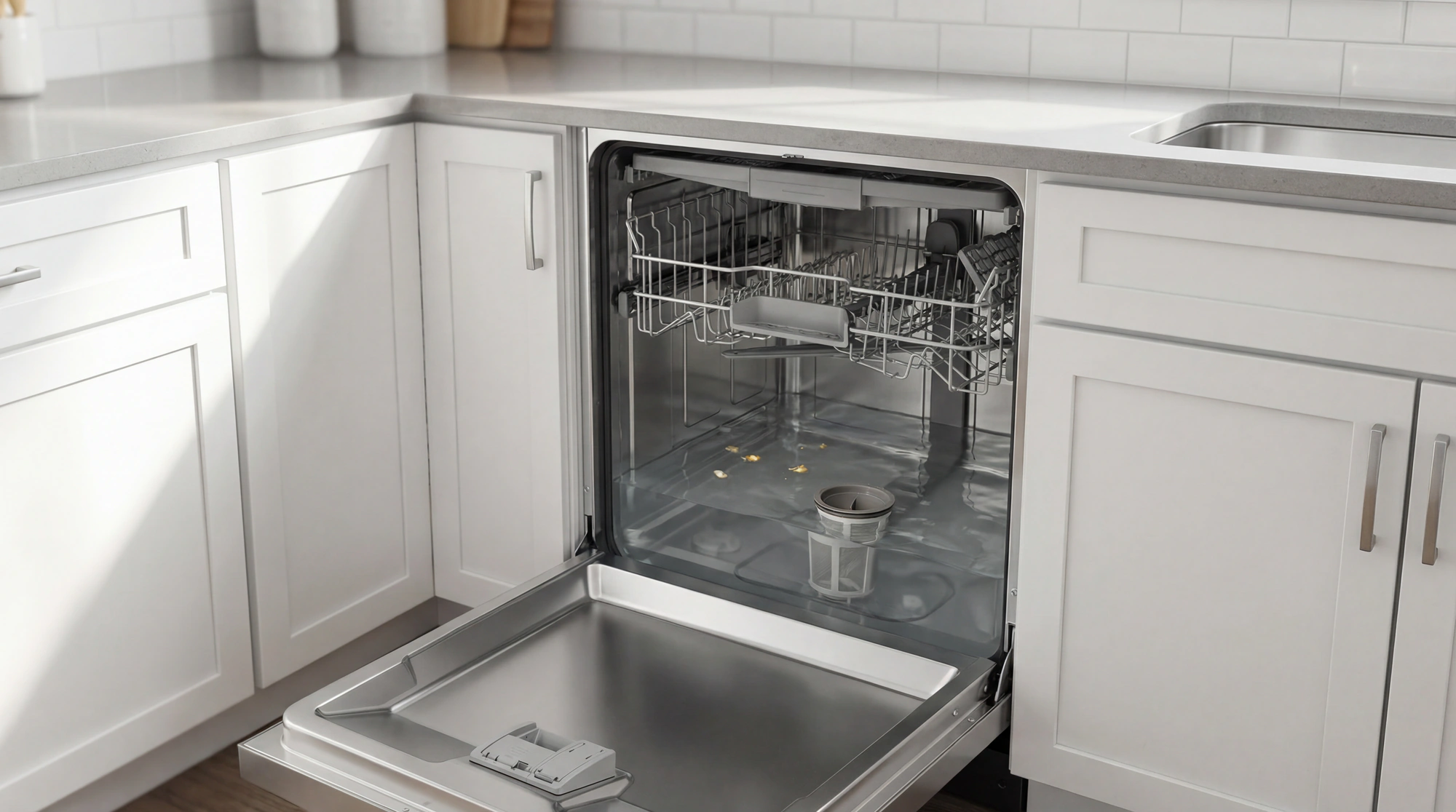
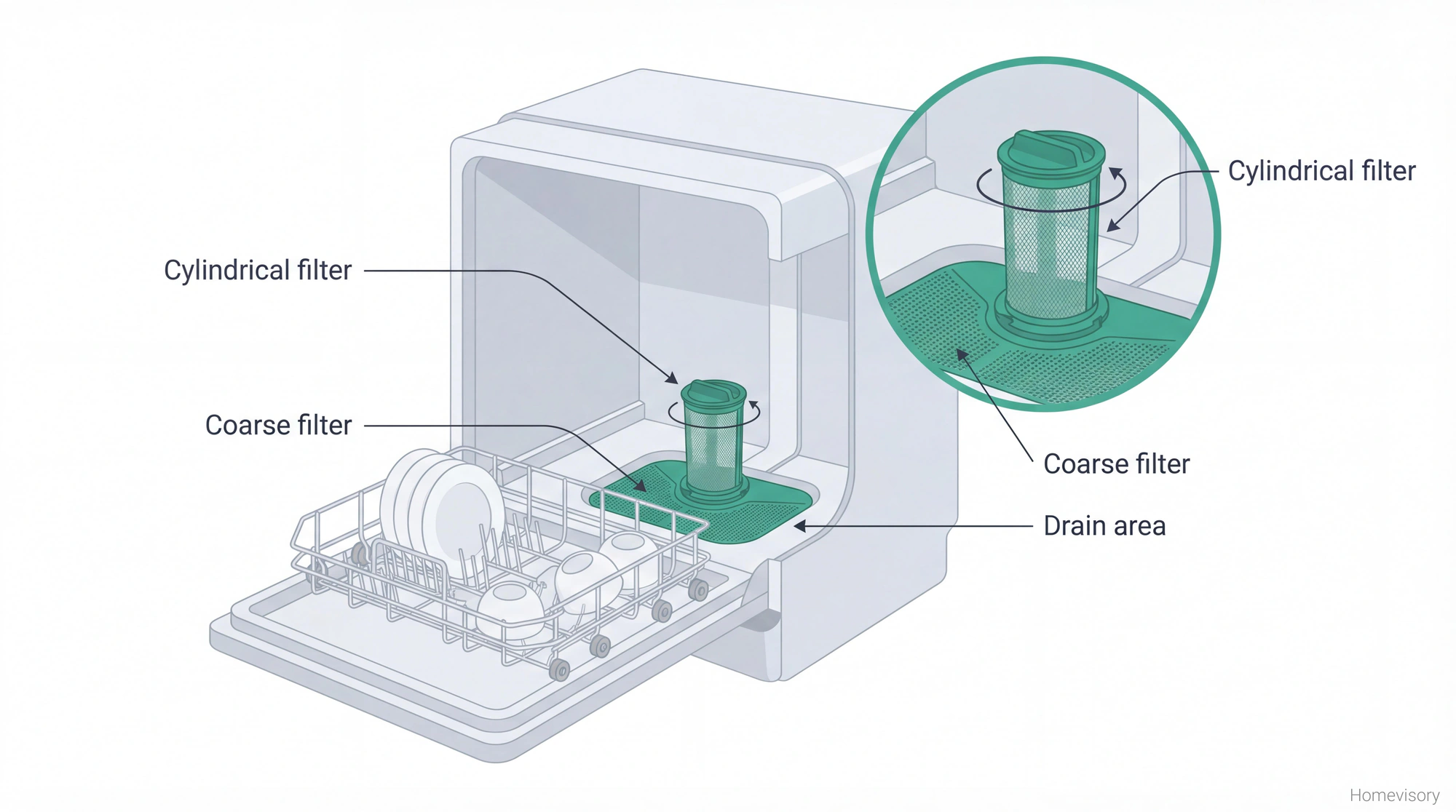
Your dishwasher filter is usually at the bottom of the machine, under the bottom rack. You’ll need to pull out the rack to see it. Most filters twist out counterclockwise, some have a little handle, some you just grab and turn. Check your manual if you’re not sure but honestly just look down there and you’ll see something that looks like a mesh screen or a cylinder with holes in it. That’s your filter.
Here’s what I’ve found in dishwasher filters over the years: glass shards from a broken wine glass that someone forgot about, twist ties that somehow survived the wash, a whole pistachio shell, chunks of label paper from jars that went through without being rinsed, bones from chicken wings, and once, I swear this is true, what appeared to be an entire bay leaf that had been there so long it had basically fossilized. The filter catches all of this so it doesn’t recirculate onto your dishes or clog your drain pump, and if you never clean it, it just builds up until your dishwasher starts to smell like a swamp and your dishes come out with a film on them and you blame the detergent or the water or the machine itself when really its just a filter that nobody has touched since the Bush administration.
Pull it out. Run it under hot water. Use a soft toothbrush to scrub the mesh screen. If there’s grease buildup, and there will be grease buildup, use a little dish soap. Get in the holes. Get in the crevices. Hold it up to the light when you’re done. If you can’t see through the mesh, you’re not done.
How often should you do this. Every two weeks if you use your dishwasher daily. Once a month minimum. I do mine every Sunday night while I’m waiting for the coffee maker to finish the cleaning cycle.
Spray Arms
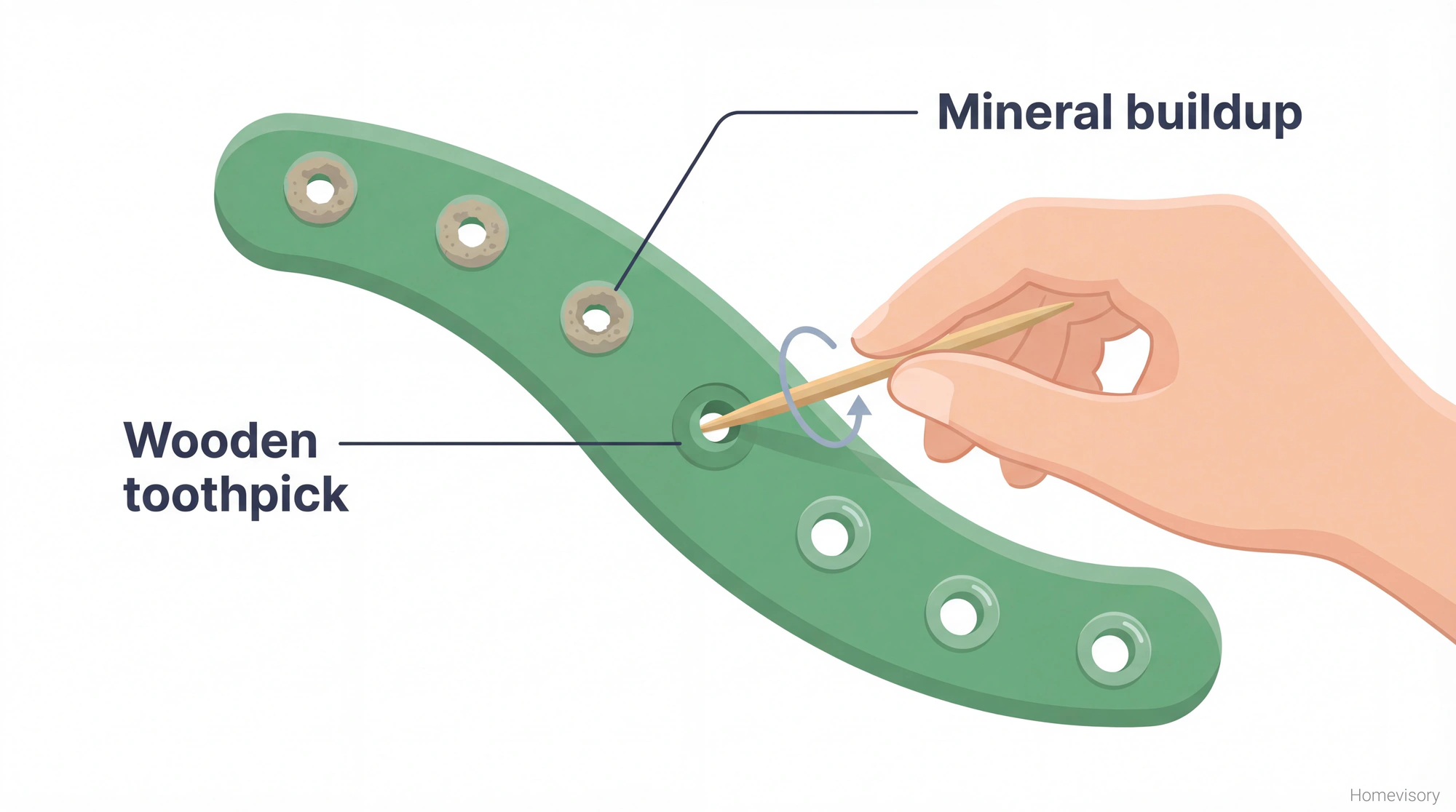
The spray arms are the spinning things with holes that shoot water at your dishes. There are usually two, sometimes three. One under the bottom rack, one under the top rack, sometimes one at the very top of the dishwasher ceiling.
The holes get clogged. Mineral deposits from hard water, food particles, whatever. When the holes clog, the water doesn’t spray evenly, and you get dishes that look like they went through the wash but definitely didn’t get clean.
My mom Shirley was obsessive about keeping things clean. Saturday mornings in our house in Atlanta smelled like Pine-Sol and whatever else she was using and she would go over the same surface three times if she thought it wasn’t right. She worked at Sears for years, customer service, and she used to say that how you do the small things is how you do everything. I didn’t appreciate it when I was twelve and she was making me re-clean the bathroom. I appreciate it now. The spray arm thing is probably because of her. She’d be proud that I’m poking toothpicks through dishwasher holes. Or she’d say I’m not doing it right. Probably that one.
Anyway.
To clean the spray arms, you can usually pop them off. Theres a cap or a nut holding them on. Twist counterclockwise. Once they’re off, run water through the arm from the center hole and see if it comes out the spray holes evenly. If not, you’ve got clogs.
Use a toothpick. Not a metal pin, not a knife, a toothpick. Poke it through each hole. Rotate it a little. The mineral deposits will break up and flush out. Then soak the whole arm in white vinegar for about thirty minutes if the buildup is bad.
Put them back on. Make sure they spin freely. Done.
The Deep Clean With Vinegar and Baking Soda
Two ways to do this. You can buy dishwasher cleaner, theres a product called Affresh that works fine. Or you can use white vinegar and baking soda. Both work. The vinegar is cheaper. The Affresh smells better. Moving on.
For the vinegar method:
- Put a cup of white vinegar in a dishwasher-safe bowl or measuring cup on the top rack
- Run a hot water cycle with nothing else in the machine
- When that’s done, sprinkle a cup of baking soda across the bottom
- Run another hot water cycle
That’s it. The vinegar cuts through grease and mineral deposits and handles odor removal. The baking soda scrubs and deodorizes. Your dishwasher will smell like nothing, which is what you want.
Do this once a month. I do mine the first Sunday of every month. Put it in your calendar. Or use Homevisory to track it, thats what we built it for.
Free printable
Save this for later: get the printable field guide
The free Homevisory field guide covers every season on one calm, printable plan: what to check, what normal looks like, and when to call for help. Tell us where to send it.
Sent! Check your inbox in the next minute or two.
Can't wait? Download the guide now
The Door Gasket and Edges
Everyone forgets this part.
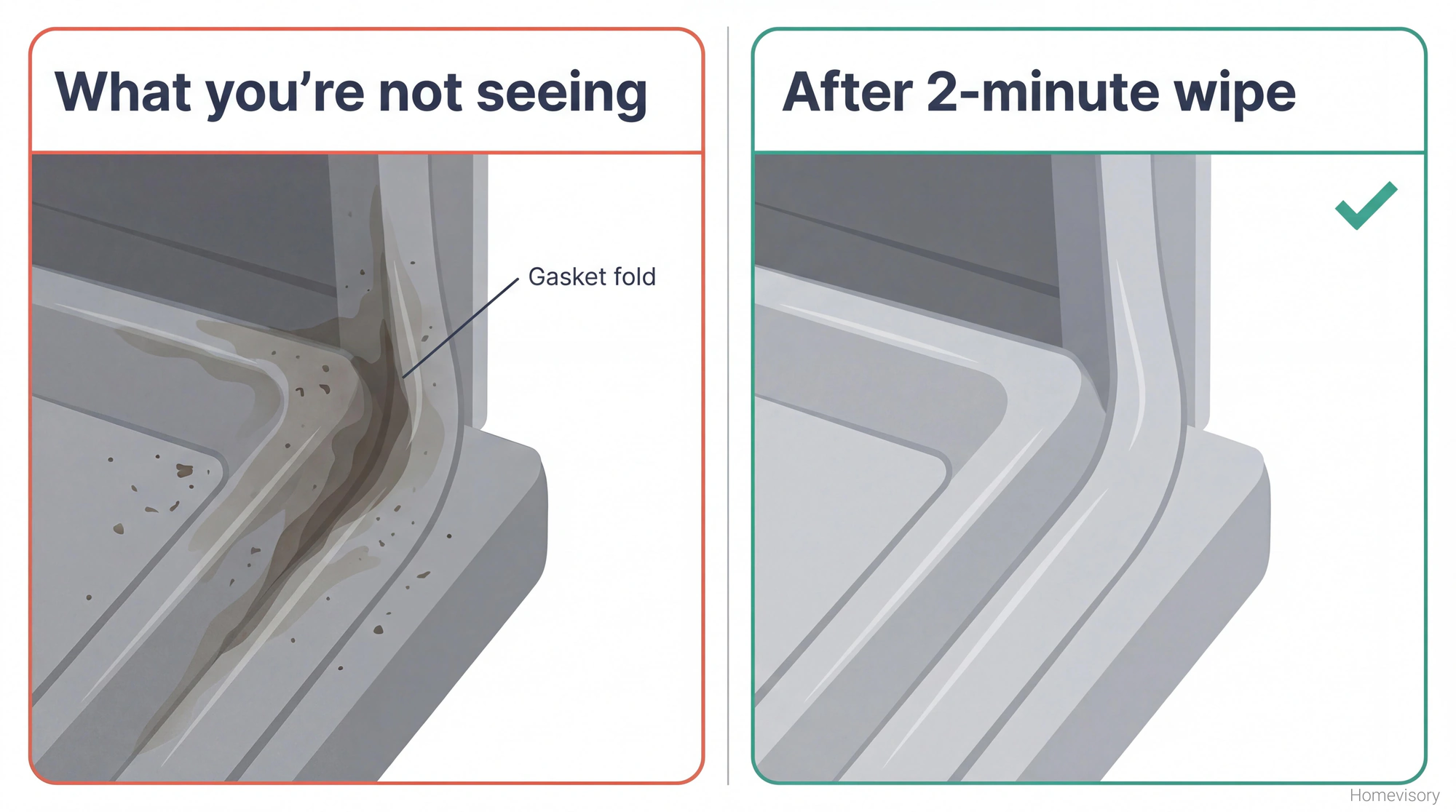
The rubber gasket around the door doesn’t get hit by the wash cycle. Neither do the edges of the door, the inside edges around the frame. These areas collect gunk. Wipe them down with a damp cloth and some dish soap. Get in the folds of the gasket. You’ll be horrified by what comes out.
My daughter Janelle once put a wooden cutting board in the dishwasher. Warped it completely. Raquel was furious because it was a nice one, a wedding gift or something. I asked Janelle why she did it and she said she thought it would be fine. The label said hand wash only but she didn’t read the label. This has nothing to do with cleaning your dishwasher but I think about it every time I open ours. Kids just do things. They don’t read labels. They put wooden cutting boards in dishwashers and then act surprised when physics happens.
The Drain Area
At the bottom of your dishwasher, around where the filter lives, there’s a drain area. Food collects here. Even with a clean filter, stuff gets past it.
Wipe it out with a paper towel. Check for any debris around the drain itself. If water is pooling at the bottom after cycles, you might have a clog somewhere. Check for glass or broken pieces that could be blocking things.
The drain hose is a whole other thing and I’m not getting into that here. If you think your drain hose is clogged, call someone. It connects to your garbage disposal or your sink drain and if you disconnect it wrong you’re going to have a mess. I fix houses, not plumbing disasters that could’ve been avoided. If you’re dealing with standing water, check out our guide on dishwasher not draining for troubleshooting steps.
The Outside
Stainless steel fronts show every fingerprint. Every single one. I have four kids and at various points all of them have touched the dishwasher with various substances on their hands and I’ve given up trying to keep it perfect.
Stainless steel cleaner works. So does a microfiber cloth with water and a tiny bit of dish soap. Wipe with the grain, not against it. Dry with a clean cloth so you don’t leave water spots.
Whatever. Just do it.
Preventing the Buildup
My dad used to say, about something totally different, he used to say “don’t make future you clean up after present you.” He was talking about tools. Putting your tools away when you’re done instead of leaving them out so you trip over them later. But it applies to everything and it definitely applies to dishwashers.
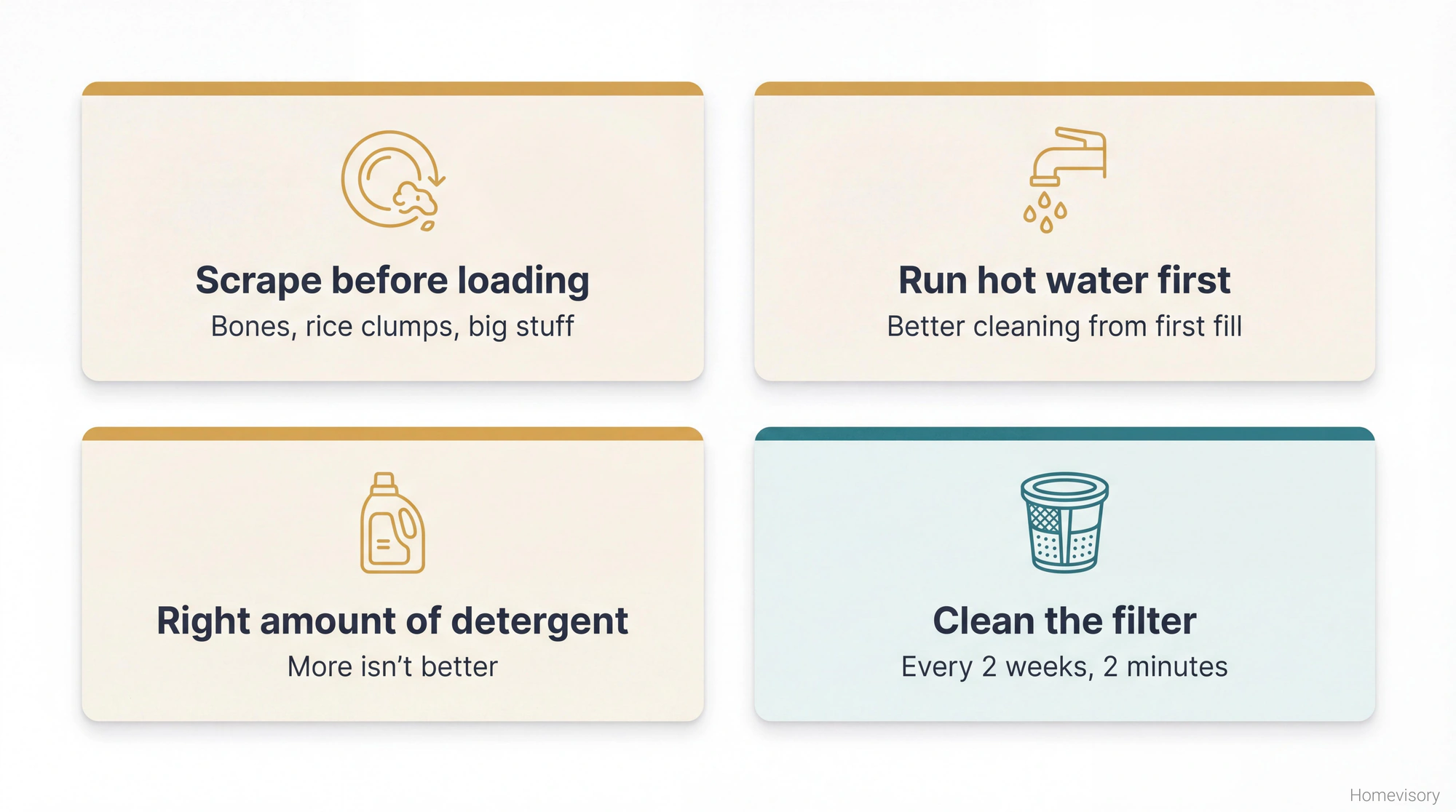
Scrape your plates before you load them. You don’t have to rinse everything, the dishwasher can handle some food, but scrape off the big stuff. Bones. Rice clumps. Anything that’s going to end up in your filter.
Run the hot water at your sink before you start the dishwasher. This means the first fill is hot instead of cold. Better cleaning. Less residue.
Use the right amount of detergent. More isn’t better. Too much detergent leaves a film on everything and gunks up your machine.
And clean the filter. I’ve said it three times. I’ll say it again. Clean the filter. Every two weeks. It takes two minutes. Your dishes will be cleaner. Your dishwasher will last longer. Your kitchen won’t smell like the back of a restaurant that failed its health inspection.
What About Running it Empty
Some people run their dishwasher empty with just hot water as a “maintenance cycle.” It doesn’t hurt. It rinses things out. But it’s not a substitute for actually cleaning the filter and spray arms. Water alone doesn’t dissolve grease buildup. It doesn’t unclog mineral deposits. It’s like saying you cleaned your shower by standing in it.
Do the actual work.
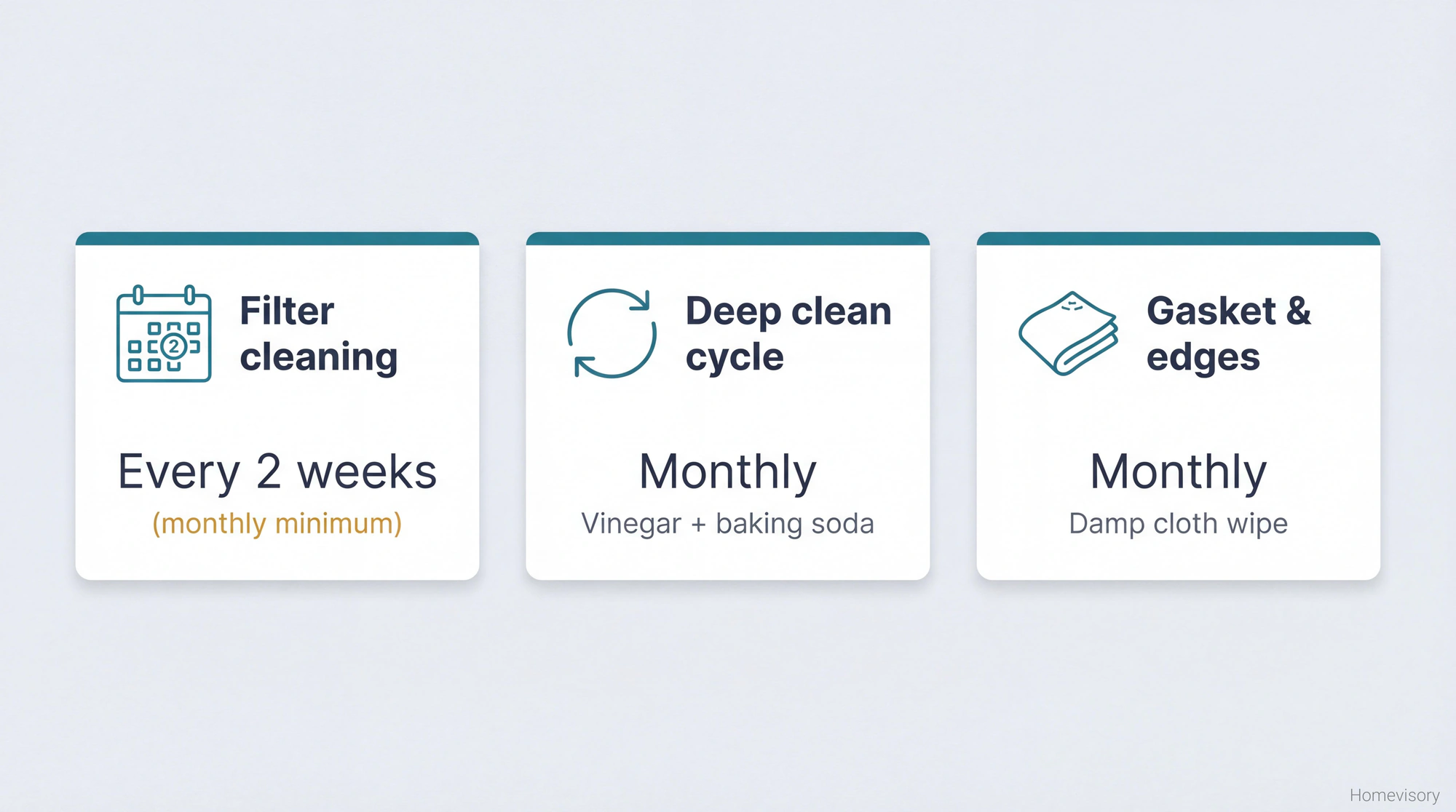
This is exactly the kind of thing Homevisory was built for. You set up your home, you tell it what appliances you have, and it reminds you when maintenance is due. Filter cleaning, deep clean cycles, gasket wipes, all of it. You don’t have to remember. The app remembers. Thats what we do here at Homevisory.
Sign up free with our Homevisory home task manager and stop finding fossilized bay leaves in your dishwasher filter.