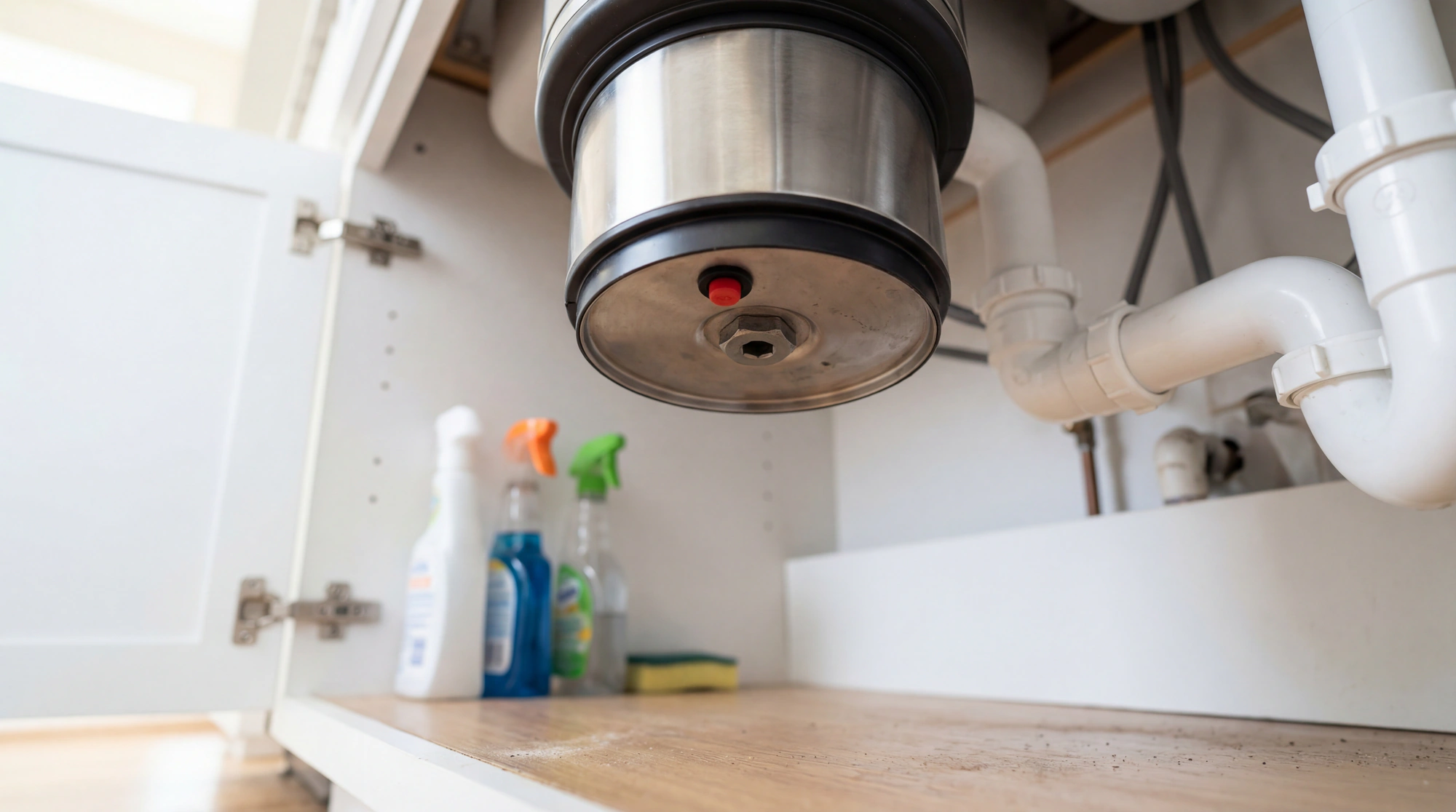
The reset button. I need you to hear me on this. Before you do anything else, before you take the thing apart, before you call a plumber and spend $150 for a ten-second fix, check the reset button.
I get asked about garbage disposals not working probably more than any other kitchen issue. People send me videos of them flipping the switch while the disposal does nothing, or makes a humming sound, or just sits there being useless. And nine times out of ten its the reset button. Nine times out of ten they didnt even know there was a reset button.
The Reset Button Is Not Optional
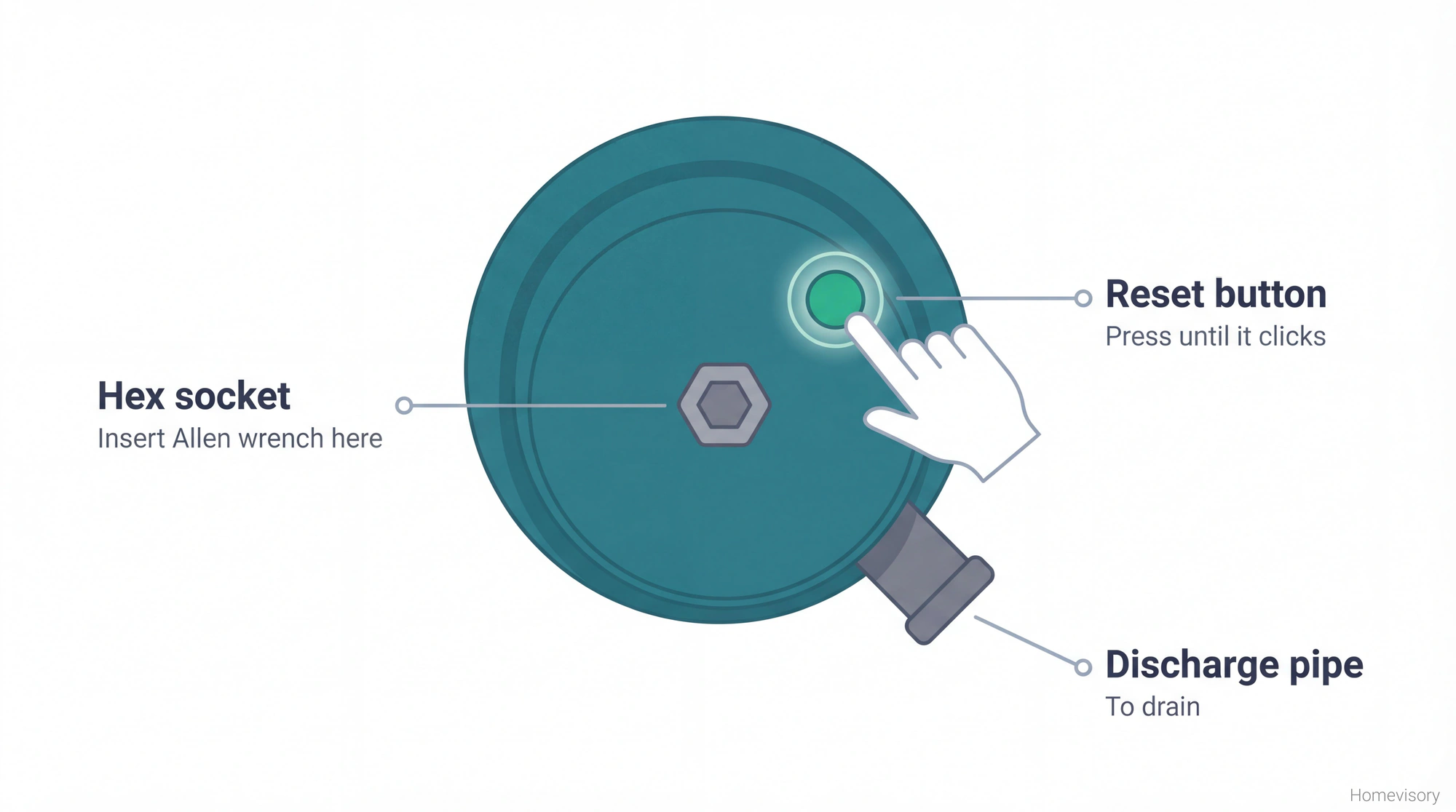
Every garbage disposal has an overload breaker. Its a small button, usually red, on the bottom of the unit. You have to get under your sink to see it. The button is there because the motor has a built-in safety switch that trips when the disposal overheats or gets overloaded. This is not a defect. This is the disposal protecting itself.
Heres how it works and I’m going to explain this in more detail than you probably need because I think people should understand their machines. The disposal motor spins a flywheel. The flywheel has impellers attached to it, those are the things that push food against the grinding mechanism, and when everything is working the motor spins freely and the food gets pulverized and washed down the drain. But if you overload it, if you shove too much down at once or something jams the flywheel, the motor has to work harder. When the motor works too hard it generates heat. When it generates too much heat the overload breaker trips and the whole thing shuts down. This is good. This means your motor didn’t burn out. The problem is that most people don’t realize what happened, they just see that their garbage disposal stopped working, they flip the switch a bunch of times, nothing happens, and they assume the whole unit is dead. Its not dead. It just needs you to push a button.
Turn off the switch. Make sure the disposal is off. Reach under the sink and find the reset button on the bottom of the unit. Press it until you feel it click. Turn the switch back on. Done.
If the button pops right back out when you press it, wait fifteen minutes and try again. The motor might still be hot.
When Its Jammed, Not Dead
Sometimes the disposal makes a humming sound but nothing spins. Thats different. That humming sound means the motor is getting power and trying to work but something is stopping the flywheel from turning. The motor is jammed.
Turn it off immediately. That humming sound is the motor straining, and if you let it hum for too long you’re back to the overload situation except this time you might actually damage something.
My dad used to say, about factory equipment, he used to say “if the machine stops, there’s a reason. Find the reason before you force it.” He wasnt talking about garbage disposals but the principle is the same. Something is in there that shouldn’t be.
The hex wrench. Most disposals come with a hex wrench, also called an Allen wrench, and if you lost yours you can buy one at any hardware store or just use a standard Allen wrench that fits. On the bottom of the disposal, right in the center, there’s a hex socket. Stick the wrench in there and work it back and forth. What you’re doing is manually turning the flywheel to break loose whatever is jamming it. Work it back and forth until it moves freely. Then remove whatever fell in there.
I’ve pulled things out of disposals that made me question humanity. Bottle caps. Twist ties. A whole avocado pit, and I don’t mean what was left of an avocado pit, I mean someone dropped an entire pit down there and then turned on the disposal like that was a reasonable thing to do. Once, at a job site, we found a small action figure. The homeowner had a four-year-old. Mystery solved.
Bones are a common one. I had a neighbor in Texas, this was years ago, he tried to grind a chicken thigh bone and couldn’t understand why the disposal made a horrible noise and stopped. I said what did you think was going to happen. He said he thought disposals could handle anything. They cannot handle anything. The impellers are not disposal blades in the sense that people think. They’re not sharp like knives. They’re blunt metal that uses centrifugal force to throw food against a grind ring. Soft food gets pulverized. Hard objects jam the flywheel. Thats what happened.
The Hex Wrench Method
- Turn off the disposal and unplug it if you can reach the plug
- Insert hex wrench into the socket on the bottom
- Work it back and forth until the flywheel moves freely
- Remove the obstruction from above (use tongs, not your hand)
- Hit the reset button
- Turn the water on, then turn on the disposal
If you don’t have a hex wrench and can’t get one right now, you can try the broomstick method. Stick a wooden broomstick or similar into the disposal from above and try to manually rotate the impellers. I don’t love this method because you cant get as much leverage and you’re working from the wrong angle. But it works in a pinch.
Potato Peels and Other Things That Have No Business Being There
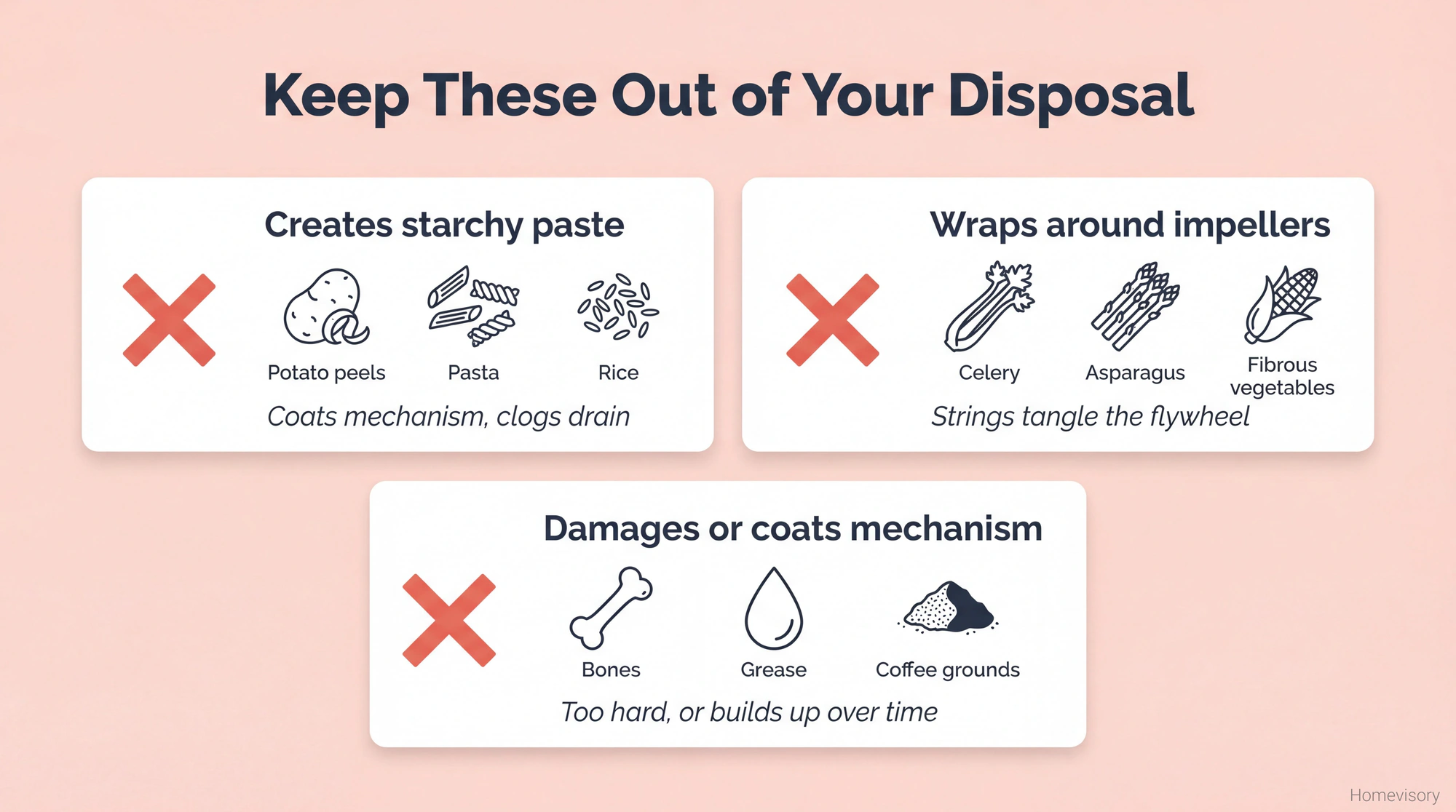
While we’re on the subject. Theres a difference between what a disposal can technically grind and what you should put in it.
Potato peels turn into paste. The starch creates a gluey mess that coats the grinding mechanism and clogs the drain. Same with pasta. Same with rice. Same with anything that absorbs water and expands.
Celery and asparagus have fibrous strings that wrap around the impellers.
Egg shells don’t sharpen the blades. That’s a myth. They just add grit that coats everything.
Coffee grounds seem fine going down but they accumulate in the drain pipe and create a sludge. If that’s already happened, here’s how to clean your sink drain.
Grease coats the grinding mechanism and hardens in the drain.
I could go on. I won’t. You get the point. Just because the disposal runs doesnt mean what you put down there was a good idea.
My mom Shirley had this disposal in our kitchen in Atlanta, loud thing, you could hear it throughout the house when she turned it on. She was careful about what went in there though. Scraped plates into the trash first, the disposal was just for what was left over. I think about that kitchen sometimes, the yellow tile, the window over the sink that looked out at the backyard. She had a little radio on the counter. Anyway.
The Circuit Breaker
If the reset button doesn’t work and the disposal isn’t jammed, check your circuit breaker.
The disposal is usually on the same circuit as your kitchen outlets but sometimes it has its own breaker. Go to your electrical panel and look for anything that’s tripped. A tripped breaker will be in the middle position, not fully on or off. Flip it off and then back on.
If the breaker keeps tripping when you turn on the disposal, you have an electrical problem. Could be a short in the disposal, could be a wiring issue, could be the motor is toast. This is where I step back. If its not the breaker and not the reset button and the flywheel spins freely, you’re beyond basic troubleshooting. Call an electrician. I’m not getting into wiring in this article.
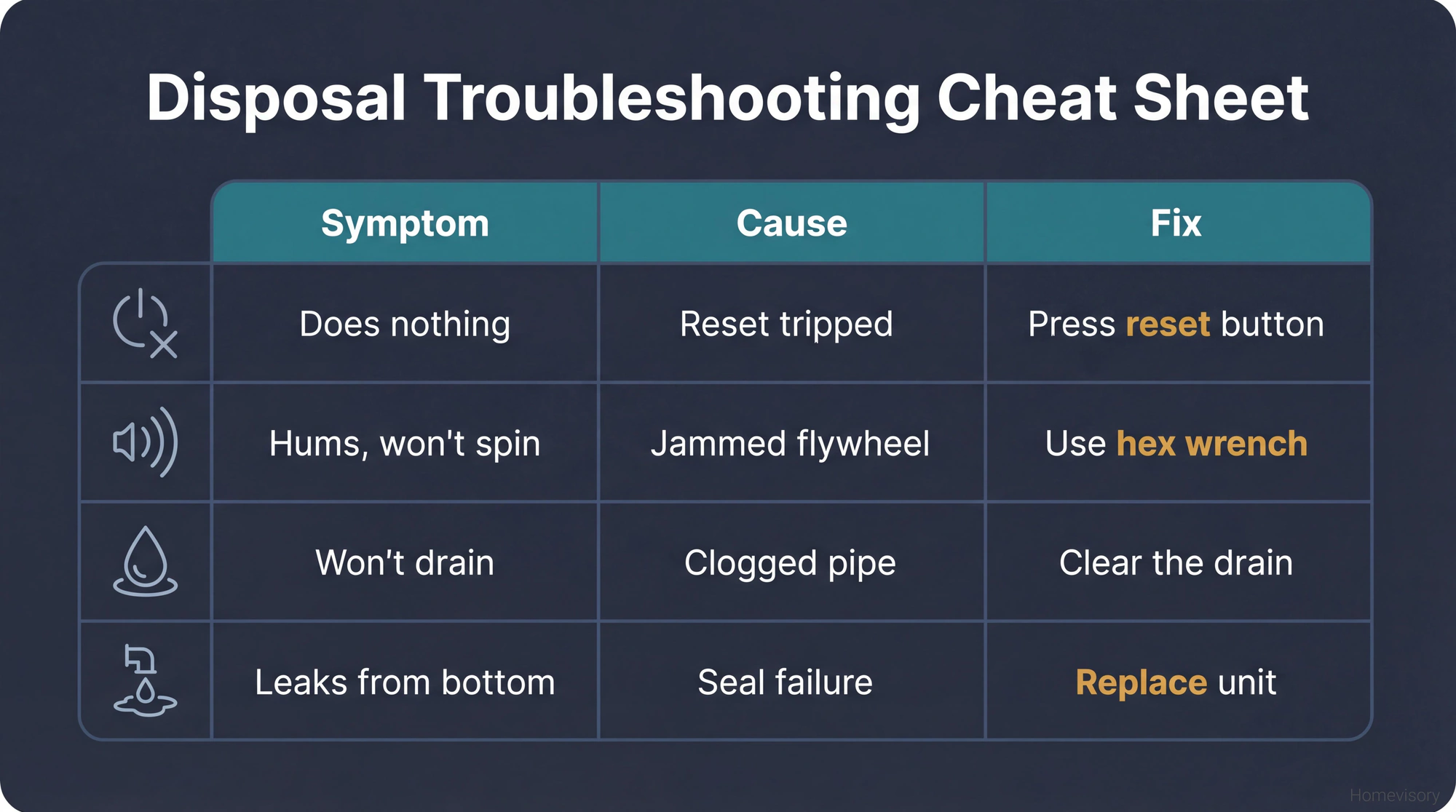
Quick Reference for Garbage Disposal Not Working
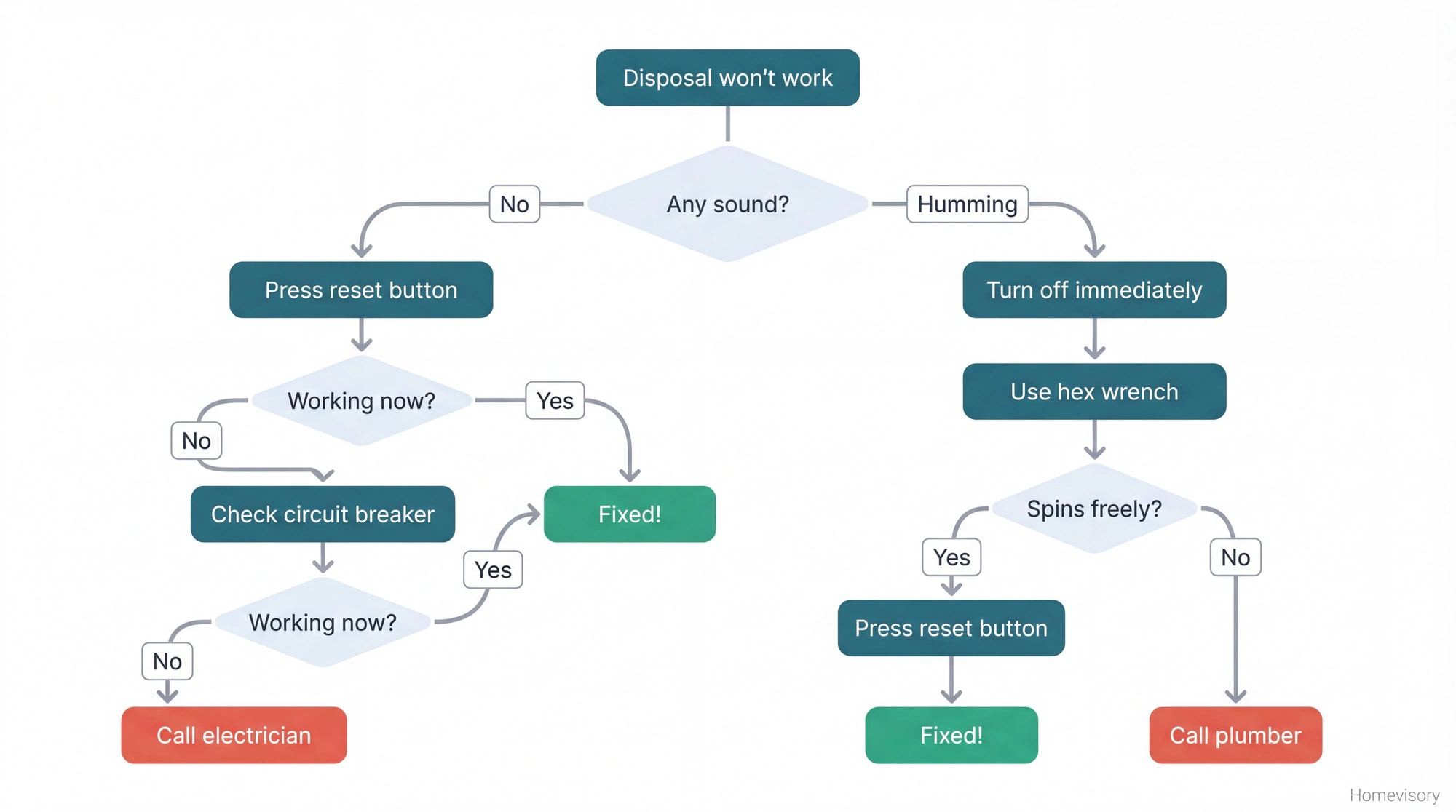
Disposal does nothing:
- Check reset button (bottom of unit)
- Check circuit breaker
- Check if its plugged in (some are hardwired, some plug into an outlet under the sink)
Disposal hums but doesn’t spin:
- Jammed flywheel
- Turn off immediately
- Use hex wrench for jam removal
- Remove obstruction
- Reset button
Disposal spins but doesn’t drain:
- Not the disposal. Your drain is clogged. Here’s how to unclog a sink.
- That’s a different problem
Disposal leaks:
- Check the flange where it connects to the sink
- Check the discharge pipe connection. If your dishwasher shares this drain, check our dishwasher not draining guide too.
- If its leaking from the bottom, the internal seal is gone. Time for a new disposal.
Reset button won’t stay in:
- Motor is still hot. Wait 15 minutes.
- Or the motor is burned out and you need a new unit.
When to Replace It
Garbage disposals last about ten years. Some last longer, some die sooner, depends on how you treat them and what brand you bought.
If the motor is dead, the internal seal is leaking, or you’re resetting it every week, replacement makes more sense than repair. A decent disposal costs $150-200. Having someone install it costs another $100-150. You can install it yourself if you’re comfortable with basic plumbing and electrical, the hardest part is usually getting the old flange off.
Whatever. Just don’t try to fix a motor yourself. Its not worth it.
The Homevisory Way
Look, most of the time when your garbage disposal stops working, its one of three things: the reset button, a jam, or the breaker. Thats it. Check those three things before you call anyone.
That’s what we do here at Homevisory, we help you handle the stuff you can handle yourself and know when to call someone for the stuff you cant. The Homevisory task manager will remind you to clean your disposal monthly, which by the way prevents most jams and odor problems. Run ice cubes through it once a month, run some citrus peels through for the smell, keep the fibrous vegetables out of there.
Sign up for free. Let us help you stay ahead of the small problems so they don’t become big ones.