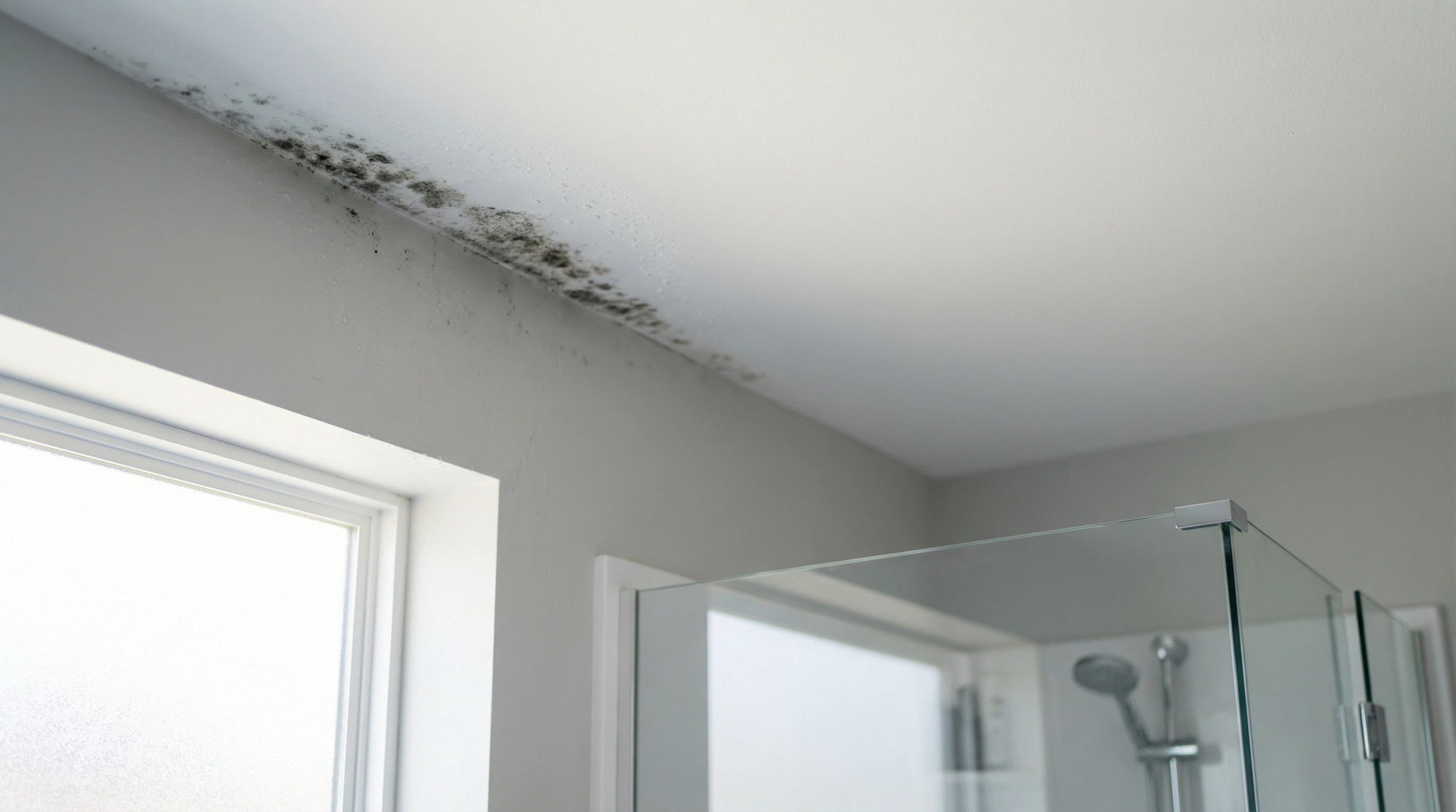
The Moisture Problem Nobody Wants to Talk About
Mold in bathroom spaces is one of those problems that people ignore until they cant ignore it anymore. They see a little black spot in the corner of the ceiling and think, that’ll go away, or I’ll get to it later. It doesn’t go away. It gets worse. And then one day youre standing in the shower and you look up and theres a whole constellation of dark spots spreading across the ceiling and you realize you’ve got a real problem.
I’ve been fixing other people’s bathrooms for over thirty years and I’ve been fixing my own mistakes for just as long. The mold issue is always, always about moisture. Everything else is secondary.
Why Your Bathroom Grows Mold
Bathrooms are basically mold factories. You take hot showers, steam goes everywhere, water splashes on surfaces, and then you close the door and leave. The EPA identifies moisture as the primary factor in mold growth, and bathrooms have moisture in abundance.
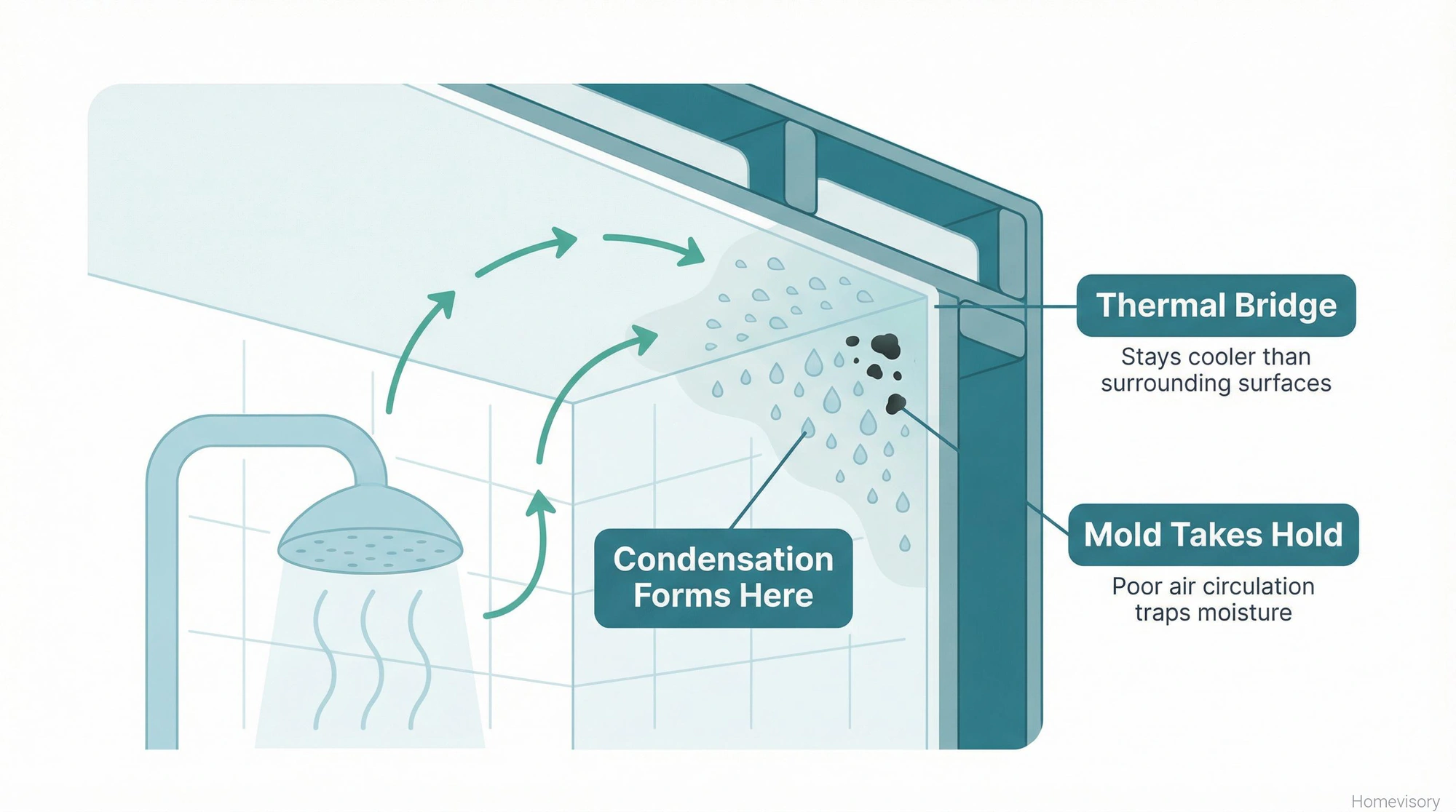
Black mold in bathroom corners and along ceiling edges happens because thats where air circulation is worst. Corners trap humidity. Ceiling edges where the wall meets the ceiling are thermal bridges, they stay cooler than the rest of the surface, and cool surfaces attract condensation.
People ask me what kind of mold they have. Black mold, green mold, pink stuff that’s actually bacteria and not mold at all, I’m not getting into the taxonomy here. If it’s growing in your bathroom, it needs to go. The CDC recommends removing mold regardless of type because all of it can cause health problems for sensitive individuals. I’ve never met a homeowner who needed to know the species name. They just needed to know how to remove mold from bathroom ceiling and wall surfaces and how to stop it from coming back.
How to Get Rid of Mold in Bathroom Surfaces
The actual removal part isn’t complicated. People overthink this.
For hard surfaces like tile, fiberglass, and painted drywall where the mold hasnt penetrated, you need a cleaning solution and some scrubbing. The EPA states that mold on hard surfaces can be cleaned with detergent and water. You can also use a bleach solution, one cup of bleach to one gallon of water, or white vinegar straight. Commercial mold removers exist. Whatever. They all work about the same. Moving on.
The process is simple. Spray the surface, let it sit for ten minutes, scrub with a brush, rinse, and dry. Wear gloves. Open a window if you can. If you’re using bleach, dont mix it with anything else. I shouldn’t have to say that but I’ve seen people mix bleach with ammonia-based cleaners and thats how you end up calling poison control.
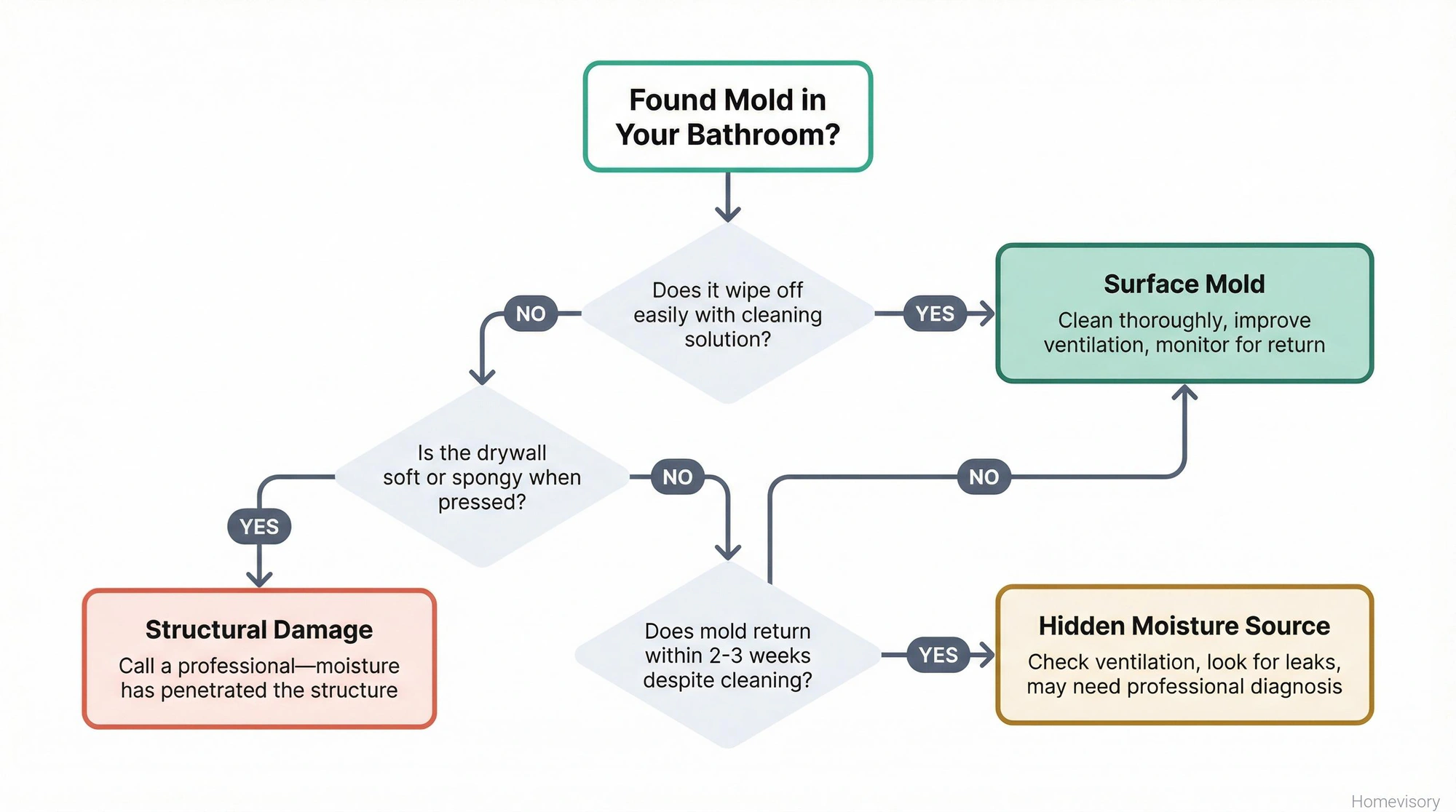
Mold on bathroom ceiling surfaces is trickier because you’re working overhead and because ceiling paint is often flat finish, which absorbs moisture and lets mold take root deeper. If the mold wipes off and the surface looks fine underneath, you’re good. If the mold comes back within a few weeks, or if the paint is bubbling, or if the drywall feels soft when you press on it, you’ve got a bigger problem.
When It’s Worse Than Surface Mold
This is where I tell you about my shower tile disaster.
In 2011 I was redoing our master bathroom and I decided to save time by tiling directly over the old tile. I’d done it before on jobs, it can work if the conditions are right, and I convinced myself the conditions were right because I was tired and we had four kids and I just wanted the project done. Eleven months later the grout started cracking. Then tiles started popping off. When I pulled everything apart the subfloor was soft and dark and smelled like a wet basement. Water had been getting behind the tile the whole time, creeping into places I couldn’t see, and by the time I noticed the damage it had spread into the wall framing.
Raquel made me sleep on the couch for a week because I smelled like mold and couldn’t get the smell out of my clothes.
The point is that visible mold is often just the surface of the problem. If your bathroom has mold on the ceiling that keeps coming back, or if you’re seeing it spread despite cleaning, the moisture is getting into the structure. Thats not a cleaning project anymore. You need to remove the affected drywall, check the framing, fix whatever’s letting water in, and rebuild with proper moisture barriers.
According to EPA guidelines on mold remediation, areas larger than about 10 square feet may require professional remediation. I’d say even smaller areas need a pro if you’re seeing soft drywall or structural involvement. This isn’t about skill level. It’s about access and equipment and knowing what you’re looking at.
Ventilation: The Part Everyone Ignores
This is where I get worked up.
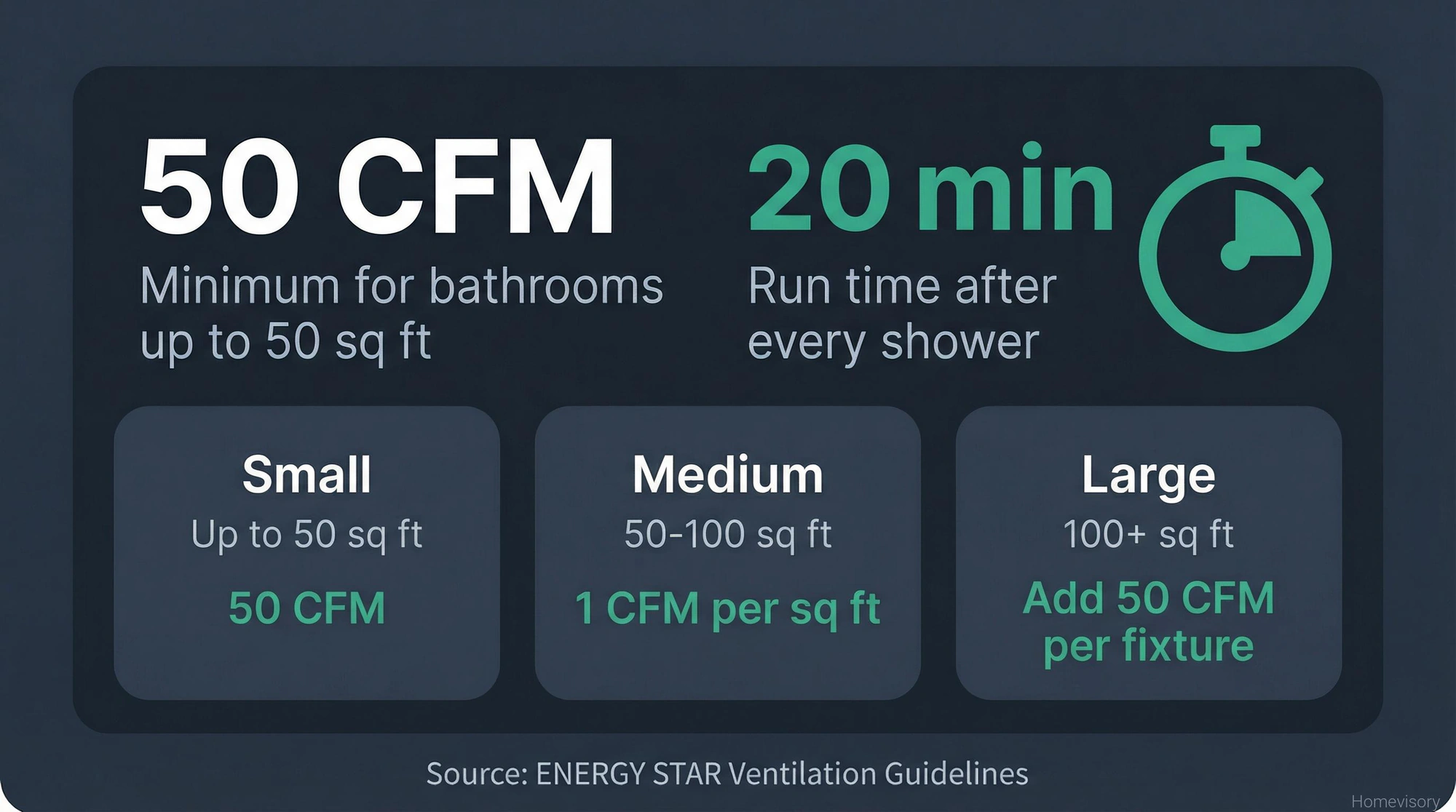
Most bathroom exhaust fans are garbage. They’re undersized, they’re not ducted properly, and people don’t run them long enough. The building code minimum is pathetic and every cheap bathroom remodel I’ve ever seen has the cheapest possible fan connected to the shortest possible duct run and homeowners wonder why they have mold on bathroom ceiling surfaces three years later. The fan is supposed to remove humid air and replace it with dry air from the rest of the house. If your fan sounds like a jet engine but barely moves a tissue, it’s moving air inside the housing but not actually exhausting it anywhere. I’ve pulled out bathroom fans that were ducted into the attic space, not through the roof, just into the attic, which means all that moisture was dumping straight into the insulation and rotting the roof deck from the inside. The ENERGY STAR program recommends bathroom fans rated at minimum 50 CFM for bathrooms up to 50 square feet, with higher ratings for larger spaces, and the fan should run for at least 20 minutes after you finish showering. Most people turn it off when they leave because they dont like the noise. Those people get mold.
My dad used to say, about something totally different, he used to say “don’t make future you clean up after present you.” He was talking about tools. Putting your tools away when you’re done instead of leaving them out. But it applies to everything and it definitely applies to bathroom ventilation. Run the fan now or scrub the mold later. Your choice.
What Actually Works
A good exhaust fan rated for your bathroom size. Run it every time you shower and for twenty minutes after. If you’re forgetting to turn it off, install a timer switch or a humidity-sensing fan that turns on automatically when moisture rises. These cost maybe fifty bucks more than a regular switch.
Open the bathroom door when you’re done showering. I know people like their privacy but the steam needs somewhere to go.
If you have a window, crack it after showers when weather permits. I know this is obvious but I’m saying it anyway.
Wipe down the shower walls after use. Raquel does this. I never did until she made it a rule. It works. The squeegee takes thirty seconds and removes most of the water that would otherwise evaporate into the air.
The Prevention System
Getting rid of mold in bathroom spaces is pointless if you don’t fix what caused it. You’ll be cleaning the same spots every few months forever.
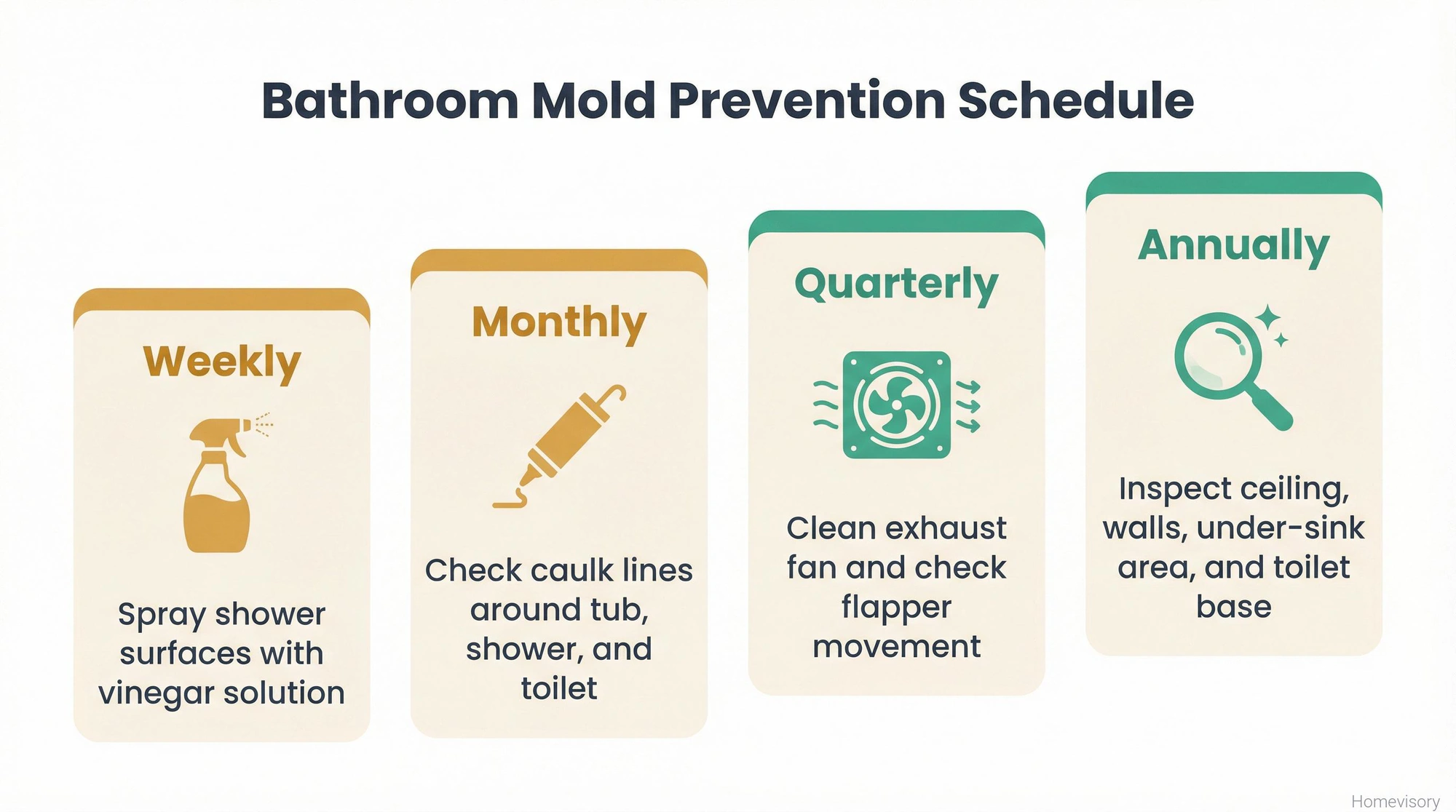
Here’s what I do:
Weekly: Spray the shower and tub surround with a vinegar solution or daily shower spray. The acidity prevents mold spores from taking hold.
Monthly: Give the tub a quick deep clean to remove soap scum before it becomes a breeding ground. Check the caulk lines around your tub, shower, and toilet base. Mold loves hiding under failed caulk. If you see dark lines through the caulk, or if the caulk is pulling away from the surface, remove it and recaulk. Our guide on how to caulk a shower walks you through the process.
Quarterly: Clean the exhaust fan. Pop off the cover, vacuum out the dust, check that the flapper is moving freely.
Annually: Inspect the ceiling and upper walls for any discoloration. Check under the sink for signs of leaks. Look at the toilet base for any water staining on the floor.
Mr. Davis, the woodshop teacher I had back in Atlanta, he used to talk about how wood and water don’t get along. Not in the obvious way, not just that wood rots, but about how wood moves when moisture changes, how it swells and shrinks and eventually cracks if you don’t control the environment around it. He built furniture that lasted generations because he understood the material and he understood that you can’t fight moisture, you can only manage it. He passed in 2012. I think about him sometimes when I’m working on old houses. But yeah.
Products That Actually Work
For cleaning, I use distilled white vinegar for regular maintenance and bleach solution for heavier mold. The commercial mold removers work fine. Buy whatever’s on sale.
For preventing mold in bathroom environments long-term:
- Bathroom paint with mold-resistant additives. The good stuff costs $50-60 per gallon. Worth it in bathrooms. Sherwin-Williams, Benjamin Moore, they all make versions.
- Mold-resistant caulk. Silicone with mildewcide added. All the major brands offer this.
- A humidity-sensing exhaust fan. Panasonic WhisperGreen is the one I install. Quiet and effective.
Thats it. You don’t need fancy products. You need consistent moisture control.
When to Call Someone
If the mold covers more than about 10 square feet, call a professional. And if you’re seeing mold in your attic rather than your bathroom, that’s a different beast — our guide on attic mold removal covers the causes and costs.
If you’re seeing mold in bathroom ceiling areas that keeps returning despite cleaning and ventilation improvements, there’s a hidden moisture source. Could be a roof leak, a bathroom above yours with a plumbing issue, condensation in the attic. You need someone to diagnose it.
If anyone in your household has respiratory issues, allergies, or immune system problems, don’t mess around. Get professional testing and remediation.
If the drywall is soft or the framing is visible and stained, you’re beyond DIY territory.
I’m not trying to scare anyone. Most bathroom mold is a ventilation problem and a cleaning problem and you can handle it yourself. But I’ve seen people paint over mold, I’ve seen them caulk over mold, I’ve seen them spray bleach on mold and call it done without ever asking why the mold was there in the first place. Those people end up calling me six months later when the problem is ten times worse and twice as expensive to fix.
Mold is just one sign that your bathroom needs attention. Our complete bathroom cleaning guide covers tubs, grout, caulk, shower heads, and the maintenance schedule that prevents problems from building up.
Staying on top of bathroom maintenance is exactly the kind of thing that falls through the cracks when life gets busy. Four kids, two dogs, a job, at some point you stop remembering when you last cleaned the exhaust fan or checked the caulk. Thats what we built Homevisory for. The Homevisory home task manager tracks all this stuff so you don’t have to keep it in your head. Its free to sign up and it takes the guesswork out of home maintenance scheduling. Give it a try at Homevisory.