What Nobody Tells You About Going Geothermal
I’ve been asked about geothermal heat pump installation maybe fifteen times in the last two years. Every time its the same conversation. Someone read something online about how they can save 70% on heating and cooling, they saw the federal tax credit, and now they want to know if its real or if its marketing.
Its real. But the numbers people throw around online are useless because geothermal heat pump cost depends on about twelve things that are specific to your property and most of them have nothing to do with the equipment itself. If you’re comparing options, our heat pump installation cost guide covers the more common air-source systems.
So heres what I actually know from projects I’ve been involved with and from talking to people who do this work every day.
The Real Cost Range in 2026
Ground source heat pump installation runs between $18,000 and $45,000 for most residential projects. Thats the full system including equipment and the ground loop. I’ve seen quotes as low as $15,000 for small homes with perfect soil conditions and I’ve seen them hit $60,000 for larger properties with rock or limited land.
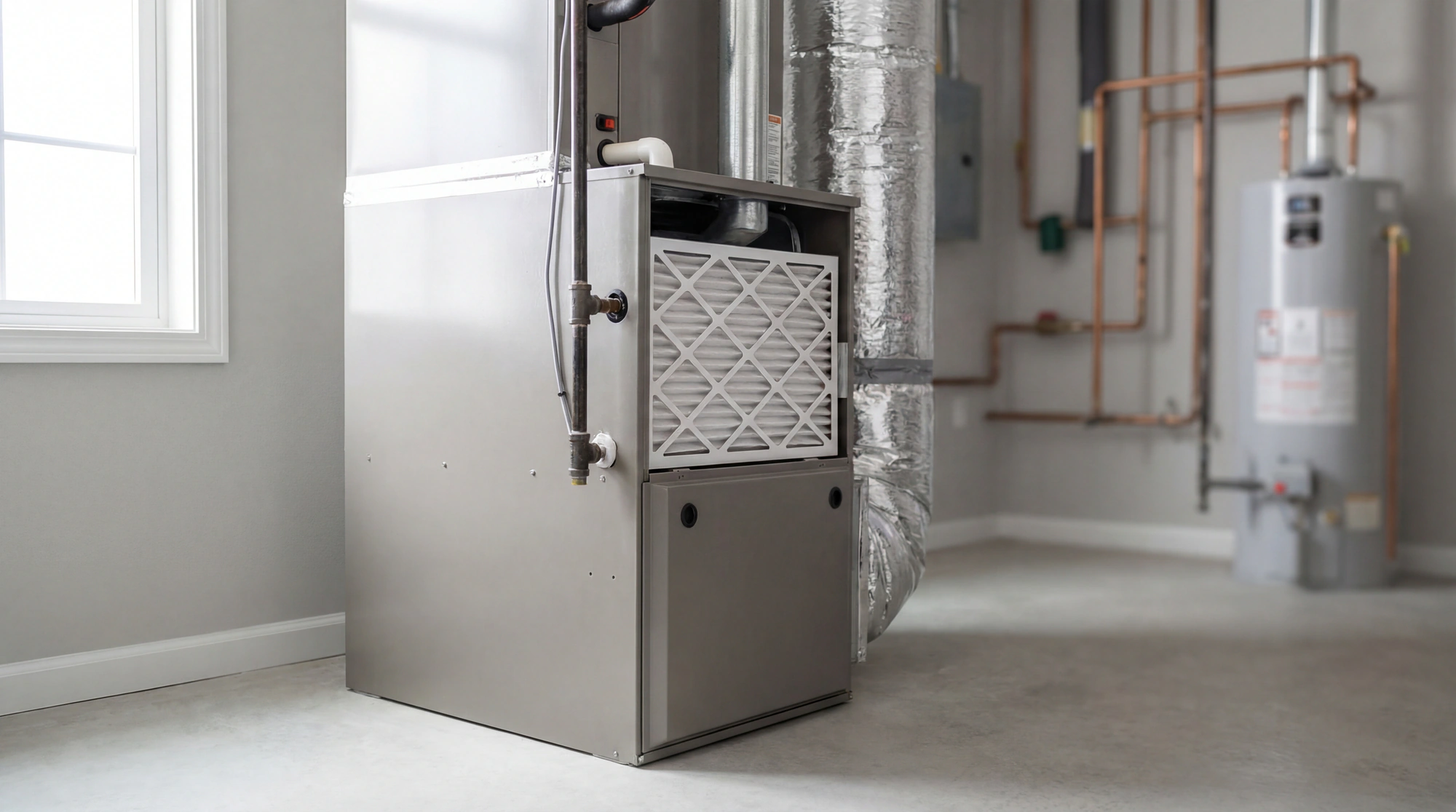
The equipment itself, the actual heat pump unit, is $3,000 to $8,000 depending on capacity and brand. Thats not where the money goes.
The money goes into the ground.
The Loop Field Is Everything
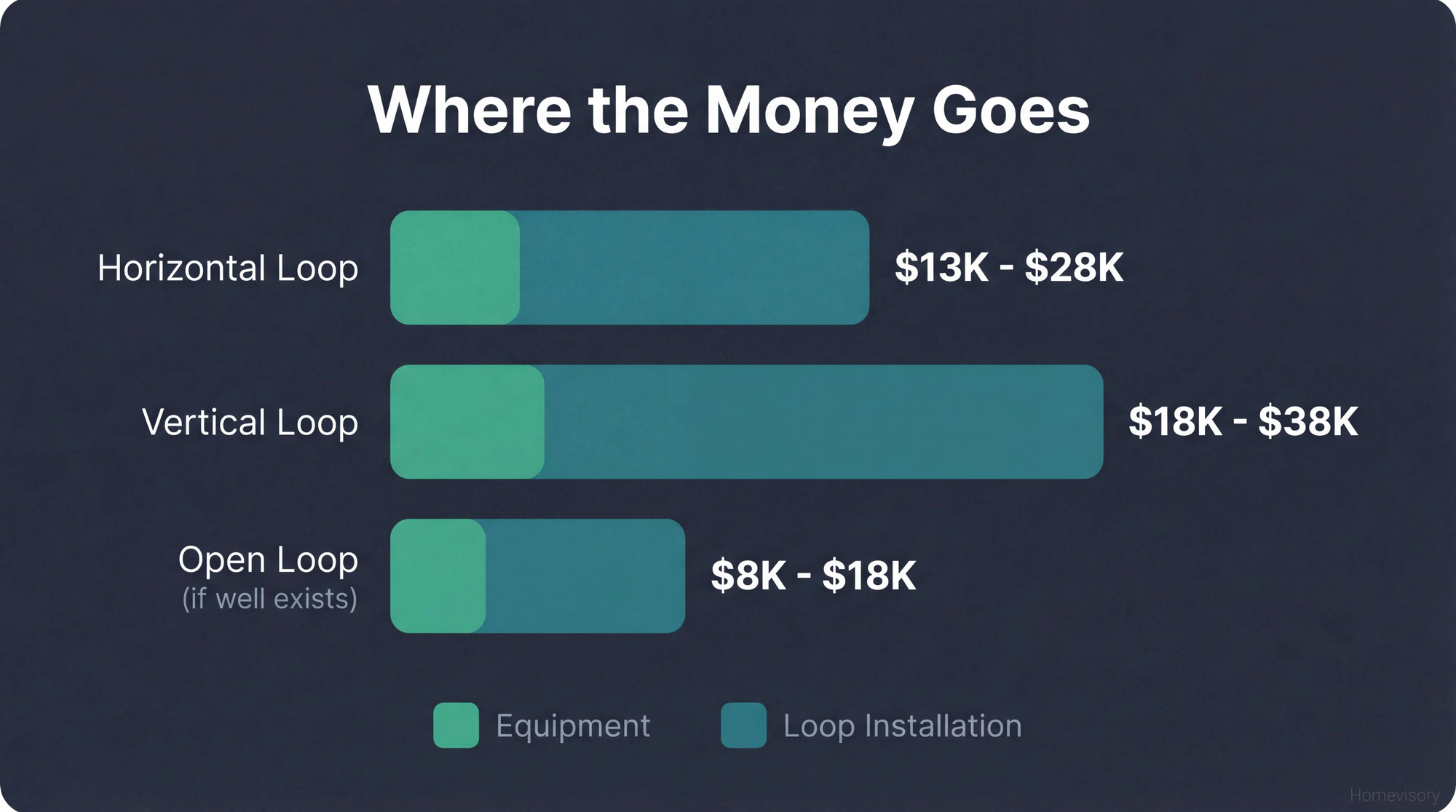
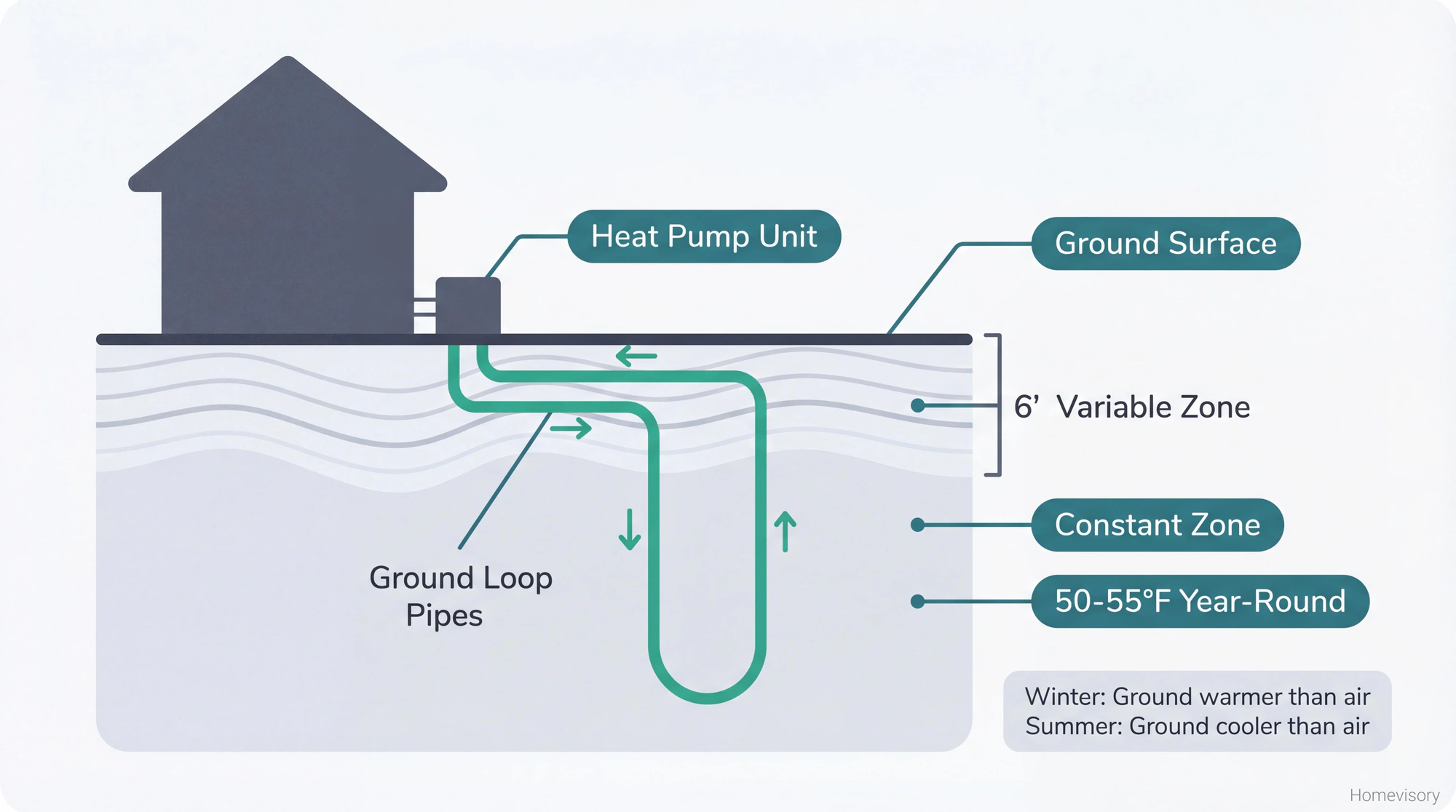
This is the part I probably care too much about but I’ve watched people make bad decisions here and regret them for twenty years so I’m going to explain it properly. The ground loop is where geothermal systems pull their efficiency from. The earth below your property, once you get about six feet down, stays around 50-55 degrees year round regardless of what the air temperature is doing. In winter thats warmer than the air so you’re pulling heat from the ground. In summer thats cooler than the air so you’re dumping heat into the ground. The loop is just a series of pipes filled with water and antifreeze that circulate through the ground and exchange thermal energy with the surrounding soil. If the loop is too small or too shallow or in the wrong type of soil, your system works harder than it should and you lose the efficiency gains that made you want geothermal in the first place. I’ve seen systems where the installer cut corners on loop depth and the homeowner ended up with a $25,000 system that performed like a $4,000 air source heat pump.
You have three main options for loop configuration and this is where ground source heat pump cost varies the most.
Horizontal Loops
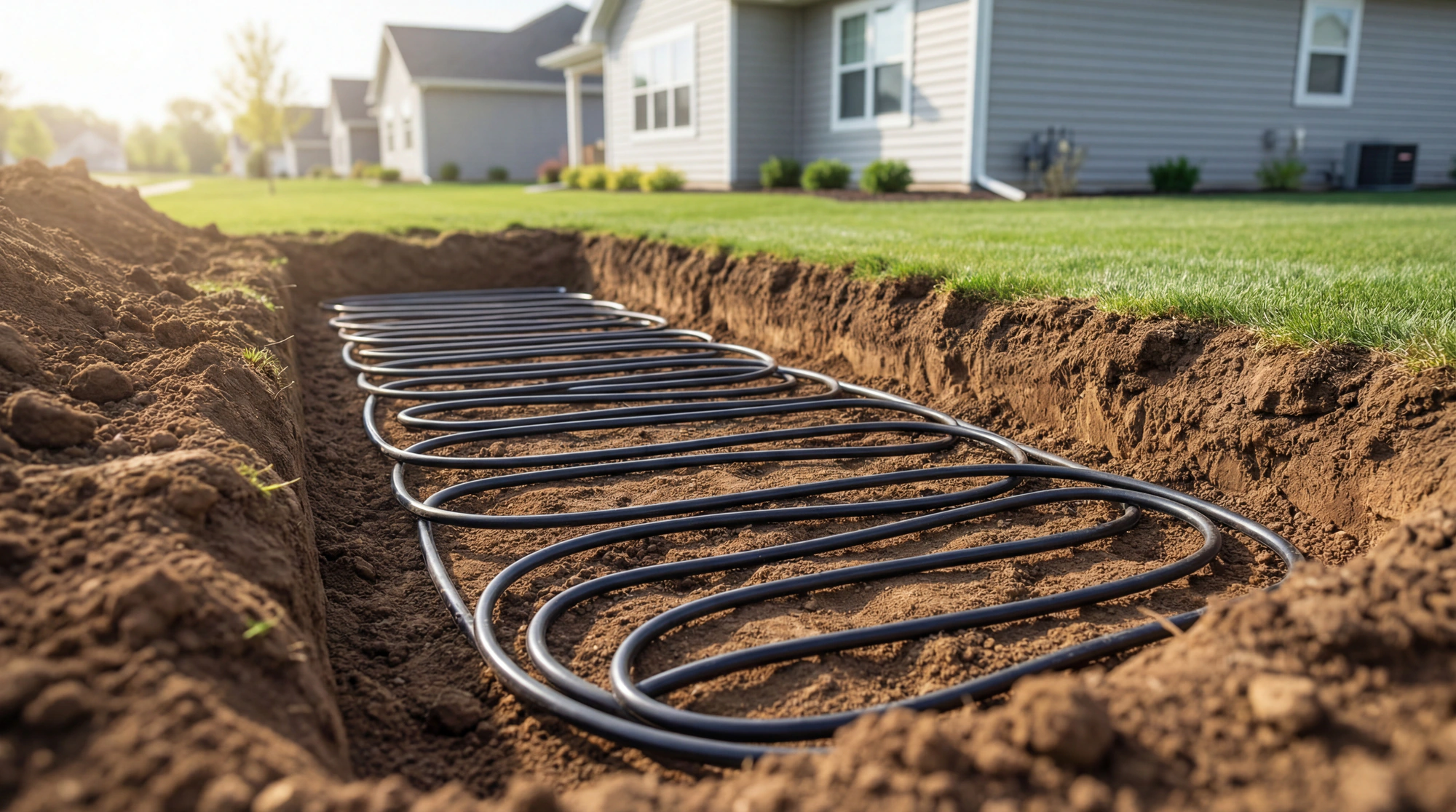
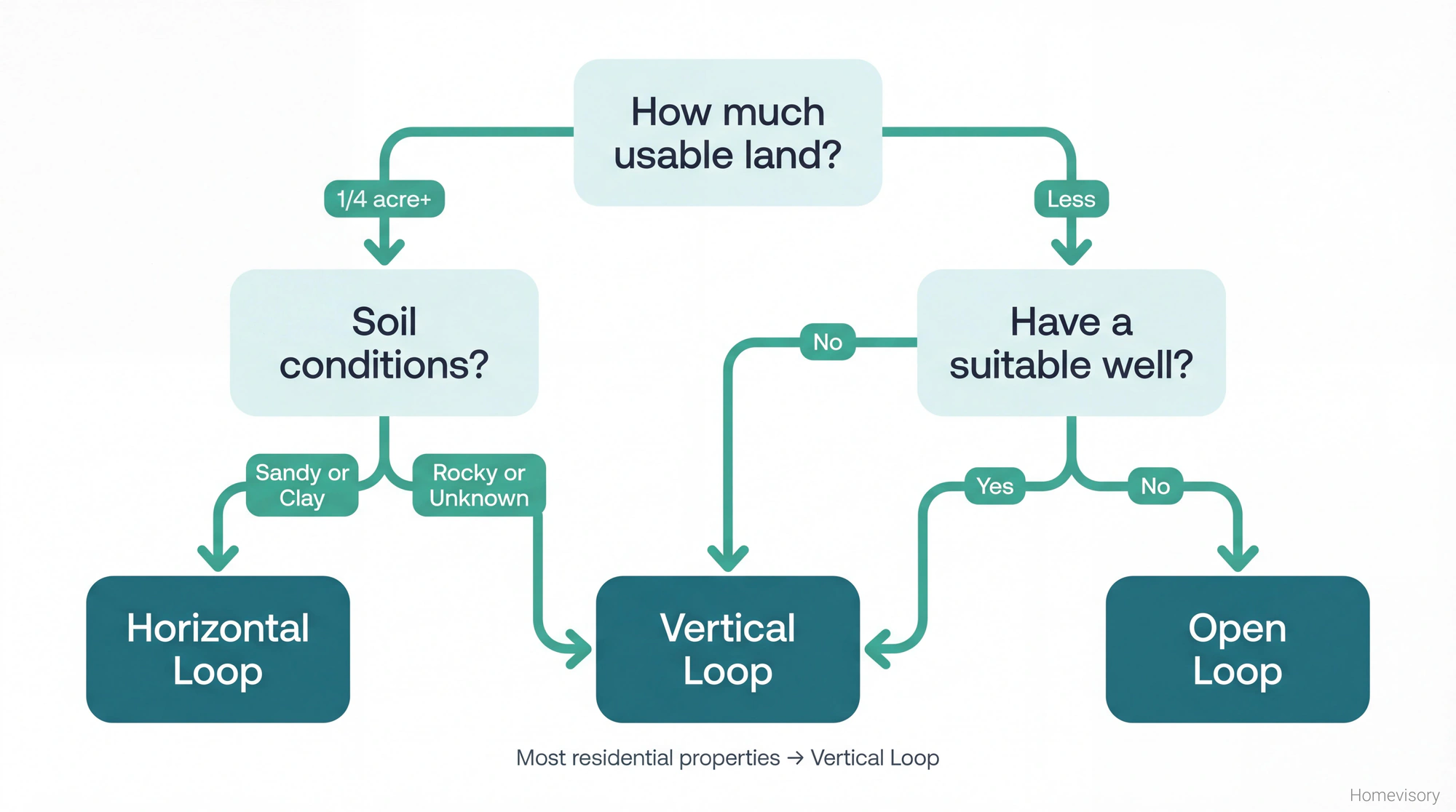
This is the cheapest option. Trenches dug four to six feet deep, pipes laid horizontally, usually in a serpentine pattern. You need a lot of land for this, typically a quarter acre minimum, and the soil needs to be decent. Sandy soil or clay, fine. Rock, forget it.
Horizontal loop installation runs $10,000 to $20,000 depending on how much digging and how long the runs need to be.
Vertical Loops
If you dont have the land for horizontal, you go vertical. Boreholes drilled 150 to 400 feet deep, pipes installed, grouted in place. This is more expensive but you can do it on a small suburban lot.
Vertical loop installation runs $15,000 to $30,000. The drilling is the expensive part. If you hit rock, if the driller needs special equipment, if access to your property is difficult, all of that adds cost.
I worked with a family in Plano back in 2008 or 2009, this was before I started Homevisory, and they wanted geothermal because they had astronomical electric bills in summer. Their lot was maybe a third of an acre with mature trees they didnt want to disturb. The contractor quoted horizontal at $14,000 but it would have required taking out two live oaks that had been there for fifty years. They went vertical instead, $23,000, drilled three boreholes near the property line, saved the trees. Eight months later their neighbor asked about the system because he’d noticed they never had their AC compressor running anymore. The neighbor’s AC died the next summer and he called the same contractor.
That system is still running. Sixteen years later. Thats the thing about geothermal.
Open Loop Systems
Open loop uses groundwater directly instead of a closed pipe system. You pump water from a well, run it through the heat exchanger, and discharge it back into the ground or a surface water source.
Cheaper to install if you already have a suitable well. Potentially more efficient because youre using actual groundwater instead of circulating the same fluid. But you need good water quality, enough flow rate, and permits for the discharge.
Whatever. If you have the well, fine. Most people dont. Moving on.
What Affects Your Geothermal Heat Pump Installation Cost
I’m going to list these because everyone asks and the answer is always “it depends” which is true but unhelpful.
Soil conditions. This is the big one. Good soil conducts heat well and is easy to dig or drill. Bad soil does neither. Before any reputable contractor gives you a final quote, they need to know what’s under your property. Some do test bores. Some use geological surveys. Some just guess based on the neighborhood and those are the ones you dont hire.
System size. Measured in tons. Most homes need 3 to 5 tons. Bigger house, more heating and cooling load, bigger system, more loop, more cost.
Loop type. Covered above. Horizontal cheapest, vertical middle, pond loops if you have a body of water which most people dont.
Existing ductwork. If your house already has ducts for a forced air system, youre ahead. If you dont, adding ductwork is another $3,000 to $10,000.
Regional labor costs. Geothermal installers in rural areas often charge less than in major metros. But theres a tradeoff because you want someone experienced and in some areas there just arent many contractors who do this work regularly.
Access to your property. Can the drilling rig get to where it needs to be. Is there a fence, a narrow driveway, overhead lines. All of this matters.
The Payback Question
People want to know how long until the system pays for itself. The honest answer is 7 to 15 years depending on what youre comparing against and what energy costs do.
My dad Curtis used to say something about tools that applies here. He said you can buy a cheap tool three times or you can buy a good tool once. He was talking about socket sets but the principle is the same. Geothermal heat pump installation costs more upfront than any other heating and cooling option. But according to the U.S. Department of Energy, the indoor components last up to 24 years and the ground loop lasts 50+ years. Compare that to 15-20 years for a good traditional system.
And your operating costs drop significantly. The DOE reports that geothermal systems can cut energy bills by up to 65% compared to traditional HVAC units. How much you save depends on your local electricity rates, what youre replacing, and how efficient your home is.
The federal tax credit helps with upfront cost. According to the IRS, geothermal heat pumps qualify for the Residential Clean Energy Credit, which covers 30% of installation costs with no annual cap. Talk to your accountant for specifics on your situation.
Finding a Contractor Who Knows What Theyre Doing
This is where I get annoyed and I apologize in advance.
The HVAC industry has a problem with geothermal. Some contractors push it because the margins are good. Some contractors talk people out of it because they dont know how to install it and dont want to learn. Neither of these groups has your interests in mind.
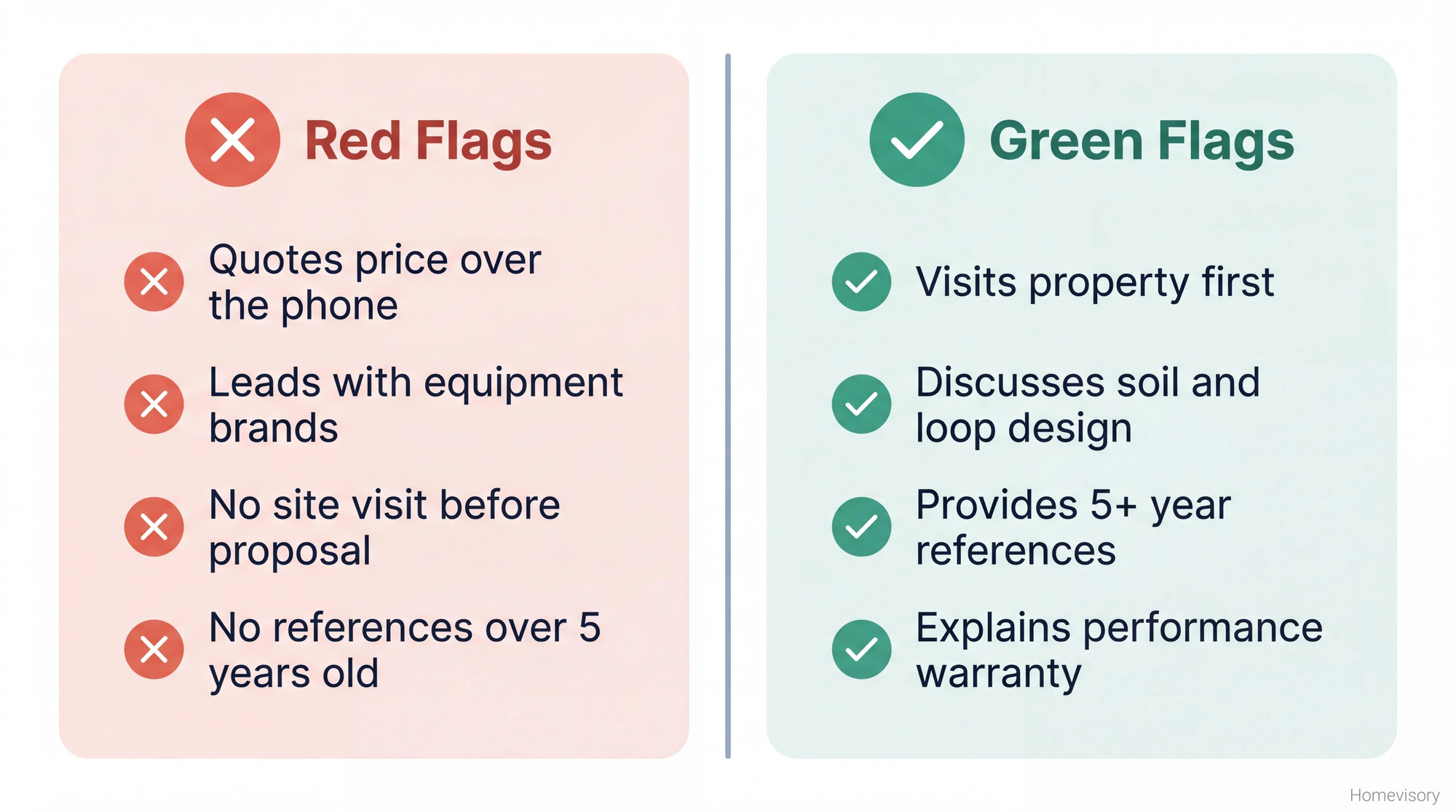
A good geothermal contractor will:
Come to your property before giving you a real number. Anyone who quotes geothermal heat pump cost over the phone is making things up.
Talk about soil conditions and loop design before they talk about equipment brands.
Have references from systems theyve installed that are at least five years old. This is important. A new installation looks great. A five year old installation tells you if they did it right.
Be willing to discuss what happens if the system underperforms. What warranty do they offer on the loop field. What happens if the heating capacity isnt what they promised.
During my commercial work years I did a renovation on a building in Chicago, must have been 2002 or 2003, and the building next door had geothermal. The owner was an engineer and he’d done the math himself before installing it. I remember standing outside in February, it was bitter cold, my eyelashes were freezing, and this guy is explaining how his heating costs were less than the office building half his size across the street. He had printouts. He had spreadsheets. He knew more about ground thermal conductivity than anyone I’ve met since. I dont know what happened to that house. His company moved and I lost touch. But that was the first time I understood that this technology actually works when its done right.
What Homevisory Recommends
We dont sell geothermal systems. We dont install them. We dont get referral fees from contractors who do.
What we do at Homevisory is help you track and maintain whatever systems you have. If youre considering geothermal heat pump installation, the best thing you can do is document everything. Get multiple quotes, compare them apples to apples, ask each contractor to explain their loop field design and why they sized it the way they did.
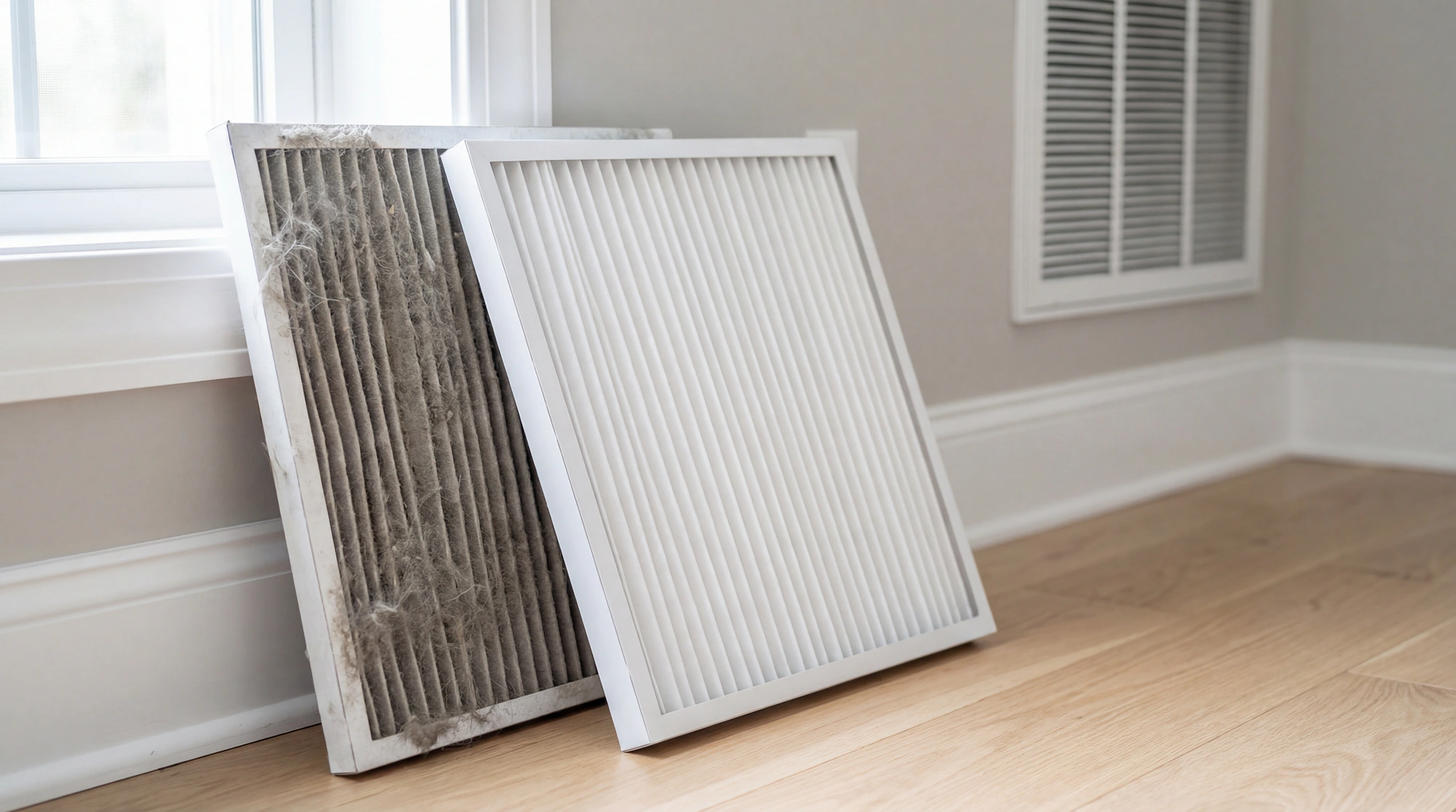
Then once its installed, maintain it. These systems are lower maintenance than traditional HVAC but theyre not no maintenance. Filters still need changing. The loop fluid needs checking every few years. The system needs annual inspection.
Homevisory’s task manager can help you stay on top of this stuff. Its free to sign up and it takes five minutes to set up reminders for everything your home needs. Geothermal or not.
That’s what we do here at Homevisory.
Ready to stay on top of your home maintenance? Sign up for the Homevisory home task manager - it’s free.