Concrete Foundation Repair: Cost Methods & DIY Options
Learn concrete foundation repair costs, DIY solutions, and when to call professionals. Expert advice on cracks, water damage, and structural issues.

Homevisory offers a home maintenance app, but our editorial content is independent. Product recommendations are based on merit, not business relationships.
What You’re Actually Dealing With
Concrete foundation repair sounds intimidating and I get why people avoid thinking about it. Nobody wants to deal with their foundation. Its the part of your house you cant see, you dont think about, and when something goes wrong it feels like the whole structure is compromised. Sometimes it is. Most of the time its not.
I’ve been doing this work for over thirty years and the majority of foundation issues I see fall into one of two categories: small cracks that homeowners panic about unnecessarily, or medium-sized problems that could have been fixed for $500 but are now $8,000 jobs because someone waited three years hoping it would go away. It wont go away.
My dad Curtis used to say, about factory equipment he worked with, he used to say “if the base isn’t solid, nothing above it matters.” He was talking about machinery. But foundations are the same idea. Everything sits on top of them. Your walls, your roof, your family sleeping upstairs, all of it.
The Cost Question Everyone Asks First
People want to know what concrete foundation repair costs before they want to know anything else. I understand. Youre trying to figure out if this is a $200 problem or a $20,000 problem.
Heres the range. Foundation repair costs $250 to $800 for minor crack repairs and thats the stuff you might be able to handle yourself. When you get into structural issues, settling foundations, bowing walls, youre looking at foundation repair costs ranging from $2,200 to $8,100, with an average price around $5,100. Major work like piering or underpinning can hit $20,000 depending on the size of your house and how deep they have to go.
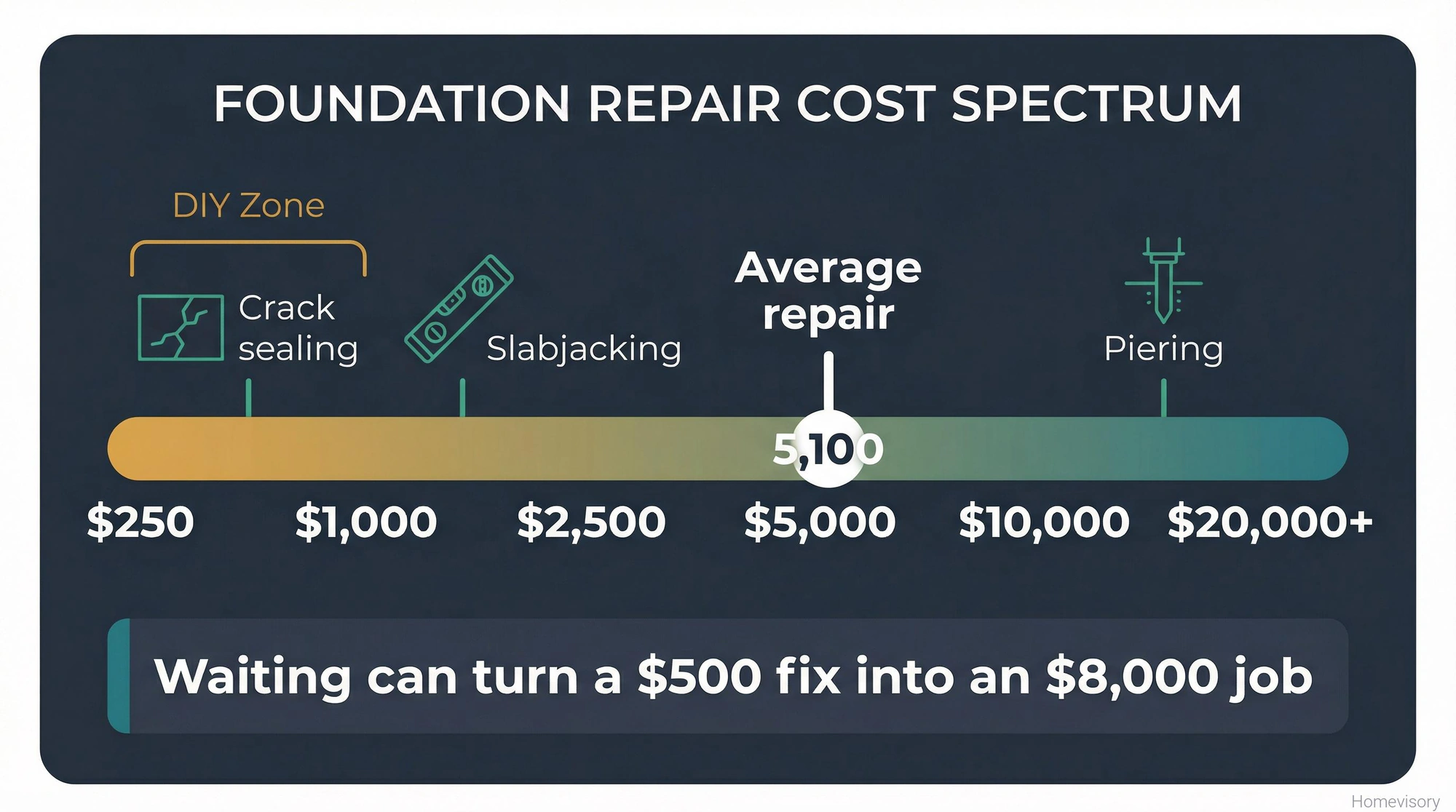
The per-square-foot breakdown is between $1.50 and $12 per square foot depending on whether youre sealing hairline cracks or doing serious structural repair with epoxy. Big range. I know. Thats why you need to understand what kind of problem you actually have before you start getting quotes.
One thing Ill say about contractor quotes. Ive seen people get quotes for $15,000 on work that should cost $4,000. It reminds me of getting car repair estimates, actually, which is funny because I dont know anything about cars. I fix houses not Hondas. But the principle is the same. Get multiple quotes. Ask what exactly theyre doing and why. If someone cant explain it to you in plain language, thats a red flag.
And consider this: if your foundation fails, your home can lose up to 20% of its value. So yes the repairs cost money. But ignoring the problem costs more.
Why Foundations Crack in the First Place
This is the part I probably care too much about but Im going to explain it anyway because most people dont understand why their concrete slab foundation repair is necessary in the first place. Water. Water is the answer to almost every foundation question and it makes me sound like a broken record but I dont care because its true. About 60% of homes built on expansive soils experience foundation stress due to soil moisture changes, according to the Concrete Network. The soil under your house swells when its wet and shrinks when its dry. If you have cracks in your outdoor concrete, see our guide to concrete crack repair. If you have clay soil like we had in Texas this is constant and relentless. The soil moves. The foundation moves with it. Cracks appear. Sometimes the whole slab tilts. After the Plano deck disaster I became obsessed with drainage and water management and it all connects to this same principle. Water finds every mistake you make and with foundations thats doubly true because the mistakes are underground where you cant see them until the damage is done.
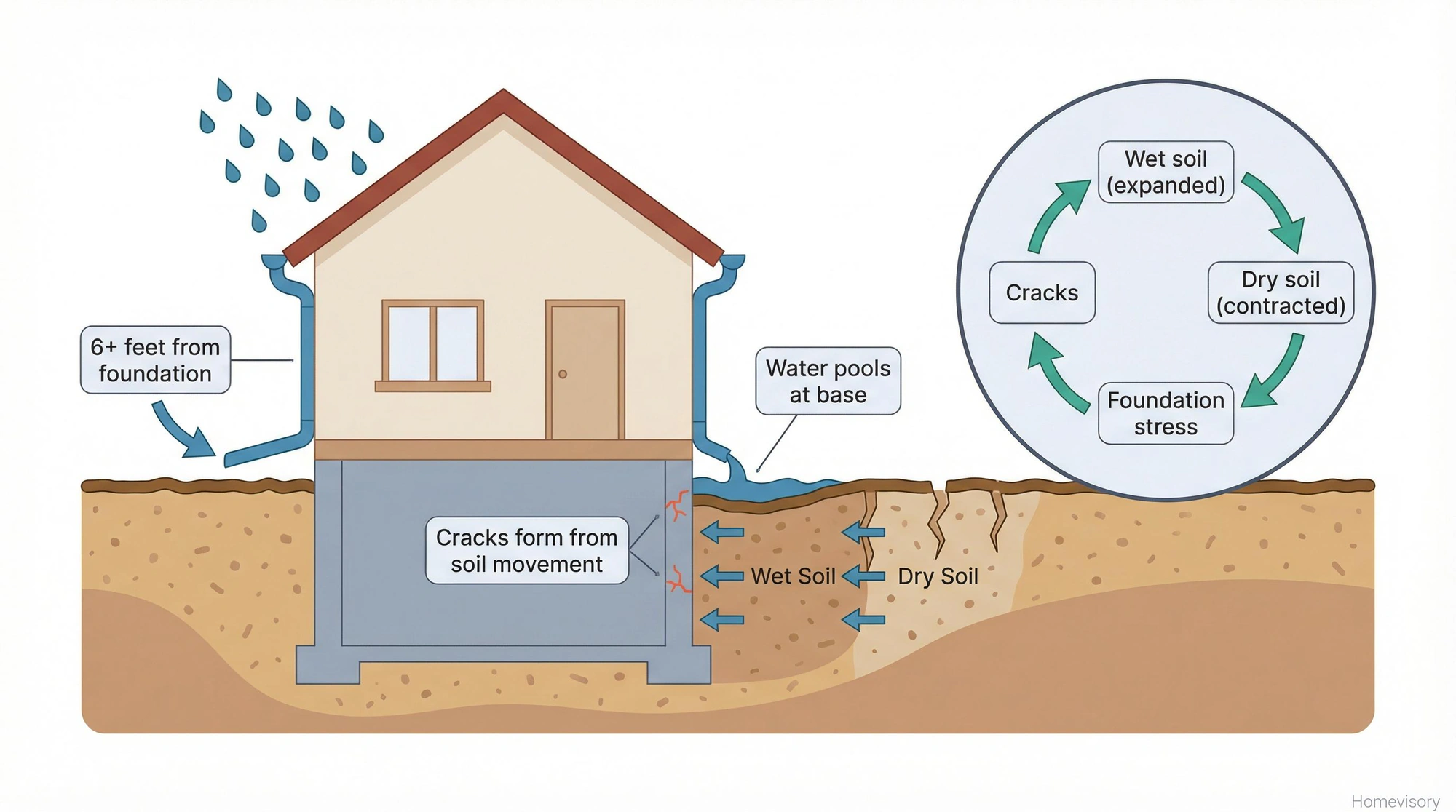
We had this house, back when I was working commercial renovation and taking side jobs, family friend of Raquels parents, place in North Texas. The cracks in their slab were spreading like a spiderweb. Every few months new ones appeared. They kept filling them with caulk from Home Depot. I told them it wasnt about the cracks, it was about why the cracks were happening. Their gutters were dumping water right at the foundation. No slope away from the house. The clay soil was expanding and contracting like it was breathing. That whole neighborhood was built on the same soil. I wonder what it looks like now. Probably half those houses have had major work done. Or maybe they just sold them and let it be someone elses problem. Anyway.
What You Can Actually Fix Yourself
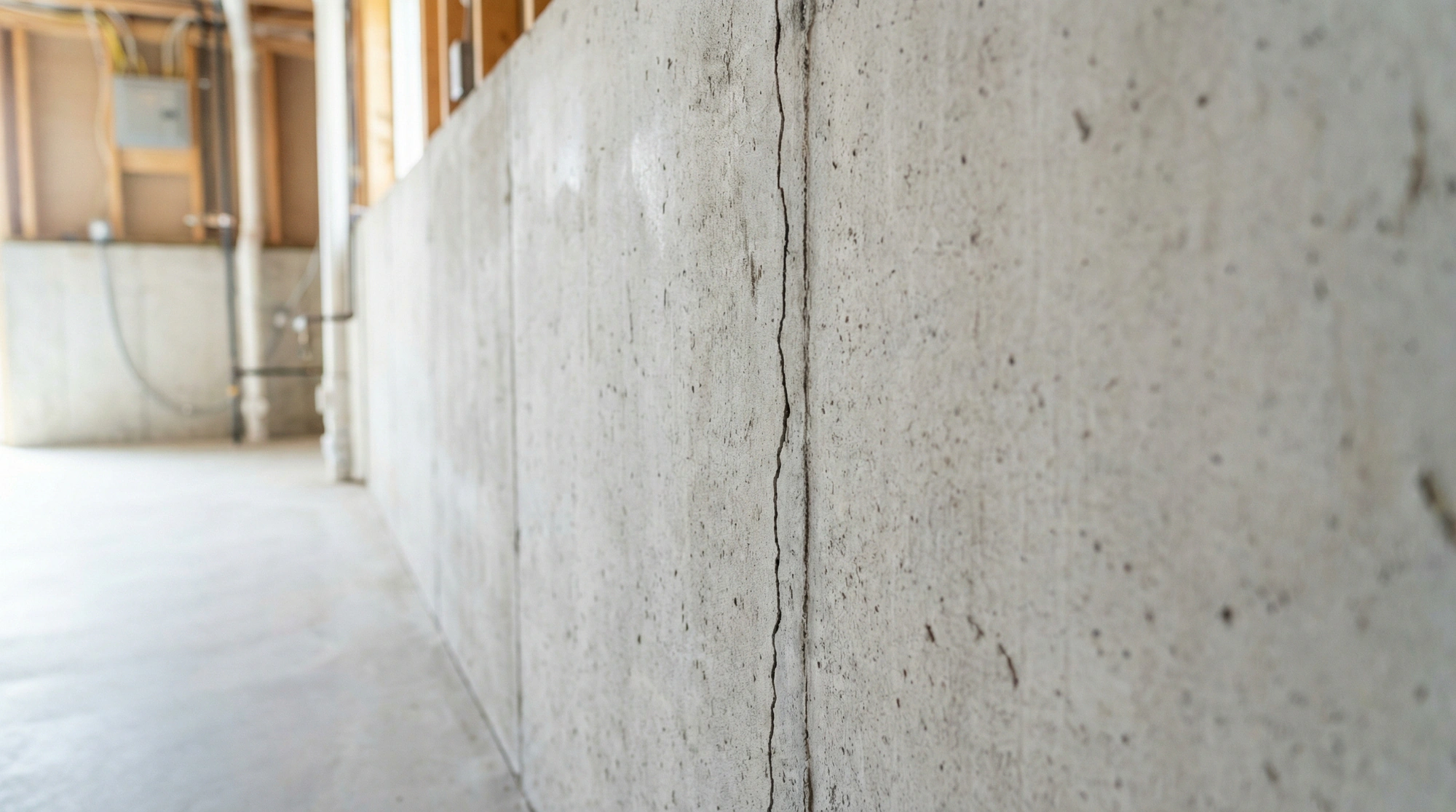
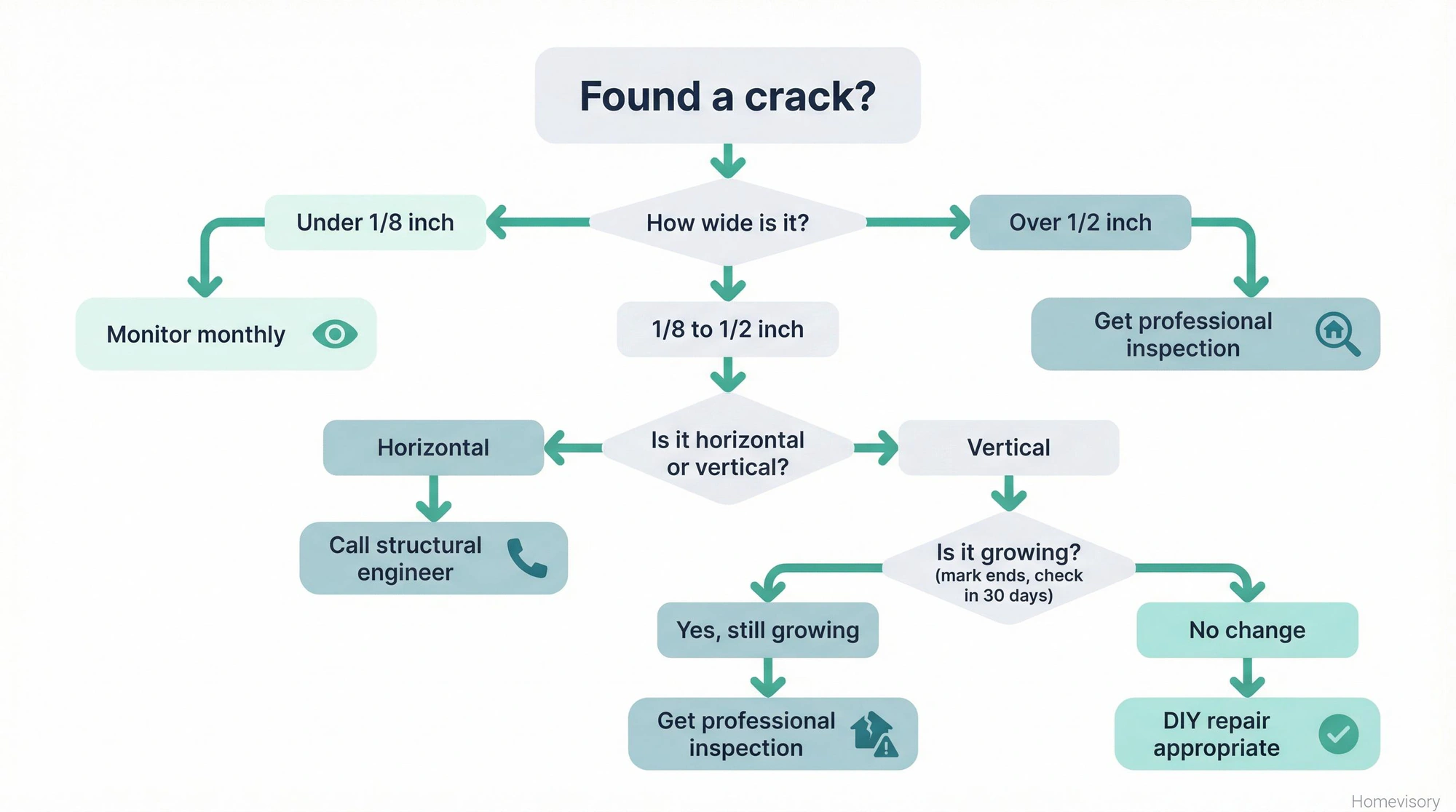
Not everything requires a contractor. Small vertical cracks no wider than 1/8 of an inch can be sealed yourself with epoxy. These hairline cracks are usually just settling or concrete shrinking after it cured. Normal. Not a structural issue.
According to Bob Vila’s foundation repair guide with certified specialist Bob Brown, cracks between 1/8 inch and 1/4 inch often result from normal settling or concrete shrinkage within the first few months after construction. These usually dont pose a structural problem. You can fill them with a caulk thats compatible with concrete.
Heres what I do for DIY concrete foundation repair on smaller cracks:
Clean the crack first. Wire brush it. Get the loose stuff out. Vacuum it if you have a shop vac. The repair material needs something to bond to.
Use the right product. Concrete caulk for hairline stuff. For anything bigger, up to maybe half an inch, you want a concrete crack repair kit with an epoxy or polyurethane injection system. The injectors push the material deep into the crack instead of just filling the surface.
Let it cure. Follow the instructions on whatever product you bought. I know nobody reads instructions. Read them anyway. Different products have different cure times and temperature requirements.
Watch it. Mark the ends of the crack with a pencil. Check it in a month. If its growing, you have a bigger problem than you thought.
For cracks more than 1/2-inch wide, you can still use a DIY crack repair kit, but get a professional foundation inspection first. You need to know if this is a symptom of something structural before you just fill it and forget about it.
Concrete Slab Foundation Repair Methods
Different problems need different solutions. Most concrete slab foundation repair falls into a few categories:
Crack injection. For non-structural cracks. Epoxy for structural bonding or polyurethane foam for waterproofing. You inject it into the crack under pressure, it fills the whole thing including the parts you cant see.
Slabjacking. When your slab has sunk or settled unevenly. They pump grout beneath the slab to lift and stabilize it. Drill holes through the concrete, pump the material underneath, it lifts the slab back to level, fill the holes. Works well for slabs that have dropped but arent cracked badly. Also called mudjacking. The newer version uses polyurethane foam instead of grout, dries faster, weighs less.
Piering. Uses steel posts and hydraulic jacks to lift and stabilize foundations with larger structural issues. Thats not DIY territory. Call someone. They excavate around your foundation, install steel piers that go down to stable soil or bedrock, then lift the foundation back to level. Expensive. $1,000 to $3,000 per pier and most houses need multiple piers. But if your foundation is seriously settling, this is the permanent fix.
Resurfacing. For damage thats more cosmetic, flaking and spalling on the surface. Concrete floor slab resurfacing costs $3 to $7 per square foot, they remove the damaged top layer and apply an overlay. Not structural repair, just making it look right again.
Helical piers, push piers, carbon fiber wall reinforcement, theres a whole industry of foundation repair methods. Im not getting into all of them here. The point is to understand what your problem is so you know what solution makes sense. A hairline crack doesnt need piering. A foundation thats dropped two inches doesnt need caulk.
When to Call a Professional
Look. I believe in DIY. Thats what we do here at Homevisory. But some things are beyond what homeowners should tackle.
Call a structural engineer or foundation specialist if:
- Cracks are wider than 1/2 inch
- Cracks are horizontal (this usually means lateral pressure from soil, not settling)
- Your walls are bowing inward
- Doors and windows stick and it wasnt always that way
- You see stair-step cracks in brick or block walls
- The floor is noticeably uneven, like you can feel the slope when you walk
- Theres water intrusion happening through cracks
Bowing wall repair costs $5,000 to $15,000 depending on severity and method. Thats serious structural work. Settling or sinking foundation repair costs $4,500 to $20,000. These arent numbers I throw out to scare you. They just are what they are. And waiting makes them bigger.
One more thing about safety. If youre doing any excavation around your foundation, even small stuff, OSHA has specific procedures for foundation excavation work especially when theres limited space between the foundation wall and the excavated ground. Most homeowner projects wont hit OSHA thresholds but if youre digging deep around your foundation for waterproofing or to expose footings, know what youre getting into. Excavations collapse. It happens.
The Prevention Piece
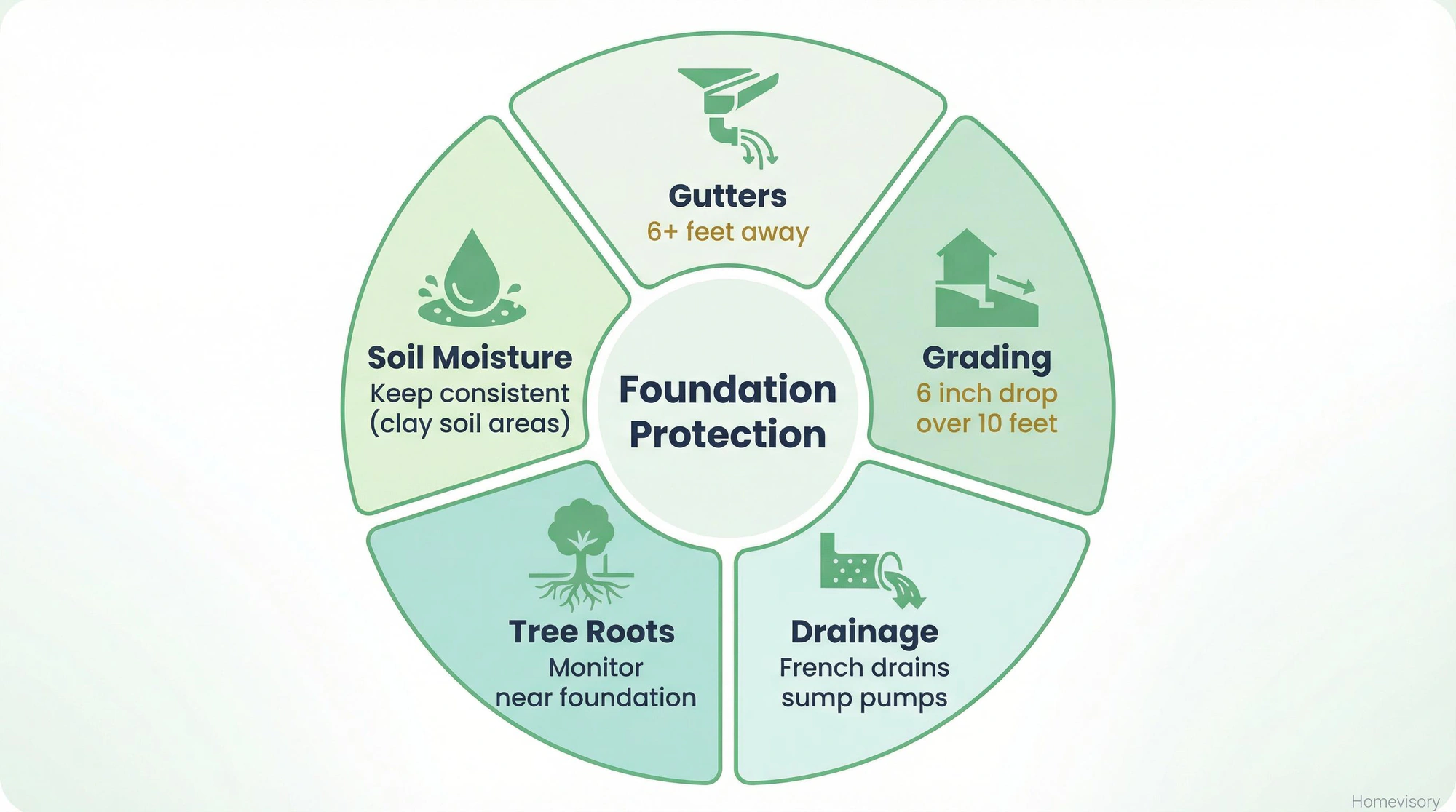
Best concrete foundation repair is the one you never have to do.
Gutters and downspouts. This is number one. Water should discharge at least six feet from your foundation. Ten is better. Get extensions. Make sure they actually direct water away and not just dump it at the base of your house.
Grading. The soil around your foundation should slope away from the house. Six inches of drop over the first ten feet is the standard. If rain pools against your foundation youre asking for problems.
Drainage systems. French drains, interior drain tile, sump pumps. These are investments that pay for themselves by preventing the water damage that causes foundation issues.
Tree roots. Big trees near your foundation can pull moisture out of the soil unevenly. Thats not me telling you to cut down your trees. Just know that a huge oak twenty feet from your house is affecting the soil moisture around your foundation.
Consistent moisture. This sounds weird but in areas with expansive clay soil, some people actually water their foundation during dry spells. The goal is to keep soil moisture consistent so the ground doesnt shrink and swell so dramatically. I know people in Texas who have their foundation on a watering schedule.
What This Actually Means
Your foundation is probably fine. Most are. The house I live in now has a couple hairline cracks in the garage slab that have been there since we moved in. I filled them, I monitor them, they havent changed in years. Thats normal settling.
But if youre seeing cracks grow, if your doors are sticking, if the floor feels wrong, dont wait. Small problems become big problems. A poured concrete slab can last 200 years when its maintained properly. Thats longer than any of us will be around.
Get the inspection. Understand what youre dealing with. Do the repairs you can do yourself and hire help for the ones you cant.
Thats what we do here at Homevisory, help you stay on top of this stuff before it becomes an emergency. Our free Homevisory home task manager sends you reminders to check things like foundation cracks, gutter drainage, all the maintenance that prevents expensive repairs. Sign up takes two minutes. Your foundation will thank you. Or it wont, because foundations dont talk. But you know what I mean.
Mark Carter
Content Writer
Mark Carter is a home maintenance expert with over 20 years of experience helping homeowners maintain and improve their properties. He writes practical, actionable guides for Homevisory to help you tackle common home maintenance challenges.
View all articles by Mark CarterRelated Articles
Ceiling Fan Direction: Summer vs Winter Settings Guide
Learn how to set your ceiling fan direction for summer and winter. Counterclockwise for cooling, clockwise for heating. Simple switch saves energy year-round.
How to Remove Oil Stains from Driveway & Concrete
Learn how to clean oil stains from driveway concrete using proven methods. From fresh spills to set-in stains, get step-by-step solutions that actually work.

How to Balance a Ceiling Fan: Stop Wobbling & Noise
Learn how to balance a ceiling fan in 30 minutes with simple DIY steps. Fix wobbling fans safely without an electrician - just a ladder and $4 kit.