
Mulch is one of those things that seems simple until you start shopping for it. Then you’re standing in the garden center looking at fifteen different options, half of them are dyed different colors, and you realize you have no idea what you’re actually supposed to buy.
I get asked about black mulch more than almost any other landscaping question. People see it in magazines or in their neighbor’s yard and they want that look. The dark contrast against green plants, against light-colored stone, against a fresh painted fence. I get it. It does look good.
But theres more to this decision than color. Let me walk you through what actually matters.
Why Mulch Matters in the First Place
Before we talk about types and colors, you need to understand what mulch is actually doing for you. Its not just decoration.
The USDA explains it pretty clearly: mulch helps conserve and extend available water, protects the soil from erosion, reduces competition by suppressing weeds, moderates temperature extremes, and acts as a barrier for your garden beds. Thats a lot of work for some wood chips on the ground.
The moisture retention piece is huge, especially if you live somewhere hot. I’m in Palm Beach now, and the humidity helps, but in my Texas years I watched garden beds dry out in two days during summer if they werent mulched properly. The mulch creates a barrier between the soil and the sun. Less evaporation. Less watering. Lower water bill.
Weed suppression is the other big one. A proper layer of mulch blocks sunlight from reaching weed seeds in the soil. They cant germinate without light. Its not perfect, you’ll still get some weeds, but its the difference between pulling a few weeds every couple weeks and spending your entire Saturday on your knees with a trowel.
The Color Question: Black Mulch vs Red Mulch vs Natural
Lets talk about what everyone actually wants to talk about.
Black mulch is popular because it creates strong color contrast in landscape design. Dark background, bright plants, clean lines. It photographs well which is why you see it in every home magazine. It also tends to look more “modern” if thats the vibe you’re going for.

Red mulch is… look, I’m just going to say it. Red mulch looks terrible in most yards. Ive seen maybe three installations where it actually worked, and all of them had specific southwestern architecture and desert plants that complemented the color. In a typical suburban yard with green grass and a beige house, red mulch looks like you’re trying too hard. Or like something from 1994.
Cedar mulch and cypress mulch in their natural colors are what I usually recommend. They look good with everything because they’re not fighting your plants for attention. Iowa State University Extension notes that cedar and cypress decompose the slowest of the common mulches, so you’re getting longevity with that choice.
There was a client I had in Plano, this was probably 2008 or 2009, who was absolutely obsessed with getting black mulch around his entire property. White limestone pathways, black mulch beds, very dramatic. And it did look incredible for about six weeks. Then the Texas sun started fading the dye and it looked gray and patchy. He called me upset like I had personally betrayed him. I told him thats what happens with dyed mulch, it fades, you have to refresh it or accept the weathered look. He did not want to accept the weathered look. We ended up topping it off twice that first year.
Anyway.
Is Black Mulch Safe? The Contamination Issue
This is where I need you to actually pay attention because this matters more than most people realize.
The dyes used in colored mulches are generally safe. The Mulch and Soil Council confirms that the colorants currently used pose no threat to people, pets, or the environment, and that the dyes are similar to those used in cosmetics and other industries, primarily iron oxide compounds. University of Maine Cooperative Extension says the same thing: theres no evidence that dyes used in colored mulches are toxic, and the color is purely aesthetic, it doesn’t affect your plants.
Heres the problem though. The dye isnt the issue. The wood is the issue.
A lot of colored mulch is made from recycled wood, and recycled wood can include pressure-treated lumber. Pressure-treated lumber contains chromated copper arsenate, which is called CCA, and CCA is toxic. University of Florida states it plainly: mixed hardwood mulch can be contaminated with CCA from pressure-treated lumber, and since this substance is toxic to animals and humans, you should not use it around edible gardens. UMass found that some recycled waste wood used for landscape mulch products is contaminated with various chemicals including creosote and CCA, and these toxic chemicals have been found contaminating soil where colored wood chip mulch has been applied. This isnt theoretical. This is happening in peoples yards.

So how do you avoid it. You buy from reputable suppliers and you look for the Mulch and Soil Council certification logo. That certification means the mulch has been tested and is free from CCA-treated wood contamination. If your local garden center cant tell you where their colored mulch comes from, or if theyre getting it from some random pallet recycling operation, dont buy it.
I know this sounds paranoid. I’ve been accused of being paranoid about materials before. But Ive seen what happens when people take shortcuts and use cheap materials without checking the source. It never ends well. Thats not just true for mulch, thats true for everything.
My dad Curtis, when I was a kid in Atlanta, he was obsessive about the yard. Not in a showing-off way, just in a taking-care-of-what-you-have way. He worked at a factory his whole life and the yard was his thing on weekends. He used to say something about how you shouldn’t put anything on your soil you wouldn’t put on your kitchen table. I dont know if that makes complete sense but I understood what he meant. The soil is where your food comes from. Where your kids play. Where your dog rolls around. You dont contaminate that to save twenty bucks.
But yeah.
Application: How Much and How Deep
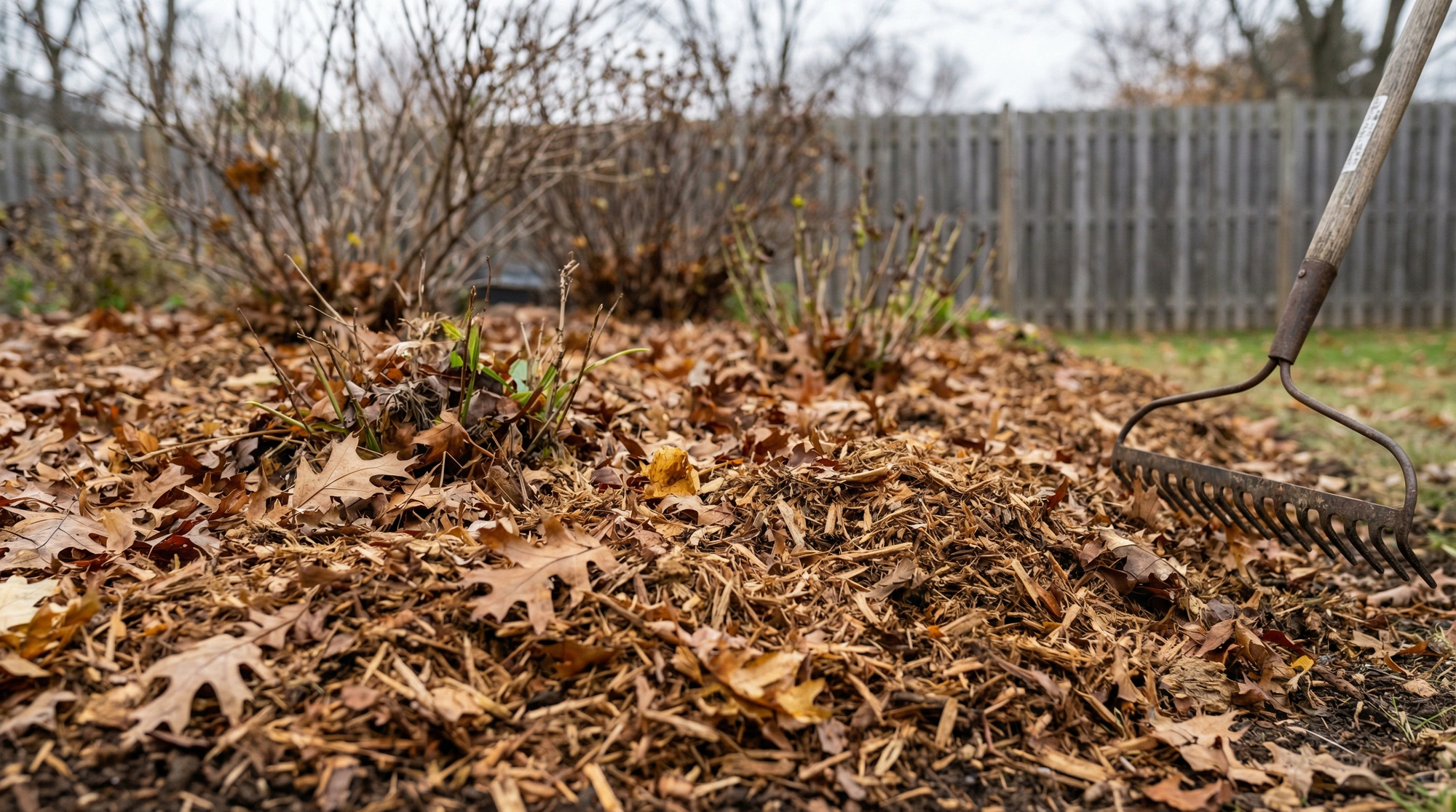
Iowa State Extension recommends 2 to 4 inches of mulch depth, with coarser mulches like wood chips on the higher end and finer mulches on the lower end. An excessively deep mulch layer can lead to waterlogging, reduced soil oxygen levels, shallow rooting, and keeping soils overly warm in winter.
Two to four inches. Thats it. Moving on.
Actually wait. I need to talk about volcano mulching.
Volcano mulching is when people pile mulch up against tree trunks in a big cone shape. It looks neat. Its everywhere. And its terrible for trees. The USDA specifically warns against it because it causes trunk rot. The bark of a tree is designed to be exposed to air. When you bury it in moist mulch, it stays wet, and wet bark rots, and rot leads to disease and pest infiltration and dead trees.

I drive around my neighborhood and I see volcano mulching everywhere. Every single street. Professional landscaping companies do it. I dont understand how this is still happening. Its not complicated. Pull the mulch back from the trunk. Leave a few inches of space. Your tree will thank you by not dying.
Mulch Glue: Does It Actually Work
Mulch glue is a spray adhesive that bonds mulch pieces together so they dont wash away in rain or blow around in wind. Its useful in specific situations. Slopes. High-traffic areas. Places with drainage issues where water really moves.
For most flat garden beds, you dont need it. Regular mulch at proper depth stays put fine. If you’re on a slope and you’re losing mulch every time it rains, then yes, mulch glue can help. Apply it after you’ve laid the mulch, let it dry, and it creates a light crust that holds everything in place while still allowing water to penetrate.
I use it on maybe ten percent of jobs. Usually steep areas around the foundation where runoff is an issue.
The Cost Reality
According to LawnStarter, bagged mulch costs $3.25 to $6.50 per bag, while bulk mulch runs $30 to $135 per cubic yard. A cubic yard covers 162 square feet at 2 inches deep, or 108 square feet at 3 inches deep.
Here’s the math most people don’t do: buying a cubic yard’s worth of bagged mulch can cost 35% more than buying bulk. If you have a small yard, bags are fine, you’re paying for convenience. If you have any significant square footage, get it delivered in bulk. The truck dumps it in your driveway and you wheelbarrow it where you need it.

Shredded bark and double shred mulch tend to stay in place better than larger wood chips. Organic mulch breaks down over time and needs refreshing, usually every year or two. University of Florida says when the depth falls below two inches, its time to replenish.
What I Actually Recommend
If you want black mulch, get it from a certified supplier. Look for the MSC logo. Dont buy the cheapest option from a place that cant tell you where the wood came from.
If you want longevity and dont care about the dark color, go with cedar mulch or cypress mulch. They decompose slower and they smell good. Mr. Davis, my woodshop teacher back in Atlanta, used to talk about how cedar was special because the oils in the wood made it naturally resistant to rot and bugs. He was talking about building with it but the same principles apply to mulching with it.
Apply at 2-4 inches depending on particle size. Keep it away from tree trunks and plant stems. Refresh when it gets thin.

For weed suppression and soil temperature moderation, any organic mulch will work. The biodegradable nature of shredded bark and dyed wood chips means they’re feeding your soil as they break down. Non-toxic dyes on properly sourced wood wont hurt anything.
I’m not getting into rubber mulch here. Its a thing, people use it on playgrounds, whatever. I work with wood.
Track Your Maintenance
This is where most people fail. They install mulch, it looks great, they forget about it for three years, and then they wonder why their beds are full of weeds and their plants are struggling.
Mulch is a maintenance item. It needs to be checked seasonally and refreshed when it gets thin. You should be looking at your mulch depth in spring and fall at minimum — same time you’d be preparing your garden for winter or doing spring cleanup. Adding a couple bags to thin spots is easier than doing a complete reinstall because you let it go too long.
Thats what we do here at Homevisory. We help you track this stuff so it actually gets done. The free Homevisory home task manager will remind you when its time to check your mulch depth, when to refresh it, when to clear debris off the beds. You can sign up at no cost and it handles the remembering so you dont have to.
Because most home maintenance isnt hard. Its just remembering to do it before it becomes a problem. Our home maintenance checklist covers the full seasonal schedule for everything, mulch included.