That chirping sound at 3 AM. You know the one. That single, sharp beep every 30 seconds that makes you want to throw the thing out the window. Your smoke detector beeping is trying to tell you something, and ignoring it isnt an option, but figuring out what it wants can feel like solving a riddle in the dark while standing on a ladder.
I’ve been in this industry for over 25 years. Four kids. Two dogs. More smoke detectors than I want to count. I’ve dealt with every beeping situation you can imagine, and a few you probably can’t. Lets go through whats actually happening and how to make it stop.
Why Your Smoke Detector is Beeping
The beeping pattern tells you everything. Pay attention to it.
A single chirp every 30 to 60 seconds almost always means low battery. Thats the most common cause and the easiest fix. Montgomery County’s fire safety guidance confirms this, the chirp interval is designed to be annoying enough that you’ll do something about it but not so constant that you confuse it with an actual alarm.
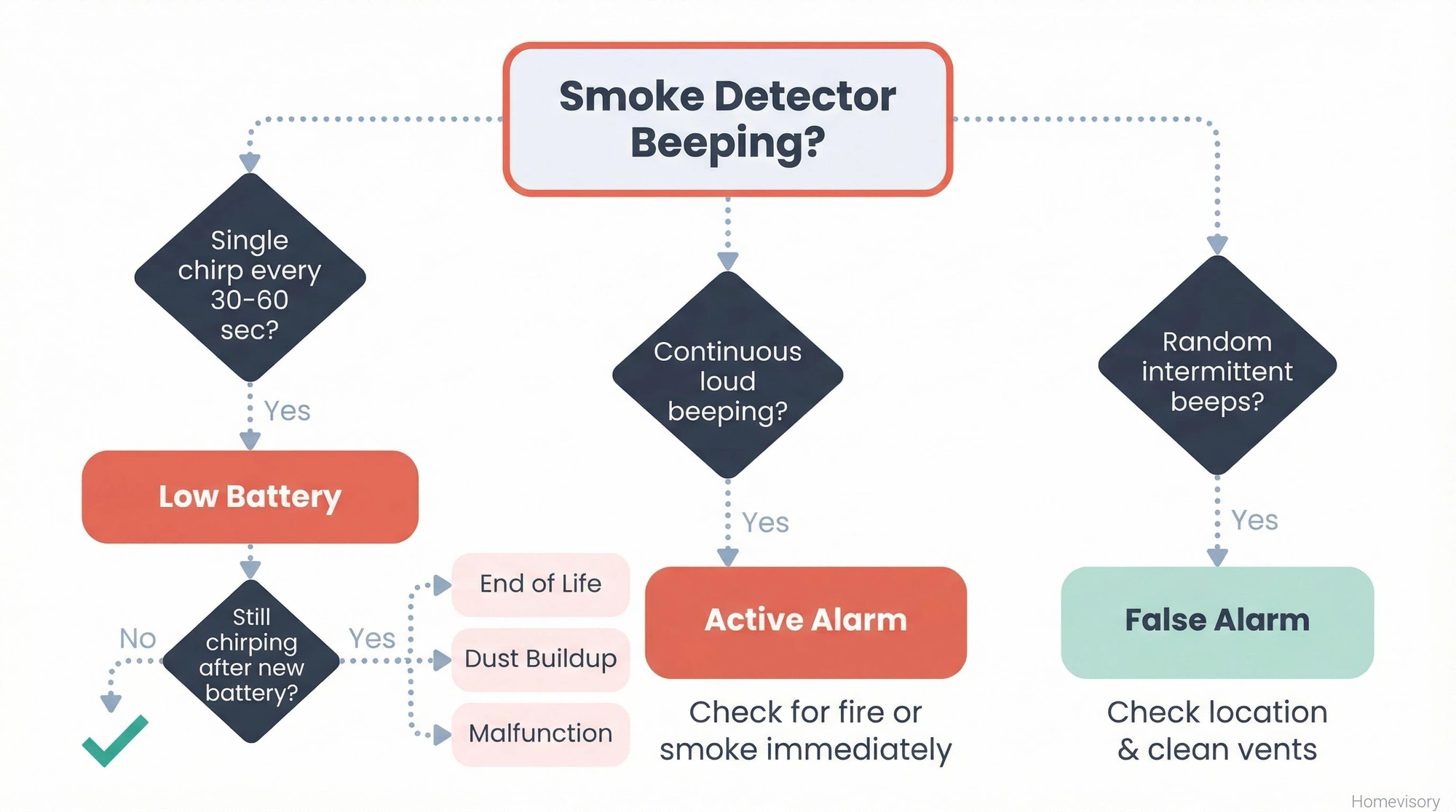
If the beeping continues after you replace the battery, you’ve got a different problem. Could be one of these:
- End of life warning (the detector itself is done)
- Dust buildup in the sensor
- Temperature or humidity issues
- Malfunction
The continuous loud beeping, multiple beeps in rapid succession, thats an actual alarm. Thats not what we’re talking about here. If thats happening and there’s no visible fire or smoke, you’ve got a false alarm situation, which I’ll get to.
The Battery Thing
Look, I’m going to spend more time on this than you probably think is necessary. But seven people die in home fires every day, and most of those deaths happen in homes without working smoke alarms. A smoke detector with a dead battery is the same as having no smoke detector. I don’t care if you’re tired of me saying this. I’ll say it again.
Standard Battery Replacement
Most smoke detectors take a 9-volt battery or AA batteries depending on the model. The U.S. Fire Administration recommends replacing batteries at least once a year, even if theyre not chirping yet.
My system: I change every battery in the house on the same day. First day of fall, when the clocks change. I don’t wait for the chirping. I don’t try to remember which detector beeped last. All of them. Same day. Takes twenty minutes.
When you put the new battery in, hold down the test button for 15 to 20 seconds. This resets the processor and clears any residual charge from the old battery. If you skip this step, the detector might keep chirping even with a fresh battery, and then you’ll think its broken when its not.
Sealed 10-Year Battery Detectors
Here’s where people get confused. A lot of newer detectors have sealed batteries that last the life of the unit. You cant replace the battery because youre not supposed to. When it starts chirping, you replace the whole detector.
As of January 2018, many jurisdictions require these sealed 10-year battery units for residential use. The idea is that people kept taking the batteries out and never putting them back. Which brings me to something that genuinely makes me angry.
Don’t Be That Person
I need to talk about this because according to NFPA research, about half of nonfunctional smoke alarms in homes have had the battery removed entirely, usually because of nuisance alarms. Thats nearly 21 million households with smoke alarms that dont work because someone got annoyed and just ripped out the battery.
I get it. The 3 AM beeping is maddening. My dogs, Sparkplug and Ratchet, go absolutely insane when it happens. Ratchet especially. He stands under the detector and barks at it like its personally offended him. And it always happens at 3 AM. Never noon. Never 6 PM when youre already awake and functional. Always the middle of the night.
But you fix it. You dont disable it.
My father Curtis worked in a factory for thirty years. He used to say that machines tell you whats wrong if you listen. The warning lights, the sounds, the vibrations. Ignore them and eventually something breaks in a way you cant fix. Same principle here. The chirp is the warning. The fire is the thing you cant fix.
The 10-Year Replacement
This is the part most people dont know about, and its important so Im going to go longer than I probably should.
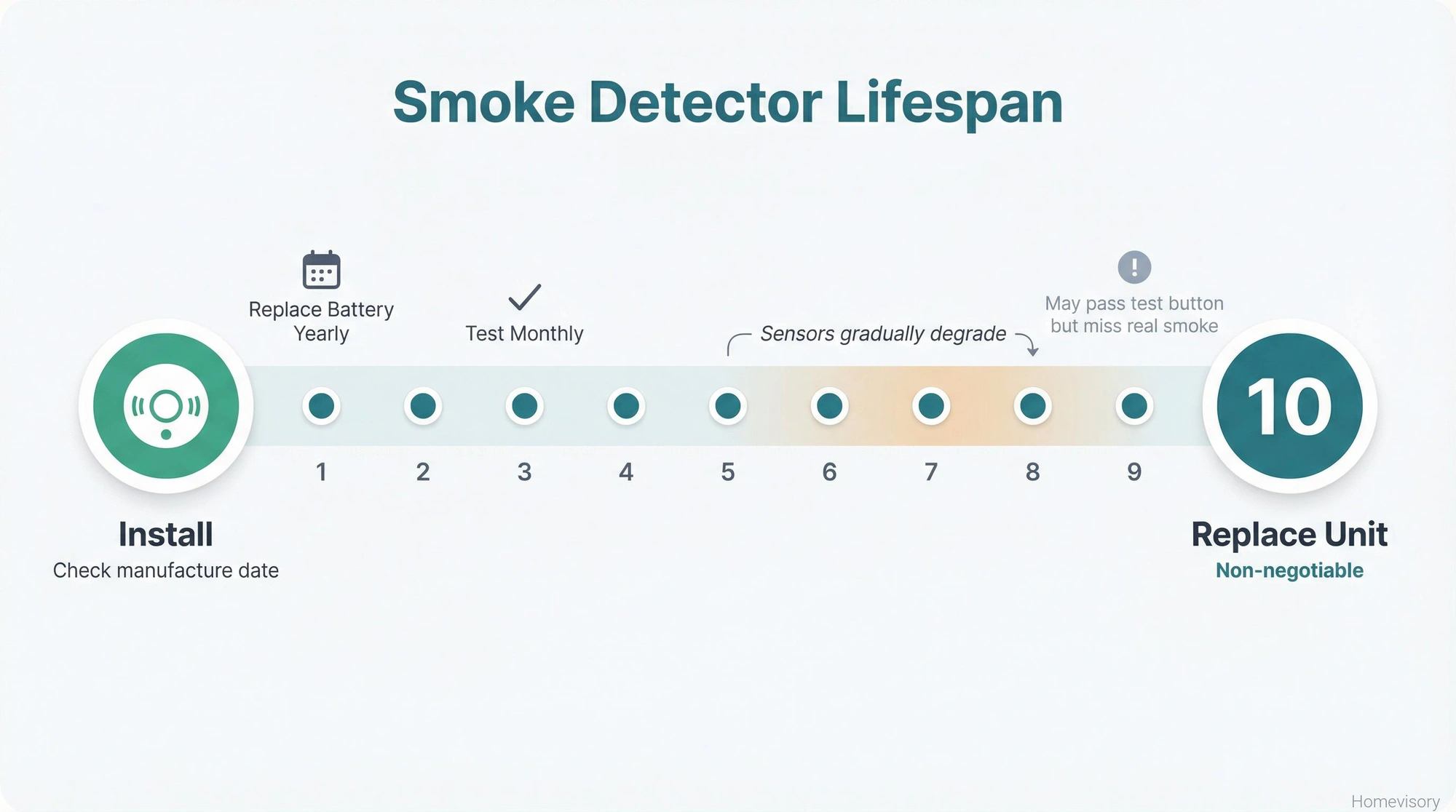
Every smoke detector has a lifespan and its not infinite. The U.S. Fire Administration says to replace the entire unit every 10 years. This isnt a suggestion designed to sell more detectors, the sensors actually degrade over time. The ionization or photoelectric sensors that detect smoke particles become less sensitive as they age, dust accumulates in ways you cant fully clean, and the electronics wear out.
A 2024 NFPA research report found that smoke alarms were present in 75% of reported home fires but in 16% of cases they failed to operate. Thats one in six. A detector that looks fine, sounds fine when you hit the test button, but when actual smoke hits it, nothing. I have four kids. That statistic keeps me up at night more than any chirping ever could.
Check the manufacture date on the back of your detector. If its older than 10 years, replace it. Today. Right now. Stop reading this and go do it.
Okay youre back.
Dust Buildup and False Alarms
Dust, cobwebs, and general gunk accumulate in the sensor chamber over time. This can cause two problems: false alarms when there’s no smoke, or failure to detect actual smoke.
Montgomery County recommends vacuuming your detectors every six months to remove dust.
Use the brush attachment on your vacuum. Go around the vents and openings. Takes thirty seconds per detector. Done.
If youre getting false alarms, especially near the kitchen or bathroom, location might be the issue. Steam and cooking smoke trigger detectors. Move it farther from the source or switch to a photoelectric model which is less sensitive to cooking smoke.
Hardwired Detectors With Backup Batteries
If your detectors are wired into your home’s electrical system, they still have backup batteries that can die. The chirping usually means the backup battery is low, not that theres a power problem.
Replace the backup battery first. Same process as a regular detector.
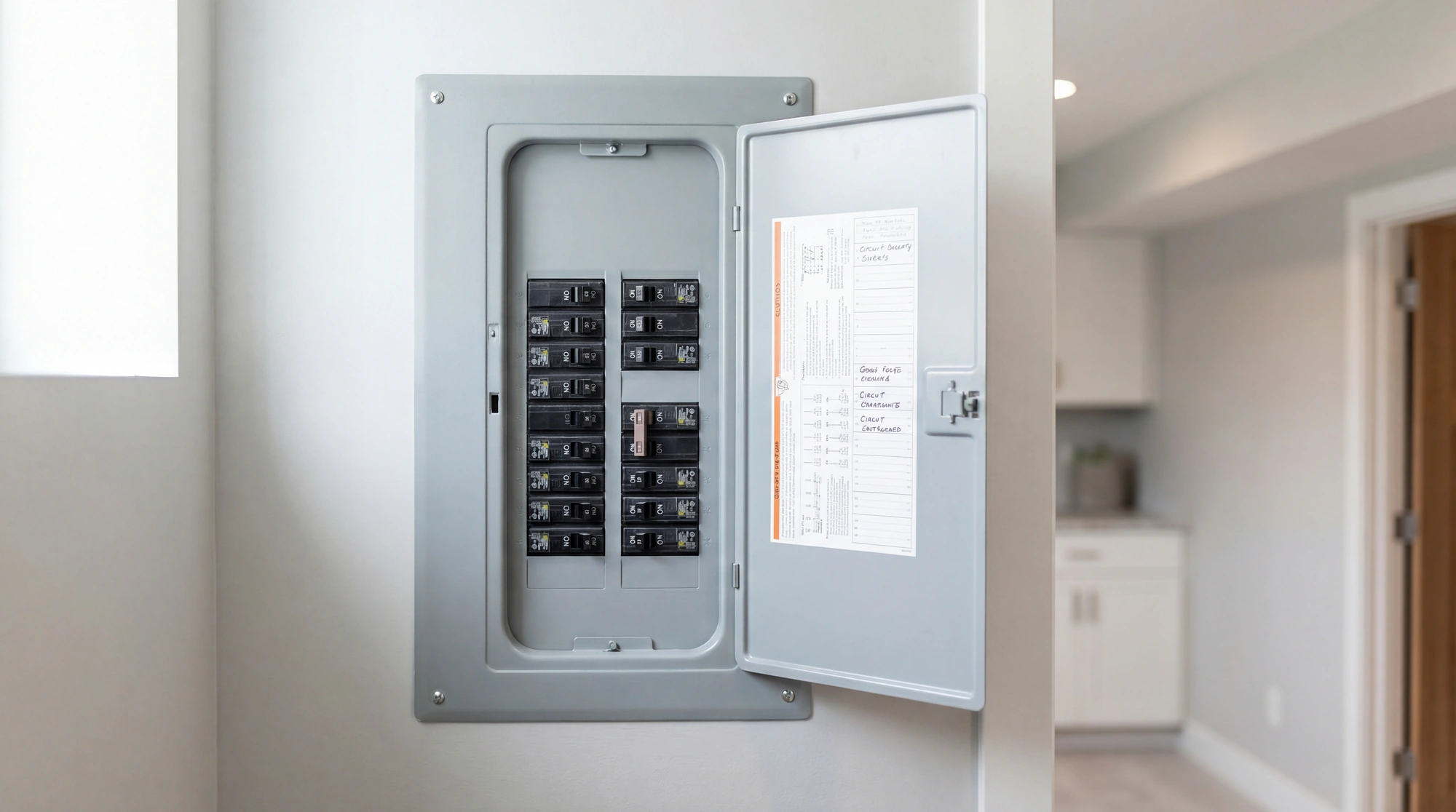
If that doesnt fix it, you might have an actual power issue. Check your breaker panel. If you’re dealing with circuit breaker issues, that could be causing problems with your hardwired detectors. Look for a tripped breaker.
Beyond that, Im not getting into it. If youre not comfortable with electrical work, call an electrician. Professional installation costs between $70 and $150 on average, which is cheaper than the alternative.
When to Just Replace the Whole Thing
Sometimes troubleshooting isnt worth it. Replace the detector if:
- Its older than 10 years
- Chirping continues after battery replacement and reset
- The test button doesnt produce a loud alarm
- Theres visible damage, yellowing, or corrosion
- You have no idea how old it is
New detectors cost anywhere from about $10 to $80 depending on features. Thats not expensive. Thats the cost of a mediocre dinner out.
The Middle of the Night Protocol
Since it always happens at 3 AM, heres what I do.
First, identify which detector is chirping. In my house with multiple detectors this means standing in the hallway like a zombie, waiting for the next chirp, trying to triangulate. Sometimes I make Raquel help. She’s better at it than me.
Once you find it, take it down. Most twist off the mounting bracket counterclockwise. Remove the battery or, if its sealed, remove the whole unit from the bracket.
Now you can go back to sleep. In the morning, either put in a new battery or buy a new detector.
I remember when Milton was little, maybe four or five, the detector in the hallway started chirping at something like 2 AM. He came into our room crying, thought the house was on fire. I spent ten minutes calming him down, then another twenty trying to find a 9-volt battery in the junk drawer. My mother Shirley, she always kept batteries in a labeled spot. Organized. I can still picture that drawer in our house in Atlanta. Everything had a spot. I am not that organized. I found the battery eventually, in a flashlight that didnt work.
Anyway.
Monthly Testing
Hit the test button once a month. Every detector. This is not optional.
Only one in five people actually do this. Four out of five people are skipping basic maintenance on the one device thats supposed to save their life in a fire.
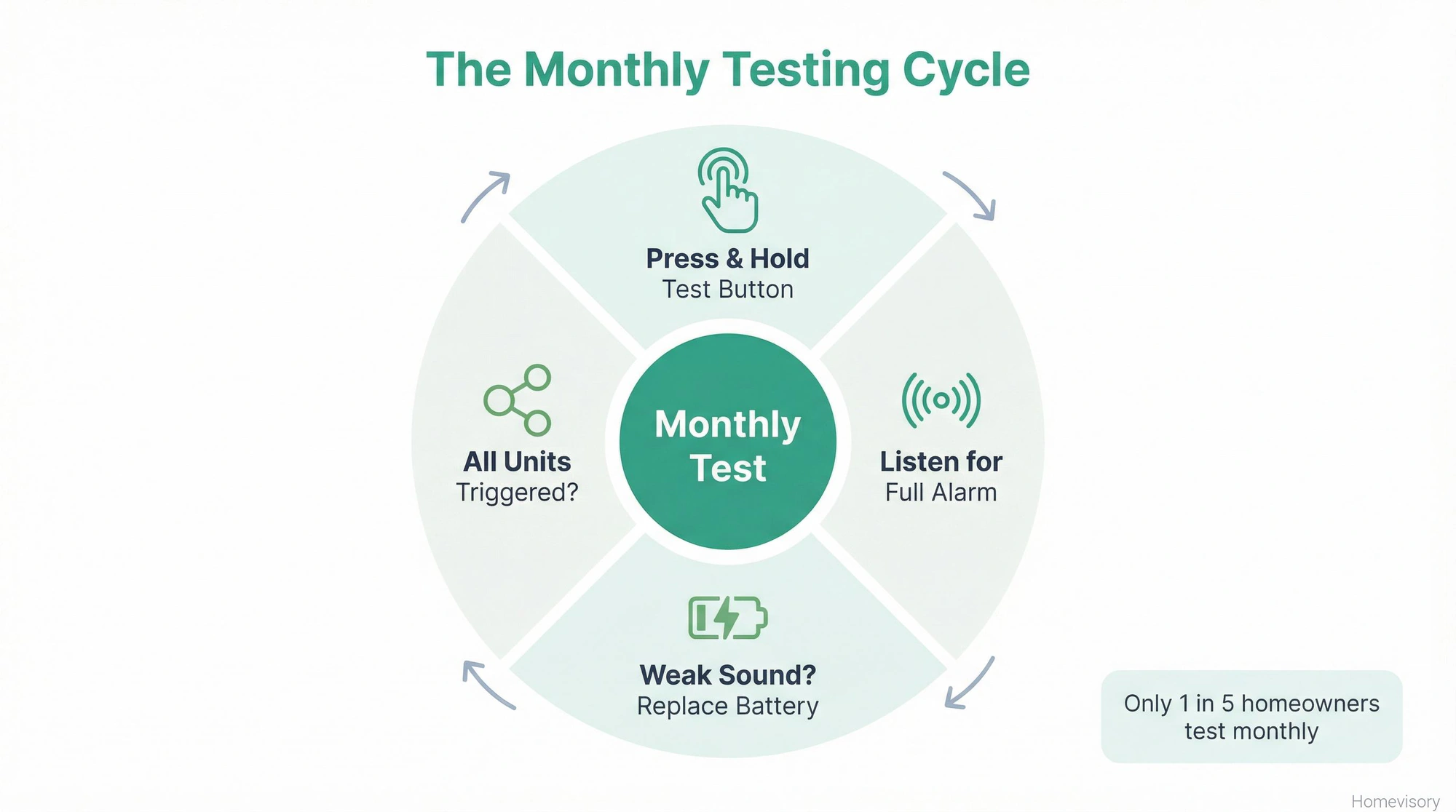
The test button confirms that the alarm, the speaker, and the electronics work. Hold it until you hear the full alarm sequence. If its weak, replace the batteries. If replacing the batteries doesnt help, replace the detector.
If you have interconnected detectors, one test should trigger all of them. If it doesnt, you have a communication problem between units. That needs to be fixed.
The Cost of Ignoring This
Working smoke alarms cut the risk of dying in a home fire by half. Half. That is a staggering number.
And you might have as little as two minutes to escape once a fire starts. Not ten minutes. Not five. Two.
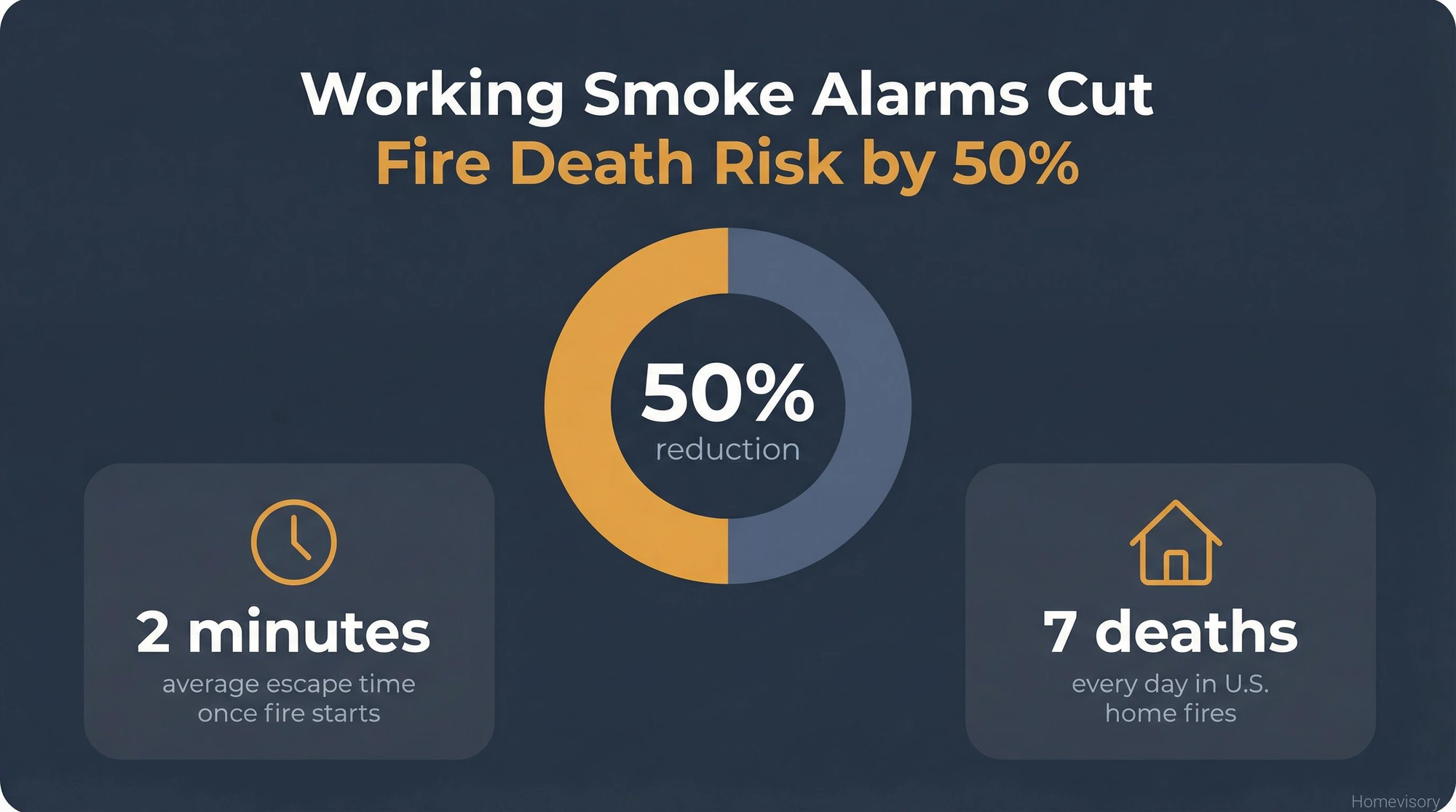
A working smoke detector gives you those two minutes. A dead one, a disabled one, a chirping one you’ve been ignoring, doesnt give you anything.
I have a lot of opinions about home maintenance. Some of it matters more than other parts. Your gutters can wait a month. Your air filter can wait a week. Your smoke detectors cannot wait. Put everything on a home maintenance checklist so nothing falls through the cracks, but smoke detectors go at the top. This is the one thing in your house where “I’ll get to it later” is not an acceptable answer.
What Homevisory Does About This
This is exactly why we built a home maintenance tracking system at Homevisory. Smoke detector battery replacement, monthly testing, 10-year full replacement, all of it goes on your maintenance calendar. You get reminders before things become problems. Before the 3 AM chirping. Before the detector thats been dead for six months that you forgot about.
Sign up for free at Homevisory home task manager and stop relying on annoying beeps to tell you when something needs attention. We’ll tell you before the beeping starts.