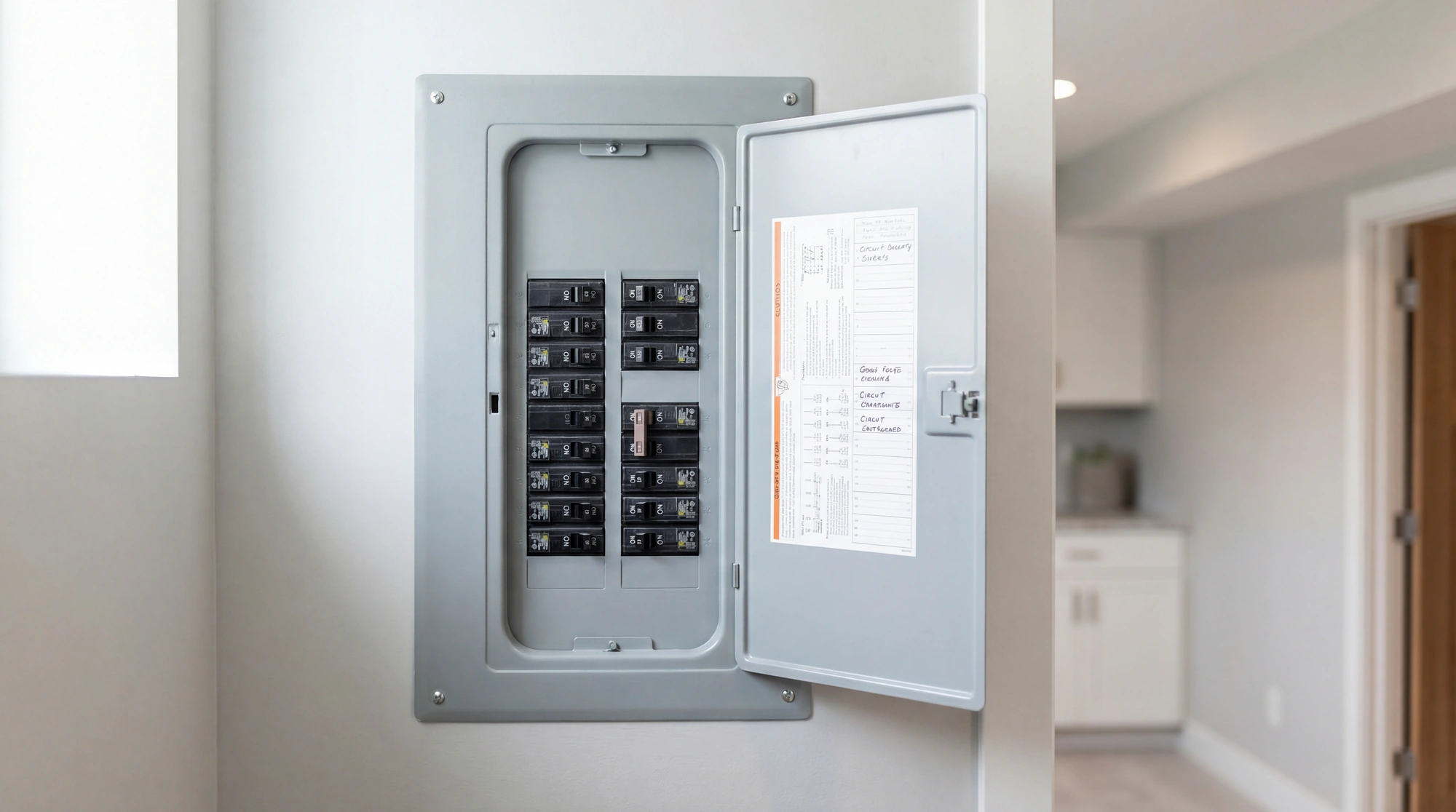
Why Your Circuit Breaker Keeps Tripping
Your circuit breaker keeps tripping because something is wrong. Thats not me being clever, thats just the reality. The breaker is doing exactly what its supposed to do. Its protecting your house from catching fire.
Most people treat a tripped breaker like an inconvenience. They walk to the panel, flip it back, and go about their day. Then it trips again. They flip it again. This drives me crazy because the breaker is literally telling you theres a problem and youre just ignoring it. You wouldnt ignore your smoke detector going off and just pull the battery. Same logic applies here.
I grew up in Atlanta and my dad Curtis worked in a factory for years. They had serious electrical equipment, big motors, stuff that could kill you if you didnt respect it. He used to tell me that electricity is invisible and thats what makes it dangerous. You cant see it. You cant smell it until something is already burning. The breaker is the one thing standing between your family and a house fire. When your circuit breaker keeps tripping, its not broken. Its working.
The Three Main Reasons
Look, I could give you fifteen reasons but really its three things. Overloaded circuit, short circuit, or ground fault. Ninety percent of the calls I used to get when I was doing renovation work were one of those three.
Overloaded Circuits
This is the one I see constantly and its the one Im going to spend the most time on because people dont understand it and it causes most of the problems.
Every circuit in your house is rated for a certain amount of current. Usually 15 amps for regular outlets, 20 amps for kitchen and bathroom outlets, larger for appliances like your dryer or AC. The breaker trips when you try to pull more current through the wire than its rated for. The wire heats up. The breaker senses this and cuts the power before the wire gets hot enough to start a fire.
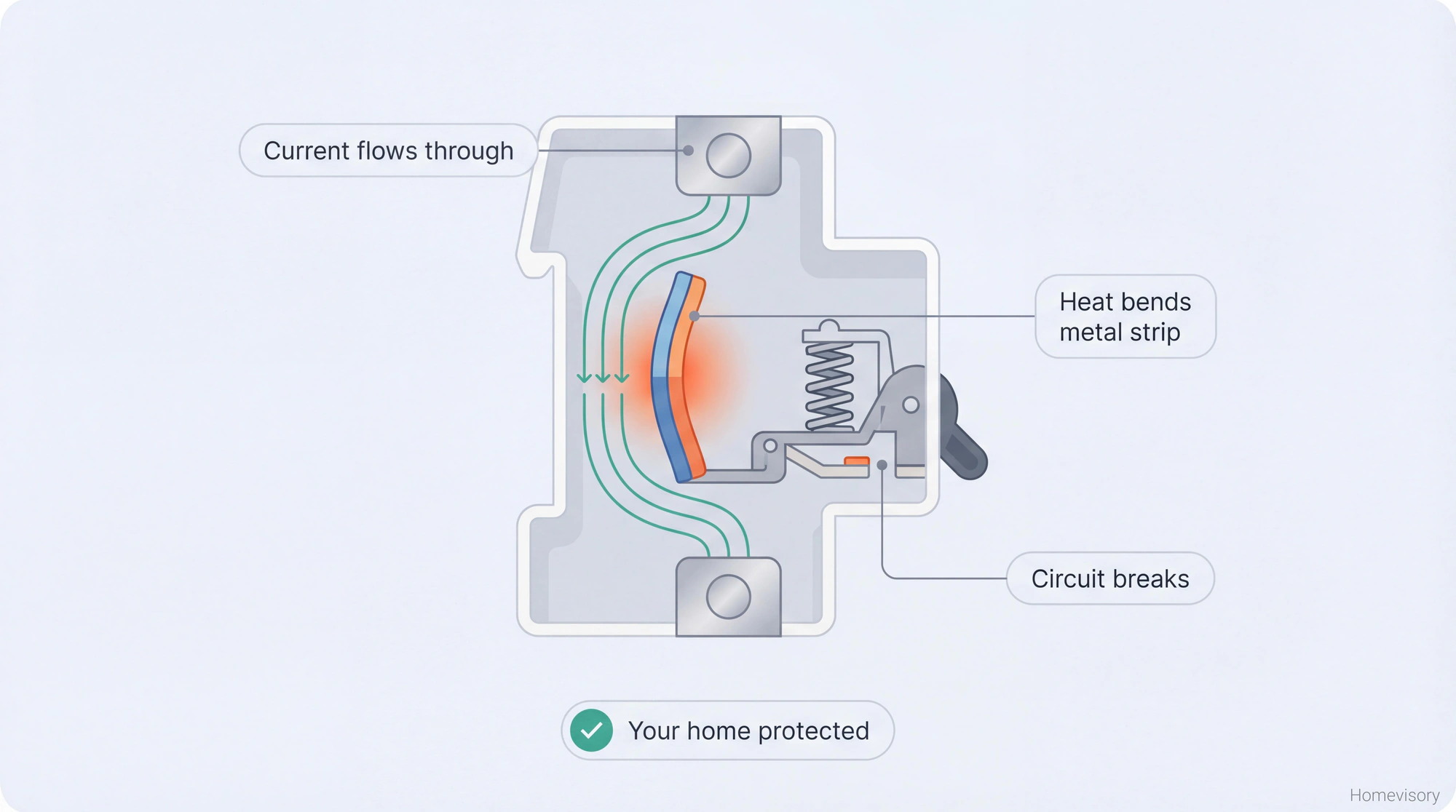
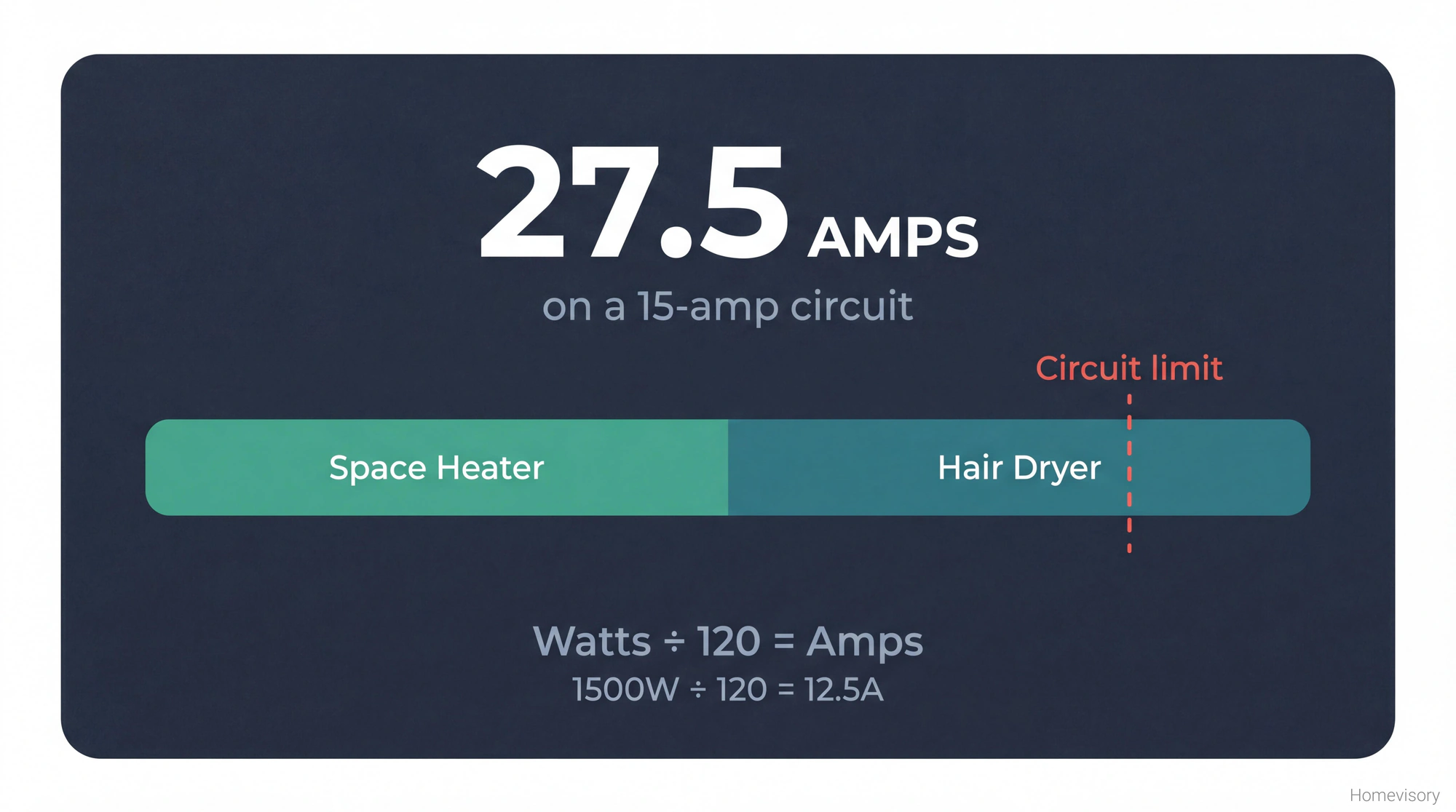
Heres what happens in real life. You plug your space heater into the bedroom outlet. The space heater pulls 1500 watts. Thats about 12.5 amps on a 15 amp circuit. Youre fine so far. Then your wife plugs in the hair dryer in the bathroom thats on the same circuit. The hair dryer pulls another 1800 watts, thats 15 amps by itself. Now youre trying to pull 27.5 amps through a 15 amp circuit. The breaker does its job and trips.
The math is simple but nobody does it. Watts divided by volts equals amps. A 1500 watt space heater on a 120 volt circuit pulls 12.5 amps. You can figure out pretty quick if youre overloading things. Add up all the wattage on a circuit, divide by 120, and if the number is over 15 or 20 depending on your circuit rating, thats your problem. Most people have never looked at this, theyve never thought about it, they just plug things in wherever theres an open outlet and wonder why the breaker keeps tripping. I had a client in Texas, this was 2006 or 2007, she had a space heater and a window AC unit on the same circuit and she kept calling me asking why the power in her bedroom kept going out. I showed her the math. Problem solved.
The modern house has way more stuff plugged in than when I was a kid. In our house in Atlanta we had a TV, a radio, a lamp, maybe a fan. Now my kids have phones charging, laptops charging, tablets charging, gaming systems, multiple TVs, and everything has a power brick. My daughter Janelle has like four things plugged in at all times in her room. And then people add a space heater in winter or a window unit in summer and wonder why everything shuts off.
What to do about it: Figure out which outlets are on the same circuit. Flip the breaker and see what stops working. Then make a list. Then spread your high-wattage stuff across different circuits. The space heater cant be on the same circuit as the hair dryer. Done.
Short Circuits
A short circuit is different. This is when hot and neutral wires touch each other directly, either because of damaged insulation, a loose connection, or something wrong inside an appliance.
When this happens you get a massive surge of current. Way more than an overload. The breaker trips immediately, sometimes with a pop or a spark at the outlet.
If your circuit breaker keeps tripping instantly when you flip it back on, not after you plug things in but immediately, you probably have a short somewhere. This is more serious than an overload.
Check your outlets and cords for:
- Burn marks or melted plastic
- Outlets that feel hot
- Burning smell
- Visible damage on cords
If you find any of that, stop using that outlet or device. If you cant find anything obvious, you need an electrician. A short inside a wall is not something you can diagnose yourself.
Ground Faults
A ground fault is when current escapes from its intended path and flows through something it shouldnt. Like water. Like you.
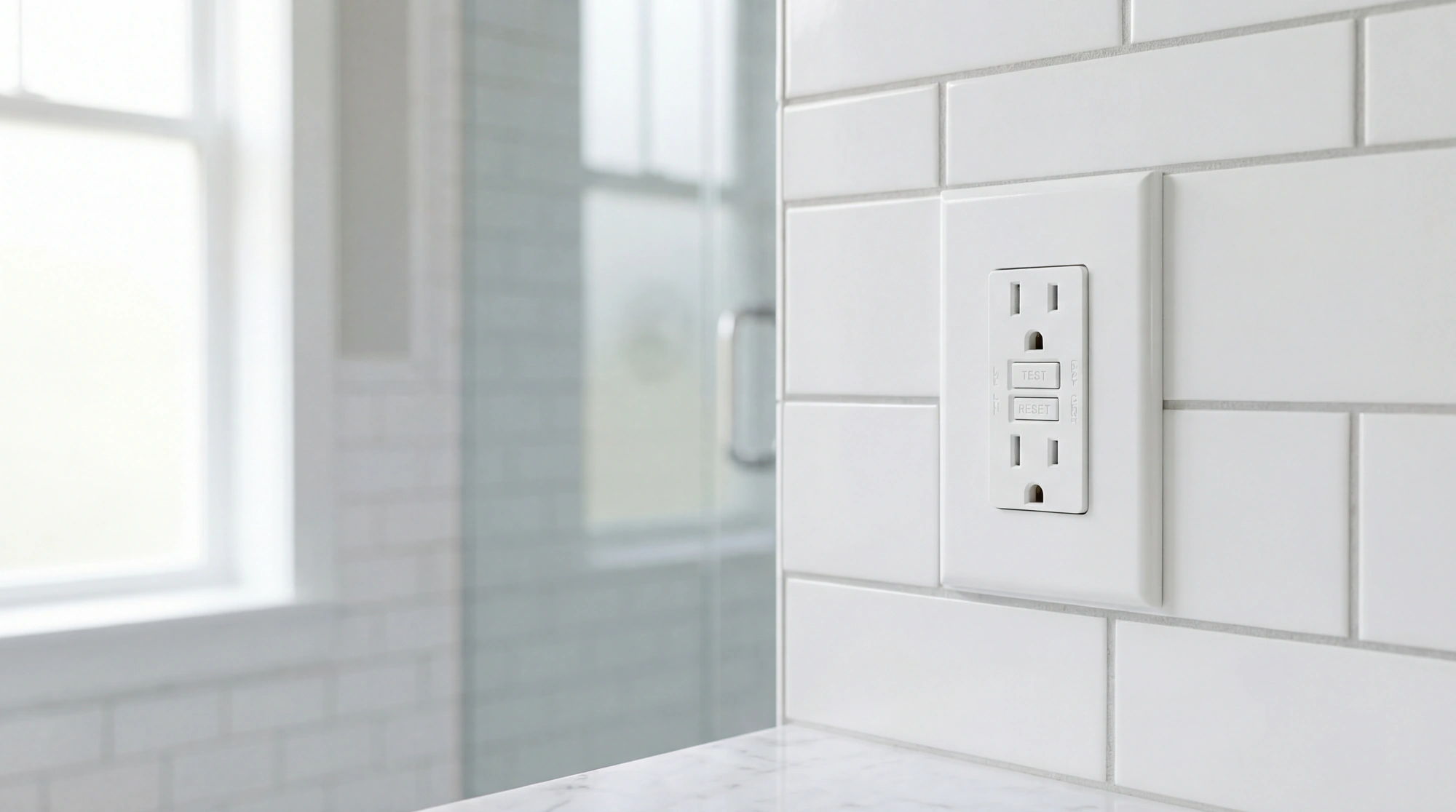
This is why bathrooms and kitchens have those outlets with the TEST and RESET buttons. GFCI outlets. They detect tiny imbalances in current flow and cut power in milliseconds. Fast enough to save your life.
If a GFCI outlet keeps tripping, its either doing its job because theres moisture somewhere, or the outlet itself is bad. Try unplugging everything from that circuit and resetting it. If it stays on, plug things back in one at a time until you find the problem device.
Im not getting into the engineering differences between arc faults and ground faults and all that. Theres a whole technical thing about AFCIs and GFCIs and when each one is required. Call an electrician if you want to know about that.
The Ben Disaster Taught Me Something About Electrical
I had a business partner named Ben back in 1999. We started a company together, MB Home Renovations. It did not end well. He disappeared with $72,000 in materials and client deposits and left me holding the bag.
But before all that, when we were still working together, we had a job where the client kept complaining about a breaker tripping in their kitchen. Ben wanted to just put in a higher amp breaker. He actually suggested this. Replace the 15 amp breaker with a 20.
I said no. I said we need to figure out whats actually wrong. He said I was overthinking it.
Heres what putting in a higher amp breaker does: it lets more current flow through wires that are only rated for 15 amps. Those wires heat up. The breaker doesnt trip because its rated for 20. The wires keep getting hotter. Eventually something catches fire. Inside your wall. Where you cant see it.
We found the actual problem. The circuit was just overloaded because the previous owner had added outlets without adding a new circuit. We ran new wiring to a dedicated circuit for the refrigerator. Proper fix.
Ben probably would have burned that house down. I think about that sometimes. Anyway.
When Its Your Appliances
Sometimes the breaker itself is fine, the wiring is fine, but you have a bad appliance causing the problem.
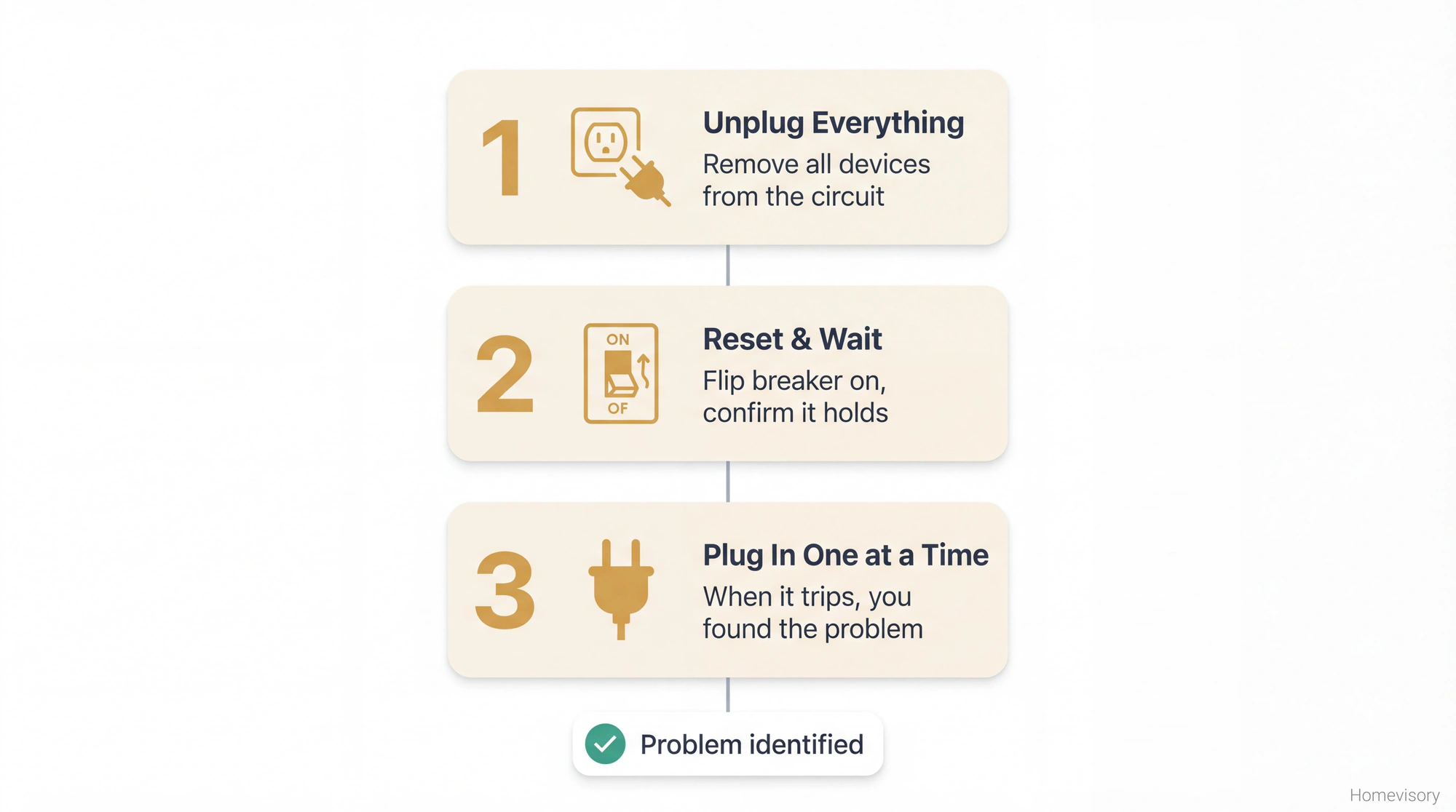
Heres how to figure that out:
- Flip the breaker back on with everything unplugged
- If it stays on, start plugging things in one at a time
- When the breaker trips, you found your problem
Common culprits:
- Old refrigerators with failing compressors
- Washing machines, especially if theyre old
- Space heaters, always space heaters
- Vacuum cleaners with worn motors
- Power tools with damaged cords
If one specific appliance trips the breaker, stop using it. Either get it repaired or replace it.
When Its the Breaker Itself
Breakers wear out. They dont last forever.
If a breaker is tripping under normal loads, loads that shouldnt be a problem, the breaker itself might be bad. After fifteen or twenty years, the internal components can weaken. A breaker that trips at 12 amps when its rated for 15 is worn out.
Also, breakers that are loose in the panel can trip more easily. Make sure everything is seated properly.
Should you replace your breaker yourself? Some people do. I did it once. But honestly, if you have to ask, call an electrician. Working inside a live panel is not something I recommend for most homeowners. Even with the main breaker off, theres still live power coming into the panel from the utility. Thats not a mistake you get to learn from.
Same thing if you think you need a panel upgrade. Thats not a DIY job. Moving on.
What My Dad Knew
My dad Curtis, the one who worked in the factory, he had a saying about electrical stuff. He said treat every wire like its live even when you know its not. Because the one time you assume, thats the time you get bit.
Mr. Davis, my woodshop teacher back in Atlanta, he said something similar about respecting the tools. He wasnt talking about electricity specifically but it was the same idea. You respect the thing that can hurt you. You dont get casual. I remember him showing us how a table saw could take a finger off and how that changes how you approach every cut. Electricity is the same way. You cant see it but it can kill you faster than any saw.
He passed away in 2012. I still think about things he said. I dont know.
When to Call an Electrician
Call someone if:
- The breaker trips immediately upon reset (wont stay on at all)
- You smell burning
- You see scorch marks
- The breaker feels hot
- You hear buzzing or crackling from the panel
- The same breaker trips constantly even with nothing plugged in
- Youre not comfortable diagnosing it yourself
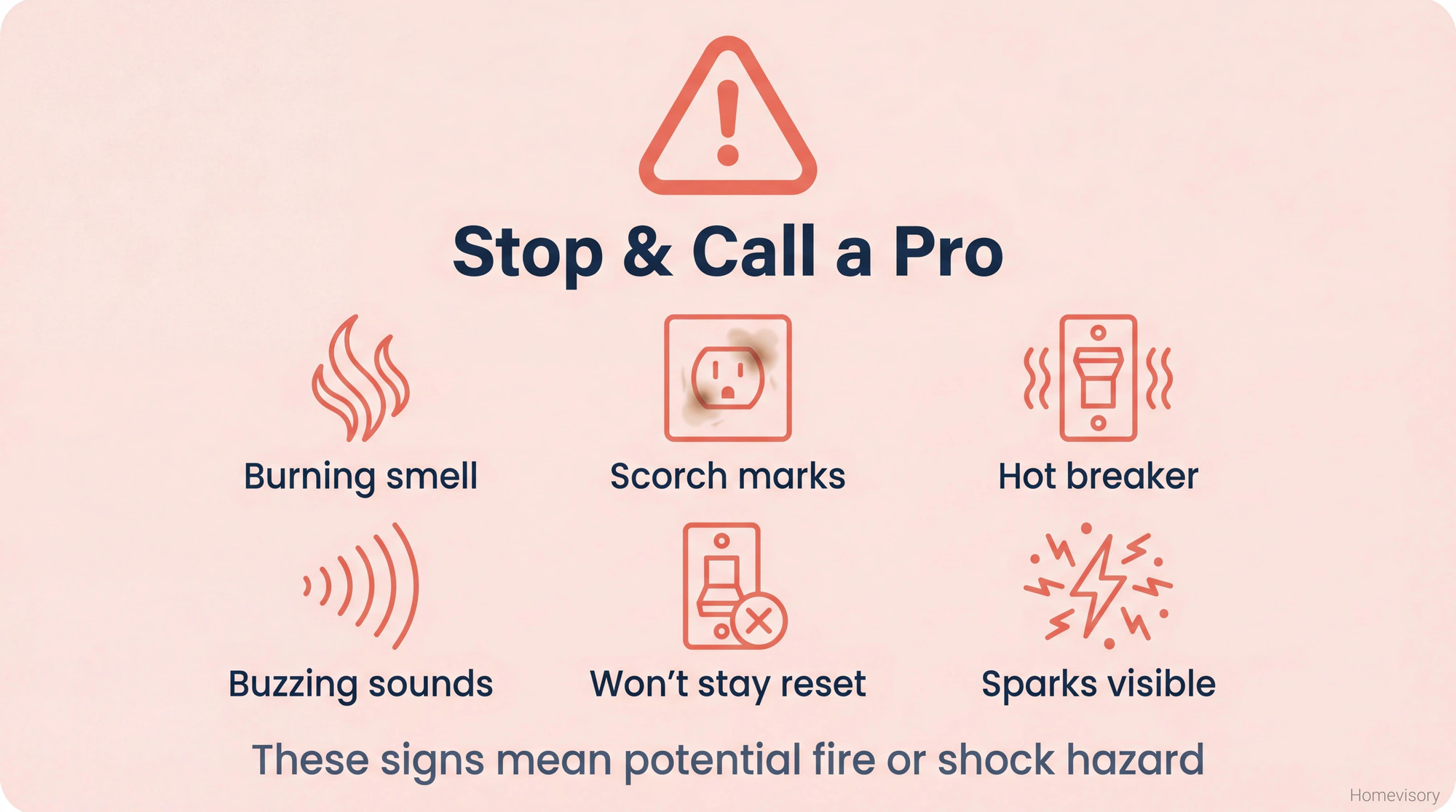
Theres no shame in calling a professional. Electrical problems can kill you or burn your house down. This isnt like a clogged drain where the worst case is you make a mess.
Stop Just Flipping It Back
If your circuit breaker keeps tripping, stop just flipping it back without investigating. The breaker is the messenger. Dont shoot the messenger.
Figure out if youre overloading the circuit. Check for damaged cords and outlets. Test your appliances one by one. If none of that reveals the problem, call an electrician.
Thats what we do here at Homevisory. We help you figure out what actually needs attention in your house so you can handle the stuff you can handle and know when to call in help. The Homevisory home task manager makes it simple to track this stuff, when you last checked your panel, what circuits you need to keep an eye on, whatever. Its free to sign up. You probably should.