When Your Refrigerator Stops Doing Its Job
A refrigerator not cooling is one of those problems that feels like an emergency because, honestly, it kind of is. You’ve got food in there. Meat. Milk. Whatever leftovers you were planning to eat. The clock starts ticking the moment you notice something’s wrong.
My dad used to say the fridge is the heart of the house. He was talking about how everything revolves around it, meal planning, groceries, the whole rhythm of feeding a family. When the heart stops working, everything else gets thrown off. He wasnt being dramatic. He was right.
Most of the time when people tell me their refrigerator not cooling, they assume the whole thing is dead. Compressor’s gone. Time to buy a new one. And sometimes thats true. But more often than not, its something you can actually fix yourself in under an hour. The trick is knowing where to look.
Start With the Obvious
Check your temperature dial. Is it set right. Someone bumped it. One of your kids adjusted it because they wanted colder drinks. My daughter Janelle once knocked our freezer dial to the warmest setting while shoving a pizza box in there and we didnt notice for two days. Lost a week of groceries.
Is the fridge plugged in all the way. Did something knock the cord loose. I know this sounds insulting but Ive gotten calls from people who spent hours panicking before checking the outlet.
Is there power to the outlet. Plug something else in. A lamp. A phone charger. Whatever.
Moving on.
The Condenser Coils (This Is Where I Get Annoying)
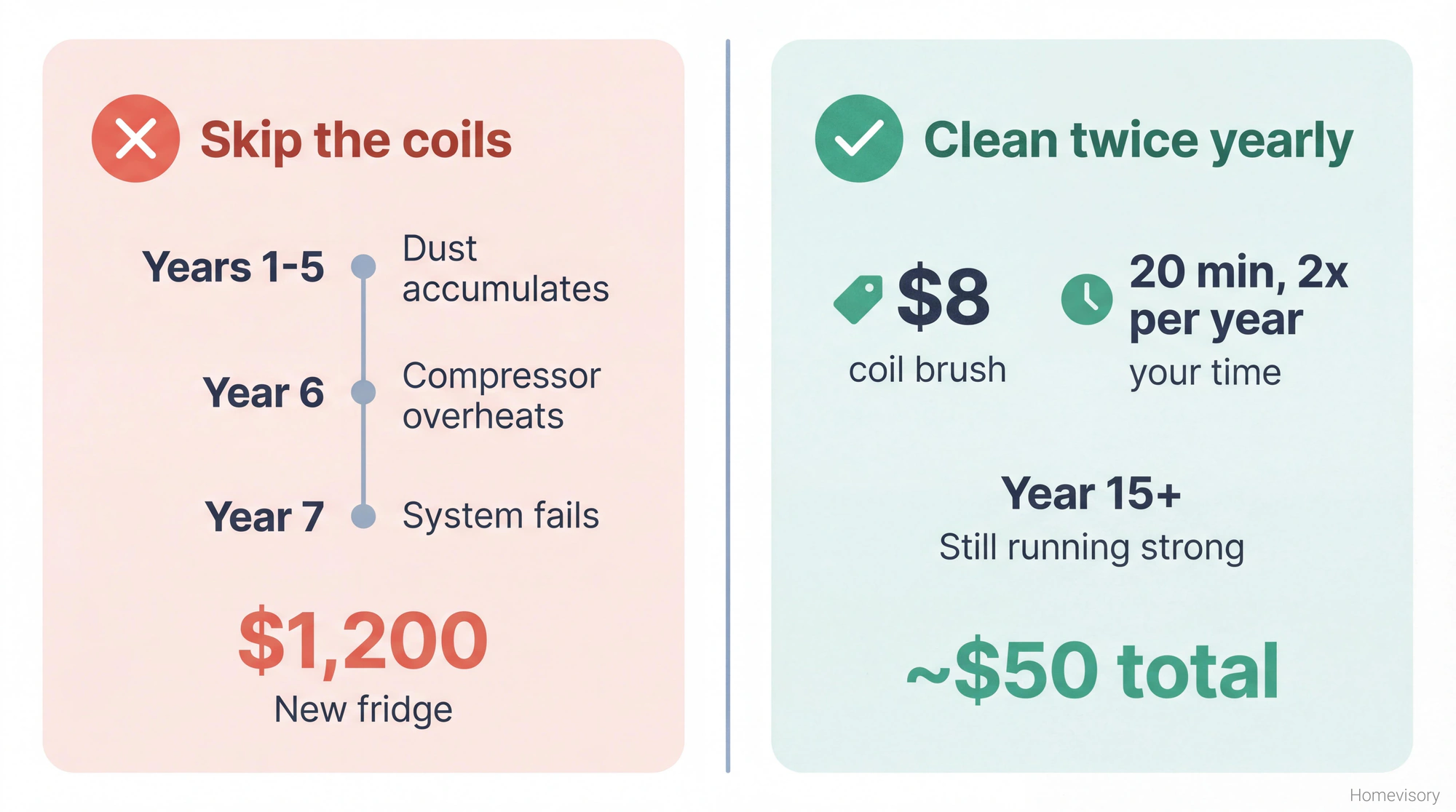
Okay. This is the part where I probably care too much but I dont care because Ive seen this exact problem a hundred times and people keep ignoring it and then acting surprised when their $1500 appliance dies after seven years instead of lasting fifteen.
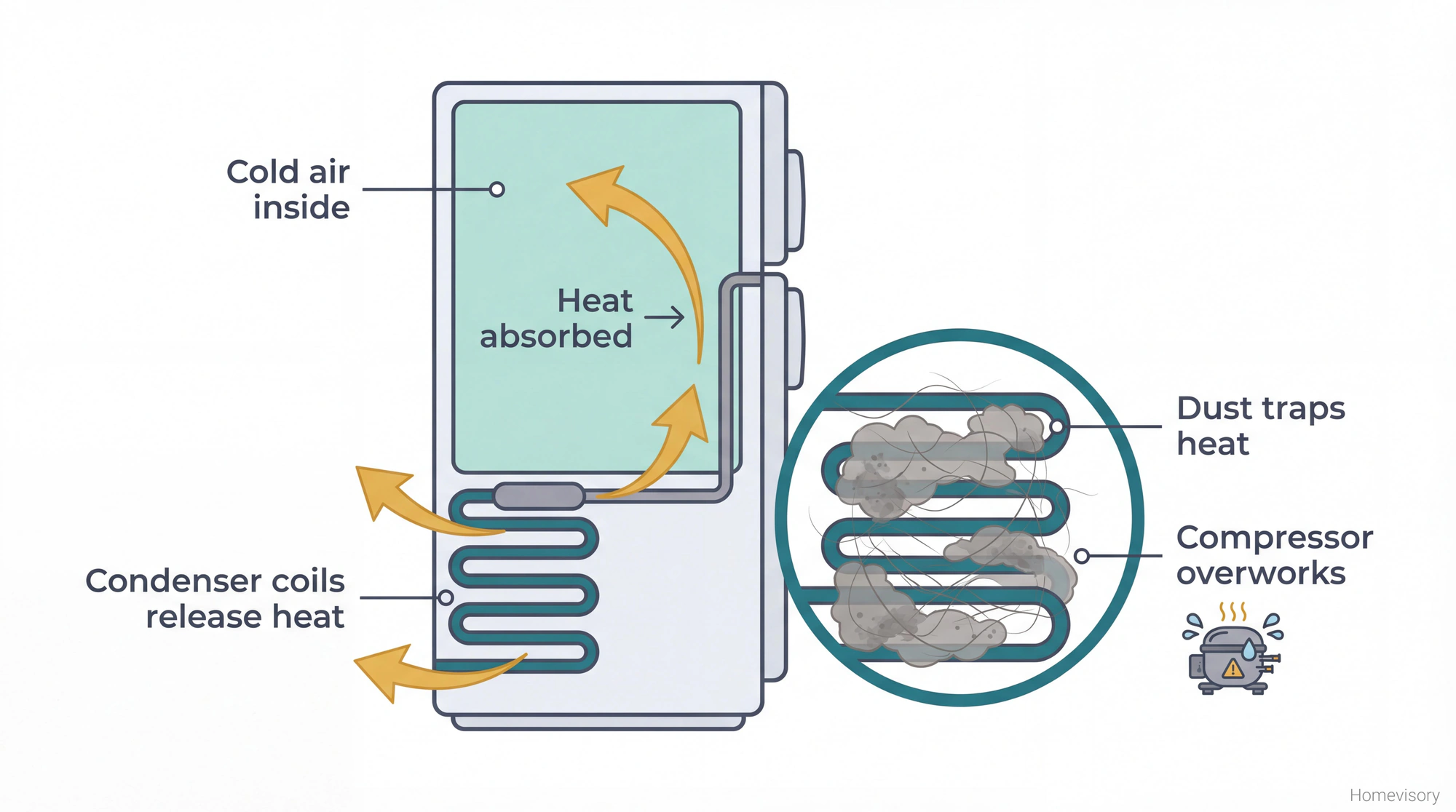
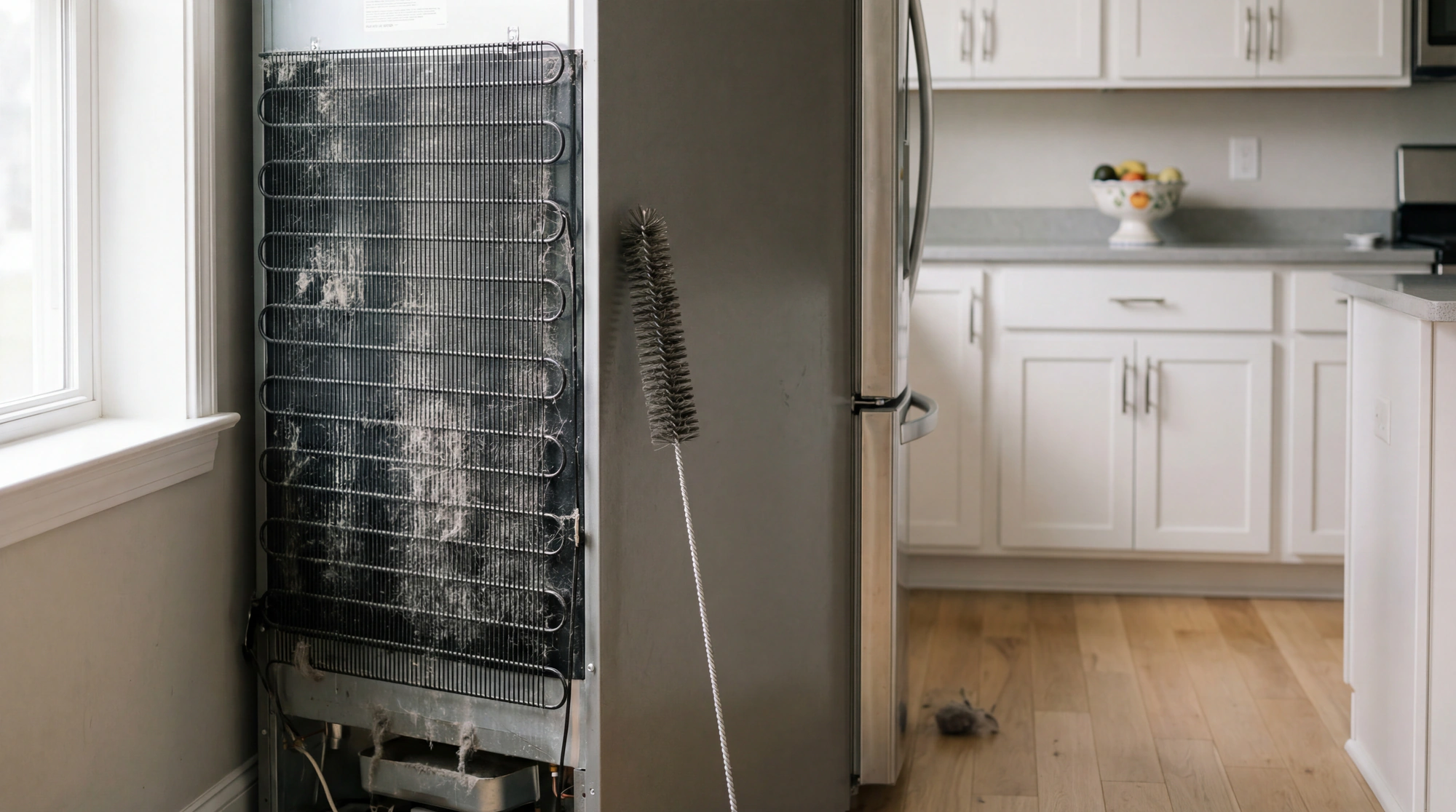
Your refrigerator has condenser coils. They’re either on the back of the unit or underneath it, depends on the model, and their entire job is to release heat. Thats how the whole cooling cycle works. The refrigerant inside your system absorbs heat from the interior of the fridge, carries it to the condenser coils, and the coils dump that heat into the room. If the coils are covered in dust and pet hair and grease and whatever else has accumulated back there over the years, they cant release heat efficiently. The compressor has to work harder to compensate. The compressor overheating is one of the main reasons these systems fail early. And people wonder why their fridge stopped cooling. The coils. Its always the coils. Or at least its the coils way more often than people think.
I clean mine every three months. Some people say twice a year is fine and maybe it is if you dont have pets, but I have two dogs, Sparkplug and Ratchet, and they shed like theyre getting paid for it. Pet hair gets everywhere. It gets under the fridge. It wraps around the condenser coils like insulation, which is the opposite of what you want.
How to Clean Them
Pull the fridge out from the wall. Unplug it first. Look at the back, if you see coils there, thats your target. If you dont see them, theyre underneath, behind a kick plate at the bottom front.
Get a coil brush. They cost maybe eight dollars and theyre specifically designed for this. Long and narrow with stiff bristles. You can also use a vacuum with a brush attachment but the coil brush gets into the gaps better.
Brush the dust off. Vacuum up the debris. Wipe down anything you can reach. Plug it back in. Push it back against the wall.
Thats it. Twenty minutes of coil cleaning twice a year could add five years to your refrigerators life. Or dont do it and buy a new fridge in 2028. Your choice.
My dad worked in a factory for thirty-two years and he used to say, this was about machinery but it applies here, he used to say you gotta respect your equipment or your equipment wont respect you back. He meant maintenance. He meant not running things into the ground and then blaming the thing when it breaks.
The Condenser Fan
Behind or underneath the fridge, near the condenser coils, theres a condenser fan. Its job is to move air across the coils to help with thermal efficiency. If this fan motor dies or gets blocked, the coils cant release heat properly even if theyre clean.
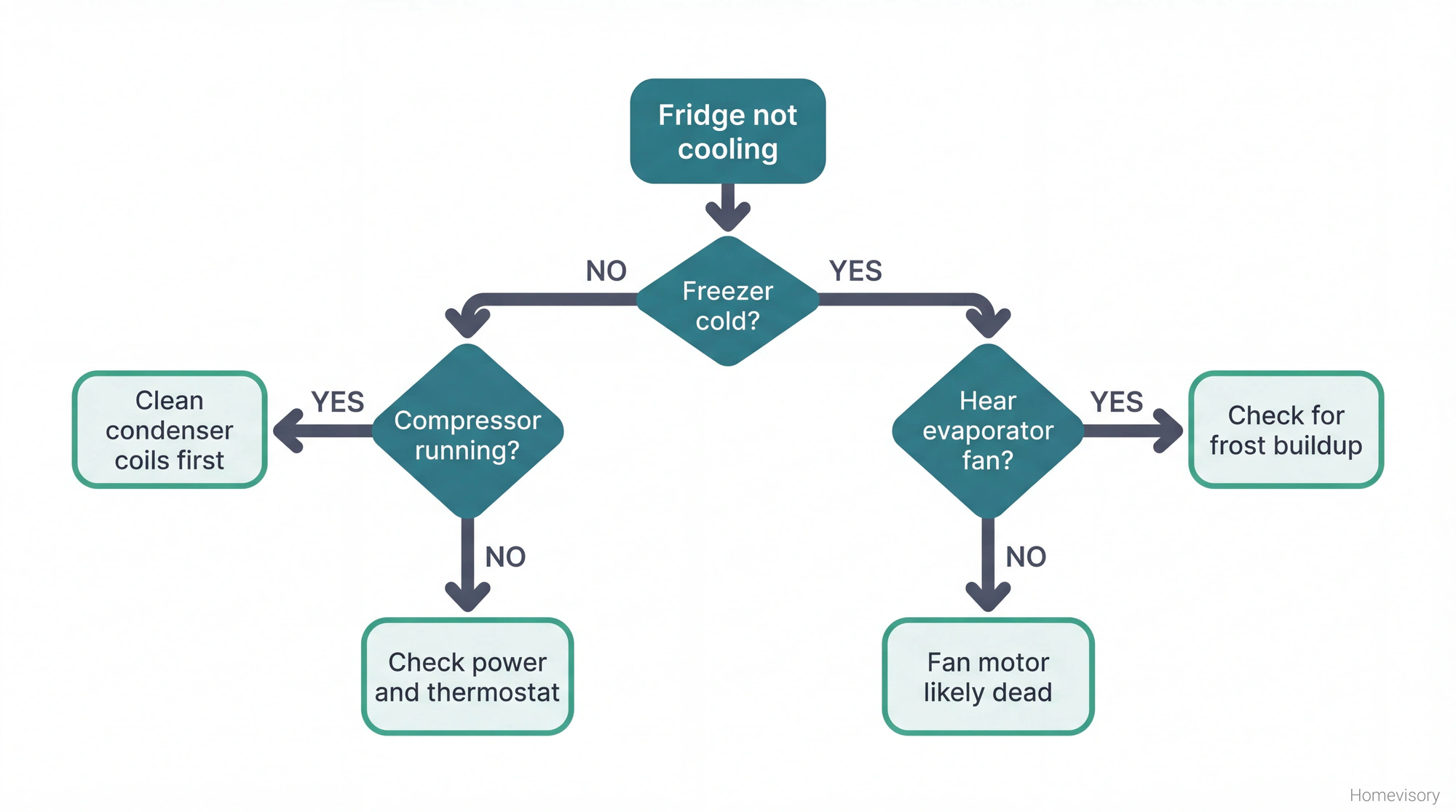
Listen. Is the fan running. You might need to pull the fridge out to hear it. If the compressor is running but you dont hear the fan, thats a problem.
Check for obstructions. Ive pulled twist ties out of these fans. A bread clip once. How did a bread clip get under a refrigerator. I dont know. But it stopped the fan blade from spinning and the whole system was struggling.
If the fan spins freely when you push it manually but wont run on its own, the fan motor is probably dead. Replacement motors run $50-100 depending on your model. Worth fixing.
The Evaporator Fan and Coils
This is where it gets colder. Literally. The evaporator coils are inside the freezer compartment, usually behind a panel. The evaporator fan blows cold air from these coils into the fridge and freezer sections.
If your freezer is cold but your fridge section isnt cooling, the evaporator fan might be the problem. Or theres frost buildup blocking airflow. If your freezer is the one not freezing, thats a different troubleshooting path.
One time, this was maybe 2019, Raquel called me at work because the fridge was warm but the freezer was fine. She was genuinely upset because she had ice cream in there that was starting to soften and Raquel takes her ice cream seriously. I told her to check if she could hear the evaporator fan running when she opened the freezer door. She couldnt hear anything. Turns out the fan motor had seized up. The freezer was staying cold because it was insulated and the evaporator coils were right there, but no air was circulating to the fridge section.
Forty dollar part. Would have cost $300 for a repair call.
Frost Buildup
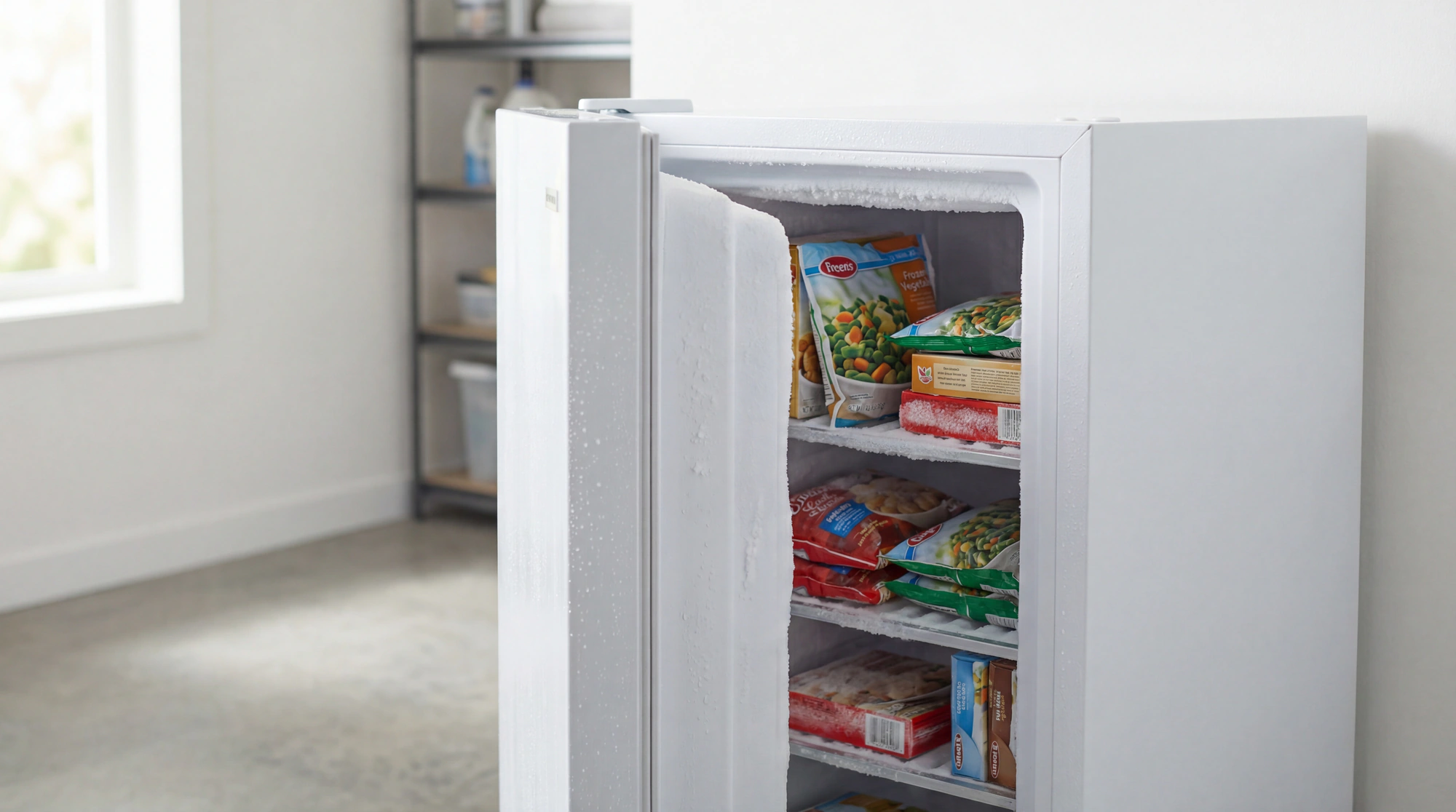
Open your freezer. Look at the back panel. If you see thick frost or ice buildup, thats blocking the evaporator coils and restricting airflow. Your fridge cant breathe.
This usually means the defrost system isnt working. Could be the defrost heater, the defrost thermostat, or the defrost timer. These are fixable but you need to figure out which component failed.
A temporary fix is to unplug the fridge, leave the doors open, let everything defrost for 24 hours, then plug it back in. If the problem comes back in a few weeks, your defrost system needs repair.
Temperature Control
Honestly I already covered this but people skip sections so Im saying it again.
Check the temperature control dial or digital settings. Make sure theyre actually set cold. The recommended fridge temp is 37-40°F. Freezer should be 0°F.
If the dial is set correctly and you’re still having problems, the temperature control thermostat might be faulty. It tells the compressor and fans when to turn on. When it fails, the cooling system doesnt get the signal to run.
You can test this with a multimeter if you know how. If you dont know how, call someone.
The Compressor
The compressor is the heart of the cooling system. Its the thing that actually pumps refrigerant through the cycle. You can usually hear it humming when the fridge is running.
If your compressor isnt running at all, the fridge wont cool. If its running constantly but nothing is getting cold, there might be a refrigerant leak or the compressor itself is failing.
Compressor replacement is expensive. $500-800 for the part plus labor. At that point you have to do the math on whether its worth fixing or just buying new.
But before you assume the compressor is dead, check everything else. Ive seen people ready to replace their whole refrigerator when the real problem was dirty condenser coils. A $8 brush would have fixed it. Instead they spent $1200 on a new fridge because nobody told them to check the coils.
Refrigerant
Not getting into this. If you have a refrigerant leak, you need to call someone. Refrigerant is not something you handle yourself. Its regulated, its dangerous if you dont know what youre doing, and adding more refrigerant without fixing the leak is pointless.
Signs of a refrigerant leak: fridge runs constantly but barely stays cold, frost in weird places, hissing sounds. Call a pro.
Door Seals
This is so obvious Im almost annoyed to include it but whatever.
Close the door on a piece of paper. Try to pull the paper out. If it slides out easily, your seal is weak and cold air is escaping. The compressor runs more, the system works harder, everything suffers.
Gaskets are usually replaceable. Check your manual or look up your model number online.
Also, are you leaving the door open. Are your kids leaving the door open. Standing there staring at the shelves trying to decide what they want while cold air pours out. I had this conversation with my kids approximately four thousand times.
What My Parents Fridge Taught Me
My parents had a side-by-side Kenmore in our house in Atlanta when I was growing up. White. Nothing special. It ran for twenty-two years. Twenty-two years. The same refrigerator from when I was five until I was long gone and married and it was still running when they finally replaced it just because they wanted something new.
I think about that fridge sometimes. Was it just built better. Were appliances more durable in the eighties. Or did my mom just take care of it. She took care of everything. Saturday mornings cleaning everything whether it needed it or not. Maybe she was cleaning the coils and I never noticed because I was a kid and who pays attention to their mom cleaning behind the fridge.
I dont know. But I know that our fridge now, in Palm Beach, works harder than that Kenmore ever did. The humidity here is brutal. Salt air from the coast. Everything corrodes faster, works harder, wears out quicker. Sparkplug and Ratchet dont help. One time the fridge died while we were at church and by the time we got home both dogs had figured out how to nudge the door open and there was shredded lunch meat packaging all over the kitchen floor. They looked very pleased with themselves. I was not pleased.
When to Call Someone
- Compressor not running and youve checked everything else
- Refrigerant leak suspected
- Electrical problems beyond your skill level
- Youve cleaned the coils, checked the fans, verified the seals, and its still not cooling
No shame in calling a professional. Some things are DIY. Some things arent.
Keep It Running
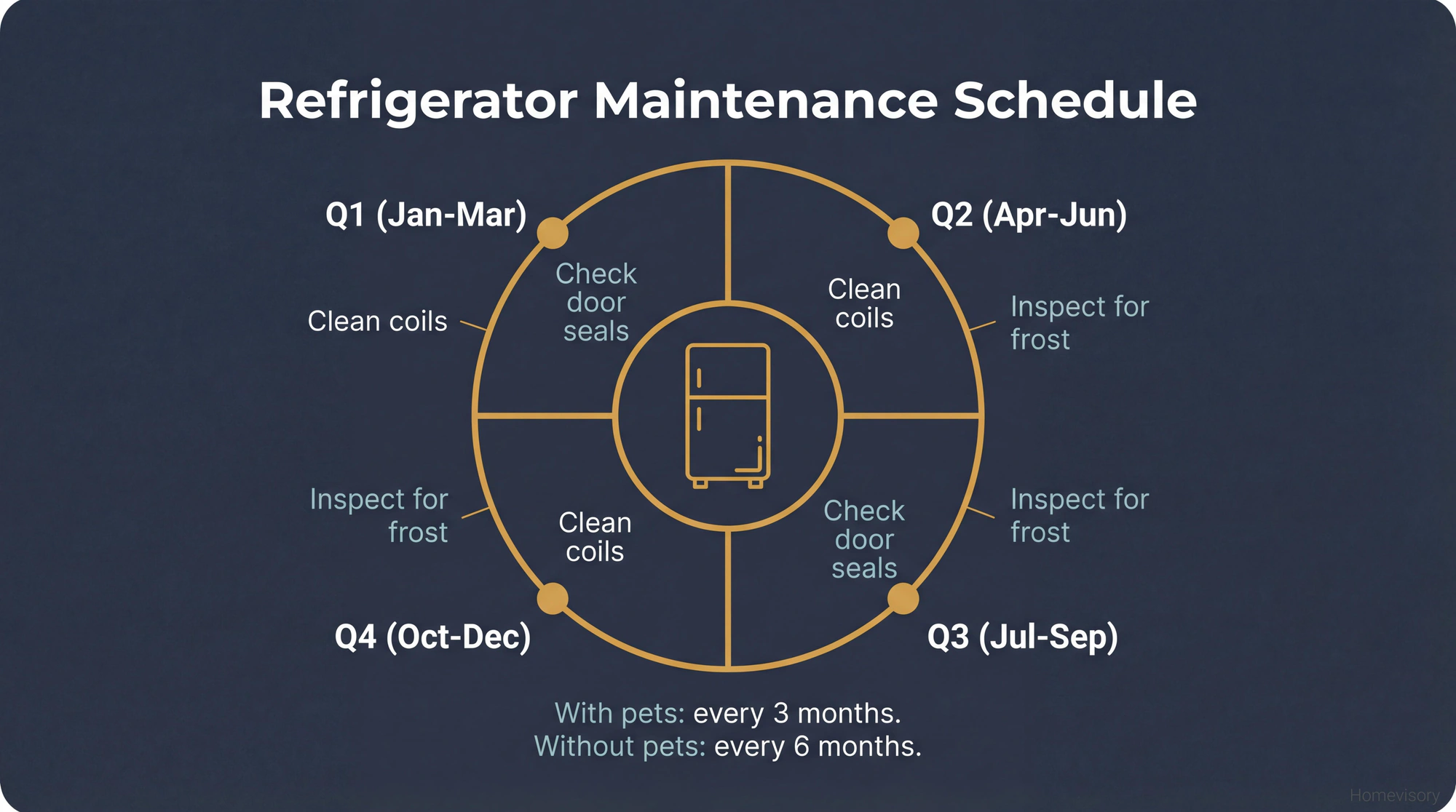
Your refrigerator runs 24/7. Its the one appliance in your house that never gets a break. Basic appliance maintenance makes a difference. Clean the coils. Check the fans. Dont ignore weird sounds. Dont let frost build up. For a full overview of every common fridge issue, our refrigerator repair guide covers the complete list.
At Homevisory, we built a home task manager that reminds you to do this stuff before it becomes an emergency. Coil cleaning. Seal checks. Filter changes if your fridge has a water dispenser. Its free to sign up and it means you stop forgetting about the things that matter until theyre already problems.
Because a refrigerator not cooling is annoying. But a refrigerator not cooling because you havent touched the condenser coils in six years is annoying AND preventable. Thats what we do here at Homevisory. Help you prevent the preventable stuff.