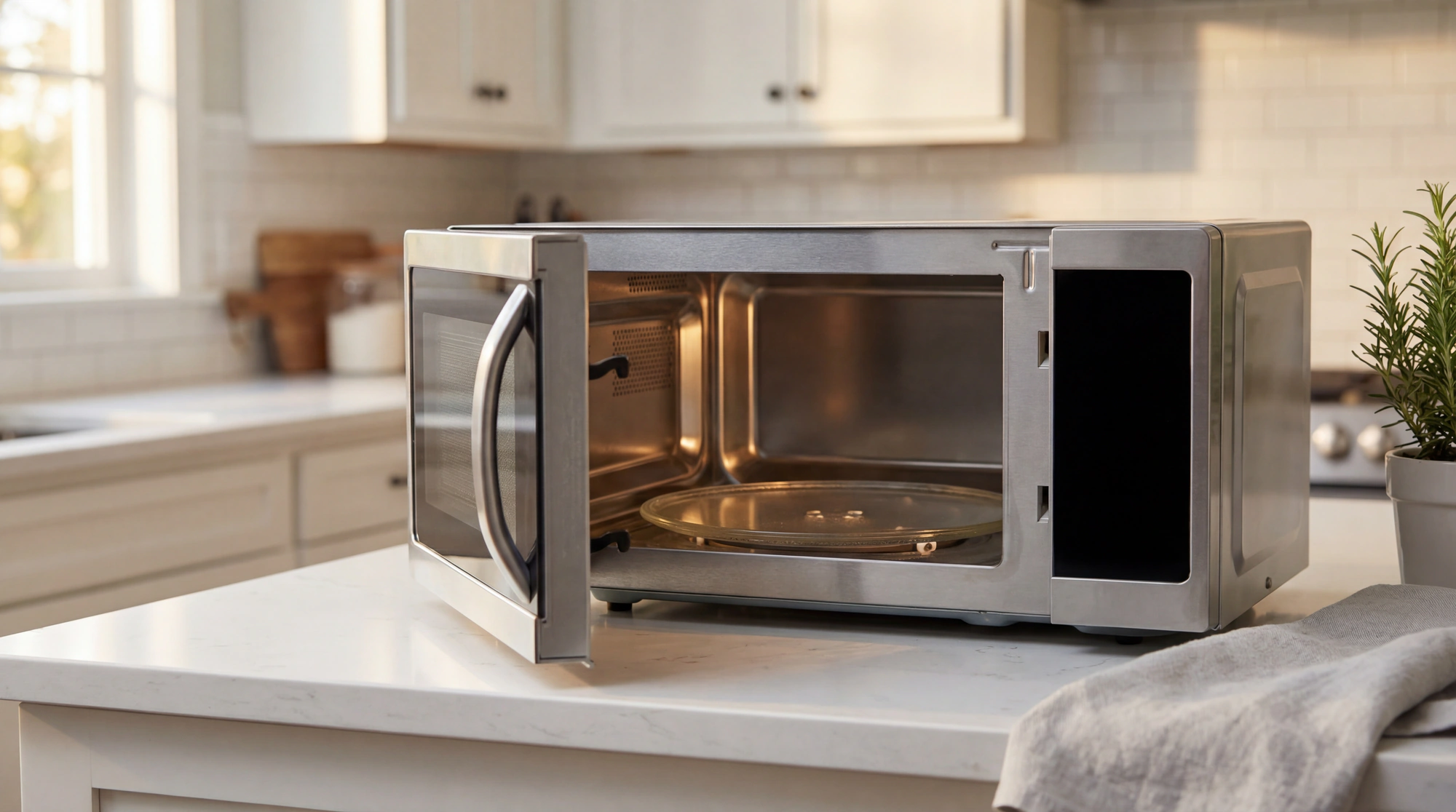
The Basics of Microwave Oven Repair
Most microwave problems aren’t complicated. People assume the whole thing is some kind of mystery box and the second it stops working they either throw it out or call someone to haul it away. Both of those are often wrong.
I’ve fixed dozens of microwaves over the years, mine and other peoples, and about 80% of the time its something simple. Something you can handle in your garage or kitchen in twenty minutes. The other 20% involves the magnetron or the capacitor and thats when you call a professional or just buy a new one because microwave oven repair on those components isn’t worth the risk or the cost.
So lets figure out which category your problem falls into.
When the Microwave Does Nothing
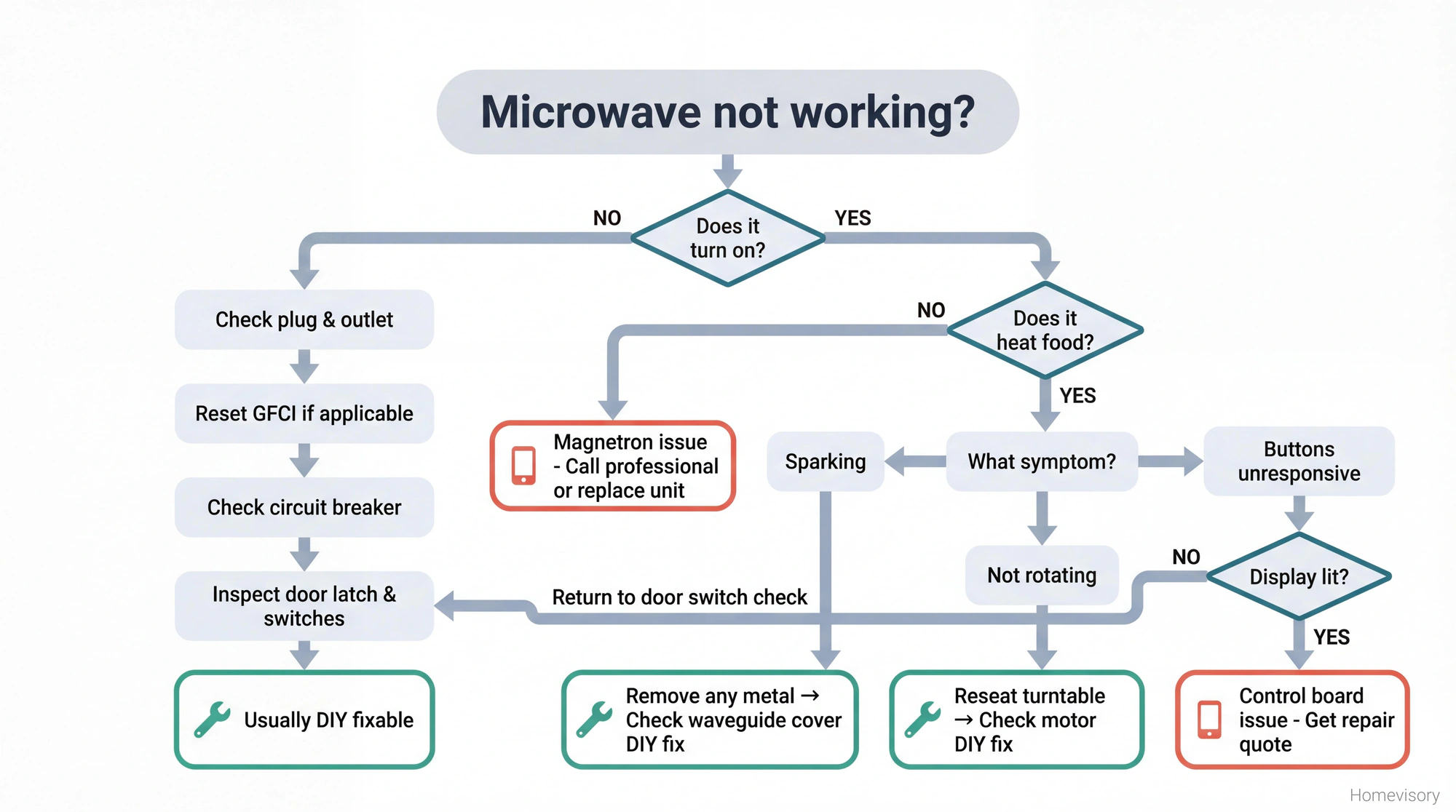
Plug. Check the plug. I know that sounds insulting but I once spent forty-five minutes convinced a microwave was dead before I realized the outlet had tripped. The microwave was plugged into a GFCI outlet in a kitchen and someone had used a blender that morning and tripped it. Reset the outlet. Microwave worked fine.
If the plug and outlet are good, check your circuit breaker. Microwaves pull a lot of power, especially older ones, and they can trip breakers pretty easily.
Still nothing. Now we’re looking at the door switch.
The Door Switch Problem
This is where I probably spend too much time explaining but I dont care because this is the most common microwave oven repair issue and nobody talks about it.
Your microwave has safety switches in the door latch mechanism. Usually three of them. Their whole job is to make sure the microwave cannot run unless the door is completely sealed shut because microwaves are radiation and you dont want that leaking into your kitchen.
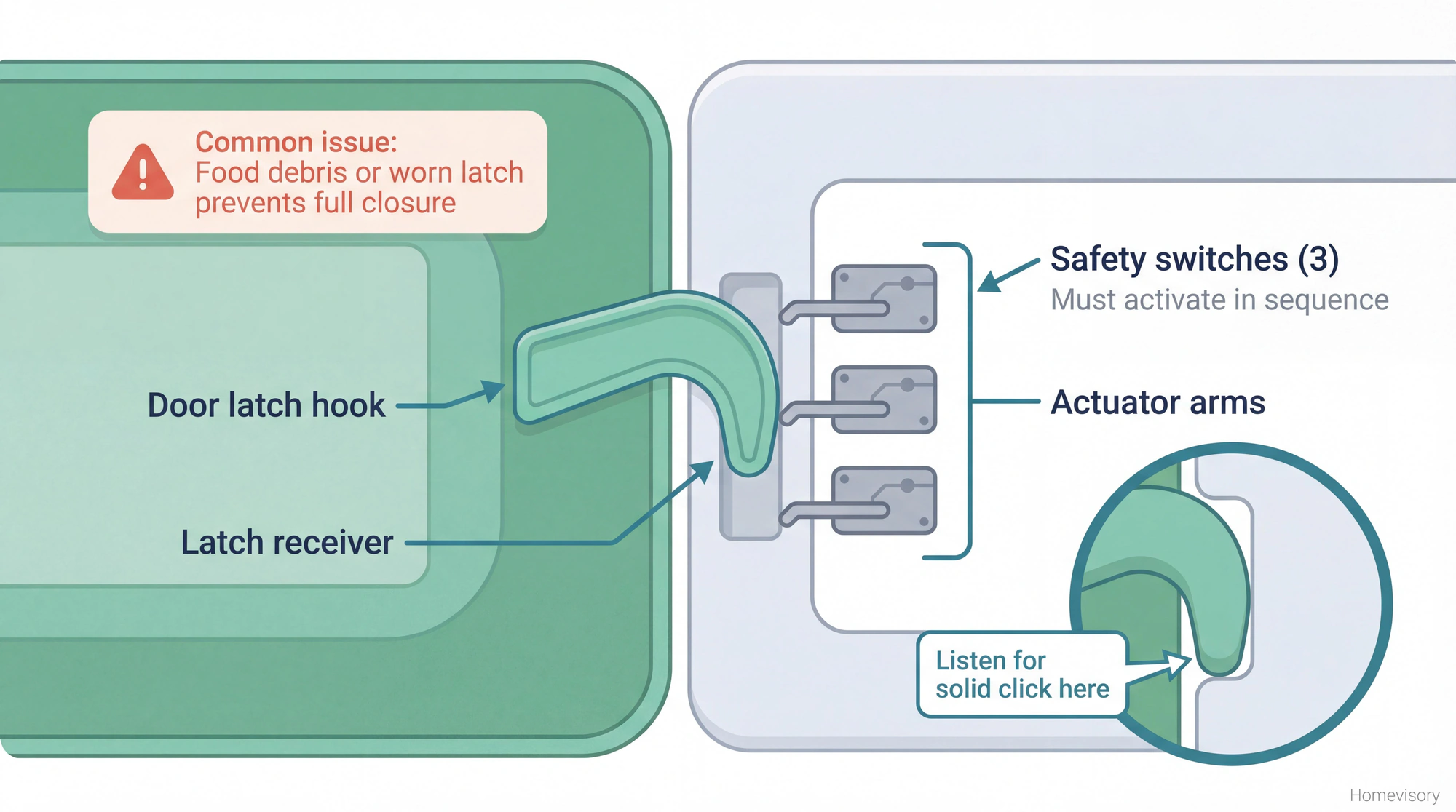
When you close the door and it latches, those switches activate in sequence and tell the control board that its safe to operate. If even one switch fails or if the latch mechanism is worn or misaligned or if theres a piece of dried food stuck in there preventing full closure, the microwave will not turn on. It will look dead. It will act dead. But its not dead, its just being safe. The engineers designed it this way on purpose because the alternative is a microwave that runs with the door open and nobody wants that.
You can test this yourself. Close the door slowly and listen for the click. Is it solid. Does it feel secure. Try pressing firmly on the door while hitting start. If the microwave suddenly works, your latch is worn.
Replacement door switches are usually $5-15 each online. The repair requires unplugging the microwave, removing the outer casing, and swapping the switch. YouTube has specific videos for most models.
Turntable Issues
The turntable motor is another one that fails constantly and its an easy fix.
If your food isnt rotating, first check the obvious stuff. Is the glass plate seated correctly on the roller ring. Is the roller ring itself in place. I’ve seen people load a heavy casserole dish that knocked everything out of alignment and then assumed the motor was dead.
Actually check those things. I’ll wait.
If the turntable motor itself is burned out, you’ll usually know because you can hear it trying to work. Sort of a humming or buzzing when the microwave runs but no rotation. The motor is under the floor of the microwave cavity and replacement motors run about $20-40 depending on the brand.
My mom Shirley kept the same microwave for probably fifteen years. GE something. She replaced the turntable motor twice in that time and did it herself both times even though she would never have called herself handy. She just followed the manual. I think about that sometimes when I hear people say they’re not good at repairs. She wasn’t good at repairs. She was just willing to try.
Anyway.
Buttons Not Responding
Control panel issues. This is where it gets a little more complicated.
If some buttons work and others don’t, your touchpad membrane is wearing out. This happens a lot on microwaves that are 8+ years old. The membrane is basically a flexible circuit that registers where you’re pressing and over time it degrades. You can sometimes buy a replacement touchpad for your specific model but honestly at this point you’re probably spending $80-100 on the part and I’d question whether that makes sense for an aging microwave.
If NO buttons work but the display lights up, you might have a control board problem. Thats not a DIY repair. Moving on.
If the display doesn’t light up at all, go back to the door switch section.
Sparking Inside the Microwave
This one scares people but its usually not a big deal.
Metal inside the microwave is the most common cause. Check for any foil, twist ties, metallic trim on dishes. I once had a bowl with a tiny gold decorative rim that I didn’t even notice and it sparked like a Fourth of July show.
But if theres no metal and its still sparking, look at the waveguide cover. That’s the small panel on the inside wall of the microwave, usually near the top or side, that protects the magnetron opening. If food has splattered on it and burned, or if its cracked or warped, it can cause arcing.
You can buy replacement waveguide covers for most models. They’re cheap, maybe $10-15. Cut it to size, pop it in, done.
The Smell Issue
This isnt exactly microwave oven repair but I’m putting it here because people ask.
Raquel microwaved salmon once. Once. I don’t know what she was thinking. We tried baking soda, we tried vinegar and lemon, we tried leaving it open with coffee grounds inside for days. That microwave smelled like fish for three weeks. We eventually just replaced it because I couldn’t handle opening it anymore and smelling the ghost of that salmon. We’ve been married 26 years and I still bring it up.
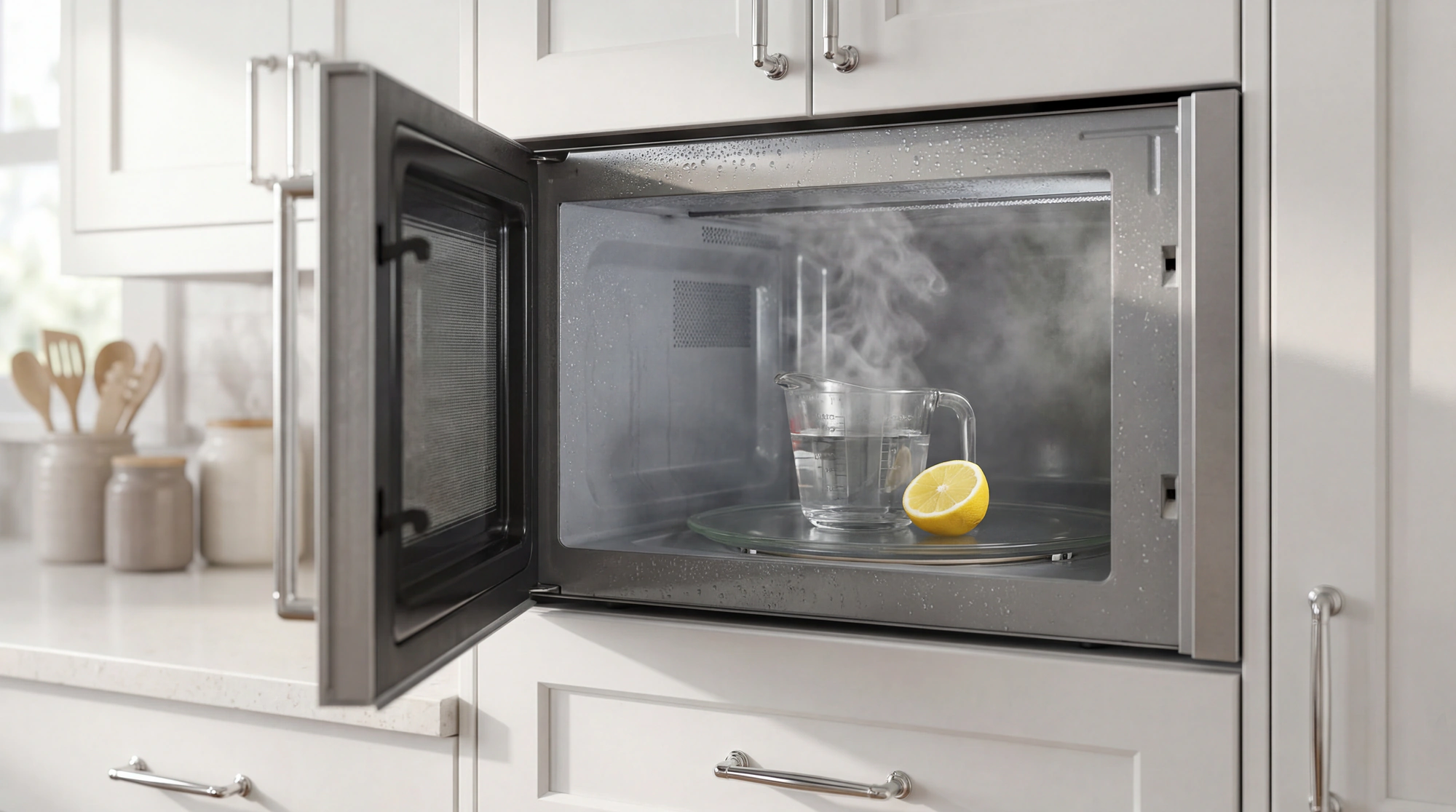
If you have a smell problem, the lemon and vinegar method works for most things. Microwave a bowl of water with lemon juice and vinegar for five minutes, let it steam, wipe down the inside. But some smells are permanent. Some smells have moved in and they’re not leaving.
Microwave Runs But Doesn’t Heat
This is the magnetron. This is the big one.
The magnetron is what actually generates the microwaves that heat your food. If your microwave turns on, the turntable spins, the light comes on, but the food stays cold, the magnetron is probably dead.
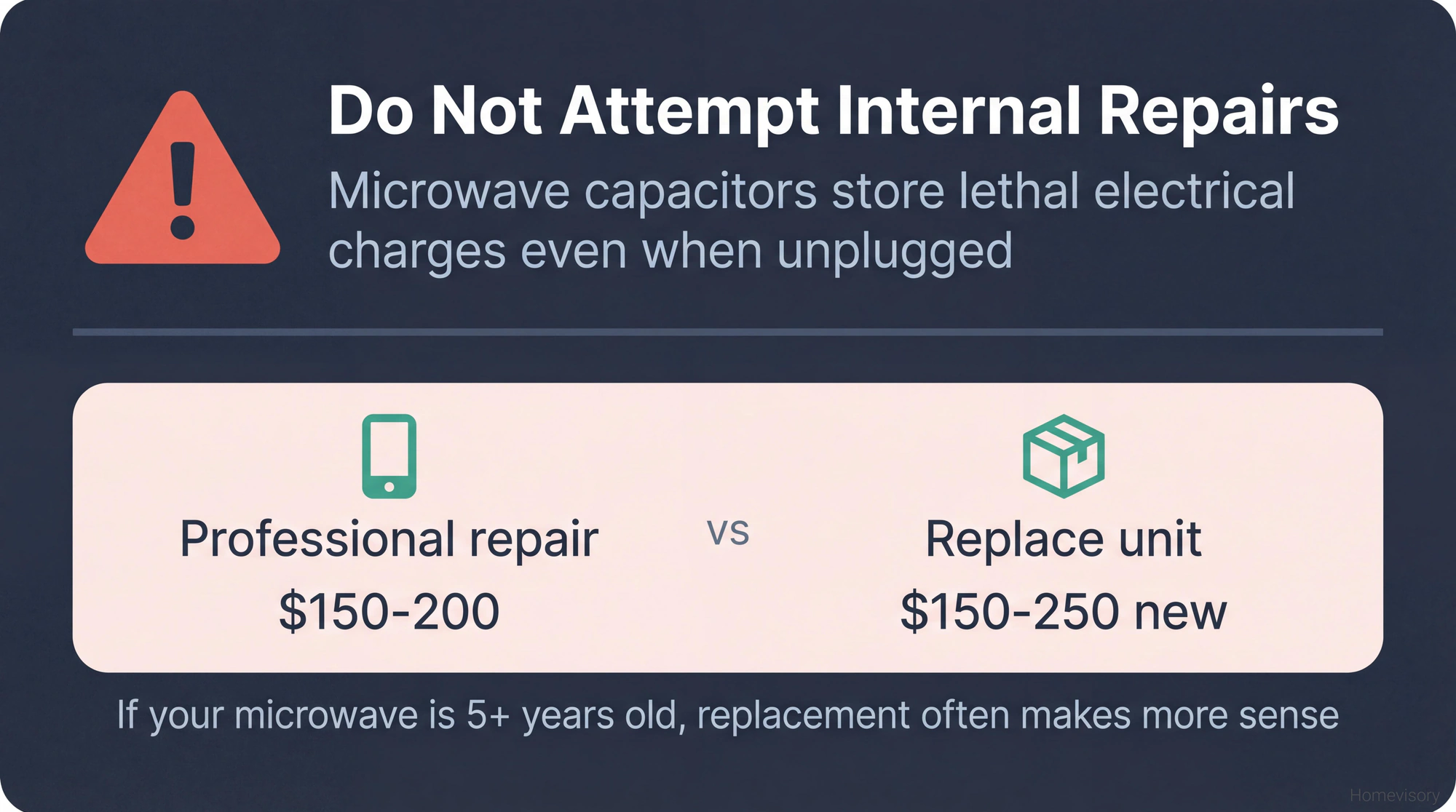
I am not going to tell you how to replace a magnetron because even when unplugged, microwave capacitors can hold lethal electrical charges. People have died working on microwaves. I fix houses, I dont fix high-voltage situations.
If its the magnetron and your microwave is under five years old, check if its still under warranty. If its older than that, replacement cost including labor is usually $150-200 and at that point youre better off buying new.
That Rental in Texas
I had a rental property in Plano back when I was doing commercial work and one of my tenants called because the microwave was “making weird noises.” I drove over expecting to tell them it was fine, microwaves make noise, but I walked into that kitchen and heard what they were talking about. Not the normal hum. More like a growling. Rhythmic. Almost mechanical in a way that sounded wrong.
Turned out the cooling fan motor was failing. The microwave has an internal fan that keeps the magnetron from overheating and when that fan motor starts to go, it makes sounds you don’t forget. I replaced the fan motor myself, took about an hour, and the tenant was happy.
I dont know why I remember that so clearly. I drove out there at like 7 PM on a Tuesday and the light in the kitchen was that orange sunset kind of light and the tenant was this older woman who reminded me of my aunt. Probably just one of those memories that sticks.
When to Just Replace It
Look, I’m all for repairing things. Thats what we do here at Homevisory. We help people take care of their homes instead of ignoring problems until everything is expensive and broken.
But microwaves are not forever appliances. If yours is more than ten years old and something major fails, like the magnetron or the control board, replacement makes more sense than repair. A decent new microwave is $150-250 and you get a warranty and probably better efficiency.
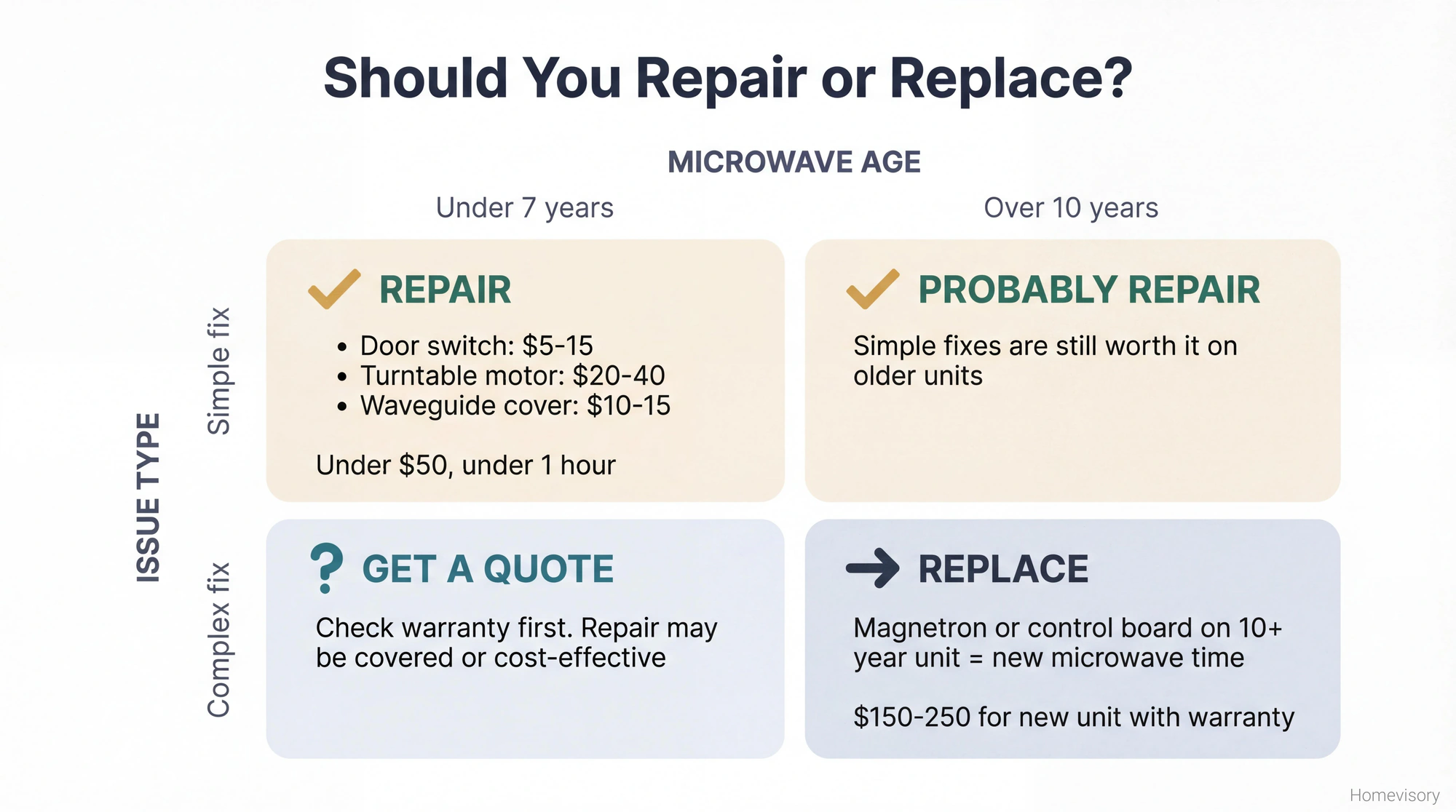
If its a door switch or turntable motor or waveguide cover, fix it. Those repairs cost less than $50 and take an hour.
If its internal electronics, get a quote first. Sometimes the quote alone will tell you the answer.
Basic Maintenance to Avoid Problems
My dad Curtis used to say, about factory equipment, he used to say a machine tells you whats wrong before it breaks. You just have to pay attention. He was talking about the sounds machines make when bearings are wearing or belts are loose or motors are straining.
Microwaves are the same. If yours suddenly sounds different, louder, higher pitched, anything unusual, don’t ignore it.
Clean the interior regularly. Food splatter hardens and burns and eventually damages the waveguide cover or causes sparking. For a deep clean, check out our microwave cleaning guide. Wipe it down after messy meals. Takes thirty seconds.
Don’t slam the door. I’ve seen people close their microwave like they’re angry at it. That wears out the latch mechanism and door switches faster than anything.
And if you’re tracking maintenance for your whole house, not just the microwave, Homevisory home task manager helps you stay on top of everything. You set it up once and it reminds you what needs attention and when. That’s the whole point.