Most people dont clean their microwave until something explodes in it. Spaghetti sauce. Oatmeal. Whatever that stuff was that Richard put in there when he was fourteen and claimed he “didn’t know” you couldn’t microwave a whole egg.
Then it sits. For weeks. Months. And suddenly you’ve got this hardened layer of food particles baked onto every surface and you’re scrubbing with a sponge wondering why nothing is coming off.
Cleaning a microwave is not hard. Its one of the easiest things you can do in your kitchen. The problem is people either ignore it too long or they try to attack dried-on food with elbow grease when theres a much simpler approach.
The Steam Method
This is what I use. This is what works. And honestly this is the part where I probably care too much but I’ve watched people struggle with microwave cleaning for years when the answer is so simple it almost feels like cheating.
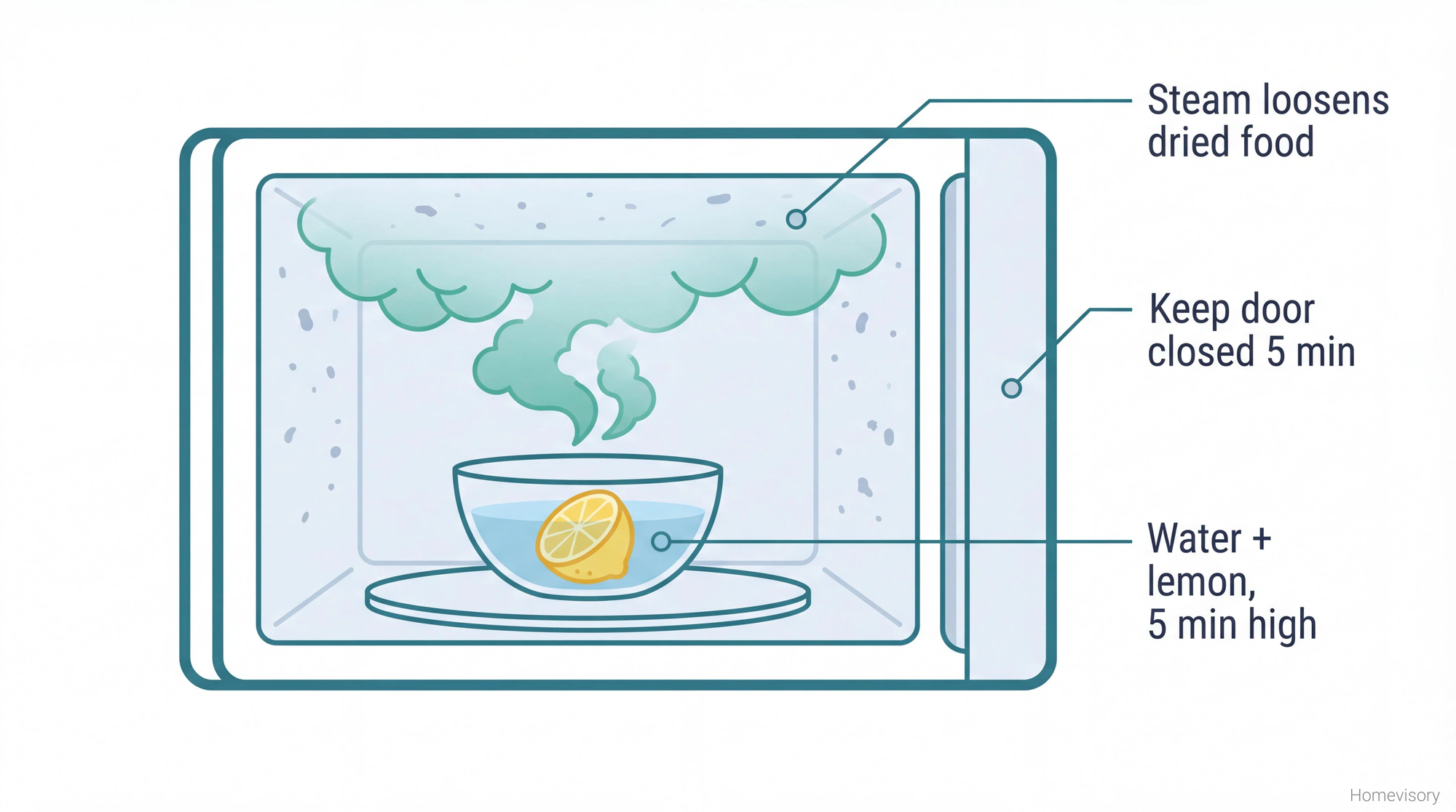
Steam. That’s it. You’re going to use steam to loosen everything and then wipe it out.
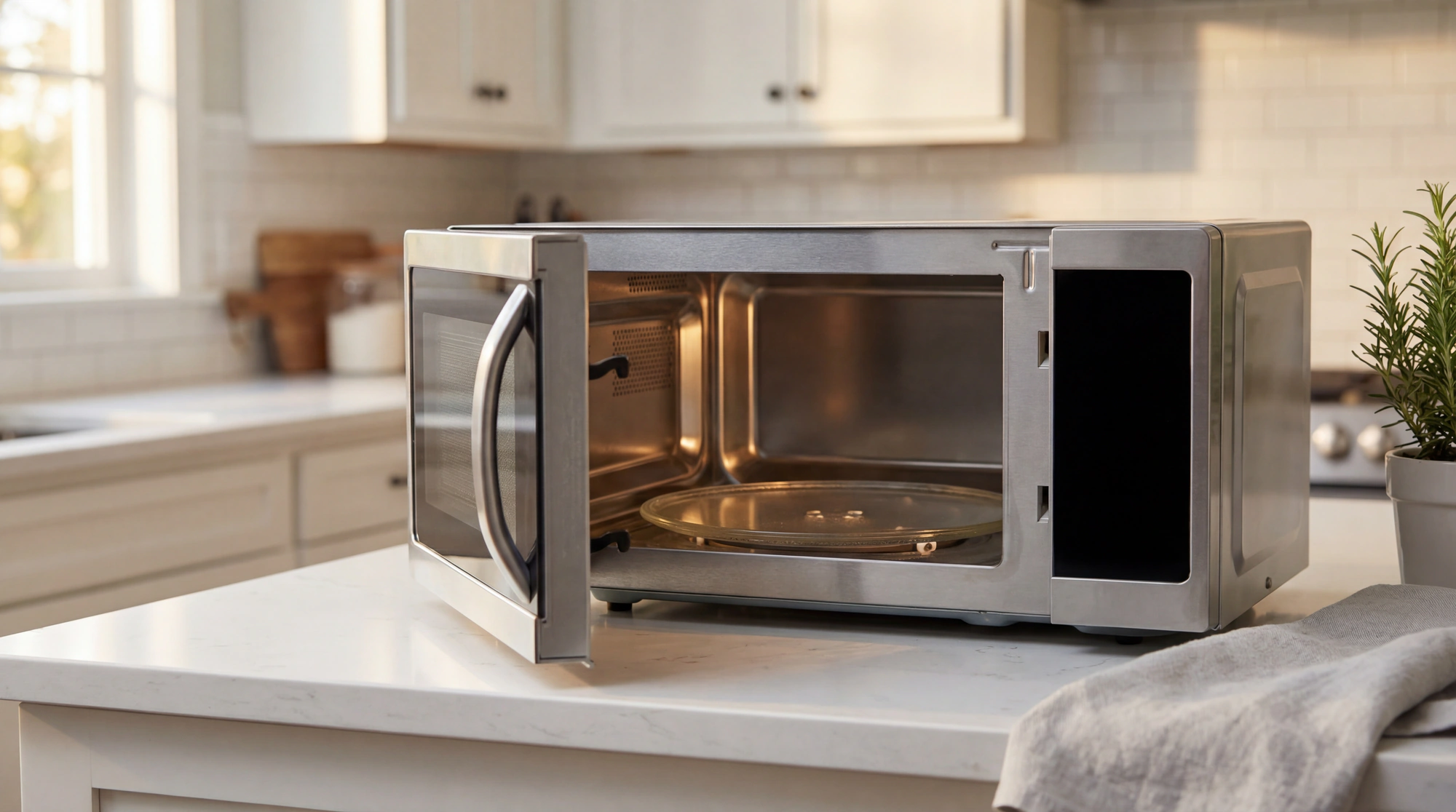
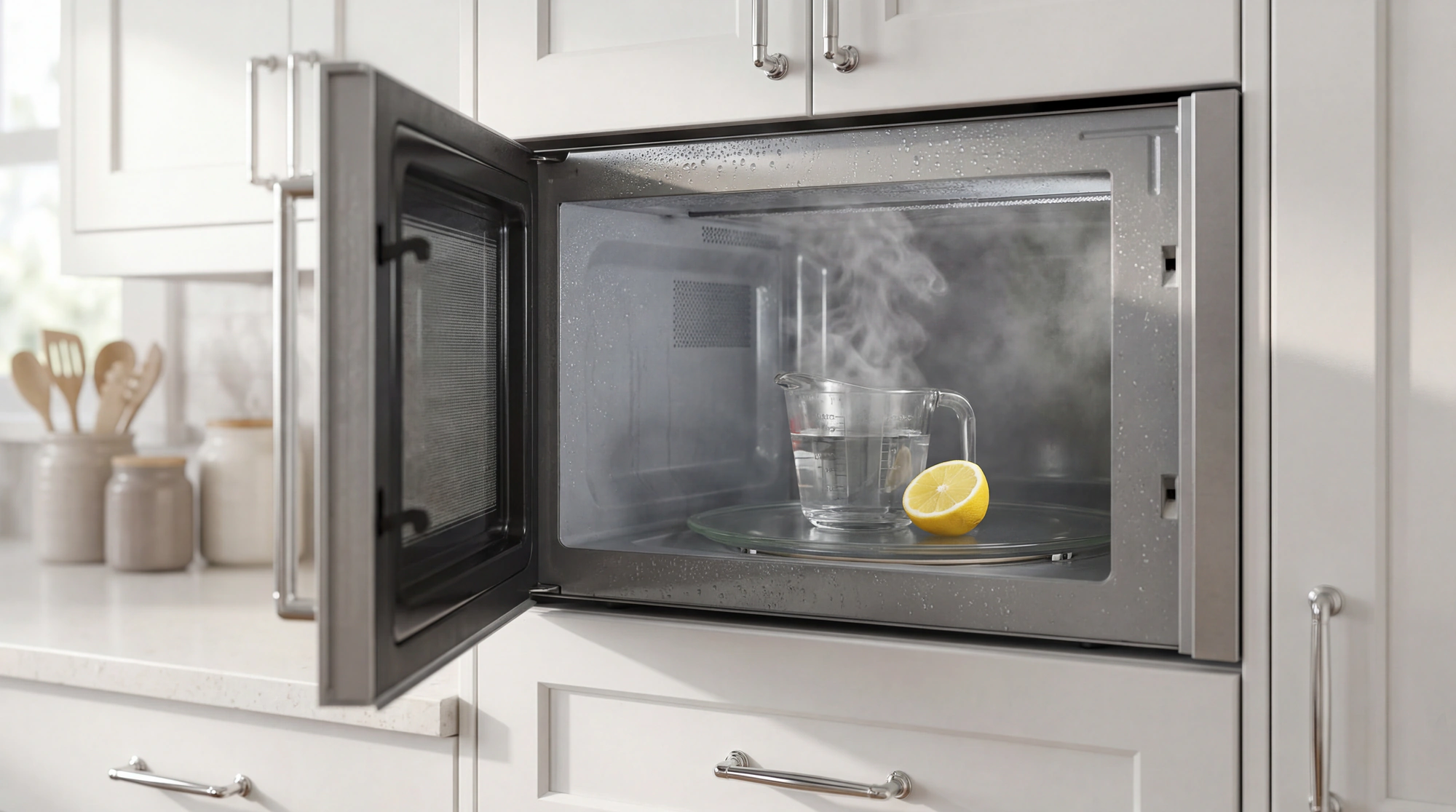
Get a microwave-safe bowl or measuring cup. Fill it about halfway with water. Add something acidic, either lemon juice or white vinegar, about two tablespoons worth. Put it in the microwave and run it on high for five minutes. Here’s the part most people mess up, don’t open the door right away. Let it sit for another five minutes with the door closed. The steam builds up and just sits there, working its way into all that dried-on garbage, softening everything. When I finally open the door, I can wipe the whole interior with a paper towel and everything comes off. No scrubbing. No special products. Just water and heat doing what they do.
Mr. Davis, my old woodshop teacher, used to say “let the tool do the work” when he was teaching us to use hand planes. Stop forcing it, stop pushing so hard, let the tool do what its designed to do. Same principle here. Let the steam do the work. You’re not supposed to be attacking your microwave with a scrub brush.
Lemon vs Vinegar
Both work. The lemon smells better. The vinegar is cheaper. Thats the whole decision.
If you use vinegar, your kitchen is going to smell like vinegar for a little while. It fades. But if that bothers you, use half a lemon squeezed into the water or just drop the whole lemon half in there.
Some people use both. Fine. Whatever works.
Free printable
Save this for later: get the printable field guide
The free Homevisory field guide covers every season on one calm, printable plan: what to check, what normal looks like, and when to call for help. Tell us where to send it.
Sent! Check your inbox in the next minute or two.
Can't wait? Download the guide now
The Turntable
Take it out. Wash it like a plate. Done.
I’m always surprised how many people forget this part. They wipe down the inside and leave the turntable sitting there covered in whatever splattered on it. It comes out. Most of them lift right off the little rotating mechanism. Wash it in the sink with dish soap. If there’s really stubborn stuff, let it soak for ten minutes.
The ring underneath that the turntable sits on, that thing gets gross too. Pull it out and wipe it down.
The Door
This is where Raquel caught me once not paying attention. I did the whole steam thing, wiped down the inside, put everything back, felt proud of myself. She walked over, looked at the door, and just stared at me.
The inside of the door, especially around the seal, collects grease and food particles like you wouldn’t believe. And the handle. Every time someone opens the microwave they’re transferring whatever is on their hands onto that handle.
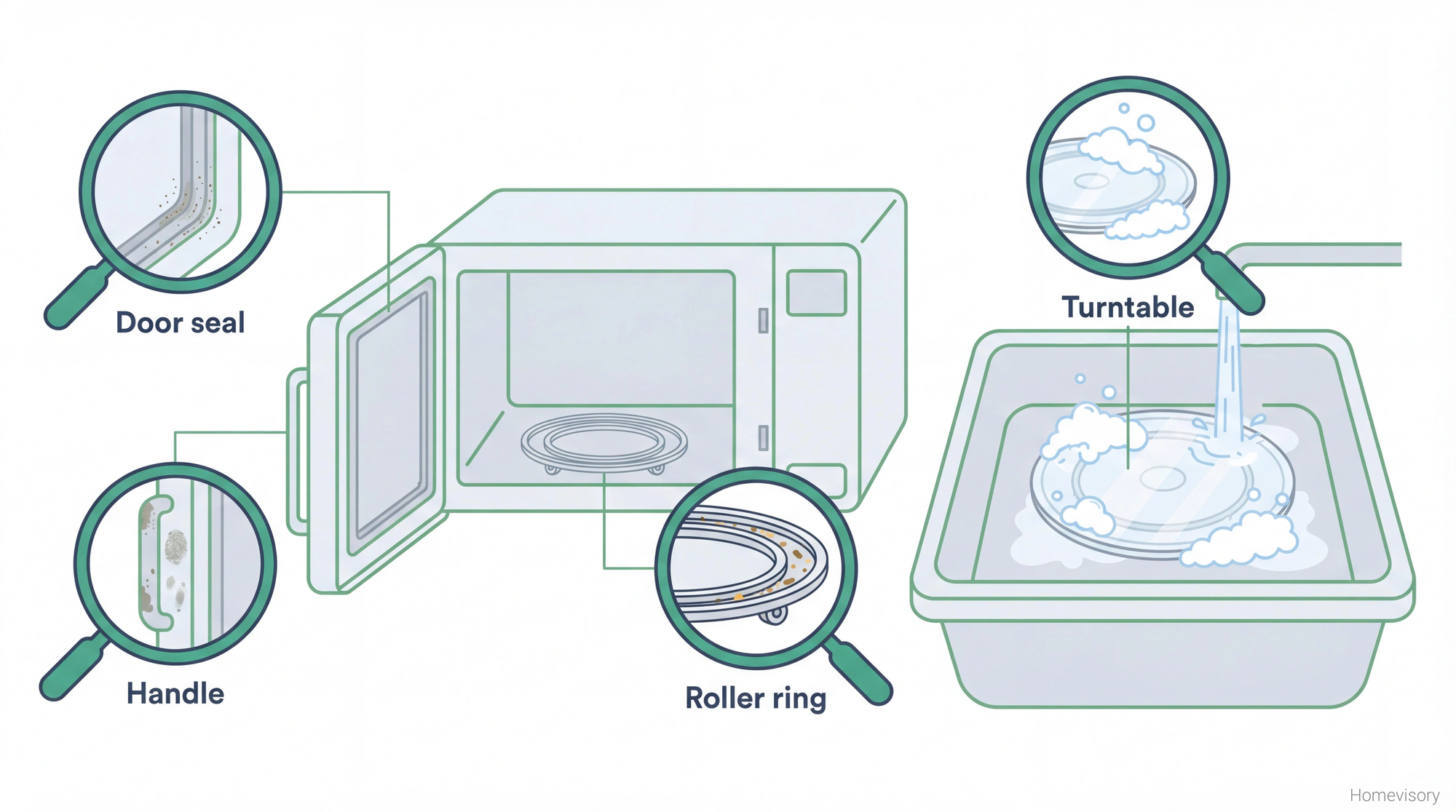
For the door interior, same approach. Damp cloth, wipe it down after the steam has done its job. The seal around the edge might need a little more attention. I use an old toothbrush for that, just gets into the groove better than anything else.
The exterior is just a normal surface. Whatever you use on your counters is fine. Glass cleaner if you want it to shine.
The Vent and Top
Depending on where your microwave is mounted, there might be vents on the top or the back. If its above your stove, theres definitely a vent filter on the bottom that catches grease from cooking. Pull that out and soak it in hot soapy water. Some of them are dishwasher safe but check your manual because some aren’t.
The top of my microwave is a disaster area that I pretend doesn’t exist. We keep stuff on top of it and I have no idea when’s the last time anyone wiped it down. Do as I say, not as I do.
What About Commercial Cleaners
I’m not getting into those. Save your money. Water and lemon juice work.
When Its Really Bad
If your microwave stops heating entirely, thats a different issue — check our microwave not heating troubleshooting guide for that. But if it just needs cleaning and you’ve let it go for too long, you might need to do the steam method twice. Maybe three times. I had a client once, back when I was doing renovations, who was selling their house and the microwave looked like it hadn’t been cleaned since the Clinton administration. We did the steam method, waited, wiped, and repeated four times before it was presentable.
My mom Shirley would have had something to say about that. Her kitchen in Atlanta was spotless. Everything. The stove, the counters, the microwave, all of it. She wiped things down after every use. I remember coming home from school and the kitchen smelled like whatever she’d been cooking but also like clean, like that lemon furniture polish she used even though furniture polish has no business being in a kitchen. She just wanted everything clean. I didn’t appreciate it then. Now I have four kids and two dogs and a wife who rightfully expects certain standards and I think about Shirley’s kitchen and how she made it look effortless when it definitely wasn’t. Anyway.
The Fish Incident
Milton microwaved fish in his dorm room his freshman year. Salmon, I think. Without covering it. And then didn’t clean it.
That microwave never recovered. He said he tried everything. Baking soda, vinegar, commercial stuff. The smell was embedded. His roommate was not happy.
Cover your food. I cannot stress this enough. Whatever you’re heating, put a paper towel over it, use one of those microwave covers, a plate works fine. Anything. Because once something splatters, its already starting to dry. And if its fish or something with garlic or anything pungent, that smell gets into the walls.
How Often
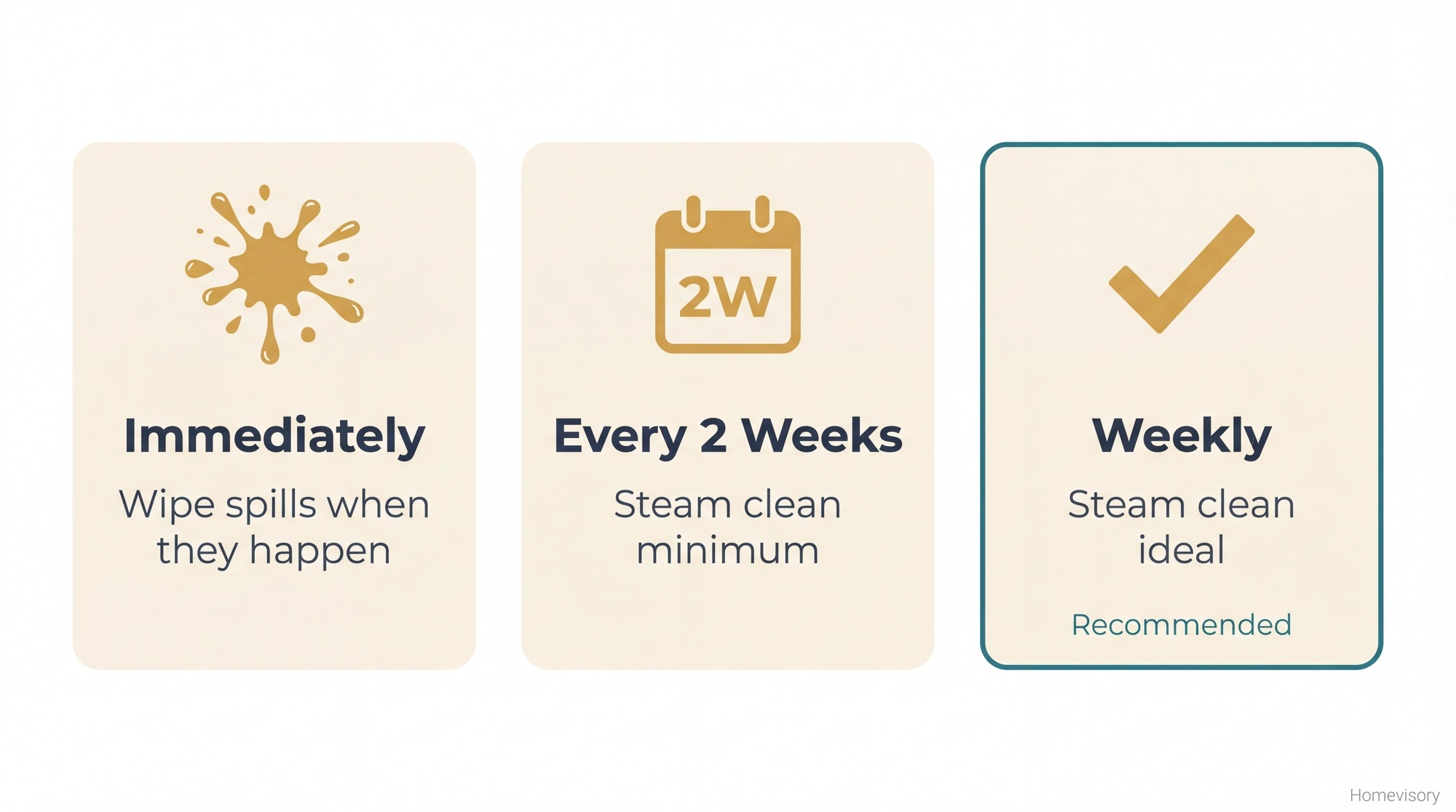
Once a week is ideal. That sounds like a lot but if you’re doing the steam method its five minutes of actual work. Less, really, since you’re mostly waiting. If you want a full schedule for tasks like this, our home maintenance checklist lays it all out.
I do mine on Saturdays. Not because I’m organized but because thats when I notice it. Something about weekend mornings makes me look around the kitchen and see what needs attention. Maybe thats Shirley’s influence too.
If once a week feels like too much, at least hit it twice a month. And wipe up spills immediately when they happen. That’s the real secret. The reason people end up with microwaves that look like they survived a food fight is because they let small messes accumulate until it becomes one big hardened mess.
The Homevisory Approach
This is exactly the kind of task that falls through the cracks. It’s not urgent. It’s not exciting. It’s just maintenance. And maintenance is what keeps your home running without surprises.
That’s what we do here at Homevisory. We built a home task manager that reminds you when things need attention, cleaning a microwave, changing your HVAC filter, checking your smoke detectors, all of it. Because most people don’t have time to keep a mental calendar of every home maintenance task. Sign up for free and let the system keep track so you don’t have to think about it.
Your microwave will thank you. Or at least it won’t smell like salmon.