Why Your Washing Machine Smells Like That
Your washing machine smells because you never clean it. Thats not a guess. That’s just statistics based on every person who’s ever complained to me about their laundry smelling musty even after washing.
People assume the washing machine cleans itself. Same logic as the dishwasher thing. It runs soap and water through itself constantly, how dirty could it get. But a washing machine doesn’t clean itself any more than your shower cleans itself. You’re running dirty clothes through it, sometimes very dirty clothes, and all that grime has to go somewhere. Some of it drains out. Some of it doesn’t.
If you want to know how to clean washing machine the right way, it depends on what type you have. Front loaders and top loaders have different problems and different solutions. I’ll go through both.
Front Load Washing Machine Cleaning
Front loaders are more efficient. They use less water, they’re gentler on clothes, they spin faster so your stuff dries quicker. But they have one major problem that top loaders dont have, and its the reason most front loader owners eventually complain about mildew smell.
The door seal. The rubber gasket.
The Rubber Gasket Situation
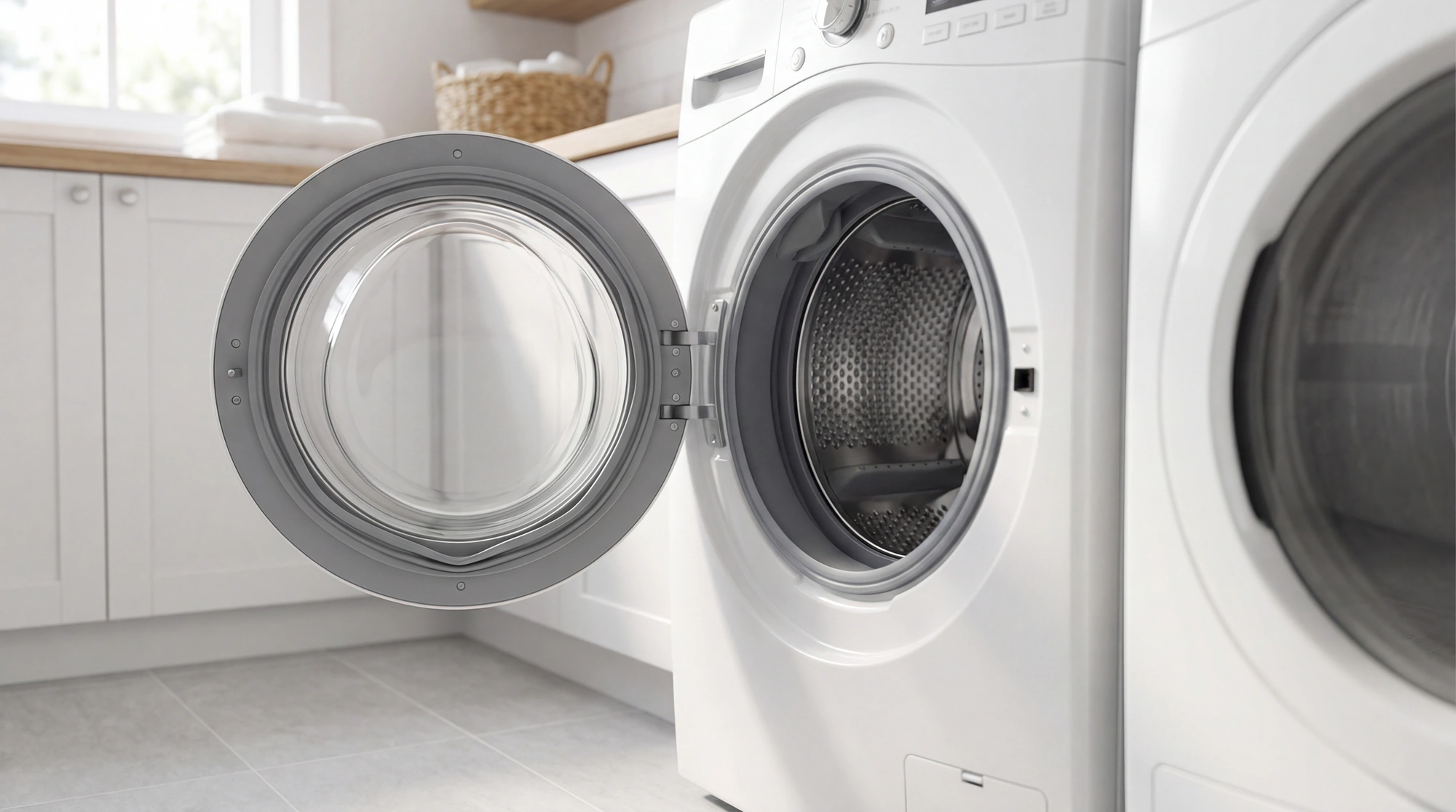
I’m going to spend more time on this than you probably think is necessary but I’ve seen what happens when people ignore this thing for years and its not good. The rubber gasket around the door of a front load washer is designed to create an airtight seal so water doesn’t leak out during the cycle. Great. The problem is that the gasket has folds, and water collects in those folds, and it never fully dries because the door is usually closed and front loaders are designed to be airtight which means no airflow. So you’ve got standing water in a dark warm enclosed space and that is exactly what mold wants.
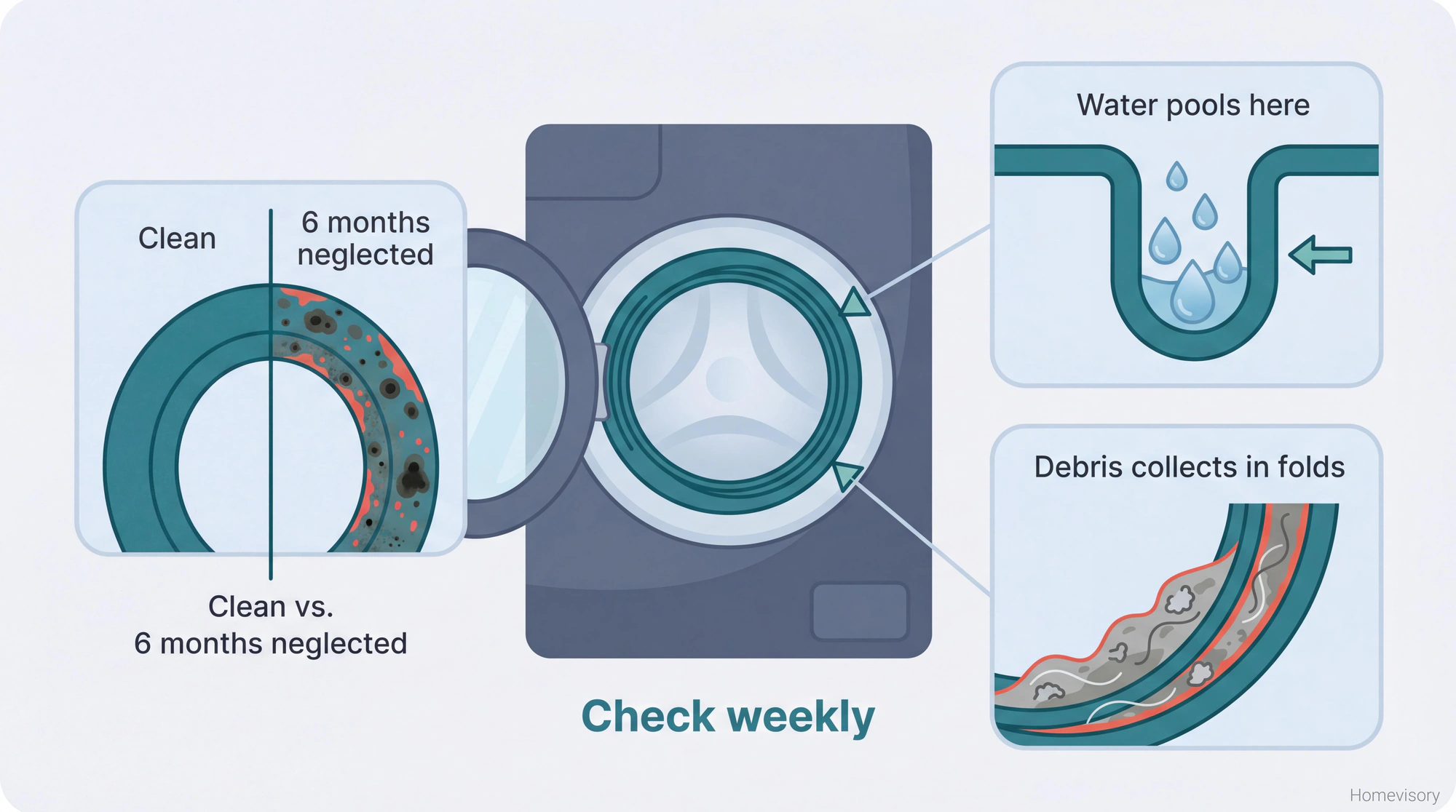
I lived in a Chicago apartment for about eight months back in the travel years, this was probably 2002, and the building had shared laundry in the basement. The front loader down there smelled like a swamp. Not an exaggeration. You could smell it from the stairs. I opened the door once, looked at the gasket, and there was black mold caked into every fold. Thick. Like someone had been painting it in there. I hand washed my clothes in the sink for eight months because I wasn’t putting my stuff in that machine.
To clean the rubber gasket, pull it back with your fingers and look in the folds. You’re probably going to find some combination of mold, mildew, hair, and that gray sludgy residue from detergent and fabric softener buildup. Get a rag or old towel, wet it with either white vinegar or a diluted bleach solution, and wipe out every fold. Get in there. Don’t be gentle about it. Some people use a toothbrush for the stubborn spots and thats fine. Once its clean, dry it completely with a fresh towel.
Do this every week if you can. Every two weeks minimum. The gasket is where mold removal becomes real work if you let it go too long.
The Drum Cleaning Cycle
Most front loaders have a drum cleaning cycle or a tub clean setting. Use it. Its there for a reason.
Run it empty with either a commercial washing machine cleaner or two cups of white vinegar. Some people add baking soda but I’ve never noticed a difference with or without it. The cycle runs hot water through the drum and cleans out residue buildup from the interior surfaces.
Bleach cycle vs vinegar solution. Both work. Pick one. Moving on.
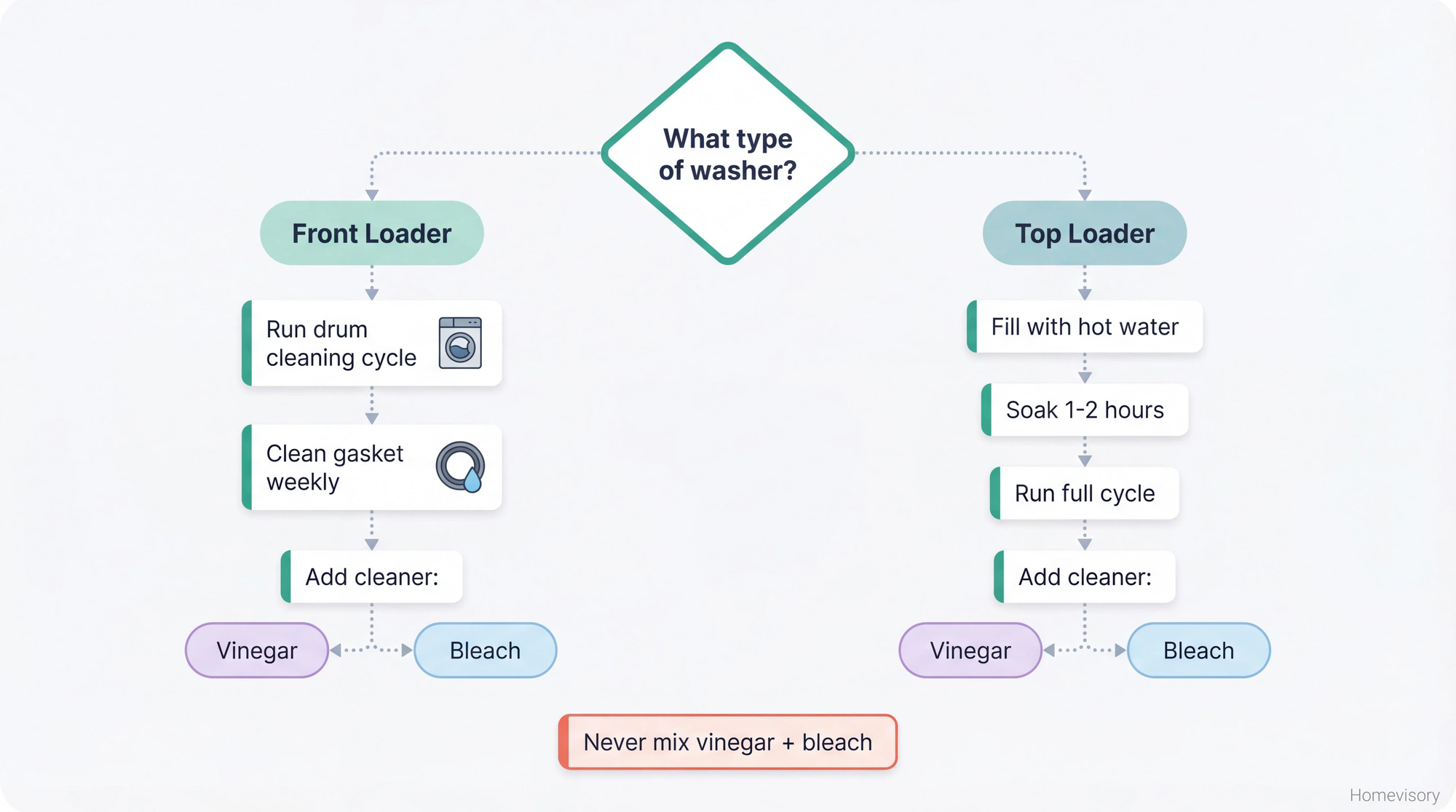
Run this monthly. Monthly cleaning keeps odor prevention manageable. Skip it for six months and you’re dealing with mildew smell that takes multiple cycles to eliminate.
The Dispenser Drawer
Pull out the detergent and fabric softener dispenser. It pulls out, there’s usually a release tab or lever. Look at the underside.
Thats the residue buildup I’m talking about. That gunky film that accumulates because liquid detergent and fabric softener dont fully wash away. Scrub it with hot water and an old toothbrush. Let it dry completely before putting it back.
My wife Raquel has a system for laundry. I learned early in our marriage not to question the system. But one time, maybe ten years ago, I tried to be helpful and clean the washer and I pulled out the dispenser drawer and she walked in and said “what are you doing” and I said “cleaning” and she said “you’re going to put it back wrong” and I did put it back wrong and it didn’t dispense fabric softener correctly for three loads until she fixed it. She was right. She’s usually right about laundry. My point is that the drawer comes out, clean it, but pay attention to how it goes back in.
Top Load Washing Machine Cleaning
Top loaders are simpler. Not better or worse, just simpler from a maintenance standpoint. You don’t have the rubber gasket situation because the door is on top and gravity keeps water from pooling in the seal. You still get residue buildup and you still need to clean it, but mold is less common.
The Vinegar Method
Fill the drum with hot water. Highest water setting. Add four cups of white vinegar. Let it agitate for a few minutes to mix the vinegar in, then stop the cycle and let it sit for an hour. Two hours if you’ve never done this before.
After it sits, run the full cycle. The vinegar solution breaks down detergent residue and mineral deposits from hard water.
The Bleach Method
Same process but with two cups of bleach instead of vinegar. Fill with hot water, add bleach, agitate to mix, let it sit for an hour, run the full cycle.
Don’t mix bleach and vinegar. Ever. Do one or the other. Mixing them creates toxic fumes. I probably dont need to tell you this but I’m telling you anyway.
The Agitator and Drum
While the drum is empty and accessible, wipe down the agitator, thats the center post that moves your clothes around, and the interior drum walls. Use a vinegar-dampened rag. Check for any buildup at the water inlet holes near the top of the drum. Sometimes gunk accumulates there and restricts water flow.
Free printable
Save this for later: get the printable field guide
The free Homevisory field guide covers every season on one calm, printable plan: what to check, what normal looks like, and when to call for help. Tell us where to send it.
Sent! Check your inbox in the next minute or two.
Can't wait? Download the guide now
Fabric Softener Is Usually The Problem
I’m going to say something that might be controversial in some households. Fabric softener causes more washing machine problems than it solves.
Fabric softener leaves a waxy residue. Thats how it works. It coats your clothes to make them feel softer. But it also coats the inside of your washing machine, the dispenser, the drum, the gasket folds. Over time that coating builds up and becomes a substrate for mold and mildew. If you use fabric softener and you have mildew smell, the fabric softener is probably contributing.
I’m not saying don’t use it. Raquel uses it and like I said, I don’t question the system. I’m saying if you use it, you need to be more diligent about cleaning the machine. Monthly minimum. The residue buildup accumulates faster.
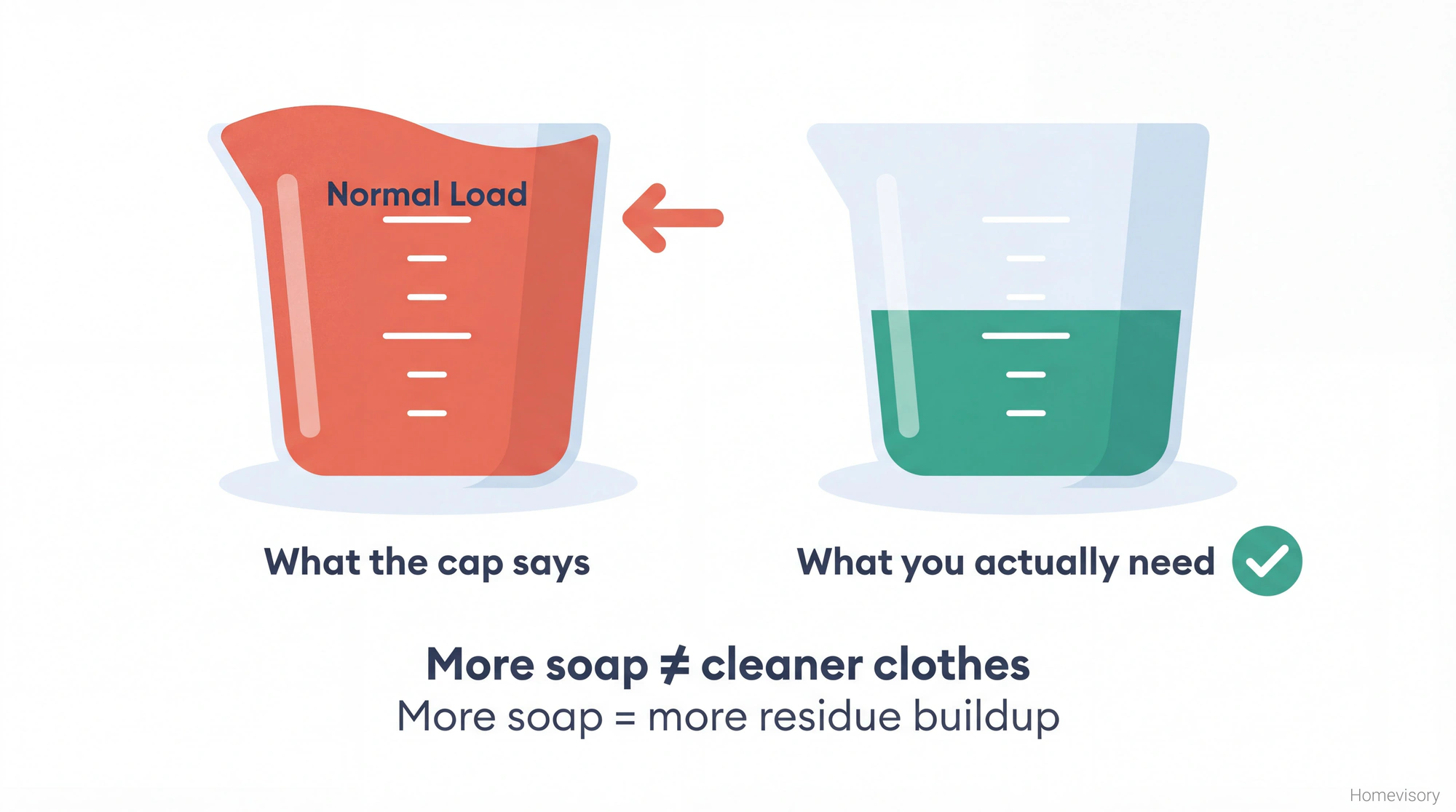
People also use too much detergent. More soap doesn’t mean cleaner clothes. It means more residue. Most people use double what they need because the cap markings are designed to make you use more product so you buy more frequently. That’s not a conspiracy theory, that’s just marketing. The amount you actually need is usually half what the “normal load” line suggests.
The Mr. Davis Rule
My woodshop teacher Mr. Davis used to say something about tools that stuck with me. He said a tool that isnt maintained isn’t really your tool anymore. It’s just something you used to own. You’re borrowing time with it until it stops working.
He was talking about chisels and planers but it applies to everything. Your washing machine is a tool. A tool you use a few hundred times a year to keep your household functioning. Either you maintain it or you replace it early. Thats it.
Mr. Davis passed in 2012. I think about him at weird times, like when I’m cleaning out a washer gasket or leveling a deck or teaching my kids how to use a drill. He told me once that I had hands that could build a life. Anyway.
What My Mom Would Say
Shirley Carter did laundry for five people in a house in Atlanta with a top loader that was probably fifteen years old when we got it and she kept that thing running clean. Saturday mornings. The laundry room smelled like detergent and dryer sheets and whatever else she was using and you could hear the machine running while she cleaned the rest of the house. She had a whole process. I don’t remember all of it but I remember she would wipe down the inside of the drum after loads and leave the lid open when it wasn’t running. But yeah.
Monthly Maintenance Schedule
Here’s what washing machine maintenance looks like if you do it right:
Every load: Leave the door open when not in use. Front loaders especially. Let it air out. Mold needs moisture and stagnant air. Take that away.
Weekly (front loaders): Wipe the door seal. Check the gasket folds. Dry any standing water.
Monthly: Run a cleaning cycle. Either the drum cleaning setting with commercial cleaner, or the vinegar method, or the bleach method. Rotate if you want. Clean the dispenser drawer.
Every few months: Pull the machine away from the wall. Check the hoses for kinks or cracks. Clean behind it because thats where missing socks apparently go to start new lives.
When To Call Someone
If you’ve cleaned everything and the mildew smell persists, you might have mold somewhere you can’t reach. Behind the drum, in the drain system, in places that require disassembly. That’s when you call a professional.
I fix houses, not washers. Once you’re taking apart appliance internals you’re in a different territory than maintenance. If your washer has problems beyond odor, like not agitating or not draining properly, our washing machine repair guide covers common mechanical issues.
That’s what we do here at Homevisory, help you stay on top of this stuff before it becomes an expensive problem. Our free Homevisory home task manager sends you reminders when its time to clean your washer, check your HVAC filters, and do all the other monthly tasks that slip through the cracks when life gets busy. Sign up, its free, and stop letting your washing machine smell like that Chicago basement laundry room. Your clothes deserve better.