
The Noises
Your fridge is making noise and youre worried about it. Thats why you looked this up. The thing is, fridges make noise. They’re supposed to. The question is whether the noise is normal or whether its telling you something is wrong.
My dad used to say, about the machines at the factory where he worked, he used to say they’ll tell you whats going wrong if you bother to listen. Most people don’t listen. They hear something, they ignore it, they hear it again, they ignore it again, and then one day the thing stops working and they act surprised. Don’t be that person.
Some fridge noises are fine. Some mean you need to do something. Some mean freezing and leaks are coming if you don’t act. I’m going to walk through the common ones.
Humming and Buzzing
Normal. Thats your compressor running and the refrigerant moving through the system. My mom’s fridge in Atlanta, this old Frigidaire she had for probably fifteen years, it hummed constantly. Not loud, just this low steady hum. She’d defrost it manually every few months because it didn’t have auto-defrost and she’d be in there with towels and a hairdryer and the whole kitchen would smell like freezer burn for an hour. I don’t know why I remember the smell. Anyway.
If the humming gets louder or changes pitch, pay attention. Could mean the compressor is working harder than it should be. Could mean the condenser coils are dirty, which I’ll get to. Could mean the temperature is set wrong, which I’ll definitely get to.
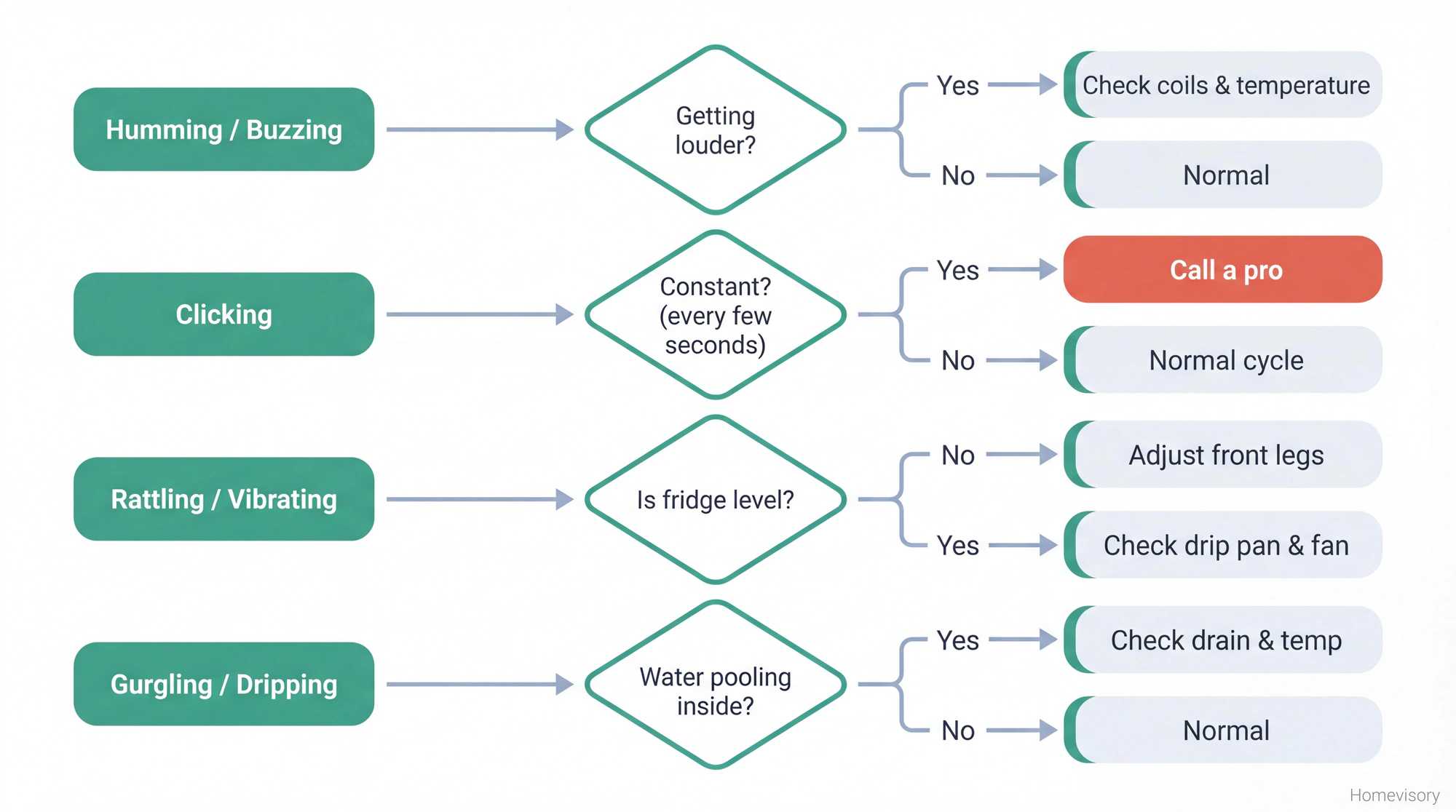
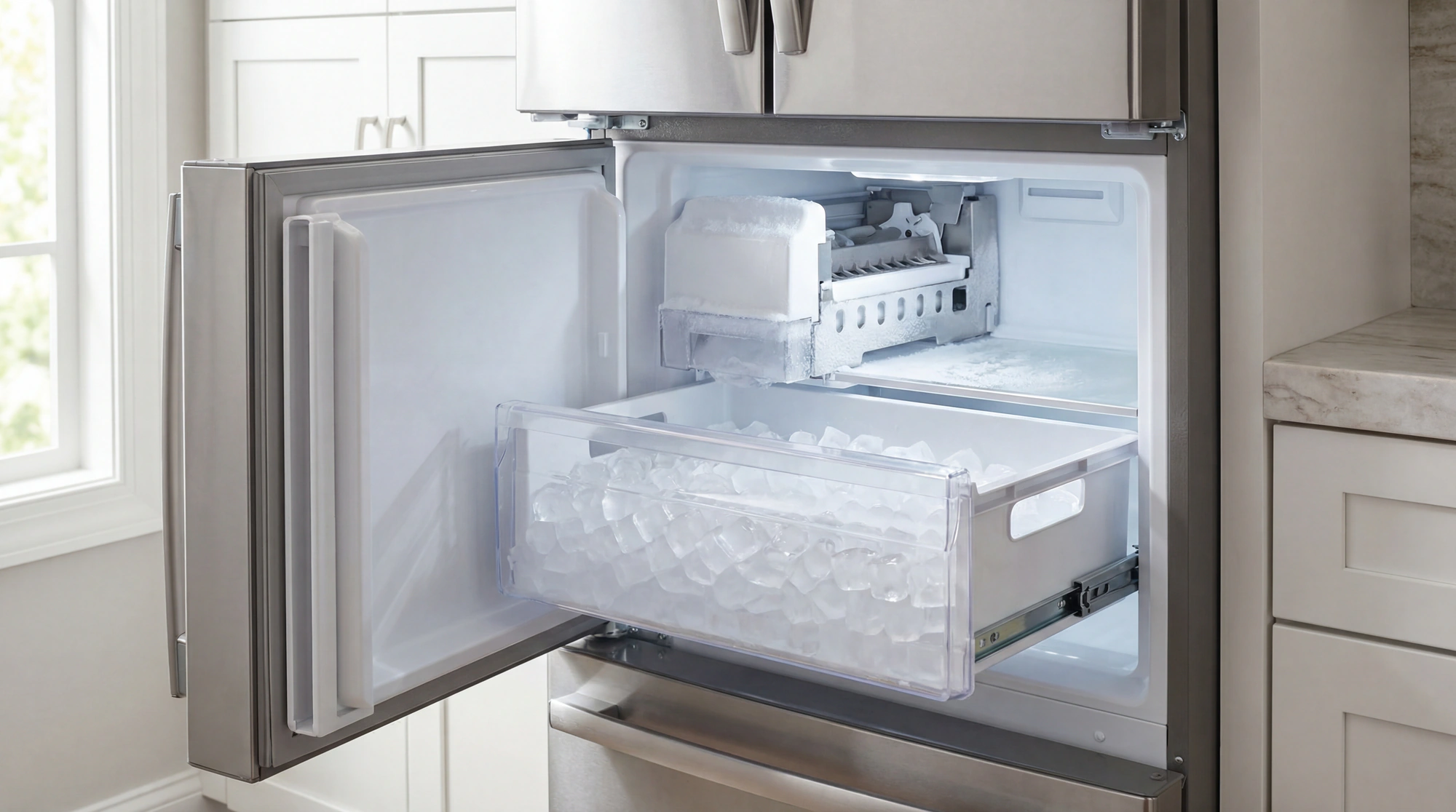
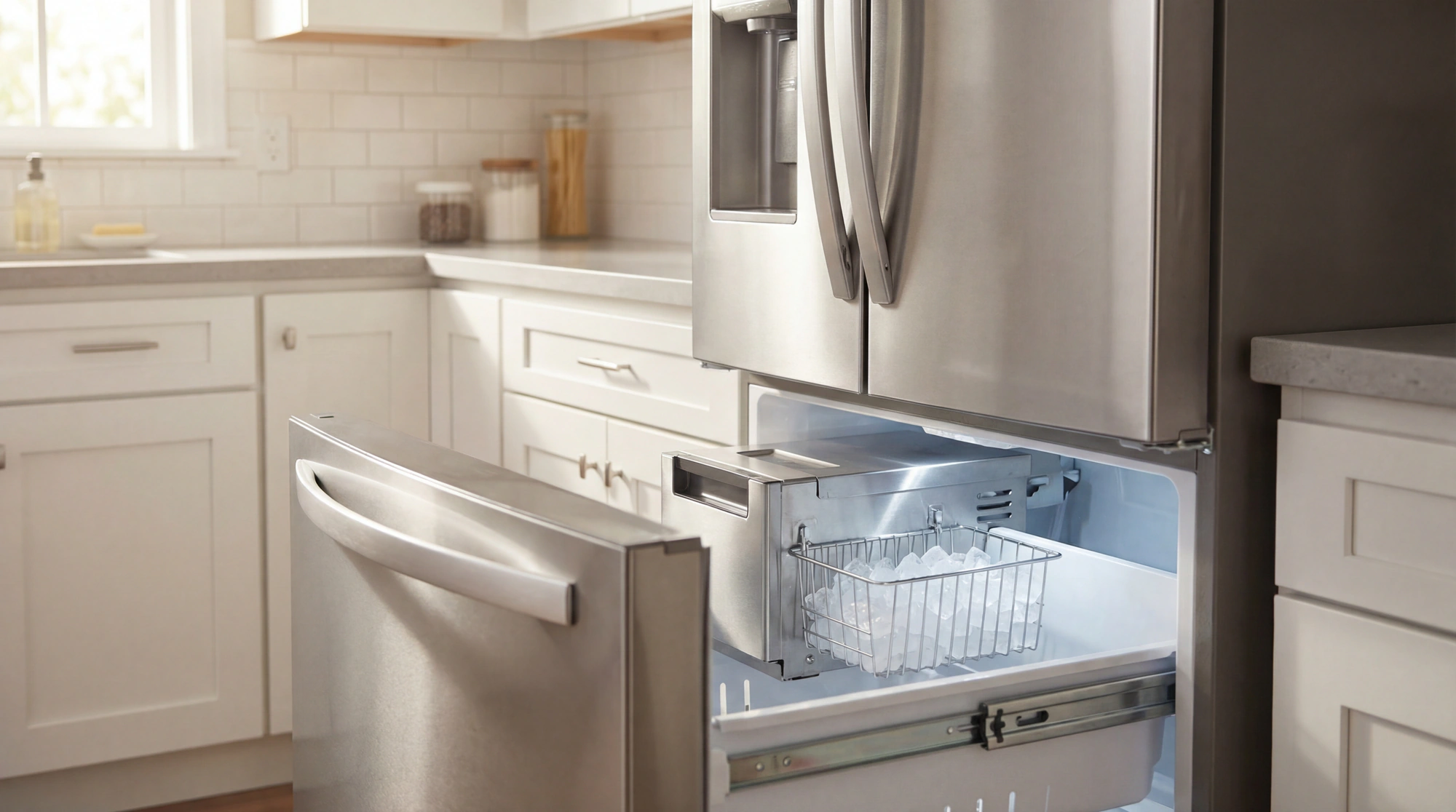
Buzzing specifically can also be the ice maker. If you have an ice maker and you hear buzzing, thats probably the water valve opening to let water into the ice tray. Normal. If it’s louder than usual or stops making ice altogether, that’s a different issue.
Clicking
Clicking when the compressor turns on and off is normal. You hear it, the fridge goes quiet for a while, then you hear it again, then the fridge starts humming. Thats the cycle. Fine.
Clicking that happens constantly, like every few seconds, is not fine. That usually means the compressor is trying to start and failing. Could be a relay issue, could be the compressor itself. If its the compressor, call someone. I’m not walking you through compressor replacement. Thats a pro job and if you mess it up you can release refrigerant which is bad for you and bad for the environment and illegal in most places. Moving on.
Rattling and Vibrating
This one is usually easy. Something is loose or something is touching.
Check the drip pan underneath. Sometimes it gets shifted and rattles against the frame. Check the condenser fan in the back, make sure nothing fell behind the fridge and is hitting the blades. Check whether the fridge is level.
Is your fridge level. Check it. Put a level on top. If its not level, the compressor works harder, things vibrate more, and you get uneven cooling inside which leads to freezing in some spots and not-cold-enough in others. Adjust the front legs until its level. Takes two minutes.
My dog Sparkplug likes to sleep right next to the kitchen because the fridge vent blows warm air and I guess he likes that. For about a week I kept hearing this weird vibrating sound and I was convinced something was wrong with the motor. Nope. His collar tags were rattling against the vent cover every time he breathed. I moved his bed. Problem solved. Not everything is a mechanical failure.
Gurgling and Dripping
Gurgling is the refrigerant moving through the lines. Normal. Sounds weird, kind of like water moving through pipes, because thats basically what it is except its not water.
Actual dripping sounds inside the fridge usually mean the defrost drain is clogged or the condensation isnt draining properly. This is where freezing and leaks come into play and where most people get confused because they think these are separate problems when theyre usually the same problem.
Why Is My Fridge Freezing Everything
This is the part I care about because I see people mess this up constantly and it drives me crazy.
Your fridge has a temperature dial or digital control. Most people set it once when they get the fridge and never touch it again. The problem is that optimal temperature is 37-38 degrees Fahrenheit and most people have no idea what number on their dial corresponds to that because the dial just says 1 through 5 or 1 through 9 or “coldest” to “warmest” and theres no actual temperature reading.
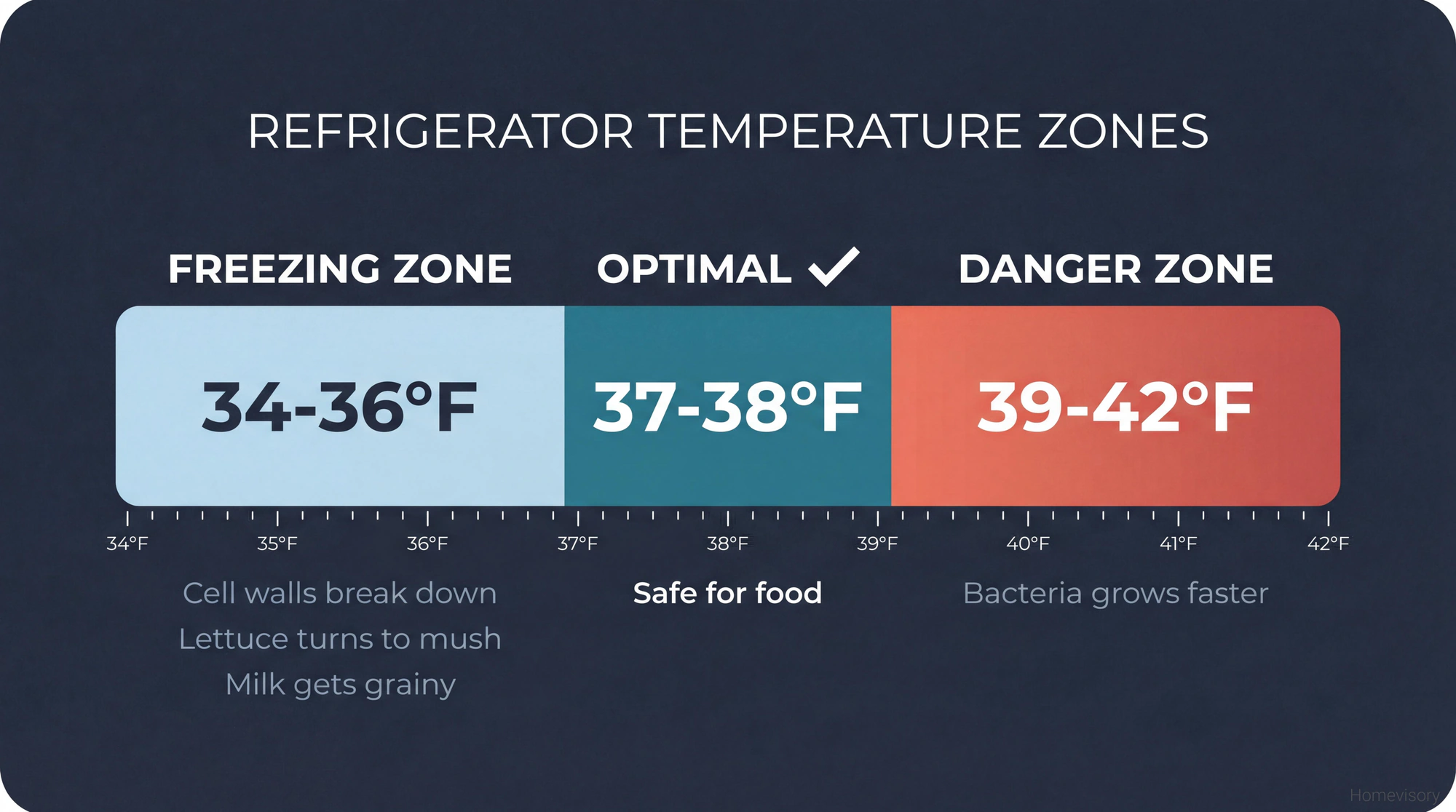
So they set it to some middle number and hope for the best and then wonder why their lettuce is frozen solid or their milk is barely cold depending on the season because ambient temperature in your kitchen affects how hard the fridge works. In the summer your fridge works harder. In the winter it might not work hard enough if your kitchen is cold. One degree makes a huge difference when youre talking about the difference between 36 and 39. At 36 things start freezing, the cell walls in your vegetables break down, your lettuce turns to mush when it thaws, your milk gets that weird grainy texture. At 39 or 40 youre in the danger zone where bacteria grows faster than it should. The margin is tiny and most people don’t realize how tiny it is.
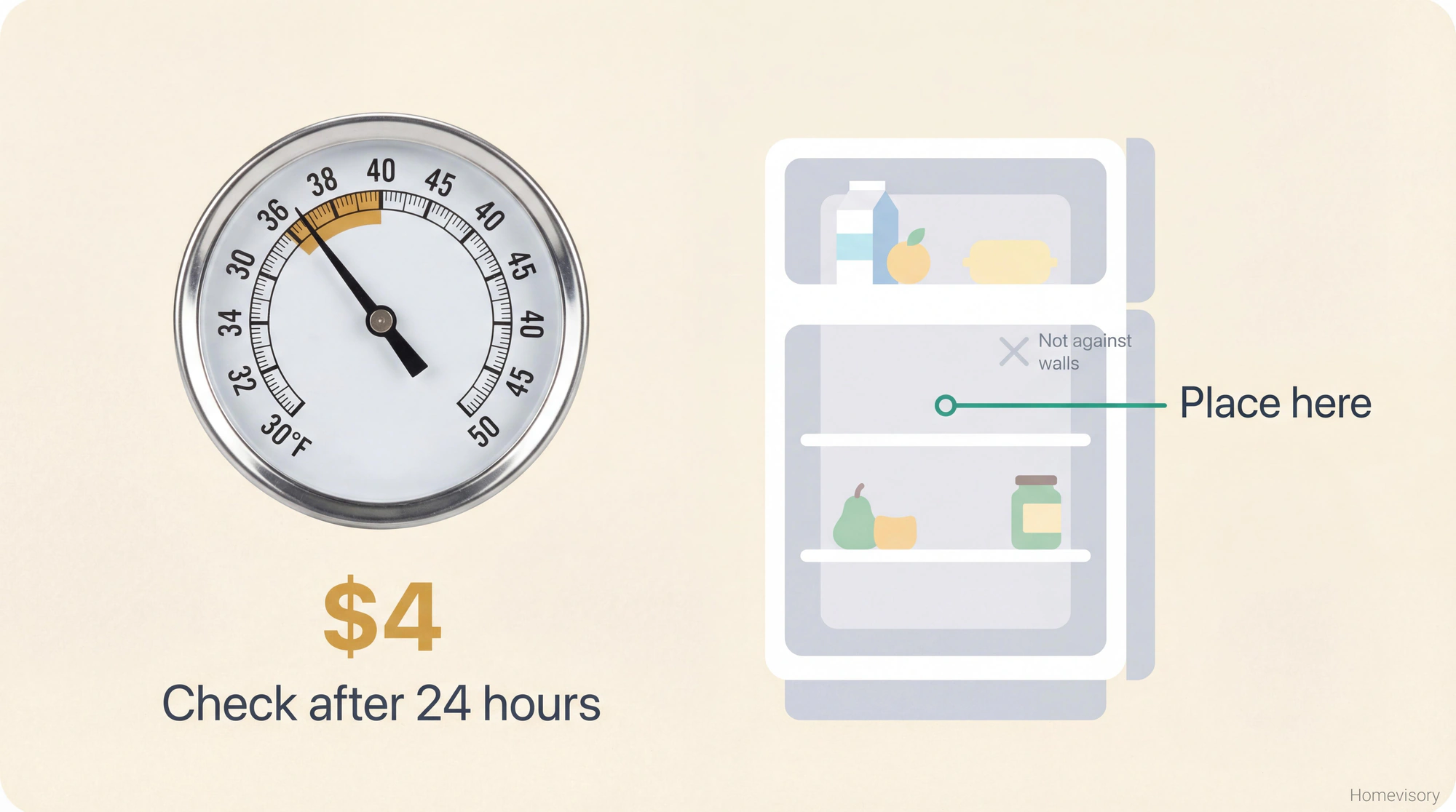
Buy a refrigerator thermometer. They cost like four dollars. Put it in your fridge. Check it after 24 hours. Adjust your dial accordingly.
My daughter Janelle, when she was maybe thirteen, she bumped the temperature dial in our fridge and didn’t tell anyone. Cranked it all the way to coldest. We didn’t notice for three days until I opened the fridge and found frozen eggs, frozen milk, frozen everything. A weeks worth of groceries ruined. She felt terrible about it but the real lesson was that I should have had a thermometer in there so I would have noticed sooner. Now I check it every time I open the fridge. Takes half a second.
If your fridge is freezing everything, check the thermostat first. Its almost always the thermostat.
Also check the air vents inside the fridge. Theres usually a vent between the freezer and fridge compartments. If you’ve packed food right up against it, the cold air has nowhere to go except directly onto whatever is closest. Leave space around the vents.
The Door Seal Thing
While were on freezing, check your door seal. If the seal is damaged or dirty, warm air gets in, the fridge works harder to compensate, it overcools, things freeze. Clean the seal with warm soapy water. Look for cracks or gaps. If you can slide a dollar bill through the closed door and pull it out easily, the seal isn’t sealing.
Why Is My Fridge Leaking Water Inside
This connects to everything I just said about freezing.
When your fridge cycles through defrost, ice melts off the evaporator coils and drips into a drain pan at the bottom of the fridge compartment. That water flows through a drain tube into a pan at the bottom of the unit where it evaporates from the heat of the compressor. Thats how its supposed to work.
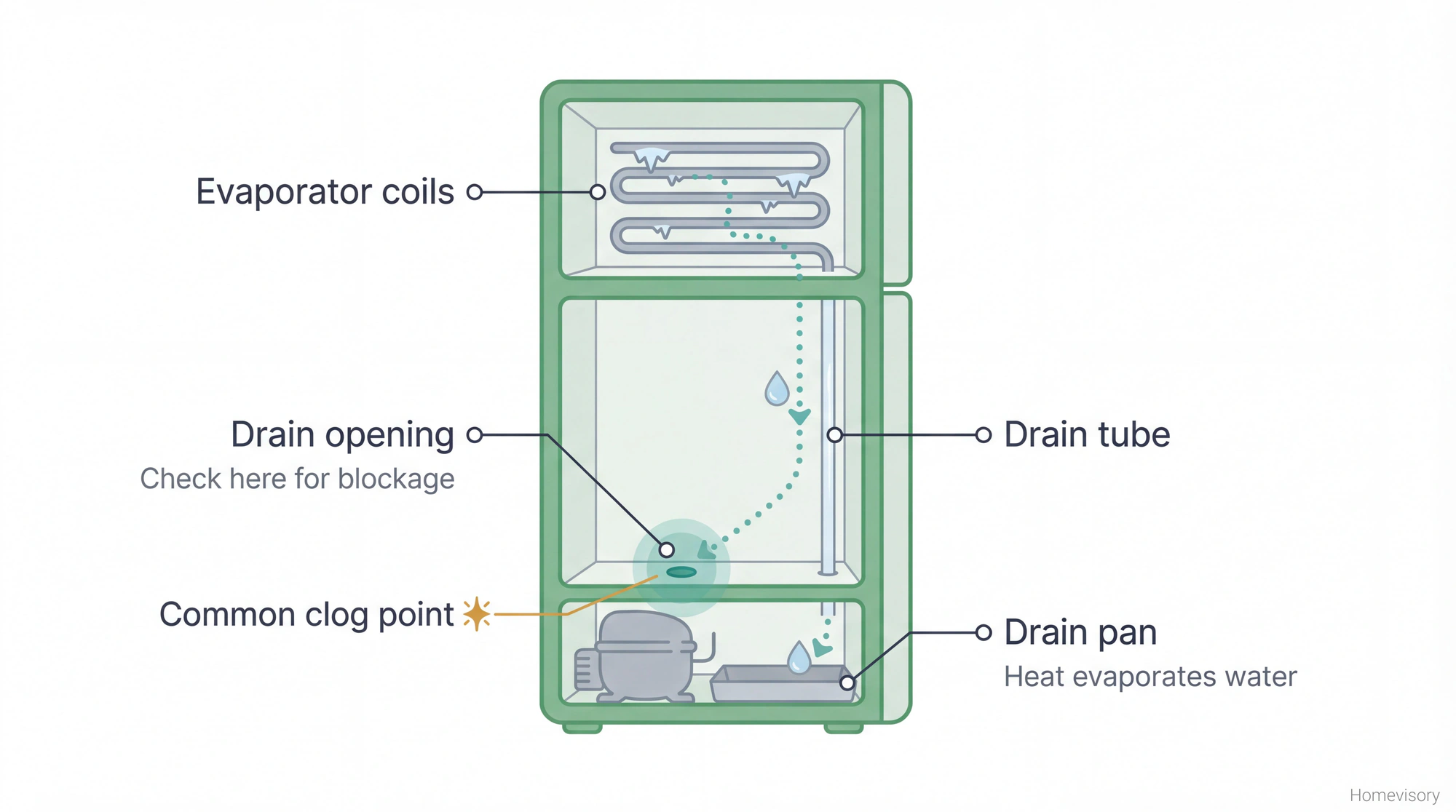
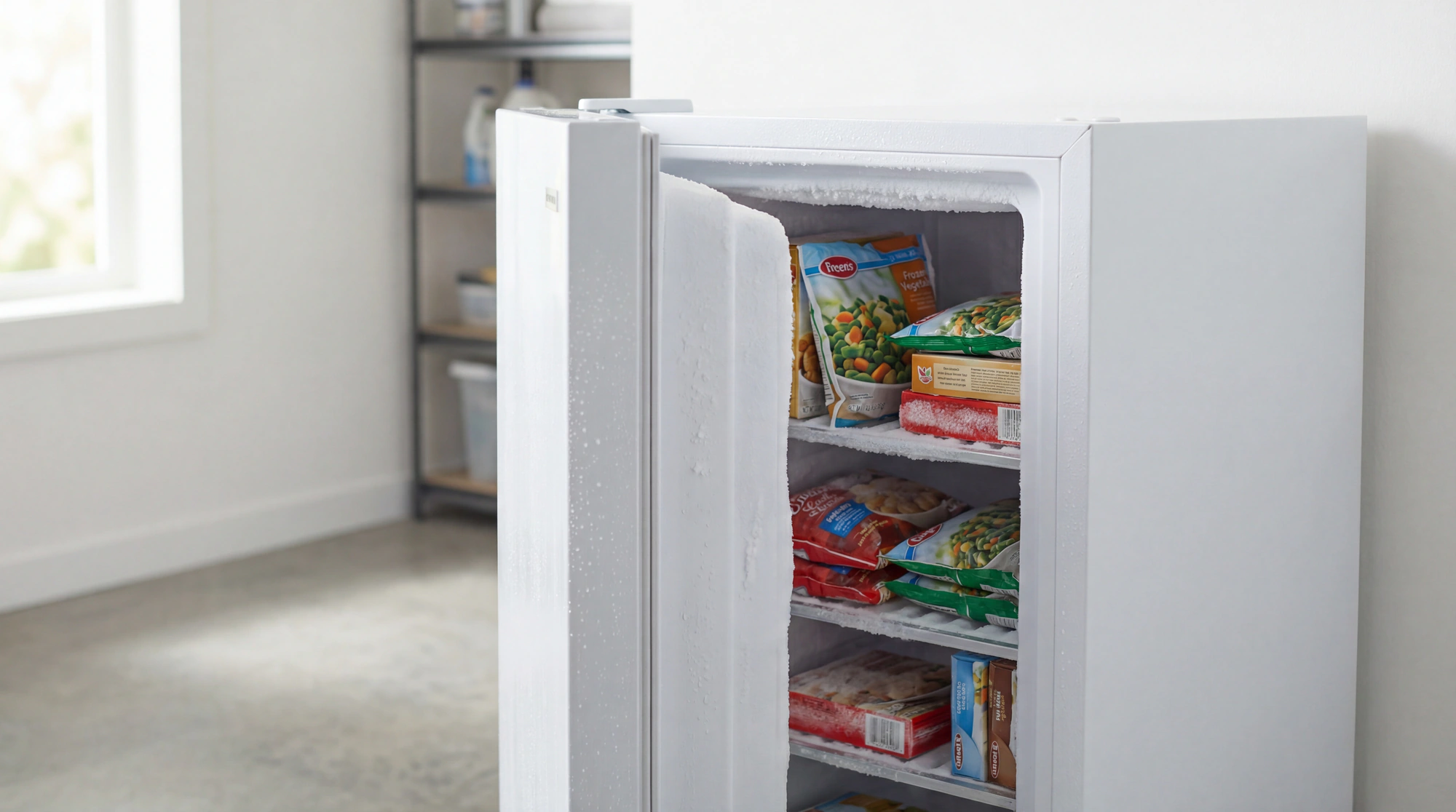
If the temperature is too cold, more ice forms than the system is designed to handle. The drain can’t keep up. Water backs up and pools at the bottom of your fridge. Or worse, the drain itself freezes over because the whole area is too cold. Now you’ve got ice blocking the drain and water with nowhere to go except onto your shelves and eventually onto your floor.
If your fridge is leaking water inside, first check the temperature. Then check the drain. The drain is usually at the back of the fridge compartment near the bottom. Sometimes it has a little cap. Look for ice around it. If its frozen over, unplug the fridge, let it thaw, clean out the drain with warm water. Some people use a turkey baster to flush it. I just use a little warm water poured directly down the drain to clear any debris.
My dad Curtis used to say the fridge is the heart of the house. Everything you eat comes through it. If its not working right, you feel it in every meal. Hes right. I’ve been in houses where the fridge was dying and nobody noticed until half their food was spoiled. The signs were all there. They just weren’t paying attention.
Water on the Floor
If the leak is on the floor under or behind the fridge rather than inside, different problem. Check the drain pan underneath, make sure its not cracked or overflowing. Check the water line if you have an ice maker or water dispenser, the connection might be loose. This happens especially in Palm Beach where the humidity is ridiculous and condensation builds up on cold lines. Tighten your connections. Wipe things down. Make sure nothing is dripping where it shouldn’t be.
The Condenser Coils
I wasn’t going to go deep on this but its connected to everything else so I’ll say it once.
The condenser coils are on the back of your fridge or underneath it. They release heat. If they’re covered in dust and pet hair, and in my house with Sparkplug and Ratchet shedding everywhere they definitely get covered, the fridge can’t release heat efficiently. The compressor runs harder and your electric bill goes up. The fridge overcools in some spots and undercools in others. You get inconsistent temperatures. You get freezing and leaks.
Clean them twice a year. Unplug the fridge, pull it out, use a vacuum with a brush attachment or a coil cleaning brush which costs maybe ten bucks. Takes fifteen minutes. Will probably add years to your fridge’s life.
When to Actually Worry
Most of these problems you can fix yourself. Clogged drain, dirty coils, wrong temperature, loose parts, bad door seal. All fixable.
Youre in trouble if:
- The compressor is clicking constantly and not starting
- The fridge isn’t cooling at all even with clean coils and correct settings
- You smell something burning or chemical
- There’s refrigerant leaking, which you’d smell as a faint sweet chemical odor and should not breathe
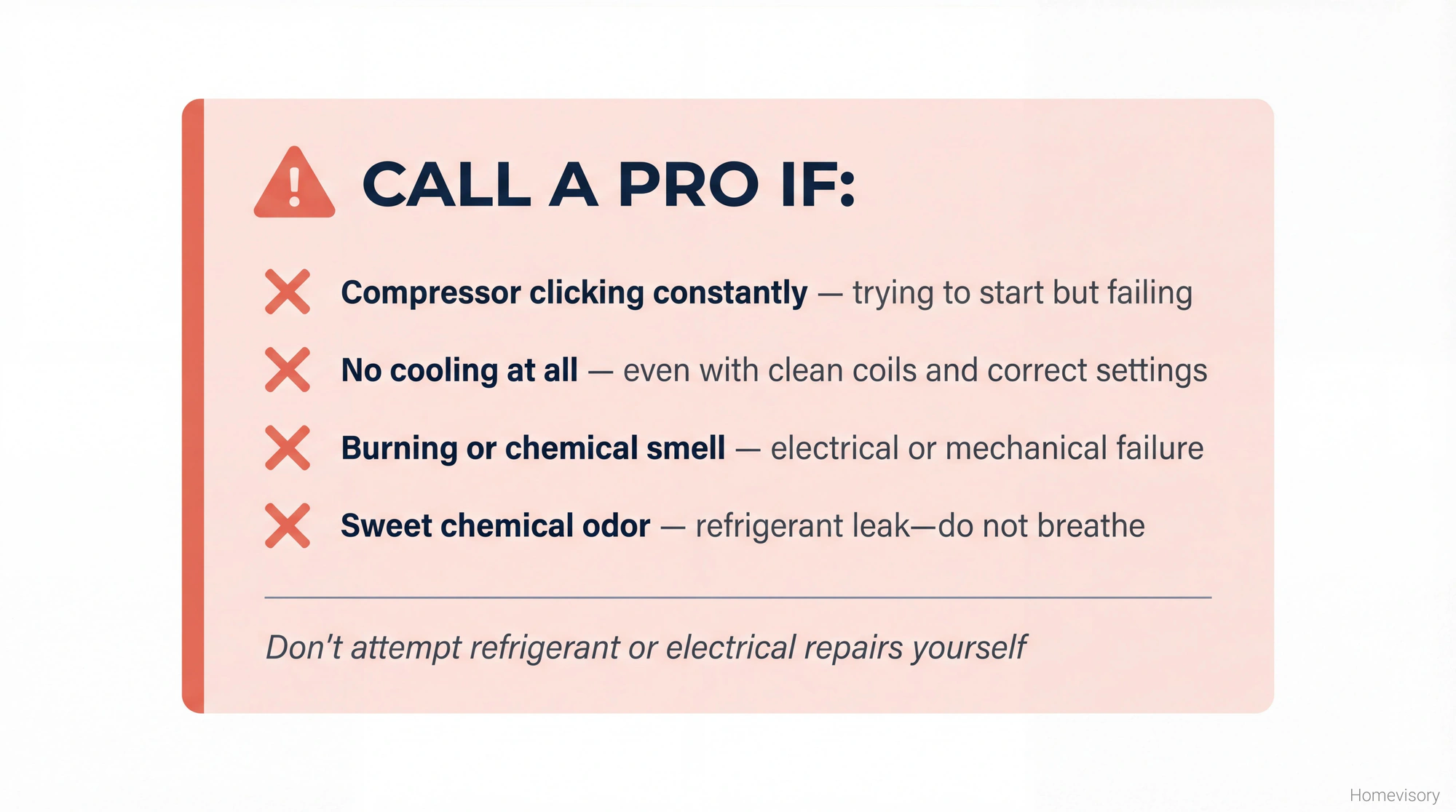
Those are call-a-pro situations. Don’t mess around with refrigerant or electrical components unless you know what youre doing.
Everything else, just pay attention. Listen to your fridge. It’ll tell you whats wrong. Thats what my dad said about machines and its true about fridges too. If your fridge isn’t cooling at all, check out our refrigerator not cooling troubleshooting guide. And for a full overview of every common fridge problem, our refrigerator repair guide has everything in one place. A new noise, a puddle that wasn’t there yesterday, vegetables that keep freezing no matter where you put them, those are all signals. The fridge is talking. You just have to listen.
This is exactly the kind of stuff Homevisory helps you stay on top of. Our Homevisory home task manager reminds you when to check your fridge temperature, clean your coils, inspect your door seals, all of it. You set it up once and it tells you what needs attention before small problems become expensive problems. Sign up free and stop wondering whether youre forgetting something important. You probably are. We’ll remind you.