What Attic Mold Actually Looks Like
Most people never go in their attic. I get it. Its hot up there in summer, freezing in winter, probably has insulation that makes you itchy, and theres no reason to be up there unless something goes wrong.
The problem is that by the time you notice something went wrong, mold has been growing for months. Sometimes years.
Attic mold doesnt announce itself. It’s not like a roof leak where water comes through the ceiling and you think “well thats a problem.” Mold in the attic just sits up there, spreading across your roof sheathing, and the only way you find out is when you’re selling your house and the home inspector climbs up with a flashlight and calls you over with that voice. That “you need to see this” voice.
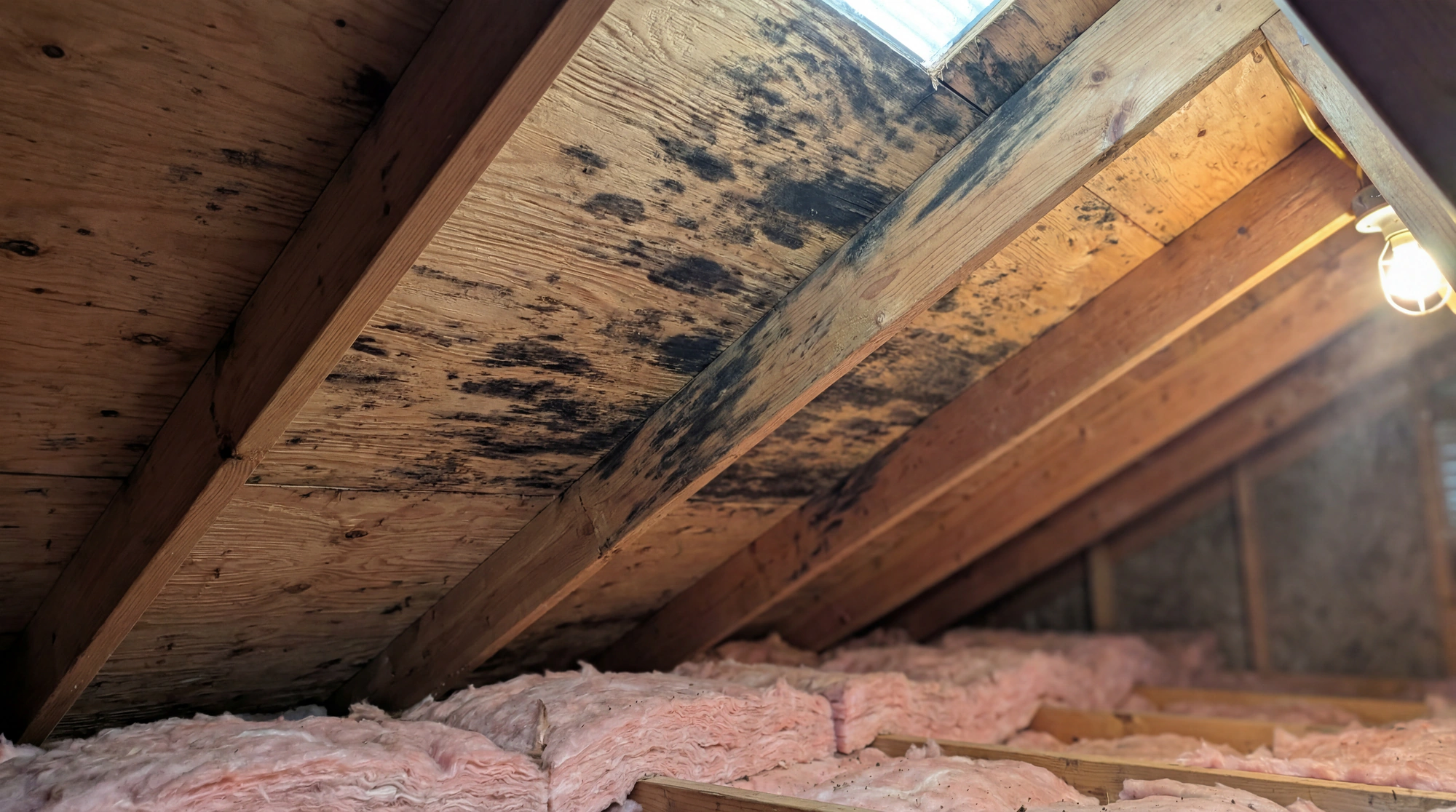
What does it look like. Black staining on the underside of the roof deck. Sometimes it looks like someone took a dirty sponge and wiped it across the plywood. Sometimes its concentrated around the bathroom fan vent. Sometimes the whole attic looks like the inside of a neglected shower.
Green mold happens too but black is more common. White fuzzy growth if you catch it early, which you probably wont because again, nobody goes up there.
The Signs You Have a Problem
You might not see the mold directly. But there are clues.
A musty smell that you cant locate. Youve cleaned everything, checked under sinks, pulled the refrigerator out, and you still smell something earthy and damp. Check the attic. Also check your bathroom — bathroom mold is another common source of that musty smell.
Condensation on your ceiling during winter. Little droplets forming on the drywall. That means warm moist air is getting into your attic space and the temperature differential is causing condensation. Where theres condensation theres moisture. Where theres moisture theres mold.
Dark staining visible from inside the attic, obviously.
Warped or soft spots on your roof sheathing. By this point you’ve got structural damage starting, so hopefully you catch it before this.
And this one surprises people: allergy symptoms that get worse at home. Mold spores circulate through your HVAC system. If someone in your house suddenly develops respiratory issues that improve when they leave and come back when they get home, mold is a possibility.
Why Attic Mold Happens
Alright this is the part I care about because the cause determines the fix and most attic mold remediation fails because people treat the symptom without treating the disease.
Mold needs three things. Organic material to eat, which your roof sheathing provides, its wood, thats not going anywhere. It needs darkness, which your attic has plenty of. And it needs moisture.
Moisture is the variable. Control moisture, control mold.
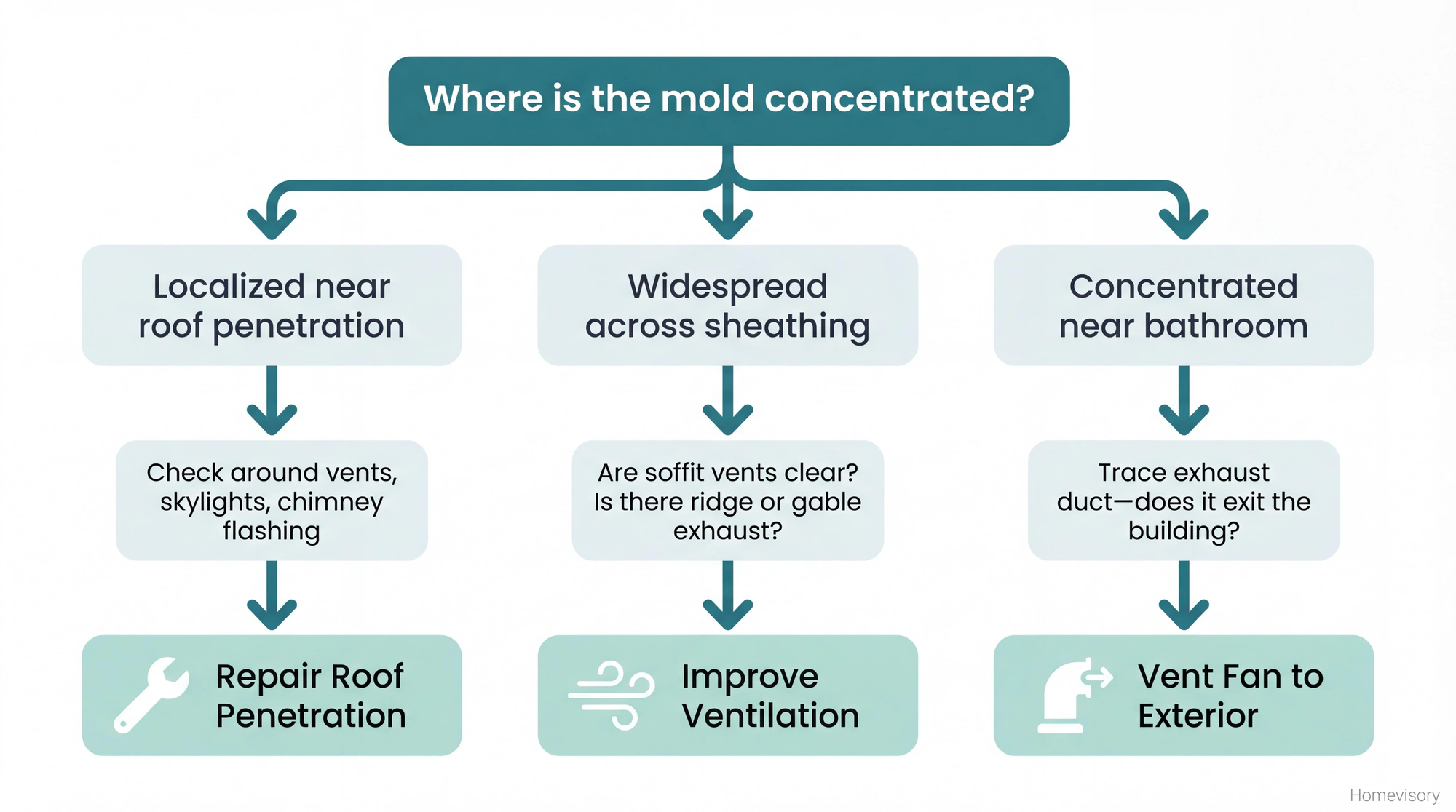
There are exactly three ways moisture gets into your attic:
Roof leaks. Water coming in from outside. Check around penetrations like plumbing vents, skylights if you have them, and flashing around the chimney. This is the obvious one and usually the easiest to spot because you’ll see water staining in a specific area rather than widespread growth.
Inadequate ventilation. This is the big one. Your attic needs air moving through it. Hot humid air rises from your living space, gets into the attic through gaps around light fixtures and the attic hatch and anywhere else it can find, and if that air cant escape, it condenses on the underside of the roof deck. Every night. For years. Mr. Davis, my woodshop teacher back in Atlanta, used to say “wood wants to breathe, trap it and it rots.” He was talking about finishing techniques but it applies to your roof sheathing too. If youre trapping moist air in your attic, the wood is going to rot. Period.
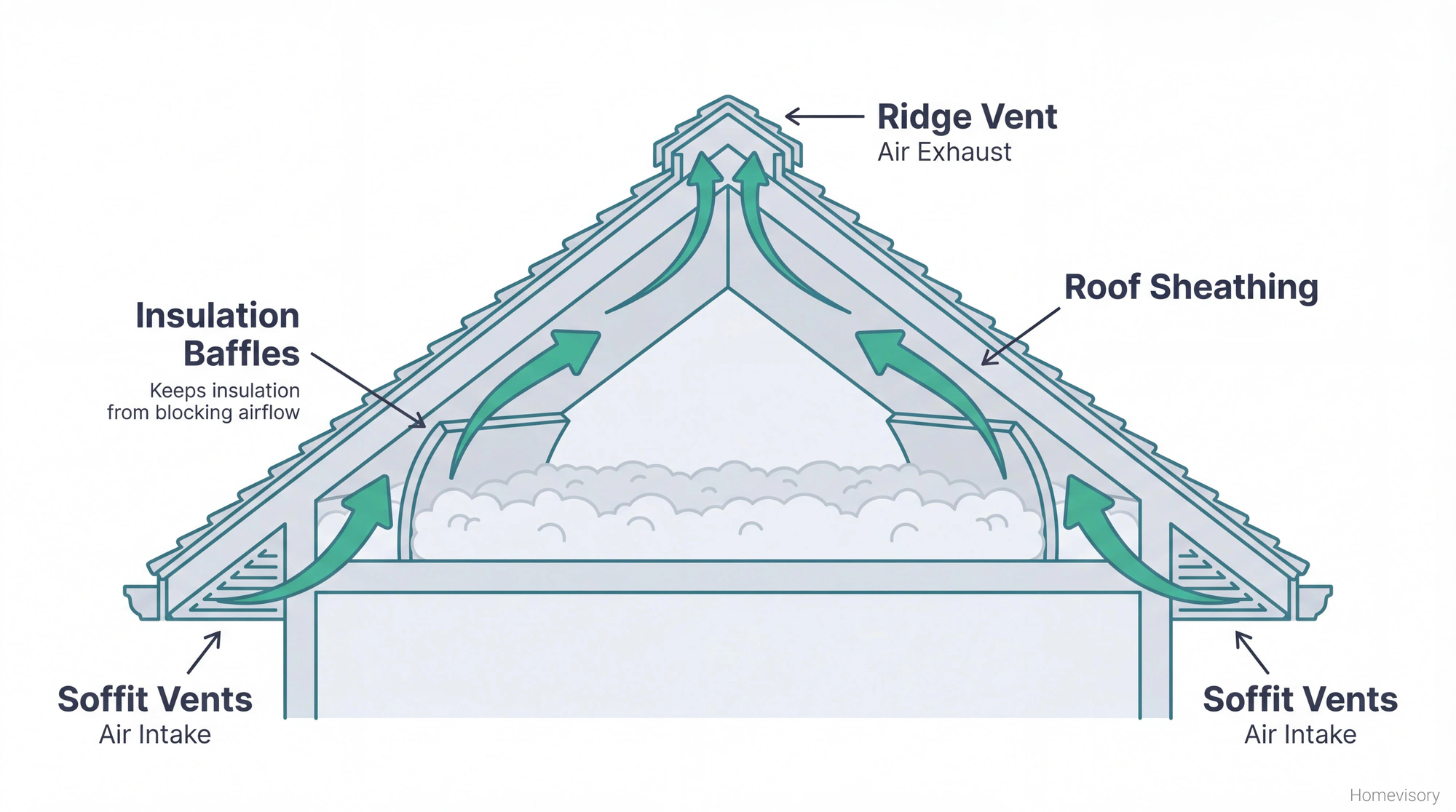
Bathroom exhaust fans venting into the attic. This one makes me genuinely angry and I see it all the time. Builders take shortcuts. Running that bathroom exhaust duct through the roof or out a gable wall takes time and materials. Running it six feet into the attic and just letting it terminate there takes five minutes. Guess which one some builders choose. So every time someone takes a shower, every time someone runs a bath, all that steam and moisture is getting pumped directly into the attic. I inspected a house in Texas, this was maybe 2008, nice young couple, first house, they thought they’d have to sell because the attic mold was so bad. Three bathrooms. All three exhaust fans venting into the attic. Builder had just stuck the duct hose up there and walked away. That house had been steaming itself for six years. We fixed the ventilation, remediated the mold, and they stayed in that house another decade. Last I heard they just paid it off.
The ventilation issue is where I probably get too deep into this but I dont care because its important and most people dont understand it.
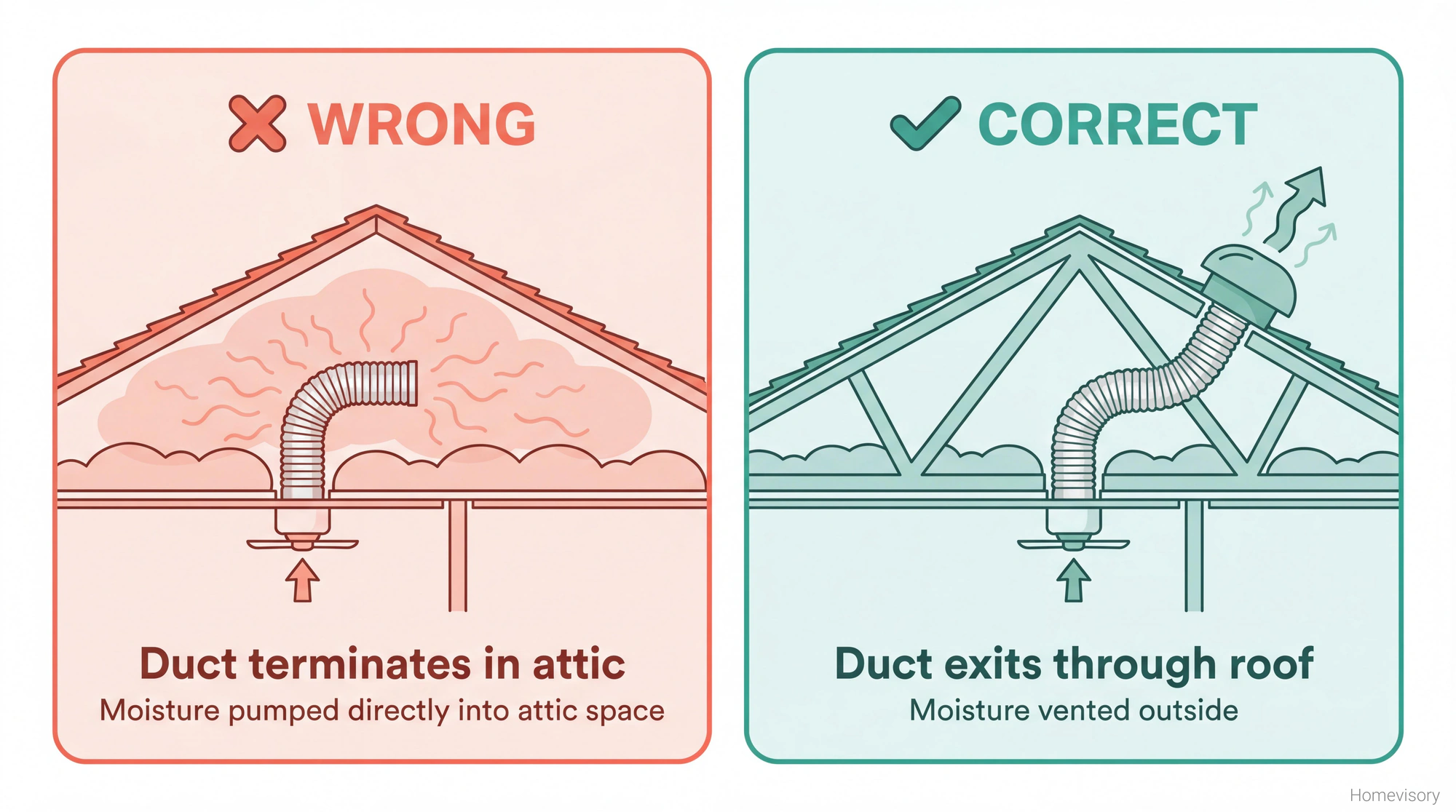
Your attic needs intake and exhaust. Intake usually comes from soffit vents, those little vents in the overhang under your roof. Exhaust comes from ridge vents along the peak or gable vents on the side walls or powered attic fans or some combination. Air comes in low, rises as it warms, exits high. Continuous cycle. If you block your soffit vents with insulation, which happens all the time when people add blown-in insulation themselves, you’ve killed your intake. If your builder only put ridge vent on part of the roof because he ran out of material on a Friday afternoon and decided good enough, you’ve got dead spots. If you have both ridge vents AND gable vents AND a powered fan, sometimes they fight each other and create weird pressure zones where air doesnt move at all. I’ve seen all of these.
That Winter in Chicago
I traveled a lot in my twenties doing commercial renovation work. Spent one winter in Chicago, 1996 maybe, and I remember my eyelashes actually froze walking from the truck to the job site. I’m not exaggerating. Little ice crystals on my eyelashes.
That was the winter I learned about ice dams. All these beautiful old buildings and half of them had icicles hanging off the gutters that were three feet long. Looked pretty. Was actually a disaster in progress. Ice dams form when the attic warms up, melts the snow on the roof, the water runs down to the cold overhang and refreezes. Backs up under the shingles. Gets into the attic. Causes mold.
Theyre caused by the same thing everything else is caused by. Poor attic ventilation. Warm attic equals snow melt equals ice dams equals water intrusion equals mold.
I think about that Chicago winter sometimes when I’m crawling around in a 140-degree Florida attic in August. The problems are different but the principles are the same. But yeah.
Attic Mold Remediation: What Actually Works
If you’ve got mold, you have to remove it. It doesnt die and go away on its own even if you fix the moisture problem. Dead mold is still allergenic. The spores are still there.
For small areas, less than maybe ten square feet, and only if its surface mold on accessible areas, you can do it yourself. Wear an N95 mask minimum, goggles, gloves, long sleeves. Dont contaminate the rest of the house by tracking through with mold on your clothes.
You can scrub with a borax and water solution. Some people use vinegar. Some people use concrobium. Whatever you use, you’re physically removing the mold from the wood surface, then applying something to kill whats left.
If it’s bigger than a few square feet, call someone. Moving on.
Professional attic mold remediation involves containment (sealing off the attic from the living space), HEPA air filtration running constantly, removal of contaminated insulation, treatment of the affected sheathing either by sanding/blasting or chemical application, encapsulation with a mold-resistant sealant, and then replacing insulation. Good companies will also find and address the moisture source or they’re just setting you up to have the same problem in three years.
Costs
I’m going to give you real numbers because I hate when articles dance around this.
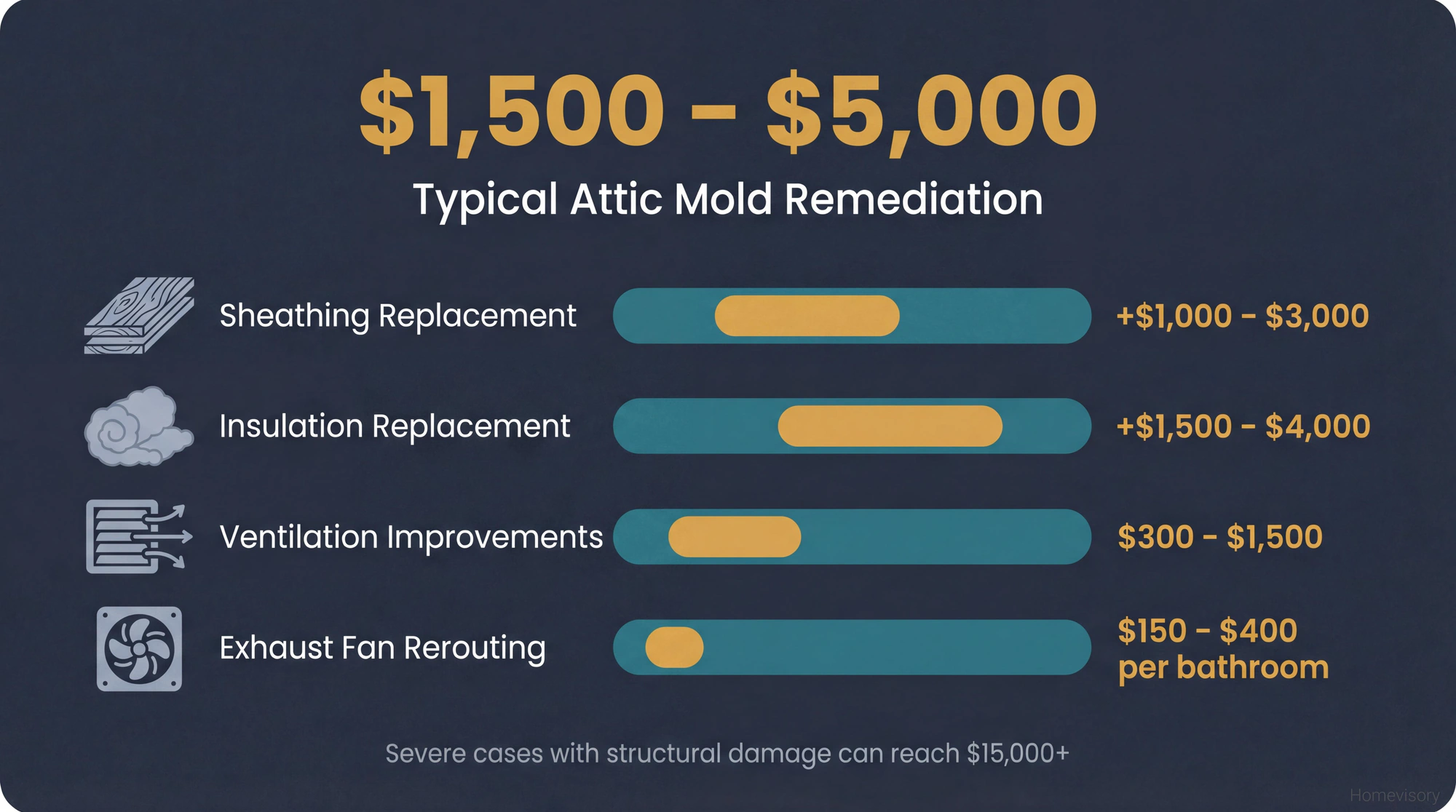
Professional attic mold remediation typically runs $1,500 to $5,000 for a standard attic with moderate mold growth. I’ve seen it go as high as $15,000 for severe cases where sheathing had to be replaced.
The variables are:
- Square footage of the attic
- Extent of the mold growth
- Whether you need sheathing replacement (adds $1,000-3,000)
- Whether the insulation needs full replacement (adds $1,500-4,000)
- Your local market
If they find the moisture source is a roof issue, roof repair is separate. If its a ventilation issue, adding proper ventilation is usually $300-800 for soffit vents and baffles, $500-1,500 for ridge vent installation.
Get three quotes. Ask each company exactly what they’ll do, in what order, and get it in writing. Ask about warranties. Reputable companies guarantee their work for at least a year, some offer five.
Fixing the bathroom exhaust situation, if thats your problem, runs $150-400 per bathroom to properly vent the duct through the roof.
The “Toxic Mold” Question
People always want to know if the mold in their attic is the dangerous kind. Black mold. Toxic mold. Stachybotrys.
I’m not getting into the whole toxic mold debate here because it gets into medical stuff thats not my expertise and theres a lot of hysteria mixed with legitimate science and I cant sort it out for you.
What I’ll say is this: all mold affects air quality. All mold can cause respiratory issues in sensitive people. Whether your specific mold is “toxic” or just regular disgusting mold, the solution is the same. Remove it. Fix the moisture source. You can have it tested for $200-400 if it gives you peace of mind. But the remediation process doesnt change based on the species.
Prevention
After youve dealt with attic mold or if you want to avoid it in the first place:
Check your soffit vents twice a year. Make sure theyre not blocked by insulation or debris or paint or wasp nests. I’ve found all of these.
Verify your bathroom exhaust fans vent outside. Go in the attic with a flashlight and trace those ducts. They should go to a roof cap or gable wall, not just terminate in the attic space.
Make sure your attic hatch seals properly. Weather stripping around the edges. An insulated attic hatch cover if you want to get serious about it.
If you live somewhere with cold winters, check your attic during the coldest part of winter. Look for frost on the underside of the roof deck. Frost means condensation means moisture means mold eventually.
And just go up there once a year. Flashlight. Five minutes. Look around. The problems you catch early are cheap problems. The problems you discover when youre trying to sell your house are expensive problems.
Look, attic mold removal isnt complicated in theory. Find it, fix the moisture source, remove the mold. The hard part is that nobody thinks about their attic until theres a crisis.
Thats what we do here at Homevisory. We help you remember the stuff you’d rather forget about, before forgetting about it costs you five thousand dollars. The task manager tracks your seasonal inspections, your filter changes, your “check the attic” reminders. Sign up free and let future you thank present you for once.