Before You Call Anyone
I get emails every week from people whose oven isnt heating up and they want to know if they should call a repair service or just buy a new oven. And I always ask the same question first. Did you check if its plugged in. Did you check the breaker.
You’d be amazed how many times thats the problem.
I’m not trying to be condescending here but I’ve been doing this long enough to know that people skip the obvious stuff. They assume the problem is complicated because the appliance feels complicated. But ovens are not complicated. They’re actually pretty simple machines when you break them down.
Here’s what an oven does. It makes heat. Thats it. It makes heat and it keeps the heat inside a box. If your oven is not heating, something in that heat-making process broke. Usually its one of about four things, and three of them you can check yourself in ten minutes.
Check the Obvious First
Power supply. I know I already said this but I’m saying it again because I’ve driven to people’s houses, back when I did service calls, and the oven was unplugged. Someone had bumped it while cleaning. Or a kid had been playing behind the stove. Or they’d pulled it out to retrieve something that fell and forgot to push the plug back in all the way.
Electric ovens need 240 volts. That means a dedicated circuit, usually a double breaker in your panel. Go look at your breaker box. Is it tripped. Sometimes it trips halfway and looks fine from a distance. Push it all the way off, then back on.
Gas ovens still need electricity for the igniter and the controls. If you have a gas oven not heating, dont assume it’s a gas problem. Could still be electrical.
Now check your oven settings. Is it on the right mode. Is there a delay start accidentally set. I’ve seen people think their oven was broken when they’d accidentally programmed it to start baking at 3 AM. The controls on modern ovens are confusing and people hit buttons they don’t mean to hit.
My daughter Janelle once managed to put our oven into some kind of Sabbath mode where it wouldnt do anything for religious observance reasons. We’re Christian but our oven was observing a Jewish holiday. Took me twenty minutes to figure out what happened.
The Igniter Is Almost Always the Problem
This is the part where I’m going to spend more time than maybe I should, but I dont care because this is the answer ninety percent of the time and people always want to skip to the complicated stuff.
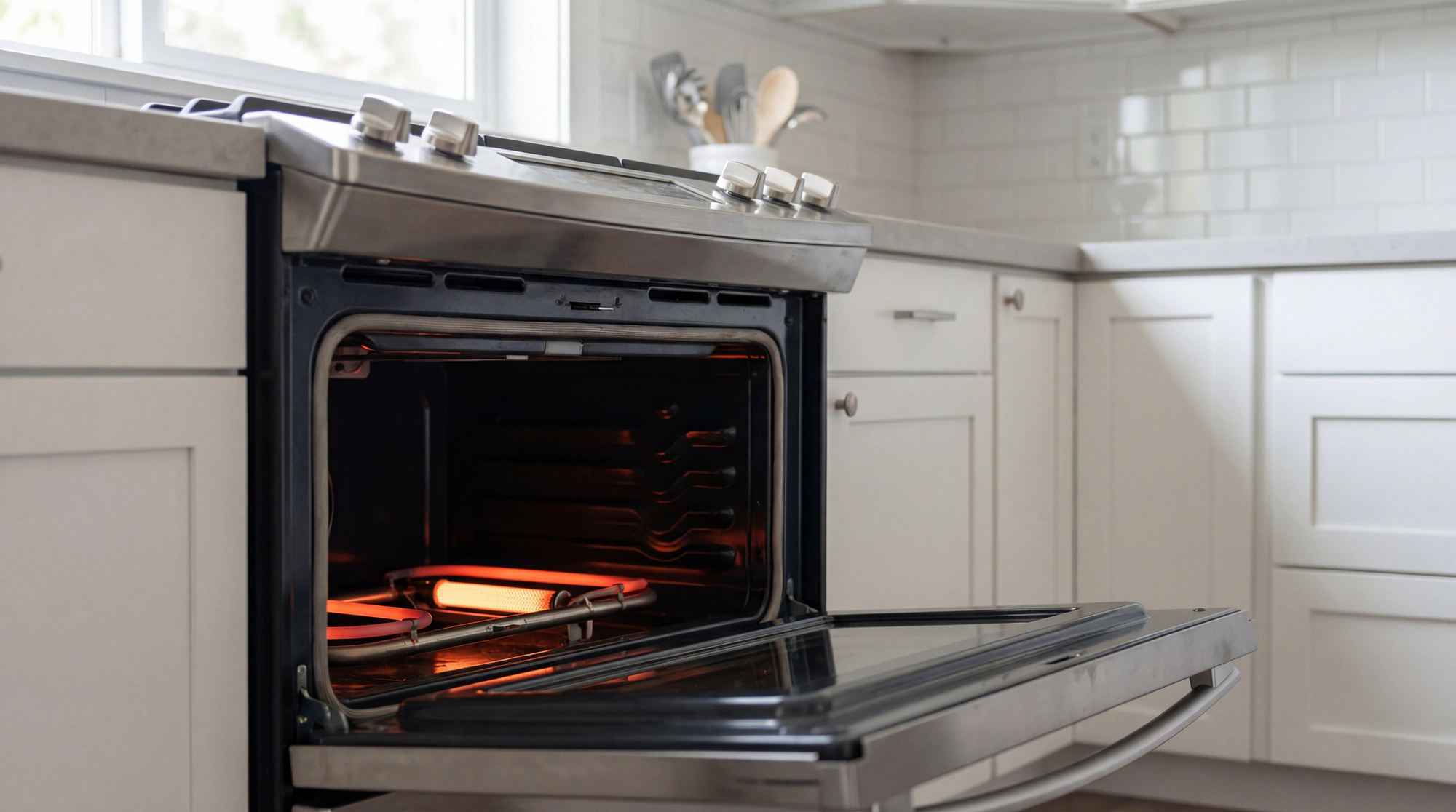
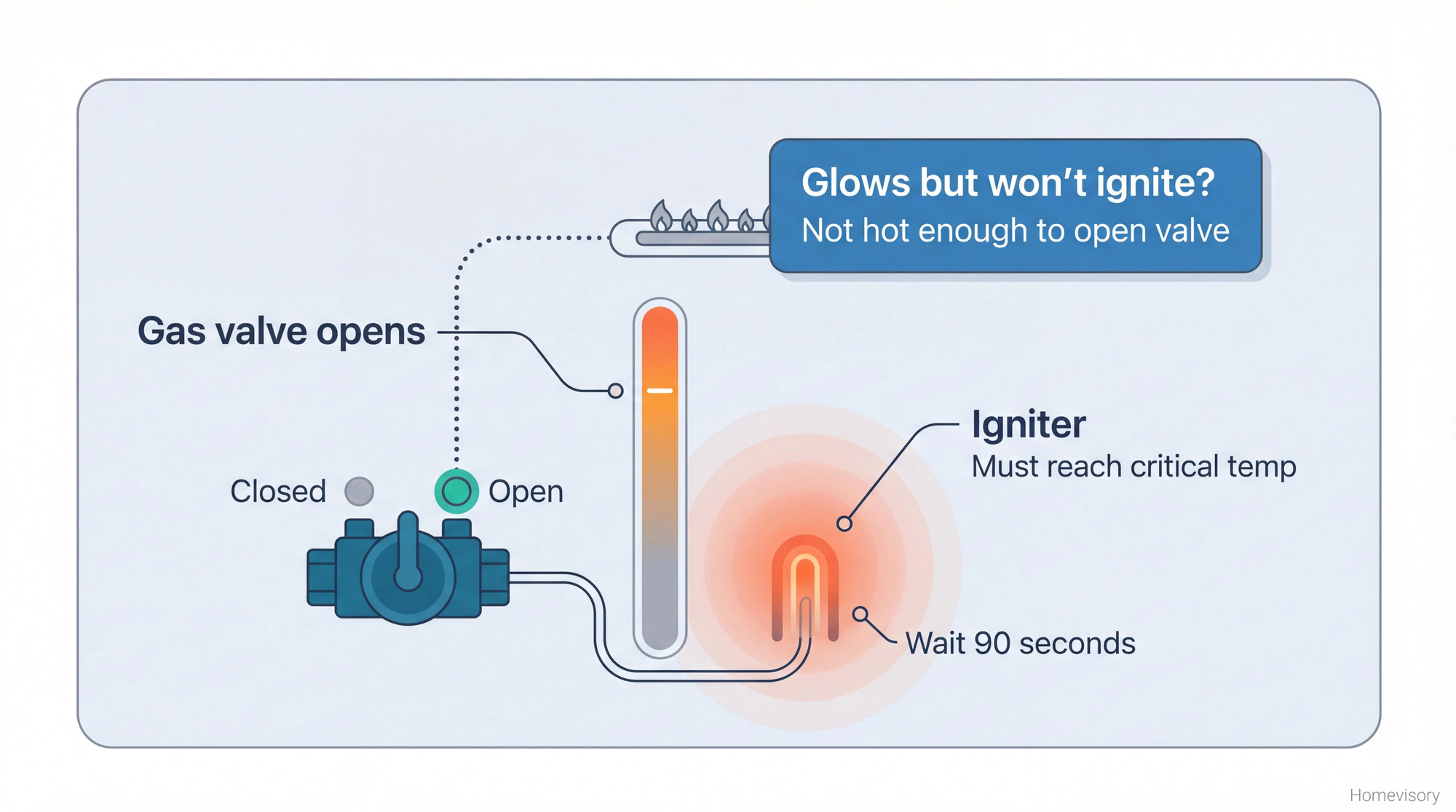
If you have a gas oven not heating up, the igniter is probably dead or dying. Thats the component that glows red hot to ignite the gas. When you turn your oven on, you should see it start to glow through the bottom of the oven, and then after about a minute or so, you should hear a little whoosh sound when the gas ignites. If you see glowing but never hear the whoosh, your igniter is too weak to open the gas valve. It still glows, it looks like it’s working, but it’s not getting hot enough to signal the valve to release gas. This is the most common failure mode and it confuses people because they see the glow and think “well the igniter’s working so it must be something else.” No. The igniter can glow and still be bad. It has to reach a certain temperature to trigger the valve and if its degraded it won’t get there. I’ve seen igniters that look perfectly fine, glow bright orange, and are completely useless. The test is simple, does gas actually ignite or not. If you’re getting glow with no fire after ninety seconds, replace the igniter. They cost between $20 and $50 depending on your model and they’re usually held in with two screws. Unplug the oven, remove the bottom panel, disconnect the old igniter, connect the new one, put it back together. Twenty minute job if you’re slow.
Mr. Davis, my old woodshop teacher back in Atlanta, used to say check the foundation before you blame the roof. He was talking about furniture that wobbled. But it applies here too. The igniter is the foundation of your gas oven’s heating system. Don’t start diagnosing gas valves and control boards until you’ve ruled out the $30 part.
The Thanksgiving Thing
Speaking of igniters. Thanksgiving 2018. We had fourteen people coming to our house in Palm Beach. Raquel had been planning this for weeks. Turkey was seasoned, stuffed, ready to go into the oven at 6 AM.
Oven wouldn’t heat.
I went through my checklist. Power was fine. Breaker was fine. I watched the igniter glow. Nice and orange. Ninety seconds. No ignition. Two minutes. No ignition.
I knew exactly what it was. The igniter. I’d been meaning to replace it for months because I’d noticed the preheat taking longer than it used to. Classic early symptom. But I’d put it off.
Now it was Thanksgiving morning, nothing was open, and I had a seventeen-pound turkey and no way to cook it.
We ended up deep-frying the turkey in the backyard with a setup I borrowed from my neighbor at 8 AM. It was actually fantastic, everyone loved it, but Raquel didn’t speak to me until we sat down to eat because I’d been telling her for two months that I was going to replace that igniter and I didn’t.
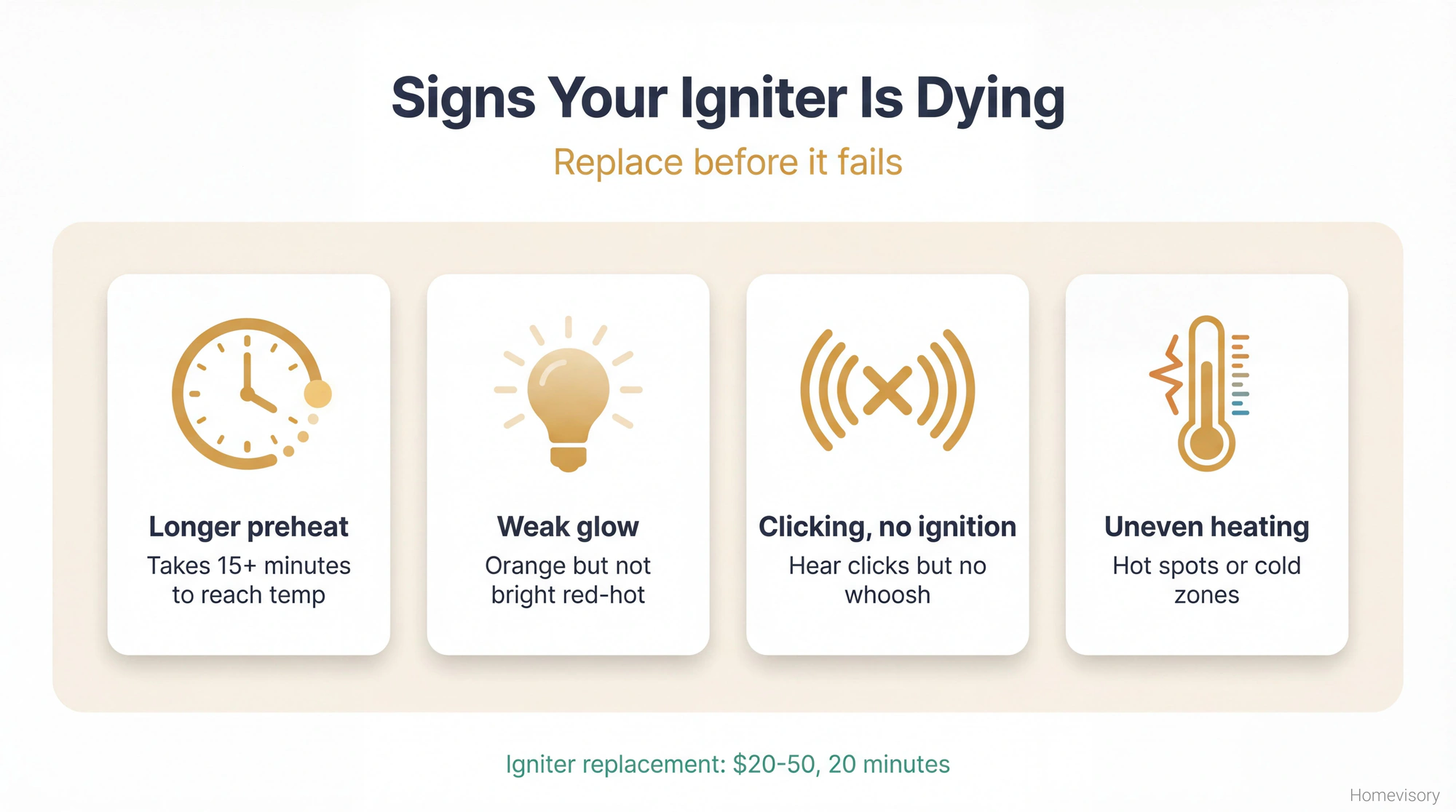
The point is, if your oven is taking longer to preheat than it used to, if the igniter glows but seems weak, if you hear clicking without ignition, replace the igniter before it fails completely. Dont be me on Thanksgiving morning.
Electric Ovens and the Bake Element
If you have an electric oven not heating, look at the bake element. Thats the coil at the bottom of the oven. When it’s working, it should glow red all the way across, evenly.
Turn the oven on to bake. Watch the element. Look for:
- Spots that don’t glow
- Blistering or bubbling on the surface
- Visible cracks or breaks
- Burn marks on the floor of the oven underneath it
If any of these, the element is burned out. Check it. Replace it if its bad. Moving on.
Elements run between $20 and $60 and usually just pull out and unplug. Two screws in the back, pull the element forward, disconnect the wires. Reverse to install the new one.
The broil element at the top can also be your problem if you’re having issues with broiling or if your oven only heats from the top. Same diagnostic process.
The Temperature Sensor
Less common but worth checking. There’s a temperature sensor in your oven, usually a thin metal probe near the back wall. It tells the oven how hot it is so the heating element or igniter knows when to cycle on and off.
If the sensor is bad, your oven might not heat at all, or it might heat but not reach the right temperature, or it might overheat.
You can test it with a multimeter if you have one. At room temperature it should read around 1,100 ohms. The resistance should increase as temperature increases. If it reads zero or infinity, it’s bad.
Sensors are cheap, usually $15-30. Easy to replace.
The Control Board
If you’ve checked everything else and your oven still isnt heating up, it might be the control board.
I’m not getting into control board diagnosis here. It requires testing with specialized equipment, the boards themselves are expensive, and if you install one wrong you can fry the whole thing. If you’ve ruled out the igniter, the element, and the sensor, call someone.
The Thing Nobody Wants to Hear
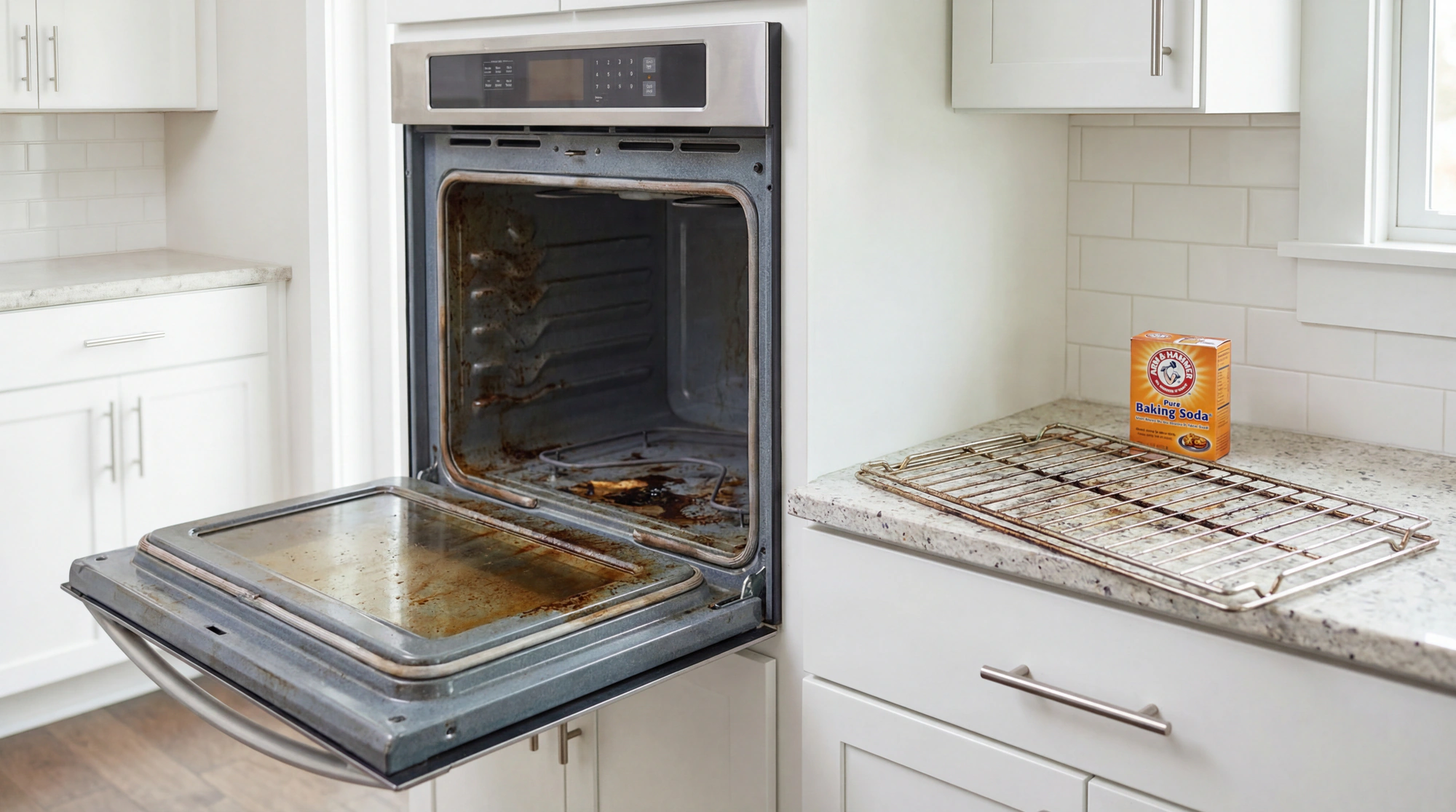
Sometimes ovens don’t heat evenly or don’t heat well because they’re filthy.
I’m not judging. I have four kids. I know what happens inside ovens. But grease buildup and burnt food residue can affect heating performance, block burner ports, gunk up igniter components.
My dad Curtis used to work at a factory in Atlanta and he told me once about the break room microwave. It was disgusting. Nobody would clean it. Everyone complained that it didn’t heat food right but nobody would clean the thing. Finally he cleaned it himself because he was tired of lukewarm coffee and it worked fine after that. He said something about how people will step over a problem for months instead of just fixing it. I don’t remember exactly what he said. But yeah.
Skip the self-clean cycle and deep clean your oven the right way with baking soda paste instead. Wipe it out especially around the igniter and burner tube on gas ovens. While you’re at it, clean your stove grates too — that baked-on grease isn’t doing your kitchen any favors.
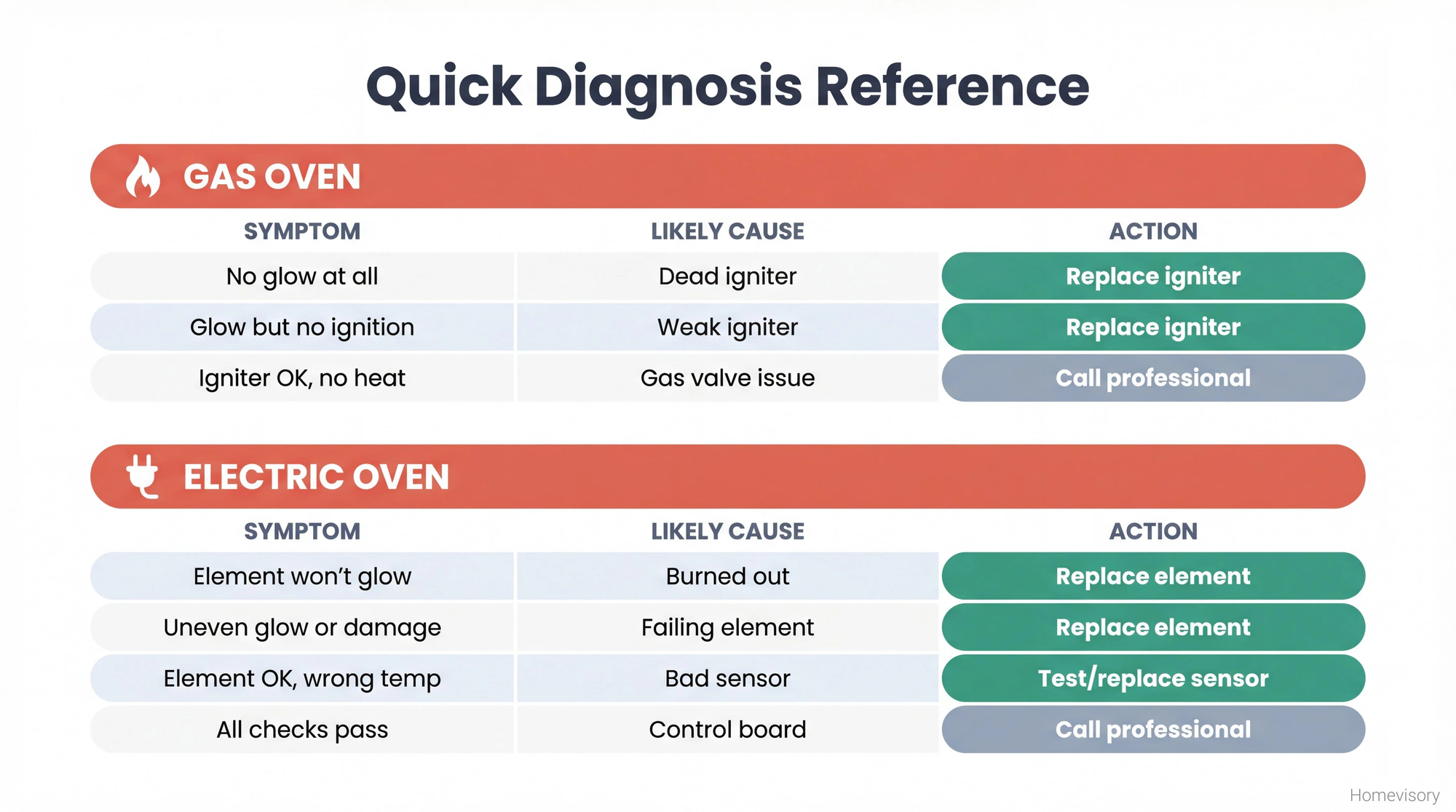
Quick Reference
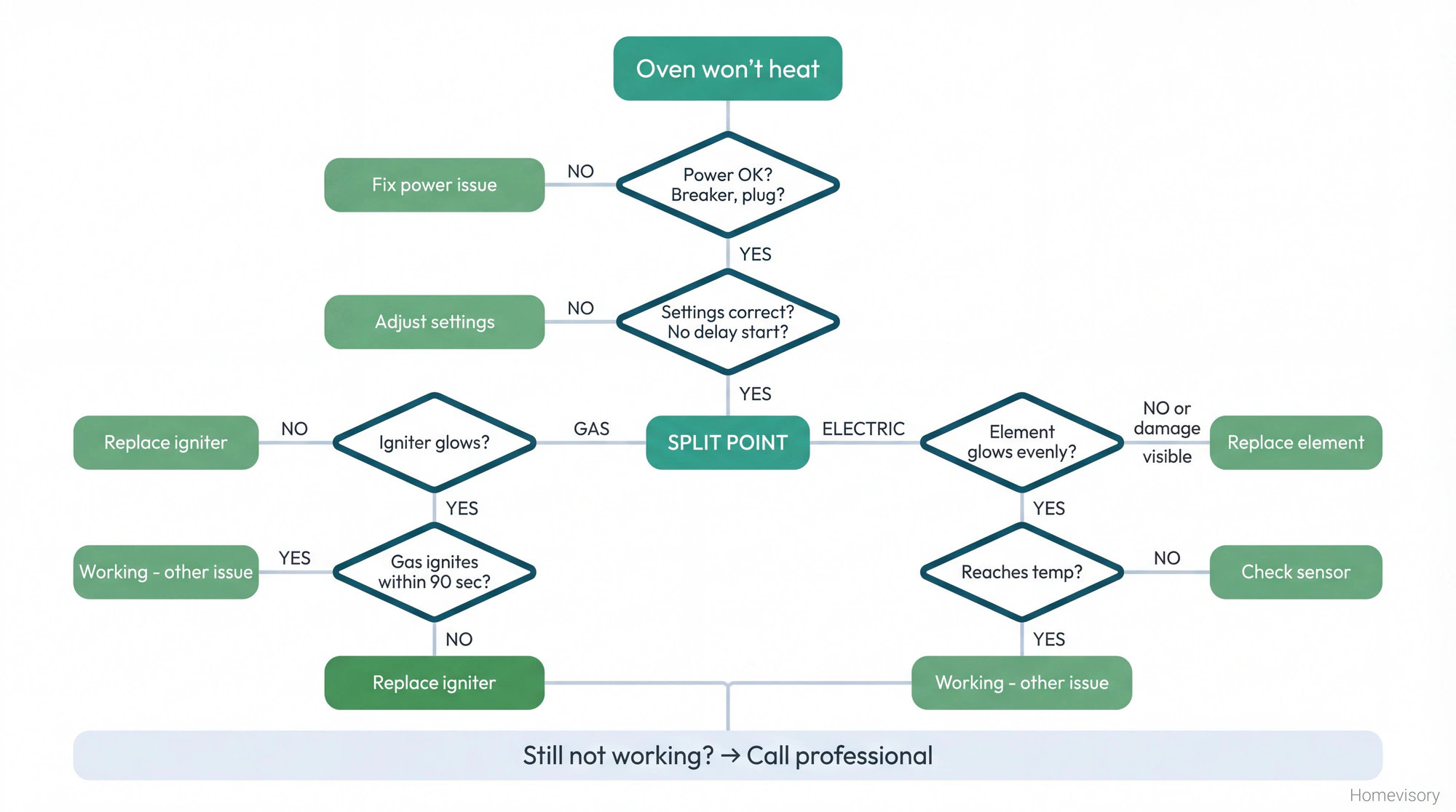
Gas oven not heating:
- Check power and breaker
- Look at igniter, does it glow, does gas actually ignite
- If glow but no ignition, replace igniter
- If no glow at all, igniter is dead, replace it
- If igniter is new and good, could be gas valve (call someone)
Electric oven not heating:
- Check power and breaker
- Look at bake element, even glow, no damage
- Damaged element, replace it
- Check temperature sensor with multimeter
- If all good, could be control board (call someone)
When to Give Up and Call
If the repair is going to cost more than half what a new oven would cost, think carefully. Ovens last fifteen to twenty years if you take care of them. If yours is old and needs an expensive repair, it might be time.
But most of the time, your oven not heating up is a $30 igniter or a $40 element. Don’t call a service technician, pay the $150 diagnostic fee, and then pay them another $200 to install a part you could have done yourself.
Check the obvious first. Check the igniter. Check the element. Most problems solve themselves when you actually look at them.
This is exactly the kind of thing Homevisory helps you stay ahead of. Instead of waiting for Thanksgiving morning to remember that your igniter has been acting weak, you get a reminder to check it in October. That’s what we do here at Homevisory. Scheduled reminders for every system in your home, so you fix the small stuff before it becomes a holiday disaster. Sign up free at Homevisory home task manager.