When Your Microwave Runs But Nothing Heats
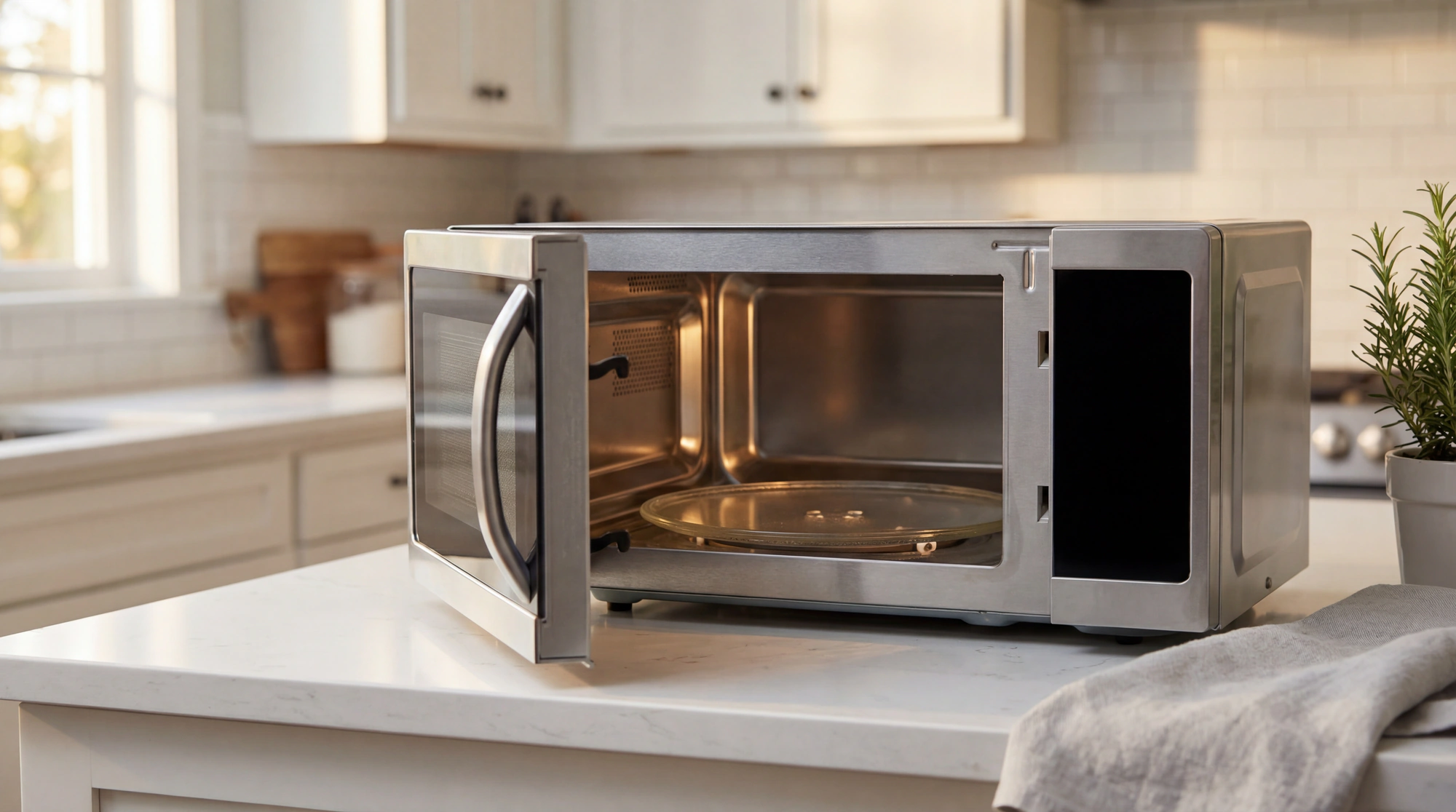
The microwave turns on. The light comes on. The turntable spins. The timer counts down. And when you open the door, your food is exactly as cold as when you put it in.
This is one of the more frustrating appliance problems because everything looks like its working. The machine is doing all the visible things. But the one job you actually need it to do, heating food, nothing. If your microwave is not heating, there are a few possible causes and some of them you can troubleshoot yourself. Some of them you absolutely cannot and I’ll be very clear about which is which.
Check the Obvious First
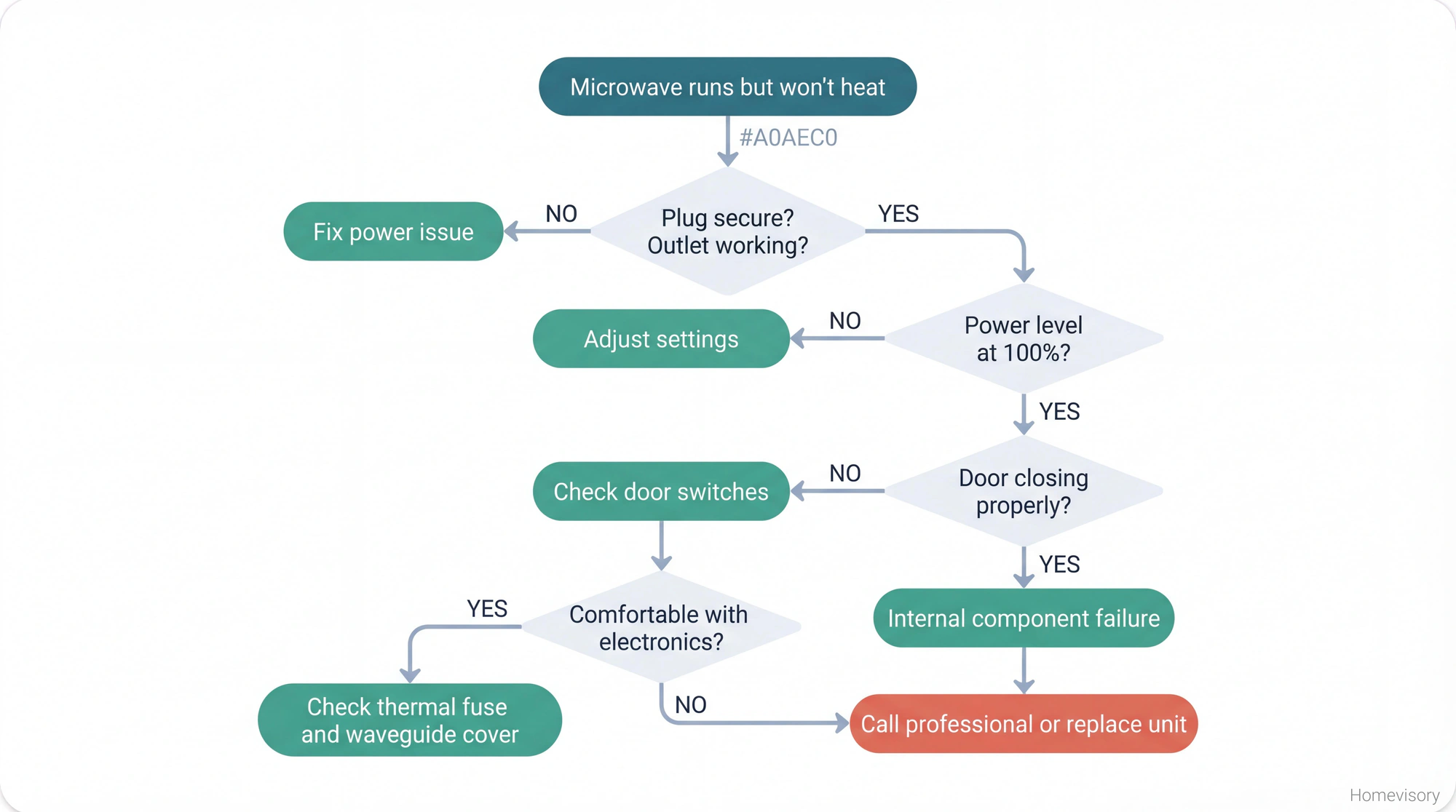
Is it plugged in all the way. I know. I know you think thats insulting. But I’ve driven forty-five minutes to a job site because someone’s microwave wasnt heating and the plug had worked itself loose from the outlet. Microwaves draw a lot of power and over time, especially if the outlet is old or the prongs are slightly bent, the connection can become intermittent.
Check it. Moving on.
Also check if the outlet itself is working. Plug something else in. A phone charger, a lamp, whatever. If nothing works, you’ve got a tripped breaker or a dead outlet. Thats not a microwave problem.
The Door Switches
This is probably the most common cause when a microwave is not heating up and everything else seems fine.
Your microwave has multiple door switches, usually three, sometimes four. They’re safety mechanisms. They tell the microwave that the door is completely closed and sealed before the magnetron fires. If any one of those switches fails or gets misaligned, the microwave will power on, lights will work, fan might run, turntable spins, but no microwaves get generated.
I have a theory about door switches and I have zero evidence for this but I’m going to say it anyway. People who slam the microwave door kill their door switches faster. I watch my kids do it. They grab the handle and they close it like theyre angry at it. Same with Raquel. I’ve mentioned it. More than once. She says I’m being dramatic. Maybe I am. But door switches are plastic components with metal contacts and repeated impact can’t be good for them. It just cant.
If you suspect a door switch issue, you can sometimes see physical damage if you look closely at the latch mechanism. But testing them requires a multimeter and opening the microwave cabinet and we’re getting into territory I need to warn you about.
What I’m Not Going to Tell You to Fix
Here’s where I need to be direct with you.
A microwave contains a high-voltage capacitor that can hold a lethal charge even when the microwave is unplugged. I’m not exaggerating for effect. I’m not being overcautious. People have died working on microwaves. The capacitor stores enough electricity to stop your heart and it can retain that charge for hours or even days after you unplug the unit.
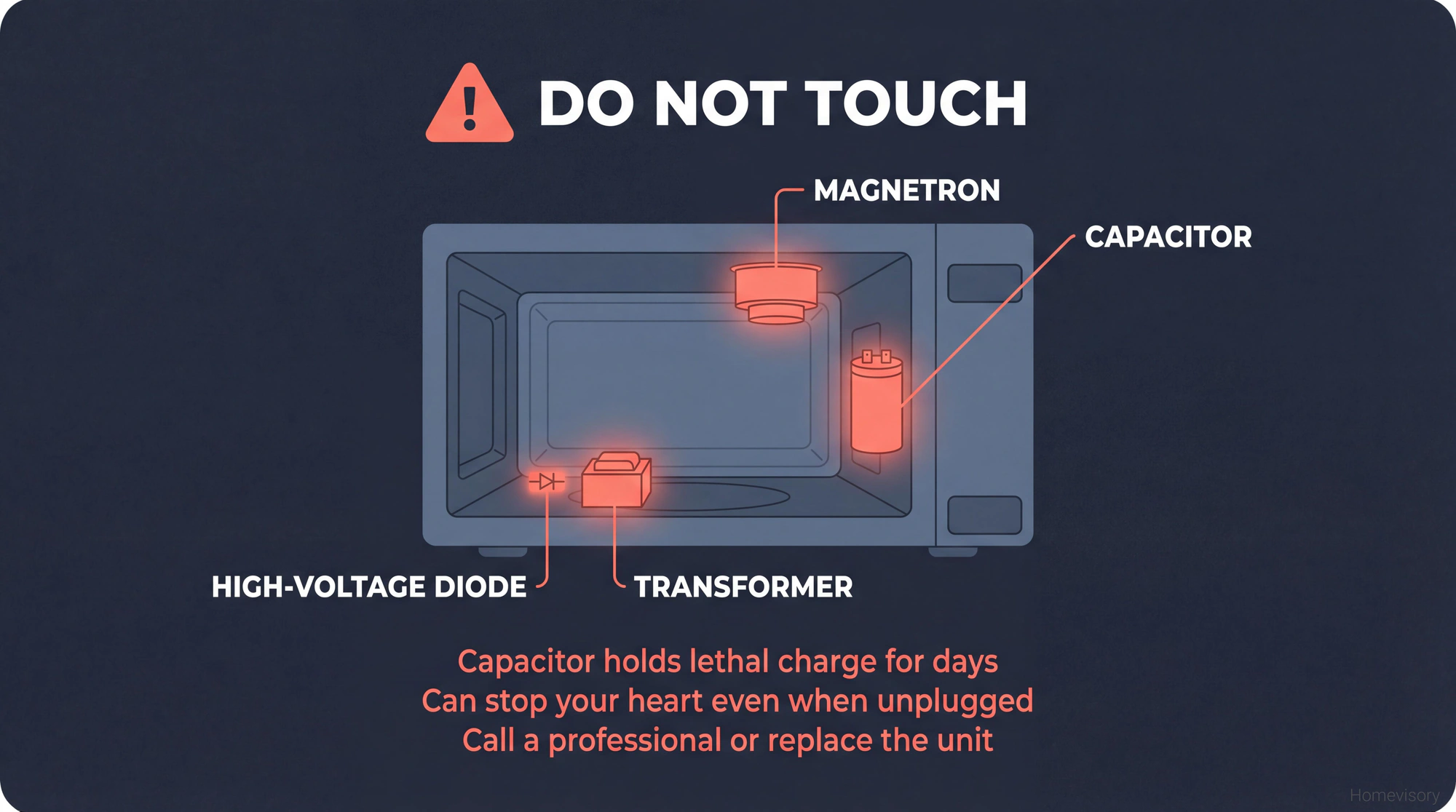
My dad worked in a factory for thirty years and he used to say, about equipment that could hurt you, he used to say “respect the machine or the machine won’t respect you.” That sounds like something off a motivational poster but he meant it literally. He saw people get hurt because they got comfortable around dangerous equipment. The magnetron, the capacitor, the high-voltage diode, the transformer, these are not components for a YouTube tutorial and a screwdriver. If your microwave is not heating and you’ve ruled out the simple stuff, call someone or replace the unit. For a deeper look at common microwave failures and repair options, see our microwave oven repair guide.
A new microwave costs $100-200. An emergency room visit costs a lot more. A funeral costs even more than that.
I’m not trying to scare you away from all repairs. I want you to fix things yourself when you can. Thats what we do here at Homevisory. But this is one of those situations where the risk is not worth it unless you’re specifically trained to work with high-voltage equipment. If you are, you don’t need this article.
The Magnetron
The magnetron is the part that actually generates the microwaves. When it fails, your microwave will do everything except heat. They burn out over time, especially in heavily used microwaves. My mom used to reheat her coffee in the microwave probably five times a day. Same cup. She’d pour it in the morning and then forget about it and then microwave it for thirty seconds and then forget about it again. I think about that microwave sometimes, how hard it worked. She had it for probably fifteen years before it finally gave up. Anyway.
If the magnetron is dead, it requires discharging the capacitor safely, removing multiple components, and installing a replacement magnetron that costs $50-150 depending on the model. By the time you add labor, youre often looking at more than the cost of a new microwave unless you have a high-end built-in unit.
High-Voltage Diode
The diode converts the transformer’s output so the magnetron can use it. When it fails, same symptom, microwave not heating but everything else works. Same danger warning applies. Same recommendation: call a professional or replace the microwave.
Capacitor
Already covered why you shouldn’t touch this. If it’s failed, a technician can test and replace it. You should not.
Things You Can Actually Check
Alright, enough scaring you. Here’s what you can safely do:
The control board
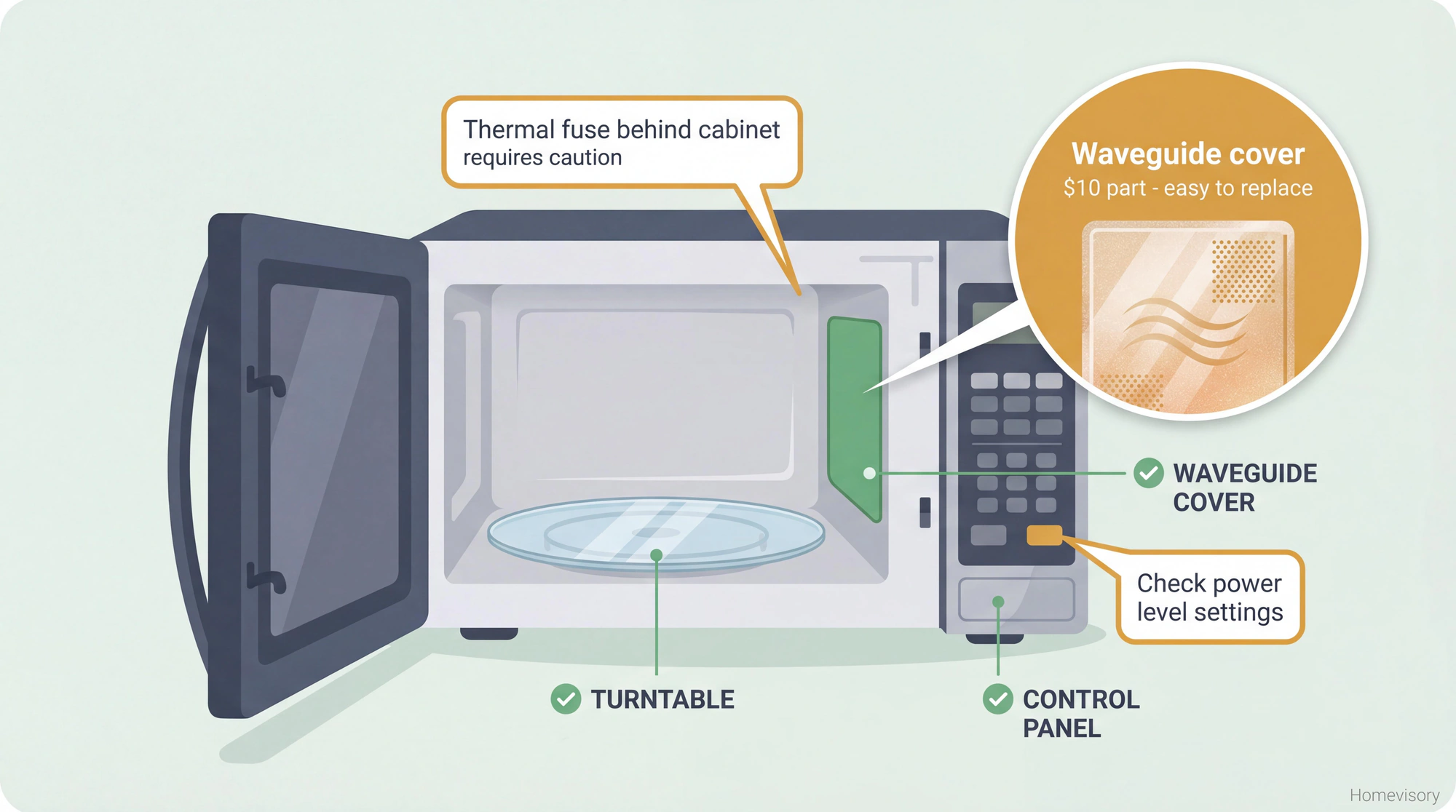
If the touchpad is unresponsive, buttons don’t work, or the display is glitchy, you might have a control board issue. This is a low-voltage component and safer to access, but honestly by the time you buy a replacement control board you’re usually approaching the cost of a new microwave anyway.
Power settings
This one is embarrassing when it happens. Someone accidentally sets the microwave to 10% power and then forgets. The microwave runs for three minutes and barely warms the food. Check your power level. Make sure it’s at 100%.
The waveguide cover
This is the rectangular plastic or mica cover inside the microwave, usually on the side wall. It protects the magnetron outlet. If its burned, cracked, or covered in food splatter, it can affect heating. Regular microwave cleaning prevents buildup on this cover. You can replace this yourself, its cheap, usually $10 or less for the part. Unplug the microwave first. The cover usually pops out or has a couple screws. Clean it or replace it.
Thermoprotector / Thermal Fuse
If the microwave overheated, the thermal fuse may have blown. This is a safety device that cuts power to the magnetron when temps get too high. It can be tested with a multimeter and replaced without touching the high-voltage components, but you need to access the interior cabinet to reach it. If you’re comfortable with basic electronics and you’re careful not to touch the capacitor, this is doable. If that sentence made you nervous, call someone.
The Turntable Thing
If your turntable isn’t spinning but the food is still heating, that’s a different problem and I’m not getting into it here. Turntable motor, roller ring, coupler. Not the same issue as microwave not heating.
When to Replace vs Repair
Here’s my general rule.
If the microwave is under five years old and it’s a decent model, get a quote for repair. If the quote is under $100, probably worth it.
If the microwave is over seven years old, or it was cheap to begin with, or the repair quote is over $100, replace it. Microwaves are not like refrigerators or washers where repair usually makes sense. They’re relatively inexpensive and the high-voltage components make repairs risky and labor-intensive.
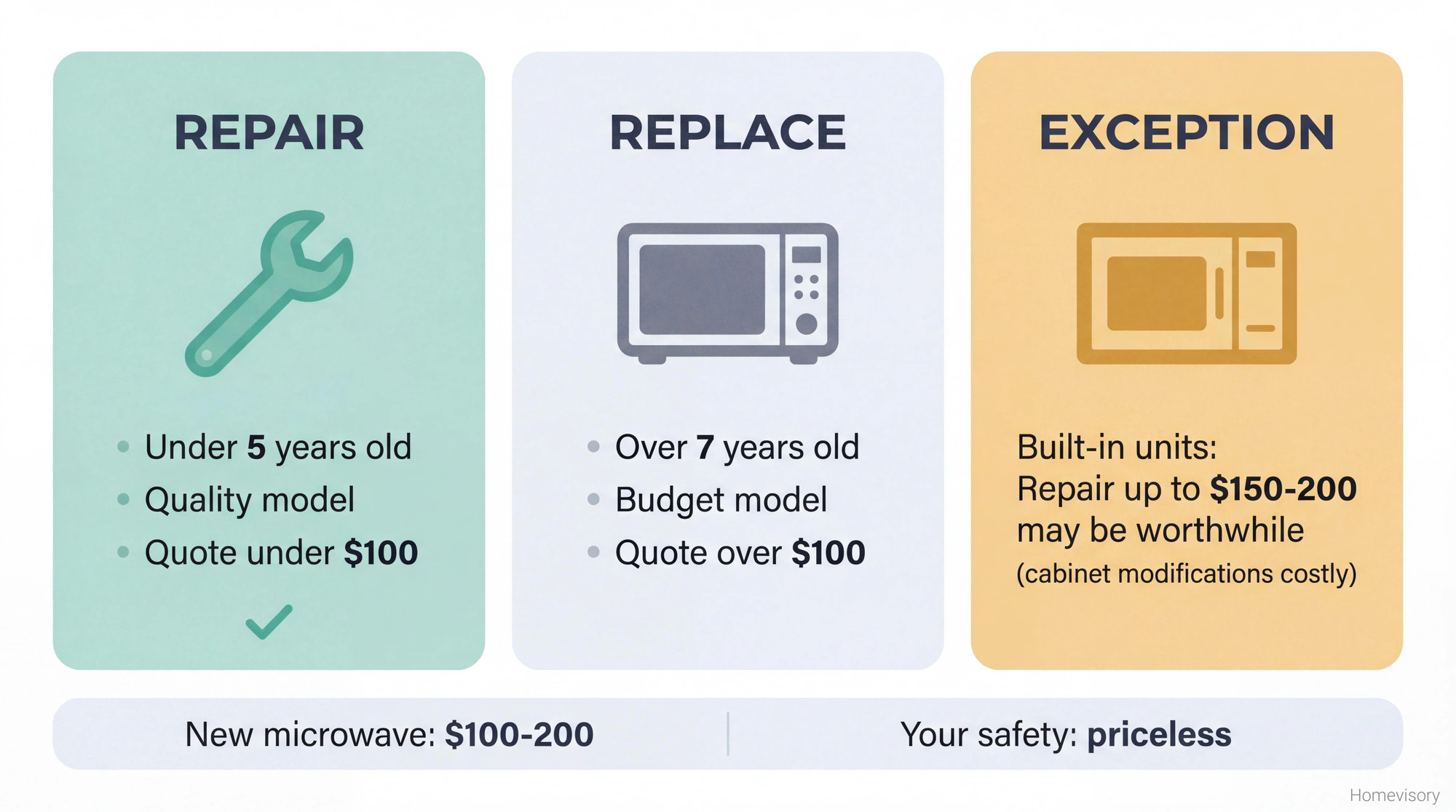
If it’s a built-in microwave that’s part of your kitchen cabinetry, that changes the math. Replacement means matching the cutout dimensions, possibly modifying cabinets. In that case, paying $150-200 for a repair might make sense even on an older unit.
The Break Room Story
I used to work commercial renovations, spent years traveling to job sites all over the country. There was this one site in Chicago, we were there for three months doing an office buildout. The break room had a microwave that stopped heating about halfway through the project. For two weeks, people blamed each other. Someone said Mike ran it empty. Mike said it was the night crew. Night crew said it was working fine when they left. Eventually someone just brought in a cheap microwave from home and we used that for the rest of the project. The broken one sat there next to it, still plugged in, until the building owner dealt with it after we left.
I never found out what was wrong with it. Probably a magnetron. Probably would have cost more to repair than the microwave was worth. But the thing that sticks with me is how long everyone argued about whose fault it was before anyone tried to fix it. Thats usually how it goes with appliances. Nobody notices until its broken, then everybody has a theory.
What Homevisory Does For You
Look, most people don’t think about their microwave until it stops heating their leftovers. Same with the furnace filter, the dishwasher seal, the dryer vent, all of it. You use it until it breaks and then you scramble.
Homevisory home task manager is a free home task manager that reminds you about maintenance before things fail. Not just microwaves, everything. The stuff you know you should do but forget. We track it so you don’t have to keep it all in your head.
If your microwave just died and you’re reading this article at 11 PM trying to figure out why, I get it. But once you replace it or fix it, sign up and let us help you stay ahead of the next thing. That’s what we do here at Homevisory.