
Why Hot Tub Maintenance Matters More Than You Think
I didn’t grow up with a hot tub. Nobody in Atlanta in the 80s had a hot tub unless they were in a music video or selling something illegal. But when we moved to Palm Beach, Raquel wanted one. The kids were getting older, we had the space, and she said it would be good for my back. She was right about that.
What she didn’t mention was that hot tub maintenance would become my second job.
Most people buy a hot tub thinking its going to be this relaxing addition to their life. And it can be. But only if you actually take care of it. Skip the maintenance and you end up with what my neighbor Gary had, which was basically a heated petri dish in his backyard. I’ll get to that.
The CDC recommends specific water chemistry standards for hot tubs: chlorine levels at least 3 ppm, bromine levels between 4-8 ppm, and pH between 7.0 and 7.8. Temperature should stay at or below 104°F. These arent suggestions. These are the numbers that keep you from getting sick.
Water Chemistry Is Everything
I’m going to spend more time on this than anything else because this is where people mess up. They buy the hot tub, fill it with water, dump in some chlorine, and think theyre done. Then three weeks later they’re itchy and the water smells like a public pool that hasn’t been cleaned since 1987.
Hot tubs are different from pools. Way different. The water is hotter, the volume is smaller, and you’re soaking in it instead of swimming through it. According to research published in the National Center for Biotechnology Information, levels of potentially toxic disinfection byproducts tend to be higher in hot tubs due to recirculation and smaller water volumes. Everything concentrates faster. Body oils, sweat, lotions, whatever your kids had on their hands, it all goes into that water and it stays there until you deal with it.
Test your water twice a day when the tub is getting heavy use. Whatever. Just do it. I know thats more than most people want to hear but the CDC specifically recommends testing disinfectant residual and pH at least twice per day, and as often as hourly during heavy use. The reason is Legionella, which is a bacteria that thrives in warm water between 77 and 113 degrees, which is exactly the temperature range your hot tub operates in. You cant see it. You cant smell it. But you can breathe it in through the steam and mist and end up with a serious respiratory infection.
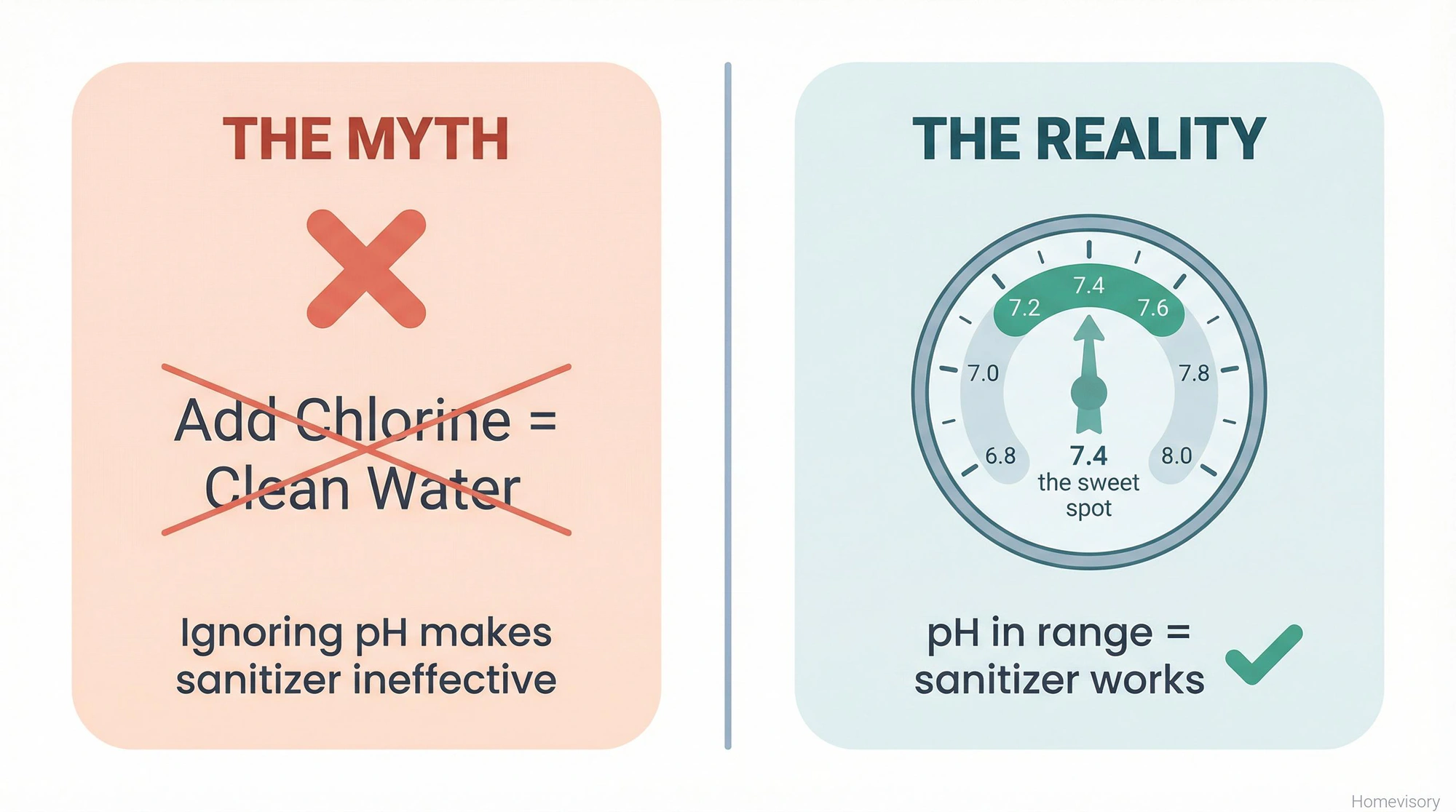
The pH thing is what trips people up and I could talk about this for an hour because it affects everything else. Your sanitizer, whether you’re using chlorine or bromine, only works properly within a specific pH range. Too high and the sanitizer becomes sluggish, too low and it burns off too fast and irritates skin and eyes. The sweet spot is 7.2 to 7.6, though the CDC gives you a little more room up to 7.8. I keep mine around 7.4. When pH drifts, and it will drift because thats what pH does, you adjust with pH increaser or decreaser, small amounts, test again in an hour. Don’t dump a bunch in and hope for the best. I’ve done that. You overcorrect and then you’re chasing the numbers for two days.
Alkalinity is the buffer that keeps pH stable. Keep it between 80-120 ppm. Test it weekly. Adjust it before you adjust pH. That order matters.
How to Drain a Hot Tub
Here’s where I learned something the hard way. First hot tub we had, I drained it maybe once a year. I figured if I kept the chemicals right, why would I need to drain it. The water looked clear. The numbers were good. What’s the problem.
The problem is everything that builds up over time that you cant test for. Total dissolved solids. Calcium. Biofilm in the pipes. After about eight months, the water started getting cloudy no matter what I did. Couldn’t fix it with chemicals. Had to drain it, scrub everything, and start over. Should have been doing that all along.
The CDC has a formula for drain frequency: take your spa volume in gallons, divide by 3, then divide by the average number of daily users. So if you have a 400-gallon hot tub and two people use it every day, thats 400 divided by 3, which is about 133, divided by 2, which is about 66 days. Every two months, roughly. More users means more frequently.
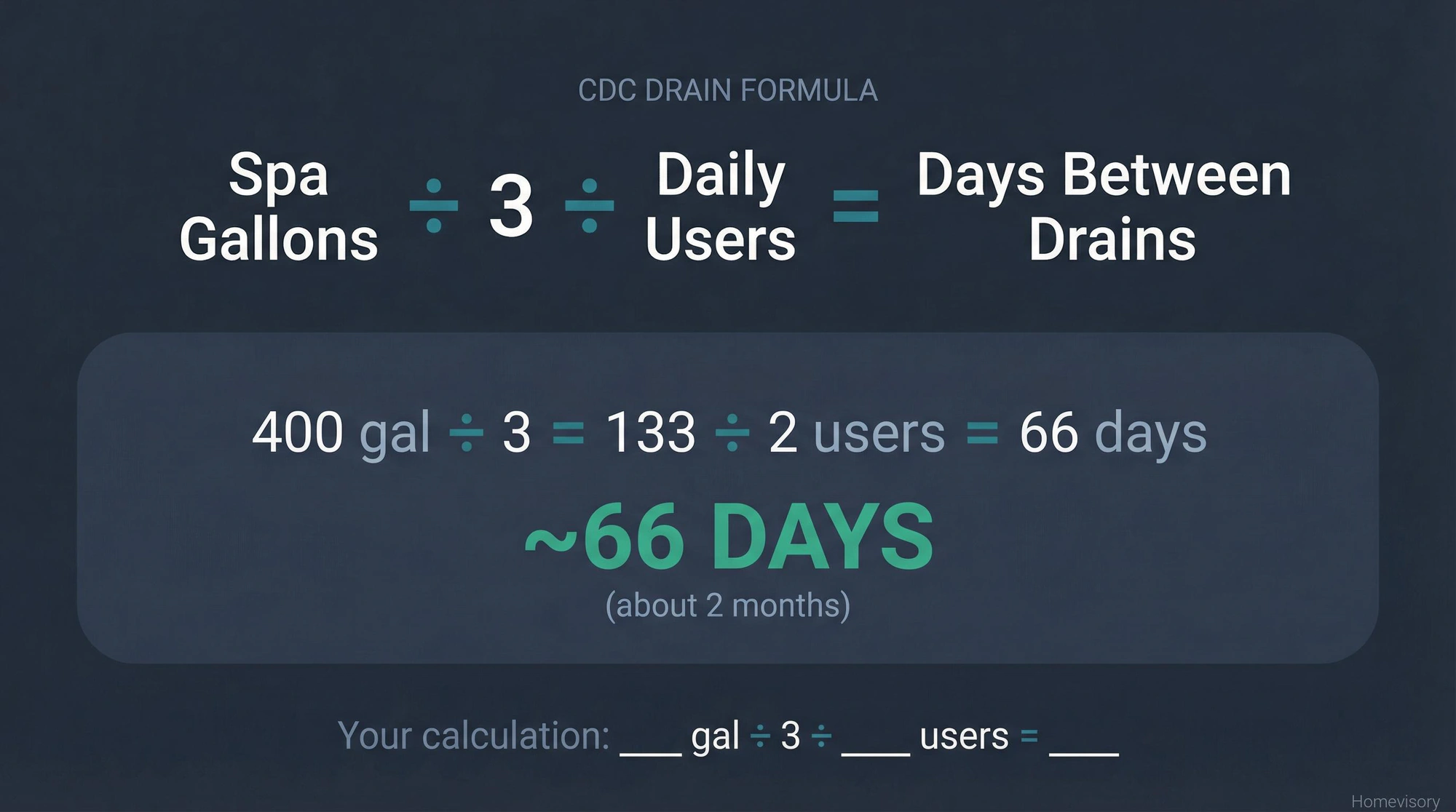
I drain mine every three months regardless, sometimes sooner if we’ve had a lot of guests.
How to drain a hot tub isn’t complicated but people overthink it or they rush it:
Turn off the power at the breaker. Not the control panel. The breaker. You don’t want the heater or pumps running dry.
Hook up a submersible pump or use the drain spigot. The spigot is slower but it works. I use a submersible pump because I’m impatient and it takes about 15 minutes instead of an hour.
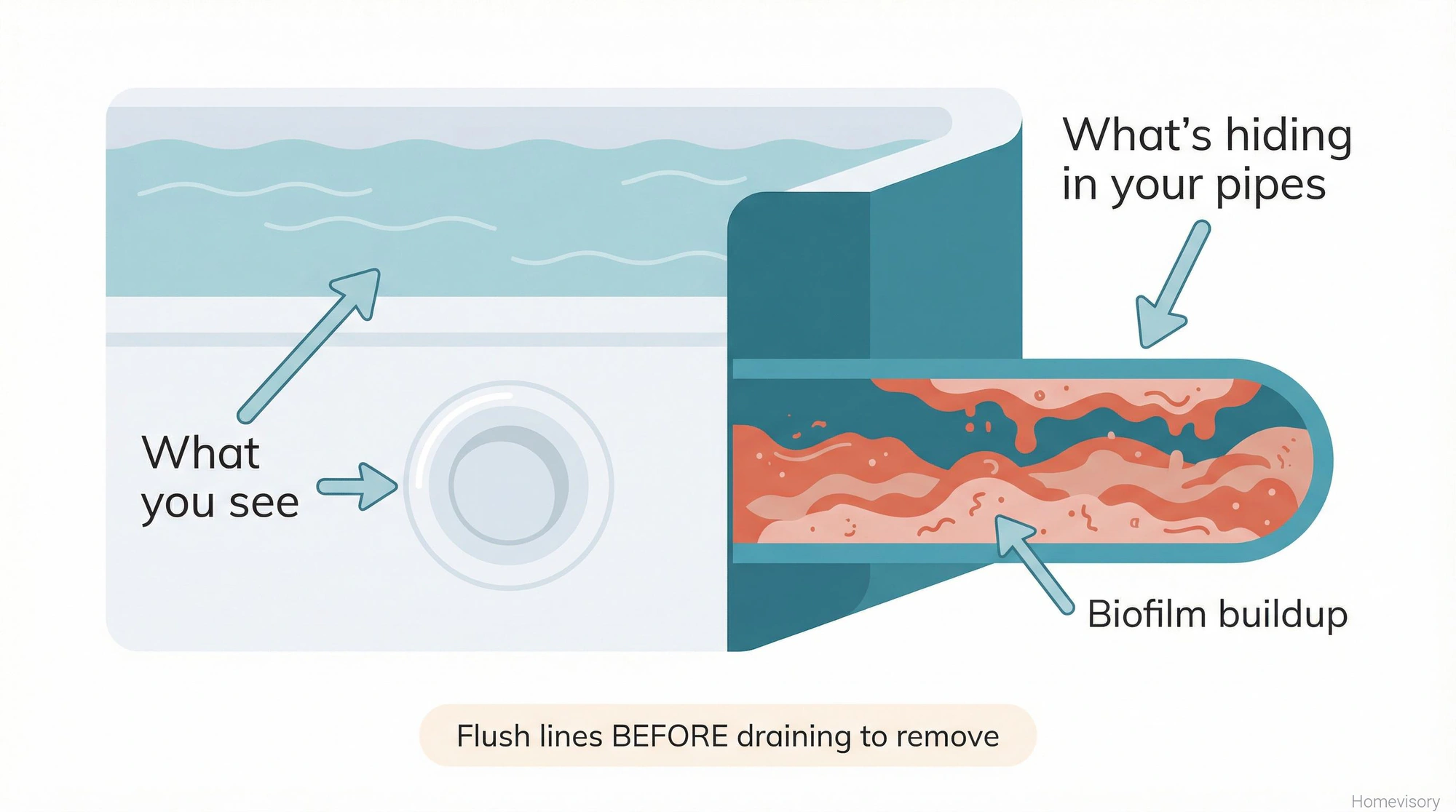
While its draining, now is when you flush the lines. There are products for this, I use one called Ahh-Some but there are others. Run the jets for 20 minutes with the flush product in there before you drain the last of the water. You will be horrified by what comes out of those pipes. Biofilm. Gunk. Stuff that looks like it belongs in a horror movie. First time I did it I almost gagged.
Once its empty, scrub the shell with a non-abrasive cleaner. Get in there. Wipe down every surface. The CDC recommends vigorously scrubbing all surfaces each time the tub is drained. That means the seats, the footwell, around the jets, everything. Rinse it completely, no soap residue.
Clean your filters while youre at it. Pull them out, spray them down, soak them in filter cleaner overnight. Filter replacements run anywhere from $15 to $120 depending on your system. I replace mine once a year even if they look okay.
The Weekly and Monthly Stuff
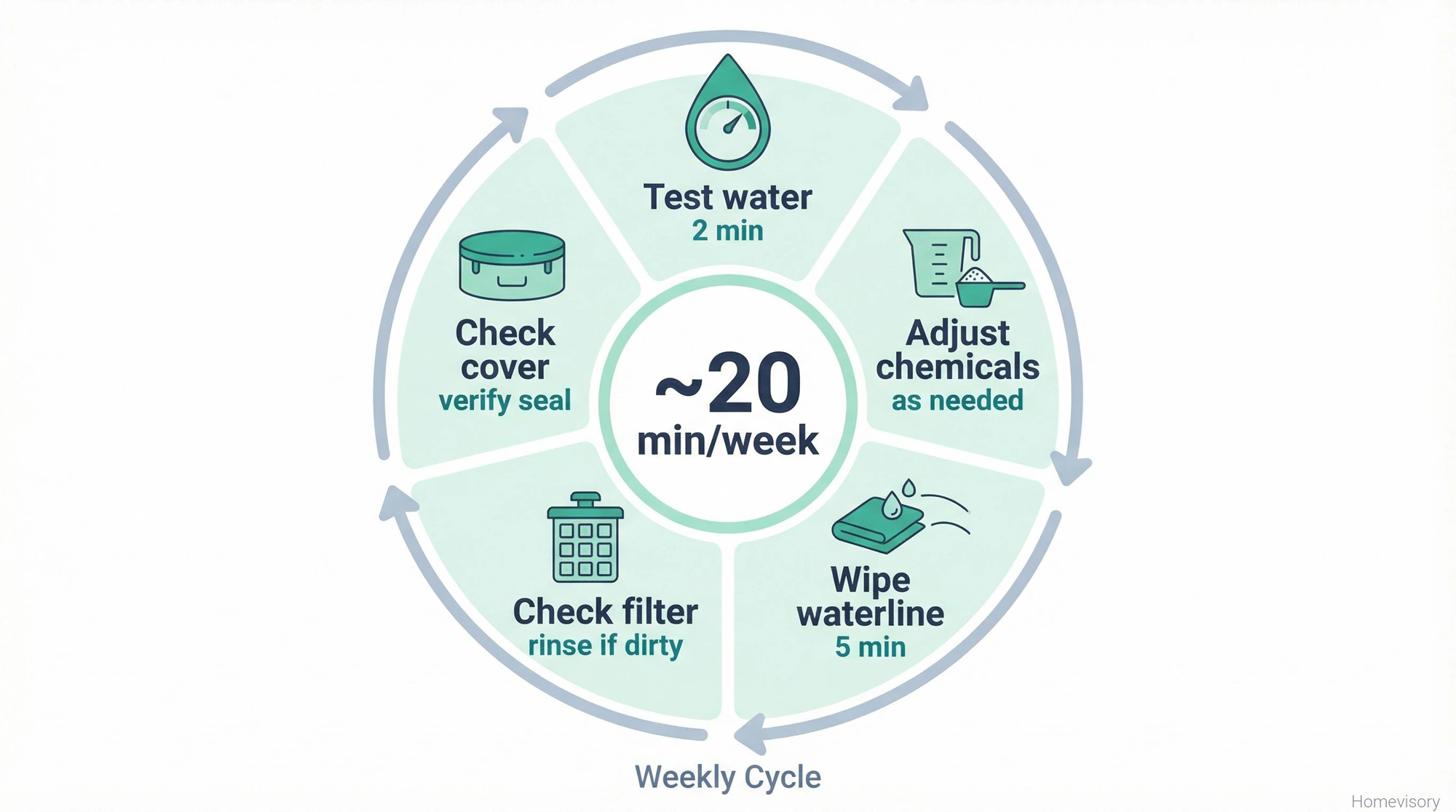
Weekly hot tub maintenance is maybe 20 minutes if you’re not rushing:
Test the water. Adjust chemicals as needed. Wipe down the waterline where oils and scum collect. Check the filter, rinse it if it looks dirty. Make sure the cover is seated properly.
Monthly, I do a deeper filter clean and check the cabinet for any critters or debris. We had a gecko living in ours for two weeks before I found it. He seemed happy but Raquel was not.
My dad Curtis used to say, about factory equipment, he used to say routine maintenance prevents catastrophic failure. He was talking about the machines at his plant but it applies to everything including hot tubs. You skip the weekly stuff for a month and suddenly you’re dealing with cloudy water or a filter thats completely clogged or worse.
My neighbor Gary bought a hot tub during COVID. Everyone did. The Pool & Hot Tub Alliance reported a 140% increase in hot tub sales in June 2020 compared to the year before. Gary was so excited. Used it every night for about three months. Then he stopped testing the water. Then he stopped adding chemicals. Then he stopped using it entirely because it smelled weird. Last time I saw it the water was green and there was something growing on the cover. I think they finally got rid of it. Or maybe they just put a cover on it. I dont know.
Costs and What to Expect
Hot tub maintenance costs around $570 per year on average, with most people spending between $240 and $900 depending on how big your tub is and how much you use it. That breaks down to about $20 a month in chemicals and supplies, plus $10 to $50 in electricity depending on your climate and insulation.
I probably spend closer to $400 a year because I do everything myself. Professional service runs about $100 to $150 per visit for a drain and clean if you don’t want to do it yourself.
Here’s my yearly breakdown:
- Chemicals (chlorine, pH adjusters, shock): $100-150
- Filters: $60-80
- Test strips: $30
- Line flush product: $25
- Replacement parts (o-rings, occasional jet): $50-100
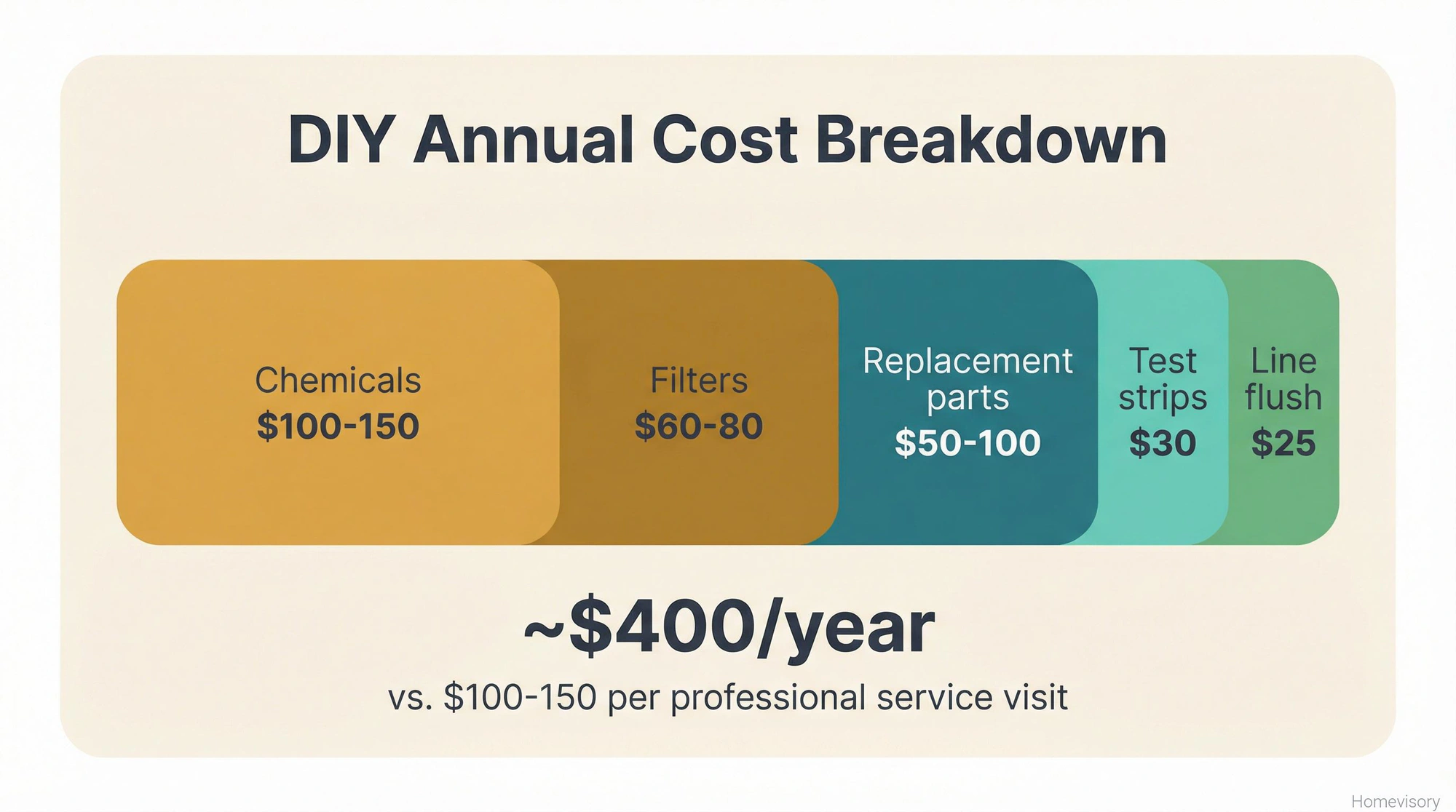
Not cheap. But cheaper than replacing a $8,000 hot tub because you let the water chemistry go bad and corroded the heater.
Ozone and UV Systems
Some hot tubs come with ozone generators or UV-C sanitizers that reduce the amount of chlorine or bromine you need. They work. If you have one, use it. If you’re buying a new hot tub, they’re worth the upgrade.
Moving on.
Safety Things
Quick notes because these matter:
The CDC recommends water temperature no higher than 104°F. I keep mine at 102 most of the time. Higher than that and you risk overheating, especially if you’ve been drinking. Which you shouldn’t be doing in the hot tub but people do.
Kids under five shouldn’t use hot tubs. Their bodies can’t regulate temperature the same way.
Have a qualified electrician inspect your hot tub’s electrical setup and make sure it meets the National Electrical Code. This isn’t DIY territory. If your GFCI trips repeatedly or you notice anything weird with the power, call someone.
If your pump is making grinding noises or your heater’s dead, call someone. I’m not getting into electrical or mechanical repairs here. I fix houses, not hot tubs. I know my limits. And if your GFCI outlet keeps tripping when you run the hot tub, our GFCI outlet troubleshooting guide can help you figure out whether it’s the outlet or something more serious.
What I Actually Do
I test the water every other day. Takes two minutes. I add a little chlorine after heavy use. I wipe the waterline on Sundays while Raquel and I are sitting out there after the kids go to bed. It’s become part of the routine. She reads something on her phone. I’m wiping scum off the edge with a microfiber cloth. Romance.
Every three months I drain it, scrub it, flush the lines, clean the filters. It’s a Saturday morning project. I put on some music, take my time. Not my favorite way to spend a morning but it beats replacing the whole system because I got lazy.
Hot tub maintenance isn’t hard. Its just consistent. Little things done regularly. Same as everything else around your house — our home maintenance checklist covers the full schedule of what to check and when. My mom Shirley used to say how you do the small things is how you do everything. She wasn’t talking about hot tubs. She was talking about folding towels or something. But it’s true anyway.
If you want help remembering when to test your water, drain your tub, or replace your filters, thats what we built Homevisory for. It tracks all your home maintenance tasks and reminds you before things become problems. Sign up free at the Homevisory home task manager and stop trying to remember everything yourself. That’s what we do here at Homevisory.