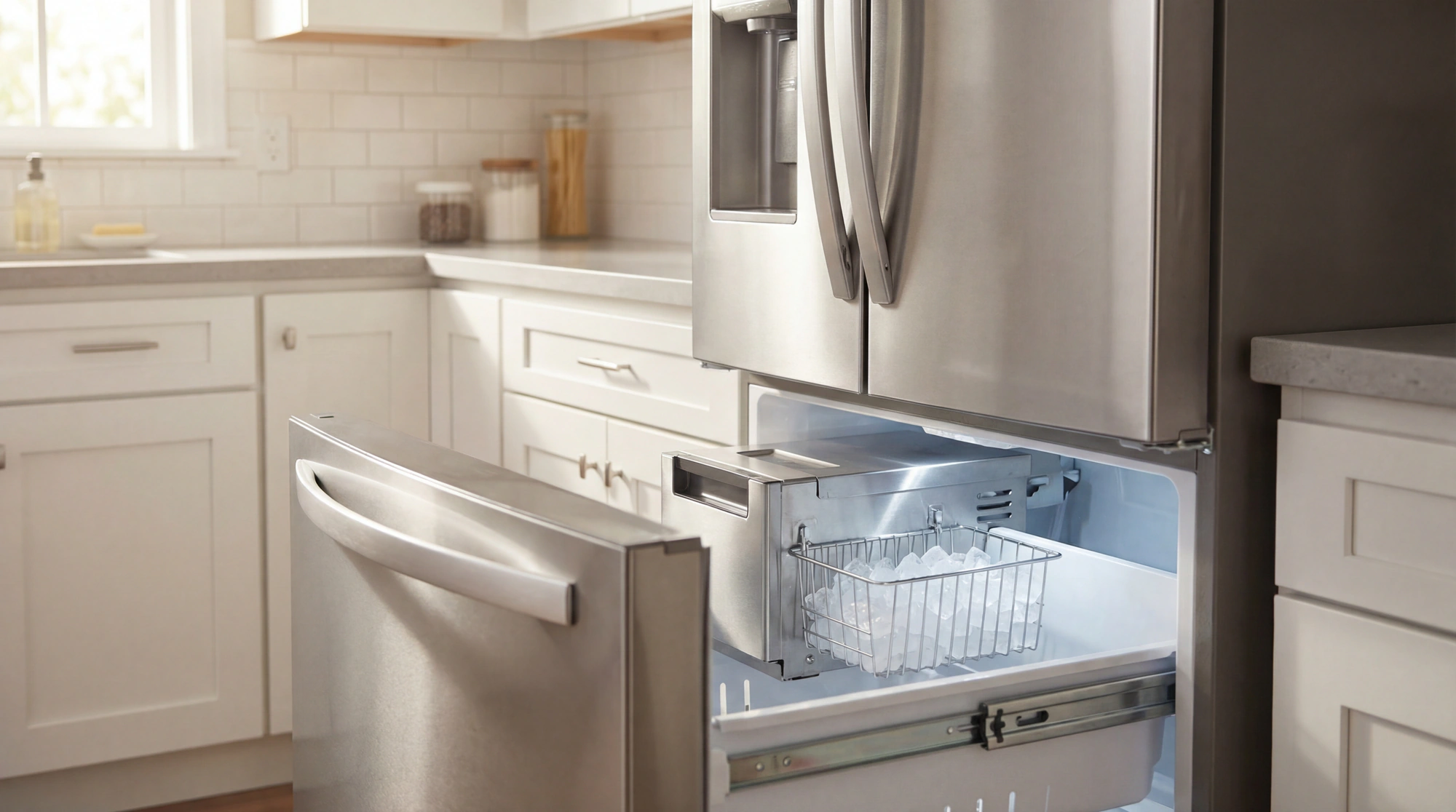
The Real Reason Your Ice Maker Stopped Working
Nine times out of ten, when someone tells me their ice maker is not making ice, the problem isnt the ice maker. I know that sounds like Im being difficult but its true. The ice maker itself is a pretty simple mechanism. Water comes in, gets frozen, gets dumped into a bin. Thats it. When it stops working, people assume the whole thing is broken and start pricing replacements or calling repair techs who charge $150 just to show up.
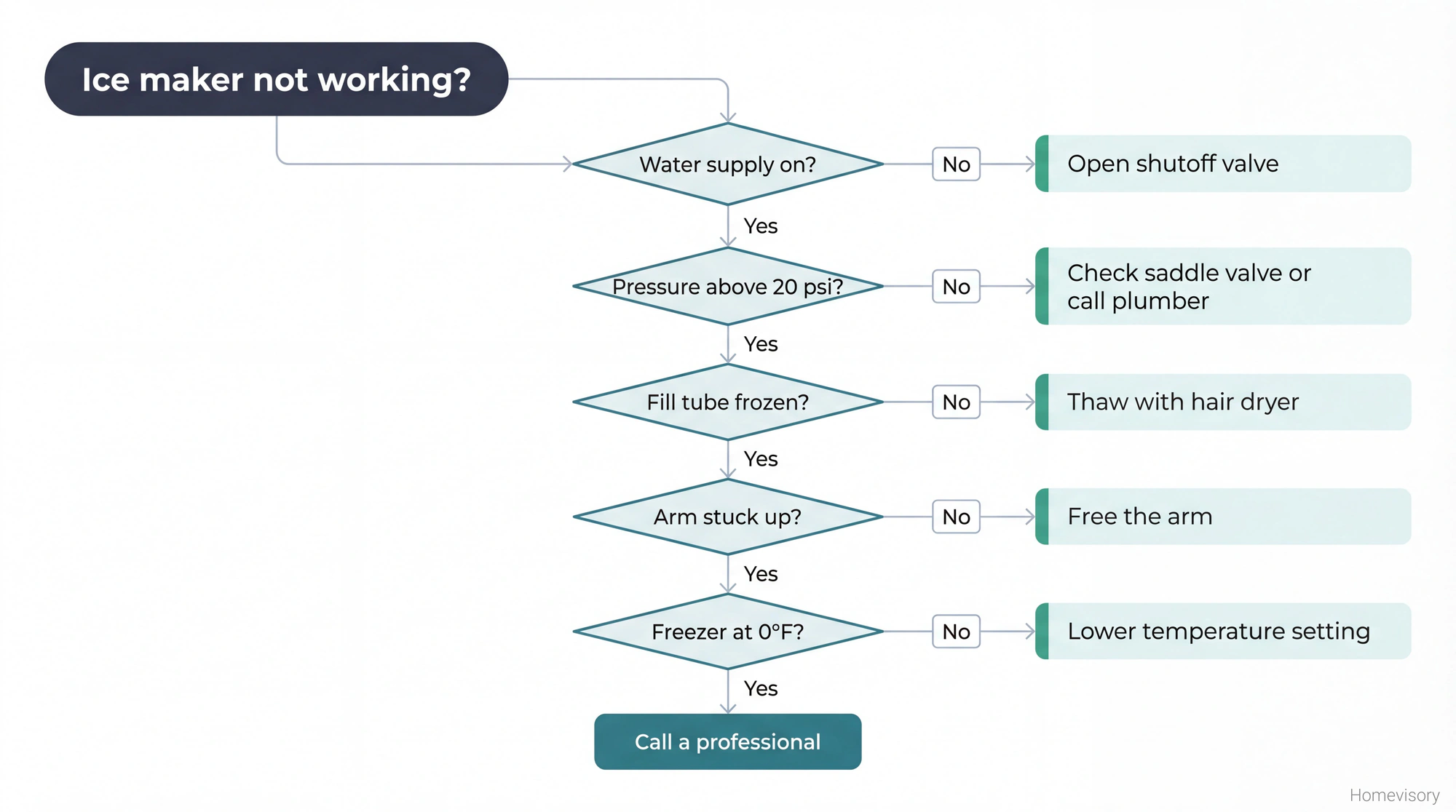
Before you do any of that, before you even think about ice maker repair costs, check the water supply. Seriously. Check it.
My dad worked in a factory for thirty years and he used to say, about machines in general, he used to say “the machine’s usually fine, it’s whatever feeds the machine that’s the problem.” He was talking about industrial equipment, conveyor belts and stamping presses, but it applies here. Your ice maker is probably fine. Something upstream isnt.
Water Supply Issues
This is where I’m going to spend most of my time because this is where most of your problems are.
The Shutoff Valve
First thing. Is the water even on. I’m not asking this to be condescending. I’ve driven to three different houses over the years where the “broken” ice maker was just… turned off. Someone bumped the valve behind the fridge. Someone shut it off during a repair and forgot to turn it back on. Once, a guy’s kid had been playing behind the refrigerator, dont ask me why, and turned the valve.
The shutoff valve is usually behind the fridge or under the sink. Pull the fridge out, find the valve, make sure its open. If you have one of those saddle valves, and I really hope you dont, make sure its actually piercing the pipe correctly.
Saddle Valves
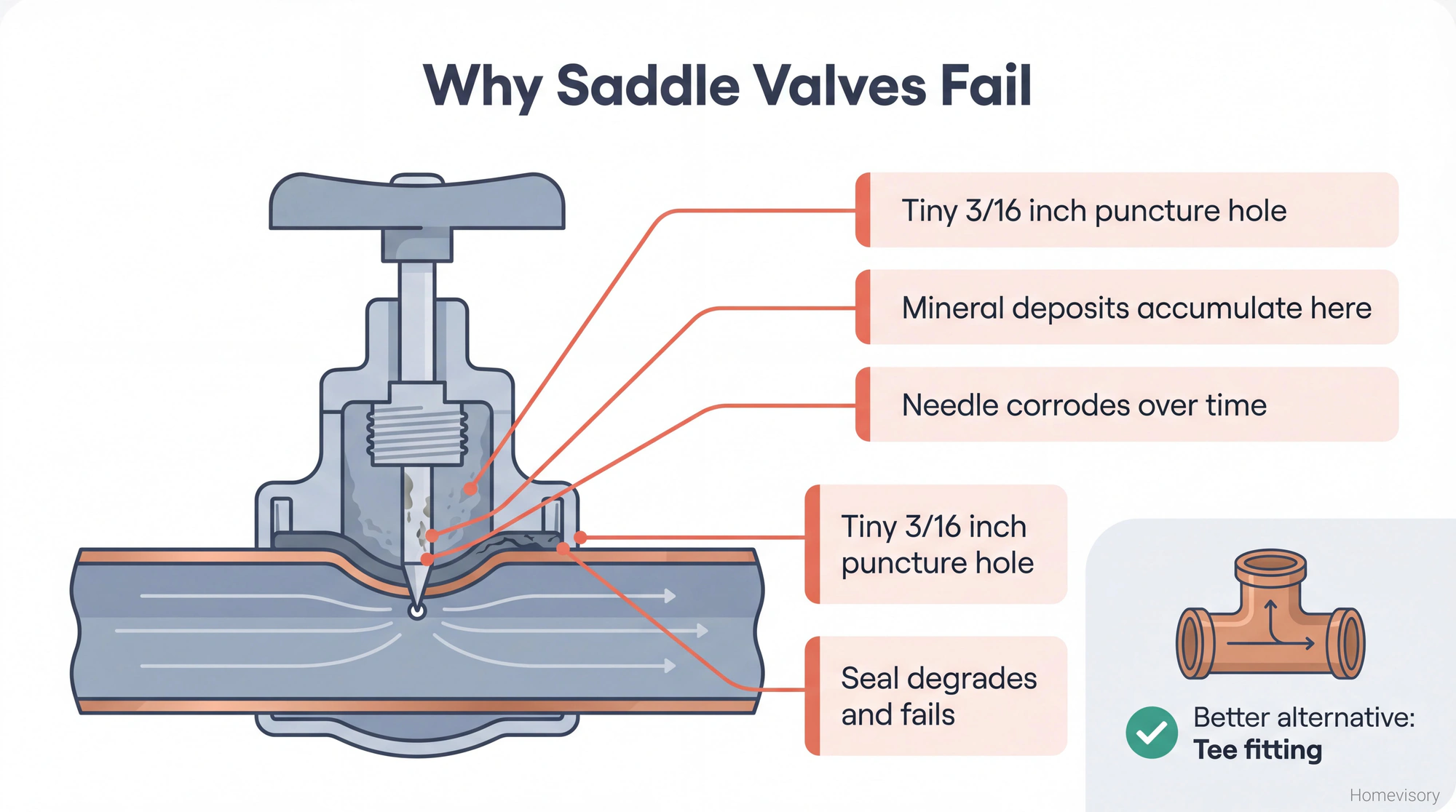
Let me go on a rant about saddle valves for a minute because I hate them and I’ve seen them cause more ice maker problems than anything else. A saddle valve is this little clamp-on thing that punctures your water pipe to create a connection for your ice maker line. Builders love them because theyre cheap and fast to install. Theyre also terrible. The puncture hole is tiny, maybe 3/16 of an inch, and it clogs constantly. Mineral deposits build up. The needle corrodes. The seal fails. I had a house in Texas, my first house actually, where the builder used saddle valves for everything, the ice maker, the humidifier, the reverse osmosis system, and I spent years dealing with problems until I finally replaced all of them with proper tee fittings. If your ice maker stopped working and you have a saddle valve, theres a decent chance the valve itself is the problem. You can try closing and opening it a few times to break up deposits, but honestly, just replace it with a real fitting. Its not hard and its worth it.
Frozen Fill Tube
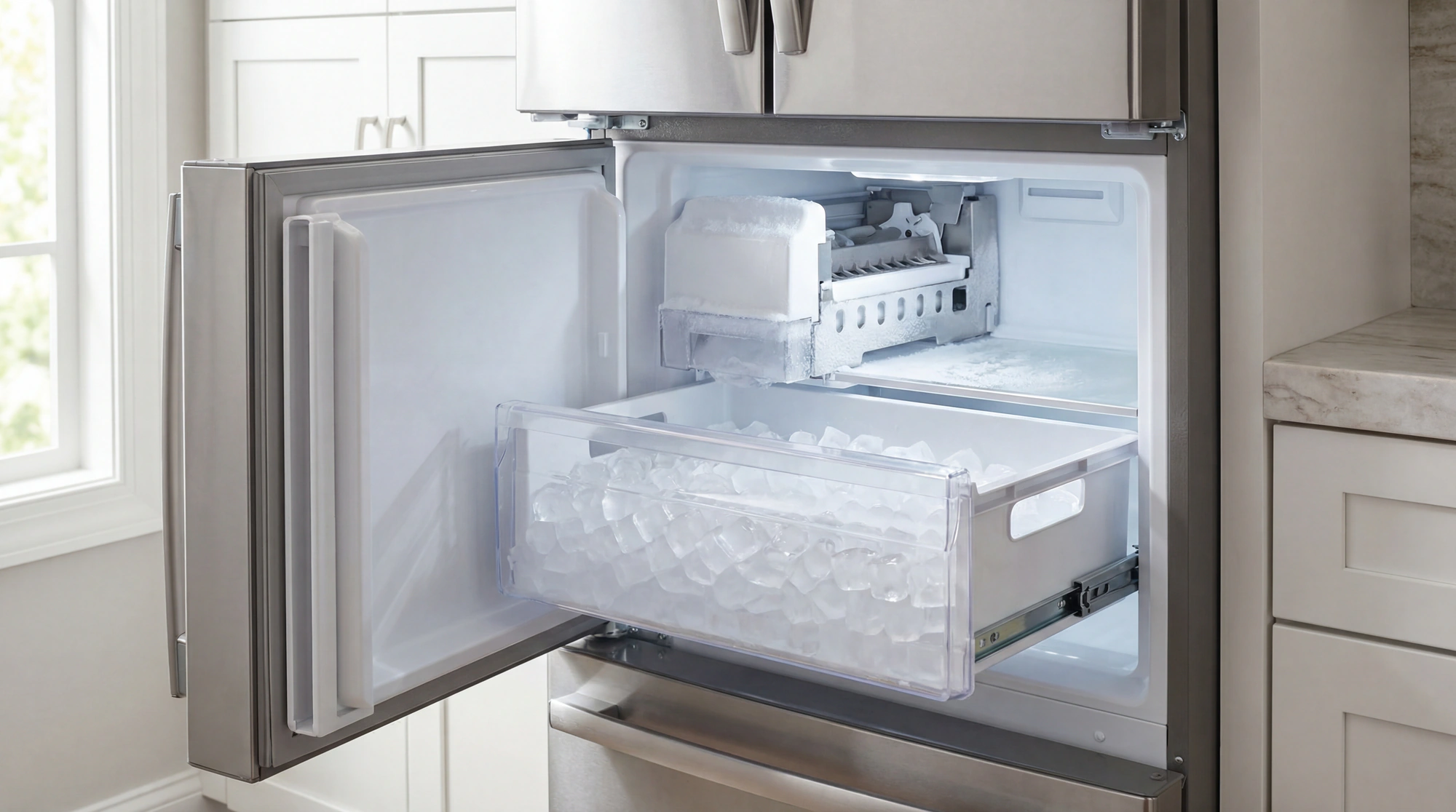
The fill tube is the little plastic tube that carries water into the ice maker. It can freeze. Especially if your freezer is set too cold or if theres a problem with the water inlet valve letting water dribble in slowly instead of filling properly.
You’ll know if its frozen because you’ll see ice buildup around where the tube enters the freezer. You can thaw it with a hair dryer. Low heat, keep it moving, dont melt anything that shouldnt be melted. Once its thawed, figure out why it froze in the first place or it’ll happen again.
Water Inlet Valve
The water inlet valve is an electric valve that opens to let water into the ice maker. It needs at least 20 psi of water pressure to work. If your house has low water pressure, or if the valve is partially clogged, not enough water gets through and you get no ice or tiny malformed ice cubes.
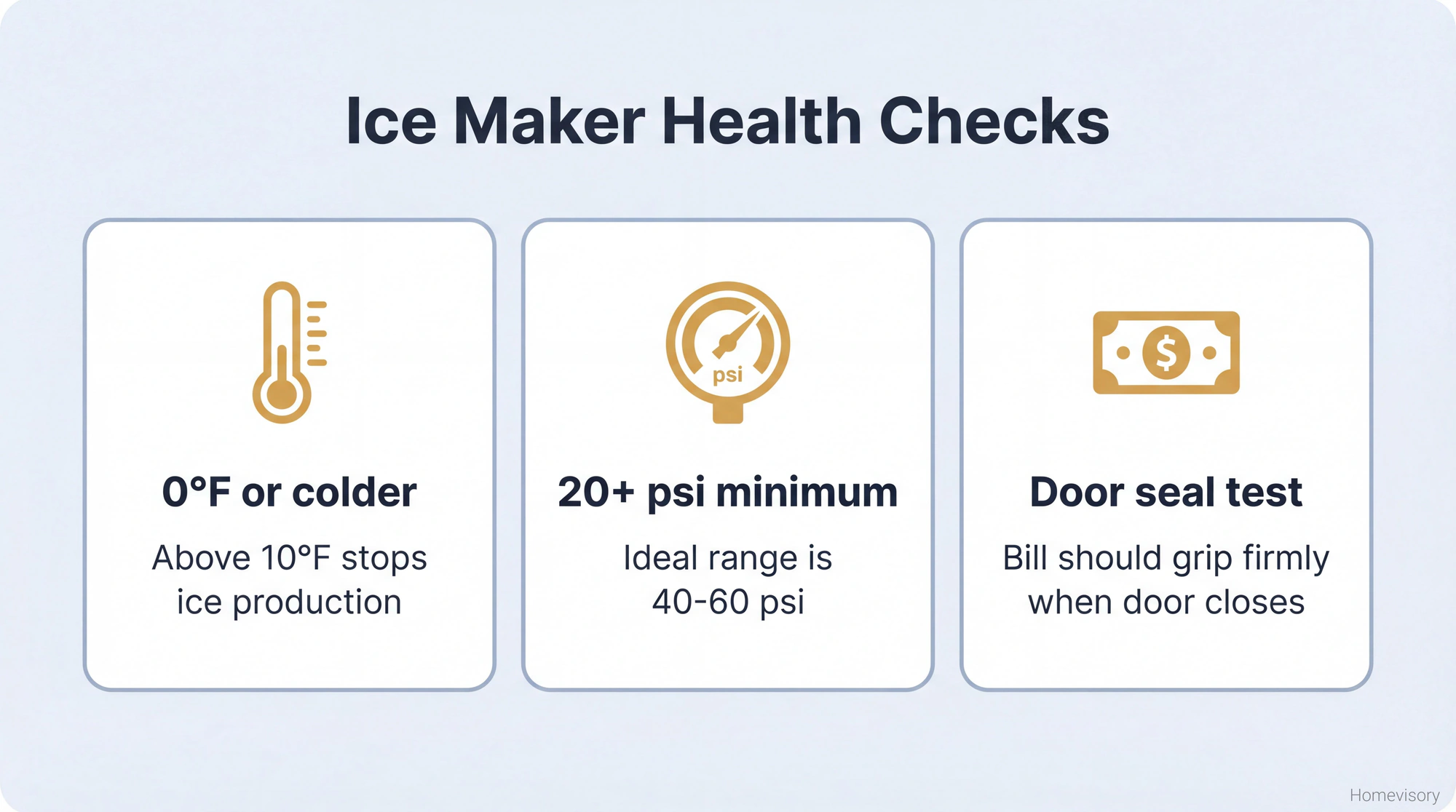
You can test water pressure with a $10 gauge from any hardware store. Screw it onto a hose bib, turn on the water, see what you get. Should be between 40-60 psi for most houses. If its below 20, your ice maker wont work right and thats a whole different problem.
The valve itself can also fail electrically. Needs a multimeter to test. If youre comfortable with that, great. If not, this is where you might need someone.
The Ice Maker Mechanism
Alright so youve checked the water supply and everything looks fine. Water pressure is good, valve is open, fill tube isnt frozen. Now we look at the ice maker itself.
The Arm or Sensor
Most ice makers have either a wire arm or an optical sensor that tells them when the bin is full. If the arm is stuck in the up position, the ice maker thinks its full and wont make more ice. If the optical sensor is blocked by frost or ice buildup, same thing.
Check the arm. Move it up and down. It should move freely. If its stuck, figure out why. Sometimes ice jams it. Sometimes it gets bent. Sometimes, and this is the story I was going to tell you, sometimes your kid shoves a bag of frozen vegetables into the freezer and knocks the arm up without anyone noticing.
That was Richard. He was maybe twelve. The ice maker “stopped working” for two weeks. I was ready to start taking things apart. Raquel found the arm pushed up when she was reorganizing the freezer. Two weeks. I felt stupid for two weeks.
Temperature
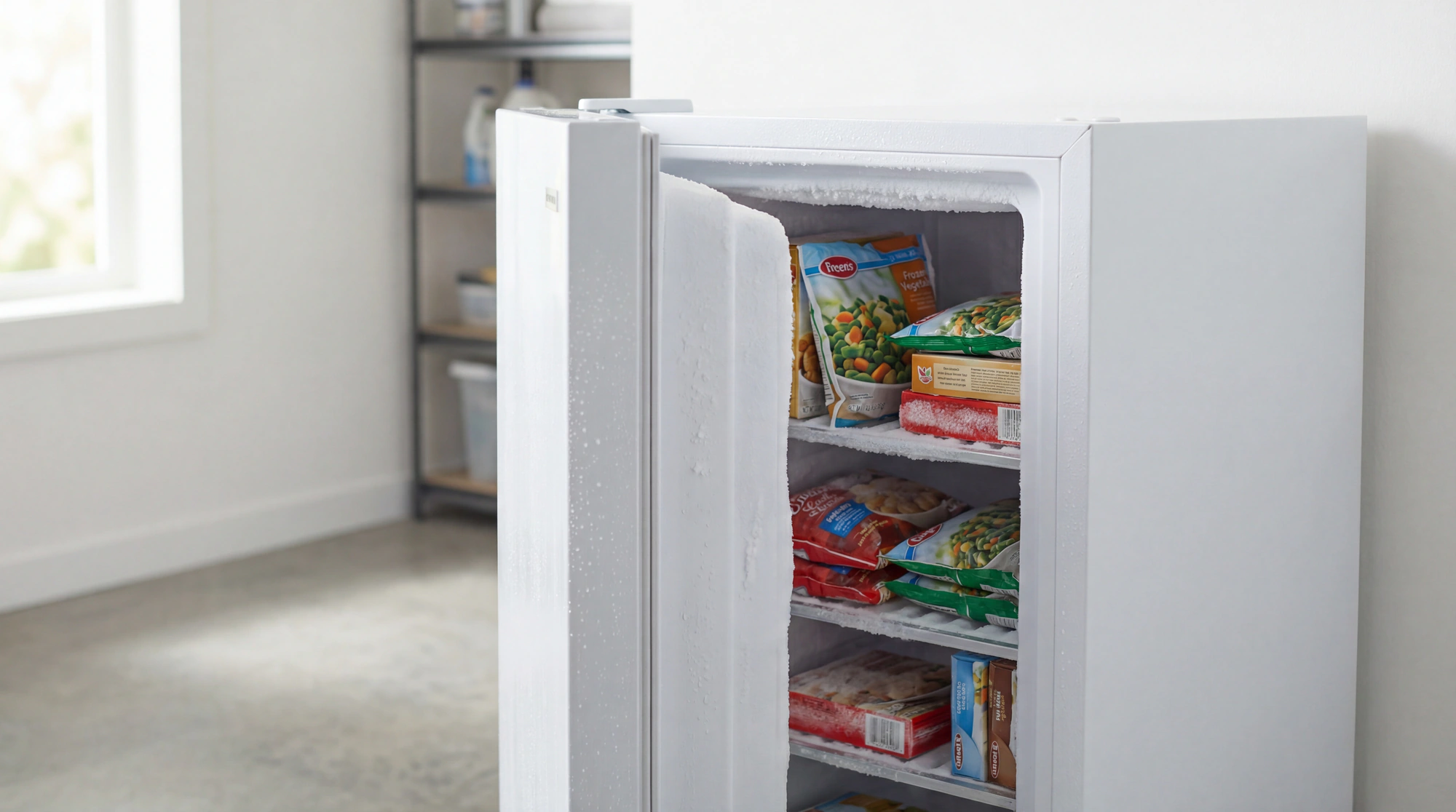
Your freezer needs to be at 0°F or colder for the ice maker to work properly. If its warmer than 10°F, ice production slows down or stops entirely. A lot of people set their freezer to the middle of the dial and assume thats fine. Its often not.
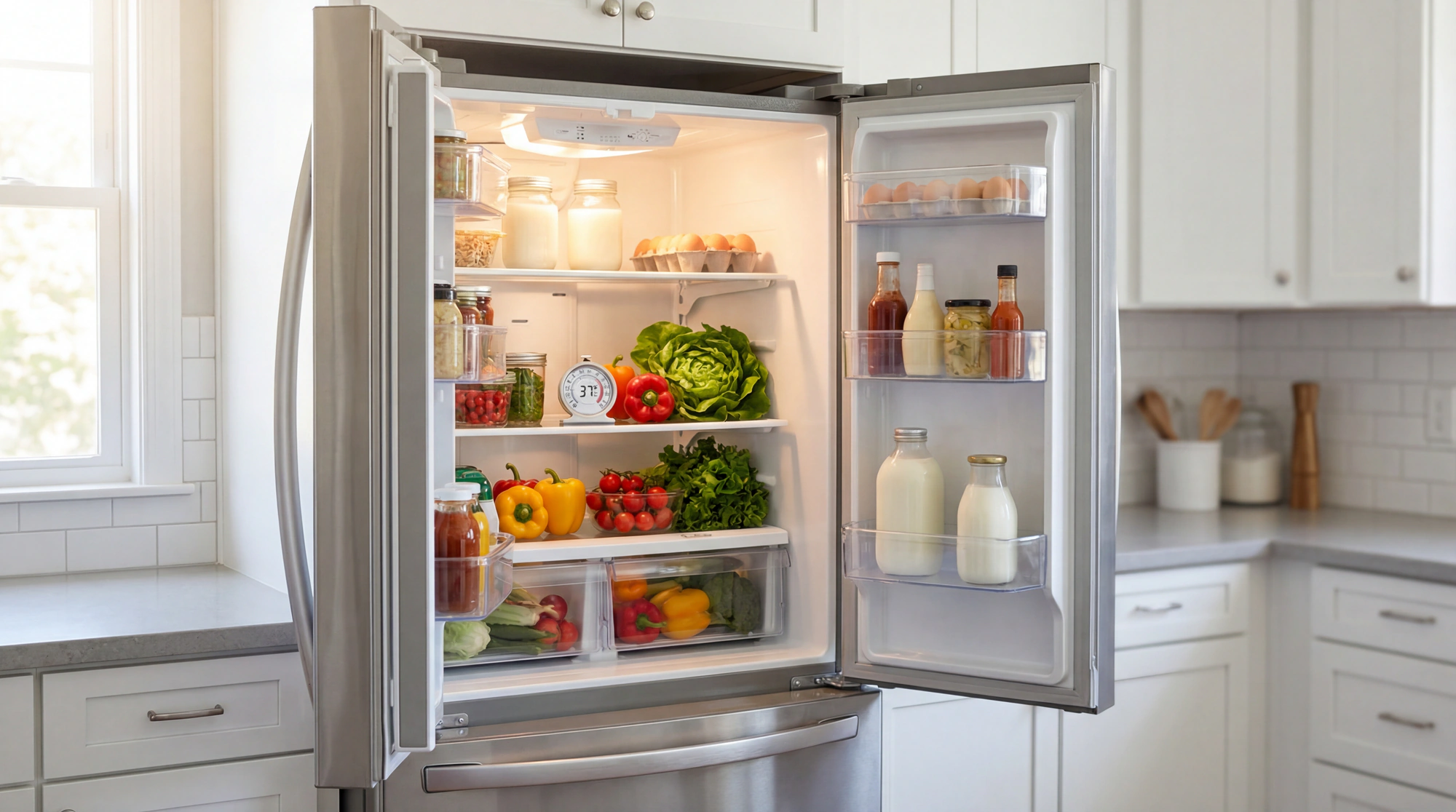
Get a thermometer. Put it in the freezer. Wait a few hours. See what it says. If its too warm, turn it down and give it 24 hours to stabilize before you check ice production.
While youre at it, check the door seal. If warm air is getting in, the freezer cant maintain temperature. Close the door on a dollar bill. If you can pull the bill out easily, the seal isnt sealing.
The Door Switch
Theres a switch that tells the ice maker when the door is open. If that switch fails, the ice maker might think the door is always open and refuse to cycle. Whatever. Check it. Press it manually, listen for the fan to respond.
Moving on.
When to Actually Call Someone
If youve checked everything above and the ice maker still isnt working, now you can start thinking about ice maker repair from a professional.
If the water inlet valve has failed electrically, thats replaceable but you need to be comfortable working with electrical components.
If the ice maker module itself is dead, you can usually buy a replacement and install it yourself. They’re $50-150 depending on your model.
If its the compressor or something in the sealed refrigeration system, call someone. Im not getting into sealed system repair here because its specialized work, you need recovery equipment for the refrigerant, and unless youre already a technician theres no reason you should attempt it.
Ice Maker Brands
Some quick notes. Samsung ice makers have a reputation for problems, especially the top-freezer models from a few years back. LG has had issues with certain models too. If you have one of these and youve already fixed it twice, sometimes its worth just buying an aftermarket replacement module. They’re often more reliable than the original.
Thats about all I have to say about brands.
A Memory I Just Remembered
My grandmother in Brooklyn used to make ice in trays. The metal ones with the lever you pull. I was maybe four or five when we moved to Atlanta so I dont remember much but I remember the sound of those trays. The crack of the ice coming loose. She’d put ice in everything. Lemonade, iced tea, just water. My dad does the same thing. Always has ice in his water. I asked him once why and he said his mother always did it that way and he never thought about it. I don’t know. Some things just carry forward.
Anyway.
What Homevisory Does With This
This is exactly the kind of thing we built Homevisory to help with. Ice maker stops working, you panic, you assume you need a new fridge, you call someone who charges you $200 to flip a switch you didnt know existed. And once the ice maker is working again, keep it clean — our ice maker cleaning guide covers what to do every six months.
Homevisory home task manager reminds you to check these things before they become problems. Clean the condenser coils. Check the water filter. Make sure the fill tube isnt freezing. Regular maintenance catches issues early. And if your fridge has problems beyond just the ice maker, our refrigerator repair guide covers every common issue. And when something does break, the troubleshooting guides walk you through exactly what I just walked you through here, so you can fix it yourself or at least know what youre dealing with before you call anyone.
Sign up free. Thats what we do here at Homevisory.