The Grates Are Always Worse Than You Think
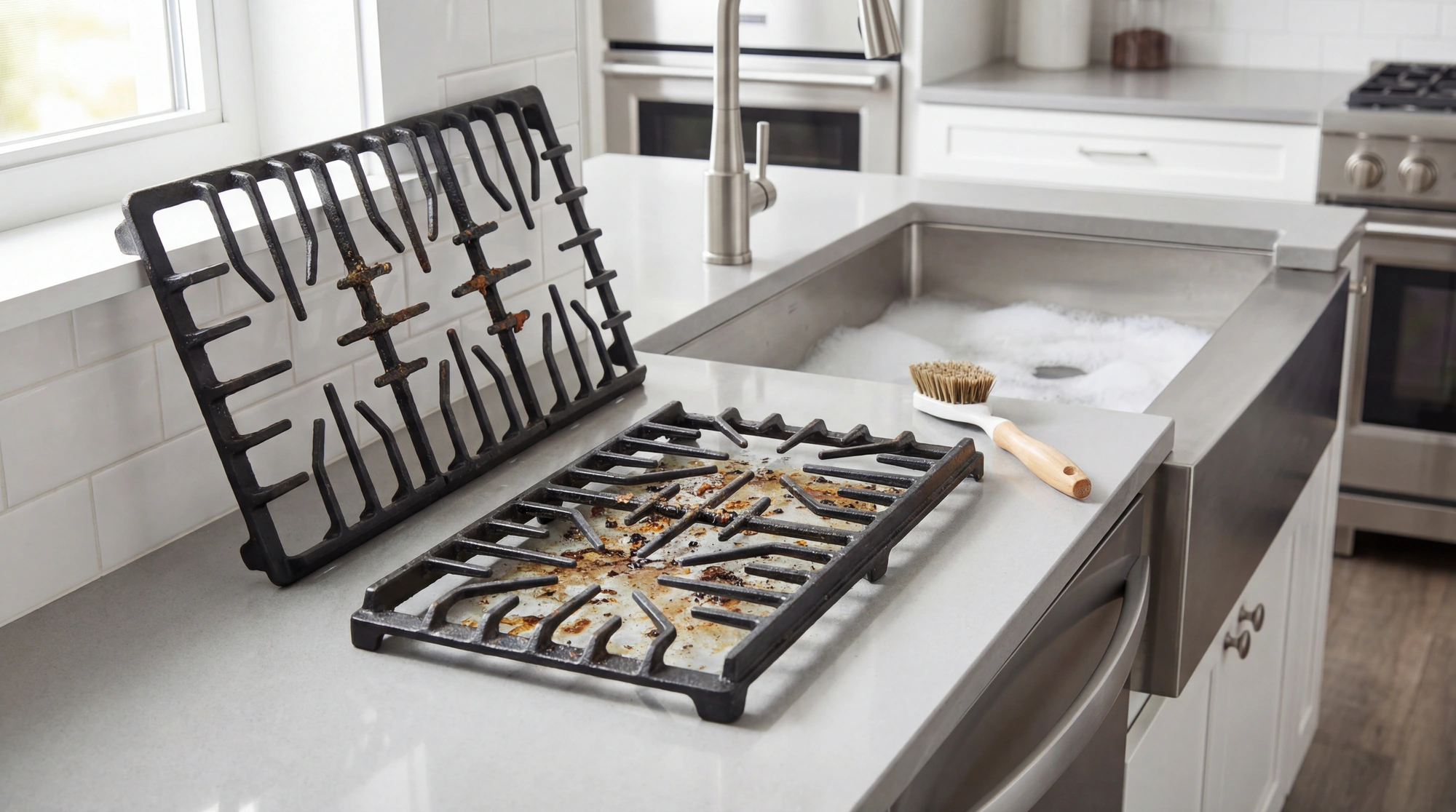
I pulled off my stove grates last week to clean underneath them and I dont know what I expected but it wasnt that. Theres something about cooking every day that makes you blind to how bad things get. You lift those grates and suddenly youre looking at six months of splattered oil and burnt-on whatever that you could swear wasnt there yesterday.
Knowing how to clean stove grates is one of those things that seems obvious until you actually try to do it right. Most people either ignore them completely or go too hard and damage the finish. Both are wrong.
Gas Stove Grates: The Basics
If you have a gas stove, your grates are probably either cast iron or porcelain-coated steel. Flip one over. If its black all the way through and heavy, cast iron. If its lighter and has a glossy coating, porcelain. This matters because you clean them differently.

For porcelain grates, the process is pretty simple. Fill your sink with hot water and dish soap. Let them soak for fifteen minutes. Scrub with a non-abrasive sponge. Done.
The soak is important. People skip it because theyre impatient and then they end up scrubbing for twenty minutes trying to get off grease that would have released on its own. Just let the water do the work.
For weekly cleaning, thats really all you need. If youve got baked-on stuff that wont budge, make a paste with baking soda and water. Apply it, let it sit for fifteen minutes, then scrub. The baking soda is mildly abite and it helps break down grease without scratching the porcelain.
How to Clean Cast Iron Stove Grates
This is where I have opinions.
Cast iron is the best material for stove grates and its also the easiest to ruin if you dont know what youre doing. I learned this from watching people destroy perfectly good cast iron for decades and also from my mom Shirley who had a cast iron skillet that was older than me. That skillet was passed down from her mother and she treated it like it was alive. She cooked everything in it. Cornbread, chicken, eggs, whatever. The surface was so seasoned it was practically non-stick and she never once used soap on it in her entire life. She said soap would strip the seasoning and I believed her because I believed everything she said about cooking. Now I know thats not entirely true, a little soap is fine, but I still dont use it out of some kind of loyalty to her method. Anyway.
The point is cast iron needs to be treated with respect. Mr. Davis, my old woodshop teacher, used to say respect the material and he was talking about wood but it applies to cast iron too. You dont force it. You work with it.
Here’s how to clean cast iron stove grates properly:
Don’t put them in the dishwasher. Ever. I know people do this. I know the internet will tell you its fine. Its not fine. The prolonged exposure to water and detergent strips the seasoning and promotes rust. Ive seen cast iron grates that went through dishwashers a few times and they look gray and rough and they rust within days if you dont oil them constantly. Just dont do it.
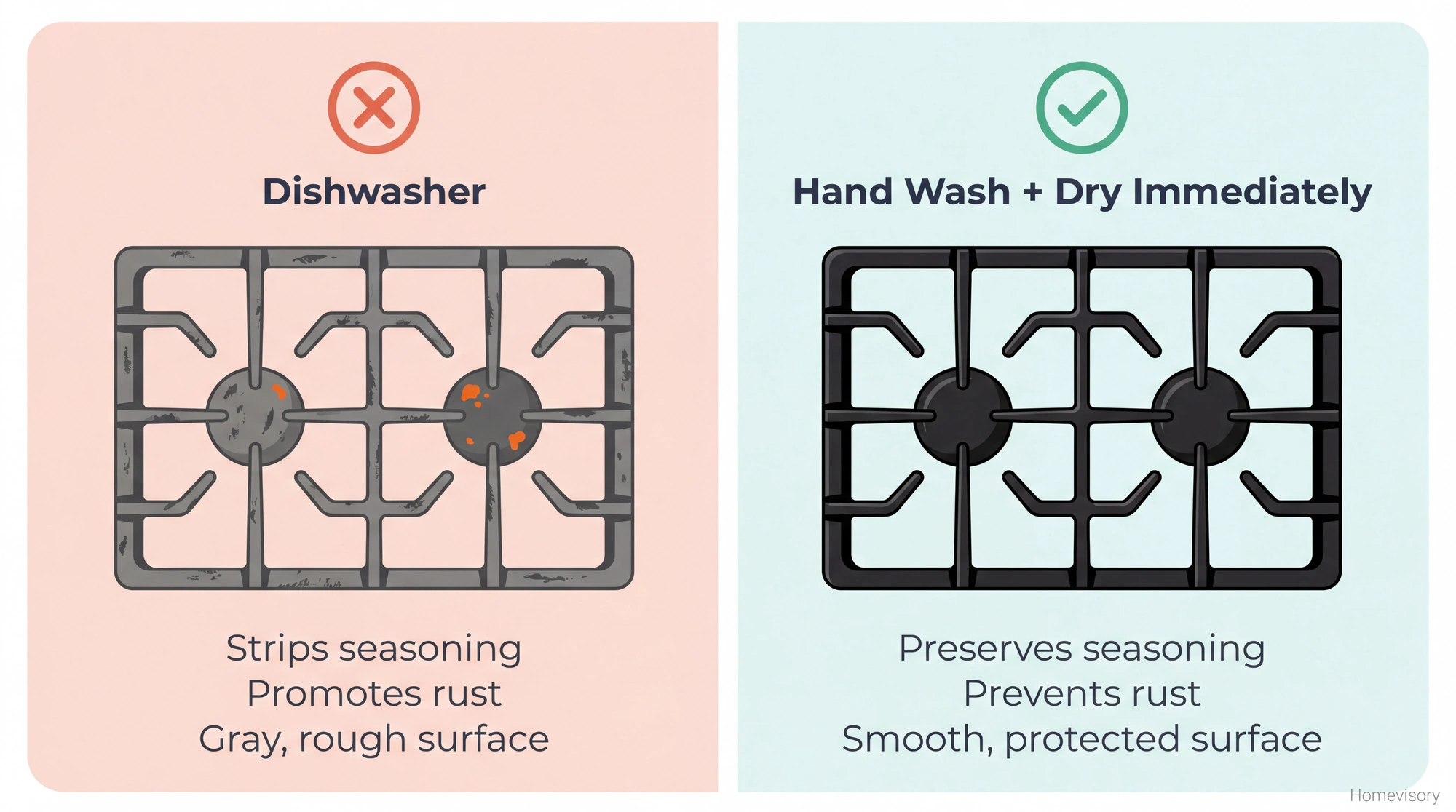
Don’t use steel wool. Another thing people do because they think aggressive means effective. Steel wool scratches the surface, removes seasoning, and creates tiny grooves where rust can start. Use a stiff nylon brush instead.
The soaking method. Fill your sink with hot water and add about a quarter cup of baking soda. Not dish soap. The baking soda is alkaline and it helps break down grease without attacking the seasoning the way detergent can. Soak for thirty minutes, then scrub with a nylon brush. Rinse and dry immediately.
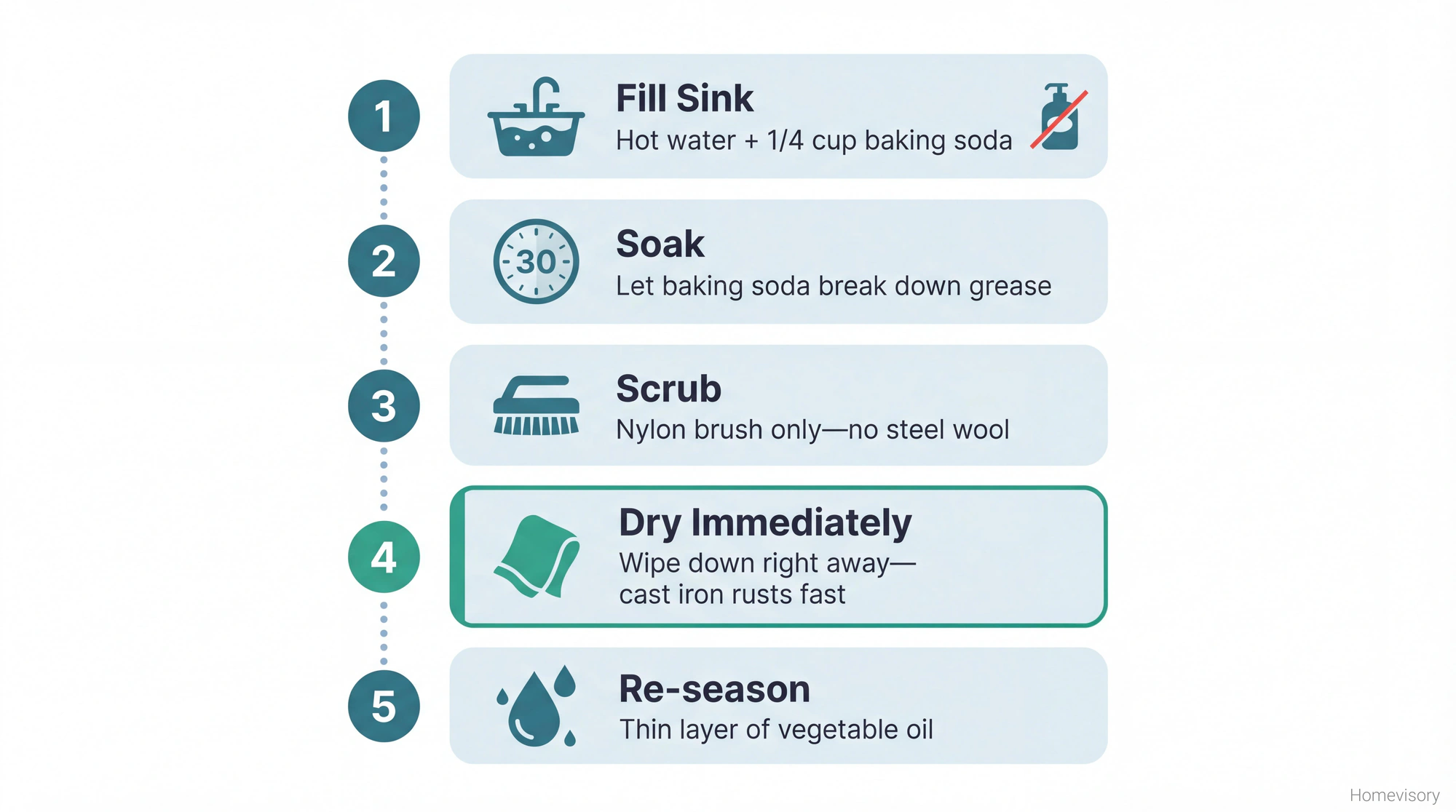
The drying immediately part is critical. Cast iron rusts fast when its wet. Dont leave it in the dish rack. Dont let it air dry. Wipe it down with a cloth right away and if you want to be thorough put it back on the stove and turn the burner on low for a minute to evaporate any moisture in the pores.
Re-season if needed. Once the grates are dry, wipe a thin layer of vegetable oil or flaxseed oil on them. Very thin. You’re not coating them, youre conditioning them. Then put them back on the stove. Over time this builds up the protective layer that makes cast iron cast iron. If your grates look dull or feel rough or show any orange spots, they need more seasoning and you need to do this more often.
I once left my grates soaking overnight because I forgot about them. Raquel found them in the morning and I could tell by her face that I’d done something wrong. They had rust spots by the time I got to them. Not the end of the world, I scrubbed the rust off with a baking soda paste and re-seasoned, but it was an extra hour of work because I was lazy.
The Ammonia Method
Theres a method that involves putting grates in a trash bag with ammonia overnight. It works. The ammonia fumes break down grease without you having to scrub much. You just seal the grates in a bag, pour in about a quarter cup of ammonia, leave it outside or in a well-ventilated area overnight, and the next morning the grease wipes off.
Do I do this? No.
Its effective but I dont love having ammonia around with four kids and two dogs and also I dont think its necessary if youre cleaning your grates regularly. If youve got grates that havent been cleaned in a year and theyre caked with black carbon buildup, the ammonia method might be worth it. Otherwise just stick with the baking soda soak.
Free printable
Save this for later: get the printable field guide
The free Homevisory field guide covers every season on one calm, printable plan: what to check, what normal looks like, and when to call for help. Tell us where to send it.
Sent! Check your inbox in the next minute or two.
Can't wait? Download the guide now
How to Clean Glass Stovetop
Different situation entirely. Glass cooktops look great when theyre clean and terrible when theyre not, and they show everything. Every splatter. Every water spot. Every time someone drags a pot across the surface. Its annoying but thats what you signed up for when you got a glass cooktop.
The good news is cleaning a glass stovetop is straightforward. The bad news is you have to do it constantly if you care about how it looks.
Daily cleaning: Spray with a glass cooktop cleaner or just use white vinegar and water. Wipe with a microfiber cloth. Done. This prevents buildup and keeps things looking decent.
Weekly deep clean: This is where the razor blade scraper comes in. Those black burnt-on spots that dont come off with wiping? They need to be scraped. Use a razor blade scraper held at a 45-degree angle and push forward in one direction. Dont scrub back and forth. Dont use a dull blade. A dull blade drags instead of cutting and thats when you get scratches.
After scraping, apply a glass cooktop cleaner. I use Weiman because it works and its been around forever but theres a dozen brands that do the same thing. Spread it around with a cloth, let it sit for a few minutes, then wipe clean with a microfiber cloth.
Stubborn spots: If scraped and still there, apply baking soda paste, lay a warm damp cloth over it for fifteen minutes, then scrape again. Whatever. Just use the right scraper. Moving on.
Things That Scratch Glass Cooktops
Cast iron pans. Sorry. Theyre rough on the bottom and they will leave marks if you slide them around.
Sugar. This one surprises people. If you spill something sugary on a hot glass cooktop, it can actually bond to the glass as it cools. Clean sugar spills immediately.
Dirty pan bottoms. If theres residue on the bottom of your pans, it transfers to the cooktop and bakes on.
Abrasive cleaners. Anything with grit in it will scratch. No scouring powders. No steel wool. No scrubby sponges with the green abrasive side.
I’m not getting into every scratch and how to fix them because honestly once a glass cooktop is scratched its scratched. You can minimize their appearance with cooktop cream but youre not removing them. Just accept it and be more careful going forward.
The Burner Caps and Heads
While youre cleaning grates, clean the burner caps too. Those are the little metal discs that sit on top of the burner heads. They get just as grimy as the grates.
Remove them and soak them with the grates. Same process. Scrub, rinse, dry. While theyre off, look at the burner heads, the part with the holes where the flame comes out. If those holes are clogged with debris, your flame will be uneven. Use a toothpick or a straight pin to clear each hole. Dont use anything that will break off inside.
How Often
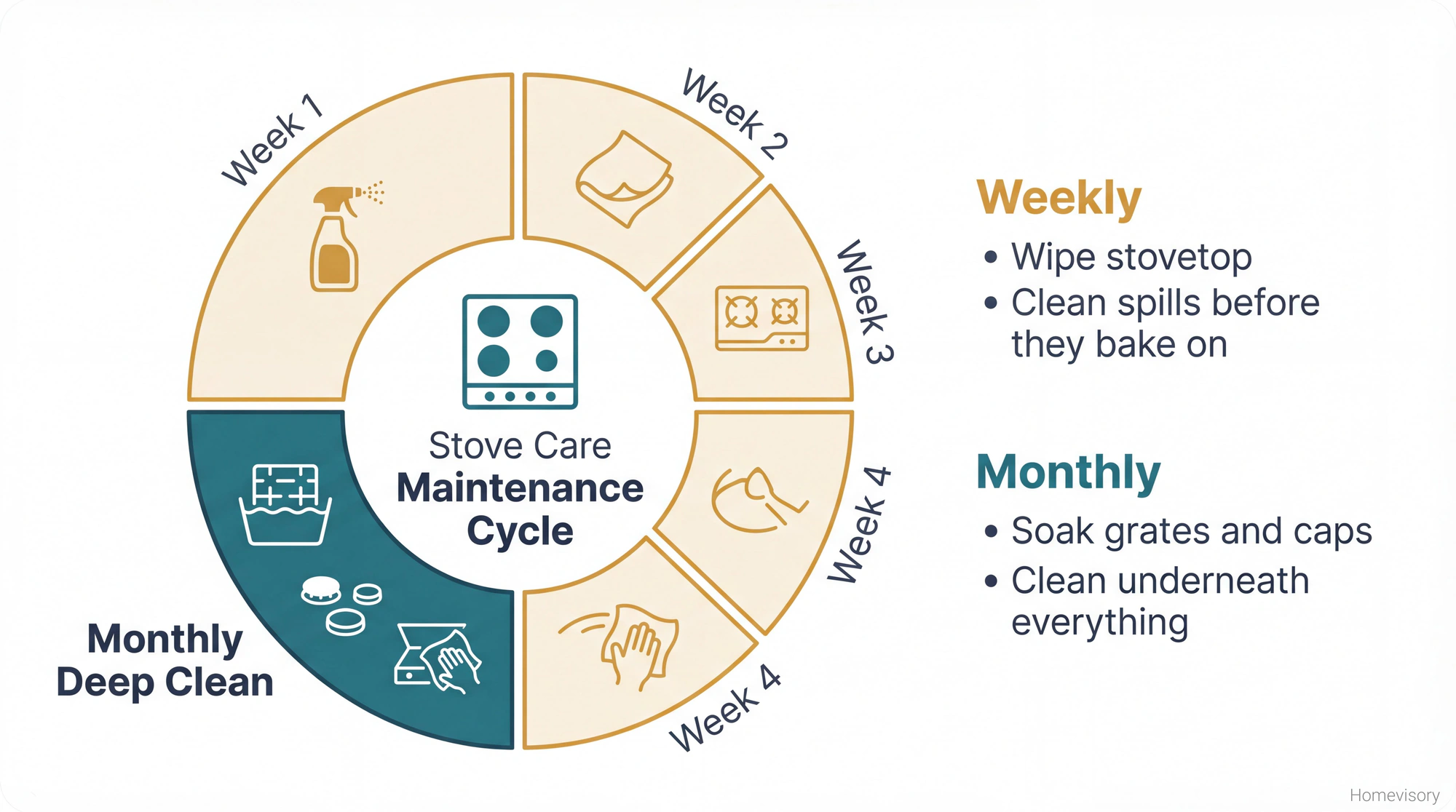
Weekly for light cleaning. Pull up the grates, wipe down the stovetop, deal with any spills before they become baked-on disasters.
Monthly for the full soak. Take everything apart. Clean the grates, the burner caps, underneath everything.
Thats it. Its not complicated.
What I Use
Baking soda. White vinegar. Dawn dish soap for porcelain grates. A nylon brush. A razor blade scraper for glass. Weiman glass cooktop cleaner. Vegetable oil for re-seasoning cast iron.
I dont buy degreasers. I dont buy specialty stove cleaners. I dont buy whatever new product is being advertised this month. The basics work.
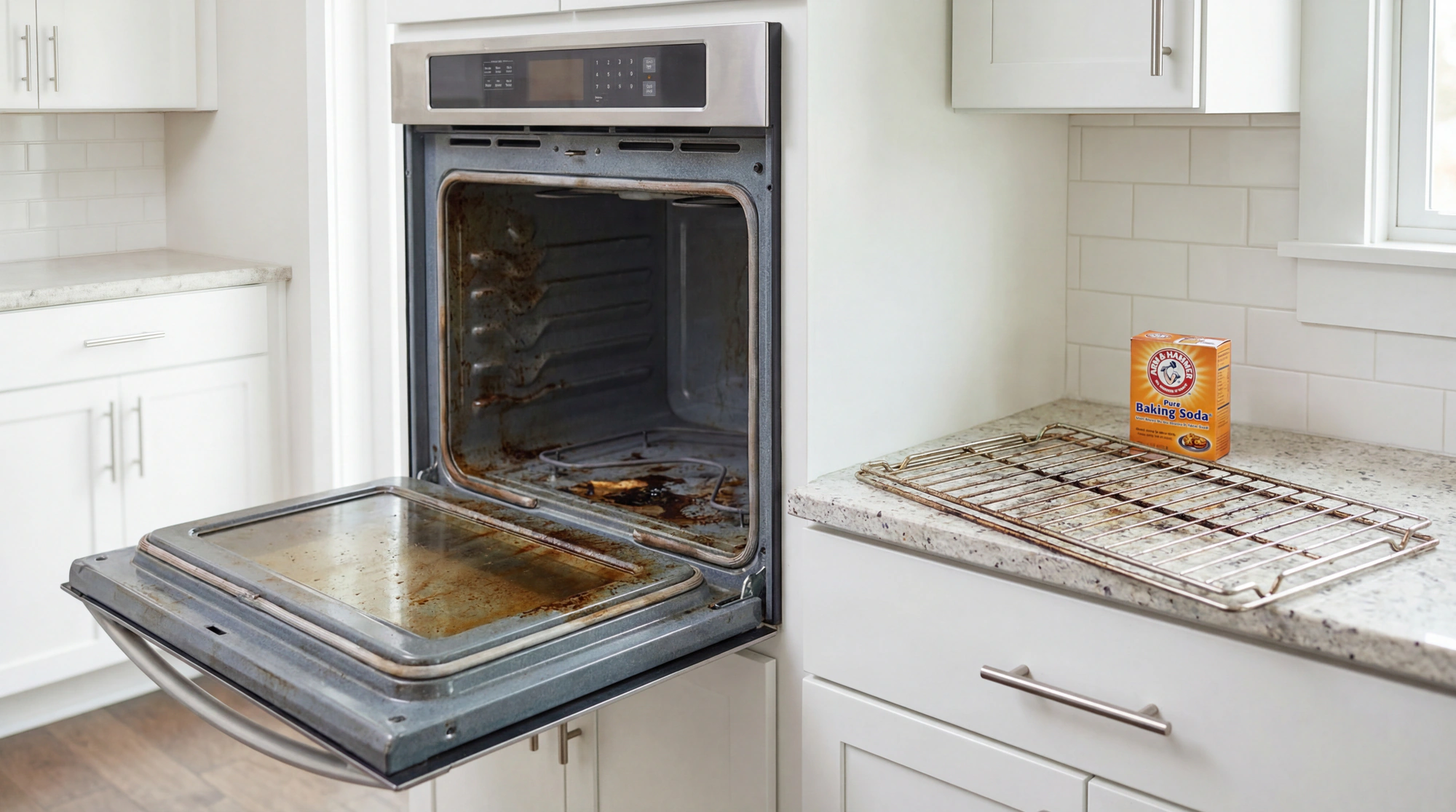
If youre reading this because your stove grates are already disgusting, dont feel bad. Everyone lets them go too long. The ammonia bag method might be your friend this time. Then start a regular schedule so you never have to do it again. And while you’re in kitchen cleaning mode, your oven racks probably need the same treatment. If your oven’s not heating properly either, that buildup might be part of the problem.
This is exactly the kind of task that gets away from people. Not because its hard but because its easy to forget. Thats what we do here at Homevisory, we help you remember the stuff thats easy to forget. Sign up for the Homevisory home task manager and we’ll remind you when its time to clean your grates, check your filters, and handle all the other maintenance that keeps your house running. Its free.